REVIEW · HIROSHIMA
Hiroshima: Hiroshima and Miyajima UNESCO Sites 1-Day Tour
Book on GetYourGuide →Operated by Japan Panoramic Tours · Bookable on GetYourGuide
One day, two UNESCO worlds. This 8-hour tour connects the hard-to-erase story of Hiroshima’s Peace Memorial with the postcard beauty of Miyajima and Itsukushima Shrine. It’s the kind of day that moves between solemn and scenic without feeling like whiplash.
I especially love how the trip is structured around a real guide on the bus and on the ground. You’ll get an English-speaking tour guide, plus a multilingual audio guide on the coach (Spanish, French, Italian, German, Portuguese, and Ukrainian), and even free Wi‑Fi while you’re riding.
The main drawback to plan for is pacing. You’re seeing a lot in one day, so if you want extra time for Hiroshima city itself beyond the major memorial stops, you may feel a little shorted on free wandering.
In This Review
- Key things I’d watch for
- From Hiroshima Station to the peace sites that define the day
- The Atomic Bomb Dome and Peace Memorial Park: how the tour handles the emotional core
- Hiroshima Peace Memorial Museum: give yourself time to process
- Ferry to Miyajima: the calm reset that makes the day work
- Lunch break: Hiroshima-style okonomiyaki (and how to choose the right option)
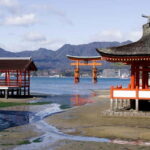
- Itsukushima Shrine: torii, tides, and why this stop feels cinematic
- Daishoin Temple on Mount Misen: quieter views after the crowds
- Omotesando Street free time: snack, shop, and reset your energy
- Returning to Hiroshima: the day’s meaning lingers on the bus
- Price and value: what you’re really paying for
- Who should book this tour
- Should you book this Hiroshima and Miyajima UNESCO day tour?
- FAQ
- FAQ
- How long is the Hiroshima and Miyajima day tour?
- Where do I meet the group at Hiroshima Station?
- What language options are available?
- Is lunch included, and what type of lunch is it?
- Do I get time to explore the Hiroshima Peace Memorial Museum on my own?
- Does the tour include ferry transport to Miyajima?
- Is there Wi‑Fi during the tour?
- What happens if the Peace Memorial Museum is closed during certain dates?
- Is this tour suitable for wheelchair users?
Key things I’d watch for
- Peace Memorial focus first: The most emotional sites get guided time, then museum time for your own pace.
- Miyajima by round-trip ferry: You get scenic water time, not just a rushed cross-island sprint.
- Okonomiyaki lunch is optional: Hiroshima-style okonomiyaki is available if you choose the lunch option (vegetarian possible).
- Itsukushima Shrine time includes the iconic torii view: Plan your photos around when you’re there.
- Daishoin Temple adds calm and views: Gardens, stone statues, and a quieter temple moment on Mount Misen.
- Omotesando Street free time: A practical window to snack, shop, and reset after the temple visits.
From Hiroshima Station to the peace sites that define the day
You start at Hiroshima Station, meeting in front of the Shinkansen Ticket Gate on the 2F North Gate. It’s one of those meeting points that’s easy to find once you’re standing in the right corner—look for staff holding a green and white flag. From there, you roll out by air-conditioned coach with the guide pointing out what’s coming next.
This first transfer matters more than it sounds. In a day like this, you want your head partially pre-set before you reach the memorial area, and that’s what the guided intro helps with.
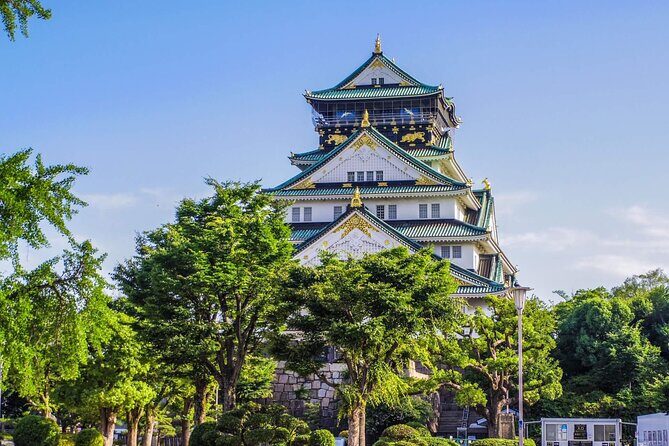
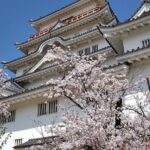
You may also pass by Hiroshima Castle during the drive. It’s not a deep stop, but it gives you a quick sense that you’re still in a living city while the tour spends so much time on remembrance.
A few more Hiroshima tours and experiences worth a look
The Atomic Bomb Dome and Peace Memorial Park: how the tour handles the emotional core
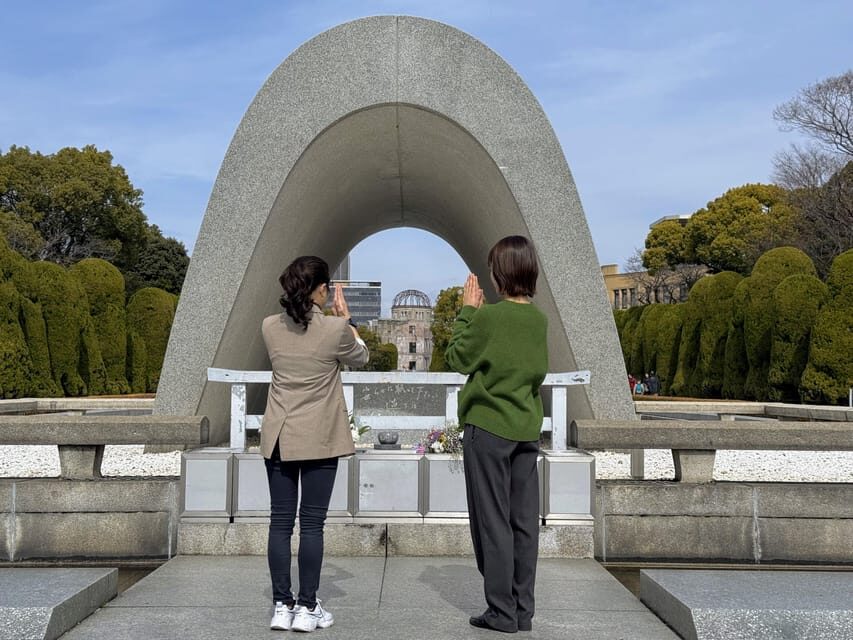
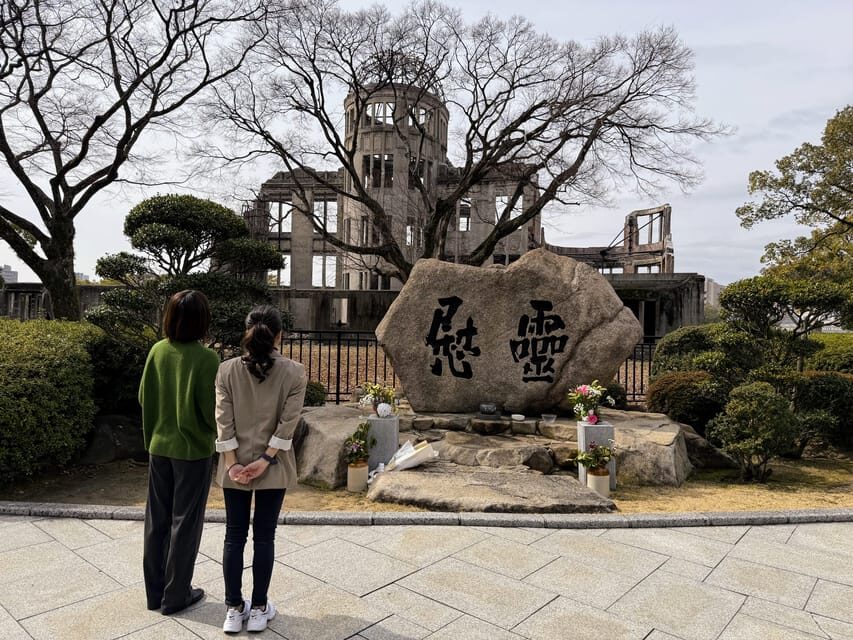
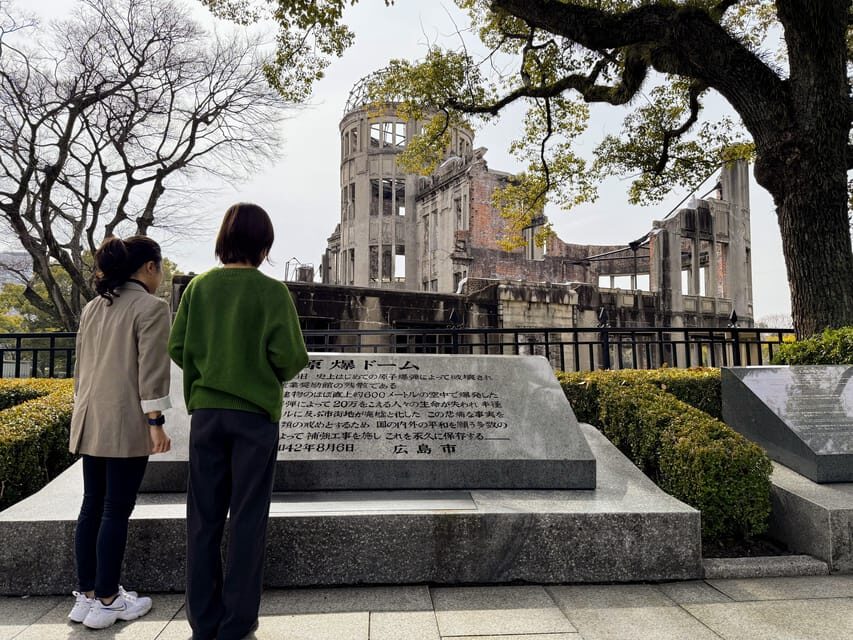
The Hiroshima Peace Memorial portion starts with the Atomic Bomb Dome, guided for about 20 minutes. This preserved structure is UNESCO-listed, and it’s hard to process at normal tourist speed. The guide’s job here is to give you context without making it feel like a lecture you can’t escape.
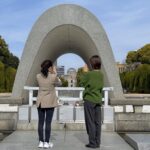
Next comes Hiroshima Peace Memorial Park, with about 40 minutes of guided walking. You’ll see key monuments, including the Cenotaph for the A-bomb Victims and the Children’s Peace Monument tied to Sadako Sasaki. This is the point where a good guide can shift the day from facts to meaning—especially because the subject is so heavy.
A useful thing to know: you don’t have to keep your eyes glued to signage the whole time. Use the guided time to understand what you’re looking at, then let the monuments do the rest while you slow down.
Hiroshima Peace Memorial Museum: give yourself time to process
After the park, you’ll have about 1 hour at the Hiroshima Peace Memorial Museum with free time. Entrance fees are included, so you’re not juggling ticket lines or missing exhibits because you’re under pressure. This is also where your pacing becomes personal: some people want to read everything; others just want the key sections that connect the dots.
The museum is listed as self-paced during this tour block, so you’re in control. If you’re the type who gets overwhelmed quickly, stick to the sections that most directly explain the bombing’s impact and aftermath. If you can handle it, you’ll likely appreciate how the exhibits turn history into something you can actually picture.
There’s also a special note for certain dates: from February 16 to 21, 2026, the museum will be closed for exhibit replacement. During that window, the tour visits the Hiroshima National Peace Memorial Hall for the Atomic Bomb Victims instead, with no refunds due to the change.
Ferry to Miyajima: the calm reset that makes the day work
Once you’ve done the memorial portion, you board a ferry for Miyajima Island. The ferry ride is about 20 minutes and it’s not just transportation—it’s a reset. You’ll get Seto Inland Sea views, with calm water and scattered islands that make the emotional half feel less like a one-way drop.
This pacing choice is smart. You’re still in the same region, so the travel feels smooth, but the visuals start shifting toward something lighter—mountains, water, and the iconic shrine silhouette you came for.
If you’re prone to getting seasick, you might take it easy with your seat choice, but the ride is short enough that most people treat it like a breather rather than a problem.
Lunch break: Hiroshima-style okonomiyaki (and how to choose the right option)
If you select the lunch option, you’ll eat Hiroshima-style okonomiyaki at a local restaurant. It’s typically 50 minutes of lunch time, and the dish is built in layers—cabbage, pork, noodles, and egg. It tastes like comfort food, but it’s also local food culture in one bite: savory, filling, and a nice switch after the memorial sites.
Vegetarian okonomiyaki is available, but you must request it during booking (and the tour notes vegetarian only—no vegan, no halal, and no gluten-free option). If those needs don’t match your diet, the tour offers a no-lunch option, which keeps the schedule intact.
Tip: if you plan to snack later on Omotesando Street, don’t go full dessert after lunch. You’ll want room for Miyajima treats.

Itsukushima Shrine: torii, tides, and why this stop feels cinematic
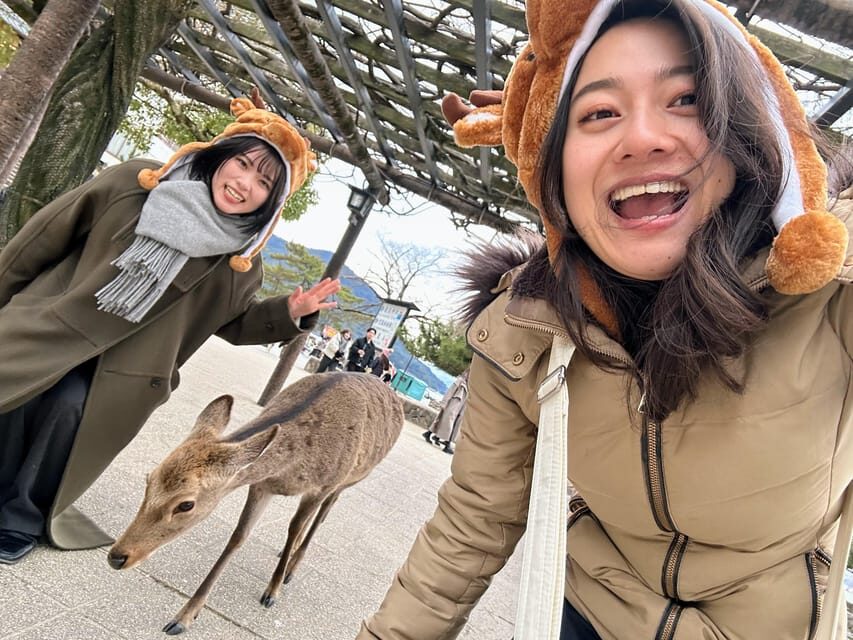
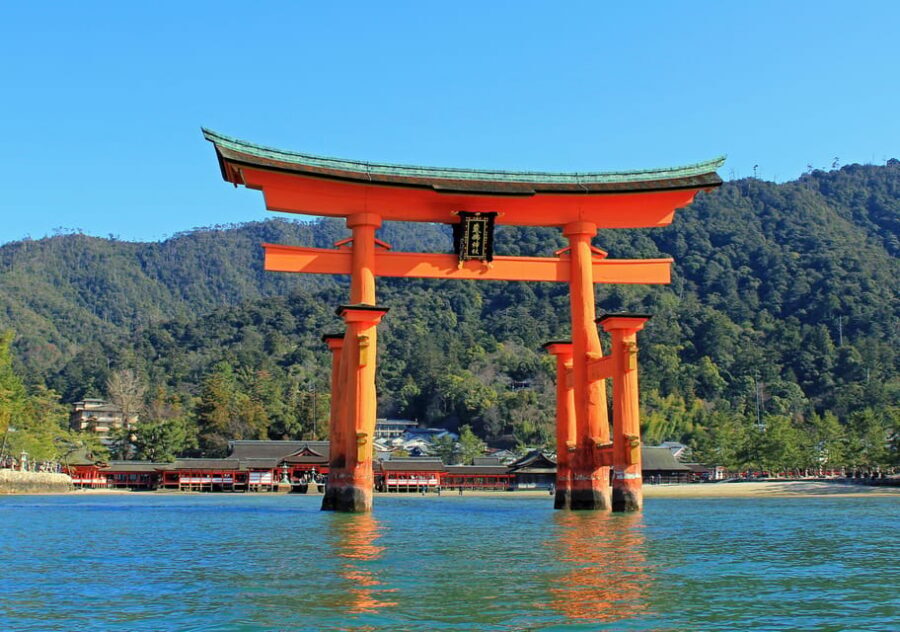
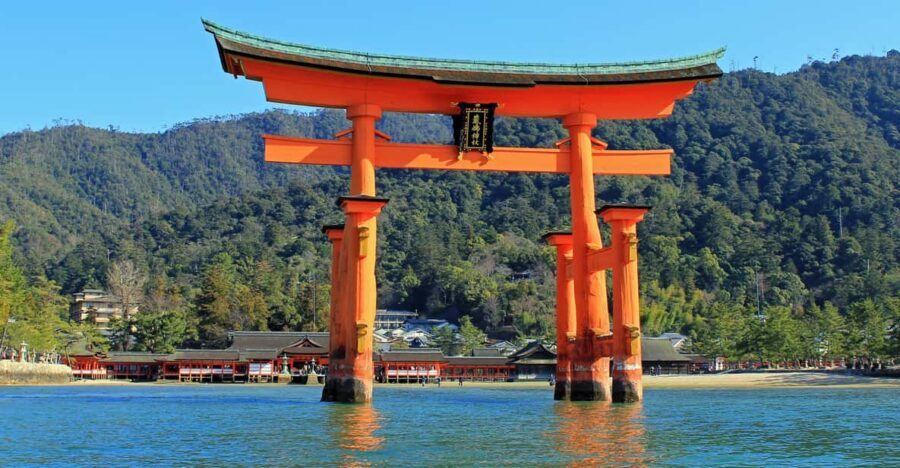
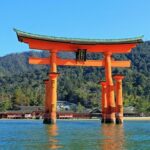
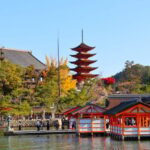
Next up is Itsukushima Shrine. You’ll get about 1 hour here, with a guided component plus free time. The shrine is famous for the torii gate that appears to float out over the water at high tide—one of those travel images that looks unbelievable until you see it in front of you.
What I like about this tour timing is that you’re not just herded for 10 minutes and then sent away. You get time to look slowly, take photos, and understand what you’re seeing in cultural terms, not just as scenery.
Because tides can affect the look of the water and structures, don’t assume every photo will match what you saw online. Use your time on-site to enjoy the shrine atmosphere even if the torii-water effect differs slightly from the internet version.
Daishoin Temple on Mount Misen: quieter views after the crowds
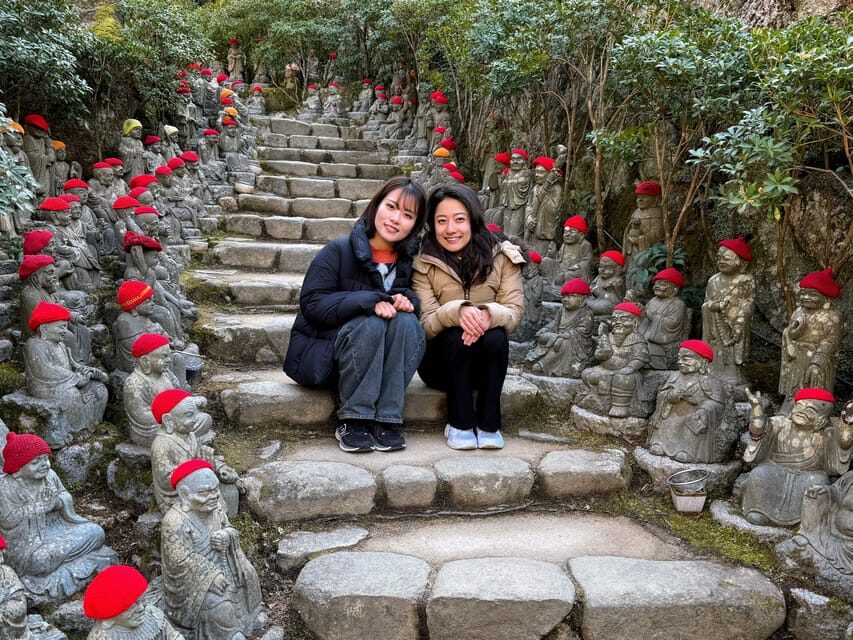
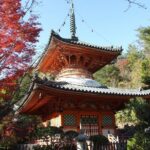
Daishoin Temple follows, with a shorter visit (around 30 minutes) and time to breathe. Daishoin is known for its gardens and many stone statues, and it sits on Mount Misen, so you also get views back over Miyajima and the Seto Inland Sea.
This is the “slow down” moment in the second half of the day. If the shrine area feels crowded, Daishoin is where you can stand and absorb without feeling like you’re constantly moving.
Stone statues + gardens also make a nice photo change from the torii-water look. If you’re tired of taking the same angle everyone is taking, this stop helps you get variety.
Omotesando Street free time: snack, shop, and reset your energy

After the temple, you’ll have free time on Omotesando Street, Miyajima’s main shopping corridor. This is a practical break—about 40 minutes—where you can grab snacks and browse local souvenirs.
Expect lots of Miyajima-themed items, including edible treats and small gifts. If you want something easy to pack, this is the moment to choose it, not later when you’re already back on the mainland.
One smart move: walk the street once at a relaxed pace, then go back to the places you actually want. The guided parts are clear; the free part is where you can spend your mental energy best.
Returning to Hiroshima: the day’s meaning lingers on the bus
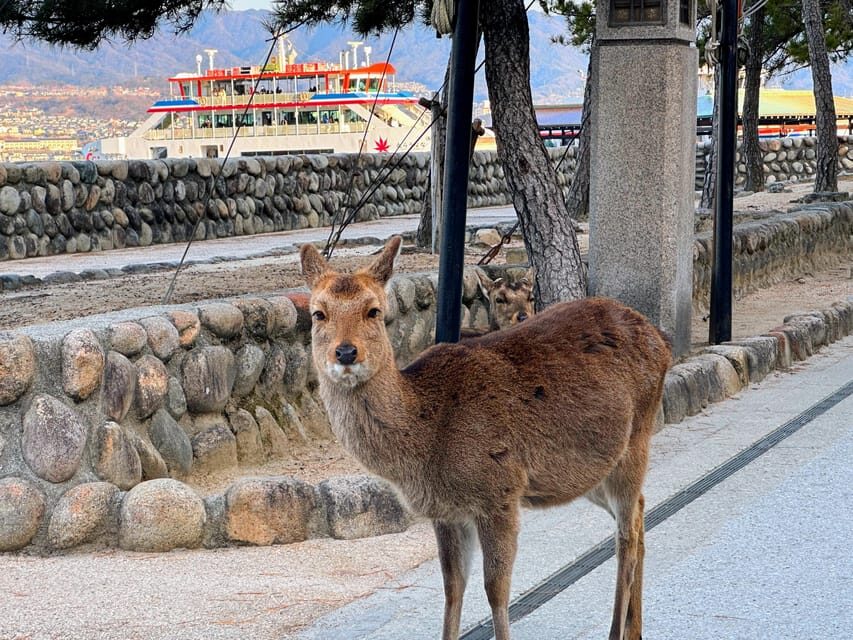
You’ll take the ferry back to the mainland and then ride the coach to Hiroshima Station, finishing around the late afternoon. The return time is long enough to let the day settle in—especially after a museum visit—without making you feel stuck.
Even on the ride back, the tour’s attention to comfort shows. The coach is air-conditioned, and you still have access to free Wi‑Fi. It’s also when you can look up anything you missed while walking through a monument area, which helps turn “I saw it” into “I understood it.”
Price and value: what you’re really paying for
At $122 per person for an 8-hour day, the value hinges on three things: logistics, admission, and guidance.
You’re paying for round-trip ferry transport, entrance fees for the Atomic Bomb-related museum area and Miyajima, and a full-day English-speaking guide handling timing and context. In other words, you’re not just buying a ride—you’re buying a clean plan that links hard history with a major shrine experience, without you needing to coordinate trains, ferries, and tickets in a single day.
If you’re short on time in Hiroshima (or you’re doing Osaka/Hiroshima and can’t afford a multi-day setup), this is the kind of bundle that helps you see the big UNESCO anchors without sacrificing too much sanity.
Who should book this tour
This is a strong pick if you want a one-day package that covers both halves clearly—Peace Memorial first, Miyajima second. It’s also ideal if you’d rather have a guide translate cultural and historical context while you focus on walking and absorbing.
It’s a less ideal match if you want long free roaming in Hiroshima city, or if mobility limits matter—this tour is not suitable for wheelchair users.
From the guide names people highlighted—Marin, Tomo, Rino, Mo, and Momiji—you can also infer something important: the guides tend to balance energy with sensitivity for the memorial content, which is exactly what you want when the topic is serious.
Should you book this Hiroshima and Miyajima UNESCO day tour?
Yes, if you want the smart, time-efficient pairing of Hiroshima’s most essential remembrance sites with a major Miyajima shrine-and-temple day. The tour works because it doesn’t treat either half as an afterthought: the memorial portion gets real guided attention, and the Miyajima portion gets the breathing room that makes the scenery meaningful.
Book it if you’ll appreciate both sides of the day—history that stays with you, and then a calm island reset. Skip it if you know you’ll resent tight pacing or you need a lot of extra time in Hiroshima beyond the core memorial area.
FAQ
FAQ
How long is the Hiroshima and Miyajima day tour?
The tour runs for about 8 hours, from meeting at Hiroshima Station through the return journey back to Hiroshima Station.
Where do I meet the group at Hiroshima Station?
Meet in front of the Shinkansen Ticket Gate on 2F of Hiroshima Station (North Gate). Look for a staff member holding a green and white flag.
What language options are available?
The live tour guide is English and Japanese. There is also a multilingual audio guide on the bus in Spanish, French, Italian, German, Portuguese, and Ukrainian.
Is lunch included, and what type of lunch is it?
Lunch is included only if you select the lunch option. It’s Hiroshima-style okonomiyaki. Vegetarian okonomiyaki is available if requested, but there is no vegan, halal, or gluten-free option.
Do I get time to explore the Hiroshima Peace Memorial Museum on my own?
Yes. After the guided park portion, you’ll have free time at the Hiroshima Peace Memorial Museum for about 1 hour.
Does the tour include ferry transport to Miyajima?
Yes. The tour includes a round-trip ferry to Miyajima.
Is there Wi‑Fi during the tour?
Yes. Free Wi‑Fi service is available on the bus.
What happens if the Peace Memorial Museum is closed during certain dates?
From February 16 to 21, 2026, the Hiroshima Peace Memorial Museum is closed for exhibit replacement. During those dates, the tour visits the Hiroshima National Peace Memorial Hall for the Atomic Bomb Victims instead, and no refunds are issued due to the change.
Is this tour suitable for wheelchair users?
No. The tour is listed as not suitable for wheelchair users.