REVIEW · HIROSHIMA
Walking Through History: Hiroshima’s Path to Peace
Book on Viator →Operated by Ghani Explorer · Bookable on Viator
Peace in Hiroshima starts with one scar. This 2-hour walk through Hiroshima’s Peace Memorial area is run by a PhD scholar and keeps the group small (max 8), so you get thoughtful explanations without feeling herded along.
I especially like the museum setup: the Peace Memorial Museum ticket is handled in advance, so you can skip the long line and then take your time inside. One consideration: this is powerful, heavy subject matter, and in warm weather you’ll appreciate the built-in slowdowns for shade and breaks.
In This Review
- Key highlights you’ll feel right away
- A two-hour route that actually fits a day in Hiroshima
- Atomic Bomb Dome: where your brain goes quiet
- Peace Bell and the Korean victims monument: widening the lens
- Children’s Peace Monument and Sadako Sasaki’s cranes
- Peace Flame and the Peace Memorial Hall: hope you can stand near
- Cenotaph and the Museum: time for facts, then time for silence
- Gates of Peace: the finish line with a message in many languages
- Price and value: where your money actually goes
- What to expect on the ground (pace, walking, and emotional load)
- Who this tour suits best
- Should you book this Hiroshima Peace Memorial walking tour?
- FAQ
- How long is the walking tour?
- What does the tour cost?
- Do I need a ticket for the tour itself?
- Is the group small?
- Where does the tour start and end?
- Are there admission fees at the stops?
- Will the guide talk inside the Peace Memorial Museum?
- Does the tour include help with the museum line?
- Are service animals allowed?
- Can I cancel for free?
Key highlights you’ll feel right away
- Small-group pace (max 8): questions welcomed, and the route is timed so you don’t feel rushed.
- Atomic Bomb Dome + UNESCO impact: you start at the most famous landmark and build context as you go.
- Most stops are free to enter: you’re guided by meaning, not ticket hurdles.
- PhD-level explanations from guides like Ghani and Sheraz: clear, human-focused storytelling.
- Reflection moments are built in: quiet time at the Peace Memorial Hall and steady emphasis on remembrance.
A two-hour route that actually fits a day in Hiroshima
Hiroshima can feel like a lot to process, especially if you’re squeezing it between train rides, ferry trips, or day trips. This tour helps because it is short, direct, and designed for people who want the big landmarks without spending half a day wandering.
You’ll meet in central Hiroshima at 1-chōme-10-1 Ōtemachi and finish near Gates of Peace on the other side of Peace Memorial Park. Ending at the gates is a smart move: it gives you a clear “wrap-up” visual moment after the more solemn stops.
The group size matters more than it sounds. With a maximum of 8 people, the guide can answer questions, slow down for photos, and adjust pace when someone needs it. In the heat, that pacing can be the difference between “I saw a lot” and “I actually absorbed what I saw.”
You can also read our reviews of more walking tours in Hiroshima
Atomic Bomb Dome: where your brain goes quiet
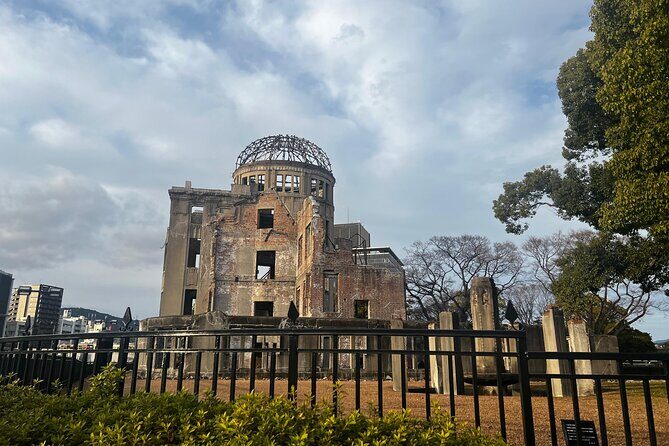
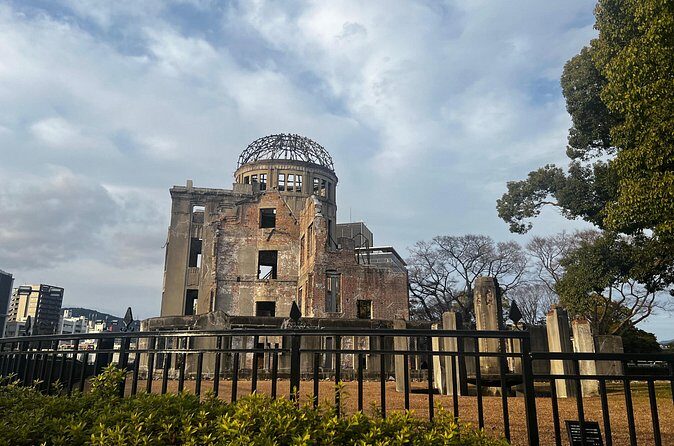
The tour begins at the Atomic Bomb Dome, a UNESCO World Heritage Site. You only get about 20 minutes here, but that’s long enough to take in the raw reality of the building’s remains before moving on.
Why this first stop works: the dome is a physical anchor. Once you see it, everything else on the tour stops being abstract. You start to understand the monuments that follow as part of one shared purpose—memory, warning, and the hope for a world without nuclear weapons.
Admission at this stop is free, so you can focus on observation. Try to spend a few moments looking at angles and distances: the dome is photographed constantly, but seeing it in person makes the scale feel real in a way pictures never fully do.
Peace Bell and the Korean victims monument: widening the lens
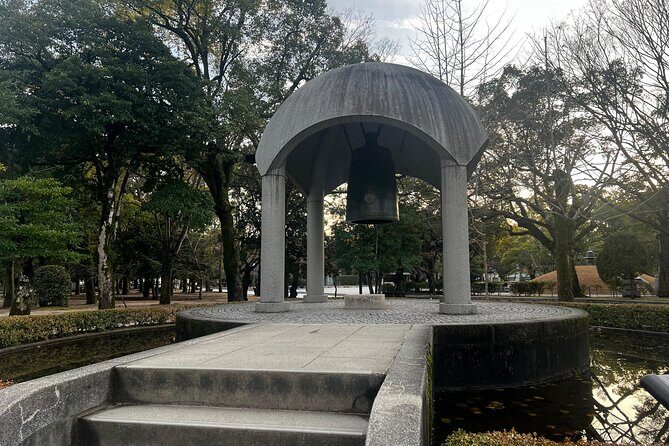
Next comes the Peace Bell, a symbol of harmony and a world without nuclear weapons. You’ll have around 10 minutes, which is enough time to hear its meaning without turning it into a photo contest. The bell’s deep sound isn’t just poetic. It’s built for reflection—an intentional pause in a day that moves quickly.
Then you head to the Monument to Korean Victims and Survivors. This stop is only about 10 minutes, but it adds an essential layer. It honors Korean victims of the atomic bombing and recognizes their suffering and connection to Hiroshima’s history.
A tour like this earns its value when it refuses to narrow the story to a single narrative. If you only ever hear about one group, you leave with an incomplete picture. This monument nudges you toward a fuller, more human understanding of who was affected.
Children’s Peace Monument and Sadako Sasaki’s cranes
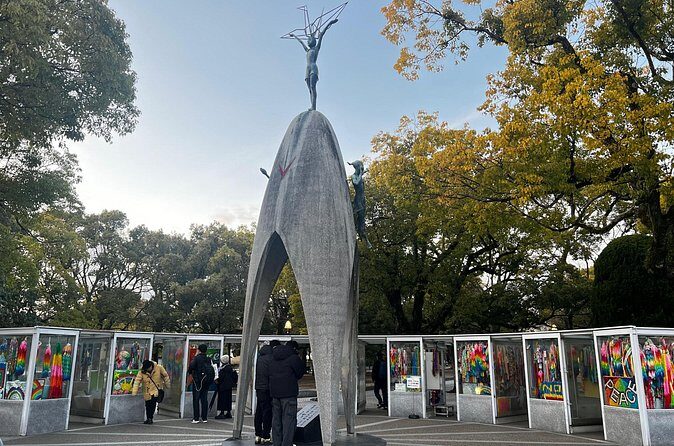
The Children’s Peace Monument is one of the most emotionally direct stops on the walk. It’s also quick—around 10 minutes—but it’s built around a specific story: Sadako Sasaki, a young girl known for folding paper cranes in hope of survival.
This is where the tour shifts from documentation to meaning. The paper cranes idea is simple, but it’s powerful because it turns tragedy into something people can carry forward—one small act, repeated by many.
If you like symbolism that connects to everyday life, you’ll appreciate this stop. It’s not just about what happened. It’s about what people chose to do with the memory afterward.
Peace Flame and the Peace Memorial Hall: hope you can stand near
At the Peace Flame, you’ll learn how the message stays active. The flame has been burning continuously since 1964, and it will remain lit until all nuclear arms are abolished. That detail matters. It’s not a one-day ceremony. It’s a long commitment that visitors can physically witness.
After that, the tour moves to the Hiroshima National Peace Memorial Hall for the Atomic Bomb Victims, where you get about 20 minutes. This is a quiet reflection space, filled with personal stories, photographs, and survivor testimonies.
The best way to handle this stop is to slow down on purpose. You don’t need to read every label like a textbook. Instead, pick one or two stories to focus on, then let your brain rest between sections. That’s how this hall hits without overwhelming you.
You can also read our reviews of more historical tours in Hiroshima

Cenotaph and the Museum: time for facts, then time for silence
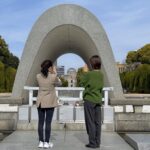
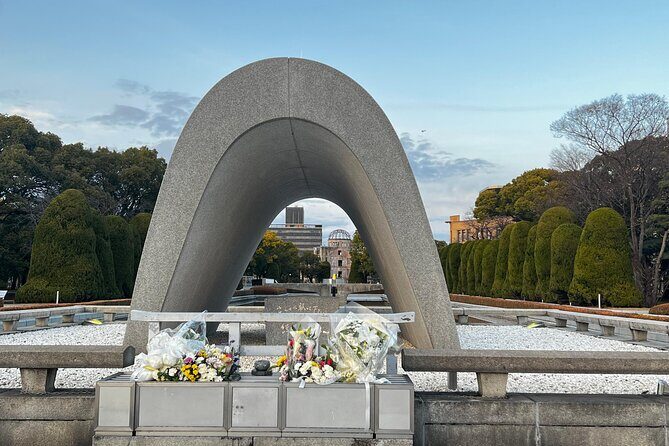
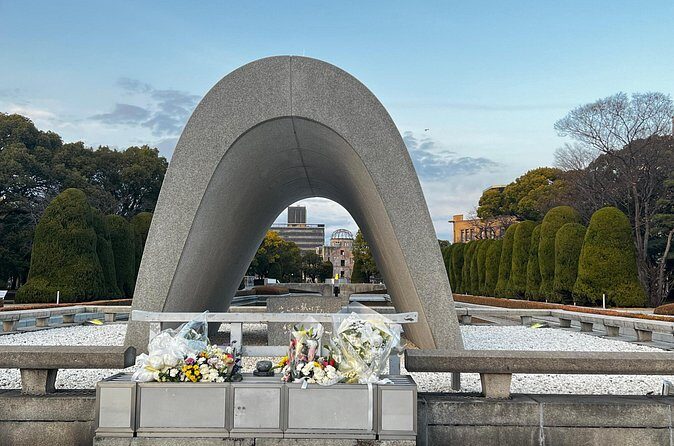
The Hiroshima Peace City Monument Cenotaph for the Atomic Bomb Victims comes next, with around 10 minutes. It’s an arched monument inscribed with the message: Let all the souls here rest in peace, for we shall not repeat the evil. It also holds the names of all known victims.
This is one of those stops where the words feel almost too direct to be taken lightly. You can read the inscription in a minute, but the meaning stays with you longer.
Then you reach the Hiroshima Peace Memorial Museum. Here’s the practical part: the tour includes your entrance ticket, and the museum ticket is purchased in advance so you can skip the long line. That’s a real time-saver in a place that can get crowded.
There’s one important rule: tour guides are not allowed to speak inside the museum, so you’ll visit the museum on your own for about 10 minutes. In practice, that means you should go in with a simple plan: pick one section that matches what you want to understand most, scan the rest, and don’t worry about finishing it all.
Gates of Peace: the finish line with a message in many languages
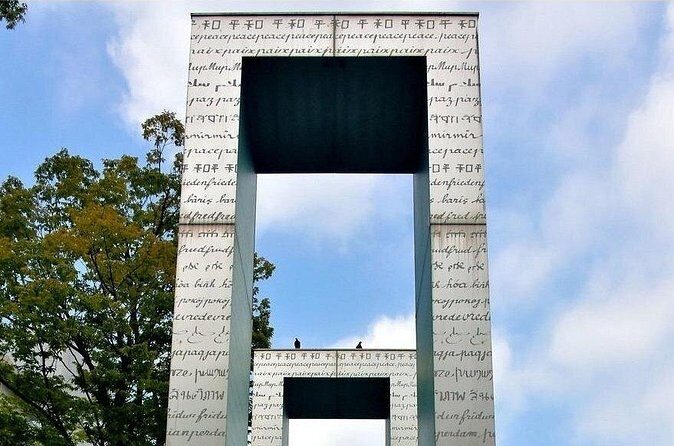
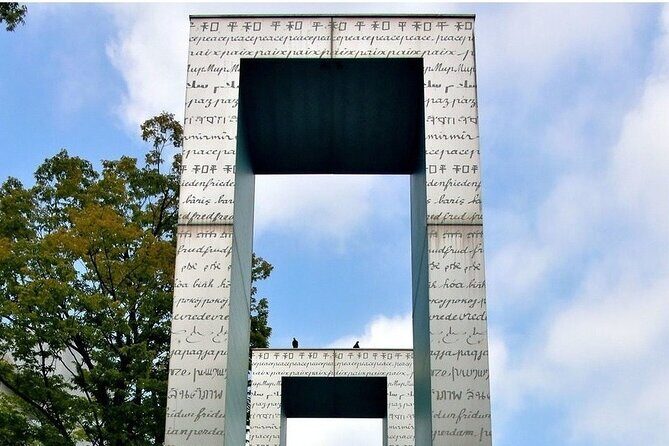
The final stop is the Gates of Peace, a set of ten glass gates inscribed with the word peace in multiple languages. You’ll spend about 20 minutes here, and it’s a nice way to end.
Why this works at the end: after the dome, monuments, flame, and museum, your emotions need an exit route. The gates give you a collective message you can leave with, not just images you had to absorb.
Also, ending here is convenient for your next move. Since the tour ends at the gates area, you’re not stuck trying to cross the park afterward while your legs are tired and your head is full.
Price and value: where your money actually goes
The price is $31.63 per person, and the tour is commonly booked about 14 days in advance. For a lot of walking tours, that price can feel like a generic guide fee. Here, the structure makes the value clearer.
First, most of the major stops are listed as admission free, so you’re paying for interpretation and timing, not entry costs. Second, the museum ticket is included, and the advance setup is specifically there to help you skip the long line.
Third, the small group size is a value multiplier. With max 8 people, you’re more likely to get real answers instead of only hearing what the guide says while half the group tunes out because they’re stuck in a photo queue. Guides like Ghani and Sheraz have been praised for clarity and staying on top of pace and questions.
All together, you’re buying time you can’t easily manufacture on your own: the “what to look for” guidance plus the right order of stops.
What to expect on the ground (pace, walking, and emotional load)
This is a walking tour, so wear comfortable shoes. The route is described as easy walking on the flat in real-world use, but it’s still outdoors, and Hiroshima weather can be intense.
The good news: the guides have shown they can adjust. When someone had a knee issue and trouble with stairs, the pace was slowed. On a hot day, breaks in shade were built in. That’s exactly what you want from a guide in a memorial setting—human care, not rigid timekeeping.
Emotionally, this tour isn’t light. You’re moving from the Atomic Bomb Dome to monuments honoring children, named victims, and survivor testimony. If you tend to get overwhelmed in museums, you might want to go in ready to take mental breaks.
Who this tour suits best
This works well if you:
- want the essentials of Hiroshima Peace Memorial Park in about 2 hours
- prefer a guided route that tells you what matters at each stop
- appreciate a scholar-led explanation rather than only audio guides
- are short on time and don’t want to guess your way through the museum
It may not be ideal if you want a very long, slow pace or if you want a guided commentary inside the museum itself. The museum visit is self-guided because guides aren’t allowed to speak there.
Should you book this Hiroshima Peace Memorial walking tour?
Yes—if your goal is a meaningful, efficient orientation to Hiroshima’s peace message, this is a smart booking. The combination of a small group, PhD-level context, and the museum line-skip gives you a strong payoff for the time you spend.
Book it soon if your schedule is tight, since the average booking window is about 14 days. If you’re traveling with limited stamina, comfortable footwear and a willingness to pause will help a lot—and the guides have shown they can slow down when needed.
If you want Hiroshima’s story in one focused walk, with the right order from the dome to the gates, this tour is the kind of practical plan that makes your visit feel complete.
FAQ
How long is the walking tour?
It’s about 2 hours (approx.).
What does the tour cost?
The price is $31.63 per person.
Do I need a ticket for the tour itself?
Yes, it’s a mobile ticket.
Is the group small?
Yes. The tour has a maximum of 8 travelers.
Where does the tour start and end?
It starts at 1-chōme-10-1 Ōtemachi, Naka Ward, Hiroshima and ends at Gates of Peace, 4-15 Nakajimachō, Naka Ward, Hiroshima.
Are there admission fees at the stops?
Most stops listed are free to enter, and the museum entrance is included.
Will the guide talk inside the Peace Memorial Museum?
No. You’ll visit the museum on your own, since tour guides are not allowed to speak inside the museum.
Does the tour include help with the museum line?
Yes. The museum ticket is purchased in advance so you can skip the long line.
Are service animals allowed?
Yes, service animals are allowed.
Can I cancel for free?
Yes. You can cancel for free up to 24 hours in advance for a full refund.