REVIEW · HIROSHIMA
Hiroshima Walking Tour Why A Bomb was dropped to Hiroshima
Book on Viator →Operated by Localized Walking & Food Tours · Bookable on Viator
Hiroshima hits you fast. This 2.5-hour small-group walk connects the build-up to August 6 with the places people built afterward, including Peace Park and the Atomic Bomb Dome. I love how the route stays close together with a mostly flat pace, so you can actually watch and ask questions instead of just marching. I also love the way the guide mixes on-the-ground sights with human context, including personal angles shared by guides. One possible drawback: if you want ultra-deep technical WWII detail, you may find the time is more about clarity and meaning than exhaustive history.
The best part for me is that it does not treat Hiroshima like a museum-only stop. You see a war-scarred landmark, then you look around at modern buildings right next to it—because that contrast is the whole point.
If you’re sensitive to heavy subject matter, plan your day around the tone shift. This is a thoughtful walk, and you’ll want a little space afterward to process.
In This Review
- Key highlights you’ll feel on this walk
- A 2.5-hour Hiroshima walk that links the war story to today
- Hiroshima Gokoku Shrine: a quiet start before the heavy parts
- Hiroshima Castle grounds: context without the inside ticket pressure
- Hiroshima Green Arena and Orizuru Tower: seeing modern Hiroshima in the same breath
- The Atomic Bomb Dome: the stop that forces focus
- Children’s Peace Monument: why this moment hits harder
- How the guide experience shapes what you take away
- Timing and pacing: making the 2.5 hours feel comfortable
- Ending in front of the Peace Memorial Museum: what to do next
- Price and value: is $28 a good deal?
- Who should book this Hiroshima walk—and who might want a different plan
- Should you book it?
- FAQ
- What is the duration of the Hiroshima walking tour?
- How much does the tour cost?
- How big is the group?
- Where does the tour start and end?
- What’s included in the price?
- Do I need a printed ticket?
- Is there free cancellation?
Key highlights you’ll feel on this walk
- Small group, big attention: up to 15 people, with time for questions
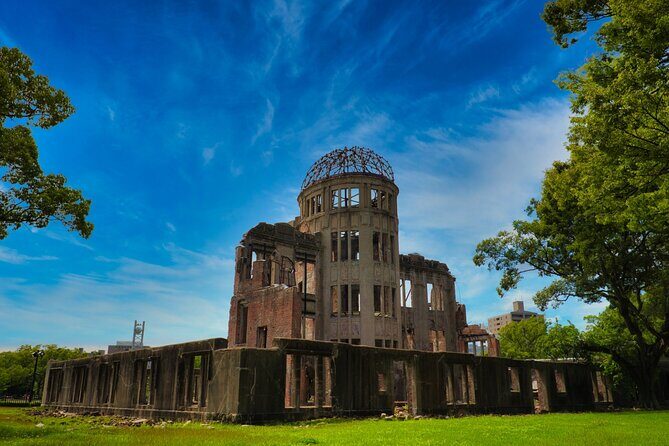
- Peace Park core included: Atomic Bomb Dome, Children’s Peace Monument, and the victims’ memorial area
- A pre-1945 to post-1945 route: it starts at a shrine and moves through key landmarks
- Photo-friendly stops: lots of chances to frame major sites without sprinting
- Modern Hiroshima shows up too: Orizuru Tower and other present-day landmarks sit right alongside the memory sites
A 2.5-hour Hiroshima walk that links the war story to today
This tour is built for one clear goal: help you understand Hiroshima’s WWII reality, then see how the city keeps moving forward with a peace-focused mission. The walk runs about 2 hours 30 minutes, and the stops are close enough that the time feels manageable rather than dragged out.
At $28 per person, it’s not trying to be a bargain the way some ultra-basic tours are. Instead, you’re paying for guided context—especially the kind that helps you connect what you see at the Peace Park to what came before August 6, 1945. Also, all fees and taxes are included, so you’re not hit with extra ticket costs along the way. Bottled water is not included, so if you know you’ll want it, grab it nearby before you meet.
The pace matters here. Multiple guides have kept the walk moving but not rushed, and the route is described as mostly flat. That’s great for families and first-time Hiroshima visitors who want the highlights without turning the day into a leg workout.
You can also read our reviews of more walking tours in Hiroshima
Hiroshima Gokoku Shrine: a quiet start before the heavy parts
You begin at Hiroshima Gokoku Shrine (21-2 Motomachi, Naka Ward). The tour starts with a calmer tone—tracing the setting and the architecture in a peaceful area—so your mind isn’t dropped straight into tragedy.
That calm start is useful. It helps you understand that Hiroshima isn’t only an event date. It’s a city with deep layers, and the shrine’s role in honoring protective deities of the domain gives you a sense of how long-term community identity works there. You’re not just learning facts; you’re getting your bearings before the tour turns serious.
You’ll typically spend around 20 minutes here. Since the first stop sets the emotional tempo, I’d treat it as your chance to slow down, look around, and settle in.
Hiroshima Castle grounds: context without the inside ticket pressure
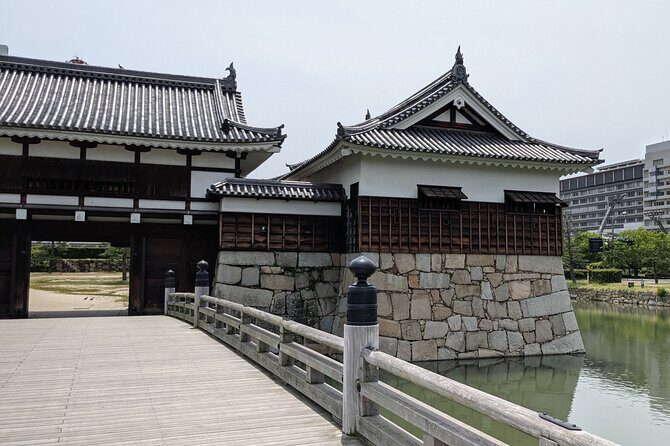
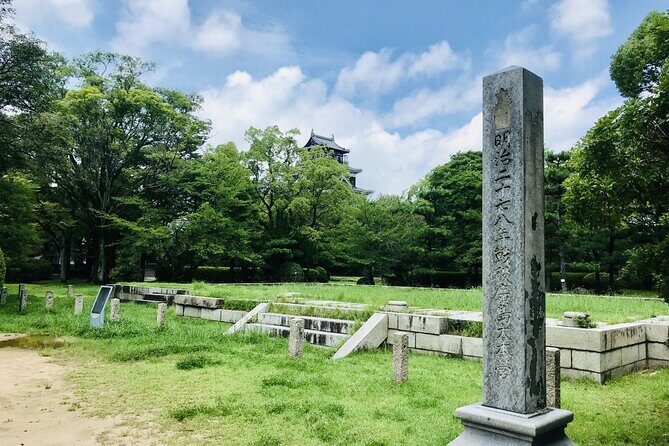
Next up is Hiroshima Castle, sometimes nicknamed Carp Castle. In about 20 minutes, you’ll cover the basics around its origin and how it functioned as the home of feudal leadership in the Hiroshima domain.
Important note: your time is focused on the grounds. Admission is listed as free, and some tours keep the visit outside rather than doing a full interior experience. That actually works well for this format. You get the historical framing without losing your day to ticket lines or long museum-style wandering.
Why I like this stop: it gives you a “then” in the physical city. You can picture how power and settlement shaped Hiroshima long before the bomb. And then, when you later walk near the epicenter sites, the contrast lands harder.
Hiroshima Green Arena and Orizuru Tower: seeing modern Hiroshima in the same breath
The middle of the walk includes two present-day landmarks that many people wouldn’t include if they were only chasing WWII sites.
You’ll pass by Hiroshima Green Arena (about 30 minutes), a multi-purpose indoor sports venue. It’s not a memorial, and that’s the point. Hiroshima today is not only grief and history plaques. It’s a working city with schools, sports, events, and regular life.
Then comes Orizuru Tower, a modern 13-story building opened in 2016 right next to Hiroshima Peace Memorial Park. It’s a contemporary-looking stop that helps you understand how the Peace Park sits inside a living urban fabric—not tucked away like a separate world.
Orizuru Tower can be a good “breathing space” between stops. Not because it changes the topic, but because it changes your surroundings. If you like taking photos, these areas give you chances to frame Hiroshima as it is now, not only as it was.
If you’re doing this as a day trip, this part is also where you can quickly check your energy. Use the modern stops to drink water (bring your own or buy nearby since bottled water isn’t included) and decide how much time you’ll want at the memorial area.
The Atomic Bomb Dome: the stop that forces focus
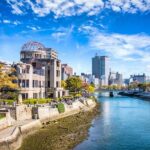
The centerpiece is the Atomic Bomb Dome, in the area near the blast’s epicenter. You’ll spend about 20 minutes here, and it’s exactly the right length. Too short and it feels like you skimmed past the symbol. Too long and it becomes hard to think clearly.
This building originally served as a promotion hall, and today it functions as a solemn reminder of what nuclear weapons can do. Standing there, you don’t need extra drama. The shape, the setting, and the awareness around you do the work.
Practical tip: arrive mentally ready to be quiet for a moment. This is one of those sites where the guide’s job is partly to explain and partly to help you hold the emotional weight without rushing. The best pacing I’ve seen on these tours keeps the walk moving, but it also allows a respectful pause.


Children’s Peace Monument: why this moment hits harder
From the Dome, you move into Peace Memorial Park and the memorial stops that narrow the story to human impact.
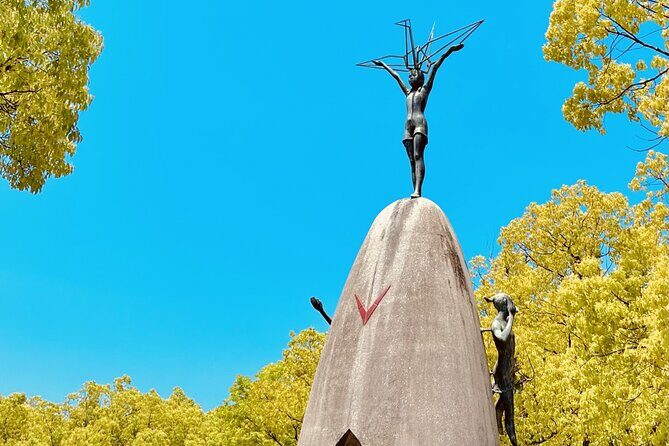
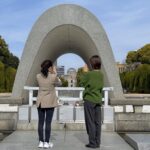
First is the Children’s Peace Monument, about 10 minutes. This monument commemorates Sadako Sasaki and the child victims of the atomic bombing. Sadako’s story—especially the idea connected to paper cranes—is widely known, but seeing it anchored in this place is different. It turns a famous narrative into something you feel as a local loss.
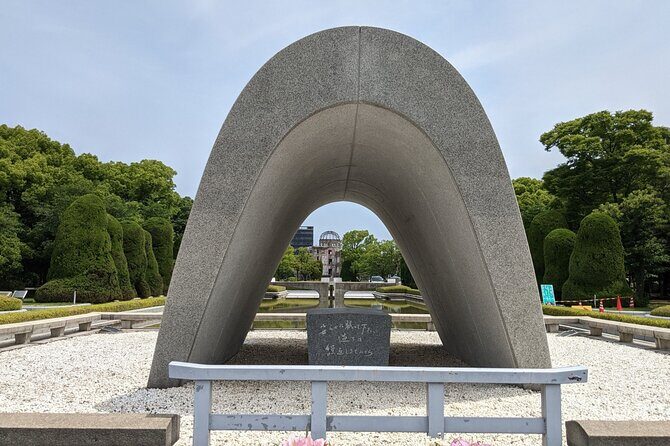
Then you reach the Hiroshima Victims Memorial Cenotaph, where you’ll spend about 30 minutes. This cenotaph is dedicated to the victims of the atomic bomb dropped on August 6, 1945. It’s a heavier stop, and the time helps. You’re not only looking; you’re being guided to understand what the memorial space is asking you to remember.
If you’re bringing kids, this part can still work. Some guides have used simple comparisons to keep younger visitors engaged (one guide used pop-culture references like Pokemon to help children stay interested). The goal is not to make light of anything. It’s to keep attention from drifting while you process something enormous.
How the guide experience shapes what you take away
The reviews emphasize something consistent: the tour quality rides hard on the guide. Names you might encounter include Chihiro, Thomas, Katya, and Emi. Across those guides, what stands out is clarity and a willingness to answer questions.
A few helpful patterns show up again and again:
- Guides often connect the build-up to the bombing and the long-lasting impact on the city.
- Some guides bring a personal layer to the story, including family connections to the bombing (for example, being a granddaughter of a survivor has been mentioned).
- Guides also use maps, photos, and short seated moments to keep the history understandable and the pace realistic within the 2.5-hour window.
That matters because Hiroshima can overwhelm you if you only rely on signage. A good guide helps you make sense of why each stop exists in the sequence you walk.
Timing and pacing: making the 2.5 hours feel comfortable
The tour is designed to fit into a half-day plan. Since most of the route is close together, you’re not constantly moving between far-flung neighborhoods. You’re walking, stopping, and then walking again.
A realistic expectation: you’ll want to ask questions sooner rather than later. The tour is paced so you can cover major points within the set time. If you’re the type who wants to linger, I’d speak up during the stop, not after the group has already moved on.
Also, bring layers if you’re visiting in colder months. One group did the walk on a very cold January day, and guides still found a way to keep things enjoyable without losing the seriousness.
Ending in front of the Peace Memorial Museum: what to do next
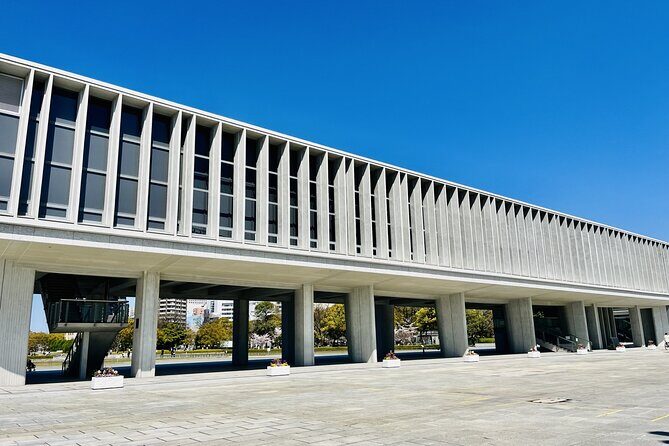
The tour ends in front of Peace Memorial Museum. That’s a smart handoff. You finish at the doorstep of the deeper museum experience rather than ending somewhere random.
If you want to keep the meaning going, this is when you go inside the museum with a guide’s framework already in your head. If you’d rather not go in immediately, you can take a short pause, then return later when you’re ready to focus again.
Either way, you’ll likely feel the tour’s emotional rhythm: start with grounding, build context, then move into the memorial core.
Price and value: is $28 a good deal?
For $28 per person, the value depends on how you like learning while traveling.
- If you prefer self-guided walking with apps and signs only, you might not need a guide.
- If you want someone to explain why the city looks the way it does, and why the sequence of sites matters, the price feels fair—especially since all fees and taxes are included and the route covers major, iconic locations.
One caution from a minority of feedback: a small set of people felt the walk sometimes leaned more toward broader context than the bombing story alone, and that it did not feel as deep as the title promised. If you’re a hardcore WWII history buff hunting for granular details, you may want to pair this walk with extra reading or the museum for the full depth.
For most first-timers, though, it lands as a practical “right places, right order, right meaning” kind of tour.
Who should book this Hiroshima walk—and who might want a different plan
Book it if:
- You want a guided walk through the Hiroshima memory places, not just a museum day.
- You like small groups (up to 15) and the chance to ask questions.
- You want a route that includes both memorial sites and modern Hiroshima landmarks like Orizuru Tower.
Consider a different approach if:
- You’re chasing ultra-detailed, technical WWII history with lots of lecture time.
- You really want free-form wandering with no set timing, because this tour has a clear structure and you’ll move with the group.
It’s a strong match for couples, solo travelers who want companionship and context, and families who can handle respectful memorial sites—especially when guides keep kids engaged in age-appropriate ways.
Should you book it?
Yes, I’d book it if this is your first real look at Hiroshima and you want the main sights connected into one story. The short, guided route is a smart use of time, and the inclusion of both the Atomic Bomb Dome and the memorials in Peace Park makes it hard to beat for first-time visitors.
If you’re the kind of traveler who needs every minute to be about one specific topic, plan to add the Peace Memorial Museum afterward or do your own extra research so you get the depth you’re after. For everyone else, this walk is a clear, respectful, and practical way to understand why Hiroshima remembers—and why it keeps pointing toward peace.
FAQ
What is the duration of the Hiroshima walking tour?
The tour runs about 2 hours 30 minutes (approx.).
How much does the tour cost?
It costs $28.00 per person.
How big is the group?
The tour has a maximum of 15 travelers.
Where does the tour start and end?
It starts at Hiroshima Gokoku Shrine (21-2 Motomachi, Naka Ward, Hiroshima). It ends in front of Peace Memorial Museum (1-2 Nakajimachō, Naka Ward).
What’s included in the price?
All fees and taxes are included. Bottled water is not included.
Do I need a printed ticket?
No. The tour uses a mobile ticket.
Is there free cancellation?
Yes. You can cancel up to 24 hours in advance for a full refund.