REVIEW · HIROSHIMA
Hiroshima Peace Memorial and Atomic Bomb Dome Private Tour
Book on Viator →Operated by Tahir · Bookable on Viator
Hiroshima Peace Park asks you to slow down. This private tour strings together the museum and memorials in a way that helps the big story land—quietly, clearly, and with purpose. You’ll move through the park’s symbols in order, from the Peace Memorial Museum to the Atomic Bomb Dome, learning what each place is trying to say.
What I really like is the private guide who keeps the facts straight and connects the monuments so you don’t feel lost in a sea of stone and names. I also like that the schedule is built for focus: you get museum time (with admission included) and then you move through the rest of the grounds efficiently, with reflection stops that don’t feel rushed.
One thing to consider: this is emotionally heavy. Even when everything is well explained, you should expect the material to feel exhausting, not just informative.
In This Review
- Key things you’ll appreciate
- How Hiroshima Peace Park makes sense when someone guides you
- Hiroshima Peace Memorial Museum: your best chance to get the timeline right
- Hiroshima National Peace Memorial Hall: reflection and the victim database
- The memorial walk: cenotaph views, children’s story, and ashes you can feel
- Atomic Bomb Dome: the ending that sticks with you
- Price and value: is $85 worth it for 3 hours?
- Who this private tour is best for
- Should you book it?
- FAQ
- How long is the Hiroshima Peace Memorial and Atomic Bomb Dome private tour?
- What is the price per person?
- Is this a private tour or a shared group?
- What is included in the ticket price?
- How long do we spend at each major stop?
- Where do we meet for the tour?
- Where does the tour end?
- Is the tour near public transportation?
- Can I cancel for a full refund?
Key things you’ll appreciate
- A guide who ties the park together so each stop has meaning, not just a location
- Hiroshima Peace Memorial Museum time included (1 hour 30 minutes) so you’re not guessing what to prioritize
- Victim memorial hall with screen access to a database for deeper context at the right moment
- Many stops are free, so your money goes mostly toward interpretation and the museum entrance
- A-Dome finish that gives you time for a careful walk around the Atomic Bomb Dome
- Mobile ticket and private group so you can keep things simple and not wait around
How Hiroshima Peace Park makes sense when someone guides you
Hiroshima Peace Park can feel like a test you did not study for. One minute you’re looking at the Peace Bell and the next you’re surrounded by monuments that each carry a different message. A private guide helps you read the park instead of just touring it.
You’ll start at the Peace Memorial area and move through the sites in a thoughtful order. That order matters because the story does too: devastation, aftermath, memory, and the ongoing plea for nuclear disarmament. Guides on this route (people like Khan, Ali, James, and Hans show up in past groups) tend to explain not only what happened, but why each monument is shaped the way it is and what emotions the design is meant to hold.
You should also know the pace is purposeful. The tour is about 3 hours, so it’s long enough to feel complete and short enough to not drag you through grief all afternoon. Still, wear comfortable shoes. The park is mostly walkable, but you’ll be standing and looking a lot.
You can also read our reviews of more private tours in Hiroshima


Hiroshima Peace Memorial Museum: your best chance to get the timeline right
The museum stop is the heart of the experience. You’ll have about 1 hour 30 minutes inside, with admission included, and you’ll spend that time building a clear understanding of Hiroshima’s path from catastrophe to reconstruction—and the push for global peace and nuclear disarmament that followed.
The biggest value here is structure. The museum contains artifacts and visuals that can be overwhelming if you’re trying to figure everything out on your own. A good guide helps you pick up the major themes fast: what the city looked like before, what was lost, what survivors endured, and how Hiroshima turned remembrance into action.
Here’s how to make the most of that museum time:
- If you tend to skim when you’re tired, slow down here. This museum is where details stop being abstract.
- Pay attention to personal items and displayed evidence. Even when you already know the event from school, these objects can make it suddenly real.
- Bring your questions. People in past groups have praised guides for answering follow-ups and connecting the museum to what you’ll see outside.
A practical note: the museum can feel emotionally intense. Plan to take short breaths between rooms and don’t force yourself to absorb every label at once. You’re doing better than you think if you leave with a clear picture of the timeline and the human impact.
Hiroshima National Peace Memorial Hall: reflection and the victim database
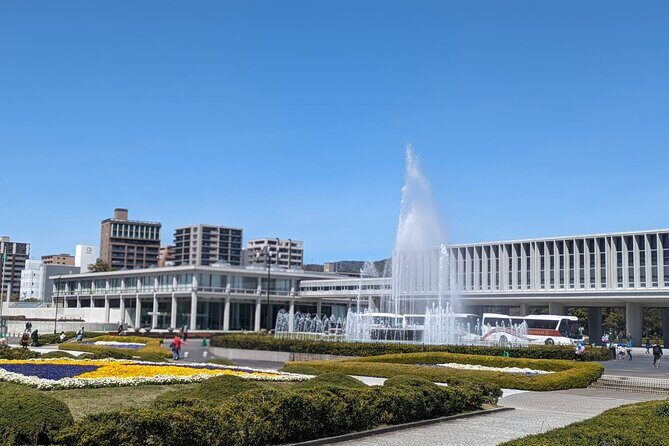
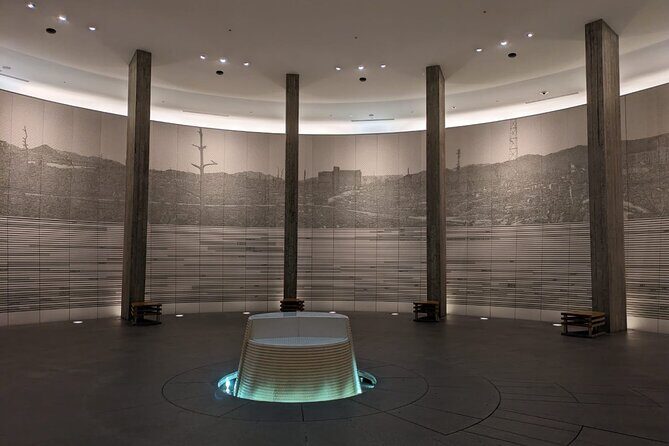
After the museum, you’ll visit the Hiroshima National Peace Memorial Hall for the Atomic Bomb Victims. This stop lasts about 20 minutes, and admission is included.
What makes this hall stand out is that it focuses on people rather than only events. There are display screens that give access to a database of victims. That means the visit doesn’t stay on the level of history class. You’re reminded that behind every monument or statistic there were real individuals and families.
This stop is shorter on the clock, but it can feel longer in your body. The best way to handle it is to let yourself be quiet. Look at what’s being shown and then take a breath before moving on. If you want to ask questions, this is the moment to do it, because you’ll have fresh context from the museum.
Potential drawback: because it’s a quick reflection stop, it may not satisfy you if you’re looking for deep, hour-long research. If you want more than what fits in a short guided visit, you might also plan extra solo time later. But for most first-timers, the timing here is exactly right.
The memorial walk: cenotaph views, children’s story, and ashes you can feel
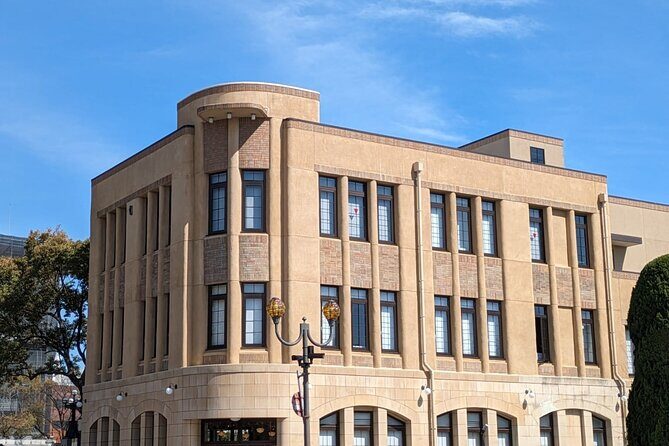
Next comes the sequence of monuments that transforms the tour from information into memory. You’ll spend time at several free sites, each with its own emotional tone.
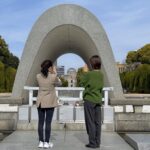
Peace City Monument Cenotaph for the Atomic Bomb Victims gives you a broader view of the park layout. You’ll also get a panoramic look that includes major landmarks such as the museum and the Atomic Bomb Dome. That view helps you connect what you’ve learned to what you’ll see next. In other words, the tour stops start talking to each other.
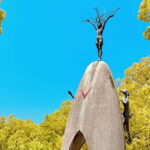
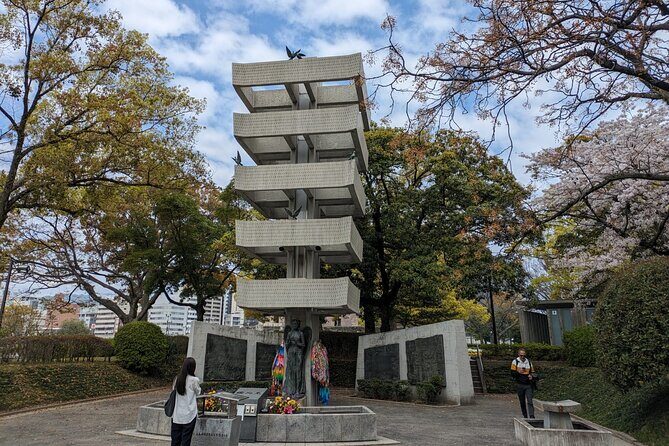
Then you’ll visit the Children’s Peace Monument, about 10 minutes. This is dedicated to Sadako Sasaki and other child victims affected by the bombing. The power of this stop is that it pulls the story forward into the innocence of childhood. If you’re visiting with teens or kids who can handle it, this is often the moment they understand that the impact wasn’t only military or political—it was personal and lifelong.
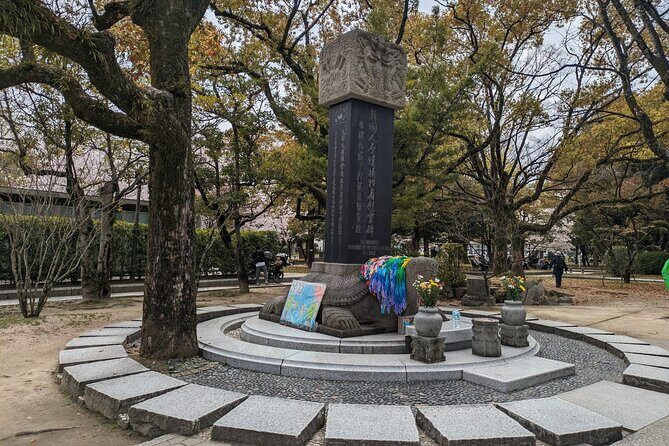
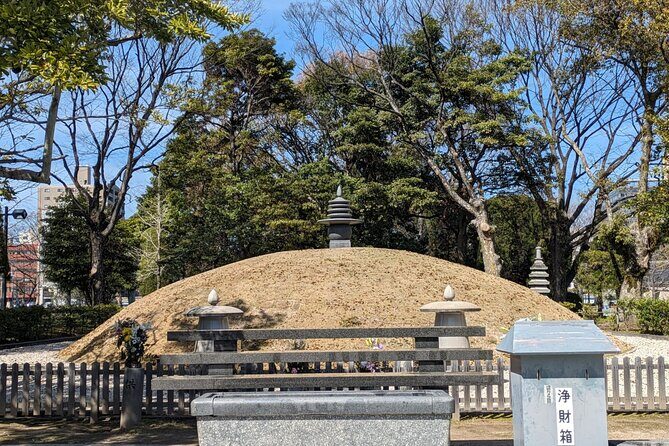
After that, you’ll reach the Atomic Bomb Memorial Mound, about 20 minutes. This is the place with recovered ashes buried there, presented as a sacred space. People describe strong feelings here while still noticing the way it’s designed to feel peaceful and respectful. It’s one of those stops where photos can feel wrong, so if you do take them, keep it minimal.
Atomic Bomb Dome: the ending that sticks with you
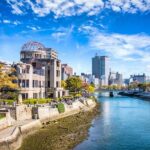
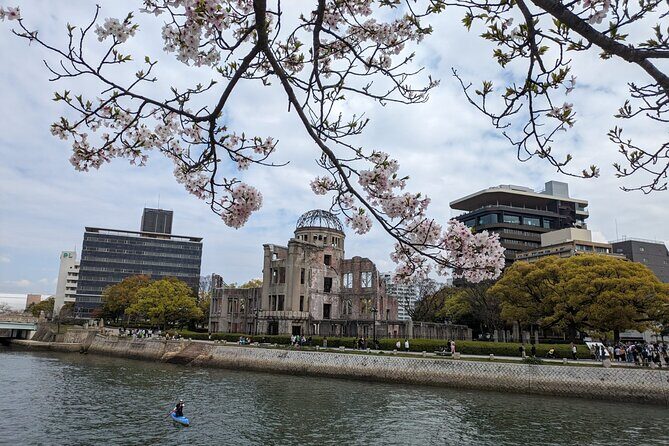
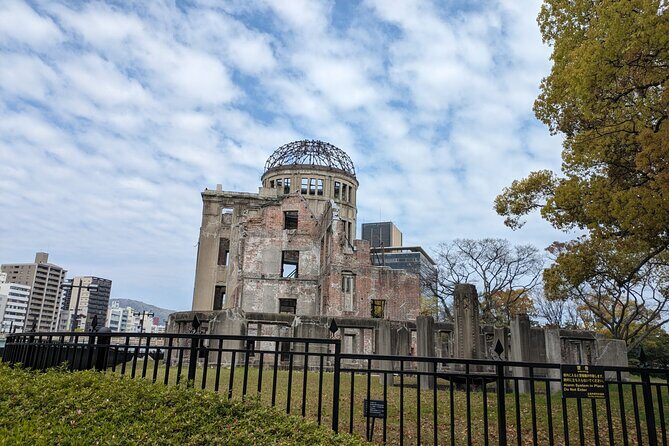
Finally, you’ll reach the Atomic Bomb Dome, often called A-Dome. You’ll have about 20 minutes here, and the stop is free. Most people assume the Dome is just a photo spot. On this tour, it becomes something else: a closing image after you’ve learned what you’re looking at.
What I think works best is simply walking the perimeter slowly and noticing how the structure looks against the present-day city. The Dome isn’t fully restored in a way that hides what happened. Instead, it’s left in a condition that forces you to remember what damage looked like.
If you care about photo etiquette, this is where you keep it respectful: short shots, no blocking paths, and a moment of quiet before you move on. You’ll also be glad you didn’t rush here, because the Dome hits harder after you’ve seen the museum and the memorial sites first.
The tour ends at a meeting point near the Dome area, so you can naturally continue your own exploring right after the guided portion.

Price and value: is $85 worth it for 3 hours?
At $85 per person for about 3 hours, this tour is priced for people who want a clean, meaningful experience without figuring everything out by themselves.
Here’s the value math that matters:
- You’re paying for a private guide, which is the big cost driver.
- Hiroshima Peace Memorial Museum admission is included, and that’s where a lot of visitors feel the most unsure alone.
- The other key memorial sites on the route are free, which means your money isn’t mostly going into repeat entrance fees.
So the real “product” you’re buying isn’t just tickets. It’s interpretation: a guide who helps you connect the museum’s themes to the monuments’ symbols, and helps you understand why specific places are arranged and designed the way they are.
This is also a good option if you’re time-limited. If you’re arriving from farther away or planning other parts of your Hiroshima day, a 3-hour focused plan helps you avoid wasting time wandering with no bearings.
Who this private tour is best for
This private tour format fits a lot of different travel styles.
- First-timers to Hiroshima Peace Park: You’ll get the story in a logical order, which makes the memorials easier to process.
- Families: The Children’s Peace Monument is included, and many guides handle questions patiently (there’s at least one past group with an 8-month-old who said the guide stayed patient and accommodating).
- Solo travelers who hate group logistics: Private means it’s only your group, so you can ask questions without feeling like you’re slowing everyone down.
- People who want less crowd pressure: Some guides have arranged the visit so you can focus on the main sites without feeling like you’re trapped in a constant flow.
If you’re very sensitive to upsetting topics, you may still want to go, but do it with expectations set. This isn’t a cheerful sightseeing circuit.
Should you book it?
I’d book this tour if you want a guided, ordered experience through Hiroshima Peace Park rather than a self-guided checklist. It’s especially worth it if you care about understanding what you’re seeing—because the museum and memorial sequence benefit most from interpretation.
I wouldn’t book it if you’re looking for a light, casual walk. This tour deals with a tragic event and the human cost. Even with a great guide, it will land emotionally.
If your priority is clarity, respect, and time well spent, this is a strong choice—one of those few experiences that can genuinely change how you see the world, because it teaches you the “why” behind the monuments, not just the “where.”
FAQ
How long is the Hiroshima Peace Memorial and Atomic Bomb Dome private tour?
The tour duration is approximately 3 hours.
What is the price per person?
The price is $85.00 per person.
Is this a private tour or a shared group?
It is a private tour/activity. Only your group will participate.
What is included in the ticket price?
Admission tickets are included for the Hiroshima Peace Memorial Museum and the Hiroshima National Peace Memorial Hall for the Atomic Bomb Victims. Other listed memorial stops are free.
How long do we spend at each major stop?
You’ll spend about 1 hour 30 minutes at the Hiroshima Peace Memorial Museum, about 20 minutes at the Hiroshima National Peace Memorial Hall, about 20 minutes at the Atomic Bomb Memorial Mound, about 20 minutes walking around the Atomic Bomb Dome, and shorter times at the other memorials.
Where do we meet for the tour?
You meet at Peace Memorial Mailbox1 Nakajimacho, Naka Ward, Hiroshima, 730-0811, Japan, at the north corner of Hiroshima Peace Park.
Where does the tour end?
The tour ends at Atomic Bomb Dome, 1-chōme-1-10 Ōtemachi, Naka Ward, Hiroshima, 730-0051, Japan.
Is the tour near public transportation?
Yes, it is near public transportation.
Can I cancel for a full refund?
Yes, you can cancel for a full refund if you cancel at least 24 hours in advance of the experience’s start time.