REVIEW · HIROSHIMA
Miyajima: Private Rickshaw Tour to Itsukushima Shrine
Book on GetYourGuide →Operated by Ebisuya Rickshaw · Bookable on GetYourGuide
Riding past shrines by rickshaw feels unreal. This private tour is a smart way to see Miyajima’s top sights without spending the whole day figuring out routes. I love the private, door-to-sights pace, and I love how guides like Kim (with his humor) help you connect the dots between the town, the shrines, and the little details you’d miss on foot.
One consideration: the live guide is Japanese, so if you need lots of English, you’ll want to be ready for simpler explanations or using translation.
Floating torii, if the timing works: Aim for the sea-level red torii view during high tide.
Old streets plus waterfront stops: You get the shopping arcade look, not just the shrine postcard view.
Temple add-ons on the right schedule: Choose the Daishoin or Senjokaku options to match your time.
Deer sightings are part of the vibe: You’ll often run into Miyajima’s famous locals while you move between sights.
Small-group comfort rules: Max two adults per rickshaw, with narrow seats (74cm) to keep in mind.
In This Review
- Miyajima by rickshaw: why this beats walking for many people
- Meet-up outside the ferry: your first small win
- The floating torii gate: plan for high tide, then let the guide work magic
- Town streets, an old shopping arcade, and waterfront views
- Itsukushima Shrine: where spirituality meets postcard-perfect framing
- Daishoin Temple (70-minute option): a 1200-year stop with big viewpoints
- Senjokaku Shrine (130-minute option): Hideyoshi’s legacy and sea views
- The 190-minute option: scenic routes, parks, seaside, and custom endings
- Price and value: what $51 per person buys you
- Comfort, rules, and who should skip it
- My booking advice: who this tour fits best
- FAQ
- FAQ
- Where is the meeting point for this private rickshaw tour?
- How long is the tour?
- Is this a private tour?
- What’s included in the price?
- Are temple and shrine admissions included?
- What language is the guide?
- Are selfie sticks allowed?
- How many adults can ride per rickshaw?
- Can children ride for free?
- Is the tour suitable during pregnancy or for back problems?
- What are the cancellation terms and payment options?
- Should I book this tour?
Miyajima by rickshaw: why this beats walking for many people
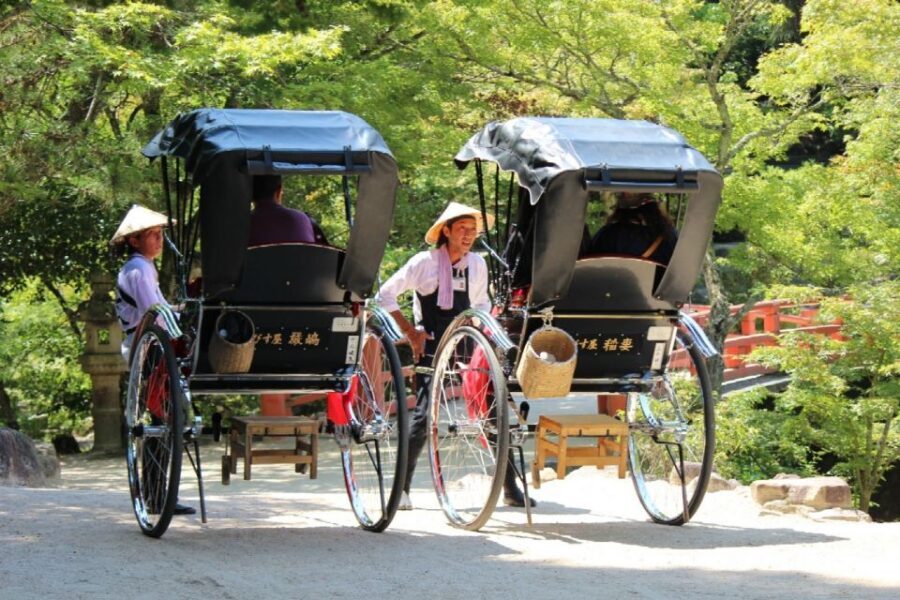
Miyajima is beautiful, but it’s also one of those islands where you can accidentally burn time just getting from one must-see spot to the next. A private rickshaw tour gives you something practical: you glide through the key areas while a local guide helps you read what you’re looking at.
What I like most is the pacing. You’re not rushing, and you’re not stuck standing in one place while the crowd moves around you. The ride format also makes photo stops feel natural—pause, look, shoot, then roll on. Guides such as Jose have a knack for making the storytelling fun, and people often appreciate that they also help with small “spot the view” moments you might not find alone.
You should still know the limits. This is a private rickshaw experience, not a public bus tour—so the cost is higher than self-guided strolling, and you’ll be working within rickshaw comfort and rules.
Meet-up outside the ferry: your first small win
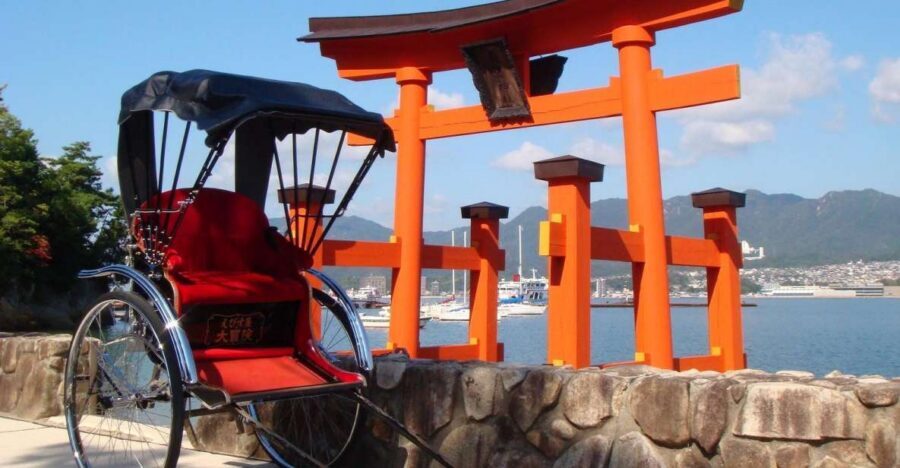
Your guide meets you just outside the Miyajima Ferry Terminal on Miyajima Island. After booking, you’ll get an email with a map and a photograph of the exact meeting spot, which is genuinely helpful on an island where signage and foot traffic can feel chaotic.
From there, the tour moves into the heart of Miyajima: charming streets, older townhouses, and the kind of lanes that make the island feel like more than one big shrine area. That matters because the most famous view—Itsukushima’s torii—can be crowded. Getting some of the character of the island first helps your day feel balanced, even if the main shrine area has lots of visitors.
Also, since entry fees aren’t included (more on that later), this tour helps you spend time where you’re meant to be, rather than burning energy on extra ticket lines.
You can also read our reviews of more private tours in Hiroshima


The floating torii gate: plan for high tide, then let the guide work magic
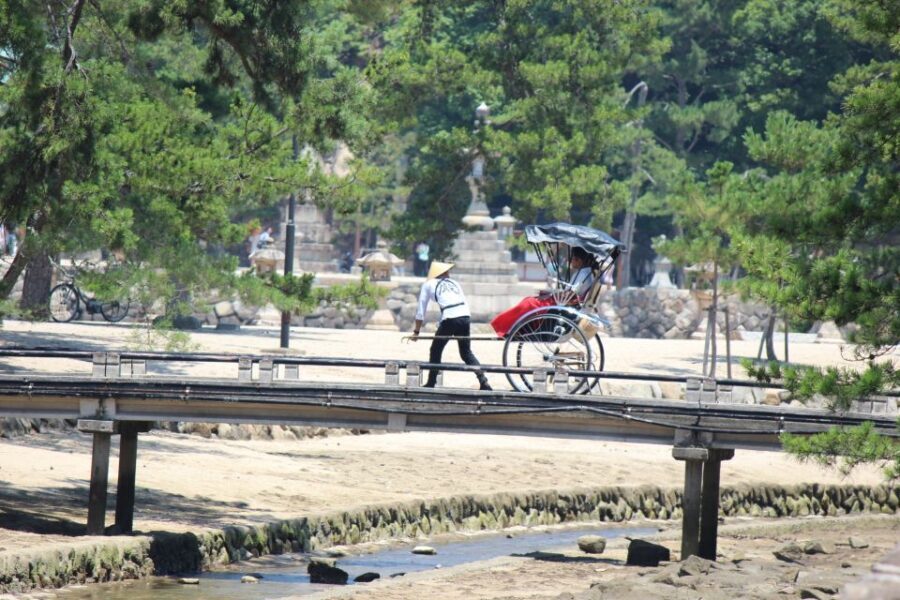
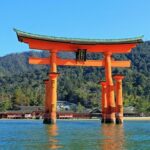
The big “wow” is the large orange torii gate in the water in front of Itsukushima Shrine—specifically when conditions bring out the floating look during high tide. Realistically, tides are the boss here. Your goal is to be at the right place at the right time, and the guide’s job is to keep your stops sensible around the schedule.
If you hit high tide, the effect feels almost unreal: the torii looks like it’s standing on the sea surface, with the shrine area visually tied to the water. If you don’t, you’ll still see a striking landmark and waterfront scenery, just with a different look.
Quick practical tip: bring a camera or phone you can hold comfortably while moving, and wear shoes that can handle stone paths. The tour is private, but you’ll still walk a bit around viewing spots, especially near the shrine approach and waterfront edges.
Town streets, an old shopping arcade, and waterfront views
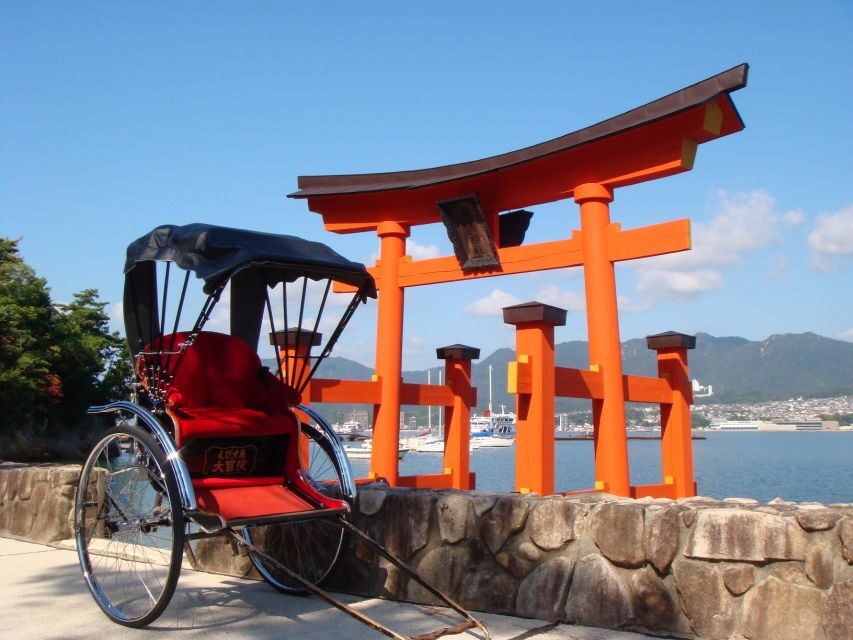
One of the smartest parts of this tour is that it doesn’t treat Miyajima like a single destination. You roll from the ferry area into the center of town, where you’ll notice older-style townhouses and the atmosphere of an old-fashioned shopping arcade.
This is where you get the island’s “in-between” energy: smaller storefronts, street textures, and the kind of quiet lanes that make Miyajima feel human-scale. Then you move toward the waterfront, where the scenery shifts from narrow streets to open sky and sea views—exactly what you need for a good rhythm between sightseeing and photos.
The rickshaw also means less fatigue. If you’re traveling with someone who tires faster (or you just don’t want to spend the day walking), this format is a clean solution. You get the core sights plus the scenery between them.
Itsukushima Shrine: where spirituality meets postcard-perfect framing
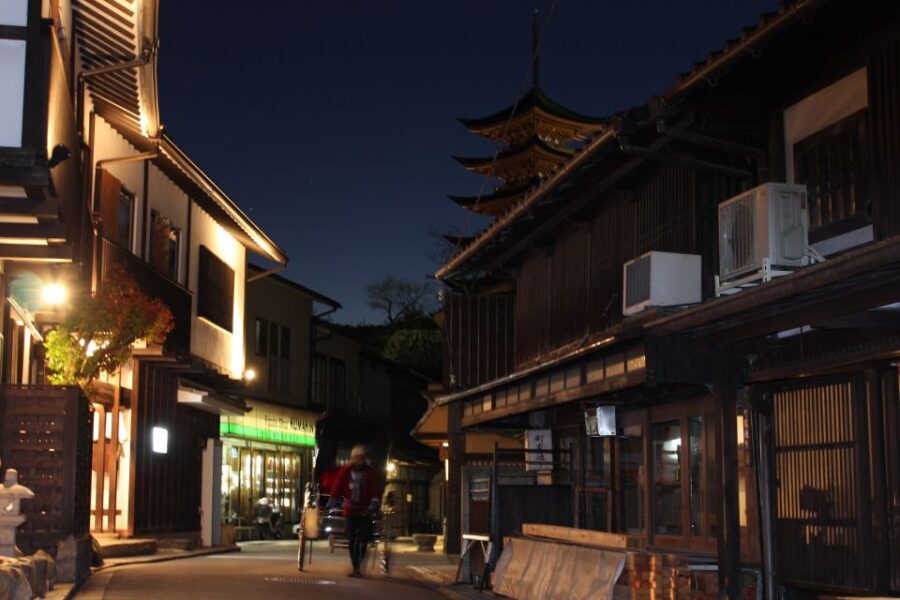
Itsukushima Shrine is the star, and the waterfront positioning is what makes it famous. The approach and surrounding views are designed to feel connected to the sea, which is why the torii gate view is so iconic. Even if you’ve seen pictures before, being there makes it click: you understand why the shrine area has that maritime atmosphere.
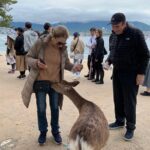
You’ll also likely meet Miyajima’s famous deer while you’re moving around. They’re part of the island’s daily life and can add a spontaneous, slightly goofy charm to your photo breaks—just be sure you keep your distance and don’t chase them for shots.
One more useful detail: temple and shrine entry fees aren’t included in your tour price. So if you’re planning to spend a lot of time once you arrive, budget a little extra cash for any admissions that apply to what you choose to see.
Daishoin Temple (70-minute option): a 1200-year stop with big viewpoints
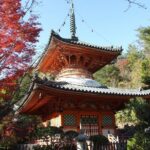
If you choose the 70-minute option, your tour includes Daishoin Temple, described as a 1200-year-old site and a so-called power spot—basically a place people visit to feel energized. The big practical reason to like this stop is the payoff: a phenomenal view over Miyajima from the temple.
This is a great match if you want a spiritual and scenic experience without taking the whole day. Daishoin also adds variety. Itsukushima is waterfront and icon-focused; Daishoin shifts you toward the island’s elevated perspective.
Potential drawback: temple areas often require more walking than the rickshaw alone, so wear comfortable footwear. Also remember that admission fees are not included, so plan for any entrance costs that might apply.

Senjokaku Shrine (130-minute option): Hideyoshi’s legacy and sea views
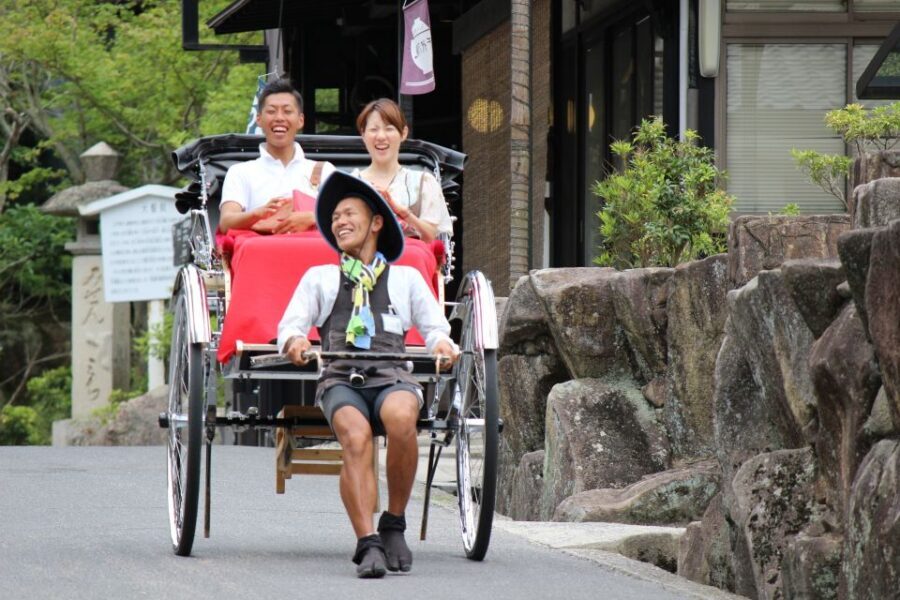
Go with the 130-minute option and you’ll add Senjokaku Shrine. This shrine was built under the order of former Shogun Toyotomi Hideyoshi, which gives the visit extra context beyond the visuals.
Senjokaku is also positioned for sea views, so it complements the torii area rather than repeating it. It’s a different angle of Miyajima’s relationship with water—more sweeping and atmospheric, depending on the weather.
One important cost detail: entry into Senjokaku Shrine is not included and costs 100¥. That’s not a deal-breaker, but it’s the kind of small fee that can surprise you if you assume everything is covered.
If you enjoy history with your scenery, this is the option that best connects both. If you’d rather keep things lighter and spend more time wandering the streets and arcade, the shorter option might feel better.
The 190-minute option: scenic routes, parks, seaside, and custom endings
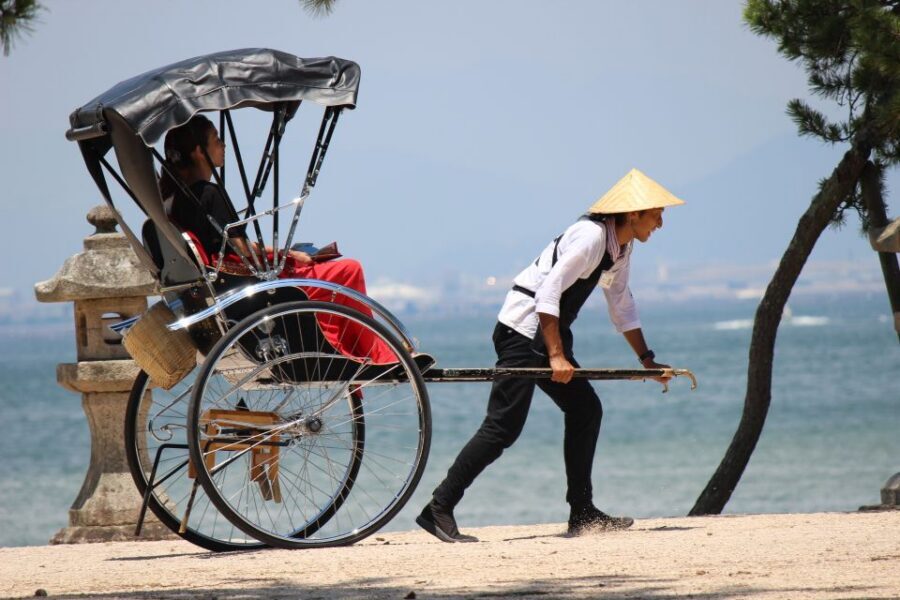
For the 190-minute option, you get more than the main shrine-and-temple highlights. In addition to the temples and shrines already mentioned, you’ll travel down special scenic routes that snake through parks and along the seaside.
This is the version that feels most like a “slow tour” of the island. Instead of compressing everything into tightly timed stops, you get a chance to see Miyajima’s variety—greens and open views—while still staying on a guide-led schedule.
A practical bonus: the tour is customizable, and you can choose your own endpoint. That’s useful if you want to pair the tour with something else you have planned on your ferry back, or if you’re hoping to end closer to where you want to browse or eat.
If you’re the type who likes fewer checkmarks and more motion, this longer option usually feels like the best value of the three.
Price and value: what $51 per person buys you
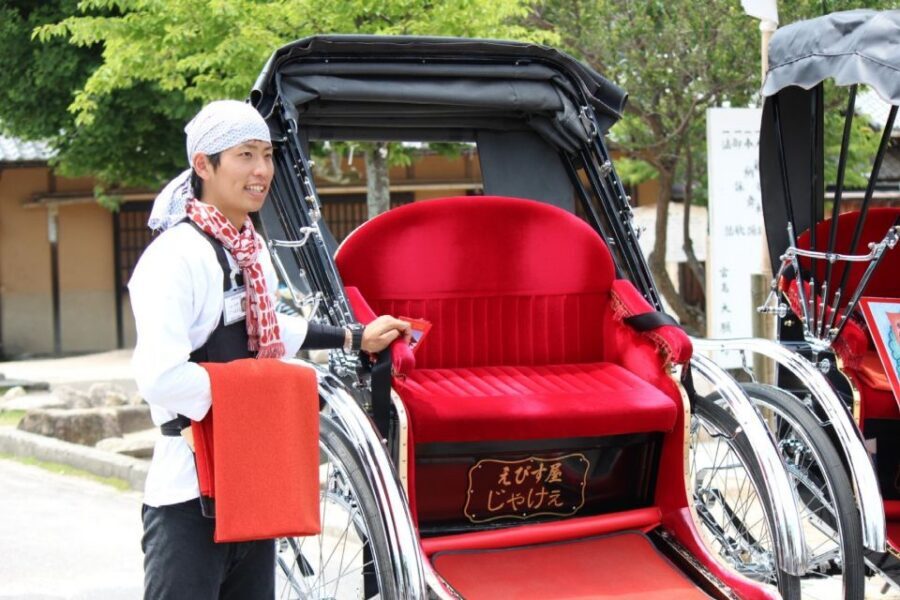
At around $51 per person, this private rickshaw tour isn’t the cheapest way to do Miyajima—but it can be excellent value when you compare what you get: private guiding, purposeful stops, and a pace that reduces wasted time.
You’re paying for three things:
- Time saved. The guide handles the routing logic so you don’t need to figure out the best order of sights.
- Meaning added. Guides such as Jose and Shinemasa are praised for making the island feel understandable, not just scenic. That matters if you want more than “see torii, take photo, move on.”
- Comfort and photo-ready pauses. The rickshaw format makes it easier to pause for views without burning energy.
Trade-off: admission fees to temples and shrines aren’t included. So budget a little extra for what you select—Senjokaku’s 100¥ is the one explicitly called out.
If you’re a solo traveler or a couple, private pricing can feel steep. If you’re traveling as a small group and you care about a smooth, guided day, it often becomes more reasonable.
Comfort, rules, and who should skip it
Before you fall in love with the idea, check the practical constraints.
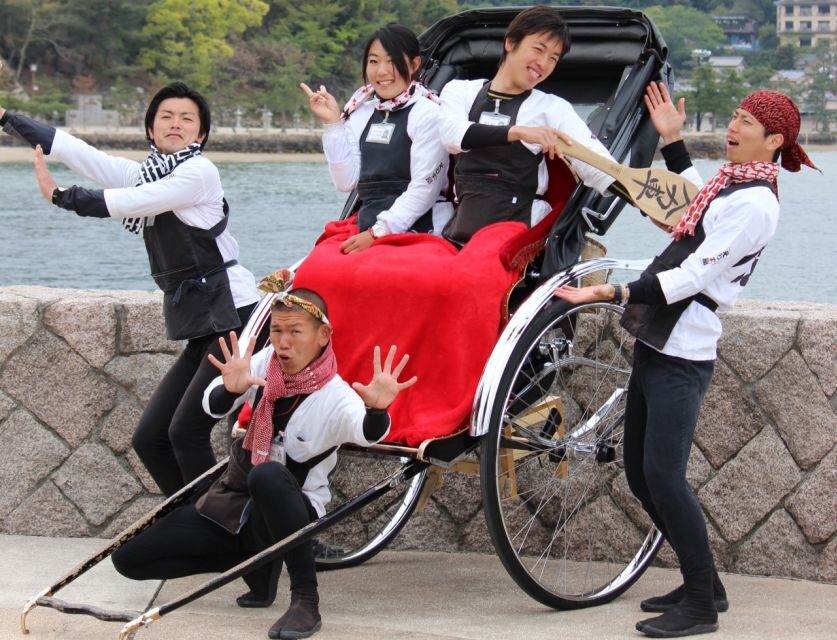
There’s a maximum of 2 adults per rickshaw, and rickshaw seats measure 74cm (29.1in) in width. The design can make side-by-side comfort uneven, so sometimes it’s better to book individual rickshaws for each passenger if you want more space.
If you’re bringing kids: children 6 years and under can ride for free if they sit on an adult’s lap (one child per adult, max two adults & two children per rickshaw). Kids 6 years or older need a booked seat as an adult.
Rules to know:
- Selfie sticks are not allowed.
- The tour isn’t recommended for expecting mothers in their first 16 weeks of pregnancy.
- It’s not suitable for people with back problems.
Language is another real-world factor: the guide is Japanese. Many guides manage with a mix of explanation and translation tools, but your comfort level will depend on how you communicate.
My booking advice: who this tour fits best
I’d book this private rickshaw experience if you want Miyajima to feel efficient and meaningful, not just crowded. It’s especially good for:
- couples or small groups who want a calmer pace than walking,
- anyone who wants Itsukushima’s torii moment plus optional temple stops,
- travelers who enjoy history and cultural context while they move.
It might be less ideal if you’re on a strict budget and you’re comfortable building a self-guided day around tides and admissions. Also, if you need lots of accessible seating comfort or have mobility or back concerns, you should think carefully before booking, since it’s not recommended for back problems and isn’t suited for early pregnancy.
FAQ
FAQ
Where is the meeting point for this private rickshaw tour?
Your guide will wait just outside the Miyajima Ferry Terminal on Miyajima Island at the scheduled time. After booking, you’ll receive an email with a map and photograph showing the exact meeting place.
How long is the tour?
The experience duration ranges from 45 to 190 minutes, depending on availability. The plan can include options around 70 minutes (Daishoin), 130 minutes (Senjokaku), and 190 minutes (adds scenic seaside/park routes).
Is this a private tour?
Yes. It’s a private group rickshaw tour.
What’s included in the price?
Included: a private rickshaw, a local guide, and a souvenir postcard and sticker.
Are temple and shrine admissions included?
No. Admission fees are not included. For example, entry to Senjokaku Shrine costs 100¥.
What language is the guide?
The live tour guide language is Japanese.
Are selfie sticks allowed?
No. Selfie sticks are not allowed.
How many adults can ride per rickshaw?
There is a maximum of 2 adults per rickshaw.
Can children ride for free?
Yes. Children 6 years and under can ride for free if they sit on an adult’s lap (one child per adult, max two adults and two children per rickshaw). If a child is 6 years or older, they need to book a seat as an adult.
Is the tour suitable during pregnancy or for back problems?
It’s not recommended for expecting mothers in their first 16 weeks of pregnancy and it’s not suitable for people with back problems.
What are the cancellation terms and payment options?
You can cancel up to 24 hours in advance for a full refund. You can also reserve now and pay later to keep your plans flexible.
Should I book this tour?
If you want Miyajima’s highlights handled for you—torii timing, waterfront views, and optional temples—this is a strong choice. If you’re comfortable self-guiding, watching tides yourself, and you don’t need a private pace, you may decide the extra cost isn’t worth it.