REVIEW · HIROSHIMA
Walking Through History: Hiroshima’s Path to Peace
Book on GetYourGuide →Operated by GhaniExplorer · Bookable on GetYourGuide
A bell can change how you remember. This two-hour walk turns the Hiroshima Peace Memorial Park into clear, human-scale stories from 1945 and beyond, with PhD-led guidance and real time to ask questions. I especially love the moment you pay tribute at the Cenotaph for A-bomb Victims, and I also love that you get to ring the Peace Bell as a symbol of hope. The only drawback: this is an emotional route, and people with heart problems may want to think twice.
You get a small group (up to 10), which matters when the subject matter is heavy and you want time to process. I like that the tour includes major memorial stops plus key context, so you’re not just walking past plaques hoping it makes sense. One more consideration: it’s weather-affected, so plan for sun or rain and wear shoes you can handle for a focused stroll.
You’ll focus on the core sites inside the peace park, including the UNESCO World Heritage–listed Atomic Bomb Dome, plus moving monuments like the Children’s Peace Monument and the Peace Memorial Museum stops built for meaning. If you’re the kind of traveler who prefers a guided “thread” through a difficult place, you’ll probably feel grateful you did it this way. If you just want casual sightseeing, this tour’s tone may feel more solemn than you expect.
In This Review
- Key things I’d plan around
- Starting at the Cenotaph: setting the tone in Hiroshima Peace Memorial Park
- Atomic Bomb Dome and Clock Tower of Peace: seeing the past without getting lost
- Ringing the Bell of Peace: the moment hope becomes physical
- Victim memorials you shouldn’t skip: Korean Atomic Bomb Victims Cenotaph and other tributes
- Children’s Peace Monument: Sadako Sasaki and the thousand paper cranes
- Hiroshima National Peace Memorial Hall and the Peace Memorial Museum: context you’ll use later
- Prayer Fountain, Gates of Peace, and the Dr. Marcel Junod and Norman Cousins memorials
- Price and what you get for $23 in two hours
- Who this walk is best for (and who should reconsider)
- Practical tips so the walk feels easier on you
- Should you book this Hiroshima Peace Memorial Park walking tour?
- FAQ
- How long is the Hiroshima walking tour?
- Where does the tour start?
- How much does it cost?
- Is it wheelchair accessible?
- What languages are the guides available in?
- Is there a way to avoid long lines?
- What should I bring, and what isn’t allowed?
Key things I’d plan around
- PhD scholar guide: English-language storytelling backed by academic rigor and respectful presentation.
- Peace Bell + paper-crane story: Hope isn’t an abstract idea here; it’s built into the route.
- Skip-the-ticket-line: You save time so the walking moments don’t feel rushed.
- Small group size (10 max): Better pacing and more room for questions and photos.
- Multiple victim memorials: You see both well-known and specific commemorations, including the Korean Atomic Bomb Victims Cenotaph.
- Museum context within a short walk: You get signposts before you go deeper on your own.
Starting at the Cenotaph: setting the tone in Hiroshima Peace Memorial Park
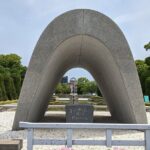
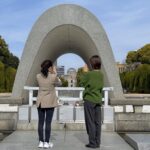
The tour begins at the Atomic Bomb Dome area, in front of the Cenotaph erected by volunteers of former executives and employees of Hiroshima Prefecture Chiho Lumber Co., Ltd. That detail matters because it frames the memorial as a community effort, not a solo monument planted in isolation. Before you move anywhere else, you’re guided to understand why this place was built and what it asks of you: attention, respect, and memory.
From the first stop, I like how the experience doesn’t rush. You’re not handed a checklist; you’re eased into the purpose of the park. Even if you’ve read about Hiroshima before, the guide’s framing helps you see the memorials as a map of grief, testimony, and long-term rebuilding.
You can also read our reviews of more walking tours in Hiroshima
Atomic Bomb Dome and Clock Tower of Peace: seeing the past without getting lost
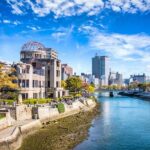
Next comes the Atomic Bomb Dome, one of Japan’s most recognizable images and a UNESCO World Heritage Site. The guide time here is brief, but it’s designed to give you orientation fast—what the building represents now, why it’s preserved, and how people understand it today.
You then move to the Clock Tower of Peace. It’s easy to treat that kind of landmark as scenery, but on this walk it’s handled as context: time, interruption, and the gap between what life was and what came after. The pace stays practical, so you’re not staring at monuments with no idea what you’re looking for.
If you’re traveling with mixed interests—say, one person wants history facts and another wants emotional meaning—this segment is a good compromise. It gives both: visuals you’ll remember and explanations you can carry forward.
Ringing the Bell of Peace: the moment hope becomes physical
At the Bell of Peace, Hiroshima, you get a short guided stop and the chance to ring the bell. It’s a simple action, but it changes the whole energy of the route—from witnessing to responding.
I like that the tour positions this not as a feel-good gimmick, but as a ritual of world peace. You’ll also hear connections to Hiroshima’s broader peace message, so the bell doesn’t feel like random tourist participation. Even if you’re not the type to join ceremonies, this is one of those moments where “doing” something tiny helps you remember something big.
Practical note: bring your patience and your calm. You’ll likely want a photo, but the guide’s tone encourages you to keep a respectful pace rather than rushing for shots.
Victim memorials you shouldn’t skip: Korean Atomic Bomb Victims Cenotaph and other tributes
A key part of this walk is that it doesn’t limit commemoration to a single narrative. You’ll visit the Korean Atomic Bomb Victims Cenotaph, and you’ll also stop at the Hiroshima Victims Memorial Cenotaph and other memorial points built into the park.
These are the parts that can feel easy to gloss over on a DIY visit, because they’re not always the loudest landmarks. On a guided walk, you get the why: who is being remembered, what those memorials are meant to correct or preserve in public memory, and how Hiroshima’s memorial culture includes people beyond the most famous names.
I’m glad the route includes multiple tributes like the Korean Atomic Bomb Victims Cenotaph. If you care about understanding history accurately, this is a strong way to avoid the “one-and-done” version that only covers what’s most prominent on postcards.
Children’s Peace Monument: Sadako Sasaki and the thousand paper cranes
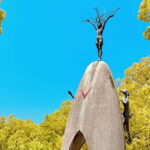
Next you’ll reach the Children’s Peace Monument, where the story of Sadako Sasaki and the thousand paper cranes is part of the guided experience. This section is often the emotional pivot of the tour because it shifts the story into something personal and symbolic—kids, survival, and a message that traveled far beyond one city.
What I appreciate is that the guide connects the symbol to meaning, not just the legend. The cranes become a language of endurance you can actually see in your mind: small pieces, repeated over time, turning grief into a form of hope.
If you’re traveling with kids, this is probably the most accessible segment. If you’re traveling alone, it’s still one of the most grounding stops—because it reminds you that the bombing’s aftermath wasn’t only about adults, governments, or battle timelines. It was about everyday lives that kept going, including children’s attempts to live with what happened.
You can also read our reviews of more historical tours in Hiroshima

Hiroshima National Peace Memorial Hall and the Peace Memorial Museum: context you’ll use later
The walk includes Hiroshima National Peace Memorial Hall and Hiroshima Peace Memorial Museum. With only two hours total, you might worry this will turn into a quick skim. Instead, the guiding here works like scaffolding: it helps you understand what you’re seeing and why the park includes each theme.
This is also where the route earns its value. Without a guide, you can read labels for a while and still miss the shape of the story. With a guide, you walk through the exhibits, artifacts, and survivor testimonies with a sense of sequence—why certain details matter and how they connect to the bigger arc of 1945 and Hiroshima’s recovery.
One smart strategy: if you have time in your schedule, do the Peace Memorial Museum before the walking route. That way, when the guide references points within the park, it feels like reinforcement rather than repetition. If you can’t manage both, don’t worry—you’ll still get the context you need for the memorials to make sense.
Prayer Fountain, Gates of Peace, and the Dr. Marcel Junod and Norman Cousins memorials
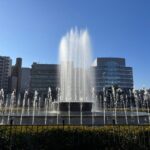
As you move toward the end, you’ll see the Prayer Fountain and the Gates of Peace, which serve as a kind of closing chapter. The tour’s final moments matter because they help you shift from sadness into intention—what peace work looks like after the headlines fade.
You’ll also encounter memorials tied to people connected to Hiroshima’s peace message, including the Dr. Marcel Junod Memorial and the Norman Cousins Memorial Monument. These stops add a broader lens, showing how testimony and advocacy traveled outward and how Hiroshima’s message became part of global conversations about humanity and war.
I like finishing at the Gates of Peace because it doesn’t feel like a hard stop. It feels like a transition: you leave the park with a clear impression of what the city wants the world to carry forward.
Price and what you get for $23 in two hours
At $23 per person for a two-hour, small-group, English-guided walk, this is solid value for Hiroshima’s Peace Memorial Park. The price covers a lot that’s hard to replicate well on your own in a short time: short guided stops at major monuments, a carefully structured narrative, and access that includes skipping the ticket line.
Also, the group size (limited to 10) changes the experience. In a place like this, you don’t want to feel like your questions are a nuisance. Multiple guides (such as Ghani, Sheraz, Shiraz, and Wajid in past bookings) have been praised for answering questions patiently and keeping a respectful tone, and the small format helps that happen.
You’re paying for more than movement—you’re paying for clarity. For first time visitors, that’s worth a lot because the park can be overwhelming without a thread.
Who this walk is best for (and who should reconsider)
This tour is a strong fit if you:
- Want a focused, two-hour orientation through Hiroshima’s peace sites
- Appreciate a guide who can handle difficult history respectfully
- Like the idea of hands-on symbolism like ringing the Peace Bell
- Travel with people who might need both meaning and facts
You should reconsider if:
- You have heart problems. The tour is explicitly noted as not suitable for people with heart problems.
If you like to keep things light and casual, this isn’t the route for that mood. It’s reflective and serious by design.
Practical tips so the walk feels easier on you
The experience is short, but it’s still a walking route through an outdoor memorial area.
Bring:
- Comfortable shoes
- Water
- Sunscreen and a hat
- A camera if you want photos, though you’ll want to respect quiet moments
Wear weather-appropriate clothing. If rain hits, you’re still going to walk, and you’ll likely appreciate having a plan for how you’ll stay comfortable.
Also, note the rules: smoking isn’t allowed. Simple, but it helps keep the atmosphere respectful.
Should you book this Hiroshima Peace Memorial Park walking tour?
If your goal is to understand Hiroshima without turning it into a hurried photo stop, I’d book this. The mix of major landmarks (Atomic Bomb Dome, Cenotaph, Peace Bell) and the specific memorials (including the Korean Atomic Bomb Victims Cenotaph), plus the Sadako Sasaki story, gives you both recognition and context in just two hours.
I’d especially choose it on an arrival day or early in your Hiroshima trip. It helps you get your bearings fast so later museum time—or independent wandering—feels connected instead of random.
If you prefer silent self-guided visits and you already know the details you want, you might feel you could do it alone. But for most travelers, the guided thread is the difference between seeing memorials and truly understanding them.
FAQ
How long is the Hiroshima walking tour?
It lasts 2 hours.
Where does the tour start?
The meeting point is the Atomic Bomb Dome in front of the Cenotaph erected by volunteers of Hiroshima Prefecture Chiho Lumber Co., Ltd.
How much does it cost?
The price is $23 per person.
Is it wheelchair accessible?
Yes, it’s wheelchair accessible.
What languages are the guides available in?
The live tour guide offers English, Urdu, and Hindi.
Is there a way to avoid long lines?
Yes, it includes skipping the ticket line.
What should I bring, and what isn’t allowed?
Bring comfortable walking shoes, a hat, camera, sunscreen, and water. Smoking isn’t allowed.