REVIEW · HIROSHIMA
Hiroshima and Miyajima by Bike and Boat
Book on Viator →Operated by In Kansai Experiences · Bookable on Viator
Hiroshima rolls by on two wheels. You’ll cover real ground fast, with a guide helping the day make sense through both WWII sites and Miyajima’s shrine world, not just photo stops. I love the small-group size (max eight), because the ride feels calm and the explanations can land.
Next up, I love the included lunch and the way the route mixes atmosphere with food—Hiroshima-style flavors and island fare show up along the way. One consideration: this is a full, packed 7 to 8 hour day, so if you’re hoping to add extra museums or long breaks on your own, you’ll need to manage expectations.
In This Review
- Key things that make this bike-and-boat day work
- Hiroshima by bike feels faster than walking
- How the day’s 7–8 hours stay organized (even when it’s hot)
- Stop 1: Cycling through Hiroshima’s rivers, parks, and neighborhoods
- Stop 2–3: Peace Memorial Park and the Cenotaph moment
- Stop 4: Hiroshima Castle’s restored walls and feudal contrast
- Stop 5: JR ferry to Miyajima (fare included)
- Stop 6: Exploring Miyajima streets and local pace
- Stop 7: Itsukushima Shrine, orange views, and a local sit-down lunch
- Stop 8: Returning by ferry and train, then cycling back with recommendations
- Guides make or break this tour, and this one gets it right often
- Value check: what you’re really paying for
- Who should book Hiroshima and Miyajima by Bike and Boat
- Who should think twice
- Should you book this tour?
- FAQ
- What time does the tour start, and how long is it?
- How many people are in the group?
- What’s included in the price?
- Is lunch included, and are there vegetarian options?
- Do you take a ferry to Miyajima?
- Which Hiroshima stops are part of the tour?
- Is the Itsukushima Shrine visit included?
- What if weather is bad?
Key things that make this bike-and-boat day work
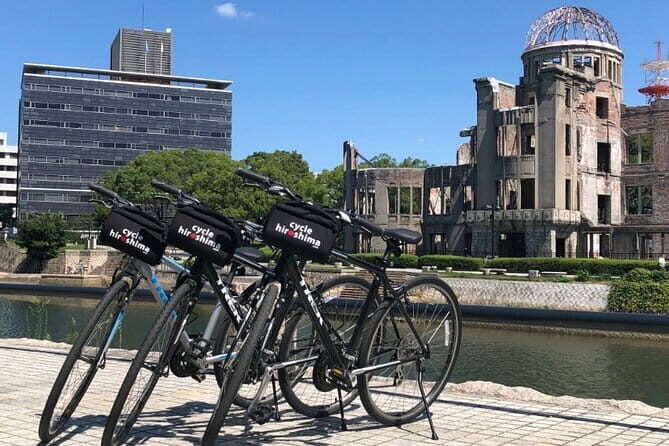
- Max eight people means you don’t get lost in a crowd, even when the itinerary changes with real-life timing
- Bicycle + transit included (bike, train, ferry) so you spend your energy on the sights, not logistics
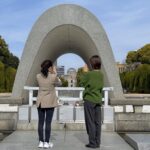
- Peace Park commentary is handled with care, with time set aside at the Cenotaph for a quieter moment
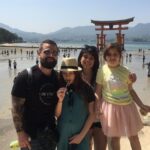
- Miyajima time for deer and Itsukushima Shrine gives you that classic orange-gate viewpoint
- Lunch is built in with vegetarian options available, so you don’t hunt for food between stops
Hiroshima by bike feels faster than walking
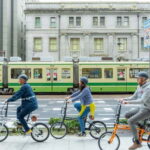
Cycling around Hiroshima is a smart move because the city is spread out enough that you’d waste time hopping between “must-sees” on foot. On this tour, you get that easy momentum: riverside stretches, parks, and neighborhood lanes all roll past at a human pace.
The feel is part active sightseeing, part guided culture lesson. You’re not just moving—you’re getting the story behind what you’re seeing, from the war’s aftermath to the feudal symbolism of the castle.
You can also read our reviews of more boat tours in Hiroshima
How the day’s 7–8 hours stay organized (even when it’s hot)
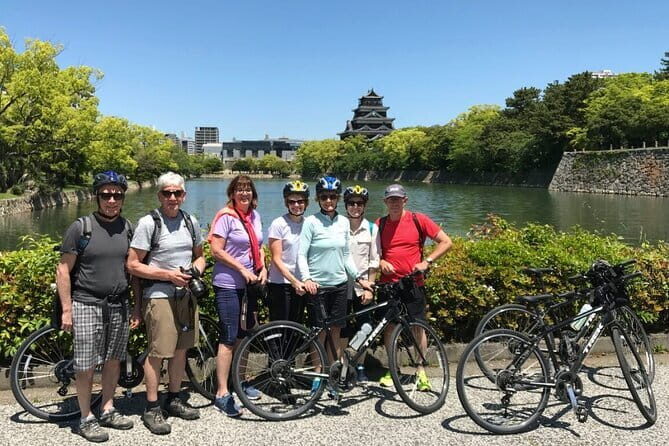
The tour runs about 7 to 8 hours, starting at 9:30 am at Cycle Hiroshima (4-chōme-5-4 Ōtemachi, Naka Ward). That timing matters because it gives you daylight for the Peace sites and Hiroshima Castle, then still leaves room for ferry time and shrine views later.
The rhythm is also designed to reduce stress: short blocks of cycling, then guided time at major landmarks. Guides on this route also tend to manage pace well when it’s warm—slow down, take breaks, and keep you moving without turning it into a grind.
One practical note: the itinerary includes a lot of “key moments,” so you should treat the day as scheduled. If you want to add extra stops on your own, you may feel rushed at the end.
Stop 1: Cycling through Hiroshima’s rivers, parks, and neighborhoods
The first hour is all about getting your bearings. You’ll pedal along rivers, through parks, and across neighborhoods while your guide sets the context for the day.
This opening stage is more than warm-up. It’s where you learn what Hiroshima looks like beyond the headline names, so the Peace sites later feel connected rather than random.
Stop 2–3: Peace Memorial Park and the Cenotaph moment
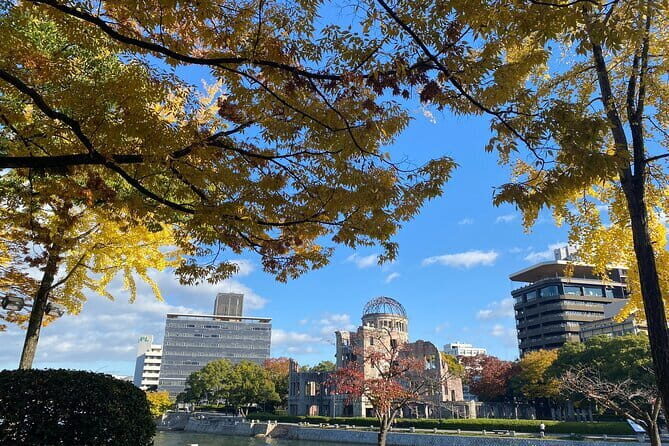
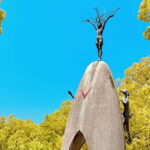
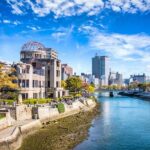
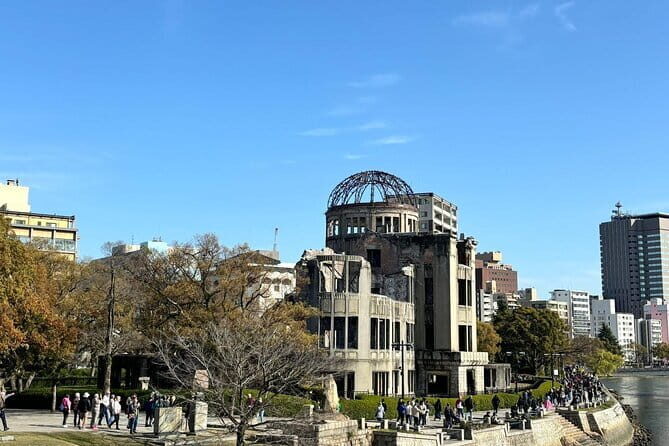
After that city ride, the tour shifts gears to the Hiroshima Peace Memorial Park area. You’ll spend about an hour here, and the focus is commentary that’s meant to be sensitive and clear—the kind of explanation that helps you understand what you’re looking at without turning it into trivia.
Then there’s a shorter, quieter stop at the Peace City Monument Cenotaph for the Atomic Bomb Victims (about 15 minutes). That timeframe is intentional: you’re not rushed through the symbolism, and you get a pause that feels respectful.
If you’re sensitive to heavy topics, plan on staying present. This part isn’t built for multitasking; it’s built for attention.
Stop 4: Hiroshima Castle’s restored walls and feudal contrast
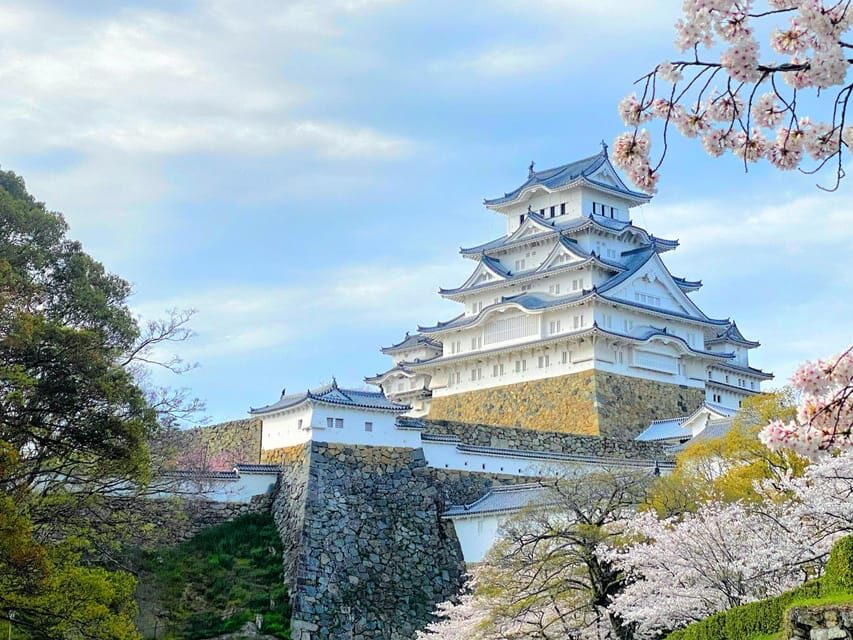
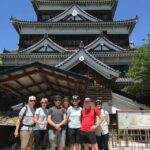
Next, you’ll head to Hiroshima Castle for about 30 minutes. It’s a compact visit, but it gives you a strong contrast to the Peace sites—this is where the city’s earlier identity and role as a castle town comes into view.
You’ll be able to walk the moats and grounds, take the classic photo at the main tower area, and connect the “then” and “now” themes of the day. Don’t expect a long deep museum-style visit here; the castle stop works as a way to broaden your understanding before you switch to the island.
You can also read our reviews of more cycling tours in Hiroshima

Stop 5: JR ferry to Miyajima (fare included)
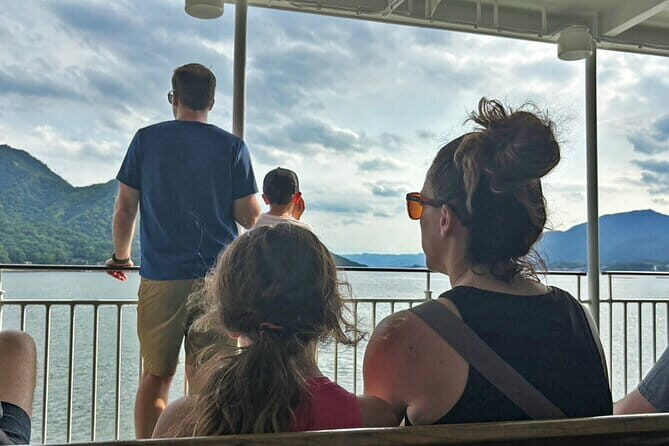
Then you’re off to Miyajima via the JR Miyajima Ferry. The ferry ride is included, and it’s one of those simple, effective travel moments that changes the mood instantly.
Your guide also helps you transition—so you’re not scrambling to find the right boarding rhythm or figuring out what comes next. For many people, this ferry segment is a big part of why the tour feels like a true day trip instead of a checklist.
Stop 6: Exploring Miyajima streets and local pace
Once on the island, you’ll spend about 1.5 hours exploring Miyajima with your guide navigating the streets. This is where the island vibe takes over: quieter energy, shrine-town details, and that famous island rhythm that doesn’t feel like Hiroshima’s city tempo.
You’ll also have time to greet the local deer. It sounds simple, but it’s often the moment people remember most because it turns the day from “history lesson” into living place.
Just keep your eyes up and your footing steady. Island street areas can be busy near key sights, and you’ll want to stay aware while you’re stopping for photos.
Stop 7: Itsukushima Shrine, orange views, and a local sit-down lunch
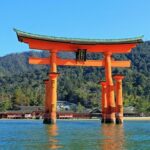
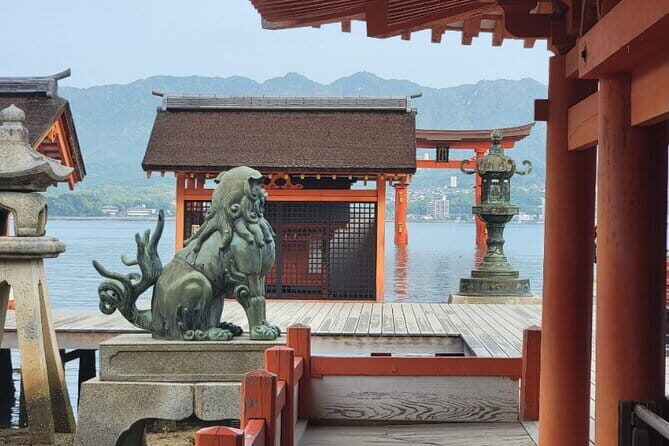
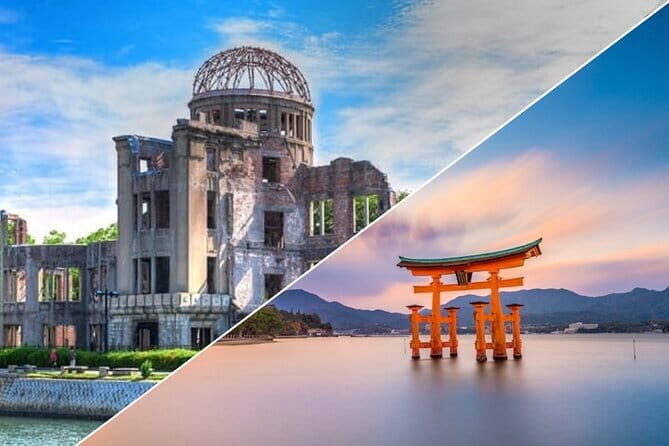
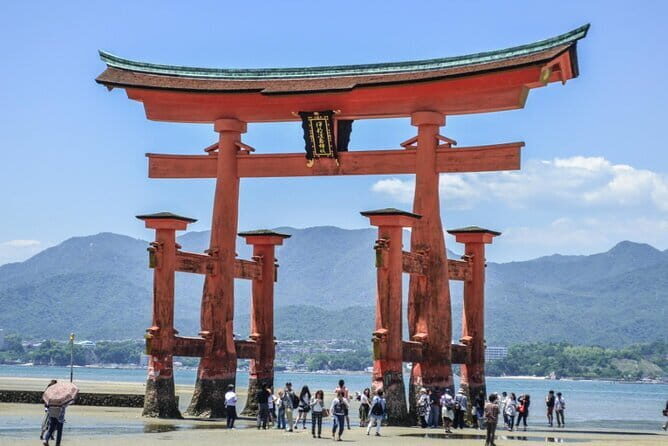
The highlight on the island is your time around Itsukushima Shrine (about 1.5 hours). You’ll navigate the monuments and landmarks surrounding the shrine, then take photos and enjoy the classic scenery people come for—the iconic orange structures against greenery and water views.
One of the best parts here is the combination of movement and pause. You get guidance to help you understand what you’re seeing, and you’re not just standing in one place to wait for the perfect shot.
Lunch is included at a nearby eatery. Guides handle this as a real break, not an afterthought. You can expect regional Hiroshima flavors—Hiroshima-style okonomiyaki and local ramen-type meals have shown up in the day’s food choices, and vegetarian options are available. If you have dietary restrictions beyond vegetarian, you’ll want to message ahead so the lunch plan fits.
Stop 8: Returning by ferry and train, then cycling back with recommendations
After Miyajima, you retrace your route by ferry and train, then bike back to the start area. The cycle portion back is about 20 minutes, and it’s also your wrap-up moment—collect luggage you stored, then get recommendations for onward sightseeing.
That final handoff can be more useful than it sounds. You’re ending a long day with a local guide’s practical suggestions, so you’re not stuck Googling at the exact time you’d rather be enjoying the last evening.
Guides make or break this tour, and this one gets it right often
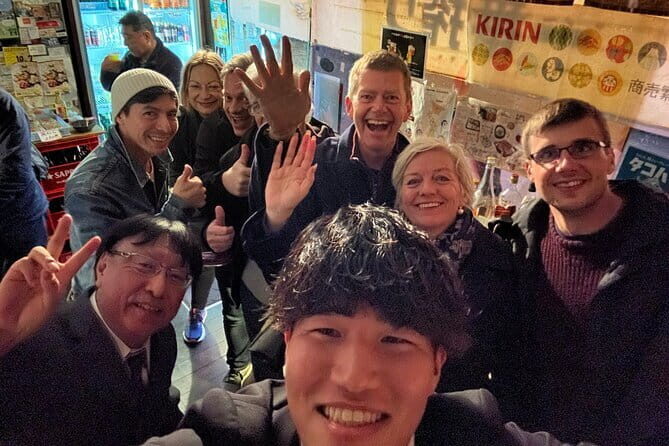
On a day this full, the guide’s tone matters. Across guide styles you’ll see on this route—names like Aimee, Alex, Ishan, Sage, James, and Melissa—the common theme is clarity paired with the right level of respect, especially around Hiroshima’s WWII history.
Many people also specifically mention humor used in the right places. That balance is important here. You want the day to feel human, not stiff, but you also don’t want jokes to land in the wrong moments.
Also pay attention to pacing and bike comfort. Several people mention guides fitting bikes properly for different heights and keeping the group moving at a pace everyone can handle.
Value check: what you’re really paying for
At $142.05 per person, this tour isn’t trying to be the cheapest option. What makes it feel fair is what you don’t have to organize yourself:
- Bicycle use for the city riding
- Train and ferry rides included
- Lunch included, with vegetarian options
- All fees and taxes handled
When transportation and entry-related costs are bundled, the effective price per sight day becomes more reasonable—especially on a full-day route that includes both Hiroshima and Miyajima.
You’re also paying for guide time across multiple major stops, plus the convenience of having the route handled in a logical sequence. That’s the kind of value that shows up on days when you’d rather not stress about timing.
Who should book Hiroshima and Miyajima by Bike and Boat
This tour is a great fit if you want:
- Active sightseeing without turning the day into a workout
- A guided approach to both Peace sites and shrine culture
- A single-day plan that covers Hiroshima + Miyajima without independent transit planning
It’s also ideal if you like small-group dynamics. With up to eight people, the experience tends to feel personal enough to ask questions and adjust to the group’s needs.
Who should think twice
If you’re the kind of person who wants lots of free roaming time, this may feel tight. The schedule centers on major sites, and the day is long enough that you shouldn’t count on extra museum stops or long, unscheduled detours.
Also, if you’re uncomfortable with cycling and short transitions between biking, ferry, and walking segments, you might prefer something less movement-heavy. The listing notes that most people can participate, but your comfort level matters.
Should you book this tour?
Yes, if you want a guided day that connects the places—Hiroshima’s Peace Memorial Park and Cenotaph area, Hiroshima Castle, then Miyajima’s Itsukushima Shrine with that classic orange-and-water imagery. The small-group size, included transit, and included lunch make it practical, and the guide-led tone around WWII history is a strong selling point.
I’d book it sooner rather than later if you’re staying central and want a one-stop plan for this region. Just go in knowing it’s a full day, and bring the mindset that the schedule is part of the value.
FAQ
What time does the tour start, and how long is it?
It starts at 9:30 am and runs about 7 to 8 hours.
How many people are in the group?
The group size is maximum eight travelers.
What’s included in the price?
The price includes bicycle use, train and ferry rides, and all fees and taxes, plus an included lunch.
Is lunch included, and are there vegetarian options?
Yes. Lunch is included and vegetarian options are available. For other dietary restrictions, you’ll need to contact the operator before the tour.
Do you take a ferry to Miyajima?
Yes. You ride the JR Miyajima Ferry, and the ferry fare is included.
Which Hiroshima stops are part of the tour?
You’ll cycle around Hiroshima, then visit Hiroshima Peace Memorial Park, the Cenotaph for the Atomic Bomb Victims, and Hiroshima Castle.
Is the Itsukushima Shrine visit included?
Yes. You’ll spend time around Itsukushima Shrine, and lunch is included at a nearby eatery.
What if weather is bad?
This experience requires good weather. If it’s canceled due to poor weather, you’ll be offered a different date or a full refund. There is also free cancellation up to 24 hours in advance for a full refund.