REVIEW · TOKYO
Asakusa: 1400-year history exploration
Book on Viator →Operated by Arumachi · Bookable on Viator
Asakusa hits you fast. In one afternoon, you’ll trace the Sumida River roots of the neighborhood and then move straight through the sights that made Asakusa a Tokyo anchor for 1,400 years. I like how the tour balances major landmarks with street-level Tokyo life, and I especially like that you get included snack tastings while your guide spots the details you’d otherwise miss. One thing to consider: it’s popular and often loud, so you’ll want to stay near your guide if you want the audio to land.
This is also a tour that asks you to walk a real chunk of Asakusa. If you hate crowds, or you want a quick-hit photos-only loop, the pacing may feel a little heavy—but if you’re in the mood for context, it’s a strong way to make the temples and streets make sense.
In This Review
- Key highlights you’ll notice right away
- Your 3.5-hour plan: what this Asakusa walk actually delivers
- From Azumabashi to Tokyo Skytree: starting with the Sumida River context
- Asakusa Culture Tourist Information Center: getting your bearings fast
- Kaminarimon and Nakamise-dori: the approach to Sensō-ji you should do slowly
- Hōzōmon and the main Sensō-ji stretch: how the complex reveals itself
- Asakusa Shrine: the unusual neighbor that teaches you Tokyo’s religion mix
- Denbōin Street and Rokku: the street you remember after the temple photos
- Price, pacing, and crowd-proofing: is it worth $91.17?
- Who should book this Asakusa tour, and who should skip it
- Should you book this 1400-year Asakusa exploration?
- FAQ
- How long is the Asakusa 1400-year history exploration tour?
- What time does the tour start, and where do I meet?
- What is the group size?
- Is there an English-speaking guide and do I get help hearing them?
- What snacks are included during the tour?
- Are meals and drinks included?
- What sights do we visit?
- How much walking is involved?
- Does the tour run in all weather conditions?
- Can I book last-minute, and can I cancel for a refund?
- FAQ
- How long is the Asakusa 1400-year history exploration tour?
- What time does the tour start, and where do I meet?
- What is the group size?
- Is there an English-speaking guide and do I get help hearing them?
- What snacks are included during the tour?
- Are meals and drinks included?
- What sights do we visit?
- How much walking is involved?
- Does the tour run in all weather conditions?
- Can I book last-minute, and can I cancel for a refund?
Key highlights you’ll notice right away
- Small group of up to 8 people, which keeps questions flowing and the pace human
- Earphone guide system, so you can hear clearly even when the Nakamise crowd thickens
- Snacks included, including melon pan and rice-based sweets as you walk the approach to Senso-ji
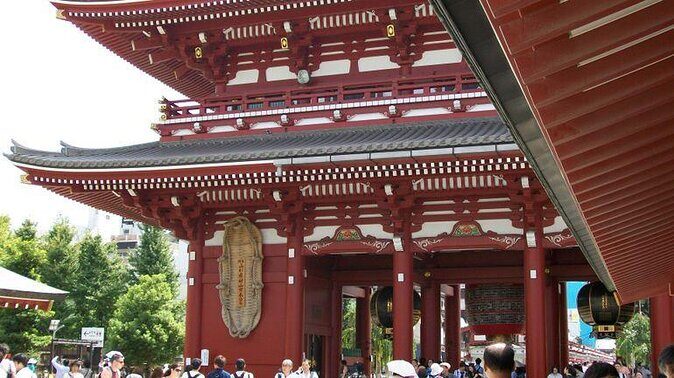
- Sensō-ji’s gates in order, from Kaminarimon to Hōzōmon, so you understand how the complex unfolds
- A move into Rokku (Denbōin Street), where you get a Meiji-to-now feel and practical food and shop advice
Your 3.5-hour plan: what this Asakusa walk actually delivers
This half-day experience is built like a story you can walk. You start by the Sumida River, then head toward the gates that frame the Sensō-ji complex, and you finish by ducking into Asakusa’s more old-school entertainment lanes in the Rokku district. The format matters because it’s not only about seeing famous buildings. It’s about understanding why this neighborhood grew into what it is today—religion, commerce, and everyday Tokyo living side by side.
The included snack breaks also do real work. They aren’t random freebies; they give you a chance to try typical Asakusa treats as your guide explains what you’re looking at and where the food culture fits in. And because the tour is small, you’re more likely to get direct answers instead of listening from the back row.
Just remember the “3 hours 30 minutes” isn’t a drive-by. You’re walking with a moderate amount of movement, and Asakusa can get packed. Comfortable shoes help a lot.
You can also read our reviews of more historical tours in Tokyo
From Azumabashi to Tokyo Skytree: starting with the Sumida River context
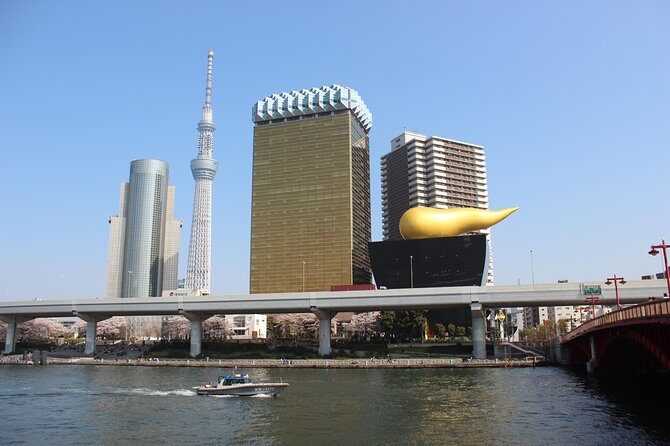
You begin near Asakusa’s Azumabashi bridge area, where the tour starts tying modern Tokyo landmarks to how this district developed. This is a smart first move: it gives you a mental map before you hit temple gates and shopping streets.
Early on, you also get big visual cues in one sweep:
- Tokyo Skytree shows up in the skyline view
- The Asahi Breweries headquarters area comes into view, including its famous golden flame-style feature
That “today-meets-history” opening sets the tone for the rest of the afternoon. You’re not just collecting photos—you’re learning how Asakusa evolved while Tokyo modernized around it.
Asakusa Culture Tourist Information Center: getting your bearings fast
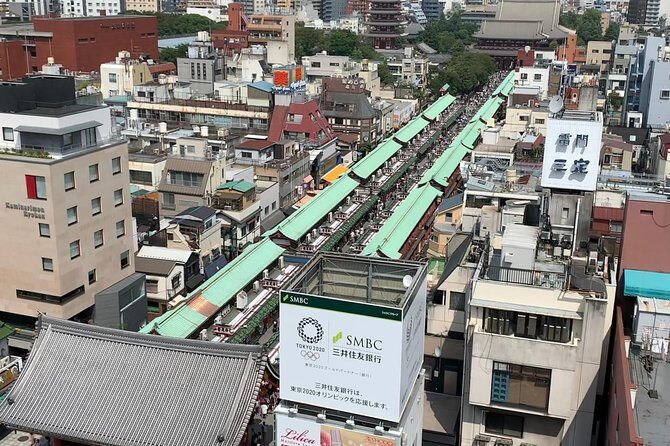
Next you stroll to the Asakusa Culture Tourist Information Center, described as one of Asakusa’s newer attractions with an 8-story design. Even if you only spend part of your time here, the value is practical: it helps you orient yourself in a neighborhood that can feel maze-like once you’re on foot.
This stop also works as a pacing reset. After the river-side view, you’re switching from “big landscape” to “what should I do with my time once I’m among the streets.” A good guide uses this moment to set expectations for what’s coming next, so you’re not overwhelmed once the crowds arrive.
Kaminarimon and Nakamise-dori: the approach to Sensō-ji you should do slowly
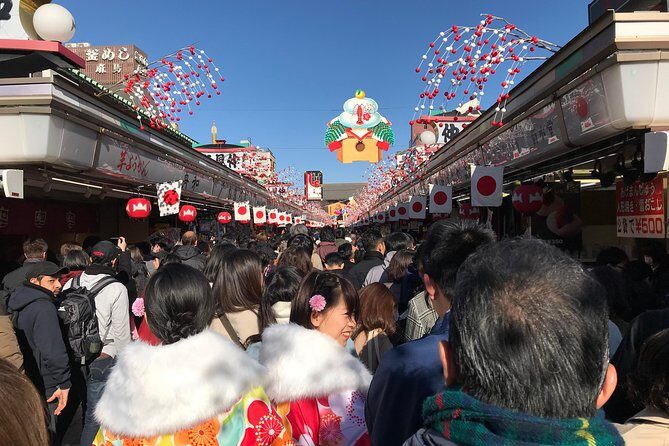
You then reach Kaminarimon Gate, the outer of Sensō-ji’s main entrance gates. The huge red lantern and the statues are the kind of visual that even first-time visitors instantly recognize. The point of stopping here isn’t only to stare—it’s to learn how the gate functions like a threshold. You’re crossing from everyday shopping-street energy into a religious centerpiece that has shaped Tokyo for centuries.
From there, you walk Nakamise-dori, a roughly 250-meter approach lined with souvenir shops and food stalls. This is where most people rush, but your guide makes the difference by pointing out what to buy and where to find the classic items. If you’re trying to bring home gifts, this is the area where you’ll spot the most recognizable Asakusa-style goods.
And yes, you also get to taste. The tour includes a selection of Japanese sweet snacks such as:
- melon pan
- rice dumpling
- rice cracker
- sweet puffed rice
My practical advice: try your snack as you walk a short distance, then pause. It’s easier to enjoy the flavors when you’re not swallowed by the busiest flow of people.
Hōzōmon and the main Sensō-ji stretch: how the complex reveals itself
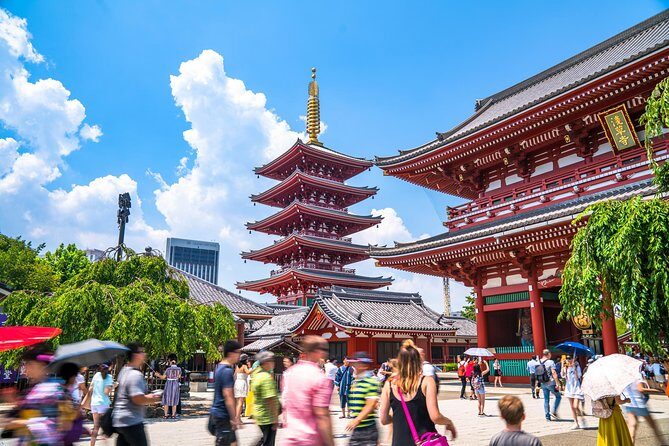
Past Nakamise, the tour reaches the Hōzōmon (Treasure-House Gate), the inner gate leading deeper toward Sensō-ji’s main area. The reason this stop matters is sequence. By seeing the gates in order, you start to understand the layout as a process—outer entry, then transition, then the heart of the temple grounds.
Once inside the main Sensō-ji area, you spend about 45 minutes moving through the parts between Hōzōmon and the main hall. One standout detail is the Five-storied pagoda, noted as the second-highest pagoda in Japan at 53 meters, built in 942. The tour also highlights that it holds Buddha’s ashes, which adds weight to what you see—this isn’t just architecture, it’s a vessel for belief and memory.
You’ll also hear the story of Sensō-ji’s origins, tied to two fisherman brothers. That founding tale is one of those lessons that makes the whole neighborhood feel less random. When you connect the temple’s beginnings to how Asakusa grew, you’ll notice the street energy makes sense rather than feeling like noise.






Asakusa Shrine: the unusual neighbor that teaches you Tokyo’s religion mix
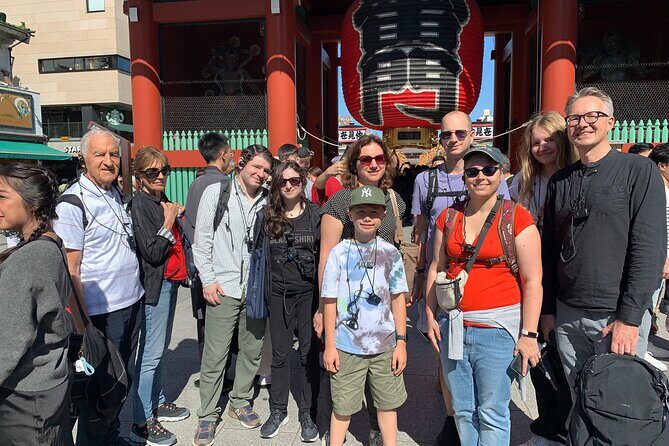
After Sensō-ji, you move to Asakusa Shrine, located on the same broader grounds where Buddhism and Shinto coexist. That shared space is exactly the kind of detail that surprises people who expect strict separation. The shrine section is shorter—about 15 minutes—but it gives you an important cultural lens.
If you’ve never thought about how Japan practices religion day to day, this is a good place to get a basic framework. Even a quick stop here helps you understand why rituals, symbols, and architecture don’t always follow the categories you might expect.
Denbōin Street and Rokku: the street you remember after the temple photos
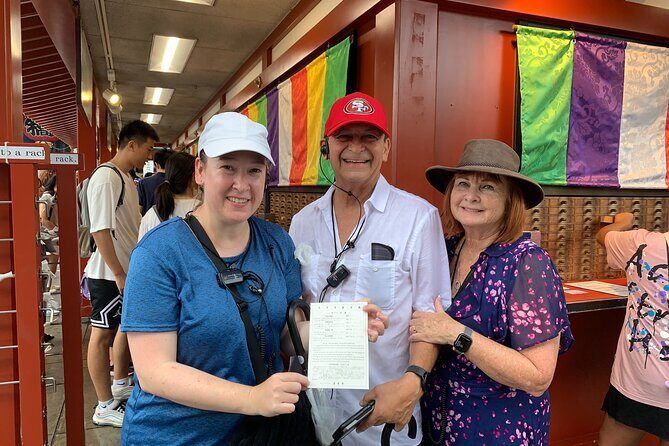
Then the tour changes gears. You head into Denbōin Street, stepping into the Rokku district, described as Asakusa’s traditional entertainment area. This is where the neighborhood feels more “lived-in” than staged. The vibe is lively—busy at times, but not chaotic—so it’s a great contrast to the temple crowd.
You’ll walk through a sense of time travel, with the tour framing it as moving from the Meiji period into the present day. The practical payoff is your guide’s local advice. You’re not just hearing history; you’re also getting help with where to eat, drink, and shop in Rokku.
If you like to end a walking tour with a place you can actually return to, this part matters. It turns “I saw Asakusa” into “I know what to do in Asakusa next.”
Price, pacing, and crowd-proofing: is it worth $91.17?
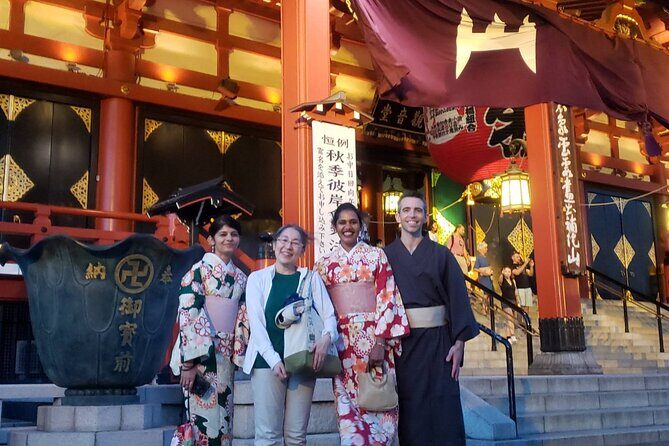
At $91.17 per person, the price can look steep until you count what’s included. You’re getting:
- an English-speaking guide
- an earphone guide system for clearer listening
- selection of Japanese sweet snacks
- guided time across a set of major landmarks plus Rokku street area
What you don’t get is just as important: no hotel pickup/drop-off, and food and drinks aren’t included except for the specified snacks. Bottled water is recommended, and vending machines are available.
Value-wise, this tour works best when you want two things at once: context and convenience. The guide is the translator for the temple layout, the gate sequence, and the local neighborhood logic. And because the group max is 8 people, the experience stays interactive enough to feel worth paying for instead of feeling like a walking lecture.
As for pacing, you’ll cover multiple stops over about 3 hours 30 minutes. Some people prefer faster loops, especially if they’re temple-first and snack-second. If that’s you, choose this tour when you can commit your whole afternoon to it, not when you’re trying to fit it between other must-dos.
Crowd-proofing tips that help:
- Stay close to the guide when the Nakamise lanes get packed.
- If the sound system feels weak, it’s usually because you’ve drifted away from the group—so adjust your position early.
- Wear comfortable shoes. Asakusa’s streets are not built for sneakers with worn-out soles.
Who should book this Asakusa tour, and who should skip it
Book it if you want a guided walk that connects big sights to street culture. This is ideal for first-time visitors who feel intimidated by Tokyo’s scale, and for people who like asking questions. It’s also a good fit for families who can handle moderate walking and prefer a structured route instead of wandering temple-to-temple.
Skip it if you need a minimalist, low-crowd, low-walking experience. Asakusa is popular, and this is a walking tour through both religious and shopping streets, plus Rokku.
One more tip: since this tour has featured many different English-speaking guides (names you might see include Amy, Emiko, Sachi, Aki, Yasu, Taka, and Yoko), ask yourself what style you like. If you want lots of story detail and you enjoy learning, you’ll probably love the flow. If you only want quick facts, you may find some sections longer than you expect.
Should you book this 1400-year Asakusa exploration?
If your goal is to understand Asakusa instead of just passing through it, I’d book it. The combination of Sensō-ji’s gate sequence, temple-and-shrine context, included tastings, and a finish in Rokku (Denbōin Street) gives you a full afternoon that feels more like a local orientation than a checklist.
But go in with the right mindset. This isn’t a 30-minute highlight reel. It’s a guided story walk that’s best when you’re ready to slow down, listen, and let the neighborhood explain itself.
FAQ
How long is the Asakusa 1400-year history exploration tour?
It runs for about 3 hours 30 minutes.
What time does the tour start, and where do I meet?
The start time is 1:30 pm. The meeting point is Burger King Asakusa Azumabashi (Tokyo, Taito City, Kaminarimon, 2-chōme, Cross Building Royal Palace). The tour ends back at the meeting point.
What is the group size?
The maximum group size is 8 travelers.
Is there an English-speaking guide and do I get help hearing them?
Yes. The tour includes an English-speaking guide and an earphone guide system that delivers the guide’s voice securely to each participant.
What snacks are included during the tour?
The tour includes a selection of Japanese sweet snacks such as melon pan, rice dumpling, rice cracker, and sweet puffed rice.
Are meals and drinks included?
Food and drinks are not included except for the snacks specified. Bottled water is recommended, and vending machines are available.
What sights do we visit?
You’ll visit the Sumida River area, Asakusa Culture Tourist Information Center, Kaminarimon Gate, Nakamise Shopping Street, Hōzōmon Gate, Sensō-ji Temple, Asakusa Shrine, and Denbōin Street in the Rokku district.
How much walking is involved?
There is a moderate amount of walking, so wear appropriate footwear.
Does the tour run in all weather conditions?
Yes. It operates in all weather conditions, so dress appropriately.
Can I book last-minute, and can I cancel for a refund?
Last-minute bookings are accepted until two hours prior to the tour start time. Cancellation is free up to 24 hours in advance for a full refund (based on local time).
FAQ
How long is the Asakusa 1400-year history exploration tour?
It runs for about 3 hours 30 minutes.
What time does the tour start, and where do I meet?
The start time is 1:30 pm. The meeting point is Burger King Asakusa Azumabashi (Tokyo, Taito City, Kaminarimon, 2-chōme, Cross Building Royal Palace). The tour ends back at the meeting point.
What is the group size?
The maximum group size is 8 travelers.
Is there an English-speaking guide and do I get help hearing them?
Yes. The tour includes an English-speaking guide and an earphone guide system that delivers the guide’s voice securely to each participant.
What snacks are included during the tour?
The tour includes a selection of Japanese sweet snacks such as melon pan, rice dumpling, rice cracker, and sweet puffed rice.
Are meals and drinks included?
Food and drinks are not included except for the snacks specified. Bottled water is recommended, and vending machines are available.
What sights do we visit?
You’ll visit the Sumida River area, Asakusa Culture Tourist Information Center, Kaminarimon Gate, Nakamise Shopping Street, Hōzōmon Gate, Sensō-ji Temple, Asakusa Shrine, and Denbōin Street in the Rokku district.
How much walking is involved?
There is a moderate amount of walking, so wear appropriate footwear.
Does the tour run in all weather conditions?
Yes. It operates in all weather conditions, so dress appropriately.
Can I book last-minute, and can I cancel for a refund?
Last-minute bookings are accepted until two hours prior to the tour start time. Cancellation is free up to 24 hours in advance for a full refund (based on local time).