REVIEW · KYOTO
Kyoto Gion Historical Walking Tour
Book on Viator →Operated by Localized Walking & Food Tours · Bookable on Viator
Kyoto’s old streets have a way of pulling you forward. This Kyoto Gion Historical Walking Tour strings together Gion shibashi, Chion-in, maruyama park, stone paths, and the approach to Kiyomizu-dera, so you get a tight mental map of eastern Kyoto instead of disconnected photos. I love the way the English-speaking guides bring history down to street level, especially with Meiji restoration context. I also like the pacing: it’s long enough to feel like a real day plan, but short enough to keep your legs (mostly) happy. One drawback to consider: it’s a solid 3-hour walking route with some stairs and cobblestones, so comfy shoes aren’t optional.
Small group size helps, too—this runs with a maximum of 12 travelers. Most listed spots are free to enter or view from the outside, and you’ll finish near Kiyomizu-dera, where admission isn’t included. That mix makes it a good value if you want orientation and stories, not just a checklist.
In This Review
- Key things to know before you go
- Why this Gion-and-Higashiyama route is great for your first Kyoto half day
- From Ben’s Cookies to Tatsumi Bridge: getting your eyes on Gion right away
- Chion-in Sammon and the main temple: the gate gives you scale
- Maruyama Park and Nene-no-Michi: when Kyoto slows down
- Hōkan-ji (Yasaka Pagoda) to Ninen-zaka and Sannen-zaka: classic lanes, classic steps
- Ending at Kiyomizu-dera: UNESCO views, and the one admission wrinkle
- How the Meiji restoration story changes what you notice on the walk
- Pacing, stairs, and the snack reality of a 3-hour temple walk
- Price and value: how $40 makes sense when most stops are free to view
- Who should book this Kyoto Gion Historical Walking Tour
- Should you book? My practical take
- FAQ
- How long is the Kyoto Gion Historical Walking Tour?
- Where does the tour start and where does it end?
- What is included in the price?
- Is lunch included?
- Are temple or site admission fees included?
- What group size should I expect?
- Is the tour too hard if I’m not super mobile?
- Are service animals allowed?
Key things to know before you go
- Gion shibashi first: you start with big scenery, then ease into temples and lanes.
- Chion-in in two bites: gate grandeur at Sammon, then time to take in the temple grounds.
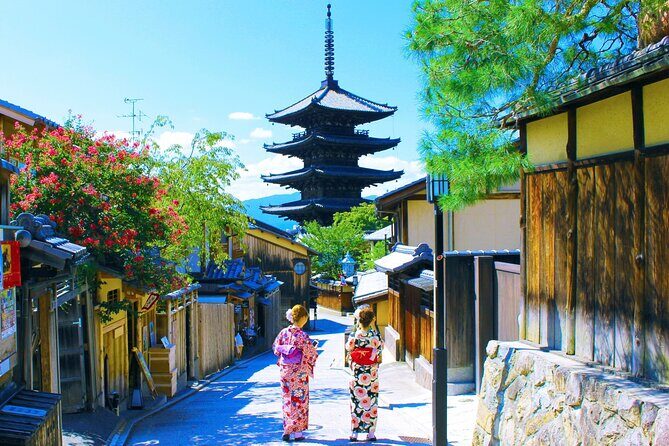
- Stone-paved history walks: Nene-no-Michi plus the classic slopes of Ninen-zaka and Sannen-zaka.
- Meiji restoration is part of the story: your guide connects “then and now” beyond the obvious.
- Finish at Kiyomizu-dera area: you’re in position for UNESCO views, with admission handled separately.
- Small group feel: up to 12 people makes it easier to ask questions and keep a steady pace.
Why this Gion-and-Higashiyama route is great for your first Kyoto half day
If it’s your first time in Kyoto, eastern neighborhoods can feel like a maze. This tour helps you get bearings fast by moving through the most recognizable textures of Higashiyama: big temple gates, quiet parks, and narrow pedestrian lanes that thread between everything.
The other big win is context. You’re not just being told what you’re looking at. The tour includes a guide-led look at the Meiji restoration, so when you see how Kyoto’s religious sites and street life survived big changes, it clicks. Guides often share humor and personal touches (one guide is known for fun Kyoto details like joking about a favorite vending-machine spot), which keeps the history from turning into a lecture.
You’ll also appreciate the structure: the tour is about three hours, with a sequence of stops designed to build a walkable story rather than random backtracking. That’s especially valuable if your other plans depend on having a free evening.
You can also read our reviews of more walking tours in Kyoto

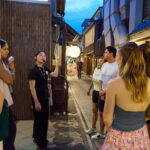
From Ben’s Cookies to Tatsumi Bridge: getting your eyes on Gion right away
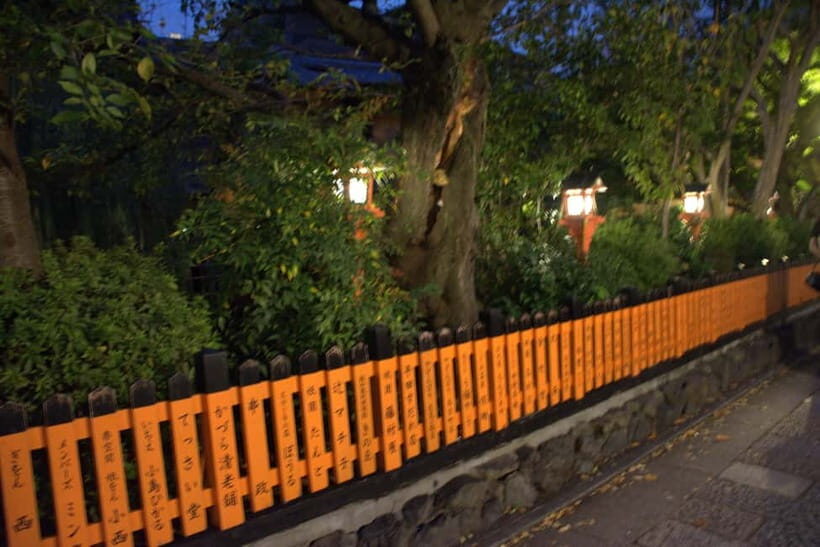
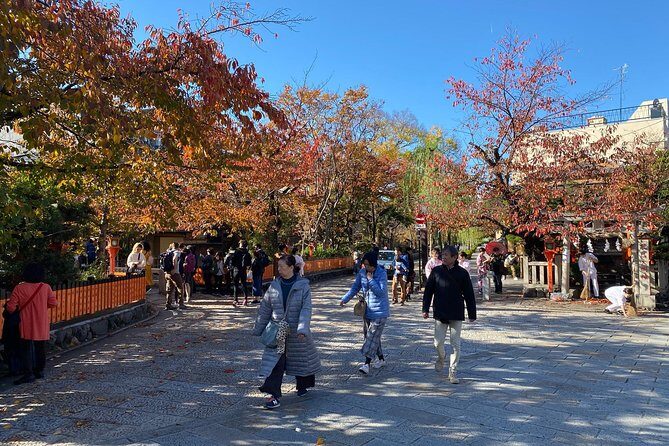
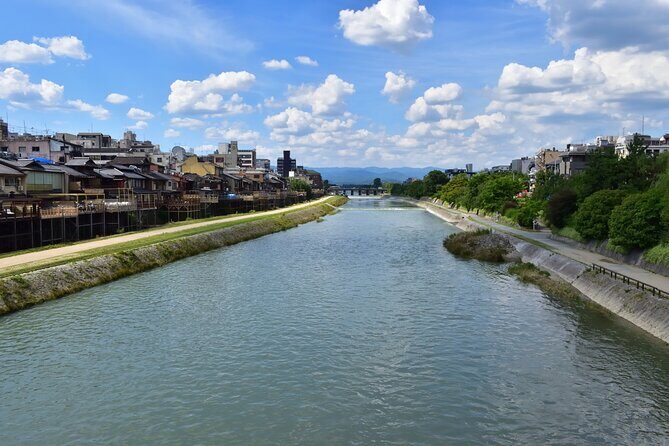
The tour starts at Ben’s Cookies Kyoto Shijo (near Shijo, in Shimogyo Ward). From there, you head toward Gion’s classic waterfront vibe—beginning with Tatsumi Bridge and the walk through Gion shibashi, a photogenic stretch that puts you right where Kyoto looks like Kyoto.
This first segment is smart because it lowers the mental load. Before you start climbing temple steps and entering packed lanes, you’re greeted with open sightlines and a recognizable district feel. It’s also a useful moment for your guide to set the tone: where you are, why it mattered historically, and what you’ll notice later as the route narrows into quieter spaces.
Practical note: it can get busy around Gion shibashi. You’ll still get good sightlines, but don’t plan to linger for long selfies at every angle. Let your guide steer you to the moments where the street opens up.
Chion-in Sammon and the main temple: the gate gives you scale
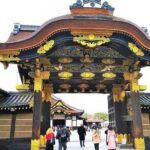
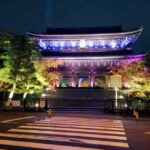
Next up is Chion-in Temple (Sammon)—the massive wooden gate (Sanmon). Even if you only get a short look, it’s the kind of structure that changes your sense of size. Kyoto temple architecture often feels “big,” but the Sanmon helps you understand how big in a real, human way.
After that, you move into Chion-in Temple itself. This stop matters because Chion-in is one of the city’s major Buddhist sites, and it’s the kind of place that benefits from a guided explanation of what you’re seeing—labels aside, you need the story behind the spaces: why certain areas are emphasized, how the grounds are arranged, and what religious practice looks like in motion through the site.
Time here is brief by design (around 20 minutes for the temple stop in the plan), so you’re not waiting around for one landmark forever. Instead, you get enough time to feel the scale and then keep moving while the route still feels fresh.
If you’re the type who likes to explore on your own, I’d treat Chion-in as your “anchor stop.” Take your time absorbing the gate, then use the guided context to decide what you’d want to revisit later—this tour helps you choose.
Maruyama Park and Nene-no-Michi: when Kyoto slows down

After temples, the tour shifts to breathing room with Maruyama Park. It’s a small pause that changes the mood. Parks like this do more than provide photos—they show you Kyoto’s habit of mixing sacred and everyday life. You’re not just walking between monuments; you’re moving through the spaces locals actually pass through.
Then comes Nene-no-Michi, also called the Path of Nene. This historic stone-paved lane is named for Nene, the wife of Toyotomi Hideyoshi. That detail is exactly the kind of thing that makes a short stretch of pavement feel meaningful. Instead of just walking a pretty lane, you’re walking a named corridor of history.
Here’s the key idea: stone paths and named routes in Kyoto often reflect layers of influence—who lived where, who traveled through, and how stories stayed attached to places. Even if you’re not a history deep-dive person, this section makes the city feel legible.
Hōkan-ji (Yasaka Pagoda) to Ninen-zaka and Sannen-zaka: classic lanes, classic steps
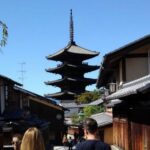
The tour hits Hōkan-ji Temple, also known as Yasaka Pagoda, in the Higashiyama area. The standout is the iconic five-story pagoda. Pagodas can look striking from a distance, but they also work as a navigational landmark—you’ll see how the neighborhood connects around that kind of focal point.
From there, you transition to two of Kyoto’s best-known walking lanes:
- Ninen-zaka (Two-Year Slope)
- Sannen-zaka (Three-Year Slope)
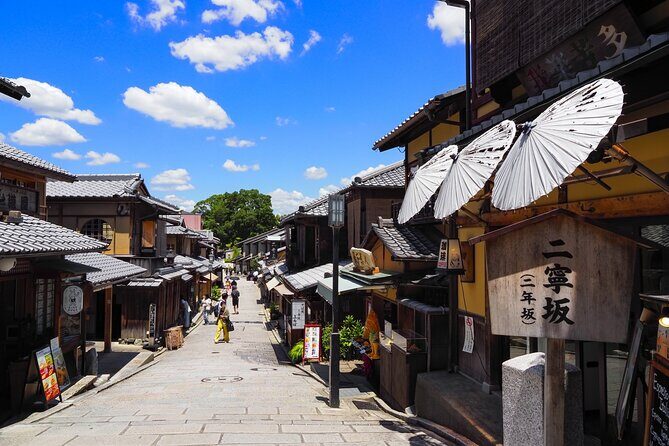
These are historic cobblestone paths with preserved traditional streetscapes. They’re lined with the kind of small tea houses and souvenir storefronts that make Kyoto feel like a living museum.
This is also where you’ll want to pay attention to your feet. Cobblestones can be unforgiving, and one review-style caution that shows up in guest feedback is that there can be stairs along the way. If you have any mobility limitations, plan to go slow and let the group set the tempo. The small group size helps with that.
If you want a smart strategy: don’t try to shop while you walk. Let the lanes carry you first. Once you’re done with the tour, you’ll know which streets are worth a second, unhurried walk.
You can also read our reviews of more historical tours in Kyoto

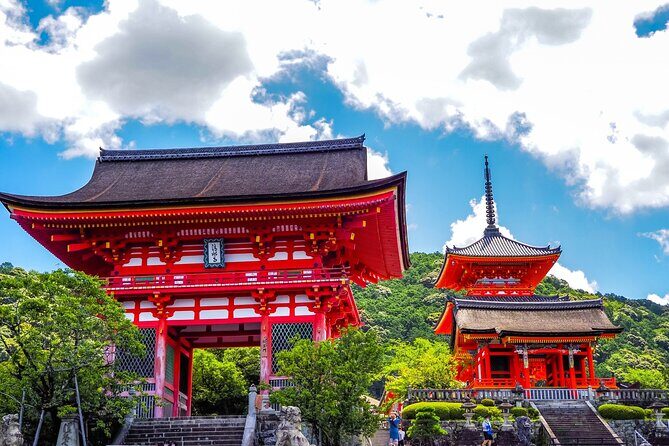
Ending at Kiyomizu-dera: UNESCO views, and the one admission wrinkle
The tour’s final stretch is Kiyomizu-dera, a UNESCO World Heritage Site. The temple sits on a hillside, so even at a glance you’re set up for sweeping views over Kyoto’s rooftops and streets.
One practical thing to understand: the plan notes admission to Kiyomizu-dera is not included. That doesn’t make the stop less valuable; it just means you’ll need to decide whether you want to pay to go inside or focus on exterior viewpoints and the approach area.
Finishing near Kiyomizu-dera is a good move for your day because it positions you to keep exploring immediately after the tour. If you have time for one more stop, this ending point is ideal. You’re already in the right neighborhood, with the route’s context fresh in your head.
How the Meiji restoration story changes what you notice on the walk
A lot of Kyoto tours stop at “this is old” and “this is pretty.” This one includes learning about the Meiji restoration from your guide, which matters because it connects religion, society, and national change.
On the ground, you’ll see the effects of modernization less as a “timeline display” and more as everyday contrasts: how Kyoto kept religious and cultural identity while the country transformed. Your guide’s job is to make those connections feel real instead of abstract.
What I especially like is that the Meiji restoration isn’t tacked on as a separate lecture. It’s woven into why sites and neighborhoods look the way they do—and why certain stories stayed attached to specific places you’re walking through.
If you’re the type who likes to ask questions, you’ll probably enjoy this tour. Multiple guides from past groups—people named Jay, Ben, Michel, Tommy, and Aiyumi/Ayumi—were praised for clear English and for handling questions. That combination tends to turn a route into a conversation, which is where the best learning happens.
Pacing, stairs, and the snack reality of a 3-hour temple walk
The tour is about 3 hours, and the plan clearly expects moderate physical fitness. Even with good guidance, you’re moving through:
- temple grounds,
- slopes and cobblestones,
- and at least some stair climbing.
One helpful caution from guest feedback: it can be information heavy, and after a while, kids may lose patience, even if they’re troopers. For families, I’d expect it to work best for older kids who can handle sustained history talk.
Food is another real-world issue. Lunch isn’t included, and there aren’t many built-in breaks. A guest note emphasized there aren’t many chances to stop for food besides bathroom breaks. So you should eat before you meet, then bring a small snack in your day bag just in case.
What I’d do for comfort:
- Wear walking shoes you trust on uneven stones.
- Bring water, even if you only sip it.
- If you have a later reservation, plan to be flexible; one guide in feedback even mentioned the group could run overtime and that you could break off if needed.
Price and value: how $40 makes sense when most stops are free to view
At $40 per person, this tour is priced like a budget-friendly way to get a guided orientation of major eastern Kyoto. The value comes from two things.
First, a lot of what you’re stopping for is free to enter or view from the outside (most stops list admission as free). That means you’re paying primarily for the guide’s storytelling and route planning rather than for ticket-heavy sightseeing.
Second, the tour includes a clear “big picture” mix:
- Gion area orientation,
- two-part Chion-in temple experience,
- a park pause,
- historic stone paths,
- classic slopes,
- and a strong finish near Kiyomizu-dera.
The only notable cost wrinkle is Kiyomizu-dera admission is not included, plus lunch and gratuity to the local guide are not included. If you’re budgeting, that’s the part to think about: whether you want to pay for entry at Kiyomizu-dera, and whether you’ll grab lunch afterward on your own.
Given the small group size (max 12) and the guide-led Meiji restoration context, this feels like a smart spend for many first-time visitors.
Who should book this Kyoto Gion Historical Walking Tour
Book it if you want:
- a guided intro to Gion and Higashiyama without spending your whole day lost,
- English narration that connects sites to bigger historical change (including the Meiji restoration),
- and a walking route that ends right where you can keep exploring.
You’ll probably enjoy it most if you’re an adult or a teen who likes context, not just scenery. The walking time and information density make it less ideal for very young kids who want constant breaks or minimal talking.
You’ll also be a good fit if you’re comfortable with stairs and cobblestones and you’re wearing supportive shoes. If that’s not you, consider pairing this with a more low-walking plan on your trip rather than trying to power through it.
Should you book? My practical take
I think this tour is worth booking if your goal is to understand Kyoto quickly and walk away with a mental map of the east.
Choose it if:
- you want three hours of structure through the most recognizable Kyoto lanes and temples,
- you like guides who explain why things matter (Meiji restoration included),
- and you’d rather pay for guidance than pay for lots of separate admissions.
Skip or reconsider if:
- you know you can’t handle stairs/cobblestones comfortably,
- you’re hoping for a relaxed, mostly flat stroll with lots of long free time,
- or you want a tour where lunch and temple admissions are fully handled.
If you’re on your first full day in Kyoto and you want the biggest payoff per walking hour, this is a strong match.
FAQ
How long is the Kyoto Gion Historical Walking Tour?
It’s about 3 hours.
Where does the tour start and where does it end?
It starts at Ben’s Cookies Kyoto Shijo and ends at Kiyomizu-dera (in front of the entrance).
What is included in the price?
The tour includes a walking tour and an English-speaking guide experience with a mobile ticket.
Is lunch included?
No, lunch is not included.
Are temple or site admission fees included?
Some stops list admission as free, but admission for Kiyomizu-dera is not included.
What group size should I expect?
The tour has a maximum of 12 travelers.
Is the tour too hard if I’m not super mobile?
It’s listed as requiring moderate physical fitness. Wear walking shoes, and expect some walking on uneven and stepped areas.
Are service animals allowed?
Yes, service animals are allowed.