REVIEW · KYOTO
Kyoto Gion: 2-Hour Geisha Culture & History Walking Tour
Book on Viator →Operated by Local Guide Stars · Bookable on Viator
Geisha stories start in the smallest alley. This 2-hour Kyoto Gion walk mixes everyday street life with clear explanations of geisha culture, plus temple-and-shrine stops that make the district feel real, not staged.
You get two things I really like: a small-group pace (max 15) and a route that connects multiple classic spots without rushing past them. I also like that it’s designed around learning—training, kimono and hairstyle craft, and how the geisha world works—while still leaving time to enjoy the scenery.
One consideration: it’s still a walk. You’ll be on your feet for about 2 hours on uneven city streets, so wear comfortable shoes and plan around heat or rain.
In This Review
- Key takeaways before you go
- Why Gion feels different with a 2-hour walking plan
- Getting to the meeting point by transit (and starting on time)
- The overall route: famous lanes plus quieter back streets
- Hanamikoji Street: the geisha district’s main stage
- Sannenzaka and Ninenzaka: Kyoto’s postcard slopes and a rumor check
- Yasaka Shrine: a 1,000-year-old stop that grounds the district
- Hokan-ji Temple: the photo magnet (and why it works)
- Pontocho and the Kamogawa area: food street energy and a breather
- Gion Shirakawa: Edo-period townhouses in a real neighborhood
- Yasui-Konpiragu: Shinto worship adds the final cultural layer
- How much geisha culture you actually walk away with
- Value check: is $23.88 for two hours in Gion worth it?
- Timing and weather: small choices that change your experience
- Who this tour fits best
- Should you book this Gion Geisha Culture & History Walk?
- FAQ
- FAQ
- How long is the Kyoto Gion walking tour?
- What does the tour cost?
- Where do I meet the guide?
- Is the tour end location the same as the start?
- Do I need to buy tickets for the stops?
- What’s the group size limit?
- How do I access the tour ticket?
- Do I need to be able to walk for the whole tour?
- Is good weather required?
- When should I go if I want a better chance to see a geisha?
Key takeaways before you go

- Geisha spotting is possible along Gion’s main lanes, especially in the late afternoon window people tend to target
- You hit iconic Kyoto landmarks in one loop, including Yasaka Shrine and Hokan-ji Temple
- Edo-period townhouses show up in the route, not just on postcards
- A real photo stop exists at Hokan-ji, plus plenty of side-street angles
- Free entry is built in for the scheduled stops, so you’re not paying ticket-by-ticket
- Guides make the culture practical, from training routines to the Maiko-to-Geisha path
Why Gion feels different with a 2-hour walking plan
Gion can look simple on a map: a neighborhood, a few streets, some famous views. Walking it with a guide changes the whole experience. In a short time, you get the context that helps you notice what you’d otherwise walk right past—where the district’s old rhythms sit, and why certain streets matter.
This tour is built for that “fast orientation” feeling. You’re not doing a long day. You’re doing a focused loop where the guide keeps connecting street corners to culture and history. And because the group is capped at 15 people, it tends to feel more like a city stroll with commentary than a cattle-call tour.
You’ll also get a mobile ticket, which makes it easier on the ground when you’re bouncing between transit stops and street-level landmarks.
You can also read our reviews of more walking tours in Kyoto


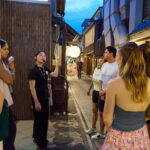
Getting to the meeting point by transit (and starting on time)
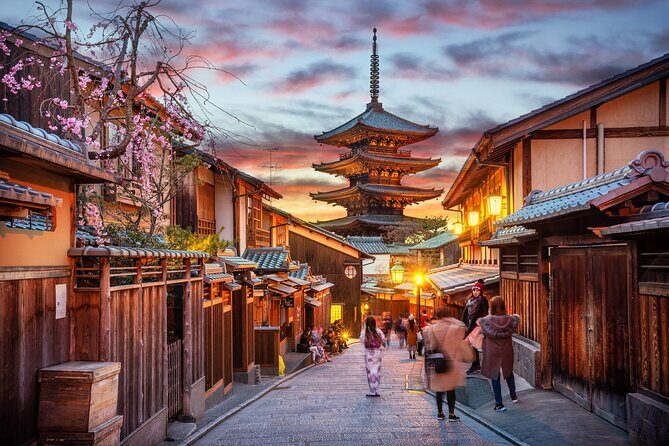
You meet at McDonald’s – Shijo-ohashi Bridge, address 105-1 Hashimotochō, Shimogyo Ward, Kyoto (near Shijo-ohashi Bridge). It’s a practical start because it’s a recognizable location in a dense city grid, and the tour notes that it’s near public transportation.
The big practical move: plan to arrive a few minutes early so you can find your group without stress. The tour ends back at the same meeting point, which is helpful if you want to keep exploring nearby streets right afterward.
For your gear, think simple: comfy shoes, water, and your phone charged for the mobile ticket. The route is light on “sit-down breaks,” so you’ll want to be ready to walk.
The overall route: famous lanes plus quieter back streets
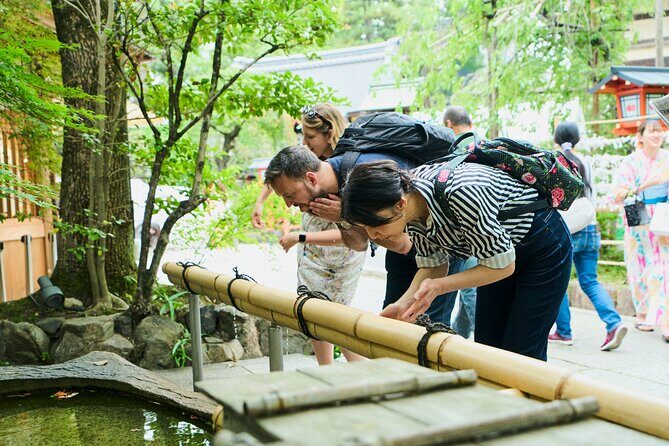
The tour is structured like a gentle escalation. You start on Hanamikoji Street, then shift into lanes that feel calmer and more local. From there, you step into sacred spaces and photogenic corners, then return to the neighborhood mood—street life, food energy, and riverside downtime.
What I appreciate here is balance. You’re not only doing religion stops or only doing geisha-themed stops. You’re getting a mix that matches what Gion is: a living district where tradition runs alongside daily life.
Expect frequent photo opportunities and short stops rather than long museum-style sessions. Most locations are around 15 to 20 minutes, which is exactly right for a 2-hour window.
Hanamikoji Street: the geisha district’s main stage
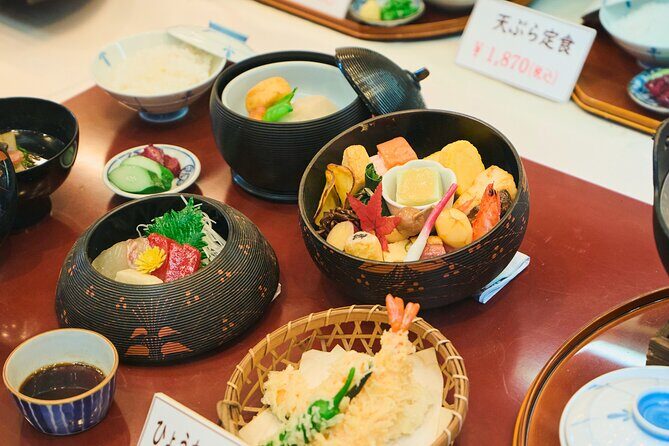
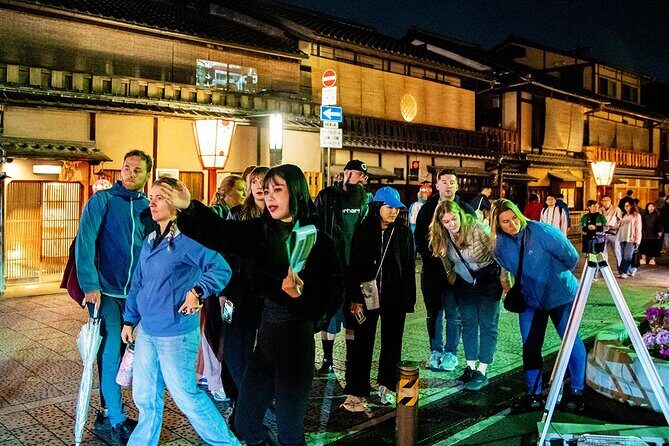
Your first stop is Hanamikoji Street, about 15 minutes. This is the lane most people picture when they hear Gion, and it’s where your guide sets the cultural groundwork.
Here’s what makes this stop more than just walking a pretty street:
- You learn about the strict training involved in becoming a geisha, and how that shows up in manners and performance
- You hear how dances and craftsmanship connect to kimono and hairstyle styling
- You get the chance to spot a geisha (luck helps, but timing matters)
One useful tip: if your main goal is spotting, aim for a late-afternoon/early-evening slot. People often target around 5 to 6 pm, when activity levels can work in your favor. And keep your expectations realistic. A sighting is never guaranteed, but you can increase your chances by arriving with a calm, respectful attitude and not blocking paths.
Sannenzaka and Ninenzaka: Kyoto’s postcard slopes and a rumor check
Next is Sannenzaka Ninenzaka, another 15 minutes. These are the lanes where the scenery does that instant Kyoto thing: stone steps, traditional streetscape, and plenty of angles for photos.
There’s also a fun cultural layer. The tour points out a rumor tied to the area—something people say happens if you fall—and your guide explains the truth behind it. That matters because rumors can distort how you read a place. When you know what’s real, the street feels less like a set of “rules” and more like part of real local lore.
If you go for photos, move smart. Saka slopes can get crowded quickly, and your time is limited. Take a few good shots, then keep the pace so you don’t end up stopping every five meters.
You can also read our reviews of more historical tours in Kyoto

Yasaka Shrine: a 1,000-year-old stop that grounds the district
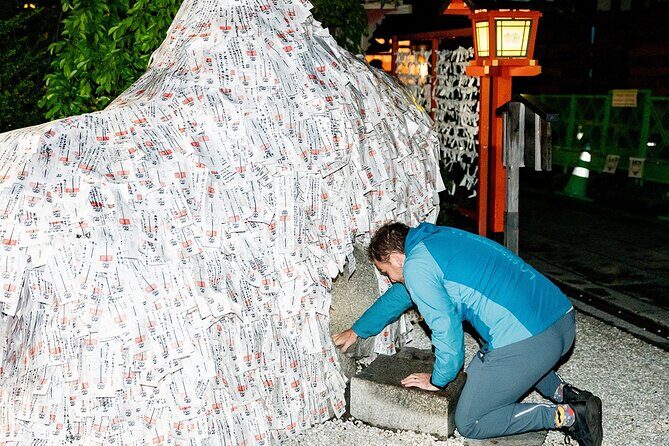
Then you head to Yasaka Shrine for about 20 minutes. This is marked as a 1,000-year-old shrine, and it’s a key anchor point because it puts Gion in a bigger Kyoto context.
Even if you’re not deep into shrine rituals, you’ll feel the difference. Shrines change the mood. They slow you down and give you something to orient around beyond street style. In a short tour, that grounding effect is valuable.
Practical note: don’t expect a long “tour guide lecture” here. It’s a stop with time to look, absorb, and ask questions—then you move on.
Hokan-ji Temple: the photo magnet (and why it works)
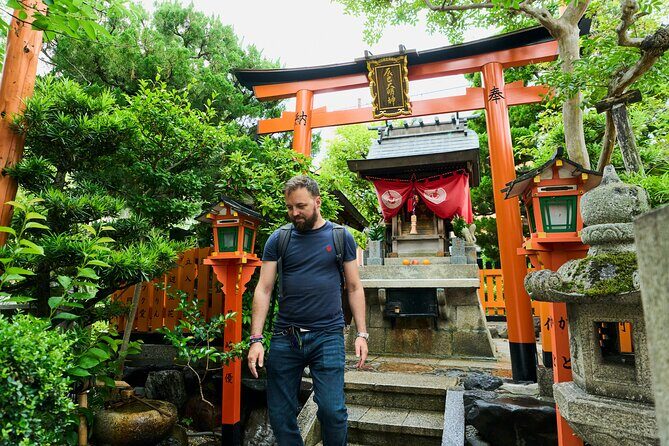
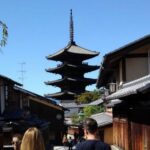
Your next stop is Hokan-ji Temple, also around 20 minutes. The tour calls it the most photogenic spot in Kyoto for this route, and that matches what you’ll feel on arrival.
This stop is ideal if you want your camera to do real work. The structure and views tend to reward careful framing. And timing can make a difference; one theme from guide-led experiences in this area is that softer light—like late day—often makes the scene even more enjoyable.
If you want the best results:
- stay patient for a clear shot
- don’t sprint through the first view—look around first
- take your time, then move back into the group so you don’t stall the walk
Pontocho and the Kamogawa area: food street energy and a breather
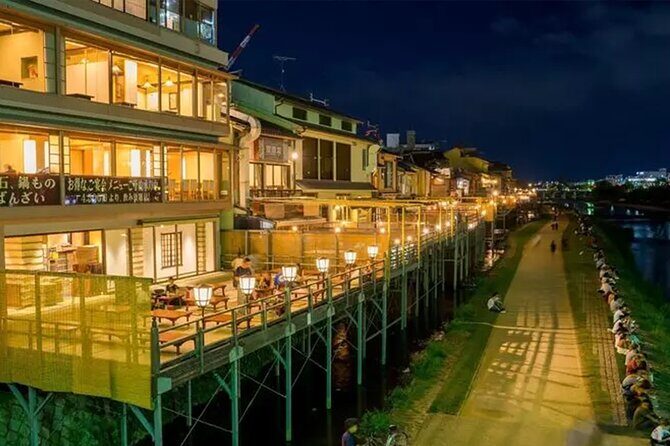
Next up is Pontocho, about 15 minutes. This is described as a historic gourmet street, and the vibe helps explain why Gion isn’t just about performance culture. It’s also about hospitality, dining, and everyday nightlife that keeps the neighborhood alive.
After that, you’ll have a local chill-out spot by the Kamogawa River. It’s not an extra “thing” you have to learn. It’s a breather. In a 2-hour walk, that matters. You’ll have enough movement to feel like you covered something meaningful, but enough pauses to avoid total sensory overload.
If you want a smooth experience, use this riverside moment for a water break and a quick reset before the last stretch.
Gion Shirakawa: Edo-period townhouses in a real neighborhood
You’ll then visit Gion Shirakawa for about 20 minutes, focused on Edo-period townhouses. This is where the tour helps you read the streets like a history lesson you can walk through.
Instead of treating old architecture like a museum backdrop, you see how it fits into modern life. That’s the quiet value here: you learn to notice what makes the district distinct—wooden townhouse style, old-town layout, and the way these spaces hold memories of Kyoto’s past.
When your guide ties architecture to cultural life, it stops being “pretty buildings” and starts being “how this neighborhood functioned.”
Yasui-Konpiragu: Shinto worship adds the final cultural layer
The last stop is Yasui-Konpiragu, around 15 minutes, where you experience Shinto worship. This wraps up the tour with a cultural element that fits naturally in Kyoto—religion and everyday neighborhood life are often intertwined here.
Even in a short time, you’ll get a sense that Gion’s traditions don’t float in isolation. They sit alongside shrine culture, festivals, and community beliefs that have long shaped the city.
How much geisha culture you actually walk away with
This is one of those tours where the title can sound like a single-theme show. On the ground, it works better because it connects multiple threads.
You learn about:
- strict training and what it takes to become a geisha
- the role of dances and the craftsmanship tied to kimono and hairstyle styling
- the pathway between roles, including how people move along the Meiko-to-Geisha journey
The best part is that a good guide doesn’t treat it like trivia. They explain what you’re seeing when you look at the district—how the culture shapes behavior and how tradition is reflected in everyday details.
If you want to get the most from it, keep your questions simple:
- What does this practice mean in daily life?
- Why does this street layout feel the way it does?
- What should I notice if I’m looking for a geisha?
You’ll get better answers when you’re not chasing only one thing.
Value check: is $23.88 for two hours in Gion worth it?
At $23.88 per person for about 2 hours, this can be a strong value if you’re the type who wants context while you walk.
Why it’s good value:
- The group size stays small (max 15) so you’re less likely to feel lost in a crowd
- It’s mobile-ticket friendly, cutting down the hassle factor
- Several planned stops show admission ticket free, which helps keep costs predictable
- You get a curated loop that strings together major streets and major landmarks without wasting time
Where it might not be worth it: if you’re the kind of traveler who only wants photos and doesn’t care about the explanations. For a pure sightseeing sprint, you could wander Gion on your own. But if you want the “why” behind what you’re seeing—this format is built for that.
Timing and weather: small choices that change your experience
The tour notes that it requires good weather. That makes sense. You’re outside the whole time, walking between lanes and shrine areas.
Also, if geisha spotting is a priority, focus your planning on a time window people often aim for—late afternoon into early evening (around 5 to 6 pm). You’re not guaranteeing anything, but you’re playing with the odds.
If you’re visiting during hot months, move early or choose a time that avoids the worst heat. One review pointed out it can get hot, and that’s real. Bring water, and don’t plan heavy sightseeing right before the tour ends.
Who this tour fits best
This tour is a great match if you:
- want a clear introduction to Gion’s geisha culture without a long day
- like walking routes with short stops and photo chances
- care about context—training, etiquette, and what you’re looking at on the street
- prefer a small group over large guided buses
It may be less ideal if you:
- need frequent long breaks (the route is short-stop style)
- dislike walking for about 2 hours on uneven city streets
- want only one type of attraction (this tour blends geisha culture with shrines and townhouses)
Should you book this Gion Geisha Culture & History Walk?
I’d book it if you’re trying to make the most of limited time in Kyoto. Two hours is enough to get oriented, learn how the district works, and still come away with great street-level photos.
Skip it if you want a slow, leisurely wander with lots of downtime, or if you only want to chase one sighting and nothing else. Even then, the shrine stops and the Edo-townhouse area make it worth considering, since you’ll still see Kyoto’s old-world texture even if the geisha sighting doesn’t happen.
FAQ
FAQ
How long is the Kyoto Gion walking tour?
It runs for about 2 hours.
What does the tour cost?
The price is $23.88 per person.
Where do I meet the guide?
You meet at McDonald’s – Shijo-ohashi Bridge, 105-1 Hashimotochō, Shimogyo Ward, Kyoto.
Is the tour end location the same as the start?
Yes. The tour ends back at the meeting point.
Do I need to buy tickets for the stops?
The scheduled stops list admission as ticket free, so you shouldn’t need separate paid entry tickets for those parts.
What’s the group size limit?
The tour has a maximum of 15 travelers.
How do I access the tour ticket?
It uses a mobile ticket.
Do I need to be able to walk for the whole tour?
You should have a moderate physical fitness level since it’s a walking tour.
Is good weather required?
Yes. The tour requires good weather. If it’s canceled due to poor weather, you’ll be offered a different date or a full refund.
When should I go if I want a better chance to see a geisha?
A helpful target time mentioned for better odds is around 5 to 6 pm.