REVIEW · KAGOSHIMA
Sakurajima Century Lava Climb Journey with E-bike
Book on Viator →Operated by Volcano Life Journey · Bookable on Viator
One volcano story is never just about the volcano. On this Sakurajima century lava climb by e-bike, you trace eruption history with an easy route to the island’s top viewpoint, Yunohira Observatory. I love the mix of clear explanations and real riding, not museum-only facts, and I also love the fact you’re using powerful e-bikes to make the climb feel doable. The one drawback to plan for is simple: you still need moderate fitness, and the route depends a lot on weather and on finding the right meeting point fast.
Small group tours make a difference here. With a cap of 6 travelers, the guide can set a pace that fits your group and actually talk through what you’re seeing—eruption impacts, island life, and why this place matters in Kagoshima. One more consideration: if you’re arriving by cruise ship, double-check your port location and walking directions, because the start at Sakurajima Visitor Center can catch people off guard.
In This Review
- Key Highlights at a Glance
- Sakurajima’s 20th-Century Volcano Story, Told by E-Bike
- Getting to the Start: Sakurajima Visitor Center and Real Directions
- The E-Bike Loop: How Yamaha Power Makes the Climb Feel Fair
- Yunohira Lookout: The Highest-Point Payoff Over Kagoshima
- What the Guide Adds: Stories, Context, and Even Treats
- Timing, Group Size, and Why 3 Hours Hits the Sweet Spot
- Weather and Safety: When to Be Flexible
- Price Check: Is $105.02 Good Value for Sakurajima?
- Who This Tour Suits Best (and Who Should Think Twice)
- Should You Book This Sakurajima Century Lava Climb by E-Bike?
- FAQ
- FAQ
- How long is the Sakurajima Century Lava Climb Journey with E-bike?
- Where does the tour start?
- Where does the tour end?
- What is the main destination on this tour?
- Is this tour suitable for people with moderate fitness?
- What kind of transportation is used?
- How many people are in a group?
- Is a mobile ticket provided?
- What happens if the weather is bad?
- What’s the cancellation window?
Key Highlights at a Glance
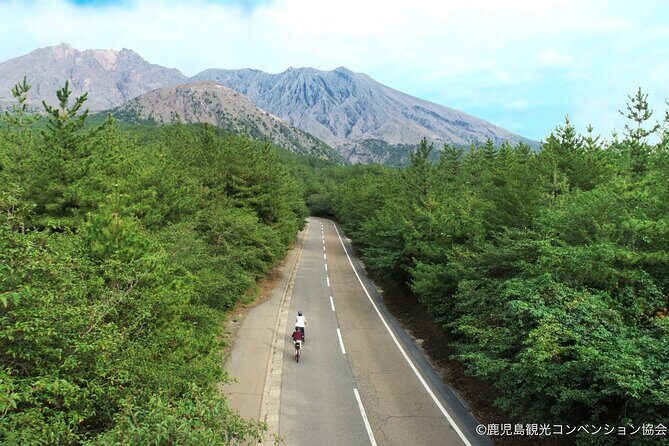
- Yunohira Observatory as the goal: the highest viewpoint on Sakurajima, built for big-sky views over Kagoshima
- E-bikes that handle the work for you: powerful Yamaha models help you keep momentum on the loop route
- History + people, not just scenery: you get the eruption story and how it changed daily life
- Small group feel: a max of 6 travelers means more conversation and smoother pacing
- About 3 hours: long enough for the climb and context, short enough to keep your day flexible
- Weather-sensitive plan: you’ll be offered a different date or a full refund if conditions fail
Sakurajima’s 20th-Century Volcano Story, Told by E-Bike
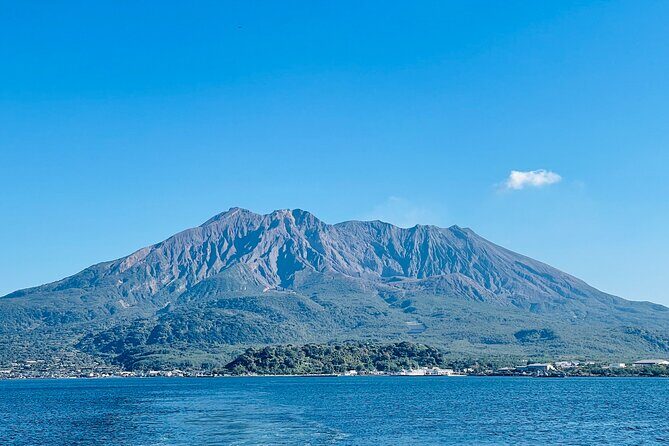
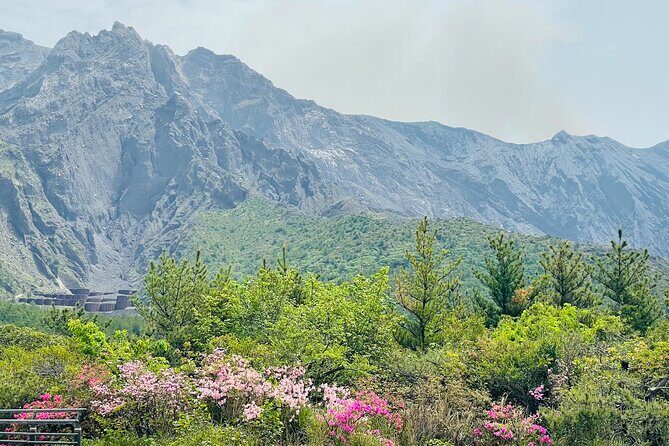
Sakurajima is famous for eruptions—and this tour leans into the big one. A major eruption in the past is described as the largest in the 20th century, and it reshaped the history of the island in a way locals still live with. What I like about this experience is that it doesn’t treat the volcano like a landmark. It treats it like a force that changed the way people built, moved, and planned.
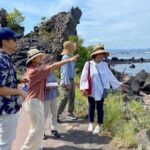
The riding is the delivery system. You cycle through the traces of that eruption story and listen as the guide connects what you see on the ground to what the eruption did. That’s the value here: you’re moving through the island instead of just stopping at a single viewpoint. You’ll still get your classic Kagoshima scenery payoff, but you’ll understand what you’re looking at much better than if you just show up and take photos.
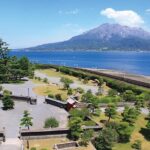
And yes, you’re getting up to Yunohira Observatory—the highest point on Sakurajima—where the view is the reason the tour exists. From up there, the geography of Kagoshima feels obvious in a good way: the city, the water, the wider natural setting all make more sense once you’ve climbed for it.
You can also read our reviews of more cycling tours in Kagoshima

Getting to the Start: Sakurajima Visitor Center and Real Directions
Your meeting point is the Sakurajima Visitor Center (1722-29 Sakurimayokoyamachō, Kagoshima 891-1419). The tour ends back at the same place, which is helpful for planning your day. It’s also listed as near public transportation, which matters if you don’t want to spend your time hunting for taxis.
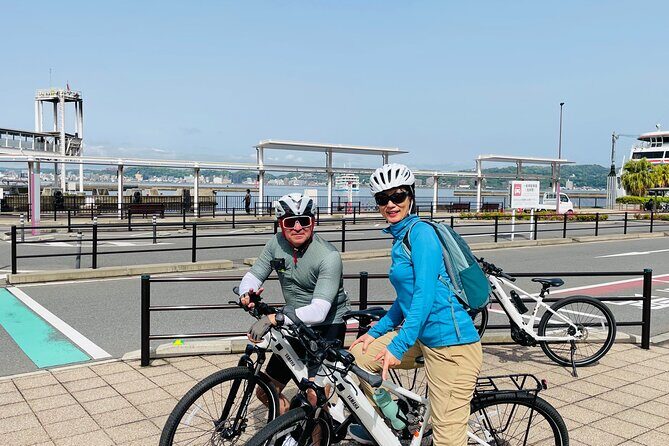
Here’s my practical advice: treat the first 15 minutes like the whole day. Because one of the big issues for this kind of tour is simple navigation, especially if you’re arriving via cruise. If your travel day includes a cruise ship, don’t assume your feet will naturally land you at the visitor center. Large ships can dock at Marine Port Kagoshima or North Wharf Passenger Terminal, and walking times and route logic can differ.
If the tour instructions tell you it’s an 8-minute walk, that might be “8 minutes from the right landing point,” not from where you think you dock. So before you go, take 30 seconds to confirm exactly where you’re disembarking. Your reward is that you’ll start the ride calm instead of stressed, and that makes the climb easier to enjoy.
The E-Bike Loop: How Yamaha Power Makes the Climb Feel Fair
The whole experience is built around electric assist bikes. In the feedback, people specifically note Yamaha bikes described as recent, solid, and powerful—exactly the kind of e-bike you want for a lava-history route that also needs a climb.
What does that mean for you? It means you’re not doing this as a pure fitness grind. The goal is to reach Yunohira Observatory at the top, then come back down as a loop. The e-bike keeps you moving at a comfortable pace and helps you focus on the guide’s storytelling and the scenery instead of burning energy just to stay upright.
You’ll still want to be honest about your ability. The tour is marked for moderate physical fitness. That usually translates to “you can ride, you can pedal, and you can handle some elevation and riding time,” even with assist. If you’re coming from a long travel day or you’re used to minimal walking, you might want to take it easy beforehand and bring a little patience for the climb.
Also, because the group is small (max 6), the pace is likely to match the group. That’s a quiet advantage over big tours. You can stay together without feeling like you’re being dragged uphill—or waiting too long at each point.
Yunohira Lookout: The Highest-Point Payoff Over Kagoshima
The main stop is the Yunohira Lookout / Yunohira Observatory—the highest point in Sakurajima. This is where the tour stops being “history with wheels” and becomes “wow, that’s Kagoshima.”
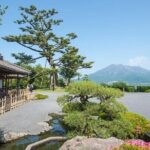
From up there, you should expect a strong sense of scale. Sakurajima is an active volcanic island, but from Yunohira you see the surrounding natural setting that makes the region feel connected—land, water, city edges, and the broader Kagoshima region all come into view. The tour description makes the point clearly: the view is impressive enough that you understand Kagoshima is surrounded by great nature.
The viewpoint also works as a narrative capstone. You’ll have been learning about the eruption history and the stories of people connected to it, then you reach the top and see the landscape layout. That “top-down understanding” is valuable. It turns facts into something your brain can organize. Instead of memorizing dates and descriptions, you connect eruption history to how the island sits in the region.
One more smart detail: the tour is only about 3 hours, so you’re not spending the entire day waiting at one spot. You get the viewpoint, you get the ride, and you still have time to keep exploring Kagoshima afterwards.
What the Guide Adds: Stories, Context, and Even Treats
This isn’t just a ride with a map. Your guide is part of the experience. In the feedback you can see that the guide—often mentioned as Rento/Renton—goes beyond route directions and fills the gaps with practical history and island perspective.
People highlight that the guide shares lots of interesting information during the ride and even includes little extras like treats along the way. That might sound like a small thing, but it’s part of why guided e-bike tours work: you’re not just consuming sights, you’re also getting help building meaning around them. When the guide explains what you’re seeing and why it matters, the eruption story stops being abstract.
If you like tours where you can ask a question and get an answer that ties back to the place, this style tends to fit well. With a group size capped at 6, you’re less likely to feel like a random number in line.
A few more Kagoshima tours and experiences worth a look
Timing, Group Size, and Why 3 Hours Hits the Sweet Spot
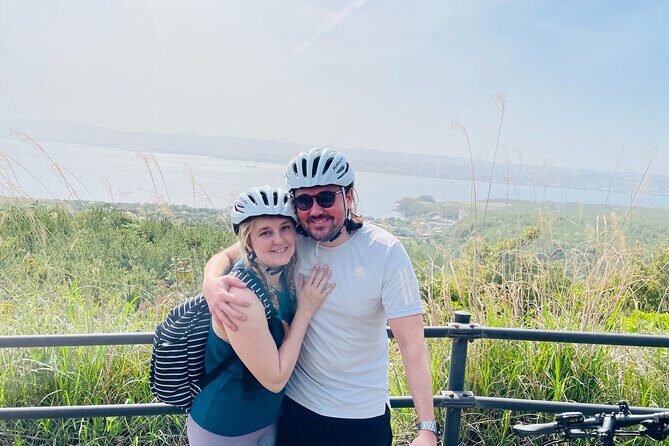
The tour runs for about 3 hours. That timing matters more than you’d think. A longer bike tour could turn into a full-day ordeal, especially with elevation and weather variables. A shorter one might not leave enough time for both the story and the ride to Yunohira and back.
At around 3 hours, you can usually slot it into a Kagoshima itinerary without it taking over your day. And because the tour returns to the meeting point, you don’t have to build complicated transport plans afterward.
The max of 6 travelers also shapes the feel. Smaller groups typically mean fewer stops, less waiting, and better pacing. For you, that means the ride stays lively. You get movement plus commentary instead of a cycle of mount, wait, dismount, wait, pedal again.
The duration being approximate also suggests some flexibility based on conditions. In practice, that means you should plan for the tour to expand if the route needs extra caution in wind, rain, or slippery surfaces.
Weather and Safety: When to Be Flexible
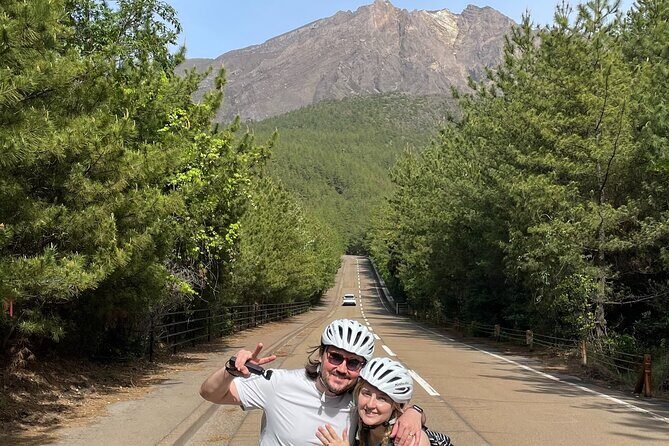
This is a “good-weather” tour. It’s explicitly stated that it requires decent weather. If conditions are poor, you’ll be offered a different date or a full refund.
My advice is to treat this like any outdoor ride in Japan: check forecasts the day before and again the morning of. If the forecast looks shaky, still consider booking, but be ready to switch dates if the operator calls it. E-bike tours aren’t only about comfort—they’re about road and surface conditions.
Also remember: even with e-assist, you’re riding on an island environment, and that means you’ll want to keep the basics covered—comfortable layers, some water, and shoes with decent grip. The tour doesn’t list gear requirements, so I’m staying general, but sensible riding basics matter for a smooth climb.
Price Check: Is $105.02 Good Value for Sakurajima?
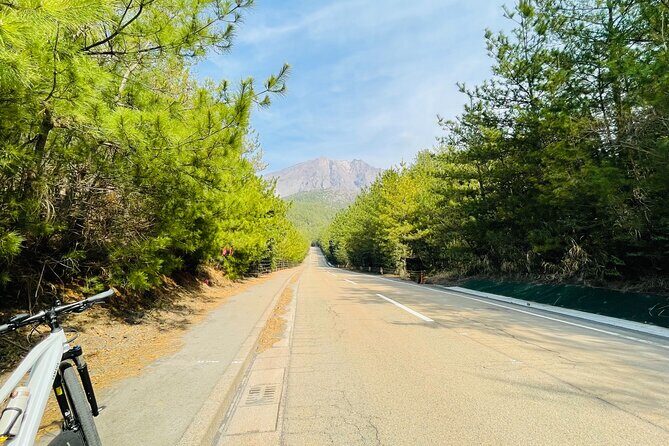
$105.02 per person can feel like a lot until you break down what’s included in a guided e-bike tour to a top viewpoint.
You’re paying for:
- a guided experience that connects eruption history and human stories to what you see
- e-bike rental and support to cover the climb efficiently
- the route to Sakurajima’s highest point and back as a loop
- a small group format (max 6) that often keeps the quality higher
So the value question is simple: do you want the eruption story explained while you ride, and do you want an easier climb than a traditional hike? If yes, the price is more defensible. If you only want photos and you’re comfortable building your own route to Yunohira, you could compare it to independent options. But this tour gives you structure, context, and a ride that saves you energy.
In short: I’d call this fair value if you’re aiming for a single, well-told volcano day on Sakurajima. It’s a lot harder to get the same “story + view” combination on your own without spending time learning the route and the context.
Who This Tour Suits Best (and Who Should Think Twice)
You’ll probably love this tour if:
- you want eruption history that feels connected to real places
- you’re okay with moderate physical fitness and cycling for a few hours
- you enjoy guided rides where the route and commentary work together
- you like small groups and don’t want a huge crowd experience
You might think twice if:
- you’re expecting a fully effortless experience with no exertion at all
- you’re uncomfortable biking for about 3 hours, even with e-assist
- you know you’ll struggle with navigation on the first leg of the day (especially if arriving by cruise)
If you’re traveling with a capable teen or an adult who can ride confidently, this also seems to land well. The feedback includes examples of parents and kids enjoying the ride together—suggesting it’s not only for serious cyclists.
Should You Book This Sakurajima Century Lava Climb by E-Bike?
If you’re visiting Kagoshima and you want one Sakurajima outing that mixes spectacular viewpoint time with a story you can actually picture, I’d book it. The Yunohira Observatory goal is the right kind of payoff: it’s high, it’s scenic, and it gives context to the region. The e-bike approach is also smart—this is about seeing and understanding, not punishing yourself.
My final nudge is planning-based: confirm the start location from where you actually arrive, especially if you’re coming by cruise. Once you’re at the Sakurajima Visitor Center and rolling on a Yamaha e-bike, the experience is exactly what you hope for—history, views, and a ride that feels strong without being overly hard.
FAQ
FAQ
How long is the Sakurajima Century Lava Climb Journey with E-bike?
It runs for about 3 hours.
Where does the tour start?
The meeting point is the Sakurajima Visitor Center, 1722-29 Sakurajimayokoyamachō, Kagoshima, 891-1419, Japan.
Where does the tour end?
The activity ends back at the same meeting point.
What is the main destination on this tour?
The goal is Yunohira Observatory / Yunohira Lookout, Sakurajima’s highest point.
Is this tour suitable for people with moderate fitness?
Yes, the tour is described as suitable for travelers with a moderate physical fitness level.
What kind of transportation is used?
You ride an e-bike, and the bikes mentioned in the feedback are Yamaha models.
How many people are in a group?
The tour has a maximum of 6 travelers.
Is a mobile ticket provided?
Yes, the tour includes a mobile ticket.
What happens if the weather is bad?
This experience requires good weather. If it’s canceled due to poor weather, you’ll be offered a different date or a full refund.
What’s the cancellation window?
Free cancellation is available up to 24 hours in advance for a full refund.