REVIEW · KYOTO
Kyoto: Private 2.5 Hour Historical Walking Tour
Book on GetYourGuide →Operated by Enjoy KyotoWalking · Bookable on GetYourGuide
Kyoto history becomes real when you walk it. I love the linking of shrine rituals to what you’re seeing, and I also love the calm Zen-garden stop at Entokuin. One thing to consider: Kiyomizu-dera draws huge crowds and there are lines, plus you’ll be on your feet (and on steps), so comfortable shoes are not optional.
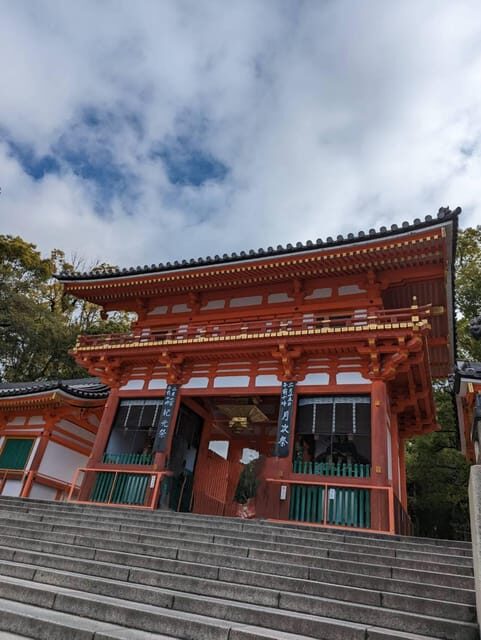
This is a private tour for up to five people, led in English by a live guide. You start at Yasaka Shrine’s west gate (the red gate), get an orientation map, and then you move through Gion’s lanes with context that makes the scenery feel less random.
The only real catch is value depends on your expectations. If you want pure “see it, snap a photo, move on,” you may feel the pace is thoughtful rather than rushed. Also, temple admission fees and getting to the meeting point are on you.
In This Review
- Key Highlights You’ll Actually Notice
- Starting at Yasaka Shrine’s Red West Gate: Where Kyoto Clicks
- From Maruyama Park to Nene-no-michi: A Street With a Story
- Entokuin Zen Temple: Dry Gardens, Sliding-Door Art, and Quiet Room Details
- Yasaka Kōshin-dō and the Five-Storied Pagoda Photo Spot
- Kiyomizu-dera: Kannon Statues, the Nail-less Stage, and Pure Water
- Kannon Bodhisattva and the stage
- Pure water and the line you’ll understand
- The iron stick, iron clogs, and small challenges
- Jishu Shrine: match-making background at the right time
- Price and Logistics: Is $80 Worth It for a Private Group?
- What You’ll Learn in Plain Terms (Without the Temple-Studying Stress)
- Who Should Book This Tour, and Who Might Not
- Should You Book This Kyoto Historical Walking Tour?
- FAQ
- Where is the meeting point for the tour?
- How long is the Kyoto historical walking tour?
- Is this tour private?
- What language is the guide?
- What temples or areas do we visit during the tour?
- Are entrance fees included?
- Are meals included?
- What should I bring?
- Where should I get off if I use the train?
- Where should I get off if I use the bus?
Key Highlights You’ll Actually Notice
- Red gate meeting point at Yasaka Shrine makes the tour start with instant meaning
- Entokuin Zen temple focuses on dry Zen gardens and traditional rooms, not just a quick peek
- Nene-no-michi ties the route to Toyotomi Hideyoshi’s wife Nene (and the temple linked to her)
- Outside view of the five-storied Yasaka-no-to pagoda with a classic photo angle nearby
- Kiyomizu-dera stage views: Kannon Bodhisattva area plus the Koyasu Pagoda view from above
- Jishu Shrine match-making context gets explained before you’re done at Kiyomizu-dera
Starting at Yasaka Shrine’s Red West Gate: Where Kyoto Clicks
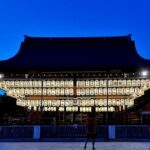
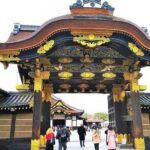
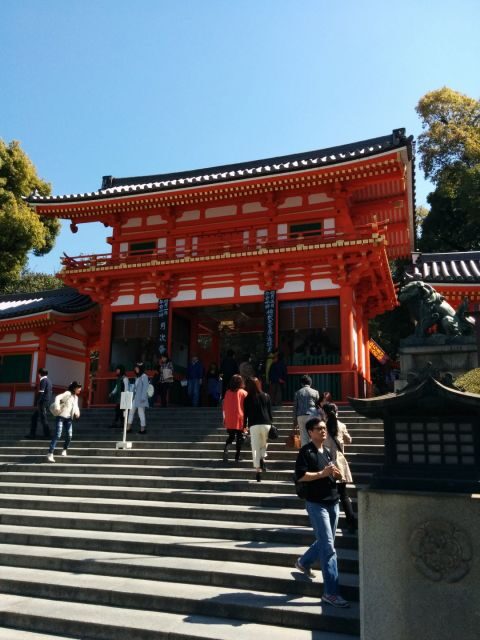
The tour begins where it should: at Yasaka-jinja Shrine’s west gate (the red gate). From the first moments, the guide frames Kyoto so you’re not just collecting temple names. There’s a map, a walk-through of the area, and then shrine-focused context that helps you understand why the places look the way they do.
What I like here is the way the tour doesn’t treat shrines as decoration. You learn how to worship at a shrine, which changes your experience immediately. Instead of wondering what people are doing in the courtyard, you understand the logic behind it. It also makes your photos more intentional, because you’ll know what to notice: the rhythms, the directionality, and what the symbols are telling you.
If you’re traveling by train, plan your arrival around Gion Shijo Station (Keihan Line) or Kawaramachi Station (Hankyu Line). From either, you’ll walk along Shijo Street, then use stone steps to reach the top area and find the red-gate entrance.
If you’re coming by bus, the simple target is the stop named Gion, where you’ll find stone steps before you reach the red gate. That’s an easy way to avoid wandering, which matters because this area can get busy.
You can also read our reviews of more walking tours in Kyoto

From Maruyama Park to Nene-no-michi: A Street With a Story
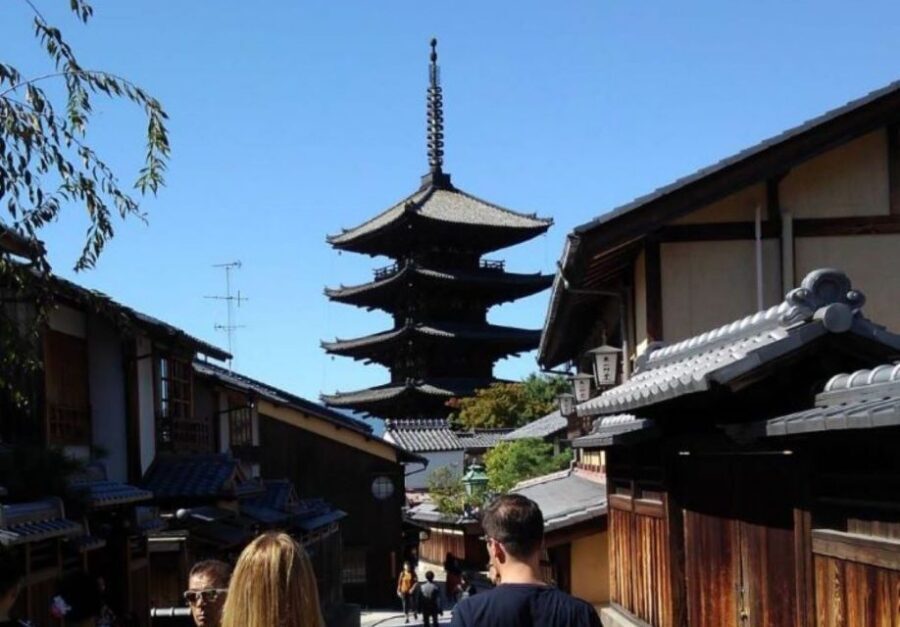
After Yasaka Shrine, you head through Maruyama Park, then toward the street called Nene-no-michi. This is one of those details that can sound like trivia until you’re walking it and the guide explains why it matters.
Here’s what you’re learning: Nene is the wife of Toyotomi Hideyoshi, a major political leader in late-16th-century Japan. The route isn’t just scenery. It’s a line in the city’s memory—how power, family connections, and later temple associations show up in daily streets and landmarks.
You’ll also hear how Entokuin connects to Nene. That connection matters because Entokuin is not the kind of place most people stumble into. With the story in your head, the Zen temple visit becomes a payoff rather than a random detour.
This section is a good “reset” between the shrine energy and the calmer Zen atmosphere ahead. Also, it sets you up for a more nuanced religious view of Kyoto: the way Shinto shrines and Buddhist temples share space in the city, even when their meanings differ.
Entokuin Zen Temple: Dry Gardens, Sliding-Door Art, and Quiet Room Details
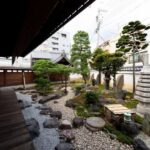
Next comes Entokuin, where the tour spends about 40 minutes. This is the stop I’d pick if I could only choose one. You get the Zen experience you came for: dry Zen gardens, a serene feel, and traditional architecture details that you can actually see without needing to be a specialist.
You’ll also notice something many quick tours miss: the inside experience. The guide points out traditional Japanese rooms, and there’s mention of famous pictures depicted on sliding doors. That matters because it’s not only about the garden. It’s about how the temple blends art, space, and contemplation into one calm package.
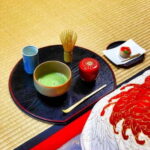
Based on reported guide styles, this stop may also include a more hands-on element. One reported experience mentions a calligraphy experience as part of the Zen visit. Even if your timing doesn’t include that exact activity, the point stays the same: Entokuin is where the tour slows down enough for you to feel what Zen spaces are trying to do.
Practical note: this is the kind of place where you’ll want a moment to stop walking and just look. If your travel style is “keep moving,” give yourself permission to stand still here for a minute or two. The garden details get clearer when you stop treating them like background.
Yasaka Kōshin-dō and the Five-Storied Pagoda Photo Spot
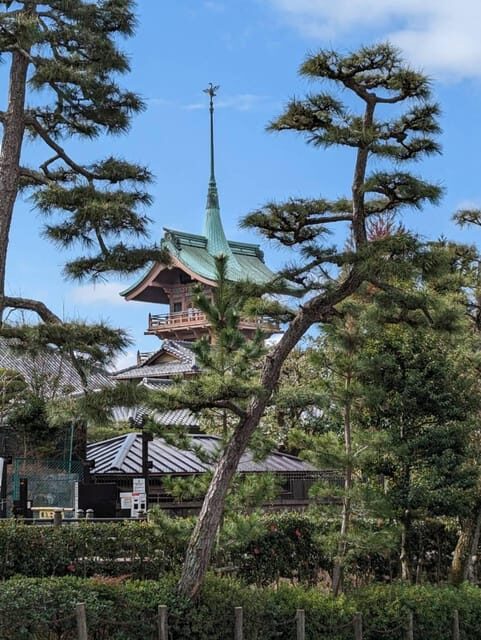
After Entokuin, the itinerary keeps you moving with a short on-foot segment and then a visit to Yasaka Kōshin-dō (about 15 minutes). This isn’t a long stay, but it’s useful because it positions you for the next visual payoff.
Near Koshindo, you’ll see the pagoda area outside. The five-storied pagoda is commonly called Yasaka-no-to, and it’s close to Koshindo. You won’t be walking through it, but you will get the look that most people come to Kyoto for: the clean, tiered silhouette that feels unmistakably Japanese the moment you spot it.
There’s also a famous photo spot on the street nearby, which is where a lot of the value of this portion comes from. Instead of guessing where the best angles are, the guide points you toward the spot that makes your picture feel like Kyoto, not like a random alley.
If you’re traveling with a camera, keep your settings simple. This stretch can be bright or contrasty depending on the time of day. And yes, you’ll likely deal with people stopping suddenly for photos. It’s Kyoto. The city runs on slow photo moments.
Kiyomizu-dera: Kannon Statues, the Nail-less Stage, and Pure Water
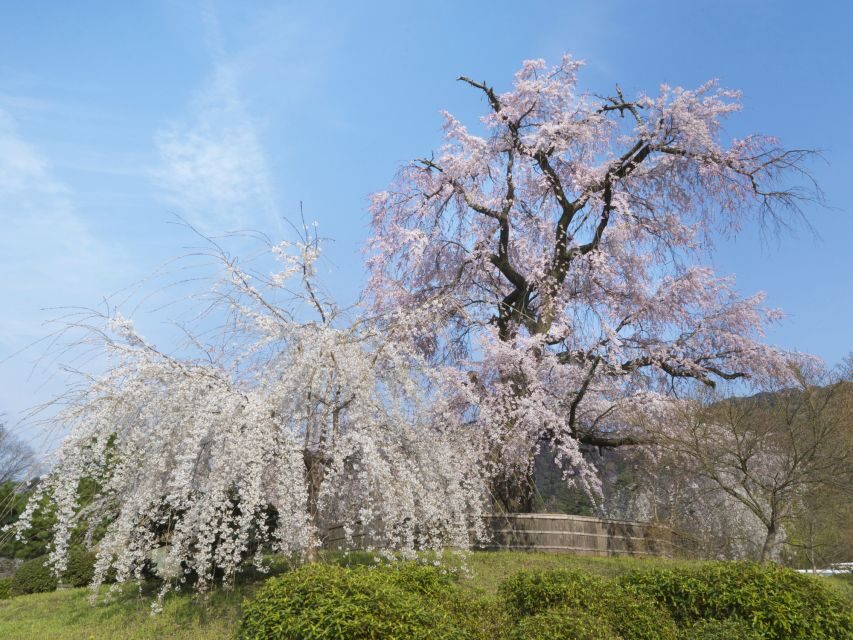
The final and biggest stop is Kiyomizu-dera, with about 35 minutes on-site. This is where the tour turns from “context” into “wow, I get it.”
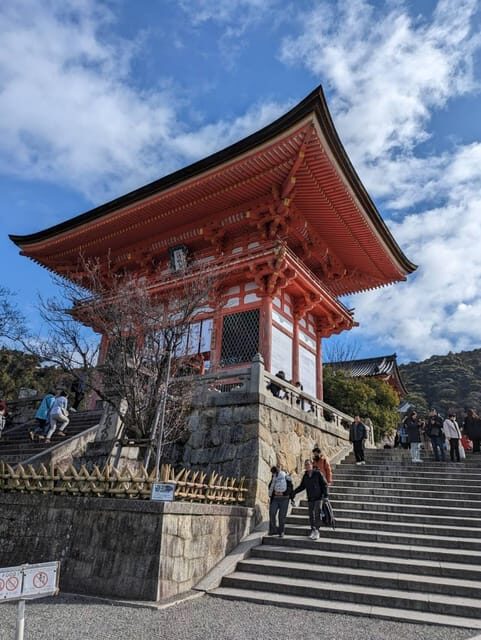
Kiyomizu-dera was originally built in the 8th century, and it’s described as hosting around five million visitors a year. That crowd number matters because it explains why you feel both the energy and the lines. This is one place where you’ll want patience more than speed.
You can also read our reviews of more private tours in Kyoto



Kannon Bodhisattva and the stage
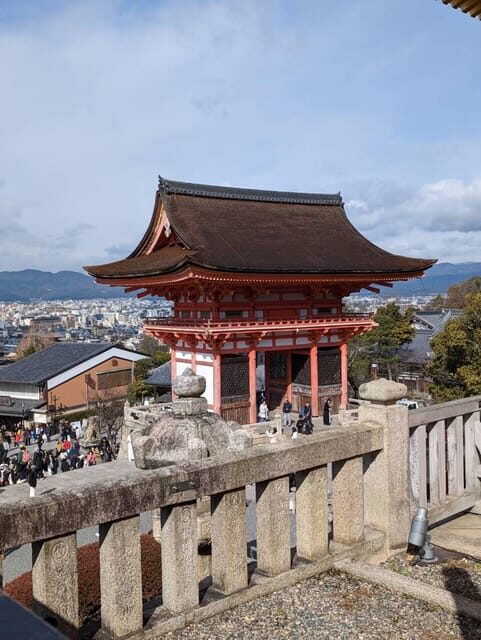
The main object of worship is Kannon Bodhisattva. You’ll see Buddhist statues in the area, including Kannon. One detail the guide emphasizes: a wooden stage attached to the main hall that’s built as a wooden structure without nails.
From that stage area, the views are a big part of what you paid for. You can see a three-storied pagoda called Koyasu Pagoda, literally tied to easy birth. Women visit it to pray for an easy birth, and that adds meaning to what might otherwise look like just another shrine corner.
Pure water and the line you’ll understand
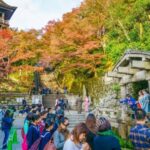
Another signature feature is the name itself: Kiyomizu means pure water. The water stream running down from the mountain behind the temple is described as never dried up. You’ll see lots of visitors standing in line to drink the water.
That line can feel like chaos until your brain catches up with the why. After the guide explains the context, it becomes more than a tourist ritual. You understand why people treat it as a meaningful act.
The iron stick, iron clogs, and small challenges
Inside the precincts, there are donated items: an iron stick and iron clogs. The stick is described as very heavy, and the guide encourages you to try lifting it. This is one of those silly-but-fun moments that balances out the solemn parts of the tour.
Jishu Shrine: match-making background at the right time
Before the tour ends (right after you step out of the main hall area), the guide explains something about Jishu Shrine, known as a shrine for match-making. It’s a smart timing choice because it helps you make sense of one more pocket of meaning before you leave the complex.
If you’re the kind of person who hates “random facts,” this is where it pays off. You’re not just reading signs. You’re getting the story that makes the signs make sense.
Price and Logistics: Is $80 Worth It for a Private Group?
At $80 per group (up to 5) for about 2 hours to roughly 2.5 hours, the cost isn’t scary compared to the value you get from a personal guide. The big reason: you’re paying for interpretation, not just walking.
A self-guided Kyoto day can be beautiful, but it’s easy to miss what matters. Here you’re buying clarity: how to worship at Yasaka, how the route ties to Nene and Toyotomi Hideyoshi, what to look for inside Entokuin, and why Kiyomizu’s features are meaningful. That context can turn “I saw a temple” into “I understand what I saw.”
The tradeoffs are also practical:
- Temple admission fees aren’t included, so plan a little extra budget if the sites charge entry during your visit.
- Transportation to and from the meeting point isn’t included, so you’ll pay your own way to the red gate at Yasaka Shrine.
- If you end up using taxis for any reason, one reported experience mentioned that as an extra cost. The tour is built around walking, but life happens.
The good news is that the tour is private, so the pacing is flexible. Reported experiences mention guides leaving time for photos and questions. That’s not free time in name only. It changes what you catch, because you’re not forced to keep up with a group pace.
What You’ll Learn in Plain Terms (Without the Temple-Studying Stress)
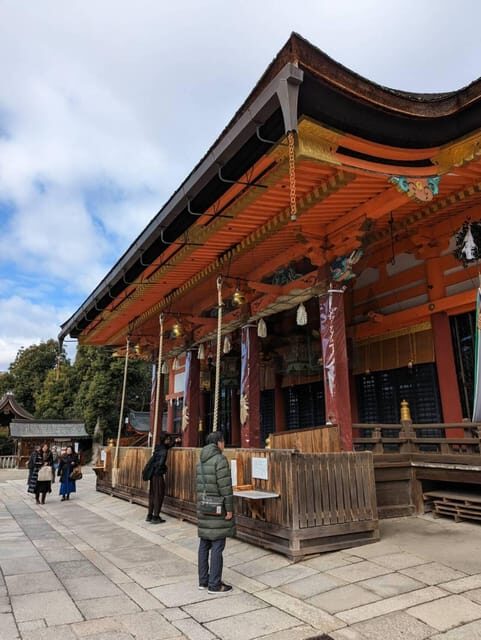
The tour’s strongest theme is simple: it teaches you how to read Kyoto. You learn the basics of shrine worship, how religious spaces function, and how historical figures connect to places you’d otherwise walk past.
Guides also show up with preparation style that makes the information easier to hold onto. In reported experiences, Hisako and other guides (like Hiroshita, Takayuki Ishii, and Hidakosan) used hand-made materials: folders, drawings, and notes to help you connect architecture and symbols to the stories being told. That’s why you’ll likely remember more than just a few temple names.
The religious angle is especially helpful. You’ll be able to spot differences in mood and purpose as you move from shrine rules at Yasaka into the Zen calm at Entokuin, then into the Kannon focus of Kiyomizu. Even if you’re not religious, it gives you a practical framework for understanding what you’re seeing.
Who Should Book This Tour, and Who Might Not
I think this works best if you fit one of these profiles:
- You want meaning with your photos, not just a checklist.
- You enjoy stories about Japan’s big historical names and how they show up in real neighborhoods.
- You’re curious about Shinto vs. Buddhism in everyday Kyoto life.
- You’d rather walk with a guide for a half day than try to decode signage alone.
It may be less ideal if:
- You want a sprint through the most famous spots with minimal talking.
- You hate crowded temple environments, because Kiyomizu-dera is described as drawing enormous visitor numbers.
- You’re extremely time-tight and can’t handle lines, steps, and stops.
Also, bring your expectations into the right shape. This is not about ticking Instagram frames only. It’s about understanding why the frames exist.
Should You Book This Kyoto Historical Walking Tour?
Yes—if you want Kyoto to make sense fast. This tour gives you what most first-time days lack: a guided translation layer. Starting at Yasaka Shrine’s red west gate, moving through Nene-no-michi, and ending at Kiyomizu-dera creates a full arc that feels like one story, not disconnected attractions.
I’d especially recommend it if you’re someone who likes asking questions. Reported experiences mention guides who answer patiently and adapt to interests. And when a guide arrives with hand-drawn notes and maps, you get more than facts. You get a mental model you can carry into the rest of your Kyoto days.
If you’re simply looking to see temples and leave, you might consider a cheaper, less interpretive plan. But if you want the kind of walking tour that makes you feel smarter at the end (in a good, not exam-test way), this private route is a strong choice for the price.
FAQ
Where is the meeting point for the tour?
You meet at the west gate (red gate) of Yasaka Shrine.
How long is the Kyoto historical walking tour?
It’s listed as 2 hours. The tour route also follows a 2.5-hour style walking plan.
Is this tour private?
Yes. It’s a private group for up to 5 people.
What language is the guide?
The live tour guide speaks English.
What temples or areas do we visit during the tour?
The tour includes Entokuin (Zen temple), Yasaka Kōshin-dō, and ends at Kiyomizu-dera. It also includes viewpoints and an explanation about Jishu Shrine.
Are entrance fees included?
No. Admission fees to the temples are not included.
Are meals included?
No. Meals and drinks are not included.
What should I bring?
Wear comfortable shoes, since you’ll be walking and there are stone steps.
Where should I get off if I use the train?
If you use the Keihan Line, get off at Gion Shijo Station. If you use the Hankyu Line, get off at Kawaramachi Station.
Where should I get off if I use the bus?
Get off at the bus stop named Gion, and then look for the stone steps before the red gate.