REVIEW · KYOTO
Full Day Hiroshima and Miyajima Tour by Bullet Train from Kyoto
Book on Viator →Operated by JTB Global Marketing & Travel Inc. · Bookable on Viator
Two worlds in one long day. This full-day trip stacks the beauty of Miyajima’s Itsukushima Shrine against the weight of Hiroshima’s atomic-bomb sites, with a guided English layer during the serious part.
I love how the day is built around a bullet train round-trip from Kyoto, so you spend less energy figuring out connections and more time actually being there. I also like that the Hiroshima segment is led by a national government licensed English interpreter, with guides such as Angela, Hiro, Azusa, Masako, Takeshi, and Sato known (from real departures) for keeping things organized and readable, even when the material is emotional.
One drawback: the schedule is tight. Expect a long day (about 13 hours 20 minutes) and timed stops—some people want more minutes on the island or extra time in the museum.
In This Review
- Key highlights worth planning around
- Kyoto’s morning start: Avanti meet point and bullet-train momentum
- Miyajima’s ferry ride: Sacred Island scenery and deer sightings
- How much time you get on Miyajima
- Lunch on your own: what to look for
- Itsukushima Shrine: the UNESCO site people remember
- Hiroshima’s Peace focus: Genbaku Dome and the memorial sights
- Hiroshima Peace Memorial Museum: emotional, timed, and very human
- Plan for crowds and audio limits
- Who should go (and who might want to prepare)
- The schedule reality: 13+ hours, limited flexibility, and return to Kyoto
- Price and value: is $399.71 worth it?
- Who this tour fits best
- Should you book the Hiroshima and Miyajima bullet-train tour?
- FAQ
- Where do I meet the tour in Kyoto?
- What time does the tour start and end?
- How long is the full day?
- How do I travel between Kyoto and Hiroshima?
- Is lunch included?
- What major sites are included in the itinerary?
- Do I get an English guide?
- Are admission fees included?
Key highlights worth planning around
- Kyoto to Hiroshima by Shinkansen with pre-arranged rail routing and group support to get you onto the right train
- Itsukushima Shrine on Miyajima plus the classic torii-photo setup and deer roaming the island vibe
- Genbaku Dome (Atomic Bomb Dome) as a preserved WWII landmark you visit up close
- Peace Memorial Park and the Hiroshima Peace Memorial Museum with guided context on Aug 6, 1945 and the city’s recovery
- Small group cap of 40 for a calmer experience than mass day tours
- Lunch is on your own on Miyajima, so you’ll want to plan for food at island eateries (oysters, okonomiyaki, eel rice)
Kyoto’s morning start: Avanti meet point and bullet-train momentum
Your day begins at 7:30 am at the JTB Sunrise Tours Desk inside Avanti (B1F), which is across from Kyoto Station’s Hachijo Exit. The tour staff then walk the group to the station, which matters more than it sounds. Kyoto Station is huge, and when you’re herding 40 people, getting everyone positioned correctly early prevents that end-of-day scramble.
Once you’re on the rails, you’ll take the Shinkansen for about two hours to Hiroshima Station. The itinerary is structured so you’re not left waiting around for trains or hunting down ticket machines. You’ll also be dealing with a major travel bottleneck in Japan—high-speed rail—so having a tour that handles the core logistics is a real quality-of-life win.
One small caution: seat assignment isn’t guaranteed the same way every time. The tour notes that seats may not be designated, even though some departures report getting reserved seats. Practically, I’d still aim to arrive a little early on the platform day-of (not because you’ll be late, but because it helps you find your car faster).
A few more Kyoto tours and experiences worth a look


Miyajima’s ferry ride: Sacred Island scenery and deer sightings
After you arrive in Hiroshima, the day moves you toward Miyajimaguchi, then onto a boat to Miyajima (the Sacred Island). This part of the trip is more than transport. The island approach gives you a clear visual shift—from city rail hub to tidal, shrine-centered Japan.
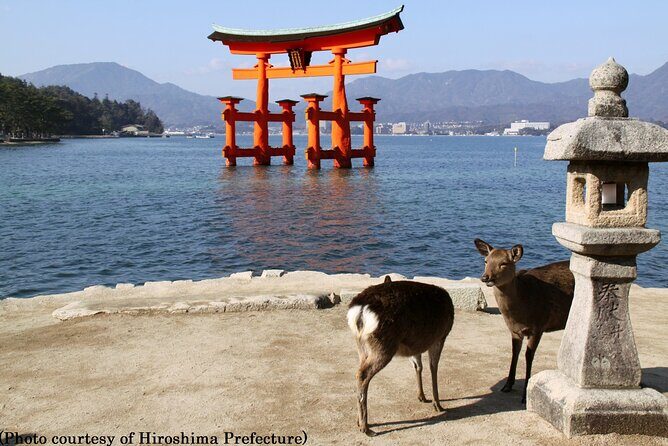
Miyajima’s star is Itsukushima Shrine, a UNESCO World Heritage site dating back to the 6th century. The shrine’s architecture is known for the Shinden-zukuri style, and it’s famous for the torii gate that appears to float on the water at high tide. You don’t control the tide schedule (and the tour timing is what it is), but you’ll still get the full shrine-island atmosphere that draws people here.
In real-world terms, this is one of those stops where you’ll feel the photo spots. Also, expect tame deer in the area. They’re part of the island’s daily rhythm, and they can pop into your path quickly, especially near food and shrine areas. It’s not scary; it’s just a reminder to keep your attention on your footing.
How much time you get on Miyajima
You’ll have about 45 minutes to around an hour on the island before lunch and island exploring time runs on. That’s enough for:
- The shrine area and classic views
- A few walks down the main stretches
- Some light shopping or snacks
But it’s not enough for a full “cover the whole island” day. If you’re the type who wants to roam every side path and stop at every temple, this may feel like a highlight reel.
Lunch on your own: what to look for
Lunch is not included, and you’re free to eat on Miyajima. The tour points out common local choices, and they’re worth using as your game plan:
- Oysters
- Hiroshima-style okonomiyaki
- Conger eel rice bowl
Because lunch is self-directed, it also gives you flexibility if you don’t want a set meal. One planning tip: don’t treat lunch like a casual afterthought. The island is compact, but your time window is real.
Itsukushima Shrine: the UNESCO site people remember
Itsukushima Shrine isn’t just a checkbox. Even if you’ve seen pictures before, standing near the shrine framing helps you understand why it became a UNESCO site in the first place. It’s the combination of architecture, water setting, and the feeling that this place was designed for a slower pace.
You’ll get about 1 hour at the shrine stop. That’s enough for the key viewpoints and photos without turning your visit into a sprint.
And having a guide early in the day helps. You’ll hear what makes the shrine historically important and why the waterline and structures matter. The difference between seeing it alone and seeing it with context is that, alone, it’s mostly visual. With a guide, you start noticing details in the structure and setting.



Hiroshima’s Peace focus: Genbaku Dome and the memorial sights
Once the day turns back toward Hiroshima, the emotional tone shifts—quickly, and on purpose. Your Hiroshima segment includes a licensed English interpreter (not just generic audio). That is a meaningful detail because the content here can be hard to process. Having real-time explanation helps you connect facts to what you’re actually standing in front of.
Your first major memorial stop is the Genbaku Dome, also called the Atomic Bomb Dome or Hiroshima Peace Memorial. It’s one of the few buildings that survived the bombing and has been preserved to promote peace and eliminate atomic weapons.
Next to it, you’ll also encounter the Children’s Peace Monument with thousands of origami cranes made by children. Even if the story behind such monuments doesn’t fully land in a quick glance, seeing the cranes in place gives it weight. You’re not reading about it; you’re looking at it.
There’s also the Atomic Bomb Memorial Mound, which contains the ashes of 70,000 bomb victims—many unidentified or without surviving relatives to claim them. This is the kind of information you don’t want to rush. The guide helps pace it so it doesn’t become a blur.
The biggest practical takeaway: give yourself a minute before your group moves on. Look first. Then listen.
Hiroshima Peace Memorial Museum: emotional, timed, and very human
The day includes time at Hiroshima Peace Memorial Park and the Hiroshima Peace Memorial Museum. The park was established in 1949, and the museum is described as an Important Cultural Property of Japan.
You’ll spend about 1 hour in the museum. That sounds long, but it can feel fast once you’re inside—especially because the exhibits are graphic and personally devastating in places. A key reality: you can’t take in everything in an hour. The value of the guided format is that you’ll get signposts—what to focus on and how to connect images to dates and outcomes.
Plan for crowds and audio limits
Some departures run smooth with the right equipment; others have had audio problems. The tour includes an option for receiving guidance through devices, but in at least one experience the equipment didn’t work well, which reduced the ability to hear the guide. If you’re sensitive to missed audio, sit where you can hear clearly, and don’t assume every device will work perfectly.
Also, the museum can run hot and crowded. That’s not a reason to avoid it—just a heads-up so you come prepared to stay alert and patient even if comfort isn’t perfect.
Who should go (and who might want to prepare)
Adults and older teens often find the museum powerful for historical understanding. Younger kids may find some photos disturbing. If you’re traveling with children, decide ahead of time how you want to handle sensitive content: do you want them close to the exhibits, or do you prefer a more distant, limited viewing approach?
The schedule reality: 13+ hours, limited flexibility, and return to Kyoto
This tour is long by design. You start at 7:30 am and you return to Kyoto Station around 9:00 pm. There’s no hotel drop-off at the end; you’ll head to your next destination on your own from Kyoto Station.
That timing is the deal you make: you’re packing Kyoto → Hiroshima (Shinkansen), Hiroshima → Miyajima (train/vehicle + ferry), island time, back to Hiroshima, memorial stops, and another rail ride home.
There are a few practical consequences:
- The order of activities can shift based on road conditions and congestion
- You should expect walking and transitions
- Lunch is on your own, and it’s part of the timing puzzle
Some people felt the island portion deserved more time, while others wanted the museum to get extra minutes. If you have one “must-do,” I’d pick your priority in advance. If you care most about Hiroshima history and the museum, understand that Miyajima is timed to essentials. If Miyajima is your main reason for going, understand that Hiroshima memorial sites will still take the center stage for the second half.
Price and value: is $399.71 worth it?
At $399.71 per person, this isn’t a cheap day. The value comes from what’s bundled, not from the label alone.
Here’s what you get that would be annoying to coordinate yourself:
- Round-trip Shinkansen transport between Kyoto and Hiroshima
- Museum and key-site admission tickets where included
- Miyajima visitor tax included
- A licensed English interpreter during the Hiroshima segment
- Included transportation between Hiroshima, Miyajimaguchi, and the ferry transfer
Lunch isn’t included, so that’s an extra variable on your end. But you can control lunch style at Miyajima since you’ll be eating where the local food is.
So is it worth it? For you, it likely makes sense if:
- You want the guided context for Hiroshima
- You’d rather not gamble with train timing and ticketing
- You’re traveling from Kyoto and want a long-day plan handled for you
If you’re a strong DIY traveler who’s comfortable planning Shinkansen timing and building an itinerary plus tickets, you may find cheaper options. Still, for many people, the “don’t think about logistics all day” effect is what they’re paying for.
Who this tour fits best
I’d say this is a strong choice for:
- First-timers to Hiroshima + Miyajima who want help making sense of the memorial sites
- Travelers who like structured pacing when the content is heavy
- Families where the group format reduces planning stress (with a heads-up that some museum material may be upsetting)
It may be a less ideal match if:
- You hate tight schedules and want long free time at each stop
- You need lots of museum reading time and are easily frustrated by time limits
- You’re very concerned about audio equipment reliability in crowded indoor spaces (rare issues can happen)
Should you book the Hiroshima and Miyajima bullet-train tour?
If your priority is seeing the headline places with less hassle and getting an English guide’s explanation during Hiroshima, I think booking is a good move. The combination of Miyajima’s calm beauty with Hiroshima’s memorial gravity is the kind of contrast that becomes more meaningful when you understand what you’re looking at.
Here’s how to make the day work for you:
- Decide what matters more to you: museum time or island wandering, since both are timed
- Wear comfortable shoes. You’re on the move for most of the day
- Eat lunch efficiently on Miyajima so you don’t feel rushed during the shrine and return segments
- If you’re sensitive to audio, sit where you can hear the guide during museum and memorial explanations
Overall, this is a classic “big day, big impact” tour: well-suited for travelers who want a guided, structured, Kyoto-to-Hiroshima day trip that still includes real moments on Miyajima.
FAQ
Where do I meet the tour in Kyoto?
You meet at the JTB Sunrise Tours Desk inside Avanti (B1F), across from Kyoto Station Hachijo Exit.
What time does the tour start and end?
The tour starts at 7:30 am and you return to Kyoto Station around 9:00 pm.
How long is the full day?
The duration is about 13 hours 20 minutes (approximately).
How do I travel between Kyoto and Hiroshima?
You travel by high-speed bullet train (Shinkansen) from Kyoto Station to Hiroshima Station, then back to Kyoto at the end of the day.
Is lunch included?
No. Lunch is not included, and you eat lunch on your own while you’re on Miyajima.
What major sites are included in the itinerary?
You visit Itsukushima Shrine on Miyajima, the Genbaku Dome (Atomic Bomb Dome), and the Hiroshima Peace Memorial Museum and park.
Do I get an English guide?
Yes. The tour includes a national government licensed English guide interpreter during the Hiroshima segment.
Are admission fees included?
Yes, admission tickets and related transport costs are included where listed, including Itsukushima Shrine and the Peace Memorial Museum, plus the Miyajima visitor tax.