REVIEW · KYOTO
Kyoto Afternoon Tour from Kyoto or Osaka
Book on Viator →Operated by JTB Global Marketing & Travel Inc. · Bookable on Viator
Kyoto in one afternoon, not a marathon. This tour packs three signature sites into one smooth loop, and the standout is Sanjusangendo Temple’s hall of 1,001 Kannon statues—a scene that’s hard to process from photos alone. The guide also does a solid job linking what you’re seeing to Kyoto’s long identity as Japan’s former capital.
I also love the way Fushimi Inari’s red torii gates set the tone early. Even with crowds, you still get that classic Shinto feel, plus the guide helps you make sense of Inari worship without turning it into a lecture.
The only real drawback: time is tight. You get about 30 minutes at two stops and roughly 1 hour 10 minutes at Kiyomizu-dera, and if your arrival lines up with dusk, the big terrace views may be darker than you hoped.
In This Review
- Key highlights to know before you go
- Why this Kyoto afternoon loop works
- Meeting at Kyoto Station and getting oriented fast
- Fushimi Inari Taisha: the red Torii walk you can pace
- Sanjusangendo Temple: 1,001 Kannon statues in a single long hall
- Kiyomizu-dera: the walk up and the view gamble
- How the short timing affects what you’ll remember
- Price and what you’re really buying for $82.58
- Group size, crowds, and hearing the guide
- What to bring for a comfortable afternoon
- Who this tour is best for
- Should you book this Kyoto afternoon tour?
- FAQ
- How long is the Kyoto Afternoon Tour?
- What stops are included in the tour?
- Are entrance fees included?
- Do we enter the Shin-en garden at Fushimi Inari Taisha?
- Is food included on this tour?
- Can I cancel for a full refund?
Key highlights to know before you go
- 1,001 Kannon statues at Sanjusangendo in Japan’s longest wooden hall
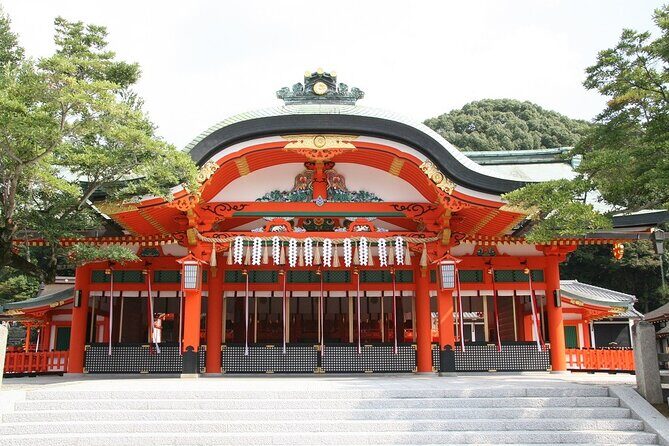
- Fushimi Inari’s Senbon Torii with photo-friendly red columns
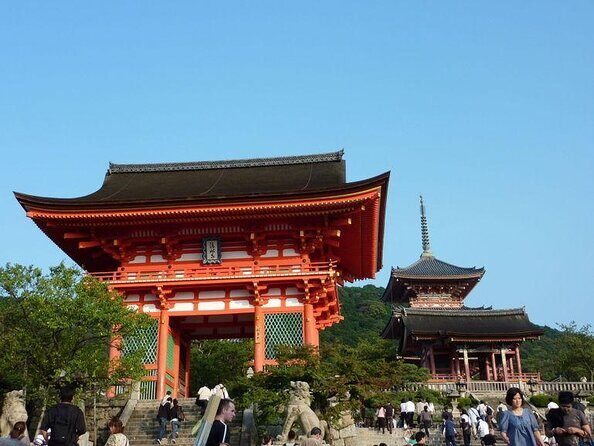
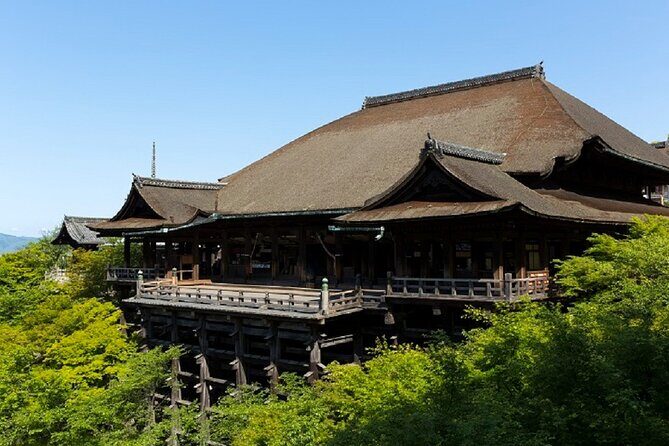
- Kiyomizu-dera panoramic views from terraces above Kyoto
- Entrance fees included for all the main stops
- A guide who keeps things understandable and organized in a short window
- Big crowd energy, especially around Kiyomizu-dera, that you can’t avoid
Why this Kyoto afternoon loop works
Kyoto rewards patience, but most of us don’t have patience for all day temples. This afternoon format is built for people who want the big hits—Shinto shrine, major Buddhist temple, and the skyline view—without burning an entire day to travel between them.
What makes it work is the selection. You start at a shrine tied to one of Japan’s most widely known gods (Inari), then you shift to a temple famous for scale and devotion (Sanjusangendo’s Kannon statues). Then you end with Kiyomizu-dera, where Kyoto turns into a view-based experience: terraces, walkways, and the Higashiyama mountain backdrop.
You also get a “guided filter” that helps a lot at these famous sites. When you don’t know what you’re looking at, famous places can feel like sightseeing checkboxes. A good guide helps the details stick—why a place matters, what parts to notice, and what to skip or watch for.
You can also read our reviews of more tours and experiences in Kyoto.



Meeting at Kyoto Station and getting oriented fast
Your meeting point is at the Avanti Tour Desk near Kyoto Station in the afternoon. That’s a plus if you’re staying around the station area, and it keeps the tour from turning into a complicated hotel pickup puzzle.
One practical point: the desk can be easy to miss. I’d give yourself extra time to find it—some groups have had trouble locating the exact office entrance because it’s inside a big building, and the meeting area may be on a lower level.
Once you’re gathered, the tour uses transportation included in the price, so you’re not juggling transit lines or timing between neighborhoods. You’ll also have a mobile ticket, which cuts down on printed paperwork and lost tickets.
Seats may not be assigned, so if you’re sensitive to motion or want to manage photo angles, just try to board early and pick what works for your comfort.
Fushimi Inari Taisha: the red Torii walk you can pace
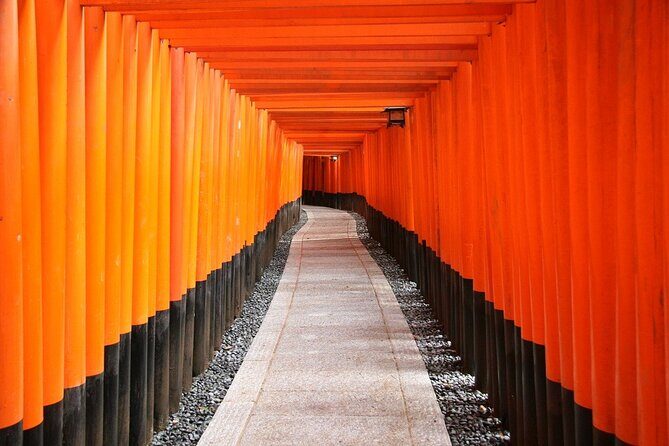
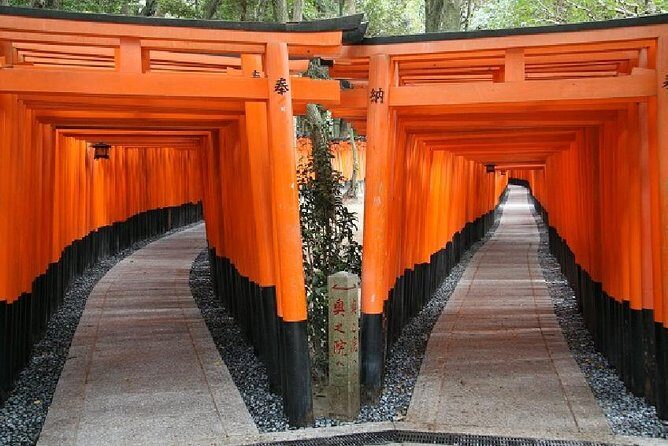
Fushimi Inari Taisha is the head shrine of Inari worship, with a network of about 40,000 inari-jinja shrines across Japan. Here, the dramatic signature is the Senbon Torii—those repeating red gates that create a corridor effect. Even if you’ve seen images before, the depth in person makes it feel bigger than a postcard.
The tour stop is about 30 minutes, and it starts with a bit of walking. You’ll walk from the parking area to the shrine for about 15 minutes one-way, so factor that into your real time on site.
Here’s the smart way to use your short window: pick a turn-around point. If you only have half an hour, don’t aim for the farthest reaches of the gates. Instead, walk far enough to feel the gate rhythm, then pause for photos and let the crowd flow do the rest. The line-of-gates look is strongest where you can see multiple torii receding behind you.
Also note the tour does not enter the Shin-en garden at this stop. That doesn’t ruin the visit—it just means your time is concentrated on the gates/shrine area rather than a specific garden feature.
Sanjusangendo Temple: 1,001 Kannon statues in a single long hall
Then you head to Sanjusangendo Temple, on Kyoto’s eastern side. This is one of those places that quietly shocks you. The hall is famous as Japan’s longest wooden structure, and it houses 1,001 life-size statues of Buddhist Kannon deities dating back to the 13th century.
Your time here is about 30 minutes, and that sounds short until you realize what you’re walking into. Sanjusangendo isn’t a “wander for hours” kind of place; it’s a “look long enough to understand scale” place. The long hall pulls your attention down its length, and the statues create a wall-of-presence feeling that photos often flatten.
A useful expectation-setting tip: plan to slow down at the viewing points. If you rush in and out, you miss the effect. If you take a minute to stand still and scan the length of the hall, the whole thing clicks—devotion isn’t abstract here; it’s architectural.
Entrance is included, and this stop tends to be where the tour feels most distinct from just random temple-hopping. It’s a clear “yes, I’m glad I booked this” kind of landmark.
Kiyomizu-dera: the walk up and the view gamble
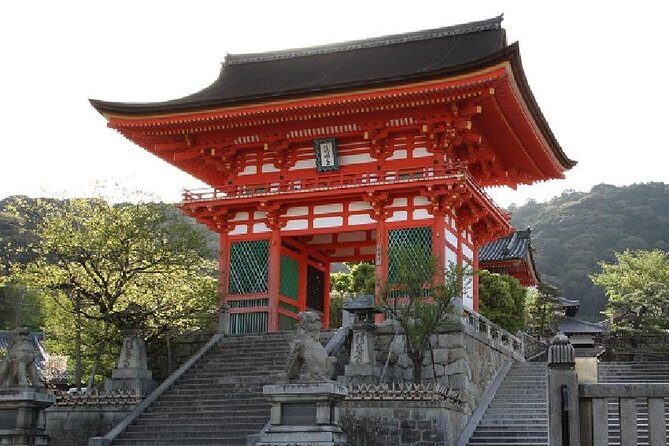
Finally, you reach Kiyomizu-dera Temple—also called Kiyomizu-dera/Kiyomizu-dera is the UNESCO World Heritage site name you’ll hear. This is the stop most people think about for Kyoto views. The terraces and walkways give panoramic sightlines over Kyoto and the surrounding areas.
The tour allocates about 1 hour 10 minutes here, and entrance is included. That extra time matters, because getting to Kiyomizu-dera is not just stepping into a courtyard. You’ll deal with a walk up and the crowd flow in the immediate approach area.
One consideration from real-world experience: the climb can feel strenuous, especially on a hot or sunny day. If you’re not a fan of uphill walking or you have limited stamina, take your time, use the slower crowd lanes when they exist, and don’t force a “pace.”
Then there’s the biggest variable: timing. This is often the most photo-focused stop, but if you arrive close to dusk—one group found the schedule meant reaching Kiyomizu-dera at about 4:30 p.m.—the view becomes night-dark rather than golden. If you want foliage or late-day color, earlier afternoon timing can help. If you don’t mind evening vibes, that same timing can still be beautiful.
You’ll also walk through the historic shopping lane lined with pottery stores on the way in. That’s a nice break from temple-only time, and it’s where you can pick up small Kyoto-style gifts without adding extra errands.




How the short timing affects what you’ll remember
Because this is an afternoon tour, it’s designed like a highlights reel: 30 minutes at each of Fushimi Inari and Sanjusangendo, then 1 hour 10 minutes at Kiyomizu-dera.
That means you’ll likely get:
- enough time for the key photo angles
- enough time to follow the guide’s explanations
- not enough time to do slow side-quests (extra paths, long meditation pauses, or deep shopping detours)
This is especially true at Kiyomizu-dera, where crowd density can slow you down. When it’s packed, “time on paper” doesn’t always feel like time in reality. You’ll see the main sights, but if you’re the type who wants to linger in every courtyard, you may wish you had more hours.
There’s also the “transport time” effect. Even though stops are timed, you’re still moving between them, and road congestion can shuffle arrival order and exact timing. The tour even notes that order and times can vary with conditions. Translation: keep a flexible mindset and focus on finishing the loop rather than chasing a perfect sunset window.
Price and what you’re really buying for $82.58
At $82.58 per person, this isn’t the cheapest way to see Kyoto’s temples—but you’re not paying for just a bus ride either.
Here’s what’s included in your ticket value:
- a licensed English guide interpreter
- entrance fees for the main stops
- transportation costs
- a mobile ticket for easy entry
The cost makes more sense when you compare it to buying multiple separate tickets and dealing with transit and timing yourself. Also, you’re saving brainpower. You don’t have to decide which temples are worth your time when your day is limited, and you don’t have to map routes on the fly while you’re tired and facing crowd schedules.
One more value factor: the guide element. In feedback tied to this tour, guides like Momo and Yoshi come up as being funny, engaging, and good at keeping the group moving. That matters when your whole visit is compressed. A dull guide can make a short tour feel even shorter; a strong one makes it feel like you got an orientation plus the highlights.
Group size, crowds, and hearing the guide
The tour lists a maximum group size of 40 travelers, which is decent for a city day trip. Still, Kyoto’s top sites are top sites for a reason—so crowds are part of the deal, especially around Kiyomizu-dera.
One practical note: if your particular departure runs larger than expected, it can be harder to hear explanations. Some groups have reported difficulties understanding the guide when the group felt quite large. If you care about clearly hearing every detail, try to stand where you can see the guide and avoid getting stuck at the back.
Also: seats may not be designated. On the bus, that can affect comfort, but it doesn’t affect the itinerary. Just go in knowing the tour is more about moving efficiently than offering assigned comfort.
What to bring for a comfortable afternoon
Since the tour doesn’t include food and drinks, plan on buying water or a snack along the way. Kyoto afternoons can be humid, and your schedule includes walking time plus uphill effort at Kiyomizu-dera.
I’d bring:
- a refillable water bottle
- comfortable walking shoes (you’ll climb and stand)
- a light layer for air-conditioned bus rides and temple shade
- cash or card for small shopping along the approach to Kiyomizu-dera
Also consider your photo plan. Kiyomizu-dera can be noisy and crowded, and Fushimi Inari’s gate corridors can produce the classic “everyone’s in the same spot” vibe. Go early in your allocated stop time to get clearer shots, then use the later minutes to enjoy the atmosphere even if photos are less perfect.
Who this tour is best for
This is a great fit if:
- you only have an afternoon in Kyoto
- you want a Shinto + Buddhist mix with a major skyline view
- you’d rather pay for guidance and entrance fees than figure out everything solo
- you want a first-day-orientation style visit to get your bearings quickly
It may be less ideal if:
- you hate uphill walking or tight timing
- you want to linger deeply at temples and gardens
- you’re chasing specific late-afternoon light or foliage effects and your schedule is inflexible
If you’re traveling as a family, kids are welcome. Children up to 5 years old can join free, but they won’t be provided bus seats—so check what seat arrangement you’ll want for your group.
Service animals are allowed, and the meeting point is near public transportation. Most people can participate, but your comfort level with walking is the main deciding factor.
Should you book this Kyoto afternoon tour?
Yes, I think you should book it if you want Kyoto’s three most talked-about visuals—red torii gates, the long hall of Kannon statues, and the terrace views from Kiyomizu-dera—without turning your trip into a logistics project.
Book with a smart expectation:
- treat it as a highlights loop, not a slow cultural ramble
- plan for crowds and keep your camera flexible
- if you care about the very best view light, aim for earlier afternoon timing when possible
If your goal is only one thing—like spending hours at Kiyomizu-dera or shopping for hours—then an all-day plan might fit you better. But for a first taste of Kyoto, guided, efficient, and entrance-fee-included, this is strong value.
FAQ
How long is the Kyoto Afternoon Tour?
It runs about 4 hours 40 minutes (approximately).
What stops are included in the tour?
You visit Fushimi Inari Taisha, Sanjusangendo Temple, and Kiyomizu-dera Temple.
Are entrance fees included?
Yes. Entrance fees for the included sites are part of the tour price.
Do we enter the Shin-en garden at Fushimi Inari Taisha?
No. The tour will not enter the Shin-en garden.
Is food included on this tour?
No. Food and drinks are not included.
Can I cancel for a full refund?
Yes. You can cancel up to 24 hours in advance for a full refund. If you cancel less than 24 hours before the start time, the amount paid is not refunded.