REVIEW · KYOTO
Kyoto Arashiyama Bamboo forest & Garden Half-Day Walking Tour
Book on Viator →Operated by MagicalTrip Inc. · Bookable on Viator
Arashiyama feels calmer when you walk it. I love two things most: temple and garden admissions are included, and the Kyoto-style lunch plus matcha gives you a proper break without hunting around. One drawback to plan for: this is a lot of steps for a “half-day,” so it may not suit slower walkers or anyone needing very limited walking.
You’ll also get a small-group experience capped at seven, which makes it easier to ask questions and keep track of your pace. I like that the tour includes photos during the walk, so you can spend more time actually looking and less time behind your phone.
The route is built around Arashiyama’s contrasts: quiet gardens, famous sights, and the Katsura River area at human speed. Since you’ll visit Buddhist and Shinto places, bring respectful clothing—easy fix, and it helps you feel right at home.
In This Review
- Key things that make this Arashiyama tour worth your time
- Getting to Arashiyama: meeting point, timing, and staying together
- Enter Hokyoin: a quiet garden start instead of the main crowd
- Sagaogurayama Donomaecho: the neighborhood stop that gives context
- Bamboo Forest Street: fast, guided, and built for good photos
- Okochi Sanso Garden: 45 minutes of landscaped calm
- Togetsukyo Bridge lunch: the break that keeps the day from falling apart
- Tenryu-ji Temple: Zen gardens and World Heritage details with a guide
- The finish near Togetsukyo Bridge: souvenirs and one last look
- Price and value: what $129.33 buys you (and what it saves you)
- The walking reality: shoes, pace, and comfort matter
- Guides can make or break this kind of day
- Who should book this Arashiyama walking tour
- Quick tips so your day goes smoothly
- Should you book? My take
- FAQ
- How long is the Kyoto Arashiyama bamboo forest and garden walking tour?
- How many people are in the group?
- What’s included in the price?
- Do they offer vegetarian, vegan, or gluten-free meals?
- Where does the tour start?
- Where does the tour end?
- Is the tour suitable for people with mobility issues?
- Can I get a refund if I need to cancel?
- What should I wear for the temple and shrine visits?
Key things that make this Arashiyama tour worth your time
- Max seven people keeps the day from turning into a train of strangers
- Admissions included for Hokyoin, Okochi Sanso Garden, and Tenryu-ji (so you’re not stuck in ticket lines)
- Kyoto-style lunch near Togetsukyo Bridge keeps the best photo backdrop from turning into a scramble for food
- Matcha drink + tea ceremony snack gives you a Kyoto pause that’s more than a coffee stop
- More than the bamboo grove with gardens and side streets that many people skip
- Tour photos afterward lets you see the best angles even if the crowd makes perfect photos hard
Getting to Arashiyama: meeting point, timing, and staying together
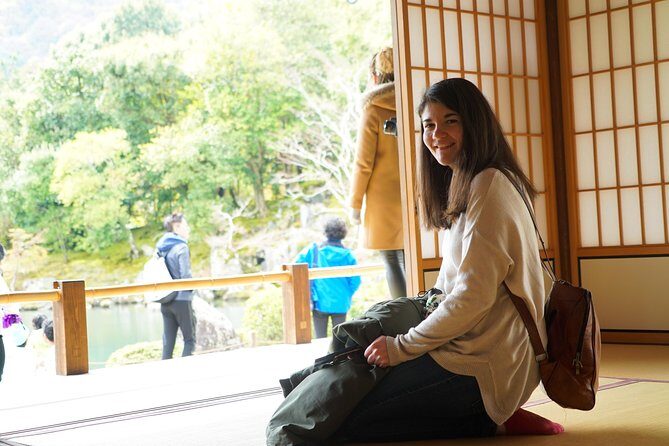
This half-day tour starts at 嵯峨嵐山駅北口タクシー乗り場 (Sagatenryuji Station, north exit taxi stand), in Ukyo Ward. It ends around Togetsukyō Bridge—often near the main souvenir street, but the exact finishing spot can shift depending on where lunch lands.
That end detail matters more than you’d think. If you want to continue walking along the river afterward or pair this with another nearby plan, you’ll appreciate having the bridge area as the final landing point.
The tour runs for about five hours overall. The pace is designed to fit in major highlights without turning every stop into a sprint. Still, expect substantial walking. One review specifically called out around 28,000 steps, so treat this like an active morning/early afternoon, not a gentle stroll.
You can also read our reviews of more walking tours in Kyoto


Enter Hokyoin: a quiet garden start instead of the main crowd
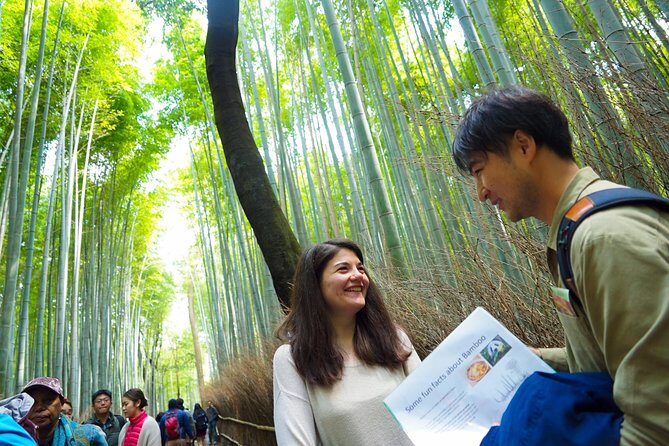
Stop one is Hokyoin, a hidden-garden style visit that lasts about 15 minutes, with admission included. This is a smart warm-up. You start with calm, not chaos. The vibe here is very Kyoto: smaller spaces, careful landscaping, and a sense that you’re allowed to slow down.
Why it works: if you jump straight into the bamboo grove first, the contrast can feel jarring. Starting in Hokyoin helps you “change gears” early. You begin noticing details—paths, textures, and how guides translate space into story.
A practical tip: if you’re the kind of person who likes photos, Hokyoin is a good place to practice your framing before you hit the busier river-and-bamboo zones.
Sagaogurayama Donomaecho: the neighborhood stop that gives context
Next you go to Sagaogurayama Donomaecho for about 1 hour (no admission). This is where the tour feels less like a checklist and more like a walk through the real area around Arashiyama’s famous landmarks.
The value here is context. The bamboo forest and big temples can feel like stage sets if you only look at the big-name attractions. A neighborhood stop gives you a sense of how locals experience the district: everyday streets, calmer side spaces, and the rhythm of walking between sights.
If you like asking questions, this is a good slot. Many of the praised guides—names like Yuki, Masa, and Josh show up in feedback—are described as helpful with culture and area stories. This kind of stop is where that storytelling lands best.
Bamboo Forest Street: fast, guided, and built for good photos
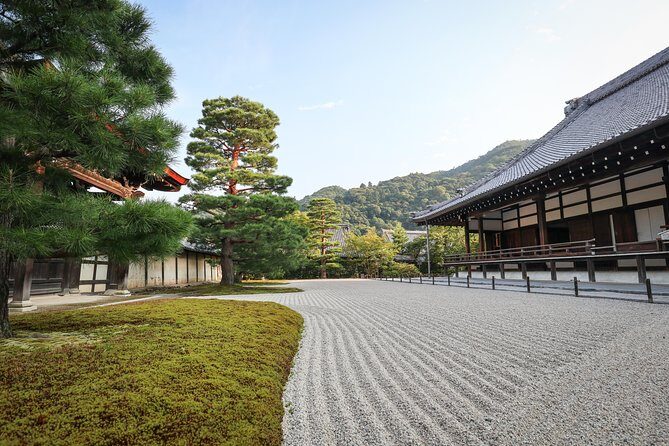
Then you hit Bamboo Forest Street for about 15 minutes. Admission is free for this stop, and the focus is clear: bamboo forests and taking good pictures.
Let’s be honest. The Arashiyama bamboo grove is popular. Even with a guide, you’re likely to feel the crowd energy at least some of the time. The tour’s short time-box helps you avoid standing around forever waiting for a perfect moment.
How to make it work for you:
- Move with the group, but don’t rush the moment you get a gap in the crowd.
- If you’re photographing, take two passes: one for the “tall bamboo” shot, one for foreground framing that includes walkway lines.
Also, bring an eye for details. The best bamboo photos often come from angles, not just standing under the stalks.
Okochi Sanso Garden: 45 minutes of landscaped calm
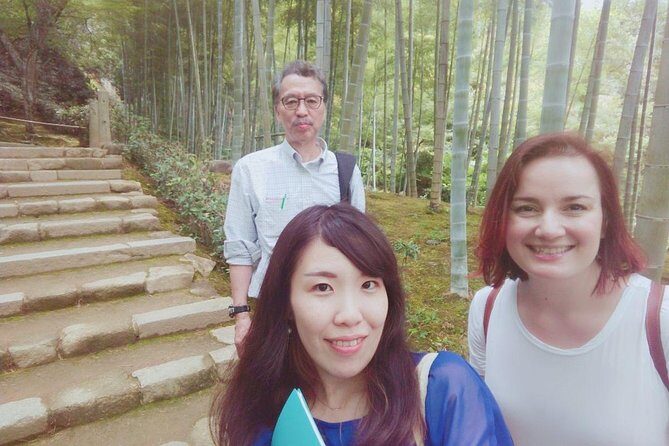
After the bamboo, you visit Okochi Sanso Garden for about 45 minutes. Admission is free on the tour listing for this stop, and the garden experience is one of the big reasons people love the overall day.
Okochi Sanso is a garden where you’re meant to linger. In feedback, the garden side gets praised for feeling serene, with time to absorb viewpoints and atmosphere. Some guide notes mention especially scenic angles—think city-and-mountain views—and the kind of quiet pauses that make the bamboo crowd feel far away.
What to expect on the ground:
- Paths designed for slow walking and looking
- Plenty of visual layers: rocks, greenery, framed views
- A smoother tempo than the bamboo area
If you start to feel “sight fatigue” (it happens after the first famous stop), this is where the day recharges.
A few more Kyoto tours and experiences worth a look

Togetsukyo Bridge lunch: the break that keeps the day from falling apart
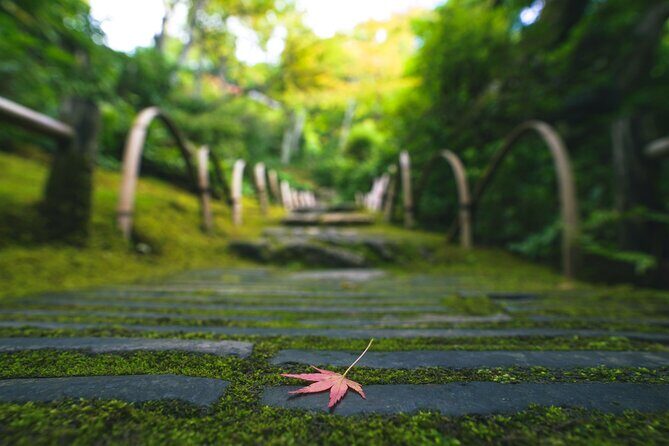
Then you get to Togetsukyo Bridge, with a lunch stop around the bridge area for about 1 hour. Lunch is included, and it’s described as delicious and authentic Kyoto-style. A matcha drink with a small tea ceremony snack is also included as part of the experience.
This is one of the best-designed parts of the itinerary. Bridge-area meals can be either crowded or disappointing if you hunt on your own at the wrong time. Here, you’re slotted in with the group and guided so you can focus on eating and resetting.
Diet notes you should know:
- Lunch options for vegetarian/vegan/gluten-free are limited
- You need to request dietary needs at least one day before
- They say they can’t guarantee allergy-free meals, since the kitchen isn’t under their control
If you have serious allergies, plan carefully and double-check instructions early. If your diet is vegetarian or you avoid gluten, this tour often fits well, but the “limited” wording is real.
Also, this lunch stop is a natural photography moment. After you eat, you can usually enjoy the bridge area with less stress than if you were trying to coordinate food and sightseeing alone.
Tenryu-ji Temple: Zen gardens and World Heritage details with a guide
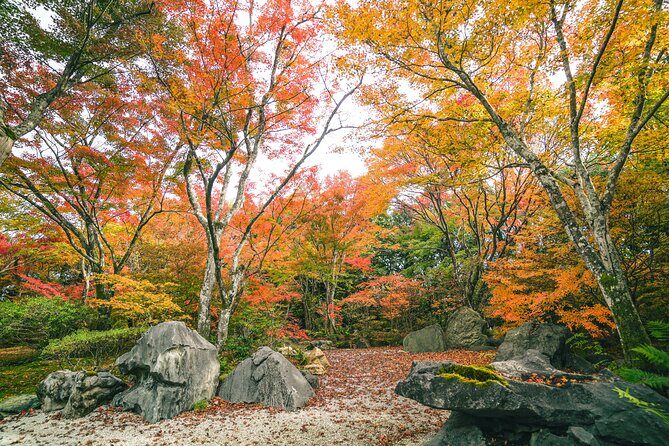
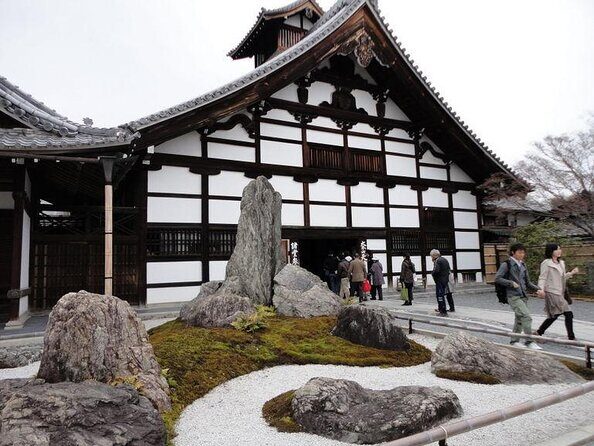
The tour’s major temple stop is Tenryu-ji Temple, lasting about 30 minutes with admission included. Tenryu-ji is a World Heritage site, and the guide commentary focuses on Japanese gardens and Zen paintings.
This is the moment where the small-group guiding shows its worth. A garden is just a garden until someone tells you what to look for—how layouts create movement, how Zen art connects to space, and why certain viewing points matter.
In reviews, guides are repeatedly praised for making cultural and historical explanations memorable, with names like Josh, Masa, Hiroko, and Kana coming up in connection with temple/garden interpretation and a good sense of humor.
Practical note: this is also where you’ll likely feel the “respectful place” energy most strongly. Dress appropriately and take your time. Even if you only get 30 minutes, this stop is designed for meaning, not box-checking.
The finish near Togetsukyo Bridge: souvenirs and one last look
The tour ends at Togetsukyo Bridge / the souvenir street area, with about 20 minutes allocated for the final hang. Admission is listed for the last segment as well, but the main purpose is simple: get you back into the most convenient walking zone for your next move.
A good strategy: use this last stretch to decide what you want next.
- If you want lingering river views, head toward the bridge area right away.
- If you prefer shopping or snack stops, the souvenir street is where you’ll find it.
Since lunch location can affect the exact finish, stay flexible. Arashiyama rewards unplanned detours anyway.
Price and value: what $129.33 buys you (and what it saves you)
At $129.33 per person, you’re paying for a “guided day with built-in costs,” not just someone walking next to you.
Here’s what your money covers:
- Temple/garden admissions for stops like Hokyoin and Tenryu-ji (and the Japanese garden visit)
- A Kyoto-style lunch plus a matcha drink and a tea snack
- A certified guide from MagicalTrip
- Photos taken during the tour
- A structured route across Arashiyama highlights without you figuring out ticket timing
If you’ve ever planned this part of Kyoto on your own, you know how quickly it turns into: ticket lines, map confusion, and the “where do we eat?” scramble. Paying for this structure is what makes the price feel fair.
Is it “cheap”? No. But it’s priced like an organized cultural walk with included meals and paid entries. For many people, that’s exactly what makes it good value—less friction, fewer decisions.
The walking reality: shoes, pace, and comfort matter
Even though it’s labeled half-day, the tour is active. One review called out serious step counts, and the itinerary includes multiple areas that require proper walking comfort.
What you should do before you go:
- Wear shoes you can walk in for hours
- Bring water, especially in heat
- Check your weather prep since the tour warns about summer heat and winter cold, with potential safety cancellations in bad weather
The route is not recommended for people with mobility issues, and that’s not a small detail. If walking is hard for you, a private option would likely fit better.
Guides can make or break this kind of day
One of the strongest themes in the feedback is the guides themselves. People praise guides like Josh for clear history and culture explanations with humor, Yuki for answering questions and giving solid forest-area info, and Masa for combining knowledge with a serene, relaxed day.
Some guides also get mentioned for small extras:
- Ayuri is noted for attentive pacing, hands-on guidance at the temples, plus extra learning moments like a kanji lesson and time for a special drink
- Hiroko gets credit for kindness and for making garden time feel thoughtful rather than rushed
You can’t pick your guide in advance from the details here, but it’s still a useful signal: this tour tends to attract instructors who care about explaining what you’re seeing.
Who should book this Arashiyama walking tour
Book it if you want:
- A small-group Arashiyama day with less crowd stress
- A mix of bamboo, gardens, and a serious temple stop like Tenryu-ji
- Lunch and matcha included so you don’t waste time searching
- Guided context that helps the sights mean more than just photos
Skip it (or consider another format) if:
- You have mobility limitations and need a less walking-heavy plan
- You have strict allergies and need guaranteed allergy-free handling (the tour notes limitations here)
- You only want the bamboo grove photo and nothing else—this route gives you more, and that can be overkill if all you care about is one stop
Quick tips so your day goes smoothly
- Bring respectful clothing for temple/shrine stops.
- Plan for serious walking. Good shoes are non-negotiable.
- If you need dietary accommodations, send requests early, at least a day ahead.
- Use the included photo service as a backup plan. It’s there for a reason, especially when crowds make your best shot hard.
Should you book? My take
If you’re spending limited time in Kyoto and you want Arashiyama done the smart way—bamboo plus gardens plus Tenryu-ji, with lunch handled for you—this is a solid choice. The included admissions and meal make the day feel “taken care of,” and the small group size keeps the whole experience from feeling chaotic.
The main thing to get honest about is walking comfort. If you can handle a very active half-day, you’ll likely love how the guide turns famous stops into a real sense of place.
FAQ
How long is the Kyoto Arashiyama bamboo forest and garden walking tour?
It runs for about 5 hours total.
How many people are in the group?
The tour has a maximum of 7 travelers, so it stays small.
What’s included in the price?
You get entrance fees to temple and garden stops on the itinerary, a Kyoto-style lunch, a matcha drink with a small tea ceremony snack, tour photos, and a certified guide from MagicalTrip. You also receive mobile tickets.
Do they offer vegetarian, vegan, or gluten-free meals?
Yes, but options are limited. You need to request your dietary needs at least 1 day before the tour.
Where does the tour start?
The meeting point is 嵯峨嵐山駅北口タクシー乗り場 (Sagatenryuji Station, north exit taxi stand), in Ukyo Ward.
Where does the tour end?
It ends near Togetsukyō Bridge, often around the main souvenir street. The exact finish area may shift depending on the lunch restaurant location.
Is the tour suitable for people with mobility issues?
It is not recommended for people with mobility issues. If walking is difficult for you, the tour suggests booking a private tour instead.
Can I get a refund if I need to cancel?
Yes. There is free cancellation up to 24 hours in advance for a full refund. The tour also says it may cancel for safety due to unsuitable weather.
What should I wear for the temple and shrine visits?
Wear respectful clothing, since the tour includes Buddhist and Shinto facilities.