REVIEW · TOKYO
Tokyo: Shinjuku Historical Walking Tour & Secret Backstreets
Book on Viator →Operated by Local Guide Stars · Bookable on Viator
One of Tokyo’s best parties starts in an alley. This Shinjuku night walking tour mixes famous neon with quieter backstreet pockets so you get the full picture fast. It’s built for people who don’t want to wrestle with maps after dark.
I especially liked the local guide planning—they keep the walk moving, explain what you’re seeing, and tailor stops to your interests (I’ve heard guides like Mao, Akari, and Cherry do this really well). I also liked that you get food and drink leads plus photo-ready sights, from Memory Lane snacks to Golden Gai’s tiny bars.
One consideration: this is a night walk through busy entertainment areas, and it requires good weather, so bad weather could affect timing and comfort.
In This Review
- Quick hits before you walk
- Why Shinjuku’s night streets work so well on foot
- Shinjuku Station meeting: getting oriented without wasting time
- Omoide Yokocho (Memory Lane): old Japan vibes in a tiny alley
- Kabukicho: Tokyo nightlife energy without getting lost
- Tokyu Kabukicho Tower: modern structure in the middle of the neon
- Shinjuku Golden Gai: narrow alleys and tiny bar culture
- Hanazono Shrine: a calm reset inside busy Shinjuku
- What the guide does for you: history, context, and food leads
- Price and value: why $25.20 can make sense in Tokyo
- Who should book this Shinjuku night walk
- Should you book the Shinjuku Historical Walking Tour & Secret Backstreets?
- FAQ
- How long is the Shinjuku Historical Walking Tour & Secret Backstreets?
- What does the tour cost?
- Where do we meet, and where does the tour end?
- Is the ticket mobile?
- What’s included in the tour fee?
- Do I need to pay admission for the stops?
Quick hits before you walk
- A tight 90-minute loop that helps you get your bearings in Shinjuku quickly
- Omoide Yokocho first for classic alley energy and easy night photography
- Kabukicho + Tokyu Kabukicho Tower for neon streets and a modern skyline pause
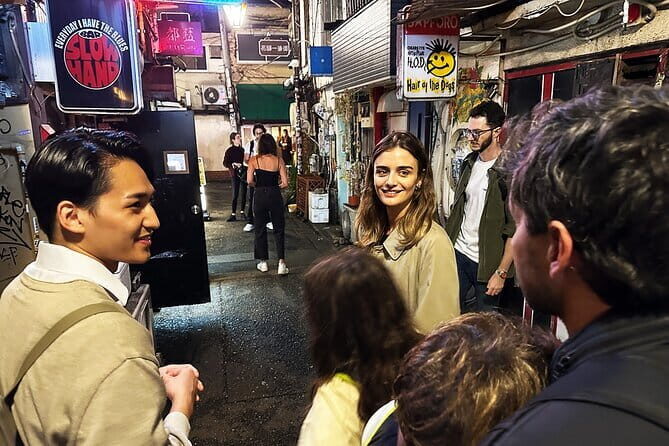
- Golden Gai’s narrow lanes where you feel Tokyo nightlife up close
- Hanazono Shrine reset so the night doesn’t blur into one long street
- Guides who adjust to you, with examples from Mao, Akari, Maya, Cherry, and others
Why Shinjuku’s night streets work so well on foot
Shinjuku is one of those places where the best parts aren’t the big landmarks. The real experience is the rhythm: neon outside, quiet alleys inside, and a surprise shrine tucked into the city grid. Walking is the only way to catch those contrasts without missing them.
This tour is timed for night viewing, which is when Kabukicho’s signage and street lights do their real job. You’re not just sightseeing—you’re learning what each area is for, and how locals treat it. That makes the whole place feel more readable, even when you’re surrounded by crowds and noise.
You can also read our reviews of more walking tours in Tokyo
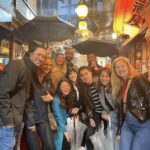
Shinjuku Station meeting: getting oriented without wasting time
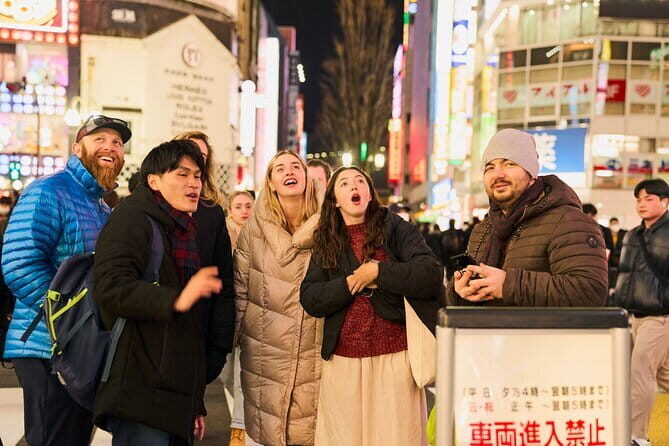
You meet at Shinjuku Station’s East Exit Police Box, located at 3-chōme-38-1, Shinjuku, Shinjuku City, Tokyo. The end point is back at the same meeting spot, which I always appreciate after an evening walk—you’re not stranded in a random neighborhood.
The tour runs about 1 hour 30 minutes, so think of it as a focused orientation walk rather than a long sit-and-stare stroll. A local guide’s job here is simple: point you toward the places you’ll miss on your own and explain what you’re looking at while you’re still there.
You’ll also use a mobile ticket, which is easy if you’re juggling transit apps and photos. Most people can participate, and since it’s a private activity for your group, you don’t have to compete for attention when questions pop up.
Omoide Yokocho (Memory Lane): old Japan vibes in a tiny alley
The walk starts in Omoide Yokocho, also called Memory Lane. This is a pocket of Shinjuku where the atmosphere feels intentionally preserved—small spots, narrow space, and that old-school “grab something quick” feeling. It’s a great first stop because it immediately teaches you the tour’s theme: Shinjuku has layers.
Omoide Yokocho is known for casual eating, and it’s the kind of place you can’t fully appreciate from a map pin. Up close, you notice how dense the area is and how the food culture works in cramped lanes. For photos, it also gives you contrast right away—less wide-angle neon, more texture and signs.
A practical tip: since you’re starting here, decide early what kind of vibe you want for the rest of the night. If you want food, you’ll want to pay attention to what your guide recommends, because this area sets the tone.
Kabukicho: Tokyo nightlife energy without getting lost
Next comes Kabukicho, Shinjuku’s entertainment district—the part most people recognize. At night, it’s lit up and loud, and it’s the perfect place to understand the scale of Shinjuku after dark. The tour keeps it moving, so you get the important context without getting stuck in the chaos too long.
This stop is listed for about 10 minutes, which makes sense. Kabukicho is big. If you try to “explore” it on your own first, you’ll waste time and end up walking in circles. With a guide, you see the core mood quickly, then you move on to spaces where Shinjuku feels more local.
Photo-wise, Kabukicho delivers. You’ll likely see a lot of neon signage and street-level lighting that turns ordinary sidewalks into scenes.
Tokyu Kabukicho Tower: modern structure in the middle of the neon
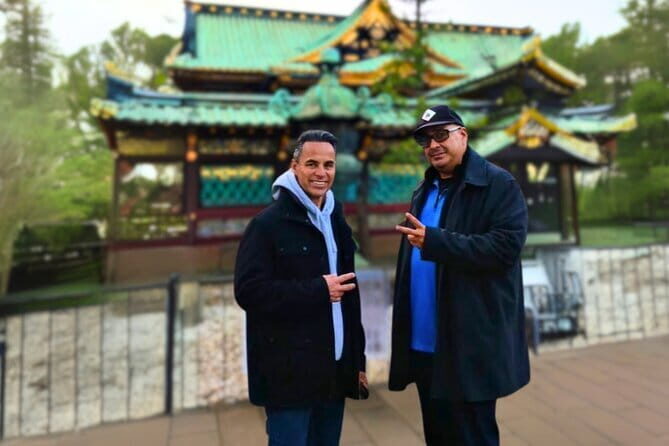
After Kabukicho, you head to Tokyu Kabukicho Tower. This is a newer addition in the same entertainment zone, and it changes the feeling from pure street spectacle to something more structured—multiple attractions under one roof.
The stop is about 25 minutes, so it’s not just a glance from the outside. Since admissions are listed as free for this stop, it’s a helpful place to pause, reset your legs, and still keep the night sightseeing going. One nice bonus I’ve seen with guides is a chance to get higher views when available, which helps you understand how the district fits together.
If you’re the type who likes skyline moments, this part is worth leaning into. Even if you don’t climb anywhere, the tower area gives you perspective and a break from walking between street-level crowds.
You can also read our reviews of more historical tours in Tokyo
Shinjuku Golden Gai: narrow alleys and tiny bar culture
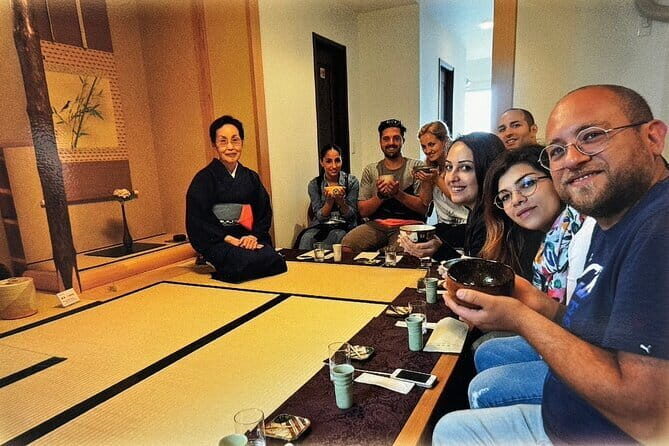
Then you hit Shinjuku Golden Gai, famous for its narrow alleyways packed with tiny bars. This is the contrast stop: the neon is still there, but the personality changes. Golden Gai feels smaller, more intimate, and more about quick conversations than big venues.
The tour includes about 15 minutes here, which is about right. Golden Gai can swallow time if you wander freely, so a guided pass helps you see the layout and understand the vibe without spending the entire night picking doorways.
This is also where your guide’s style matters. Guides like Ai, Ren, and Glenda have been praised for showing people around subculture spots in a way that feels comfortable. If you want a night that feels more like Tokyo life than just a checklist, Golden Gai is usually the part people talk about later.
Photo tip: shoot from the alley entrances first, then move inward only when the lanes feel calm. It’s a small space, so don’t crowd people trying to enjoy their drink.
Hanazono Shrine: a calm reset inside busy Shinjuku
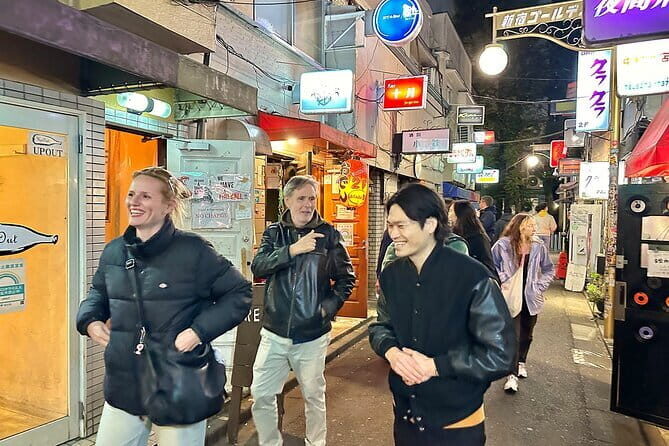
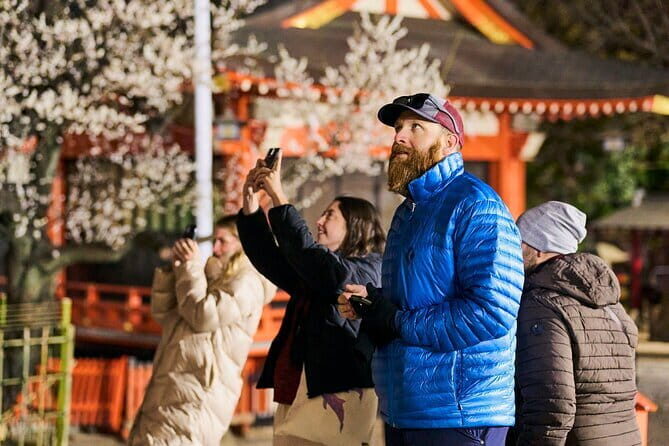
The tour ends with Hanazono Shrine, a traditional space located in the middle of the city’s action. This stop is about 20 minutes, and it works as a mental cooldown after entertainment districts. You shift from neon and noise to a more grounded, respectful atmosphere, which makes the whole night feel balanced.
Your guide explains what you’re seeing and gives context for the shrine traditions. You may see visitors doing things like purchasing omikuji (fortune slips), but those are not included in the tour fee, and any small change you might offer is also not covered.
I like this ending because it gives you something to remember that isn’t just lighting and crowds. If you’ve spent the day running around Tokyo, a shrine stop is a clean way to slow down without losing momentum.
What the guide does for you: history, context, and food leads
The best value in this tour isn’t any single street—it’s the way the guide connects the dots while you walk. In feedback from guides such as Mao, Maya, Cherry, Hannah, Nana, and Aki, one theme stands out: they start by checking what you’re into, then they guide you accordingly.
That matters because Shinjuku can feel overwhelming. With context, you stop seeing it as one big nightlife zone and start noticing how different neighborhoods function. You also get practical recommendations for where to eat and drink after the walk, which can save you time later when you’re hungry and tired.
One included perk is one vending machine drink recommended by the guide. That might sound small, but in Tokyo it’s a real convenience. It’s a quick refresh that fits the walking pace, and it keeps you moving rather than searching for a drink while the group waits.
Price and value: why $25.20 can make sense in Tokyo
At $25.20 per person for about 90 minutes with a local guide, this is solid value if your goal is orientation plus night sights. Tokyo tours can get pricey fast, and Shinjuku is one of those areas where self-guided walking often leads to confusion—especially if you’re trying to find the right alleys or the right photo moments.
You’re getting:
- A structured route with key Shinjuku areas at night
- Multiple stops with free admission noted for the listed attractions
- A local guide who explains what you’re seeing (not just pointing)
- At least one guided drink from a vending machine
If you’re on a shorter Tokyo schedule, this kind of “get bearings + learn the vibe” tour can be a smart first-night move. If you already know Shinjuku well and only want one specific neighborhood, then you might not feel as much payoff.
Who should book this Shinjuku night walk
This tour is a great match if you:
- Want a guided way to see Shinjuku’s contrast in one evening
- Like photo stops but also want explanations that make the photos mean something
- Appreciate local nightlife culture without having to figure it out alone
- Prefer spending time walking with a plan rather than wandering aimlessly
It’s also handy if you’re staying near Shinjuku and want to learn the area quickly so the rest of your meals and drinks feel easier.
If you hate crowds, have mobility limits that make uneven alley walking hard, or you’re traveling with a strict bedtime, you may want to consider that this is an entertainment-district night walk.
Should you book the Shinjuku Historical Walking Tour & Secret Backstreets?
I’d book it if you want a Shinjuku night that’s organized, friendly, and useful. The price-to-time ratio is strong, and the route gives you a mix that most people can’t assemble on their own: Omoide Yokocho for classic alley charm, Kabukicho for scale and neon, Golden Gai for the small-bar culture, and Hanazono Shrine for a calm ending.
If the weather is questionable, keep an eye on conditions. The experience requires good weather, and you may be offered a different date or a refund if poor weather cancels it.
If you’re curious about Shinjuku beyond the obvious streets, and you like getting insider food and drink leads, this one is worth your time.
FAQ
How long is the Shinjuku Historical Walking Tour & Secret Backstreets?
It lasts about 1 hour 30 minutes.
What does the tour cost?
The price is $25.20 per person.
Where do we meet, and where does the tour end?
You start at Shinjuku Station East Exit Police Box (3-chōme-38-1 Shinjuku, Shinjuku City, Tokyo). The activity ends back at the meeting point.
Is the ticket mobile?
Yes, it uses a mobile ticket.
What’s included in the tour fee?
A walking tour with a local guide, plus one vending machine drink recommended by the guide.
Do I need to pay admission for the stops?
For the listed stops (Kabukicho and Tokyu Kabukicho Tower, as shown), admission is free. At the shrine, purchasing omikuji and offering small change are not included.