REVIEW · NAGASAKI
Nagasaki Half-Day Private Tour with Government-Licensed Guide
Book on Viator →Operated by Japan Guide Agency · Bookable on Viator
Nagasaki packs a lifetime into four hours. This private tour lets you choose the pace and the focus with a government-licensed English-speaking guide, plus a morning meet near your hotel on foot. I love the custom 2–3 site plan, which helps you see what matters most instead of getting shoved through a fixed route.
My other favorite part is the way it mixes big themes fast—peace, port history, and religion—while still leaving you free the rest of the day to roam on your own. One thing to consider: it’s a walking and public-transport style outing, so you’ll want comfy shoes and you may pay extra for attractions that don’t list free admission.
In This Review
- Key things I’d plan around
- Why Nagasaki feels different in a half day
- Private guide logistics: hotel meet on foot and real customization
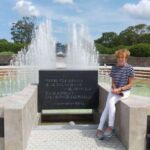
- Peace Park and the atomic-bomb story: where the morning turns serious
- Inasayama Observation Deck: the skyline moment that resets your brain
- Glover Garden, Dutch-era traces, and the port history you can walk
- Temples and churches: seeing coexistence, plus the weight of what happened
- How to choose your 2–3 sites so four hours don’t feel cramped
- Price and value: what you’re paying for, and what you still cover
- What the best guides do with this time (and how you can get the most)
- Who this Nagasaki half-day private tour fits best
- Should you book this Nagasaki half-day private tour?
- FAQ
- How long is the Nagasaki half-day private tour?
- What does the tour include?
- Are entrance tickets included?
- Do I need to pay for transportation?
- Is this tour mostly walking?
- Can I cancel for free?
Key things I’d plan around
- Government-licensed guide, in English. You’re not stuck with vague directions or canned scripts.
- Choose 2–3 stops, not a rigid loop. This is the whole point of the tour’s value.
- Peace Park plus skyline time. Pair a moving memorial with big-city views from Mount Inasa.
- Foreign-port Nagasaki in small doses. Think Glover-era mansions, Dejima, Dutch Slope, and the river bridges.
- Temples and Catholic churches side by side. You’ll see how different communities shaped the same neighborhoods.
- A short, practical time window. About four hours means you get context without exhausting your whole day.
Why Nagasaki feels different in a half day
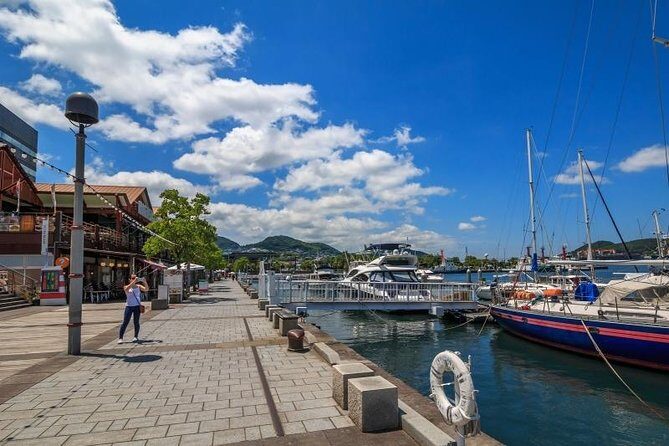
Nagasaki hits you in layers. One minute you’re standing in a quiet memorial space where history is not abstract. The next, you’re looking out over a harbor city from a hillside viewpoint. Then the streets pull you into older trade routes and mixed religious neighborhoods—often within walking distance of each other.
That’s why a half-day private format works so well here. You get the context you’d otherwise miss when you rush between major sights. And because it’s private, your guide can slow down for what you care about—peace history, foreign influence, architecture, or just getting your bearings so you can explore freely afterward.
You can also read our reviews of more guided tours in Nagasaki
Private guide logistics: hotel meet on foot and real customization
This tour is built around your choices. You tell the guide what you want to see, and you’ll select 2–3 sites from the options. That number matters. It’s long enough to get real storytelling and photos, but short enough that you’re not stuck in “one more stop” mode.
Instead of a big group schedule, you start in the morning with your guide meeting you in a designated area—on foot near your hotel. Pickups are offered, but the tour itself is clearly designed for moving around by walking and using public transport, not for being shuttled in a private vehicle.
What you’ll feel, quickly, is that your day doesn’t belong to a timetable. It belongs to you. In past outings, guides like Hiro, Hiromi, Yoshi, Koko, Norah, Asako, and Noriko have been praised for adapting the schedule to family needs, preferences, and even the weather.
Practical tip: before you commit to your 2–3 choices, think about what you want your photo roll to look like: memorial + views? port history + bridges? churches + temples? Your guide can help you build a tight plan.
Peace Park and the atomic-bomb story: where the morning turns serious
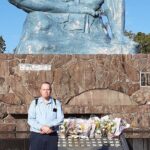
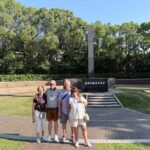
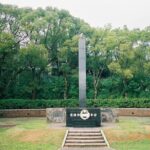
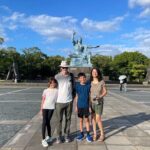
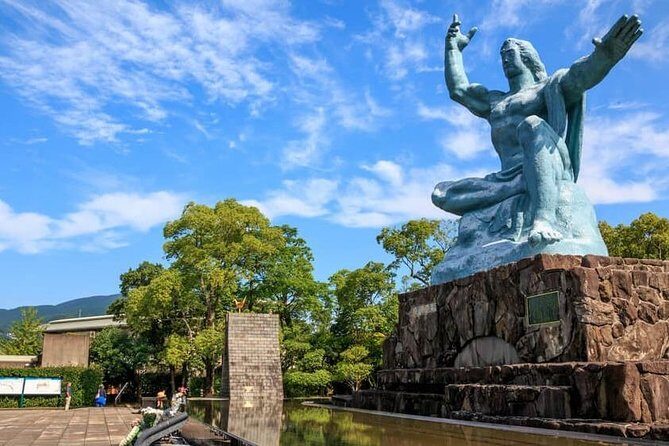
If you’re only choosing one “anchor” stop, make it Nagasaki Peace Park. It’s free to enter, and it sets the emotional tone for the city in a way that’s hard to replicate later. This is one of those places where the guide’s ability to explain what you’re seeing matters more than the architecture itself.
Depending on what you choose, you may also spend time at the Nagasaki Atomic Bomb Museum near the hypocenter area. That museum isn’t about sightseeing. It’s about documentation: what was destroyed, what survived, and how the city rebuilt afterward. Even on a short tour, it can land like a heavy book you didn’t know you needed.
What I like about doing this with a private guide: you can ask the “why” questions without worrying you’re holding up a busload. And because your time is limited, you get the most important context first—so you can reflect later when you’re walking around on your own.
Drawback to plan for: the content is emotionally serious. If you’re traveling with kids, choose your time carefully and consider pairing with a lighter stop soon after, so the day doesn’t feel all gravity.
Inasayama Observation Deck: the skyline moment that resets your brain
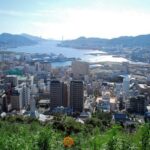
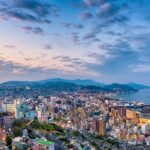
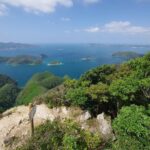
Mount Inasa is a short hop from the city, but the payoff is big. The observation deck gives you a wide view over Nagasaki, which helps everything else make sense. When you’re looking down at the city, you start to understand why certain neighborhoods, ports, and hills matter.
This stop is also listed as free for admission. That’s a small detail, but it’s smart value in a short tour: you can spend time paying attention instead of calculating additional ticket costs.
Why this is more useful than it sounds: after learning about history at street level, the view lets you connect the dots—harbor shape, hillside layout, and how the city spreads around its geography. It’s also a great “breather” after the memorial atmosphere.
If the weather is rough: bring a jacket. The tour is built for walking, and the observation deck portion may be where you notice wind.
Glover Garden, Dutch-era traces, and the port history you can walk
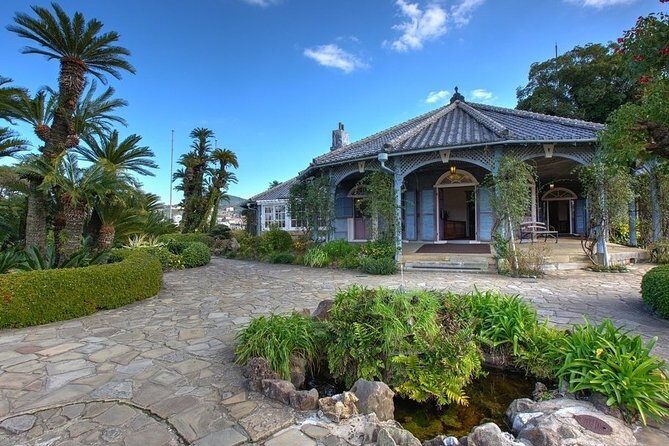
For foreign-port Nagasaki, Glover Garden is one of the best choices. It’s an open-air museum featuring mansions and related buildings tied to the city’s earlier foreign residents. Even if you don’t plan to read every sign, the setting alone helps you picture the era when Western trading and ship connections changed the port’s future.
Then there’s Dejima, the man-made island built in the 1600s to restrict Portuguese residents and control missionary activity. In the best guided moments, you don’t just learn the “what.” You learn the “why”: how geography was used as policy, and how trade and religion were managed through strict separation.
A couple of small extras round out the port-story walk:
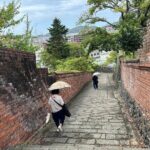
- Dutch Slope: a stone-paved street leading up where foreign traders lived after the port opened to wider contact.
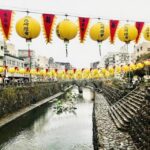
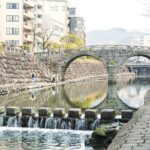
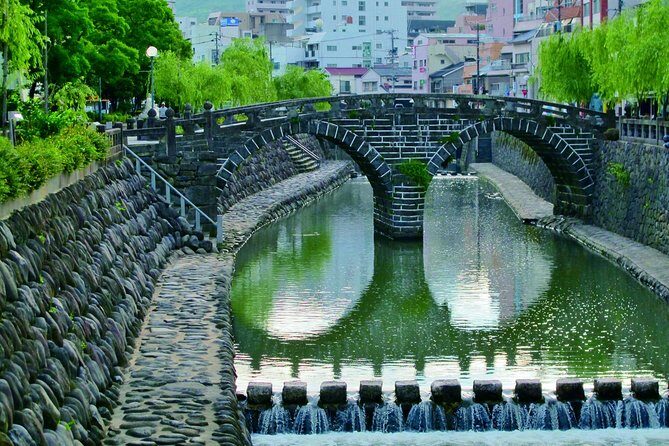
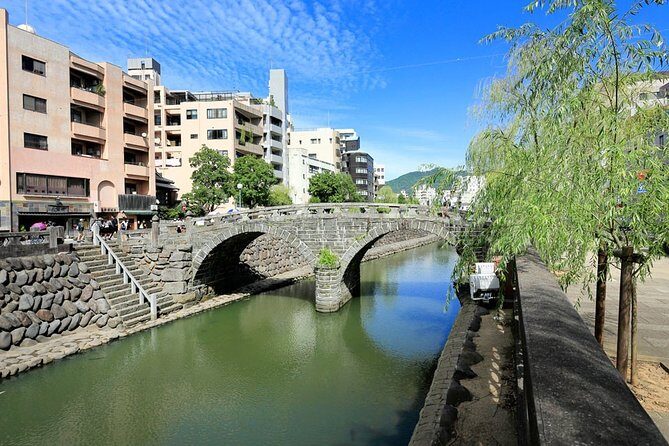
- Spectacles Bridge (Meganebashi): a famous stone bridge named for its shape over the Nakashima River.
How to use these stops effectively: if port history is your theme, pick one “big” site (like Dejima or Glover Garden) and one “street-level” stop (like Dutch Slope or Meganebashi). You’ll get variety without burning your four hours on moving between distant areas.
You can also read our reviews of more private tours in Nagasaki
Temples and churches: seeing coexistence, plus the weight of what happened
Nagasaki is known for a mix of religious communities, and this tour offers several options that show that side of the city clearly.
On the Buddhist side, Sofukuji Temple belongs to the Obaku school of Zen Buddhism. It’s tied to Chinese residents and includes Chinese-style architecture elements. If you like religious buildings not just as backdrops but as cultural fingerprints, this is a strong choice.
On the Christian side, the city’s story turns tragic and complicated:
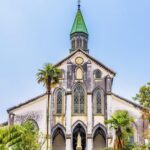
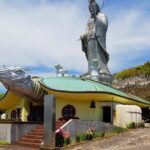
- Urakami Cathedral is a working Catholic church today, housed in a large red brick building. Its modern presence carries history you’ll want explained.
- Oura Church (Ōura Tenshudō) traces back to a French missionary and the community of foreign merchants. It’s built in the late Edo period timeframe listed for the church.
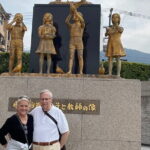
- Twenty-Six Christian Martyrs Monument and its adjacent museum focuses on the execution of Christians in 1597.
There’s also Kofukuji Temple and the Confucian Temple / Nagasaki Confucius Shrine, which round out the “Nagasaki wasn’t one single culture” picture. Kofukuji is described as a Chinese-founded temple in the Teramachi Temple Town area, and the Confucian shrine is one of the few dedicated to Confucius in Japan.
The practical reality: some of these places aren’t listed as free admission, so check costs before you choose. Still, the trade-off is that churches and temples here are not just pretty. They’re part of the city’s identity.
How to choose your 2–3 sites so four hours don’t feel cramped
You’re choosing from a long list, but your time is short. So I’d choose by theme, not by checklist.
Here are a few tight combos that usually make sense for a first visit:
1) Peace + perspective
- Nagasaki Peace Park
- Inasayama Observation Deck
This gives you the emotional anchor and the skyline reset in one smooth arc.
2) Port story + atmosphere
- Glover Garden
- Dejima
Add Dutch Slope or Meganebashi only if time allows, because you’ll already be doing most of your “history heavy lifting” in those two.
3) Religion and cultural overlap
- Sofukuji Temple
- Oura Church (Ōura Tenshudō)
If you want the sharper historical turn, swap in Urakami Cathedral or the Martyrs Monument, depending on what you can handle emotionally that day.
4) A “walkable center” day
Pick stops that cluster into a downtown walk pattern—bridges and smaller historic sites—then let your guide handle the pacing with public transport.
Key thing to remember: most sites are allocated around 15 minutes each in the half-day format, with the Martyrs Monument listed longer at 30 minutes. That means you’ll want your guide to set priorities fast: what to see first, what to skip if you’re short on time, and where to stop for the photos that actually matter.
Price and value: what you’re paying for, and what you still cover
At $122.20 per person for about four hours, you’re paying for three things: a private government-licensed guide, custom site selection, and a short, efficient path through the city.
It’s not the cheapest way to tour Nagasaki. But it can be excellent value if:
- you’re short on time (one port day, one city day, or a tight itinerary),
- you want to avoid big crowds and fixed routes,
- you care about context, not just photos.
What’s not included matters for your budget:
- Transportation fees, entrance fees, and lunch are not included.
- The tour does not include a private vehicle.
That said, some stops are listed as free admission, including Nagasaki Peace Park and Inasayama Observation Deck, plus Dutch Slope and Spectacles Bridge. So you can often keep your extra costs manageable by pairing at least one free site with one paid museum or church.
My honest advice: treat the tour price as your guide-and-time cost. Then plan entrance fees separately for the sites you pick that aren’t marked free.
What the best guides do with this time (and how you can get the most)
In the strong versions of this tour, the guide doesn’t just name buildings. They help you read the city.
A clear pattern in the guide feedback: people mention strong communication, flexibility, and the way the schedule adjusts to your needs. Some guides have handled families with care, and one guide offered weather-smart options like making things easier with taxis and suggesting umbrellas when rain hit.
You can encourage that kind of care by telling your guide, early:
- how mobile your group is,
- whether you prefer street views over museum time,
- whether you want a quiet reflective stop or a lighter storytelling vibe,
- if you have kids or want photo stops with minimal waiting.
Also, because it’s private, you can ask for recommendations after the tour ends. A good guide can point you toward places to explore on your own for the rest of the day—exactly where your chosen sights fit into the broader city.
Who this Nagasaki half-day private tour fits best
This tour is a great fit if:
- you want a first-time Nagasaki overview without joining a large group,
- you’re drawn to the city’s balance of peace memory, port history, and religious architecture,
- you like walking and using public transit, and you’re okay with a short schedule,
- you want time after the tour for independent exploration.
It’s less ideal if:
- you don’t want to walk much or deal with transfers,
- you’re hoping for a fully “hands-off” day where every ticket and ride is bundled in,
- you want to visit many major attractions without any selection.
Should you book this Nagasaki half-day private tour?
If your goal is to get the meaning of Nagasaki—not just the postcard sights—this is an easy yes. The ability to pick 2–3 places with a government-licensed English guide is the real advantage. You can shape your morning around peace, foreign port history, or religious landmarks, and you’ll still be done early enough to keep exploring later.
Book it if you’ll use the flexibility. Skip it if you want a long list of stops with minimal walking. In Nagasaki, time is short and feelings are big. This tour respects both.
FAQ
How long is the Nagasaki half-day private tour?
It’s about 4 hours.
What does the tour include?
You get a licensed local English-speaking guide and a customizable plan to choose 2–3 sites. Pickup is offered on foot, and you meet the guide within a designated area of Nagasaki.
Are entrance tickets included?
No. Entrance fees are not included, and some specific places are listed as not included for admission.
Do I need to pay for transportation?
Transportation fees aren’t included.
Is this tour mostly walking?
Yes. It’s a walking and public transport style tour, so comfortable shoes are a must.
Can I cancel for free?
Yes. Free cancellation is available up to 24 hours before the experience starts for a full refund.