REVIEW · NAGASAKI
Nagasaki Full-Day Private Tour with Government-Licensed Guide
Book on Viator →Operated by Japan Guide Agency · Bookable on Viator
Nagasaki packs a punch in one day. This private, government-licensed tour is built for you to choose 3–4 stops and get clear, human explanations as you move around the city. I especially like that you get hotel-friendly pickup on foot with a flexible plan instead of a rigid checklist, and you can tailor the day around what you care about most. The only real drawback to watch for: admissions (for many stops) and transportation are not included, so you’ll want to budget for tickets and local rides.
What makes this work well is the way the guide turns famous places into something you can actually process. On real days, guides have helped guests focus on big themes like the atomic bombing, and they’ve also found room for lighter moments like a clever detour and thoughtful local restaurant time. For example, I love the way guides like Hiro and Mei are described as making the day click for families—one guide even used quick quizzes to keep kids engaged. Still, since you’re walking and using public transport (not a private vehicle), the pace can be a bit more active than you might expect.
If you want a Nagasaki day that feels personal—without you needing to plan every turn—this is a strong option. It’s also a smart fit if you want to balance moving memorial sites with places that show how Nagasaki connected to China, Portugal, and the wider world. If you’re traveling with mobility limits, consider sticking to fewer stops and choosing places that match your comfort level.
In This Review
- Quick hits before you book
- A private Nagasaki day that you can actually steer
- Price and logistics: what’s included, what you’ll pay for
- Peace and memory stops that deserve time, not rushing
- Nagasaki Peace Park (free, and a clear place to start)
- Nagasaki Atomic Bomb Museum (moving, and emotionally direct)
- Lookout time: Inasayama and the kind of views you remember
- Inasayama Observation Deck (free, city-wide perspective)
- Foreign-settlement Nagasaki: Glover Garden, Dejima, and the Dutch Slope
- Glover Garden (ticketed, open-air museum feel)
- Dejima (ticketed by your choice, huge historical impact)
- The Dutch Slope (easy to combine with downtown exploring)
- Temples and Chinese influence in Teramachi
- Sofukuji Temple (Obaku Zen; Chinese architectural details)
- Kofukuji Temple (Chinese-founded, one of the oldest in the area)
- Nagasaki Gokoku Shrine / Confucius Shrine (Koshi-byō)
- Christian Nagasaki: Urakami Cathedral, Oura Church, and the Martyrs Monument
- Urakami Cathedral (red brick, tragic story, still active)
- Oura Catholic Church (1864 French missionary building)
- Twenty-Six Christian Martyrs Monument (and adjacent museum)
- Downtown highlights: Meganebashi and a museum moment by the harbor
- Meganebashi (Spectacles Bridge)
- Nagasaki Museum of History and Culture (modern, organized story)
- Nagasaki Prefectural Art Museum (port-side breathing room)
- A note on the seasonal swing: Lantern Festival timing
- Guides make the difference: what you can learn from past experiences
- What this tour is best for (and when to pick something else)
- Should you book this Nagasaki private tour?
- FAQ
- How long is the Nagasaki private tour?
- Is this tour private or shared?
- How many sites can we visit?
- Are entrance fees included?
- Is pickup available?
- What kind of transportation will we use during the tour?
Quick hits before you book
- Government-licensed English guide who can customize your route around your interests
- Private tour for your party only, no mixing with strangers
- Pick 3–4 sites from a strong mix of memorial, church, temple, and waterfront/history stops
- Walking + public transport with help navigating where to go next
- Some key stops are free (like Peace Park and the Inasayama Observation Deck), while others may require tickets
- Guides can adjust on the fly, which matters when the city throws you rain, crowds, or your own changing priorities
A private Nagasaki day that you can actually steer
This isn’t a crowded, one-size-fits-all sightseeing loop. You’re set up with a guide and a short menu of major stops, and you choose what you want most. The tour runs about 6 hours, and the overall idea is to slow down enough to understand what you’re looking at—without turning your day into a long, exhausting slog.
You’ll also notice the design is practical: pickup is offered, but it’s described as pickup on foot within a designated area. In plain terms, you’re not relying on a private van to magically deliver you to every hillside and bridge. Instead, your guide helps you get your bearings fast, then you use local ways of getting around.
This matters because Nagasaki has hills and layers. The city is famous for its international ports and religious communities, but it also sits on steep terrain. A guided day like this helps you avoid wandering in circles, especially if it’s your first time in town.
You can also read our reviews of more guided tours in Nagasaki
Price and logistics: what’s included, what you’ll pay for
At $155.22 per person for a private guided day, you’re paying for three things: time with a licensed local guide, on-the-spot route planning, and explanations that connect each stop into a story.
What’s typically included:
- A licensed local English-speaking guide
- A customized plan picking 3–4 sites
- Meet-up with the guide within a designated area in Nagasaki (on foot)
What’s not included:
- Transportation fees (since this is walking + public transport)
- Entrance fees and lunch
- Personal expenses
So here’s the budgeting reality: your final cost depends on which sites you select. Some stops are free (like Peace Park and the Inasayama Observation Deck). Others are ticketed on your own. If you pick mostly ticketed attractions, you’ll feel it. If you mix in the free memorial and viewpoint elements, you’ll likely keep costs under control.
Peace and memory stops that deserve time, not rushing
Nagasaki’s most intense moments are also the most important ones to see thoughtfully. If you choose the big memorial anchors, your guide can help you understand why these places are emotionally heavy—and why people keep coming back to learn.
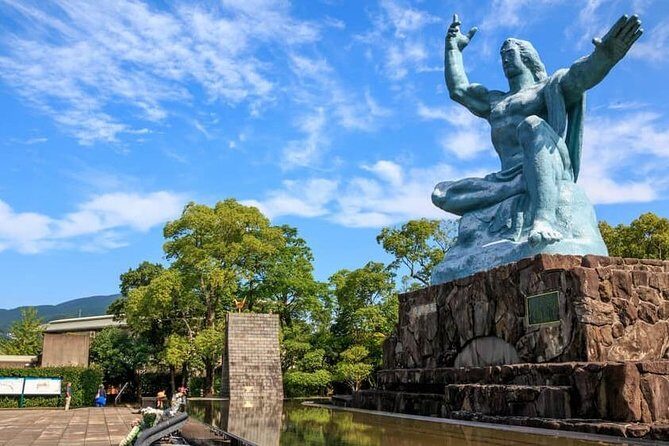
Nagasaki Peace Park (free, and a clear place to start)
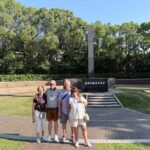
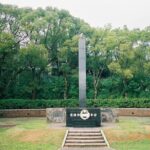
Peace Park is a calm start point. It’s specifically tied to the atomic bombing on August 9, 1945, when much of the city was destroyed and tens of thousands lost their lives. Even if you only spend a short moment here, it sets the tone. It’s the kind of place where you don’t need extra distractions; you want context and a guide who can explain what you’re seeing.
My advice for your timing: If you’re picking Peace Park, consider doing it earlier rather than later. Your brain is fresh, and the day still has room to balance the heaviness with views and other cultural stops.
Nagasaki Atomic Bomb Museum (moving, and emotionally direct)
The Atomic Bomb Museum is near the hypocenter area. It documents devastation and the city’s recovery. If you’re the type who likes to understand the why behind the what, this stop can be a highlight. It’s also the one that tends to hit hardest, so it’s worth having your route structured around it.
A practical tip: if you go to both Peace Park and the museum, don’t stack too many other ticketed attractions right after. Give yourself mental space before you switch gears to churches, bridges, and gardens.
You can also read our reviews of more private tours in Nagasaki
Lookout time: Inasayama and the kind of views you remember
Nagasaki isn’t only about the war. It’s also about the geography that shapes daily life—bay, hills, and sea views.
Inasayama Observation Deck (free, city-wide perspective)
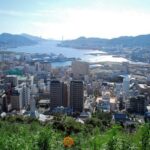
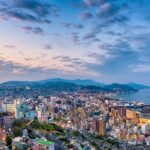
Mount Inasa rises just a bit above the city center (333 meters). The observation deck gives a wide look over Nagasaki and the ocean. You can reach it by ropeway, bus, or car. That means you’re not stuck with one transport option if the timing doesn’t work.
Worth planning: If you can choose your time slot, aim for lighting that helps you see the water clearly. Even if the ride costs extra (transportation fees are not included), the payoff is the kind of panoramic view that makes the rest of the day click.
Foreign-settlement Nagasaki: Glover Garden, Dejima, and the Dutch Slope
This is where Nagasaki starts to feel like a real port city, not just a memorial city. You’ll see the traces of foreign residents and the systems the city used to manage contact.
Glover Garden (ticketed, open-air museum feel)
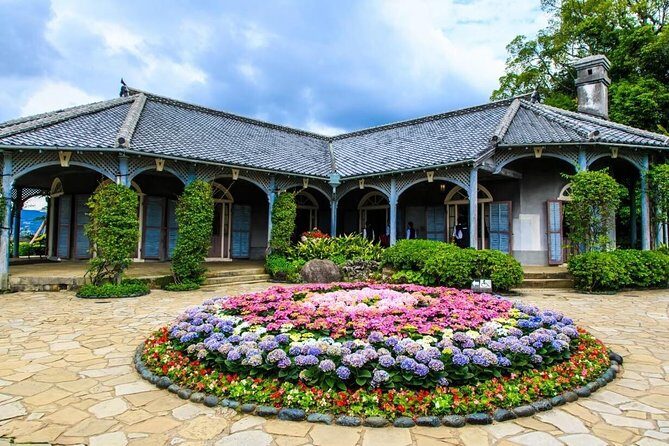
Glover Garden is an open-air museum with mansions and buildings linked to former foreign residents. It sits on a hill and helps you imagine what the area looked like when foreign trade was shaping life in Nagasaki.
If you enjoy architecture and “how people lived,” this is a great counterbalance to heavier stops. It also helps you understand why Nagasaki became such a point of international connection in the first place.
Dejima (ticketed by your choice, huge historical impact)
Dejima was a man-made island built in 1636 to separate Portuguese residents from the Japanese population and control missionary activity. Later, it changed roles as circumstances evolved. If you want a tangible way to picture controlled foreign contact, this is a standout.
The Dutch Slope (easy to combine with downtown exploring)
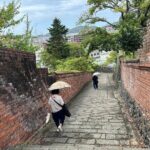
Dutch Slope is a stone-paved street leading up a hillside where foreign traders lived after the port opened for foreign trade in 1859. It’s a short, walkable history marker that adds texture to the day.
Temples and Chinese influence in Teramachi
Nagasaki’s story includes Chinese communities and religious life that became part of the city’s identity. If you choose a few of these stops, you’ll get a better sense of why different cultures layered onto one place.
Sofukuji Temple (Obaku Zen; Chinese architectural details)
Sofukuji Temple belongs to the Obaku school of Zen Buddhism and was originally built in 1629 for Nagasaki’s Chinese residents. The construction includes Chinese-style archways, so it’s not just about what the temple is, but how it looks.
Kofukuji Temple (Chinese-founded, one of the oldest in the area)
Kofukuji is described as the oldest and one of the most important Chinese-founded temples in Nagasaki, located in Teramachi (Temple Town). It’s connected to the Obaku tradition.
Nagasaki Gokoku Shrine / Confucius Shrine (Koshi-byō)
This part of the tour is for you if you like religious history with a side of cultural crossovers. The Confucius Shrine was built in 1893 by Nagasaki’s Chinese community and is one of the few dedicated to Confucius in Japan.
If you’re in the mood for meaning behind symbols, your guide can help you connect these spots to how Nagasaki’s Chinese community expressed identity and tradition.
Christian Nagasaki: Urakami Cathedral, Oura Church, and the Martyrs Monument
Nagasaki is unusually important in Christian history. The city holds both living churches and remembrance sites tied to persecution.
Urakami Cathedral (red brick, tragic story, still active)
Urakami Cathedral is a working Catholic church in a large European-style red brick building. It has a tragic history, and the fact that it’s still active today adds emotional weight.
Oura Catholic Church (1864 French missionary building)
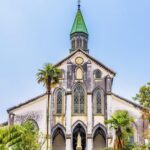
Oura Church was built in 1864 by a French missionary for foreign merchants and is tied to the end of the Edo Period. It’s another place where you’re looking at both faith and history side by side.
Twenty-Six Christian Martyrs Monument (and adjacent museum)
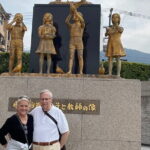
This monument and museum mark the twenty-six Christians executed on February 5, 1597. It’s one of those stops where you’ll feel the weight of the city’s long relationship with Christian history.
How to choose: If your day needs only one of the church stops, choose the one that best matches your interests—cathedral architecture and modern church life vs. early church community history vs. the specific execution story.
Downtown highlights: Meganebashi and a museum moment by the harbor
Some of the best “just walking around” time in Nagasaki comes from small, specific landmarks.
Meganebashi (Spectacles Bridge)
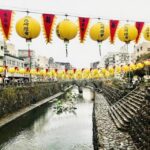
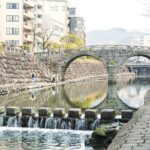
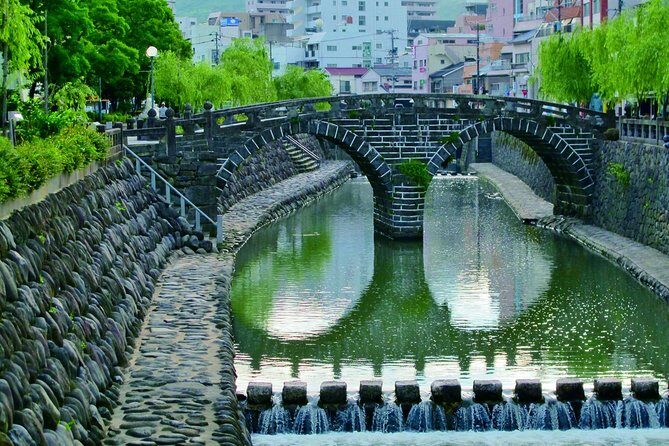
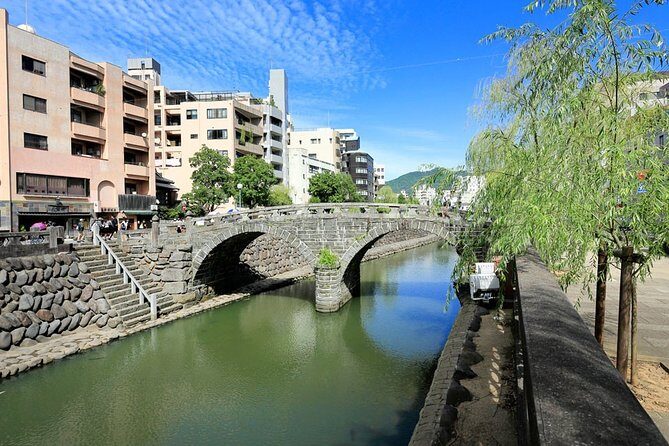
Meganebashi is a stone bridge over the Nakashima River downtown. It gets its name from resemblance to spectacles. It’s short, but it’s the type of photo stop that also works as a mental reset between heavier sites.
Nagasaki Museum of History and Culture (modern, organized story)
This modern museum focuses on Nagasaki’s history as one of Japan’s major international trading ports. If you feel overwhelmed by how much history is packed into a few blocks, a museum stop can help you get your bearings.
Nagasaki Prefectural Art Museum (port-side breathing room)
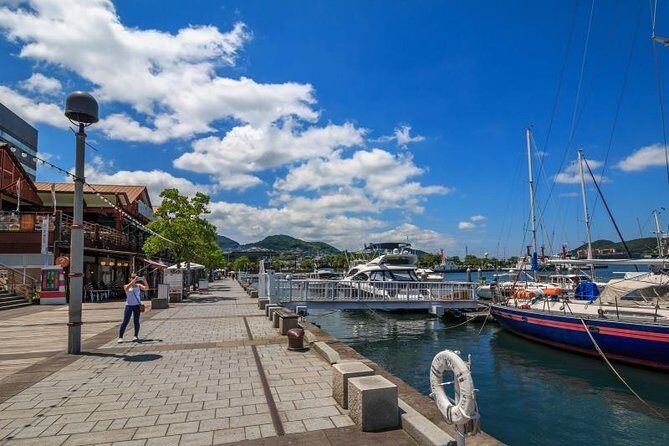
This modern art complex is described as spacious and located by the port. Even if art isn’t your thing, it can be a good pacing stop between walks, depending on your route choice.
A note on the seasonal swing: Lantern Festival timing
If you happen to be in Nagasaki around early October, the Nagasaki Kunchi (Lantern Festival) is tied to Suwa Shrine and has been celebrated for about 400 years (held October 7–9). If your dates line up, it can make the day feel more like a lived-in city than a museum outing.
Even if your timing doesn’t match, it helps to know the tour’s menu includes this kind of cultural stop, not just static sights.
Guides make the difference: what you can learn from past experiences
One pattern shows up in the way guests describe their guides: the tour isn’t only facts. It’s also comfort, pace, and small practical decisions.
- Hiro is praised for connecting Nagasaki culture, history, and food into a single memorable day, with riding local buses and trams treated as part of the fun.
- Mei is described as tailoring the day for a family and using quizzes to keep learning active for kids.
- Yoko is singled out for building a plan quickly after asking what you want to see, then moving efficiently without making anyone feel rushed.
- Minnie and Yoshi are also highlighted for flexibility and clear explanations, including help with a personal gift request tied to a grandson’s anime interests.
You don’t need to assume you’ll get the exact same added flourishes every time. But it’s a good sign: the guides are prepared to adjust to you, not just the schedule.
What this tour is best for (and when to pick something else)
This works especially well if you:
- Want a first-time Nagasaki day with a local guide who can explain the big themes
- Prefer private pacing and a route you can shape
- Like mixing memorial sites with city viewpoints and international history stops
- Will use public transport and don’t mind walking between areas
You might want a different option if:
- You dislike walking or hill transitions (and you don’t want to select a shorter stop list)
- Your plan requires many paid attractions, because tickets and transport are on your own
- You’re expecting a full vehicle-based day with zero walking (this tour is walking + public transport)
Should you book this Nagasaki private tour?
Yes, if you want Nagasaki to feel understandable—not just “seen.” The value here is in the licensed guide plus the freedom to choose 3–4 of the city’s most meaningful stops, from Peace Park and the Atomic Bomb Museum to bridges, churches, temples, and port history.
If you book, think like this: choose one emotionally heavy anchor (Peace Park and/or the Atomic Bomb Museum), add one viewpoint (Inasayama), and then pick one cluster that matches your curiosity—churches for Christian history, Dejima/Dutch Slope for trade and foreign contact, or temples/Confucius Shrine for Chinese influence.
If you do that, you’ll end up with a day that feels personal and grounded, not rushed and forgettable.
FAQ
How long is the Nagasaki private tour?
The tour runs for about 6 hours.
Is this tour private or shared?
It’s a private tour with only your group participating.
How many sites can we visit?
You can customize your day by choosing 3–4 sites from the available options.
Are entrance fees included?
Some stops are listed as free, but entrance fees are generally not included. For several sights, admission is marked as not included.
Is pickup available?
Pickup is offered, but the tour is described as pickup on foot within a designated area in Nagasaki.
What kind of transportation will we use during the tour?
This is a walking and public transport tour. Transportation fees are not included, and the tour notes that a private vehicle is not part of the experience.