Osaka works best when someone local decides the order. This private walking tour blends big sights with quieter corners, planned around your interests through a short questionnaire and flexible timing, with a real English-speaking host team (names like Maria, Karim, Kai, Loys, Taku, and Max come up often). I like the personalized itinerary and the chance to ask questions as you walk. The one drawback: it is a walking tour, so expect solid time on your feet, and plan for public transport if you need shortcuts.
I also like how the route mixes moods. You get temple calm at Shitennoji and Hozenji’s alley, then you switch gears to Umeda shopping and Namba nightlife energy near the neon canal. I’d still flag one consideration: food, entry tickets, and transportation aren’t included, so you’ll want a little extra money and a hat of patience for stairs, crowds, and weather.
If you want an Osaka day that feels practical (not just a checklist), this is a strong pick. You’ll start near a DAISO shop in Naniwa Ward and end back at the same meeting point, with optional hotel pickup if your place is centrally located.
In This Review
- Key things you should know before you go
- A private Osaka walk with a local who builds your day
- Price and logistics: what $81.07 buys you (and what it doesn’t)
- How the route flows: walking pace, transfers, and smart breaks
- River-island calm and early 1900s Osaka architecture
- Umeda department store day: from surface shopping to White Umeda underground
- Shopping arcades and Namba’s lion-guarded luck
- Shitennoji: the oldest official temple stop that resets your brain
- Amerikamura and Hozenji alley: youth style meets blessing rituals
- Dotonbori neon canal lights: a nighttime-style finale even in daylight
- How to tailor this tour so it actually fits your trip
- Should you book this private Osaka walking tour?
- FAQ
- How long is the Osaka walking tour?
- Is this tour private or shared?
- Does the price include food, tickets, or transport?
- Where does the tour start and end?
- Do they pick you up from your hotel?
- Can I cancel and get a refund?
Key things you should know before you go
- A real private guide: only your group, not a big shared herd.
- Questionnaire-led customization: your must-sees guide the stop order and pace.
- Iconic + lesser-known stops: Shitennoji, Hozenji water-bowls, Umeda underground shopping, and Namba.
- Walking-first plan: 2 to 8 hours depending on what you choose, with transit options between sites.
- Comfort details matter: you’ll want good shoes and a strategy for breaks.
A private Osaka walk with a local who builds your day
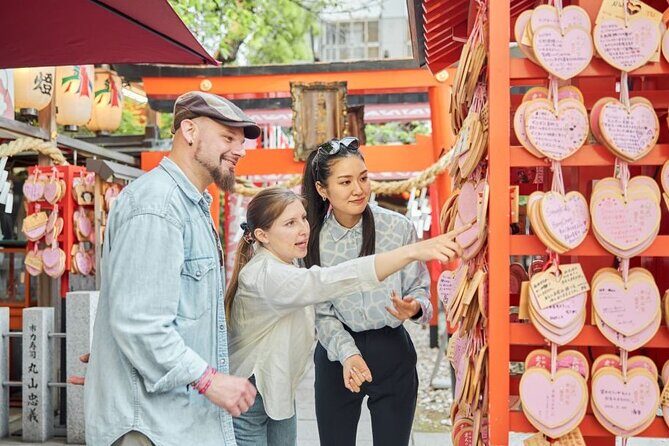
This is a private City Unscripted experience, so you’re not following a script written for everyone. After booking, you fill out an online questionnaire, and your guide reaches out to shape the route around your interests—history, shopping, street scenes, or photo stops. That matters in Osaka, where the distances are short but the vibe changes fast from neighborhood to neighborhood.
You also get some control over how the day unfolds. Durations can run from 2 to 8 hours, and start times are flexible. That’s useful if you’re arriving mid-day, have a dinner plan, or want a slower morning before the city gets louder.
Pickup can be offered if your hotel is centrally located, but don’t plan on a vehicle for the actual tour. It’s a walking tour end-to-end, and if you need transfers between spots, your guide may use public transit or local taxis based on your request. In plain terms: you get help connecting the dots, but you still walk the dots.
One more reason I like this format: your guide can adjust on the fly. If your group wants more time at a shop arcade or less time in a temple courtyard, you’re not stuck. The best part is how normal questions become part of the day—what to try, what streets to skip, and how to move efficiently.
You can also read our reviews of more walking tours in Osaka



Price and logistics: what $81.07 buys you (and what it doesn’t)
At $81.07 per person, this sits in the middle of the private-tour world—roughly what you’d pay for a guided day when you’re getting a real local host and a personalized plan. The value is in three buckets:
- Your guide time (private, not shared)
- The custom routing based on your questionnaire
- The ability to adjust duration and start time
What’s not included is just as important. Food and drinks are not included, and attraction entry fees are not included either. Transportation costs are also not included. So if you’re eating your way through Osaka, you’ll pay for that directly.
Here’s how I’d budget: keep some yen aside for transit or taxis between zones, and plan to cover meals on your own. Your guide can point you toward good options, but the cost is still yours.
Also note the tour uses a mobile ticket, and it starts at a specific meeting point near DAISO2 in Naniwa Ward (then it returns you there). That helps reduce stress, especially if you’re not 100% confident with Osaka’s train stations yet.
How the route flows: walking pace, transfers, and smart breaks
Because this is a walking experience, the biggest practical question is simple: can you handle a chunk of time on foot? The tour can be as short as 2 hours, but the itinerary also supports longer days. Many people end up doing a lot of steps—one tour experience mentioned around 15,000 steps during a 4-hour day—so pack accordingly.
Bring comfortable shoes with grip. Osaka surfaces can be slick after rain, and some areas are compact with crowd flow. If you want a smoother experience, you can ask your guide about using public transportation between stops if you’re tired, traveling with kids, or moving slowly due to mobility needs.
Your guide will usually keep the day moving but not rushed. You’ll see a mix of streets, arcades, and temple grounds. That mix is what makes it work: you get breaks from the noise in religious spaces, then you switch to shopping streets and neon-lit entertainment areas.
If you like practical help with transit, you’ll likely be in good hands. One past group mentioned help with buying ICOCA cards. Even when transit isn’t a central part of the tour, English-speaking hosts tend to explain the easiest way to connect stations and where to walk.
River-island calm and early 1900s Osaka architecture
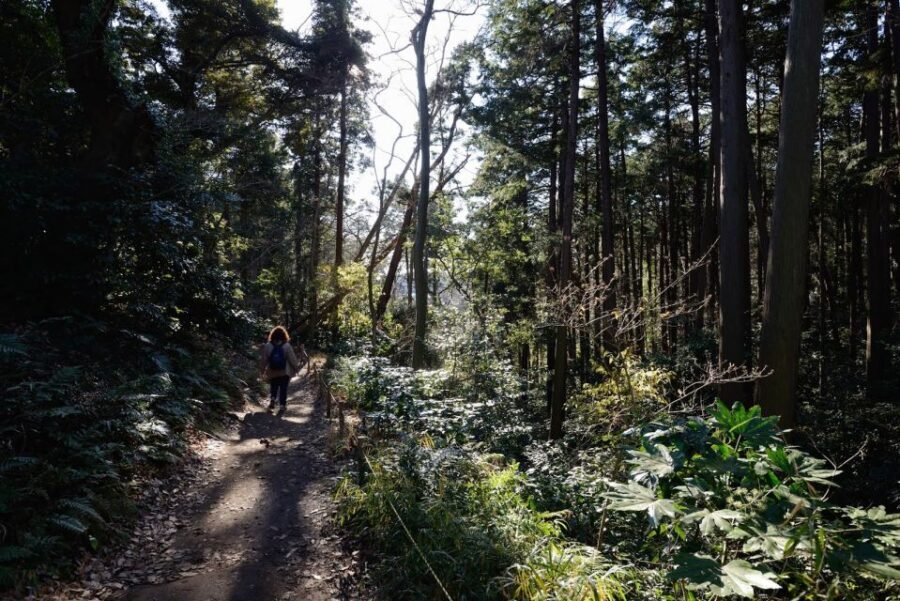
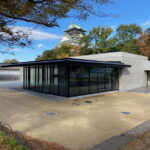
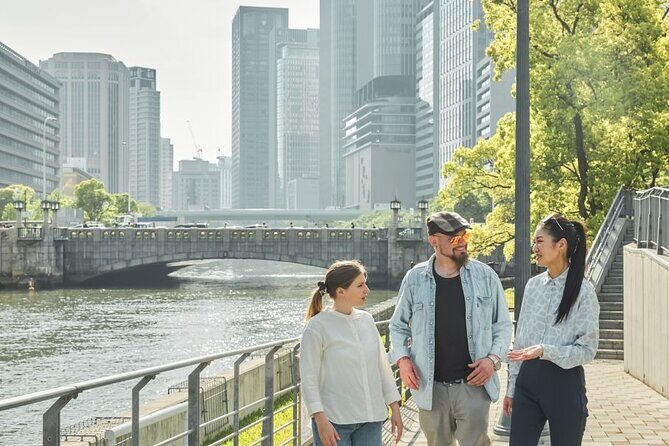
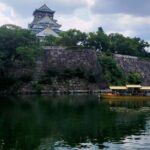
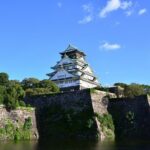
One of the quieter segments takes you to a river-island oasis—art museums, early 20th-century architecture, and a park setting. This is the kind of stop that gives you contrast. Osaka can feel like you blink and you’re in a different neighborhood. Here, you slow down and look at the city’s older face.
What to do in this stretch:
- Walk at park pace and keep an eye out for historic building details.
- Use this time for photos that aren’t just neon signs.
- Take a breather if you’re doing a longer day.
Why it’s valuable: it reminds you that Osaka isn’t only street food and neon. It has a cultural side that shaped how people live and gather. Also, art museums and park edges tend to offer a less chaotic walking rhythm than major commercial streets.
Possible drawback: if it’s raining or very hot, this kind of open-air walk can feel long. That’s not a tour problem, just reality. If weather is bad, your guide can often adjust the pacing or route order to keep you comfortable.
Umeda department store day: from surface shopping to White Umeda underground
Then you move into the Umeda area, where you get one of Osaka’s big department store experiences. This is where you’ll find a lot more than basics—think brand variety, department-store seasonal displays, and indoor browsing that works even when the weather doesn’t.
From there, the route includes White Umeda, one of Osaka’s famous underground shopping malls. People underestimate underground malls until they’re inside one. It’s not just “shops underground.” It’s a whole little city of corridors, entrances, and connections that can save you time during rainy days or long station transfers.
What I like about this stop is the mix of browsing styles:
- Department store floors give you wide selection and easy reference points.
- Underground corridors let you explore without fighting the weather.
What to watch for: underground spaces can be confusing at first. You’ll want your guide close so you don’t waste time backtracking. If shopping is your priority, ask early how long you’ll have here so the day doesn’t rush past your favorite floors.
You can also read our reviews of more private tours in Osaka

Shopping arcades and Namba’s lion-guarded luck
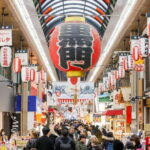
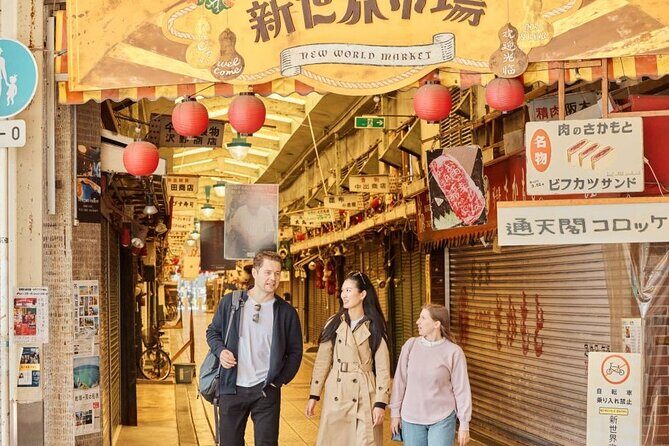
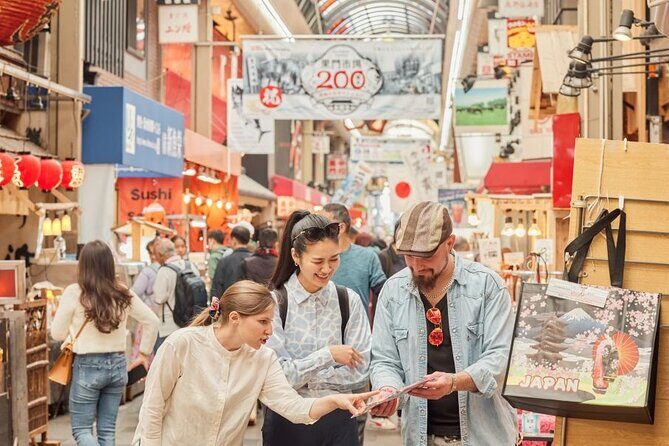
Next up is Osaka’s top shopping arcade area—shops, cafés, restaurants, and character goods. This is one of those segments where you can shop, snack, and people-watch in the same few blocks.
If you’re collecting souvenirs, this kind of street makes it easy. Character goods are everywhere, but arcades feel more walkable and less overwhelming than jumping between random department stores.
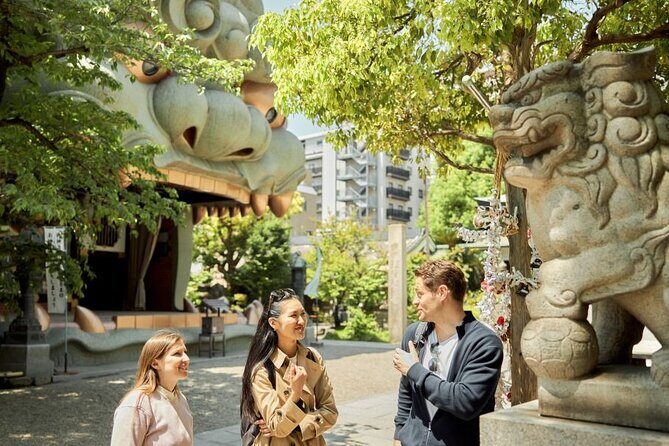
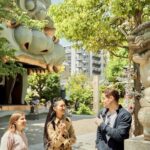
After that, the tour heads toward Namba and includes a unique shrine moment: a massive lion-shaped structure believed to devour evil spirits and bring good luck. It’s the kind of stop that’s easy to miss if you’re just following the biggest map pins. A guide helps you understand the meaning behind the weird-and-wonderful.
Why it matters: Osaka has a talent for combining everyday street life with spiritual symbolism. Even if you’re not a temple person, these shrines add color and context.
A possible drawback: Namba can be crowded, especially later in the day. If you get overwhelmed by crowds, tell your guide. They can often shift timing or walking order slightly to keep you comfortable.
Shitennoji: the oldest official temple stop that resets your brain
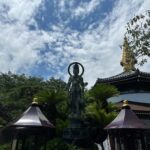
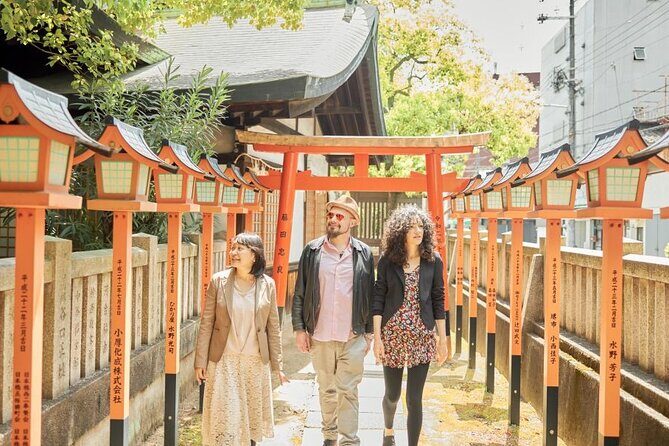
The tour includes Shitennoji, founded in 593, and described as a key site connected to the introduction of Buddhism to Japan. Whether or not you know the details, the experience works because the grounds feel like a pause button.
What you’ll notice:
- The contrast with surrounding streets.
- The quieter pace of walking and looking.
- How history shows up as a place you can still stand in today.
Why it’s a great anchor on a walking tour: if your day is otherwise shopping and neon, Shitennoji gives you perspective. You leave with more than photos. You get a sense of why Osaka grew where it did.
Possible drawback: temple sites can have steps and uneven surfaces. Wear shoes that handle both slick stone and normal sidewalks.
Amerikamura and Hozenji alley: youth style meets blessing rituals
Then you hit Amerikamura, Osaka’s American-inspired youth culture area. Indie music vibes, hipster fashion, galleries, and thrift shops. This is Osaka’s modern street identity in motion. If you like shopping with personality—rather than only buying what every tourist buys—this is the area.
What to do here:
- Browse thrift shops and small galleries slowly.
- Look for indie brands rather than only mainstream chains.
- Use the guide to separate stores that are just storefronts from the ones worth stepping into.
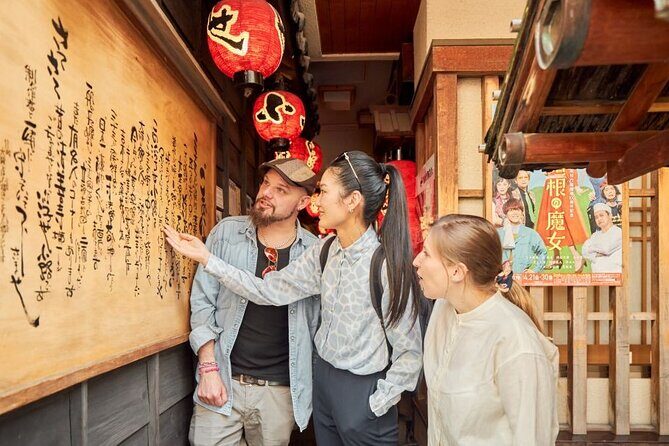
After that, you get one of the most atmospheric parts of the day: Hozenji Temple’s area and the stone-paved lane lined with over 60 traditional Japanese restaurants and bars. This is a narrow street scene where food and drink culture meet old-school faith.
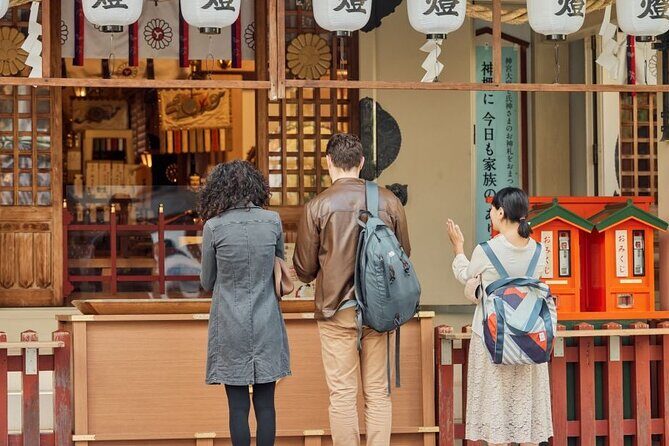
Don’t miss the moss-covered statue of Fudomyoo at Hozenji Temple. Visitors pour water for blessings here. It’s one of those small rituals that makes a place feel alive in a very practical way—you’re not just watching, you’re participating respectfully.
Why this segment is so strong: it pairs two Osaka experiences that don’t usually live together on a normal itinerary—youth fashion and traditional religious charm. Together, it makes the city feel like a real place, not a theme park.
Possible drawback: this area is popular. If you’re sensitive to crowds, plan for some stop-and-go walking. Your guide can help you time the route so you spend more time where you want and less time stuck at bottlenecks.
Dotonbori neon canal lights: a nighttime-style finale even in daylight
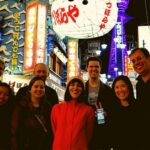
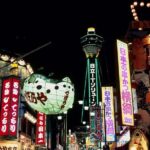
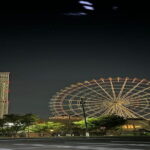
The tour finishes with Osaka’s iconic canal area, illuminated by neon lights, and the nearby Dotombori entertainment district arcades. This is where Osaka’s reputation shows up in your eyes and ears.
Here’s the difference this part makes after the earlier stops:
- Temples and arcades give you texture.
- The neon canal gives you motion and energy.
- The arcades let you keep browsing and snacking if you still have appetite.
If you’re a photo person, this is your payoff stretch. Look for reflections on water and the dense cluster of signs. If you’re not a photo person, you’ll still appreciate it as a sensory map of the city’s entertainment side.
Possible drawback: neon districts can be loud. If your group gets tired, ask for a slower route through the arcades. A good host can usually find a calmer angle without killing your time.
How to tailor this tour so it actually fits your trip
The pre-tour questionnaire is the secret weapon here. Don’t write vague answers. Be specific about what you care about and what you want to avoid.
A few ways to use that customization well:
- If you love shopping, tell your guide whether you prefer underground malls (like White Umeda) or street arcades, and how long you want each.
- If you care about temples and meaning, ask for time at Shitennoji and Hozenji so you’re not just passing through for a photo.
- If you want food guidance, you can plan your budget around it. This tour doesn’t include meals, but guides often point toward classic local eats (one past group mentioned kushikatsu and curry; another mentioned sukiyaki and hot chocolate).
- If you need mobility support, mention it upfront. A guide can use public transport or taxis between sites when needed.
If you’re visiting Osaka for the first time, this route is a smart sampler. You touch multiple districts in one day without feeling like you’re sprinting. It also works well if you already did a train-heavy trip elsewhere and you want a slower, story-driven day.
If you’re traveling with kids or multi-generation family, this format can be easier than a full-day shared bus tour. You can keep the pace flexible and stop where everyone wants to look.
Should you book this private Osaka walking tour?
Book it if you want a guided day that balances classic Osaka with quieter, meaningful stops. The personalized itinerary, private group setup, and the mix of Shitennoji, Hozenji ritual time, Umeda shopping, Amerikamura street culture, and the Dotonbori canal area make it hard to recreate on your own without lots of research.
I’d skip (or shorten) it if you hate walking, have strong mobility limits, or you’re already set on a very food-only or theme-park style day. Since food and entry fees aren’t included, also confirm your budget can handle meals and possible attraction costs.
If you’re the type who enjoys asking questions while you walk and you like switching between neighborhoods in one day, this is a very practical way to do Osaka.
FAQ
How long is the Osaka walking tour?
The duration ranges from 2 to 8 hours, depending on the option you choose and how your guide tailors the pace to your group.
Is this tour private or shared?
It’s a private tour. Only your group participates.
Does the price include food, tickets, or transport?
Food and drinks are not included. Attraction entry fees are not included. Transportation costs are not included either, though walking plus public transport or taxis may be used if requested.
Where does the tour start and end?
The tour starts at DAISO2-chōme-2-17 Nanbanaka, Naniwa Ward, Osaka, and it ends back at the meeting point.
Do they pick you up from your hotel?
Pickup is offered if your hotel is centrally located. Otherwise, you’ll meet at the stated start point.
Can I cancel and get a refund?
Yes. Free cancellation is available up to 24 hours in advance for a full refund. If you cancel less than 24 hours before the start time, the amount you paid is not refunded.