REVIEW · OSAKA
Osaka: Tea Ceremony Experience
Book on GetYourGuide →Operated by The Osaka&Tokyo · Bookable on GetYourGuide
Matcha is quiet therapy in Osaka. This tea ceremony blends a calm tatami-room ritual with hands-on matcha making, all guided in clear English by Japanese instructors in traditional kimono. It’s short, focused, and a great break from the speed of sightseeing.
I love two things most: the way the host explains the meaning and manners in practical, easy English, and the fact you don’t just watch. You actually whisk and make your own bowl, then taste it with seasonal Japanese sweets that are made to pair nicely with matcha. One thing to consider: expect to sit on the floor in a traditional setting, so if you hate tatami seating, plan accordingly.
In This Review
- Key things to know before you go
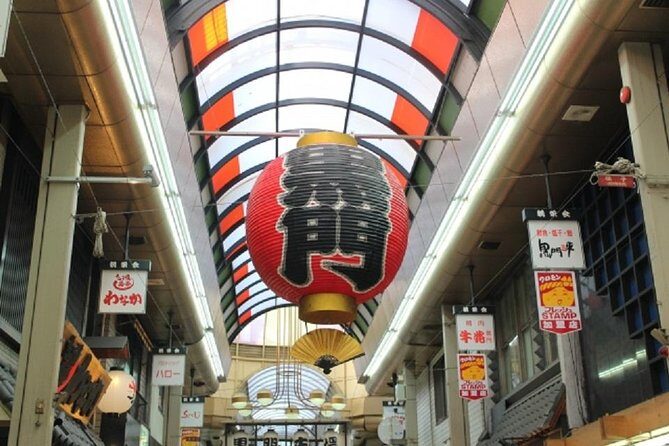
- Entering the Tatami Room: Calm in the Middle of Dotonbori
- Meet Your Kimono Host and Learn the Tea Story
- The Demonstration: Tools, Manners, and the Why Behind Each Move
- Hands-On Matcha Making: Your Bowl, Your Technique
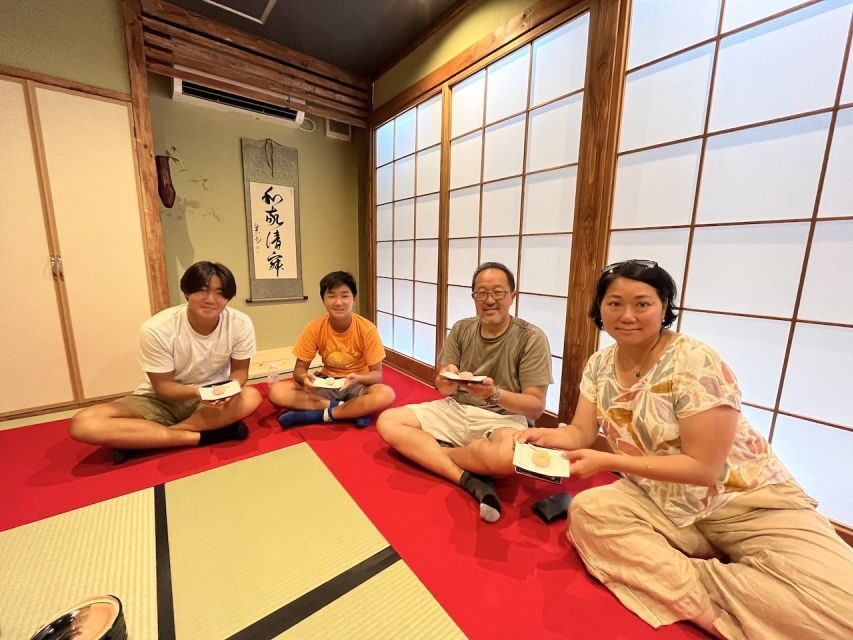
- Seasonal Sweets: The Pairing That Makes Matcha Feel Less Bitter
- Osaka Logistics: Finding the Second-Floor Entrance by Dotonbori
- Who This 45-Minute Osaka Tea Ceremony Is For
- Price and Value: What $25 Gets You in the Real World
- Should you book the Osaka Tea Ceremony?
- FAQ
- How long is the Osaka tea ceremony experience?
- Is the experience guided in English?
- What’s included in the $25 price?
- Do I make matcha myself or only watch?
- Where do I meet for the experience?
- Are children allowed?
- Are there restrictions on what I can bring or do?
- Is there free cancellation?
Key things to know before you go
- English-guided instruction: Japanese instructors lead the full session and speak English clearly.
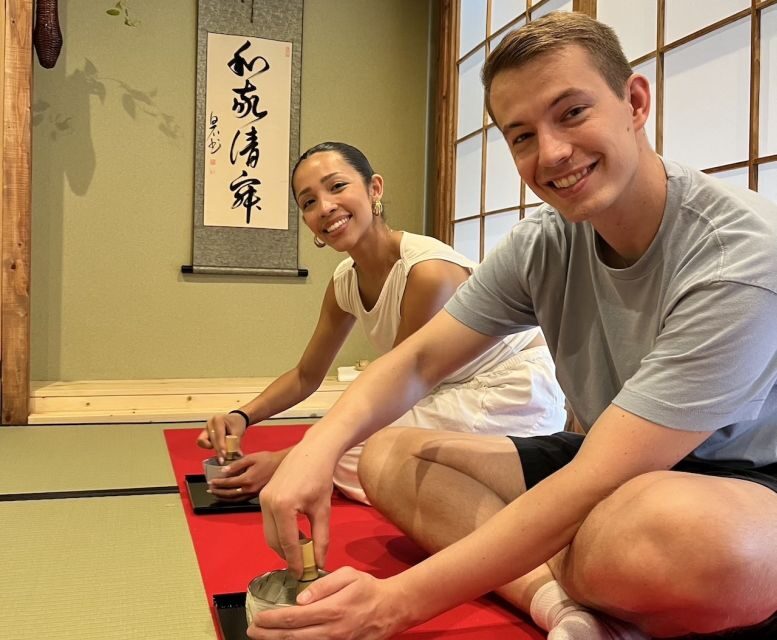
- Hands-on matcha: You make your own bowl using traditional tea tools, then taste what you made.
- Kimono welcome in a tatami room: The calm atmosphere is part of the point, not just decoration.
- History and manners, not just steps: You’re taught the meaning behind what you’re doing as you do it.
- Seasonal sweets with matcha: Confections are included and made to go with the tea.
- Short and sweet timing: The ceremony runs about 45 minutes, so it fits into a busy Osaka day.
Entering the Tatami Room: Calm in the Middle of Dotonbori
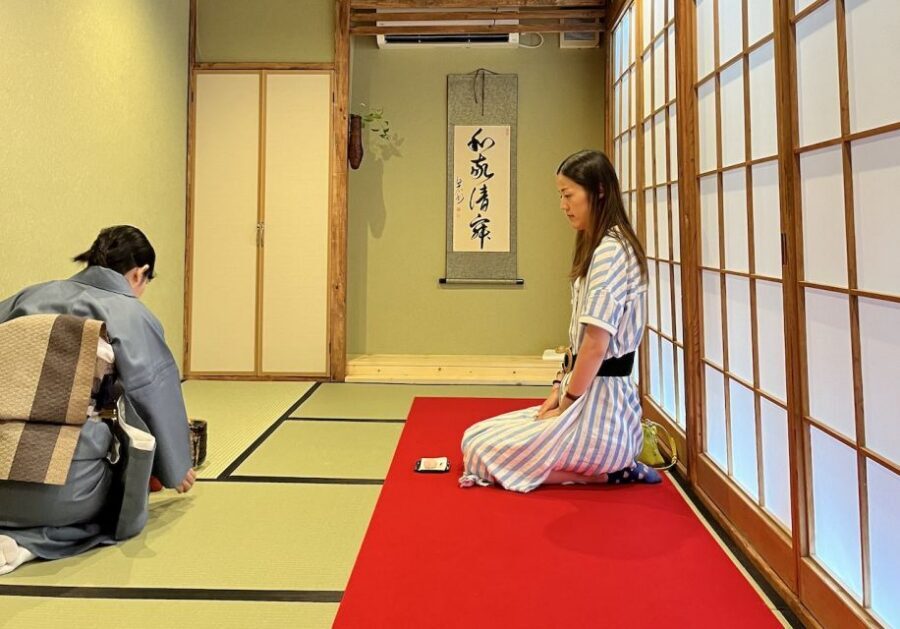
This is one of those Osaka experiences that slows your brain down fast. You’re not standing in a line staring at a screen. Instead, you step into a traditional room where the whole atmosphere says quiet, careful, and intentional.
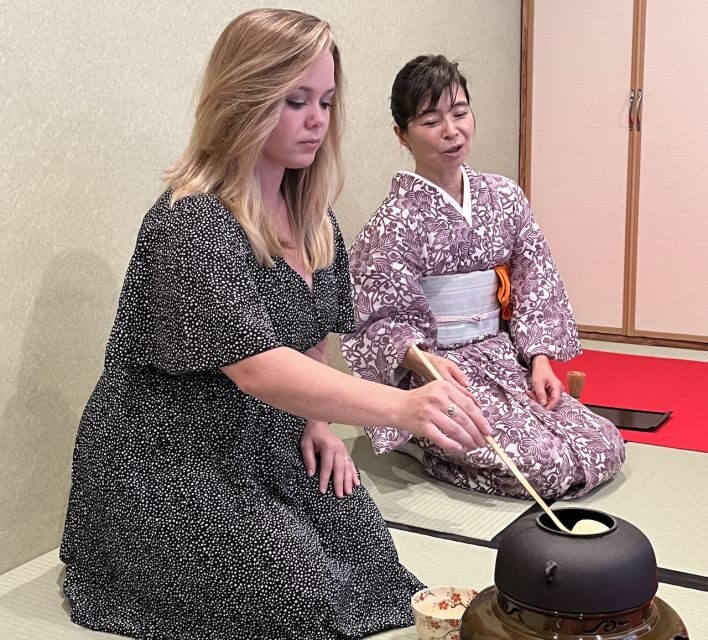
The ceremony is led by Japanese instructors who wear kimono. That matters because it sets the tone right away: you’re learning a living cultural practice, not a performance. Even the pacing feels measured. People talk about it as calm and peaceful, and you’ll understand why the moment the session starts.
One practical note: you’ll be seated on the tatami-style setup. Most people handle it fine for a short session, but treat this like a floor-sitting activity, not a quick coffee stop.
You can also read our reviews of more tours and experiences in Osaka.



Meet Your Kimono Host and Learn the Tea Story
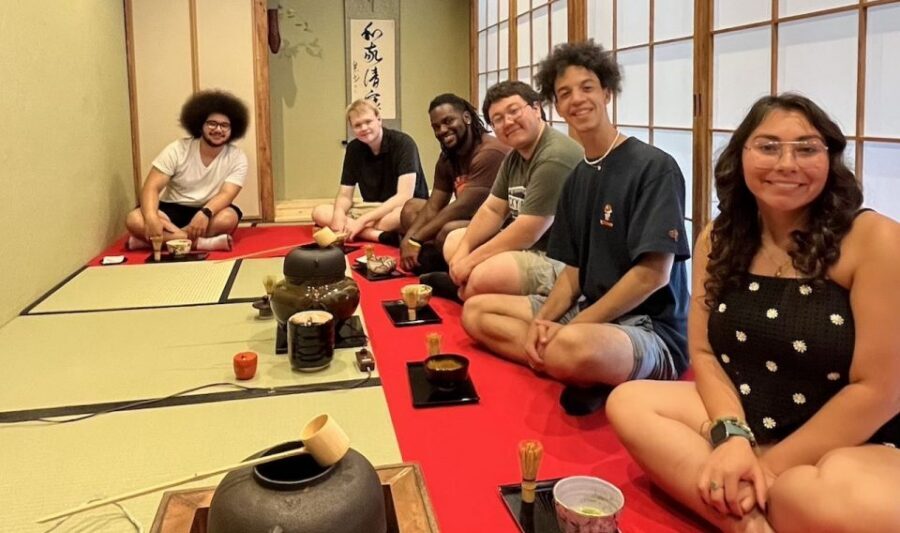
The session begins with a warm welcome and an introduction. Your host explains the meaning and history of the tea ceremony, focusing on why the ritual looks the way it does. This is where the English guidance really helps—there’s enough context to make the steps feel purposeful, without turning it into a lecture.
From the different hosts mentioned in recent sessions, you may meet instructors such as Yuki, Akiko, Ayaka, Kazu, or Mayumi. Regardless of the name, the pattern is the same: clear explanations, lots of patience, and a tone that makes questions feel normal.
Expect to learn the basic manners of tea serving too. That includes how you handle and present yourself in the space. If you’ve ever felt a bit nervous around Japanese customs, this is a low-stakes way to get oriented.
The Demonstration: Tools, Manners, and the Why Behind Each Move
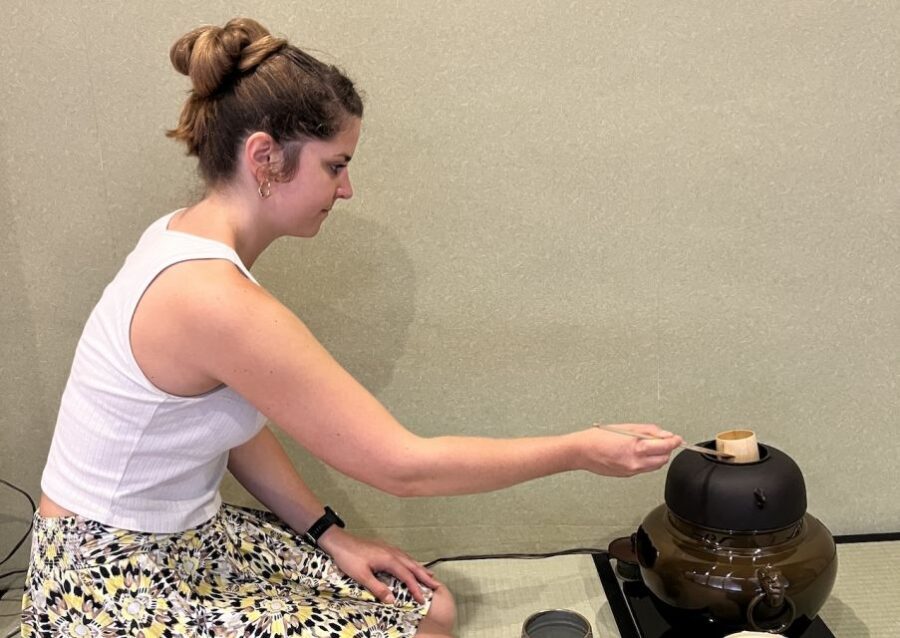
After the introduction, you watch a live demonstration. This is the part where you get the “shape” of the ceremony. Your host shows how to use the tea tools and how the steps flow from start to finish.
What I like about this format is that it’s not just movement. You learn what each action represents. Some hosts also highlight details that people often miss, like the significance of the tea bowl. When you understand that, the ritual stops feeling like a list of chores and starts feeling like a sequence with meaning.
You’ll also see the serving manners—again, in a simple, visitor-friendly way. The goal here isn’t perfection. It’s understanding what matters so you can do your part respectfully during your turn.
Hands-On Matcha Making: Your Bowl, Your Technique
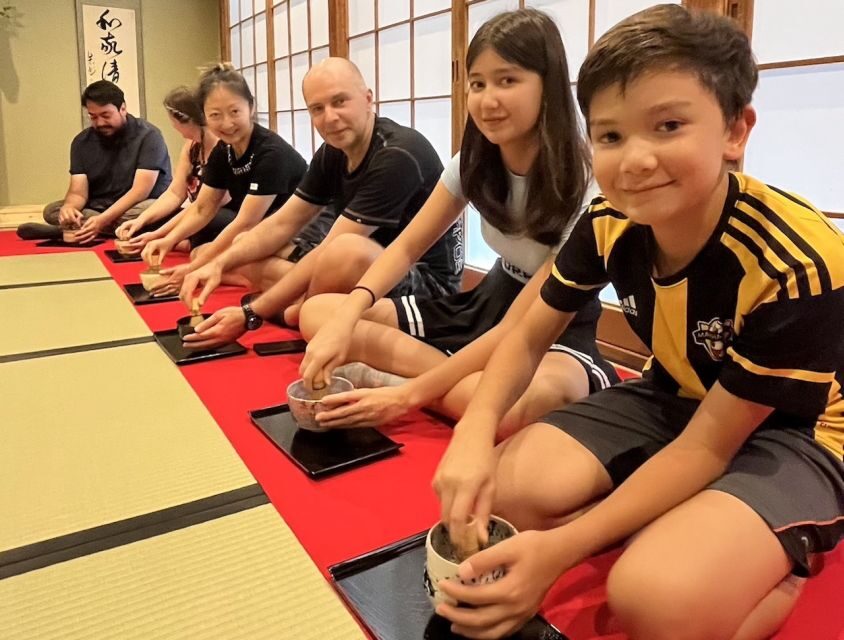
Then it’s your turn. This is the best value piece of the whole experience: hands-on matcha making with authentic tools.
You’ll learn how to prepare matcha step by step, following your instructor’s guidance. The instructions are in English, so you’re not stuck guessing what the host is saying. And because the session is short, it stays practical. You’re not spending your whole time watching someone else work.
When people talk about why this feels special, it usually comes down to two things:
- You get to experience the tools firsthand.
- You get feedback while you try.
After you make your matcha, you taste it. In at least some sessions, people mention drinking matcha twice, so if you’re offered a second tasting, consider it part of the lesson—like a chance to notice differences in flavor and texture.
Seasonal Sweets: The Pairing That Makes Matcha Feel Less Bitter
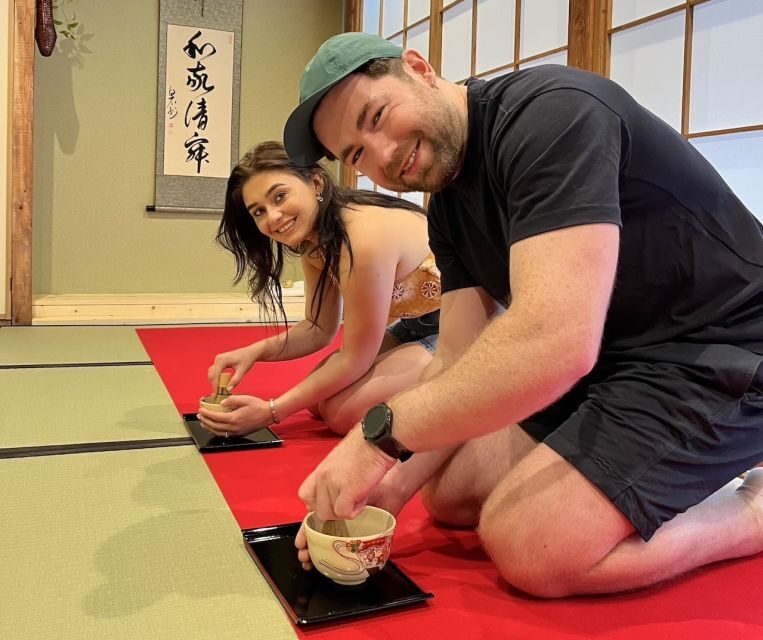
Matcha can be intense if you’re expecting it to taste like sweet green tea drinks. The seasonal sweets included with your ceremony are there to balance that.
You’ll be offered confections designed to match the tea. People describe these sweets as small, delicate, and a great partner to the flavor of matcha. That pairing is part of why the tea ceremony isn’t just about making tea—it’s about taste, timing, and contrast.
Think of it like this: matcha gives the earthiness, and the sweets give the relief. Together, it’s easier to appreciate matcha’s character instead of just judging it as strong.




Osaka Logistics: Finding the Second-Floor Entrance by Dotonbori
The location is in Osaka, Honshu, and the address is in the 道頓堀 area. The meeting point is:
大阪市中央区道頓堀1丁目東5-26
Second floor
Here’s the practical advice that will save you stress: use Google Maps and search for tea ceremony osaka the osaka to confirm the exact entrance. The “second floor” detail is crucial. This is one of those spots where people can walk past the right building and miss the entrance because the signage isn’t the big, street-facing kind.
Timing matters too. You should arrive with plenty of time—sometimes late arrivals cause issues. At the same time, one shared tip is that there may not be a lot of comfortable waiting space if you show up too early. So aim to be early, not “hours early.”
Coordinates (if you need them): 34.66885079999999, 135.5063291.
Who This 45-Minute Osaka Tea Ceremony Is For
This fits best if you want a quick, culturally grounded experience without spending half the day traveling for it.
You’ll likely love it if:
- You want an easy introduction to Japanese culture in English
- You enjoy quiet, respectful experiences (not loud tours)
- You want real participation, not just watching
- You like matcha and want to learn how it’s prepared traditionally
You should think twice if:
- You strongly dislike sitting on the floor for an extended period
- You need stroller access. Baby strollers aren’t allowed.
- You’re bringing food. Food isn’t allowed during the session.
There are also clear age rules. Children under 5 aren’t allowed to enter. If you bring children age 5 and above, they need their own ticket. If you’re traveling with a child under 4, contact in advance.
Price and Value: What $25 Gets You in the Real World
At $25 per person for about 45 minutes, this isn’t the cheapest thing you’ll do in Osaka. But it’s also not trying to sell you a factory tour.
Your money goes toward:
- A staffed, teacher-led experience with Japanese instructors
- English guidance and an English audio guide
- Entrance fee
- Matcha (powdered green tea)
- Seasonal confections
In other words, you’re paying for instruction plus materials, not just entry. And because you leave having made your own matcha bowl, the “I did something” feeling is strong. It’s also a nice tradeoff on a travel day: it’s short, calm, and gives your senses a break.
Add the kimono setting and tatami atmosphere, and you get something that’s hard to replicate on your own in a spontaneous way.
Should you book the Osaka Tea Ceremony?
If you want a peaceful, hands-on cultural activity in Osaka, I’d book it. It’s especially worth it if matcha interests you at all and you’d rather learn through doing than through reading.
Book it with confidence if:
- You like thoughtful, step-by-step experiences
- You want clear English instruction
- You want a calm moment to reset in the middle of Osaka sightseeing
Skip it if floor seating is a dealbreaker for you, or if you’re traveling with needs that conflict with the rules (no strollers, no food, keep noise down).
FAQ
How long is the Osaka tea ceremony experience?
It lasts about 45 minutes.
Is the experience guided in English?
Yes. The host or greeter speaks English, and an English audio guide is included.
What’s included in the $25 price?
You get the entrance fee, matcha (powdered green tea), and confections (seasonal sweets).
Do I make matcha myself or only watch?
You do both. You’ll watch a demonstration, then you’ll make your own bowl of matcha and taste it.
Where do I meet for the experience?
Meet at 大阪市中央区道頓堀1丁目東5-26 on the second floor. Use Google Maps to search for tea ceremony osaka the osaka to confirm the correct address.
Are children allowed?
Children under 5 are not allowed to enter. Children aged 5 and above need their own ticket.
Are there restrictions on what I can bring or do?
Baby strollers, food, baby carriages, jumping, and making noise are not allowed.
Is there free cancellation?
Yes. You can cancel up to 24 hours in advance for a full refund.