REVIEW · TOKYO
Tokyo: Sumo Tournament with Guide & Assigned Reserved Seat
Book on GetYourGuide →Operated by AMIGO TOURS JAPAN GK · Bookable on GetYourGuide
Sumo hits different when someone explains it. This Tokyo package takes you to Ryogoku Kokugikan for an official tournament session, then adds an English sumo expert guide to help you follow the rules and rituals in real time, with guides like Jorge and Mili leading the way. I especially liked having assigned reserved seats (second-floor B or C class), so you can focus on the action instead of stress-scavenging ticket luck, and I also liked the way the guide turns the ceremony into something you can actually read.
One catch: the price is high, and while the guide and reserved seating make it easier, some people still feel the markup is steep compared with what an unbundled ticket would cost.
In This Review
- Key things I’d pay attention to
- Tokyo Sumo’s Best Stage: Ryogoku Kokugikan
- Starting at Matsuura-Bungo Mansion Site and Getting to Ryogoku
- The 30-Minute Arena Walkthrough: Rules, Rituals, and Rankings
- Reserved Seating in Class B or C (Second Floor): What You Actually Get
- The Four-Hour Tournament Visit: Using Your Guide to Watch Smarter
- The Price Question: Why $209 Can Feel Like a Deal or a Rip-Off
- When it feels like good value
- When it feels like too much
- Food, Crowd Noise, and Comfort: Day-of Reality Check
- Who This Tour Suits Best in Tokyo
- Quick FAQ for Tokyo Sumo Tournament Tickets with a Guide
- FAQ
- How long is the sumo tournament experience?
- Where does the tour take place?
- What kind of seats do I get?
- Is the guide available in English?
- Are food and drinks included or allowed during the event?
- Is this tour refundable?
- Should You Book This Sumo Tournament Package?
Key things I’d pay attention to
- English guide who explains rules and ranking before and during the tournament session, so you know what you’re looking at.
- Reserved seats in B or C class (second floor), which is the practical value: you don’t arrive hoping for the best.
- A 30-minute walkthrough at Ryogoku Kokugikan that helps you get your bearings fast.
- Guides like George, Caesar, Erik, and Jorge show up repeatedly in feedback for being engaging and good at answering questions.
- Group size can be loud at times, which may affect how clearly you hear instructions.
- Some guides add short extras like a nearby temple/garden stop, so the experience can feel more than just ticket time.
Tokyo Sumo’s Best Stage: Ryogoku Kokugikan
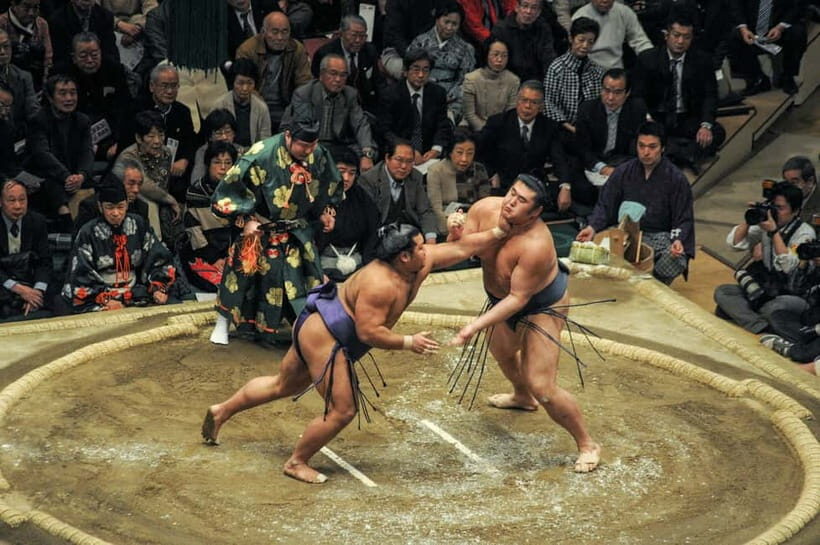
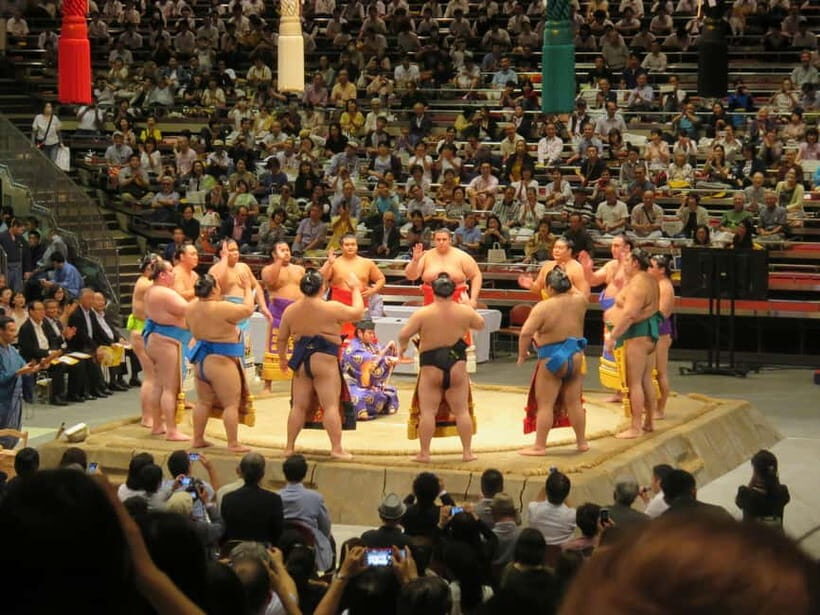
If you’re going to see sumo in Tokyo, you want the real tournament venue. This experience takes you to Ryogoku Kokugikan, one of Japan’s best-known sumo arenas, where the whole place is built around matches, ritual, and noise. It’s not a museum show. It’s live sport with tradition running through everything from the pacing to the pre-fight ceremony.
What makes this version feel smarter is the combination: you’re not only buying a seat, you’re buying context. The guide is there to explain how to make sense of what’s happening on the ring, not just to point and hope. That matters because sumo can look confusing if you don’t know what to watch first.
Also, the day is built around a real viewing block. You get a guided portion early, then a long four-hour tournament visit. That length helps. You’re not rushing in and out. You can settle, learn the rhythm, and actually start enjoying the matches instead of watching through confusion.
You can also read our reviews of more guided tours in Tokyo

Starting at Matsuura-Bungo Mansion Site and Getting to Ryogoku
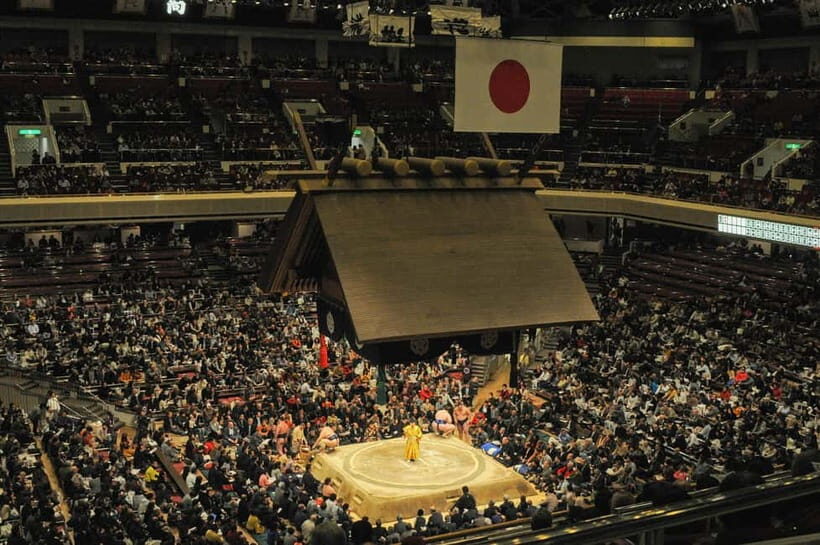
Your day starts with one of two starting location options, and the details you were given point to Matsuura-Bungo Mansion Site as the meeting spot for at least one option. Because meeting points can vary by booking choice, plan to arrive a few minutes early and double-check your confirmation.
From there, your schedule is structured, not chaotic. You’ll get a guided tour inside Ryogoku Kokugikan early on, then you spend most of your time at the arena for the tournament session. That’s a good shape for first-timers: you get information before you’re surrounded by match-day energy.
One more practical note that shows up in feedback: the area around the arena is lively and sometimes loud. If you’re sensitive to noisy environments, bring a flexible mindset. You’ll still hear plenty, but you might have moments where it’s harder to hear every detail, especially if your group is larger.
The 30-Minute Arena Walkthrough: Rules, Rituals, and Rankings
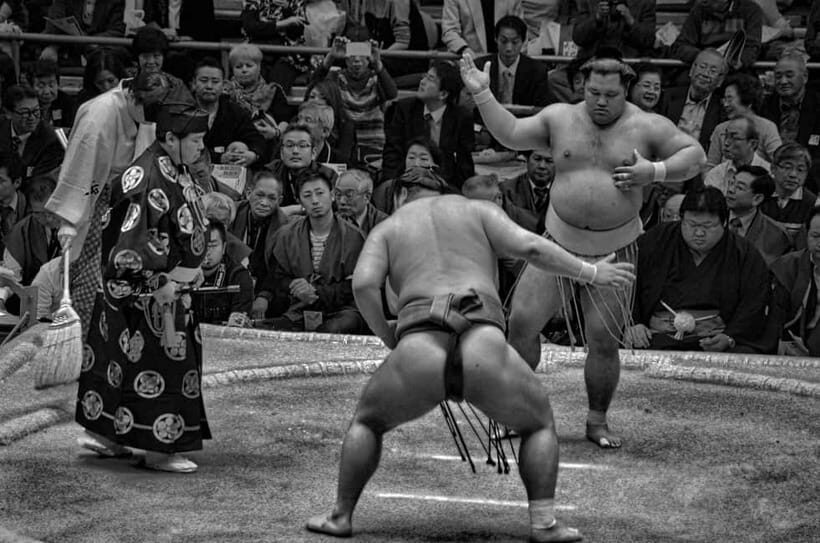
The itinerary includes a 30-minute guided tour at Ryogoku Kokugikan before the longer viewing time. This is the part that makes the rest of the afternoon click.
In plain terms, the guide is there to translate sumo for you. You’ll be introduced to:
- Rules of the bouts
- Rituals you’ll see around each fight
- Ranking system and why it matters
- Cultural significance behind what feels like tradition with a purpose
- Techniques, at least at the level of what you’re likely to notice in the ring
What I like about this approach is timing. You’re not learning sumo a week later through a guidebook. You’re learning it while you can still connect it to what you’re about to see.
Feedback also hints at different styles. Some guides are very focused on ceremonies and background, while others go heavy on explaining what the wrestlers are doing and why. If you specifically want a technique-focused explanation, you might prefer a guide who spends more time on the fight mechanics rather than just history and customs. In the feedback you provided, there’s at least one note that someone wished they’d gotten more on technique details. That’s not a reason to skip, but it’s something to keep in mind when you choose the experience.
Reserved Seating in Class B or C (Second Floor): What You Actually Get
You’re paying for something very tangible here: reserved seat access. The package includes tickets for Class B or C seats on the second floor. In a tournament setting, that’s huge because the biggest problem for most visitors is not interest. It’s getting tickets at all.
The reserved-seat setup also matters for comfort and planning. Even though your seats are assigned, a few comments suggest seating can still feel imperfect for groups, with people sometimes separated depending on how the seating is allocated. One review also mentioned that some people wished they could choose exact seats rather than getting assigned ones. So think of it like this: you get certainty, not full control.
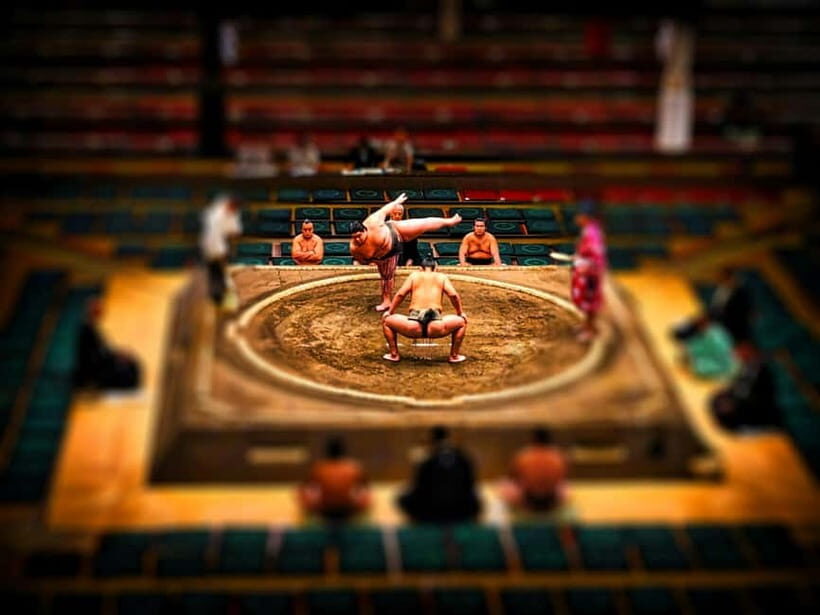
On the plus side, many accounts describe the view as strong and fights as clearly visible from those second-floor seats. That’s exactly what you want. You don’t need a front-row seat to enjoy sumo; you need a seat where you can actually track the action and see the ring space clearly.
The other practical detail: this isn’t a food-and-market experience. There’s no meal included, and food and drinks aren’t allowed. That means your ticket value is all about sight, sound, and learning.
The Four-Hour Tournament Visit: Using Your Guide to Watch Smarter
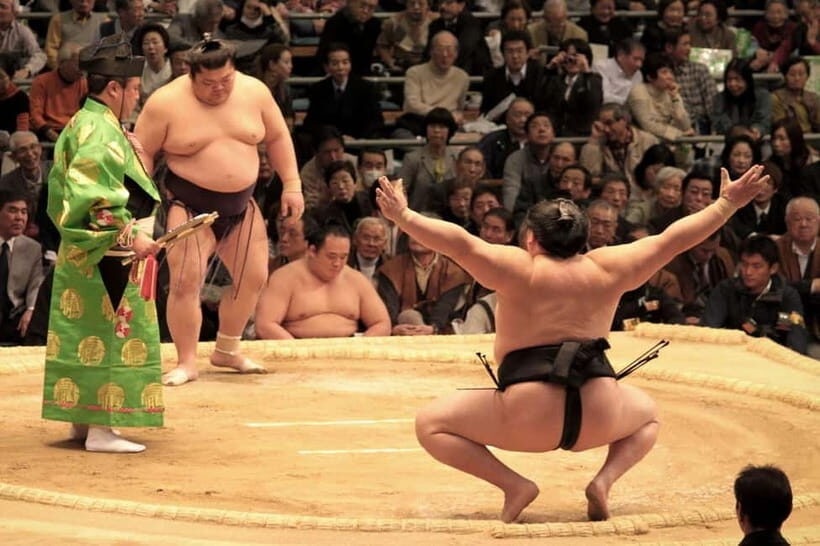
After the initial 30-minute tour, the schedule shifts into a four-hour tournament visit. That time block is where your guide earns their keep.
Here’s what this looks like in value terms:
- Your guide helps you understand what’s happening so you don’t miss the meaning behind the moments.
- You can ask questions before and during the event rather than hoping you’ll figure it out later.
- You’re more likely to recognize patterns, not just movements, because you’ve been given the ranking context and ritual cues.
Many of the strongest reviews in your provided notes emphasize that the guide made the tournament more memorable and less confusing. Names like George, Caesar, Erik, Jorge, Lily, and Lily/Micky/Miki show up repeatedly, and the consistent theme is Q&A: people felt confident asking questions because the guide had answers, or at least worked hard to clarify things.
One thing to watch for: group size can be large enough that it’s harder to hear explanations at moments. If you’re traveling with a group you might also notice spacing and sightline limits typical of arena seating. Still, the longer tournament visit gives you chances to refocus and keep learning even if you miss a detail once.
Also, the experience includes photo opportunities in what’s described as a storybook-like setting. That’s not the same as having a private photo session, but it does mean the day includes moments where you can step out, capture the experience, and return to watching with a clearer mind.





The Price Question: Why $209 Can Feel Like a Deal or a Rip-Off
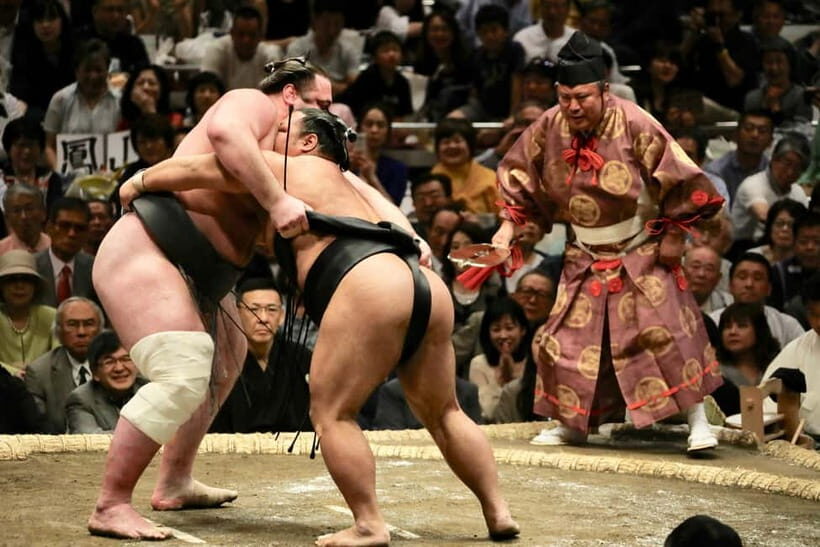
This package costs $209 per person and includes a sumo tournament ticket, a reserved seat (Class B or C, second floor), and an English expert guide.
So is it worth it? Here’s the balanced way to judge it.
When it feels like good value
- You’re getting a guaranteed seat and not just hoping you can secure tickets on your own.
- You’re buying interpretation, not only access. For many first-timers, a guide turns a fascinating event into a real fan experience.
- The reviews you provided repeatedly say the guide quality makes the day feel like a highlight. People specifically call out that preparation before the tournament helps them know what’s going on.
When it feels like too much
- Several comments directly question the markup versus what the unbundled ticket price would be. One review claims the underlying ticket alone could cost around ¥5,000, while the packaged price felt like a tourist trap.
- If you only care about watching matches and you already plan to study sumo basics beforehand, you may not feel the guide adds enough to justify the cost.
My practical advice: treat this as a convenience premium plus education. If you value both, it can be money well spent. If you’re purely cost-minimizing, you’ll likely feel sticker shock.
Also note that this experience is non-refundable, which is another reason to pick your date carefully.
Food, Crowd Noise, and Comfort: Day-of Reality Check
This is a tournament arena, not a sit-down cultural program. Food and drinks aren’t allowed, so you’ll want to plan what you eat around the experience. Since no meal is included, you can’t count on an easy snack stop during the four-hour visit.
The arena setting also means crowds and noise. You’ll be in a high-energy environment for hours, and that affects how well you can hear your guide at every moment. In your feedback, one person noted the explanations can be difficult to hear due to a large group. That doesn’t ruin the experience, but it’s a reason to keep expectations realistic and to lean on the guide’s Q&A time when possible.
Finally, this tour is not suitable for people with mobility impairments. Even without extra details, the combination of arena seating, crowds, and walking time makes accessibility a real constraint here.
Who This Tour Suits Best in Tokyo
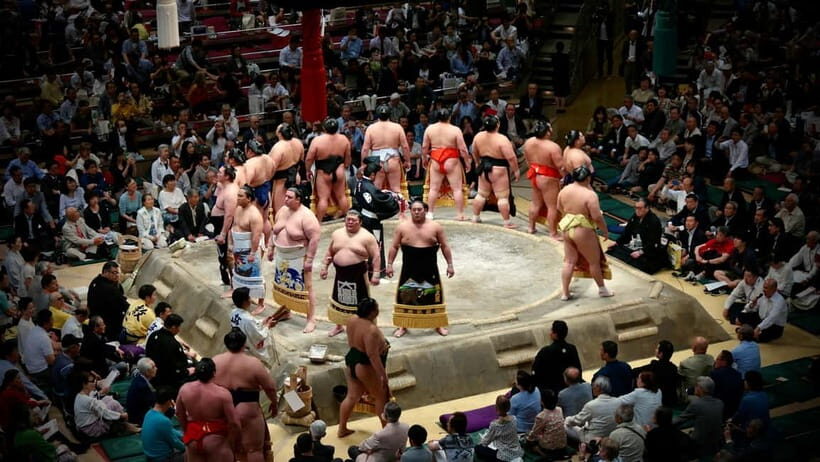
This experience fits best if you check a few boxes:
- You’re a first-time sumo viewer and you want the rules, ranking, and rituals explained so you can follow along.
- You want reserved seats without the headache of hunting tickets.
- You care about culture, not just spectacle, and you like hearing the meaning behind traditions.
It may be less ideal if:
- You’re extremely price-sensitive and want only the cheapest route to the tournament.
- You’re sensitive to noise and might struggle to hear in larger groups.
- You need mobility-friendly access.
If you fall into the middle ground—sumo-curious, not obsessed—this is still a good bet. The guide helps you decide if you actually like sumo after the first session.
Quick FAQ for Tokyo Sumo Tournament Tickets with a Guide
FAQ
How long is the sumo tournament experience?
It runs about 4 to 5 hours total, with a 30-minute guided tour portion and then a longer tournament visit.
Where does the tour take place?
You meet at one of the listed starting location options, then you head to Ryogoku Kokugikan for the guided tour and the tournament viewing.
What kind of seats do I get?
Your ticket includes reserved seating in Class B or C on the second floor.
Is the guide available in English?
Yes. The tour guide provides English.
Are food and drinks included or allowed during the event?
Food and drinks are not included, and food and drinks are not allowed during the experience.
Is this tour refundable?
No. The activity is listed as non-refundable.
Should You Book This Sumo Tournament Package?
I’d book this if you want the simplest path to a real Tokyo sumo session plus an English guide who helps you understand what you’re watching. The reserved second-floor seats solve the hardest part for many visitors: getting into the tournament at all. The guide work, especially with names like George and Jorge popping up in feedback, is what turns the day from just watching into learning.
I’d think twice if your only goal is the cheapest sumo ticket possible. At $209, you’re paying for certainty and interpretation. If you already know the basics and plan to study on your own, the price may feel like too much.
If you want one clear rule: book it when you value guidance and you want to enjoy the ceremony and sport at the same time. Skip or look elsewhere when you want the lowest-cost seat with no extra help.