REVIEW · TOKYO
Takoyaki cooking experience in Kabukicho, Shinjuku
Book on GetYourGuide →Operated by Bancre Inc. · Bookable on GetYourGuide
Takoyaki gets real fast in Shinjuku. In this one-hour class in Kabukicho, you’ll grill takoyaki yourself on a hot griddle, then eat the results while they’re still piping hot. It’s one of those rare Japan experiences where the learning and the eating happen at the same time.
I love how hands-on this is. You’re not just watching a demo—you’re making round takoyaki, then serving it to yourself with classic toppings. I also like the human side: instructors such as Chihiro, Shuma, and Sakiko are friendly and keep instructions clear, and you’ll often get helpful conversation while you cook.
One consideration: it’s not for everyone. Children under 4 aren’t suitable, and people with gluten intolerance should skip the class due to what’s used in the batter.
In This Review
- Why Kabukicho Takoyaki Feels More Than a Snack
- The Key Points That Make This Class Worth Your Time
- What You’ll Be Making: Takoyaki, From Batter to First Bite
- Your One-Hour Flow: How the Cooking Experience Typically Plays Out
- Meeting Point in Shinjuku: Fast Directions Near TOHO Cinemas
- Price and Value: What $25 Buys You (And What It Doesn’t)
- Instructor and Language Support: English-Friendly, Japan-Style
- Who Should Book This Takoyaki Class (And Who Should Skip)
- Practical Tips Before You Go
- Should You Book It? My Decision Guide
- FAQ
- How long is the takoyaki cooking experience?
- How much does the takoyaki cooking experience cost?
- Where is the meeting point near Shinjuku Station?
- What is included in the price?
- What is not included?
- What languages are used during the class?
- Is it a large class?
- Can children join?
- Is this class suitable for gluten intolerance?
- Can I cancel or pay later?
Why Kabukicho Takoyaki Feels More Than a Snack
Shinjuku is loud, busy, and full of neon. That’s exactly why a takoyaki cooking session here works so well—you get a focused, warm, food-first break inside a short block of time. You end up with a real skill (how takoyaki is made) and a full meal you can actually taste, not just a quick bite you grab on the street.
The format is also simple. It lasts about one hour, and you can join even if you’ve never cooked anything “Japanese-style” before. If your Japanese is limited, that’s okay too. The class runs in English and Japanese, and if a staff member isn’t fluent, they may use a translation machine so you can still follow along.
The Key Points That Make This Class Worth Your Time
- Hands-on griddle time: you cook and eat what you make, while it’s hot.
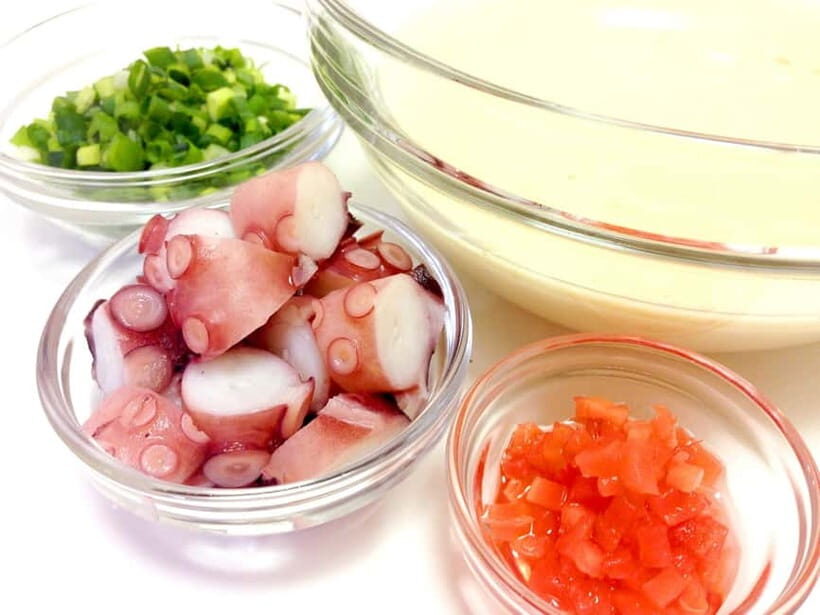
- Classic takoyaki method: batter in round holes, octopus pieces inside, grilled into shape.
- Small group limit (6): easier to get help and keep the pace comfortable.
- Clear topping options: dried bonito flakes, aonori (green laver), sauce, and mayo.
- Family-friendly with guidance: it’s designed so kids can participate (with the age limit in mind).
You can also read our reviews of more cooking classes in Tokyo


What You’ll Be Making: Takoyaki, From Batter to First Bite
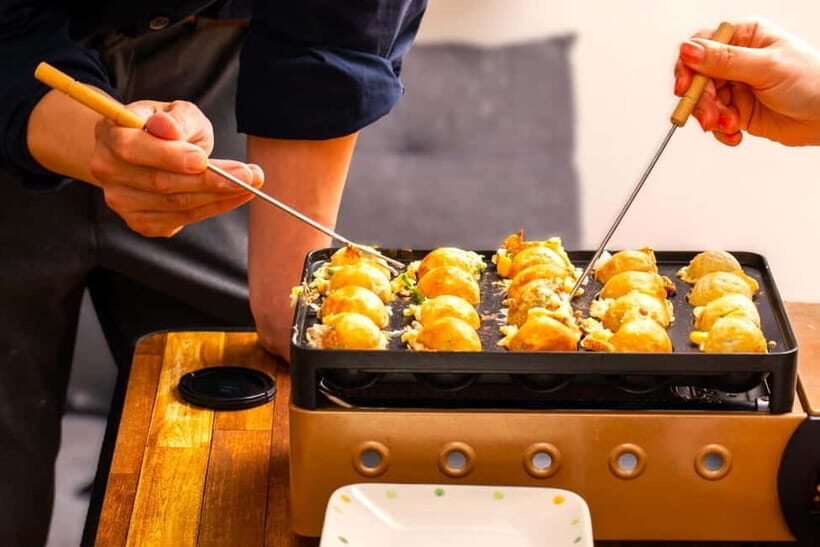
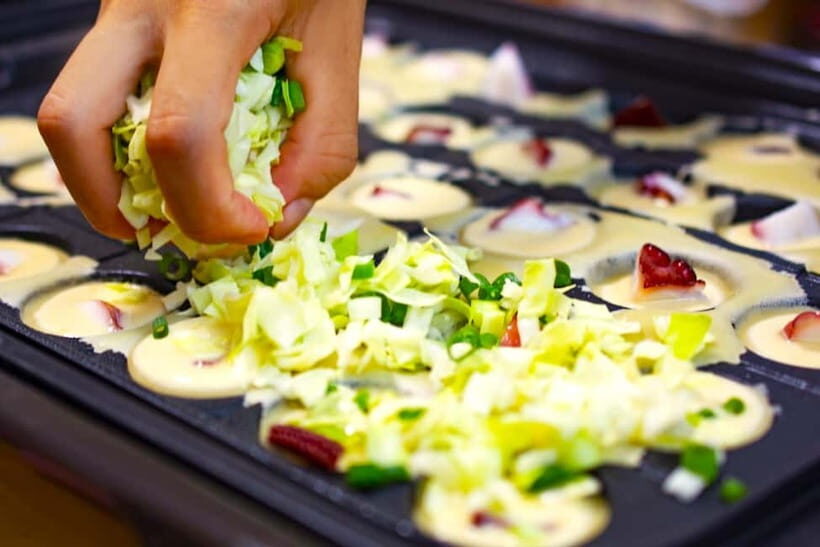
Let’s get clear on what takoyaki is before you show up. You start with a batter made from water and eggs, plus flour, poured into a griddle’s round wells. Then you place chopped octopus inside and grill until the whole thing forms that familiar ball shape.
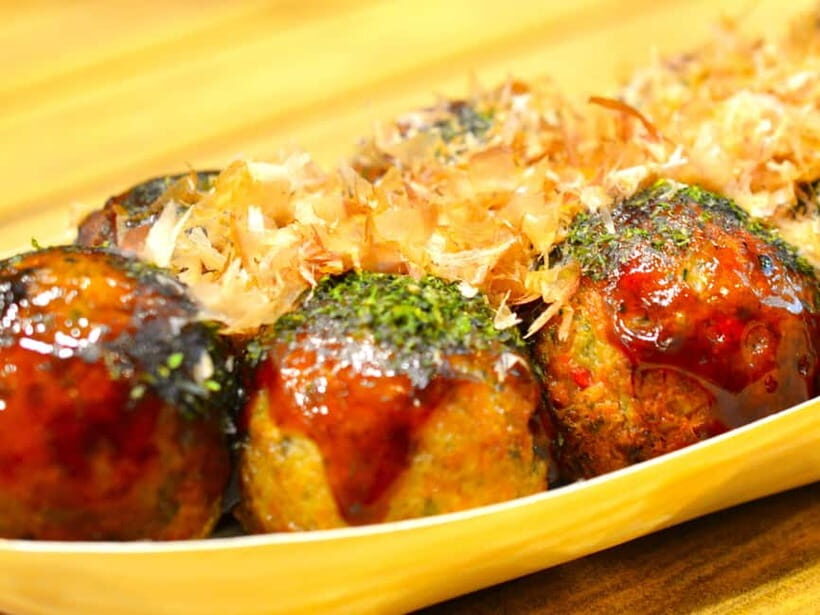
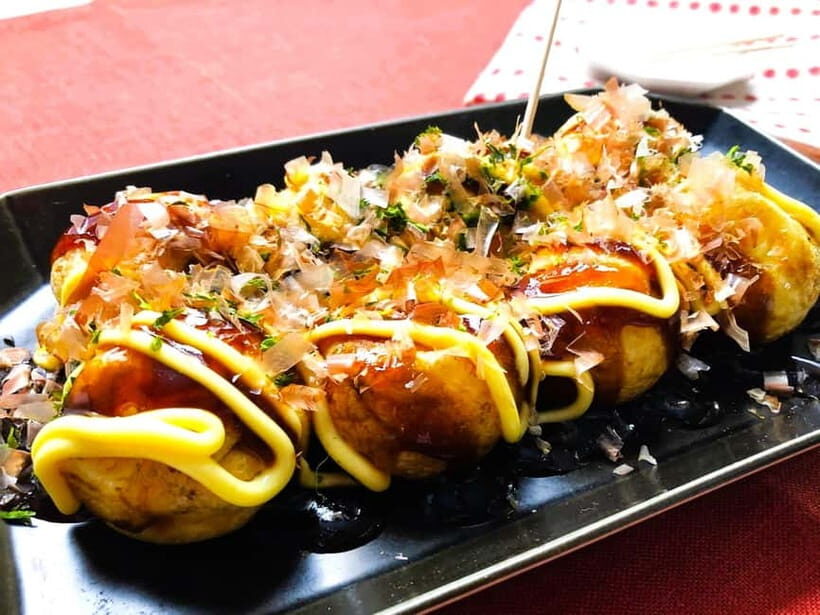
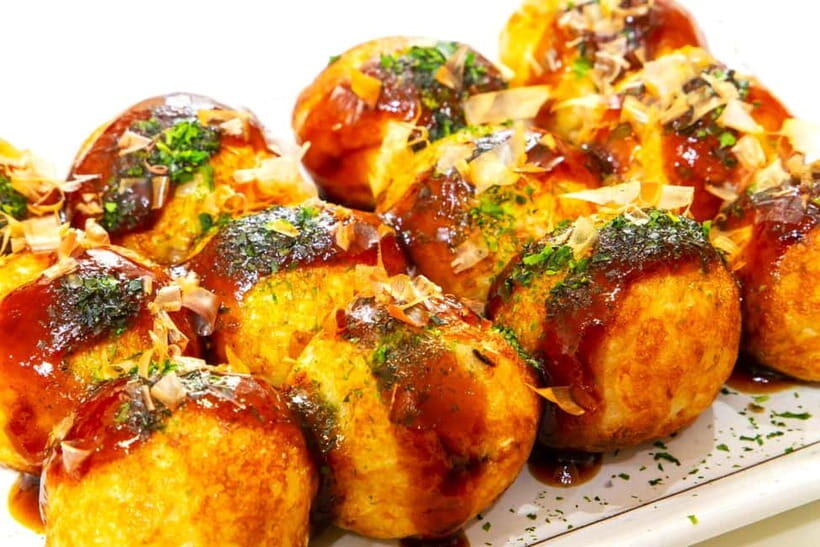
When it’s done, it comes out hot, ready to eat. It’s usually served with toppings or used as a dip-style mix depending on how you like it. Expect the basics: dried bonito flakes, aonori (green laver), and either sauce and/or mayonnaise.
Texture matters with takoyaki. You’re looking for that contrast: crispy on the outside, fluffy on the inside. That’s why it’s so fun to cook. You can tell when it’s starting to set and brown, and when it’s close to ready, because the smell and look change quickly on a hot griddle.
Also, it’s genuinely easy to eat. Each piece is made for grabbing with chopsticks or eating right away, and it pairs nicely with beer if you’re the type who likes a cold drink with street-food style cooking. Bottled drinks aren’t included, so you’ll want to plan for that if beer is part of your plan.
Your One-Hour Flow: How the Cooking Experience Typically Plays Out
The experience is set up so you can follow the steps without stress. It starts with you letting the restaurant staff know your reservation when you arrive. After that, you’ll get the instructions you need—often with support from English-speaking instructors.
From there, the class moves through the core takoyaki process:
1) Pour batter into the round holes on the griddle
2) Add chopped octopus into each piece
3) Grill until shaped and cooked, so you get those round, browned edges
4) Finish with the toppings you choose (bonito flakes, aonori, sauce, mayo)
5) Eat your takoyaki as part of the meal included in the price
You’ll notice the timing is part of the fun. Takoyaki is at its best when it’s hot. This class ends when you finish eating, so you don’t get stuck with a long waiting period after cooking.
One small practical note: you’ll be working with heat and tools in close quarters. If you’re bringing kids, keep an eye on hands and follow any safety guidance from the instructor. In past sessions, staff have been careful about kids not getting hurt, and the overall vibe is relaxed—but you still want to take the cooking part seriously.
Meeting Point in Shinjuku: Fast Directions Near TOHO Cinemas
You’ll meet about 5 minutes’ walk from Shinjuku Station on the JR Yamanote Line. From there, go along Kabukicho Central Road toward TOHO Cinemas.
As you walk, look for Shinjuku Ale next to Karaoke 747 on the right, before you reach the end of the road. The correct address is:
1-14-5 Kabukicho, Shinjuku-ku, Tokyo
If you prefer using navigation, the Plus code is MPV2+VR Shinjuku City, Tokyo.
Why I like this meeting point: it’s simple to find from a major station, and it puts you right in the area you’ll want to be in anyway. After the class, you’re also in range to pop by familiar Shinjuku landmarks for photos—one review highlighted how close it is to the Godzilla area.
Price and Value: What $25 Buys You (And What It Doesn’t)
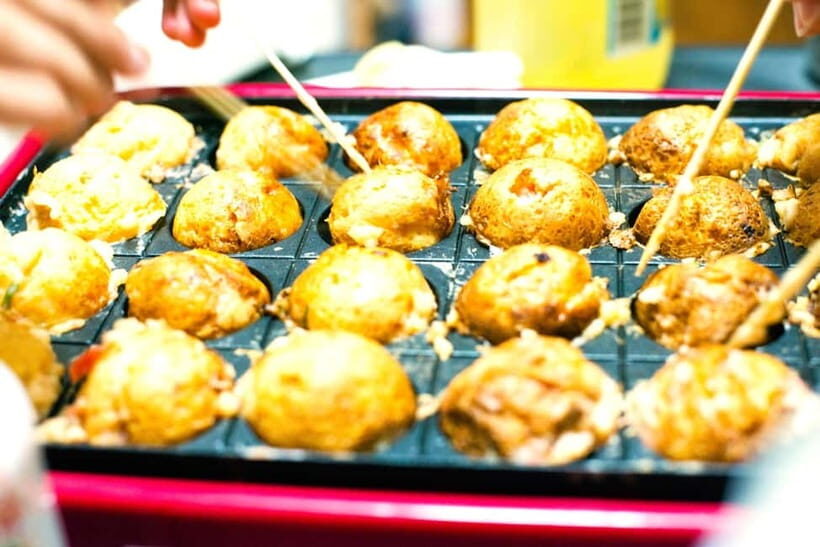
At $25 per person for about one hour, you’re paying for more than food. You’re paying for the instructor time, the equipment use, and the meal you eat right after cooking. That’s the big value here: you’re not just tasting takoyaki—you’re learning how it’s made.
In Shinjuku, $25 can easily disappear on casual snacks and drinks if you’re hungry. Here, the meal is included, and the focus is on the cooking process.
What’s not included is also worth knowing. Bottled drinks aren’t included, and you’ll likely want extra water or a beer if you like pairing food with a cold drink. Transportation to the meeting place isn’t included either, so budget that separately if you’re staying outside Shinjuku.






Instructor and Language Support: English-Friendly, Japan-Style
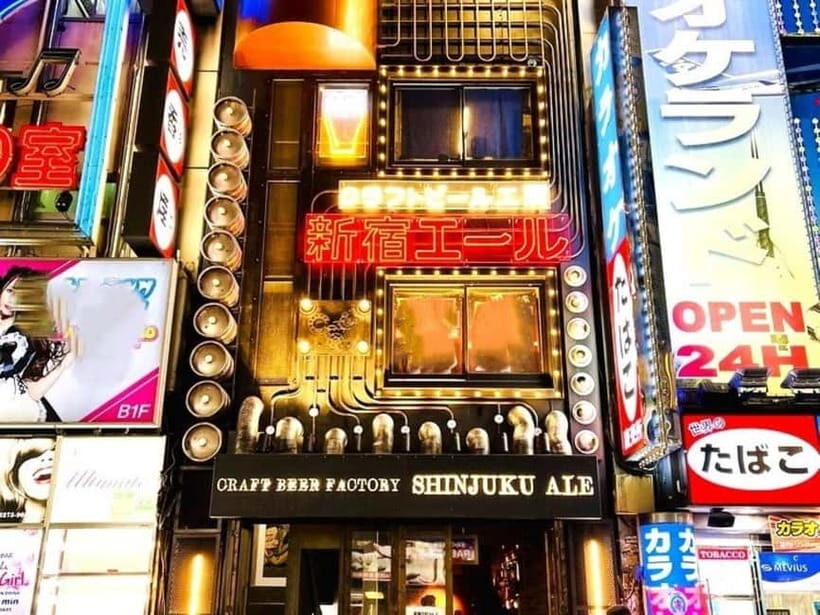
This class lists instructors in English and Japanese, and that matters in a hands-on cooking setting. You’ll be able to ask questions, clarify steps, and understand the timing while you cook. When a staff member isn’t fluent in English, they may use a translation machine, so you’re not stuck in silence.
I’ve found that the best cooking classes don’t just teach technique—they reduce anxiety. In this one, the standout is how approachable the instructors are, with names like Chihiro, Shuma, Sakiko, and others mentioned across sessions. If you want a class where the tone is friendly (not rigid, not intimidating), this is a strong fit.
Who Should Book This Takoyaki Class (And Who Should Skip)
This works well if:
- you want a first-time-friendly Japanese cooking experience
- you like hands-on food more than food tours that mostly involve walking and eating
- you’re traveling with family and want something your kids can actually participate in (as long as they meet the age requirement)
- you enjoy casual conversation while you cook
It’s not suitable if:
- your child is under 4
- you have gluten intolerance (the class isn’t designed for that dietary need)
Also, if you’re traveling alone, don’t assume it’s awkward. The class is small—limited to 6 participants—so you’ll be near the instructors and other cooks without the chaos of large groups.
Practical Tips Before You Go
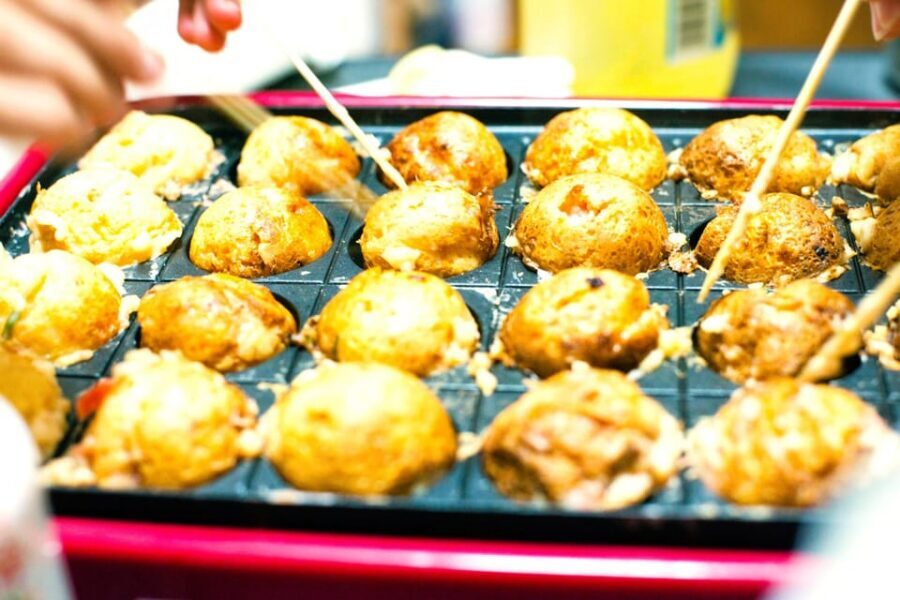
A little prep makes your experience smoother.
- Go hungry: the meal is included, and you’ll eat what you cook at the end.
- Dress for comfort: you’ll be standing and cooking near equipment, so wear comfortable shoes.
- Plan on hot food: takoyaki is served piping hot, so take your first bite carefully.
- Bring simple Japanese phrases: even a basic thanks goes far, but English support is built in.
- If you’re using a navigation app, use the provided address or Plus code so you arrive with confidence.
And one more useful mindset: don’t treat this like a perfection test. Takoyaki is forgiving. The point is learning the process, having fun flipping your brain from tourist mode to cook mode, and eating something you helped make.
Should You Book It? My Decision Guide
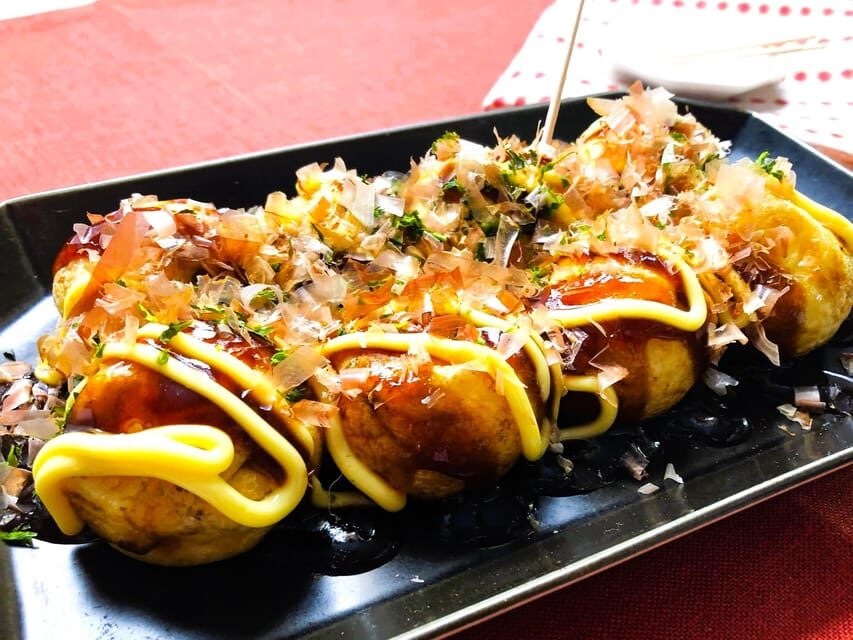
Book this class if you want a short, high-satisfaction experience in Shinjuku where you cook and eat right away. The best part is that it’s practical: you learn the method (batter into round holes, octopus inside, grilled into shape) and you get classic toppings so your first bite matches what takoyaki is supposed to taste like.
Skip it if you’re sensitive to gluten or if you’re traveling with very young kids under the age limit. Also skip if you’re expecting a long cultural lecture. This is a cooking-and-meal experience, not a history museum.
FAQ
How long is the takoyaki cooking experience?
The experience takes about one hour.
How much does the takoyaki cooking experience cost?
It costs $25 per person.
Where is the meeting point near Shinjuku Station?
It’s a 5-minute walk from Shinjuku Station on the JR Yamanote Line. You’ll walk along Kabukicho Central Road toward TOHO Cinemas, then look for Shinjuku Ale next to Karaoke 747 on the right.
What is included in the price?
The price includes the takoyaki cooking experience and a meal.
What is not included?
Bottled drinks, additional meals and drinks, and transportation expenses to the meeting place are not included.
What languages are used during the class?
The class uses English and Japanese. If a staff member isn’t fluent in English, a translation machine may be used.
Is it a large class?
No. It’s a small group limited to 6 participants.
Can children join?
It’s not suitable for children under 4. The experience is designed so children can participate.
Is this class suitable for gluten intolerance?
No. People with gluten intolerance should not join.
Can I cancel or pay later?
There’s free cancellation up to 24 hours in advance for a full refund, and you can reserve now & pay later.