REVIEW · TOKYO
Tokyo Washoku 4-hour Cooking Class: From Market to Table
Book on Viator →Operated by MagicalTrip Inc. · Bookable on Viator
Tokyo starts at the supermarket, not the studio. This 4-hour market-to-table Japanese cooking class sends you to a local shop near Iriya Station, then into a teaching kitchen where you practice knife skills and make multiple dishes from scratch. I love that the day is built around real shopping choices, not just cooking, and I love that you leave with take-home recipes so you can repeat the results later.
One thing to plan around: dietary requests need at least one day’s notice, and the class can’t guarantee an allergy-free kitchen because the cooking happens off-site. Also, they’re strict about timing—if you’re more than 5 minutes late and haven’t contacted them, you may lose your spot.
In This Review
- Key highlights worth your attention
- From FamilyMart meet-up to the market near Iriya Station
- Why the supermarket part is the real value
- The dishes you’ll make: classic washoku with hands-on technique
- Knife skills you can actually use at home
- Cooking studio meal time: shared food, plus sake or beer
- Recipes you take home (and how to use them)
- Dietary needs: what’s supported, and what to double-check
- Price and value: $79.59 for four hours of instruction plus food
- Who should book this class in your Tokyo trip
- Book it or skip it: my take
- FAQ
- FAQ
- What kinds of dishes will I cook in the class?
- Is the class suitable for vegan or vegetarian diets?
- How much time should I plan for?
- What if I have dietary requests or allergies?
- Will the class have a small group size?
- Where do I meet, and when does the tour start?
Key highlights worth your attention
- Small-group feel (max 7 travelers), which means more hands-on time
- Supermarket shopping with a pro, including tips for choosing Japanese staples
- Traditional knife and cooking technique practice, not just watching
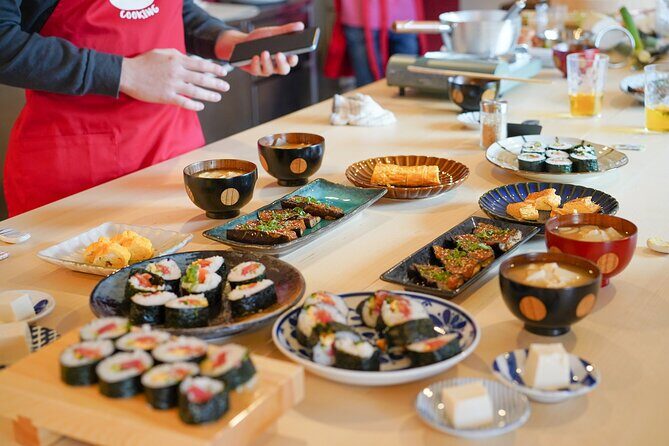
- Multiple dishes from scratch, including sushi rolls, miso soup, dashimaki tamago, and nasu dengaku
- Recipes to take home, so you’re not starting from zero later
- Sake or beer pairing during the meal, adding to the Japanese-food vibe
From FamilyMart meet-up to the market near Iriya Station
The day begins at a FamilyMart at 2-chōme-1-10 Shitaya, Taito City, Tokyo 110-0004. Start time is 10:00 am, and you’ll be walking into Tokyo life right away instead of waiting until you’re already at the kitchen. The class uses a mobile ticket, so you won’t be hunting for paper confirmations.
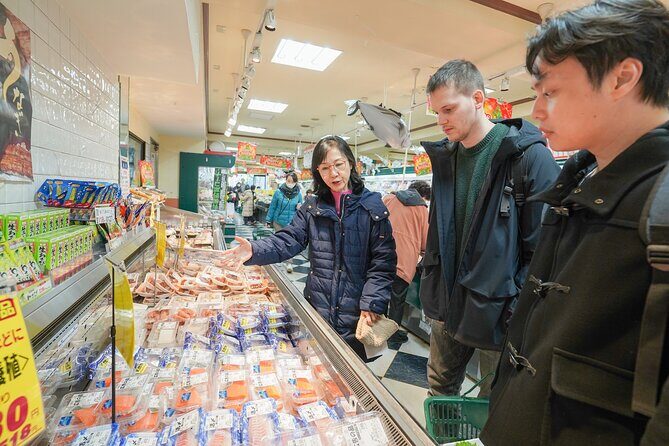
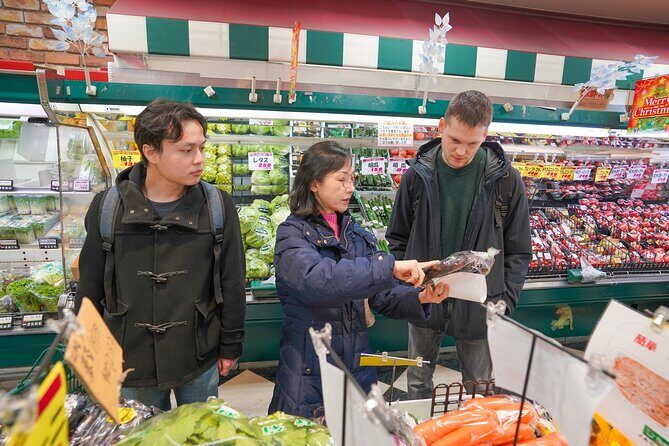
Your main “first act” is the supermarket visit. You’ll shop with your guide, and the whole point is to learn what to look for—cuts, textures, and Japanese ingredients you may not know by sight. This is a smart setup in Tokyo, where the difference between a good meal and a great one often comes down to how you pick the right product.
Group size is capped at 7. That matters because this isn’t a quick show-and-tell. You’ll likely chop, mix, roll, and cook alongside the group, with your guide keeping an eye on technique and timing.
You can also read our reviews of more shopping tours in Tokyo
Why the supermarket part is the real value
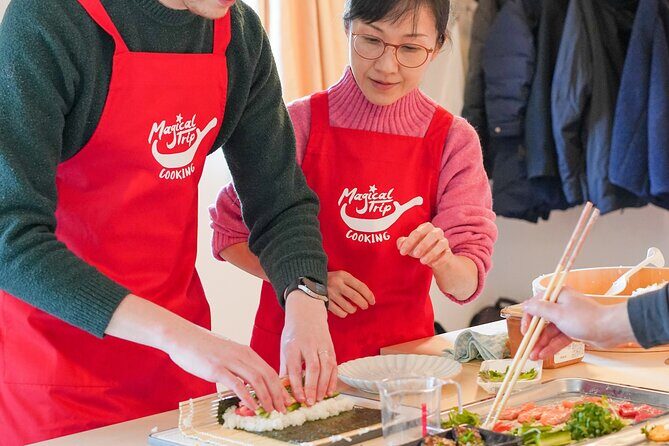
A lot of cooking classes skip the hard part: shopping. Here, the guide helps you choose ingredients the way locals do, and that’s what makes the rest of the class easier to pull off at home.
I like that the experience starts in a local supermarket because it teaches you how Japanese ingredients behave in real cooking. For example, you learn what makes miso soup taste balanced, how sushi fillings should be handled, and how egg ingredients work when you’re cooking dashimaki tamago (rolled omelet). Even if you’ve cooked Japanese food before, you’ll usually find one or two shopping habits you can steal.
You’ll also get context for everyday Japanese choices—things like what “fresh enough” looks like, and which packages are meant for home-style cooking rather than restaurant prep. One of the standout themes from instructor feedback is that guides keep you moving step-by-step, encouraging questions as you shop and cook. Names that have been associated with especially warm instruction in this class include April, Yuri, Masai, Alice, Minnie, and Suzy—each noted for clear guidance and patience.
The dishes you’ll make: classic washoku with hands-on technique
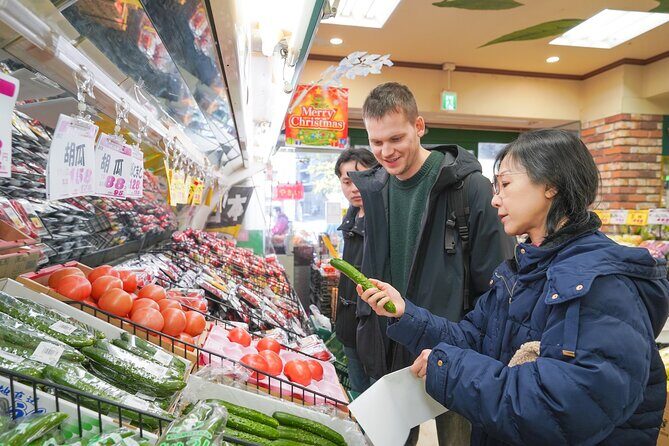
Over roughly four hours, you’ll cook several traditional dishes. Based on the class description, expect to make items such as makisushi (sushi rolls), miso soup, dashimaki tamago (rolled omelet), and nasu dengaku (grilled eggplant skewers). The description also references egg rolls (as part of the overall set), so the exact menu can vary by group and ingredient availability.
Here’s what makes this lineup practical:
- Sushi rolls (makisushi): You’re not just assembling. You practice how to manage rice and fillings so the roll holds together and doesn’t turn into a sad bowl of ingredients.
- Miso soup: This is where technique shows up fast. The guide can help with how you approach flavor balance and timing.
- Dashimaki tamago: This is a “skills builder.” Rolled omelet requires attention and gentle handling, and it teaches you how to work with eggs without fighting the pan.
- Nasu dengaku: Eggplant gets the spotlight here. You learn how to cook it so it’s tender and works with the sauce approach.
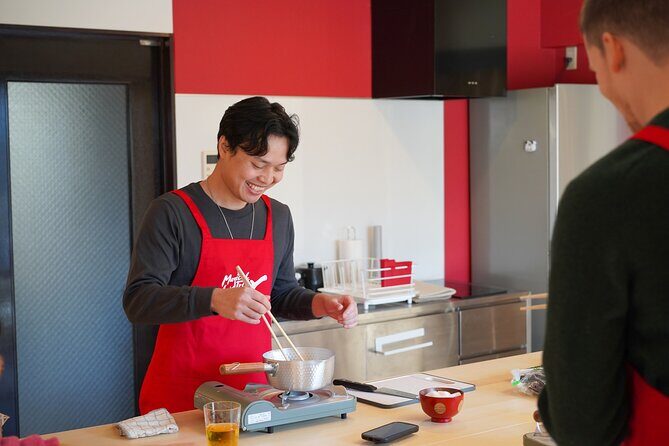
Most importantly, the cooking isn’t theoretical. You’re practicing cutting and cooking methods, and your guide will explain what you’re doing and why. Some instructors have been praised for making directions feel manageable—so if you’re the kind of traveler who likes to understand technique (not just collect photos), this is a good fit.
If you can’t eat eggs, your selection is reduced from four types to three. If you’re vegan or vegetarian, the class welcomes you, and they arrange the ingredients and cooking process accordingly—so you won’t be left watching everyone else cook meat or fish.
Knife skills you can actually use at home
This class includes hands-on practice with traditional Japanese knife and cooking techniques. Even if your knives are basic at home, learning how Japanese cooks handle prep—how they hold, how they cut, and how the cut affects cooking—pays off fast.
I especially like knife instruction in a guided class because you get feedback in the moment. You’re not guessing whether your slices are too thick, or whether your ingredient prep will cause uneven cooking later. Instructors credited with especially detailed, step-by-step teaching include Yuri, Minnie, and Mihori, with multiple mentions of patience and encouragement.
If you’ve ever felt intimidated by Japanese cooking, this is a great “starter skills” environment. The goal isn’t to turn you into a chef with perfect Japanese form in one afternoon. It’s to give you technique you can repeat without stress—and that’s exactly what take-home recipes are for.
Cooking studio meal time: shared food, plus sake or beer
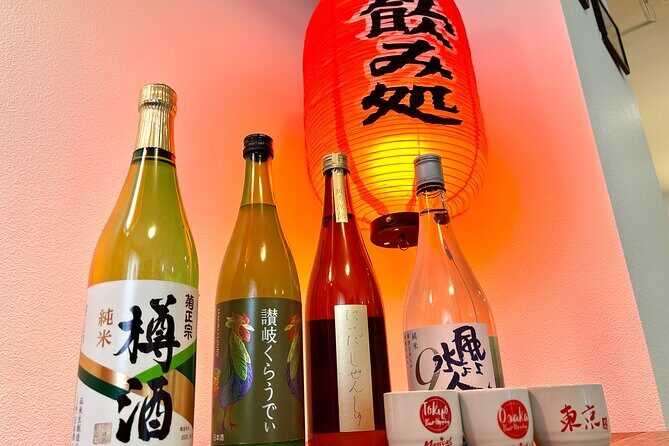
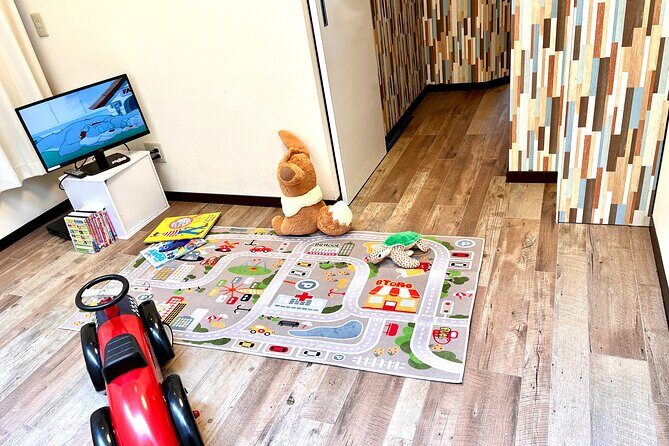
Once the cooking is done, you sit down and eat the results together in a dedicated cooking studio. Several reviews mention that the studio feels spacious and well set up, which matters when you’re chopping and moving around for hours. A comfortable kitchen reduces that frantic feeling and lets you focus on what you’re doing.
The class also includes drink pairing. You may taste beer and/or sake during the meal, depending on how the class runs. Reviews specifically mention sake and beer tasting as a fun part of the evening, and one person highlighted that they enjoyed a full meal with sake. This pairing isn’t just “extras.” It’s a nice bridge between cooking and culture—Japanese dining isn’t only about flavors; it’s about the rhythm of eating together.
If you’re someone who likes food experiences with an actual social component, this setup works well. The group is small, and the format naturally builds conversation during breaks and plating.
A few more Tokyo tours and experiences worth a look

Recipes you take home (and how to use them)
You’ll receive recipes for the dishes you make, so you can recreate them after you leave Tokyo. This is a bigger deal than it sounds. Many cooking classes give you a generic outline, and you’re stuck guessing measurements or timing at home.
Here, the recipes are part of the promise: you’ll not only learn technique, you’ll have the written steps to practice. That’s what turns a fun class into a skill you can keep. It’s also helpful if you want to cook one dish again later—maybe miso soup first, then rolled omelet when you feel confident with the pan work.
Practical tip: take a few minutes right after the class meal to compare what you did with the recipe steps. If your guide explained a small timing trick, jot it down while it’s fresh. Even in a well-run class, those little “this is the moment to stop” details are what make the difference later.
Dietary needs: what’s supported, and what to double-check
This is one of the better points for many travelers. Vegan and vegetarian are welcome, and they arrange ingredients and cooking process. If you have allergies or special dietary needs, you should tell them at least one day before the tour so the team has time to plan.
Be aware of two limits, based on the tour notes:
- They can’t guarantee allergy-free cooking because the kitchens used don’t belong to MagicalTrip and substitutions may not always be possible at every stop.
- If you can’t eat eggs, your dish set changes (four types down to three).
So if you have a serious allergy, don’t treat this as a guaranteed safe option. Instead, use the one-day notice and confirm details with the operator before you go.
Price and value: $79.59 for four hours of instruction plus food
At $79.59 per person for about 4 hours, the biggest question is what you truly get for your money. Here, you’re paying for a “full loop” experience:
- shopping with a guide
- hands-on knife/cooking instruction
- multiple dishes made from scratch
- a shared meal
- and drink pairing (sake/beer tasting is referenced)
Tokyo cooking classes can range widely, and many end up being either too short or too observation-heavy. This one uses the time well: you’re not only cooking, you’re learning ingredient choices first. For many travelers, that is the part that makes future meals cheaper and easier—because you’ll know what to buy and what to skip.
Add the small group size (max 7) and the class has a better shot at feeling personal. Reviews also consistently mention patience and clear explanations from instructors like April, Yuri, Masai, and Alice, which is exactly what you want when you’re trying technique you’ve never done.
Who should book this class in your Tokyo trip
This fits best if you want more than a restaurant meal. You should book if you like:
- learning by doing
- food experiences that start in a real Tokyo neighborhood shop
- taking home recipes you can cook again
- small-group activities where you can ask questions
It’s also a good option for travelers with teenagers, since some reviews mention that teens enjoyed the process and the variety of dishes. If you’re traveling solo, you’ll still get interaction because the group is small and you’ll be working at stations rather than sitting quietly.
If you’re short on time, 4 hours may feel like a big block. But if you’re planning to eat in Tokyo anyway, this class basically upgrades your entire food week by teaching you what good ingredients and technique look like.
Book it or skip it: my take
I’d book this class if you want a guided mix of hands-on cooking and practical learning that you can use later. The supermarket start is a standout, and the class structure supports questions while you cook, not after. If you care about technique—knife work, egg handling, and sushi prep—you’ll get real value.
I’d hesitate if you need strict allergy guarantees, or if you hate being time-bound. The operator notes that you must start on time, and being more than 5 minutes late without contacting them can mean you lose your spot. Also, if you dislike structured instruction and prefer free-form activities, a cooking class might feel a bit “guided.”
FAQ
FAQ
What kinds of dishes will I cook in the class?
You’ll prepare traditional Japanese dishes such as makisushi (rolled sushi), miso soup, dashimaki tamago (rolled omelet), and nasu dengaku (grilled eggplant skewers), plus additional items mentioned in the class description like egg rolls.
Is the class suitable for vegan or vegetarian diets?
Yes. Vegan and vegetarian are welcome. The organizers arrange ingredients and the cooking process to match your dietary needs.
How much time should I plan for?
Plan for about 4 hours.
What if I have dietary requests or allergies?
You should inform the operator at least one day before the tour. Requests made on the day can’t be accommodated. Also, the tour notes that they can’t guarantee an allergy-free environment because food is prepared in kitchens not owned by MagicalTrip.
Will the class have a small group size?
Yes. The maximum group size is 7 travelers.
Where do I meet, and when does the tour start?
The meeting point is a FamilyMart at 2-chōme-1-10 Shitaya, Taito City, Tokyo 110-0004, Japan, and the start time is 10:00 am.