REVIEW · TOKYO
Tsukiji Fish Market: Street Food & Culture Walking Tour
Book on Viator →Operated by Local Guide Stars · Bookable on Viator
Fish market energy hits fast.
This Tsukiji tour is built around street food culture and insider pacing, plus a front-row look at how seafood gets prepared. I like that you get to see the real working rhythm of the area, not just a photo-op version of it. I also like the clear, hands-on centerpiece: the traditional fish-cutting show with expert technique you can actually watch and understand.
You’ll spend time at the Tsukiji edge of the action, then move through the market atmosphere where professional traders operate. The format helps you focus on what to eat and what to notice, with a local guide keeping the story going as you walk. One possible drawback: in peak crowds, you may deal with lots of stopping and waiting, and it can get harder to hear instructions (especially near busy areas), so go in with patience.
The tour is also wheelchair and stroller accessible, which matters in a place where the sidewalks can feel chaotic. Guides can spend more time with you in a small group, and some guides praised in the feedback—like George and Tomo—are singled out for clear English and smart food choices. Still, if you’re sensitive to sun or need frequent breaks, plan for that, since you’ll be outdoors for most of the experience.
In This Review
- Key highlights you should care about
- Why Tsukiji still feels like Tokyo’s working part of town
- Price and logistics: what 33.16 gets you in about 2 hours
- Meeting at 築地本願寺本堂: a smart starting landmark
- Tsukiji Jogai Market street snacks: learning by eating for 45 minutes
- The fish-cutting show: traditional technique, not just performance
- Tsukiji Fish Market atmosphere: watching professionals work for 30 minutes
- Tsukiji Hongwanji Temple: a 15-minute cultural pause with Buddhism context
- What the guide really changes (George and Tomo show up in the good stuff)
- Crowds, sun, and pacing: how to make the most of 2 hours
- Who this tour is best for
- Should you book this Tsukiji street food & culture tour?
- FAQ
- How long is the Tsukiji Fish Market street food and culture walking tour?
- What is the price per person?
- What’s included in the tour?
- Are meals included?
- Where does the tour start?
- Is the tour wheelchair and stroller accessible?
- How many people are in the maximum group?
Key highlights you should care about
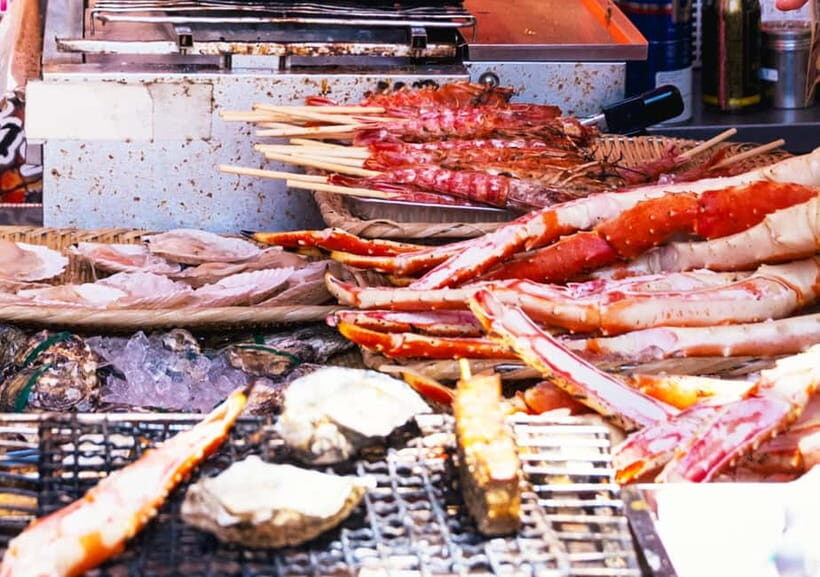
- Street-food focused walk so you’re not guessing what to try
- Fish-cutting show that explains traditional filleting technique
- Small-group feel with time for questions
- Temple context at Tsukiji Hongwanji for a cultural pause
- Working market atmosphere where traders are busy in real time
Why Tsukiji still feels like Tokyo’s working part of town
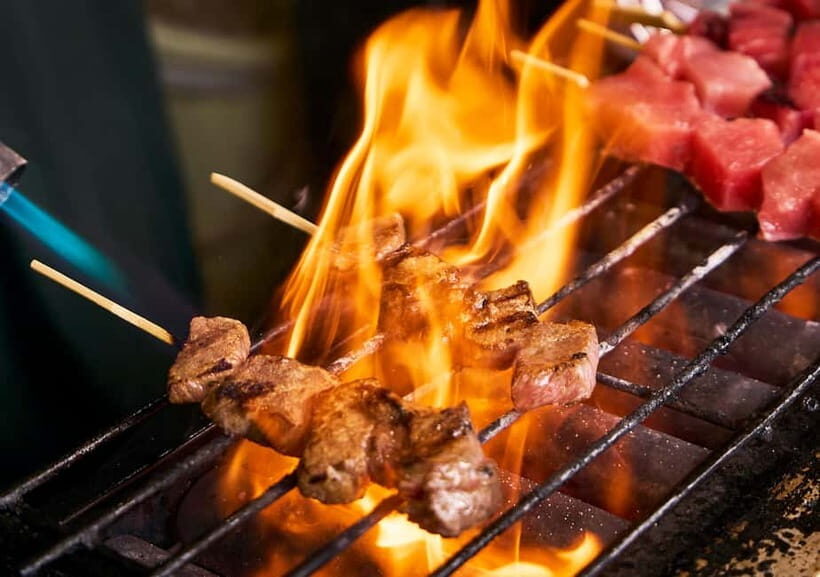
Tsukiji isn’t just about seafood tasting. It’s about seeing a system in motion—people doing their jobs, vendors handling deliveries, and food culture tied to craft. Even if you’ve eaten sushi before, this area makes the process feel grounded and practical.
What I like about this tour approach is that it doesn’t ask you to be an expert. A good guide helps you read what’s in front of you: what you’re looking at, why it matters, and how it connects to everyday Japanese eating habits. That’s a big deal when you’re surrounded by sensory overload.
Also, Tsukiji has that mix of old and new Tokyo. You get traditional technique at the center, then you get the street-food reality that makes the market part of modern life.
You can also read our reviews of more walking tours in Tokyo
Price and logistics: what 33.16 gets you in about 2 hours
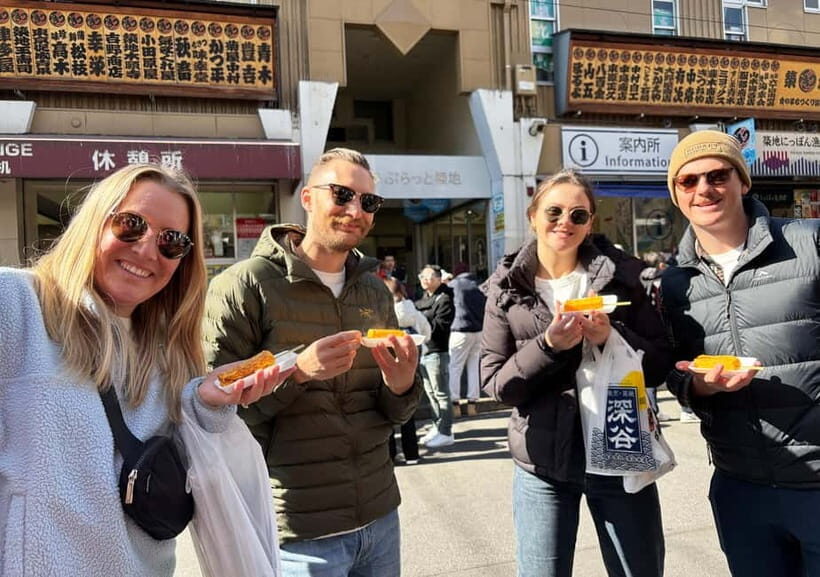
At $33.16 per person for roughly 2 hours, you’re paying for guided structure and a specific highlight. The fish-cutting show is ticketed as included, while other stops are free admission. Meals are not included, which is important: you’re tasting on your own terms, not getting a full packaged meal deal.
This price point makes sense if you want help choosing what to try at busy stalls. If you’re the type who enjoys wandering with no plan, you might feel like you could do it alone. But if you’d rather not spend your limited time figuring out what’s worth your yen, the guide can be a real shortcut.
Group size is capped at 30, and the tour is described as small-group. That matters because Tsukiji crowds can make a large group feel like a moving bottleneck. A smaller group also makes it easier to ask questions and hear what’s being explained.
Meeting at 築地本願寺本堂: a smart starting landmark
The tour starts at 築地本願寺本堂3-chōme-15-1 in Tsukiji, Chuo City. This location is a practical anchor point, especially in a neighborhood where streets and entrances can get confusing.
Starting near the Tsukiji Hongwanji area is also a smart way to build context. Before you jump into seafood chaos, you get a cultural foothold. That tends to make the rest of the walk feel more meaningful.
One small practical note: you’ll be outdoors for most of the time. So if the day is bright, bring whatever helps you tolerate sun. The tour format won’t magically turn itself into an indoor museum.
Tsukiji Jogai Market street snacks: learning by eating for 45 minutes
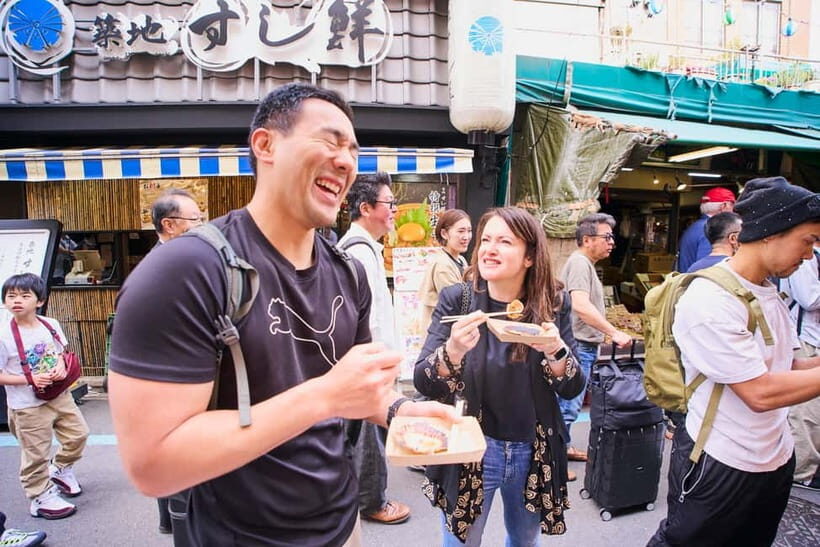
Your first stop is Tsukiji Jogai Market, where the main goal is street-food culture. You’re not just eating random bites. You’re walking with a guide who points you toward what to notice and what to try in that specific market setting.
This is one of the best parts of the experience if you want a real food vibe quickly. Tsukiji can be intimidating if you don’t know where to look. In a guided format, you get a path through the noise, and you get explanations that make the tasting feel intentional.
The time here is about 45 minutes. That’s long enough to sample and compare without dragging you through the entire market like a homework assignment.
The fish-cutting show: traditional technique, not just performance
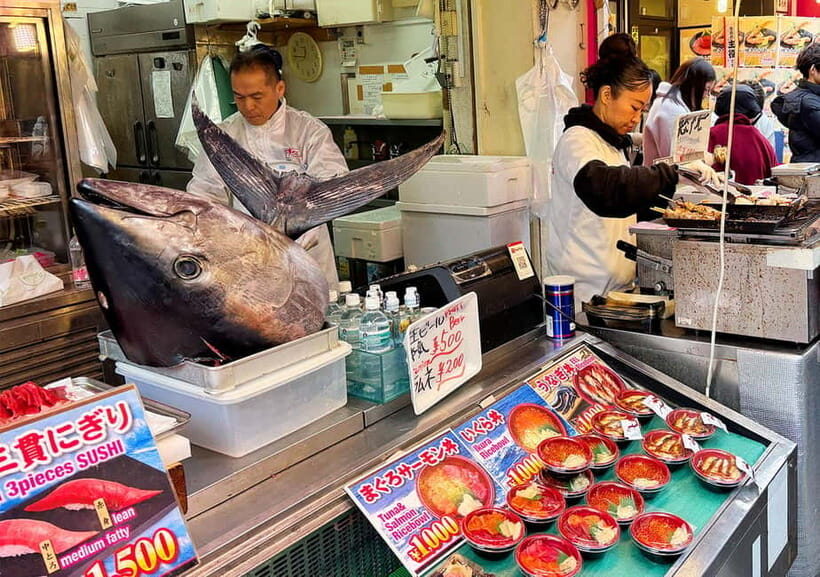
The centerpiece is the exclusive fish-cutting show, where a chef fillets a whole fish using traditional techniques. It’s scheduled for about 30 minutes, and it’s the one stop where the tour’s value is extremely direct: you’re watching craft happen in real time.
This is where you shift from eating to understanding. You start to see how the preparation is built around the fish itself—how cuts relate to texture, use, and quality. Even if you don’t know the vocabulary, the visual is clear: this isn’t random slicing. It’s a trained process.
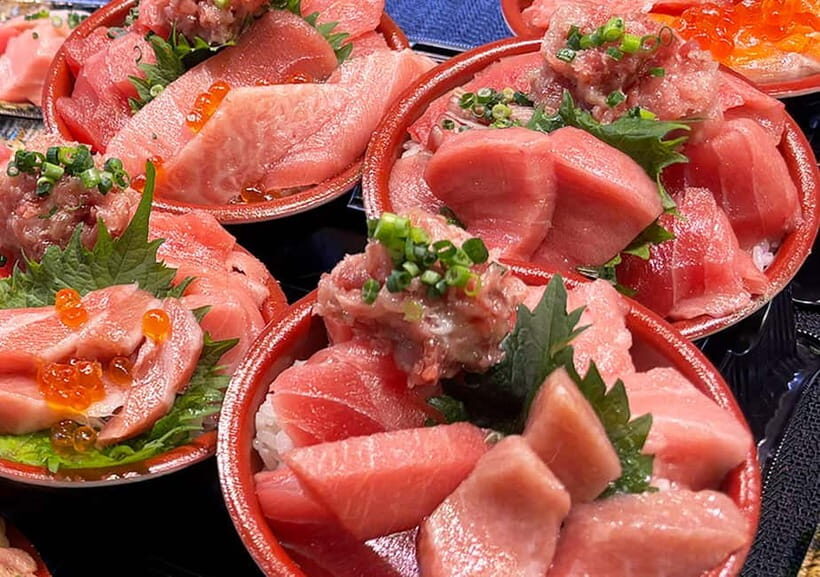
After the show, you’ll have the chance to enjoy a fresh seafood bowl afterward. Since meals aren’t included, think of this as your moment to choose what you want to pay for. If you’re picky, you’ll appreciate having time to decide what you actually feel like eating while it’s fresh.
If you’re only doing one food activity in Tsukiji, this show is a strong reason to book. It gives you a memory that goes beyond taste alone.
You can also read our reviews of more food & drink experiences in Tokyo


Tsukiji Fish Market atmosphere: watching professionals work for 30 minutes
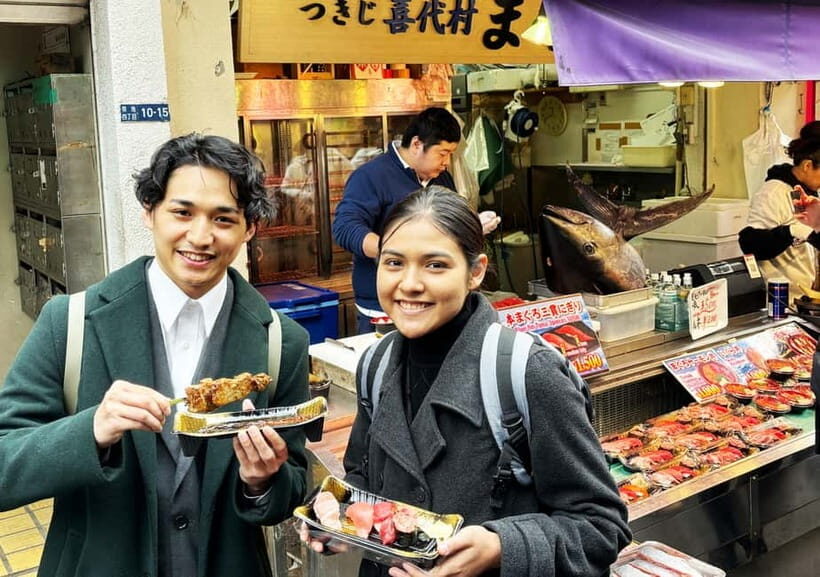
Next you move into the Tsukiji Fish Market itself for about 30 minutes. This is the authentic working atmosphere portion, where professional traders operate. The point here isn’t to lecture you for half a day. It’s to help you register what kind of place you’re in.
Why this matters: markets can look similar from the outside, but each one has its own rhythm. Being there briefly, with a guide framing what you’re seeing, helps you avoid the most common mistake—wandering without understanding what role people play.
This also supports the street-food theme. You’re not treating food as a separate event. You’re seeing the supply chain feel, right next to where you’ll eat.
In a busy market, 30 minutes can feel short. But it’s also long enough to watch how the area works and still keep the tour from turning into constant standing.
Tsukiji Hongwanji Temple: a 15-minute cultural pause with Buddhism context
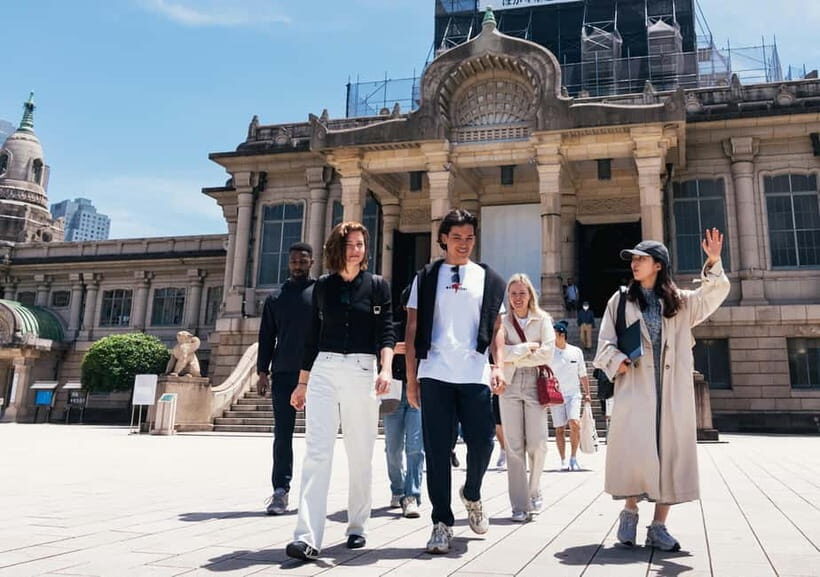
The final stop is Tsukiji Hongwanji Temple, about 15 minutes, with a local guide. The focus is cultural and historical context around Buddhism and the temple’s charm.
This stop is quick by design. It works best as a reset: you get a mental breather after seafood and crowded aisles, and you learn a little about the cultural backdrop of the area. Some people may want more depth here; others may appreciate the short, digestible pace.
In the feedback, there’s a recurring theme that this temple segment may not add as much value for everyone compared with the food and market portions. If you mainly booked for seafood, consider the temple stop as context, not the main event.
Still, even a short temple visit can help Tsukiji feel less like a theme park. It reminds you this is Tokyo with living religious and cultural spaces, not only commerce.
What the guide really changes (George and Tomo show up in the good stuff)
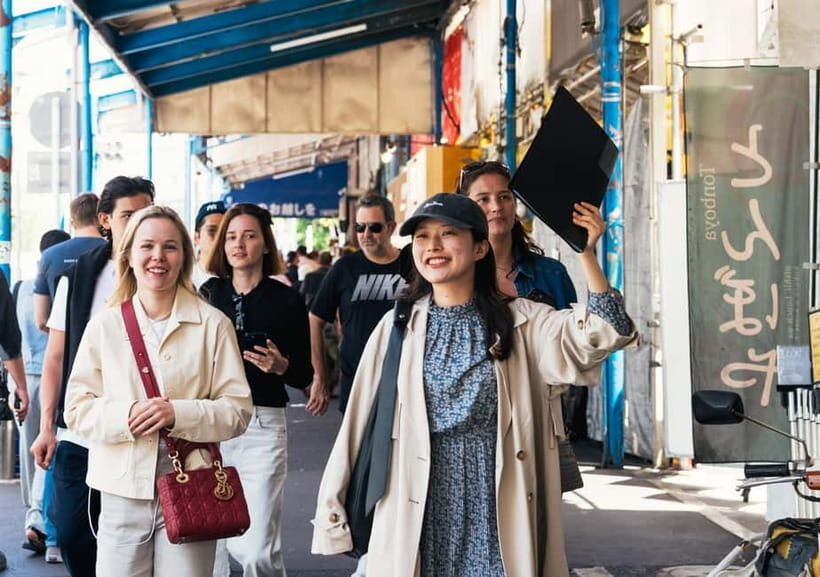
A guided food tour stands or falls on the guide. In the feedback shared for this experience, guides like George and Tomo are praised for taking people to the best spots for what they want to try and for explaining history and culture clearly.
What I like about that kind of guiding style is that it saves you from two problems: food indecision and wasted time at places that don’t match what you’re hungry for. When a guide is confident, the walk feels smoother, and your tasting becomes more satisfying.
That said, not every touring day will feel identical. Some feedback mentions that crowds can make it hard to hear, and one person felt the guide didn’t always wait during a crowded time. So if you’re someone who needs a slower pace or quiet instruction, position yourself well—stay close to the guide, and don’t drift far from the group in pinch points.
Also note: the tour is described as wheelchair and stroller accessible, and it’s a small group. That generally improves communication and pacing, since the guide can better tailor the experience to your needs.
Crowds, sun, and pacing: how to make the most of 2 hours
Tsukiji is not a leisurely garden walk. It’s a market zone with lines, people, and tight movement. Even if the tour is well-run, expect a certain amount of waiting at stalls and in show areas.
If you’re visiting around a busy season, crowds can spike. In those moments, the group needs discipline. If the guide is moving you to keep things flowing, you should plan to stick close. It’s not the tour’s job to pause every time someone steps aside for a photo.
Sun sensitivity is another practical consideration. If you know you get uncomfortable quickly in direct light, dress and bring accordingly. The route includes outdoor stretches, and even good timing won’t remove sun exposure.
Finally, for the hearing factor: in crowded areas, voices can vanish. If you’re hard of hearing, or you rely on clear audio, make sure you’re near the guide when they speak.
Who this tour is best for
Book this tour if you want a guided way to eat in Tsukiji and you like learning while you walk. It’s a great fit if:
- You’re short on time and want a focused experience in about 2 hours
- You’d rather be shown where to go and what to try than wing it
- You care about the traditional side of seafood prep and like watching the process
- You need a wheelchair- and stroller-friendly format
It might be less ideal if you prefer total independence. Since you’re moving between multiple stops and part of the experience depends on group pacing, it won’t feel like a slow roam.
Also, if you strongly prioritize deep temple history over food craft and market viewing, be aware the temple stop is brief.
Should you book this Tsukiji street food & culture tour?
I’d book it if you want a structured Tsukiji day that makes the food feel understandable. The fish-cutting show is the kind of experience that stays with you, and the market + street-food pacing helps you avoid the biggest Tsukiji challenge: wandering without a plan.
I’d skip it if you know you’ll get annoyed by crowds, you need lots of space to move at your pace, or you’d rather spend your money on seafood and explore on your own. For those travelers, a self-guided stroll can be satisfying—especially if you already know what you want to eat.
Overall, this is good value when you treat the price as payment for the guide’s navigation and the show. If you show up ready to stand, look, and taste, you’ll come away with a clearer picture of how Tsukiji connects food, craft, and culture in one short stretch.
FAQ
How long is the Tsukiji Fish Market street food and culture walking tour?
It runs for about 2 hours.
What is the price per person?
The price is $33.16 per person.
What’s included in the tour?
You get a guided tour of Tsukiji Fish Market, plus insights into Japanese cooking and ingredients. The fish-cutting show is also included.
Are meals included?
Meals are not included. You’ll have opportunities to buy or enjoy food during the tour, but the tour itself doesn’t include meals.
Where does the tour start?
The tour starts at 築地本願寺本堂3-chōme-15-1 Tsukiji, Chuo City, Tokyo 104-0045, Japan.
Is the tour wheelchair and stroller accessible?
Yes, the tour is wheelchair and stroller accessible.
How many people are in the maximum group?
The tour has a maximum of 30 travelers.