REVIEW · KYOTO
Discover Kyoto at Night by Bike
Book on Viator →Operated by Jaime · Bookable on Viator
Kyoto looks different after dark. This bike tour strings together some of the city’s best-known sights—Fushimi Inari and Gion—while the streets cool down and lantern light takes over. I love the way the ride turns famous landmarks into lived-in moments, like you’re moving through Kyoto instead of queueing in it.
Two things I really like: the small group size (up to 9) keeps things manageable, and the route is paced so you can actually look at what you’re riding past. On my radar, the guide quality matters too—Juan, for example, is described as safety-focused on the bike.
One possible drawback: if you’re the type who wants nonstop pedaling, you should know the tour includes a lot of stop-and-listen time. That can mean less ride time than you expect, depending on the guide’s talk style and how the group moves.
In This Review
- Key highlights you’ll care about
- Night on Kyoto’s bike lanes: what 5:00 PM changes
- The $80 value: bicycle, water, and entrance fees you don’t want to fuss with
- Fushimi Inari-taisha Shrine at night: torii gates in softer light
- Miyakawa-cho Dori: lanterns near Gion and the river-side mood
- Gion by night: Hanamikoji and the quiet art of passing through
- Yasui-Konpiragu: a Shinto detour with personal stakes
- Hōkan-ji and Yasaka Pagoda: cobblestones, townhouses, and night photos
- Ninenzaka slope and the Higashiyama night-photo lanes
- The Higashiyama park finish: cherry trees, ponds, and wooden bridges
- Bicycles, pacing, and why guide talk style matters
- Who should book this Kyoto after-dark bike loop
- Should you book Kyoto at Night by Bike?
- FAQ
- How long is the Kyoto at Night by Bike tour?
- What is the price per person?
- What time does the tour start?
- Where do we meet, and where does the tour end?
- What’s included in the tour price?
- Are entrance fees included for the stops?
- How many people are in the group?
- Do I need to be a confident cyclist?
- Is the tour affected by weather?
- What is the cancellation policy for a full refund?
Key highlights you’ll care about
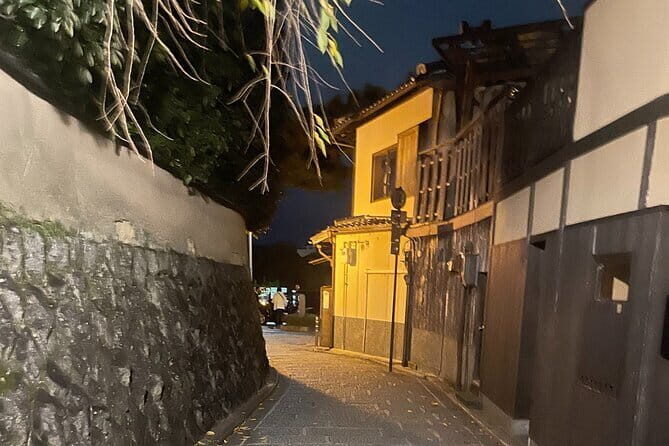
- Night lantern streets: Miyagawa-cho and Gion feel like a different Kyoto than daytime.
- Fushimi Inari at night: torii gates and shrine atmosphere without the daytime crush.
- A compact loop: a well-known route through Higashiyama with photo stops.
- Small group ride: maximum 9 travelers, which helps with flow and bike handling.
- Convenience value: bicycle, bottled water, and entrance fees are included in the $80 price.
- Safety and comfort matter: the route works best if you’re a fairly confident cyclist.
Night on Kyoto’s bike lanes: what 5:00 PM changes
Starting at 5:00 pm is the smart move. Kyoto’s late-day light is that sweet spot where it feels like you get both atmosphere and momentum: not too bright, not too late to enjoy the glow. You’ll be moving while many shops and streets are winding down, which helps the night sights feel more relaxed.
A bike tour also changes your relationship with space. You don’t just see a landmark; you pass the surrounding streets. That matters a lot in Kyoto, where the vibe can shift block to block—river light here, wooden facades there, a shrine gate appearing like a scene change.
And you’re not stuck with giant tour-bus logistics. With up to 9 people, the group is small enough that you’re less likely to feel like you’re part of a parade. You can actually follow along, stop when you should, and get going when it’s time.
You can also read our reviews of more cycling tours in Kyoto


The $80 value: bicycle, water, and entrance fees you don’t want to fuss with
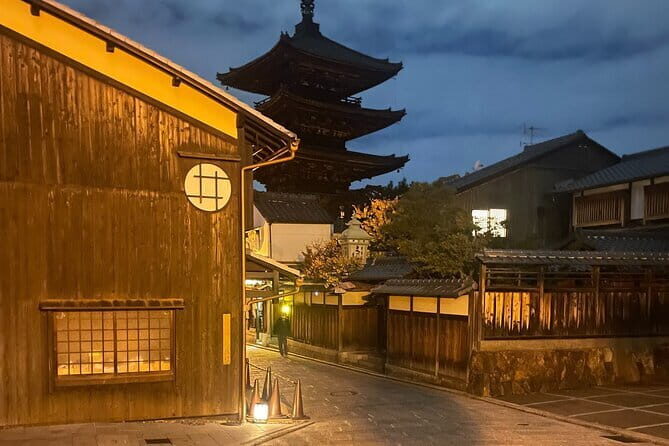
At $80 per person for about 3 hours 45 minutes, this tour is trying to do three things at once: transportation, guidance, and site entry. The included stuff is practical:
- Bicycle use (so you’re not hunting for a rental)
- Bottled water
- All entrance fees
Even if many of the major stops are free at the gate (and several are listed as free), the tour still covers the on-the-ground work: keeping you on the right route, timing your stops, and giving you context while you’re there. When you’re cycling at night, you want a plan that reduces decision fatigue.
Also, the meeting point is anchored and easy to find: 7-Eleven (44-1 Higashikujō Kamitonodachō, Minami Ward, Kyoto). It’s the kind of setup that helps you start the night smoothly instead of burning energy on navigation.
One note that affects value: guide gratuities are not included, so you should budget for that if you feel the guide earned it.
Fushimi Inari-taisha Shrine at night: torii gates in softer light
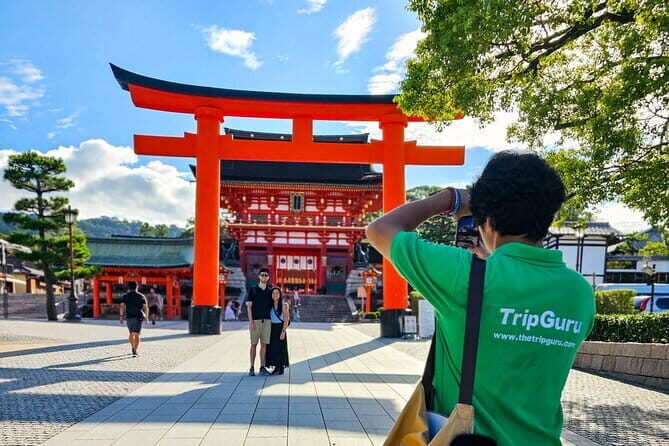
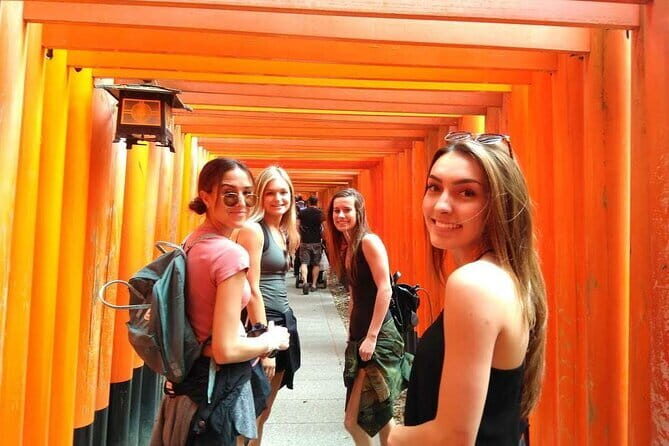
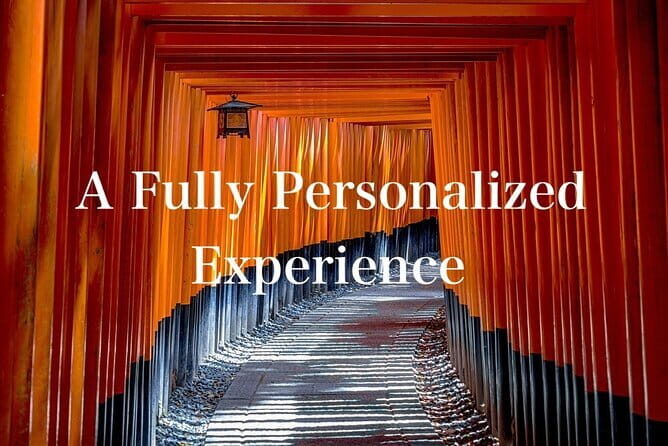
Your first stop is Fushimi Inari-taisha Shrine, one of Kyoto’s biggest Shinto sites. The headline here is the thousands of torii gates, and the tour gives you about 40 minutes.
Night changes the experience in two ways. First, the shrine feels less like a tourist checkpoint and more like a path you’re walking through. Second, the lighting makes the repeating gates look deeper and more layered than they do in harsh daylight.
Practical tip: torii-gate areas are active walking zones. Plan to move at a calm pace, because you’ll be switching between bike time and short, concentrated periods on foot. It’s also a place where photos can turn into a time sink fast—so keep an eye on the clock if you want to enjoy the rest of the route without rushing.
Miyakawa-cho Dori: lanterns near Gion and the river-side mood
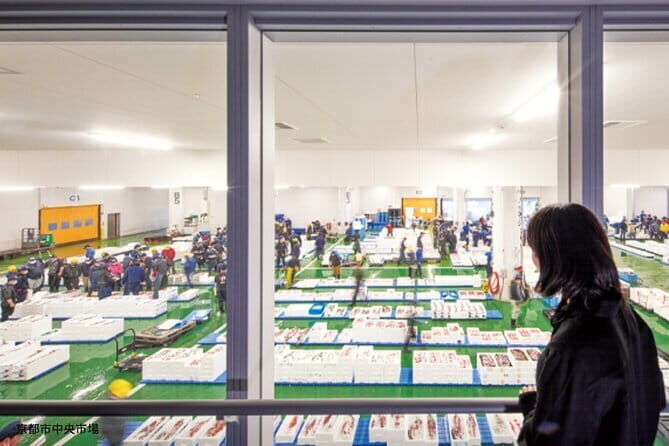
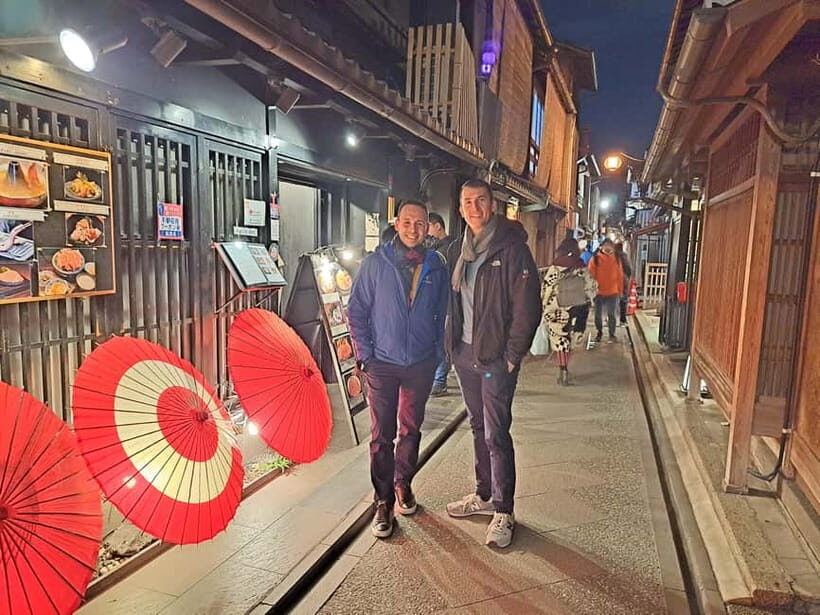
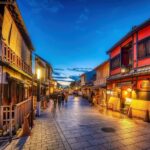
After Fushimi Inari, the tour drops you into Miyakawa-cho Dori, a street that takes on a glowing, storybook character at night. This road runs just south of Gion and parallel to the Kamogawa River.
Why this stop works: it’s not only about a single landmark. It’s about atmosphere. You’ll see Kyoto’s traditional edges in a way that’s easier to appreciate from a bike route—because you’re not trapped in one spot. You catch views as you approach, then you pause long enough to absorb what lantern light does to street texture.
It’s also a good breather stop. With only about 15 minutes here, it’s perfect when you want something special without feeling like the schedule is dragging.
Gion by night: Hanamikoji and the quiet art of passing through
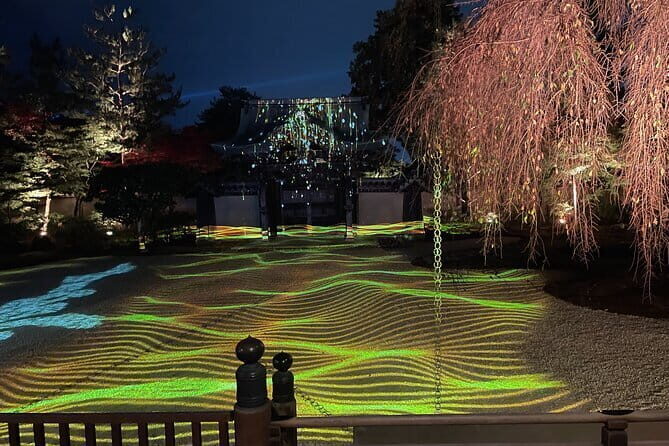
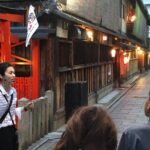
Next is Gion, with about 10 minutes and an emphasis on Hanamikoji street—lined with historic tea houses (ochaya).
Gion at night is all about restraint. You’re not going to ride through a dramatic set piece the way you might in other cities. Instead, you’re moving through narrow lanes where the architecture and lighting do the heavy lifting.
From a bike, you get a different kind of perspective: you see the street’s shape, not just the most photographed angle. That helps if you’re trying to understand how the neighborhood is laid out—where the flow is, how the street compresses, and how night light changes the mood of machiya-style buildings.
You can also read our reviews of more evening experiences in Kyoto

Yasui-Konpiragu: a Shinto detour with personal stakes
Then you head to Yasui-Konpiragu for about 10 minutes. This is one of Kyoto’s more unusual shrines, and it’s known for a very human goal: people come seeking to cut ties with bad relationships or habits.
This is the kind of stop that gives you context for Kyoto’s spiritual side beyond big-ticket temples. You’ll likely see it less as sightseeing and more as a place with meaning. Even if you’re not fully steeped in the beliefs, the idea is easy to grasp: visitors are there to change something about their lives, not just to check a box.
Because the time is short, you’ll get a quick encounter rather than a deep lesson. Still, it adds balance. After all the famous scenery, this is a pause that feels more intimate.
Hōkan-ji and Yasaka Pagoda: cobblestones, townhouses, and night photos
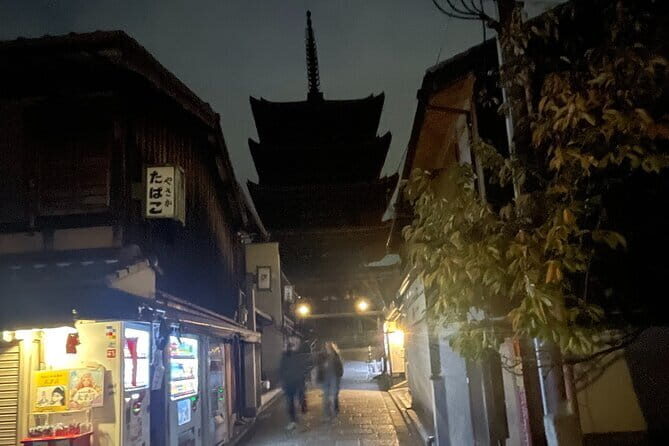
Your next stop is Hōkan-ji Temple, commonly associated with Yasaka Pagoda. The area around it is one of Kyoto’s most photographed zones, and you’ll get about 15 minutes there.
The tour description points out what makes it photogenic: narrow cobblestoned streets and traditional Machiya townhouses around the pagoda. In practical terms, that means you’ll likely get more interesting angles than you expect from a single monument. Kyoto’s charm here is the “in-between” details—street lines, old facades, and that pagoda shape anchoring the scene.
Expect a bit of foot time. Even when you’re on a bike for movement, this stop is visually dense. It’s the kind of location where people naturally slow down and frame shots, so your guide’s timing matters.
Ninenzaka slope and the Higashiyama night-photo lanes
Next up is Ninenzaka, scheduled for about 15 minutes. The tour calls it a traditional area of Japan and notes it’s one of the slopes that gives visitors views to soak in.
Saka slopes in Kyoto are part of the charm and part of the logistics. Even if you’re not doing a long walk, you’ll want to be comfortable stepping on uneven ground and moving on a slope. If your cycling confidence is high but your walking is clumsy, this stop can feel more stressful than it should.
Why it’s worth it: night makes these slopes feel cinematic. The buildings and street layout give you a sense of how people used to move through the city. It’s a great counterpoint to shrine gates and river streets.
The goal here is not just photos. It’s to help you understand Kyoto’s “horizontal” beauty—how the city looks when you’re moving across it, not only when you’re standing at the center of it.
The Higashiyama park finish: cherry trees, ponds, and wooden bridges
The final portion includes a park area in Higashiyama described as one of the most famous in the district, known for cherry trees, ponds, and wooden bridges.
Even with limited time, this kind of stop is a smart ending. It gives you space to breathe, look around, and let the night air do its job. Cherry trees and ponds also mean the setting can feel calm, even while you’re in one of the busiest parts of Kyoto.
Think of it as a soft landing after the dense shrine-and-street stops. If you like night photography, this is often where you can get wider shots, not just close-ups.
Bicycles, pacing, and why guide talk style matters
Let’s talk about the part that can make or break your night: pacing.
The ride itself is the headline, but the tour is still built around cultural stops. That means you’ll spend time standing, listening, and walking a bit. In one case, the experience was criticized for being more talk-heavy than expected, with less riding time than some people wanted.
On the flip side, you want context. Kyoto is not just scenery; it’s layers—shrines, rituals, neighborhood character. Guides who speak well can make those layers click.
A good compromise strategy for you: if you prefer motion, treat each stop like a quick “listen, then look.” Give the guide a few minutes of setup, then shift your focus to the street scene. You’ll get the benefits of guidance without losing your whole night to standing still.
Also, cycling comfort is real here. One practical takeaway from the experience: this is not the best choice if you’re a brand-new rider. You’ll be stopping and starting at night, and you’ll want to handle turns and small adjustments confidently.
Who should book this Kyoto after-dark bike loop
This tour is a strong fit if you:
- Want a guided route that covers big-name sights without the stress of planning every turn
- Like night atmosphere, especially lantern-lit streets and shrine lighting
- Enjoy learning enough to understand what you’re seeing, even if you don’t want a lecture
- Prefer smaller groups over mass tours
It might be less ideal if you:
- Want maximum cycling time with minimal stops
- Are an absolute beginner on a bike
- Get impatient when a guide’s narration runs long
If you’re somewhere in the middle, you can still have a great experience. Just be honest with yourself about how comfortable you are on a bicycle and how much you enjoy listening while sightseeing.
Should you book Kyoto at Night by Bike?
I’d book it if you want Kyoto at night in motion—torii gates, Gion lanes, and Yasaka Pagoda vibes—all stitched into one logical loop with bicycle and entrance fees included. The time window is great, the group size is small, and the route covers several “must-see” areas without turning your evening into a transit puzzle.
My one booking caution is pacing. If you’re the kind of person who counts minutes of riding like it’s part of the deal, you’ll want to be prepared for downtime at each stop. Also, be sure you’re comfortable cycling at night.
If that sounds like you, this is a memorable way to see Kyoto after dark—more like moving through the city’s story than simply visiting its photos.
FAQ
How long is the Kyoto at Night by Bike tour?
It runs for about 3 hours 45 minutes.
What is the price per person?
The tour costs $80.00 per person.
What time does the tour start?
The start time is 5:00 pm.
Where do we meet, and where does the tour end?
You meet at 7-Eleven at 44-1 Higashikujō Kamitonodachō, Minami Ward, Kyoto, and the tour ends back at the meeting point.
What’s included in the tour price?
The tour includes the bicycle, bottled water, and all entrance fees. Guide gratuities are not included.
Are entrance fees included for the stops?
Yes. The tour includes all entrance fees, and many of the listed stops are shown as free admission.
How many people are in the group?
The group size is capped at a maximum of 9 travelers.
Do I need to be a confident cyclist?
You should have moderate physical fitness, and the route works best if you are a fairly proficient bike rider rather than a first-time cyclist.
Is the tour affected by weather?
Yes. The experience requires good weather. If it’s canceled due to poor weather, you’ll be offered a different date or a full refund.
What is the cancellation policy for a full refund?
You can cancel up to 24 hours in advance for a full refund. If you cancel less than 24 hours before the start time, the amount you paid will not be refunded.