REVIEW · KYOTO
Kyoto: Gion Night Walking Tour with Geisha Insight
Book on Viator →Operated by With Japan · Bookable on Viator
Lantern-lit Kyoto beats daytime crowds. This Gion night walking tour is interesting because you get a clear route through the old streets plus a guide who explains what you’re actually looking at, including geisha and maiko culture, right as you walk. I especially like the way the tour mixes postcard sights with quieter backstreets, so you’re not just marching through the obvious angles. One possible drawback: geisha sightings are never guaranteed, and the dark streets can make photos harder than you’d hope.
You’ll also like the small feel. With a maximum of 15 travelers, the pacing is steady, questions are easy, and the guide can tailor what you notice as you go. The tour runs about 2 hours, starts and ends at the same place (Tanaka Coffee Gion), and uses a mobile ticket so you’re not hunting for paper.
Finally, it’s built for people who want better use of their limited Kyoto time. You’re walking two different “Kyotos” in one evening: traditional Gion charm first, then the lively Shijo-Kawaramachi area with modern life all around.
In This Review
- Key things that make this tour worth your time
- Why Gion at Night Feels Different
- Meet at Tanaka Coffee Gion and Get Oriented Fast
- Stop 1: Hanamikoji Street, Shirakawa Canal, and Tatsumi Daimyojin Shrine
- Learning the Geisha and Maiko Culture While You Walk
- Stop 2: Kawaramachidori and the Shijo-Kawaramachi Contrast
- Food Recommendations You Can Actually Use the Same Night
- Price, Duration, and Value at About $25
- Who This Tour Suits Best
- Should You Book This Gion Night Walking Tour?
- FAQ
- How long is the Kyoto Gion night walking tour?
- Where does the tour start?
- Does the tour end somewhere else?
- What is the group size?
- What does the tour cost?
- Is there a mobile ticket?
- What is included in the tour?
- Is admission included?
- What if I want to cancel?
- Do I have a guaranteed chance to see a geisha?
Key things that make this tour worth your time
- Small-group pacing so you can actually look up and ask questions, not just follow along
- Gion at night for a calmer feel after the daytime rush
- Hanamikoji Street + Shirakawa Canal as your anchor sights, with details you’d miss on your own
- Tatsumi Daimyojin Shrine stop that adds culture without turning it into a museum lecture
- Geisha and maiko spotting guidance so you know what to watch for, even if you don’t see one
- Food recommendations you can use immediately while you’re still in the neighborhood
Why Gion at Night Feels Different
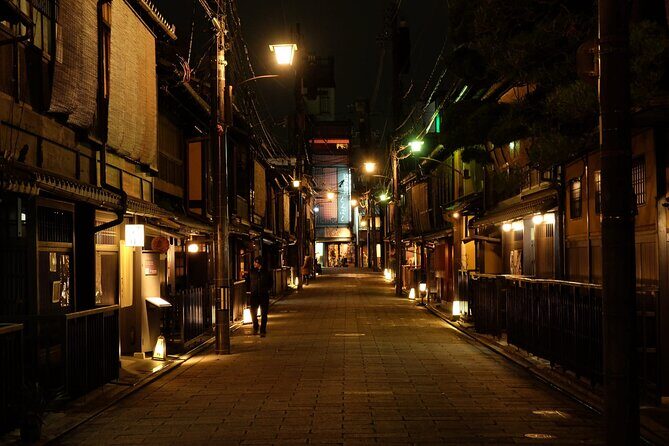
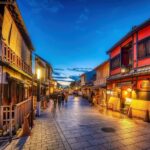
Gion in the evening has a softer tempo. The streets don’t vanish, but the vibe changes—less showroom, more lived-in. That matters because the “how do I not get lost?” problem in Kyoto is real. Even when you know the name of a street, finding the right turn in a dim alley can eat time fast. This tour helps you sidestep that.
Night walking also helps your eyes adjust. You start noticing small cues—lantern-lit facades, the narrowness of lanes, the rhythm of wooden townhouses—things that don’t translate well from daytime crowds or overexposed daytime photos. And when you’re told what you’re looking at as you go, the district makes more sense. It’s not just a scenic stroll; it’s a guided way to read the neighborhood.
One more reason I like this approach: it’s not trying to promise a miracle. The goal is to show you where geisha culture lives in the street layout and what to watch for with geisha and maiko, with “some luck” built in.
You can also read our reviews of more walking tours in Kyoto


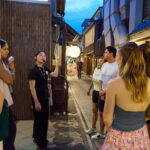
Meet at Tanaka Coffee Gion and Get Oriented Fast
The tour meets at Tanaka Coffee Gion (in Higashiyama Ward) and ends back at the same meeting spot. That one detail sounds simple, but it’s a big help on night outings. You don’t need a second plan for transport or figuring out where you’ll land after the walk.
The timing is also nicely contained. About 2 hours keeps it from turning into an all-night event, which is good when your next day in Kyoto is already full. Since the group is capped at 15 travelers and you use a mobile ticket, the start feels straightforward: show up, check in, then move.
If you’re sensitive to noise or crowd energy, night can still be busy in Gion. But being in a small group with a guide means you’re not stuck doing the slow crawl that happens when everyone stops at the same photo spots.
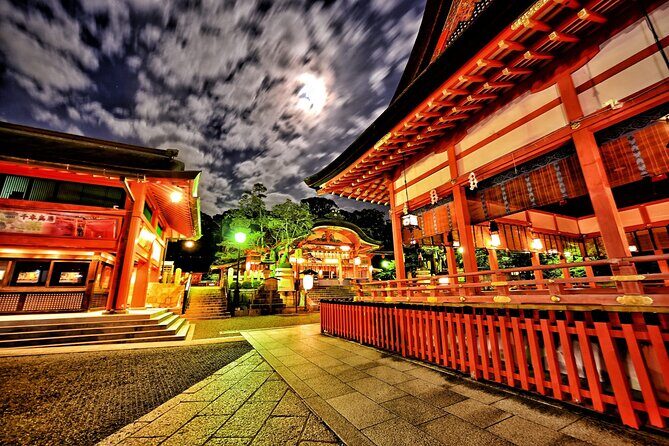
Stop 1: Hanamikoji Street, Shirakawa Canal, and Tatsumi Daimyojin Shrine
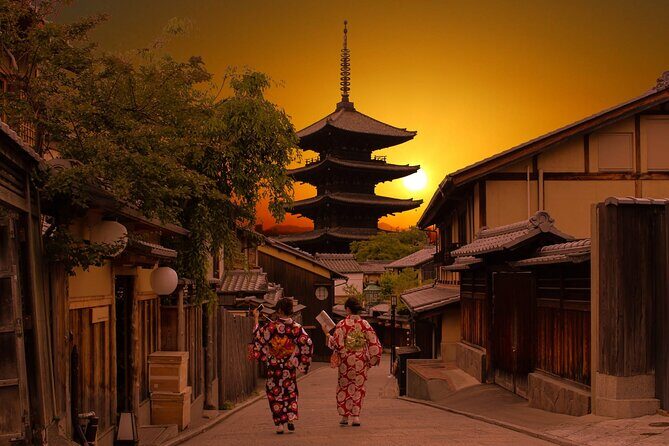
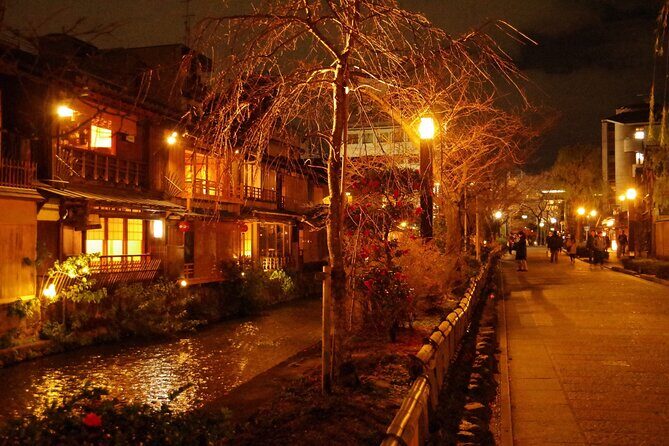
Your first hour is anchored in classic Gion. You’ll walk along Hanamikoji Street, the heart of the geisha district, lined with traditional wooden teahouses known as ochaya. If you’ve only seen Gion in daylight, this part hits differently after dark. The street feels narrower and more intentional, like it’s built for evening—not just visitors.
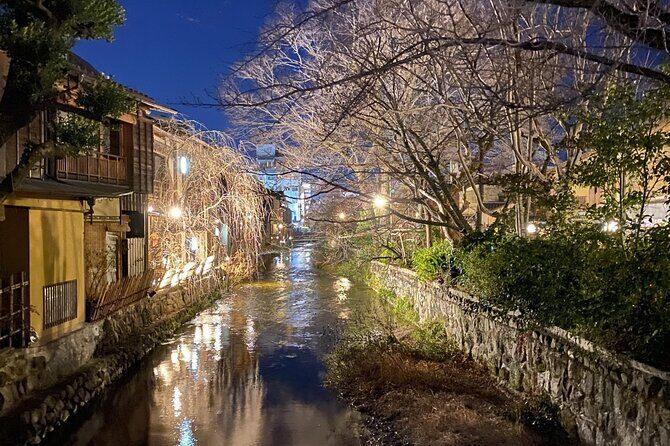
Next comes the Shirakawa Canal area. Expect stone-paved alleys, red bridges, and willow trees that frame the water scene. Even if you know the canal as a “must-see,” the tour’s value is in the slow attention. You’re not just checking off a view; you’re walking through the connecting lanes that make the canal feel like part of a living neighborhood.
Then you get the quieter culture stop: Tatsumi Daimyojin Shrine. It’s described as small but culturally significant, tucked away in the backstreets. I like this kind of placement because it balances the showy streets with a calmer pause. It also gives the walk a sense of order: you move from main drag charm, to a scenic canal zone, then to a shrine you might otherwise miss.
One practical note for the “shrines at night” vibe: you’ll likely be walking on darker paths and listening for the guide’s instructions, not roaming freely. So keep your phone ready for guidance, but don’t expect a bright, photo-perfect environment everywhere.
Learning the Geisha and Maiko Culture While You Walk
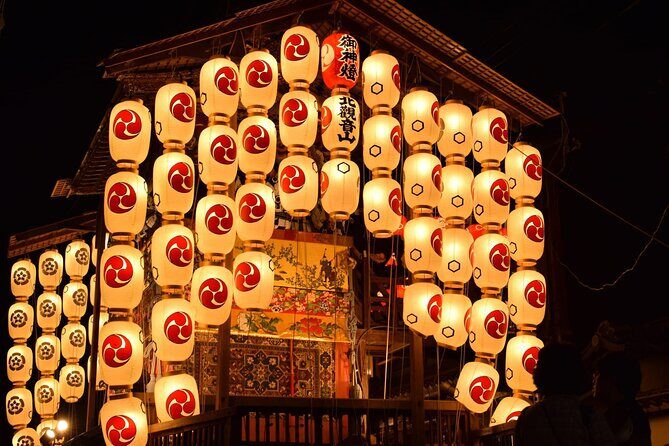
This is the part that makes the tour feel more than sightseeing. You’ll learn how to spot real geisha and maiko, and the guide explains the cues that help you tell what you’re looking at. The goal is not to turn people into paparazzi; it’s to help you recognize what’s meant to be recognizable.
Here’s my honest expectation-setting based on what I’ve seen other guests experience: some nights are quieter than the dream version. Even with “some luck” built into the plan, you might not see a geisha. That isn’t a tour failure—it’s reality. What you can control is how you go in. If your mindset is I’ll learn the culture and enjoy the walk even without the perfect sighting, you’ll likely have a good time.
Also keep in mind etiquette around photography and behavior. In at least one case, the guide set expectations early about likely sightings and about how to behave if you do see someone. If you’re the type who wants to photograph everything, take a breath and follow the guide’s cues. The night atmosphere works best when you’re respectful and not disruptive.
The reward is knowing what matters. Once you understand the basics, you stop treating Gion like a stage and start treating it like a place with traditions, schedules, and clear boundaries.
Stop 2: Kawaramachidori and the Shijo-Kawaramachi Contrast
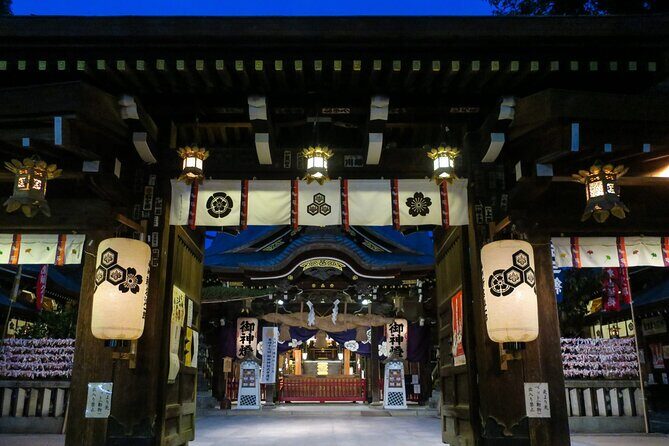
The second hour shifts gears. You move toward Kawaramachidori, focusing on the area around the Shijo-Kawaramachi intersection. This is where modern Kyoto is in full view, and it’s a smart contrast after Gion’s quieter elegance.
What I like here is the mix of “main area” energy and backstreet wandering. You’ll venture into hidden alleys known more to locals than to first-time visitors. That matters because it’s easy to think you’ve seen Kyoto when you’ve only seen the public-facing storefronts. These lanes give you a chance to notice old machiya houses and smaller spots tucked away from the busiest lines.
The tour also frames this contrast with stories about how the area evolved. That’s the kind of context that makes later sightseeing click. You start seeing streets as layers—old life and new life pressed together—rather than as separate zones you move through quickly.
If you like “one tour, two sides of Kyoto,” this is where it delivers.
You can also read our reviews of more evening experiences in Kyoto


Food Recommendations You Can Actually Use the Same Night
One included feature is insider recommendations on great places to eat in Kyoto. That’s not just a bonus line. It’s practical value for travelers who don’t want to spend their evening juggling maps, menus, and last-minute decisions.
Because the tour ends back at the meeting point near Tanaka Coffee Gion, you can pivot immediately. You’re already in the right neighborhood mindset. You also finish the walk after you’ve seen both traditional Gion streets and the Shijo-Kawaramachi-area energy, so the food suggestions can match what you’re craving—whether you want something casual or you want a more atmospheric meal.
When you get food tips, listen for two things:
- Location relative to landmarks you just walked past (so you can find it again)
- The vibe of the place (so it matches the mood you want after the tour)
Even if you don’t follow every suggestion, getting local guidance helps you avoid one common Kyoto mistake: ending the day hungry because you picked a spot that looked good in a quick glance.
Price, Duration, and Value at About $25
At $25 per person for about 2 hours, this tour lands in the “good value” zone for Kyoto. You’re paying for more than a stroll. You’re paying for direction, cultural context, and two distinct neighborhood sections instead of one.
The small-group cap (max 15) matters for value too. With larger groups, the experience often becomes watching someone else walk. Here, the tighter size supports actual conversation and quicker correction if you’re unsure what something is.
Also, the mobile ticket is a small convenience that adds up. Kyoto evenings often include transit juggling and last-minute decisions. If check-in is simple, you waste less time and spend more time enjoying.
So who gets the best value? People who want to understand what they see and who prefer guided walking over “I’ll figure it out myself.” If you just want a long scenic walk and don’t care about geisha context, you could skip a guided tour. But if you want meaning and momentum, this price is reasonable.
Who This Tour Suits Best
This tour is a strong match if you:
- Want to see Gion without stressing over turns and directions
- Like cultural explanations while you walk, not after the fact
- Are open-minded about geisha sightings and treat them as possible, not guaranteed
- Enjoy night wandering and the calmer mood after daytime crowds
- Want practical Kyoto food direction for the same evening
It may be less ideal if your main goal is nighttime photography of geisha. The streets can be dark, and etiquette matters. Even when the guide does everything right, you may still find your photos less sharp than you planned.
Should You Book This Gion Night Walking Tour?
I’d book this if you want a guided evening that teaches you how to read Gion—streets, shrine context, canal scenery, and the basics of geisha culture—while also getting food advice you can use immediately. The small group size and the route flow make it feel efficient without rushing.
I’d think twice if your trip hinges on getting a specific geisha photo. This tour is designed to help you understand and observe respectfully, not to promise a guaranteed sighting. If you go with the right mindset—learn first, hope for a sighting second—you’ll likely leave happier than someone chasing one perfect image.
FAQ
How long is the Kyoto Gion night walking tour?
It runs for about 2 hours.
Where does the tour start?
The meeting point is Tanaka Coffee Gion in Kyoto (Higashiyama Ward).
Does the tour end somewhere else?
No. The activity ends back at the same meeting point.
What is the group size?
The tour has a maximum of 15 travelers.
What does the tour cost?
The price is $25.00 per person.
Is there a mobile ticket?
Yes, it’s a mobile ticket.
What is included in the tour?
It includes a walking tour plus insider recommendations on local eateries.
Is admission included?
The itinerary indicates that an admission ticket is included for the listed stops.
What if I want to cancel?
Cancellation is free if you cancel up to 24 hours in advance for a full refund.
Do I have a guaranteed chance to see a geisha?
No. The tour teaches you how to spot real geisha and maiko, with some luck involved for sightings.