REVIEW · TOKYO
Tokyo Great Cycling Tour
Book on Viator →Operated by 東京グレートサイクリングツアー · Bookable on Viator
Six hours on two wheels in Tokyo. This is a small-group cycling tour that helps you see far more than walking, while getting to places that buses simply don’t reach. I like the mix of motion and meaning: you’re learning while you’re actually moving through real neighborhoods.
What I like most is the attention to pace and access. With a max of 12 people, the guide can keep things flowing and adjust for the crowd and the heat, so the day feels personal instead of rushed. And because you’re on bikes, you can slip past the usual dead ends and shortcuts into parts of the city that don’t work well on foot.
One thing to consider: this tour expects moderate physical fitness and comfort riding for about 6 hours. If you hate city traffic vibes or long stretches in warm weather, you’ll feel it.
In This Review
- Key things to know before you pedal off
- Tokyo by bike: what you gain in real city time
- Value check: how $99.49 fits a full, guided 6-hour day
- Meeting at 9:00am: how the day flows from Shinkawa
- Stop 1: Tsukiji Jogai Market and the real daily crowd
- Zojo-ji Temple and Tokyo Tower contrast: where tradition meets the skyline
- The in-between streets: apartment blocks, shopping offices, and an upscale cemetery
- Stop 3: Meiji Jingu Shrine and the pace of Shinto Tokyo
- Stop 4: Imperial Palace—where you see monarchy by setting
- What happens when it’s hot: the lunch swap that keeps the day enjoyable
- Your bike-day checklist: what to bring and how to stay comfortable
- Who this tour is best for (and who should think twice)
- Should you book Tokyo Great Cycling Tour?
- FAQ
- How long is the Tokyo Great Cycling Tour?
- What is the maximum group size?
- Where do you meet, and when does it start?
- What fitness level do I need?
- Is the tour affected by weather?
- What is the cancellation policy?
Key things to know before you pedal off
- Max 12 riders keeps the experience friendly and easier for the guide to manage
- Bike access lets you reach spots that buses can’t conveniently get to
- Two big shrine stops plus Imperial Palace mean you’ll get both Shinto and the imperial setting
- Tsukiji after the Inner Market moved gives you the feel of the area without the Inner Market buzz
- Hot-weather flexibility: if the weather turns rough, the plan can shift to a nearby lunch spot
- Free time at each stop helps you actually look, not just pose and move on
Tokyo by bike: what you gain in real city time
Tokyo is a place where 10 minutes can feel like a lifetime when you’re walking, waiting for crossings, and backtracking. This is why a bike tour is such a smart move. You’re not just sightseeing—you’re building efficient city time.
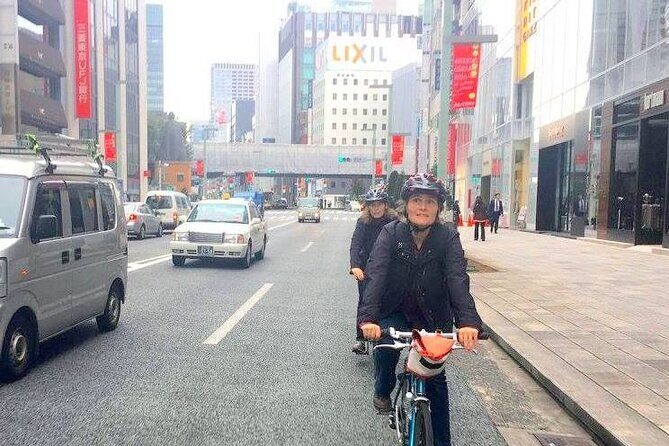
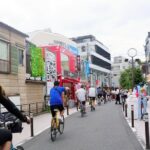
I like that the day is designed around a clear “string of highlights,” then filled in with the everyday Tokyo between them. You get the headline locations—Tsukiji area, Zojo-ji, Meiji Jingu, Imperial Palace—without the usual problem of spending most of your day in transit. And since bikes can go down streets buses can’t, you’re not stuck staring at the same wide avenues the whole time.
There’s also a human side to it. In a group capped at 12, you tend to get a guide who can respond to what’s happening on the ground: slower riders, a jammed intersection, or a hot stretch where people need a breather. In reviews, guides like Toshi, Nick, and Naoko are consistently mentioned for keeping riders safe and looked after, which matters on a city cycling day.
If you’re the kind of person who likes to understand a place rather than just collect photos, this format works well. You stop often enough to absorb details, but you’re still moving, so you feel how Tokyo changes street by street.
You can also read our reviews of more cycling tours in Tokyo
Value check: how $99.49 fits a full, guided 6-hour day
At $99.49 per person for about 6 hours, this isn’t a casual “quick loop” experience. The value comes from three things that matter in Tokyo:
First, you’re paying for a guide to connect distant sights into one coherent route. The itinerary covers multiple major areas, and bike access helps you actually link them efficiently.
Second, you’re getting time at iconic places. You’re not doing a drive-by. The stops are built in with short on-site windows—enough to look around, read the vibe, and take in the contrasts.
Third, the group size caps at 12, which keeps the experience from turning into a school field trip. For Tokyo, that personalization is a real cost saver too: you’re less likely to lose time asking repeat questions or trying to keep track of a large crowd.
One practical note: the tour is issued with a mobile ticket, and the meeting point is near public transportation. That makes it easier to fit into a full sightseeing schedule without adding complicated logistics.
The bottom line: this is good value if you want a guided sweep through Tokyo’s “must-sees” without spending your day on foot trying to stitch the neighborhoods together.
Meeting at 9:00am: how the day flows from Shinkawa
The tour starts at 9:00 am at Tokyo Great Tours, 1-chōme-3-2 Shinkawa, Chuo City, Tokyo 104-0033, Japan, and ends back at the meeting point.
That start time is smart. Early riding usually means smoother streets, less peak heat, and more comfortable stops—especially in summer. You’ll also want that morning energy because the day is long enough to feel like a real outing, not a half-hour activity.
Because it returns to the start point, you don’t have to worry about planning your onward route at the end of the day. It’s also a relief if you’re juggling other reservations later.
Stop 1: Tsukiji Jogai Market and the real daily crowd
Your first stop is Tsukiji Jogai Market. This area is known for still feeling alive after the famous Inner Market moved to Toyosu. Even if you’ve read about the move, the “Jogai” zone has its own texture—busy streets, local shoppers, and visitors mixed together.
What I like here is the timing and function. Starting at Tsukiji sets the tone early: this isn’t a quiet shrine-only day. It’s a Tokyo day. You’re arriving where people actually shop and browse, and you can see how food culture spills into the street.
The stop is about 15 minutes, and the admission ticket is free. That’s not long enough to become a food tour, but it’s enough to:
- spot the kinds of shops that define the area
- get oriented to how neighborhoods feel before you head into more formal sites
- take quick photos without feeling rushed later
A small caution: Tsukiji is active. If you get anxious in crowds, treat this as a quick orientation stop and let the guide handle how closely you bike through the densest parts.
Zojo-ji Temple and Tokyo Tower contrast: where tradition meets the skyline
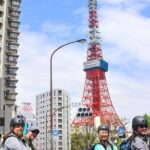
Next up is Zojo-ji Temple, an old Buddhist temple with a memorable visual twist: the temple setting and the Tokyo Tower backdrop create a sharp contrast.
The stop is also about 15 minutes, free entry. For me, this is the kind of stop that makes a bike tour worth it. You get the sensory shift from market energy to temple stillness, and then you notice the modern city immediately beside it.
Zojo-ji is the definition of Tokyo’s “two things at once” feel. You’re looking at traditional architecture while the skyline reminds you how close modern Tokyo really is. It’s also a good breather in the itinerary rhythm: a short stop that refreshes you before you roll into the bigger spiritual landmark of the day.
If you like architecture, take a slow walk inside the time you have. If you’re short on time, just pause in the best-view spots your guide points out and let the contrast do the work.






The in-between streets: apartment blocks, shopping offices, and an upscale cemetery
Between the big landmarks, you’ll pass through areas defined by tall buildings—high-story apartment blocks, and shopping and office buildings. This matters because it’s where you see Tokyo’s scale and how neighborhoods stack vertically.
You’ll also stop at a cemetery situated in a fashionable area. That might sound odd on a cycling tour, but it’s exactly the point: Tokyo doesn’t separate sacred spaces from everyday life the way many cities do.
Why include this sort of stop? Because it keeps your understanding grounded. After you’ve seen formal shrines and palace grounds, the city between them is what makes the story feel real. You notice how people live with history and ritual close at hand, not sealed behind museum walls.
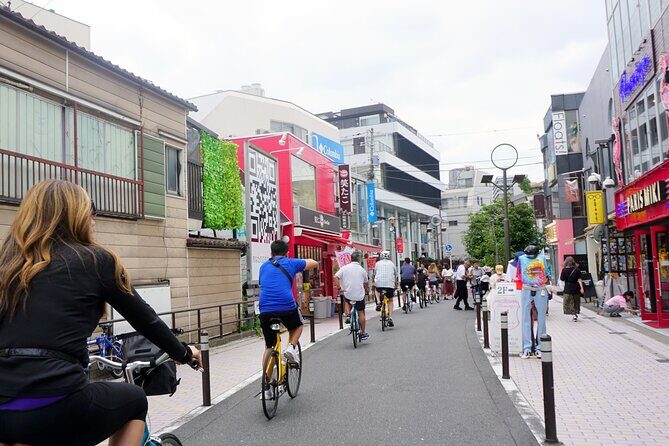
This is also where bike touring shines. You’re not forcing big jumps by car, and you’re not stuck staring at the same “big road view.” You’re moving through Tokyo at street speed, which is where you actually learn the city.
Stop 3: Meiji Jingu Shrine and the pace of Shinto Tokyo
Then you pedal to Meiji Jingu Shrine, one of Tokyo’s most popular Shinto shrines.
This stop is about 20 minutes with free admission. The extra time here makes sense. A shrine visit can absorb you, even if you’re not planning to read every sign. You’ll likely want those extra minutes to slow down, look around, and take in the transition from busy urban streets into a more ceremonial mood.
Meiji Jingu is also a perfect midpoint check. After market energy and the temple skyline contrast, you get a different kind of stillness. It gives your legs and your brain a chance to reset.
Practical tip: if you want photos, use the stop’s first part to frame images before crowds build. After that, focus on the atmosphere rather than chasing the perfect shot.
Stop 4: Imperial Palace—where you see monarchy by setting
Finally, you reach the Imperial Palace, described as the place where the Emperor and Empress live.
The stop is about 15 minutes, free entry. What’s valuable here isn’t so much a single object as the setting and the way the area reads in the city. You’re seeing the seat of the imperial system through the scale, the grounds, and the quiet weight that often comes with places of authority.
Imperial Palace also closes the loop nicely. You began with a market, moved through Buddhist and Shinto settings, and end at an imperial site. That sequence gives the day a “cultural circuit” feel without making it a lecture.
If you’re the type who enjoys contrasts, pay attention to how the landscape and tone shift even when you’re spending only a short time at each place. A bike tour helps you notice those changes as you travel.
What happens when it’s hot: the lunch swap that keeps the day enjoyable
Tokyo weather can turn fast, especially on a morning that starts fine and heats up by afternoon. One review highlight was that the planned picnic can be changed to a lunch at an izakaya if the day runs hot.
That kind of flexibility is more than a perk. It keeps the experience comfortable and helps you stay focused on the sights rather than just surviving the heat. It also signals that the guide team watches the group, not just the calendar.
If you’re booking in a hotter month, plan like a cyclist: bring water plans, dress light, and be ready for a shift if conditions demand it.
Your bike-day checklist: what to bring and how to stay comfortable
Since the tour assumes moderate physical fitness, your comfort will mostly come down to preparation.
Here’s what I’d pack for a day like this:
- water (and a refill plan you can manage)
- light layers for temperature swings
- sunscreen and something for sun protection
- comfortable shoes you can walk short distances in
- a small bag that won’t flop around while riding
If you’re nervous about biking in traffic, choose a calm, steady mindset. The guide’s job is to keep the group coordinated. And because the group stays small, you’re less likely to get separated or feel lost.
Also, remember this is a guided route. You’ll be happier if you treat it like a shared rhythm: stop when the group stops, listen when the guide talks, and don’t try to speed ahead.
Who this tour is best for (and who should think twice)
This is a great match if you:
- want to cover several major sights in one day without wasting hours on walking
- like small groups and clear guidance
- can ride a bike comfortably for a few hours
- enjoy learning context while moving through neighborhoods
It may not be the best fit if you:
- dislike city riding or feel stressed around cars and bikes
- have limited ability to sustain a moderate cycling effort for about 6 hours
- plan to spend the day doing slow, unhurried wandering at a single location
For families, it can work if kids can handle the pace and the riding. One review mentioned a father-and-son day that went well, and that’s a reassuring sign—though you should still be honest about comfort level.
Should you book Tokyo Great Cycling Tour?
Book it if you want a high-value Tokyo overview with enough stops to feel satisfied and enough movement to avoid the walking grind. The route choice is smart: Tsukiji Jogai Market for daily energy, Zojo-ji for skyline-and-tradition contrast, Meiji Jingu for Shinto atmosphere, and Imperial Palace for the weight of the imperial setting—then you get the real Tokyo streets in between.
Don’t book it if you want a purely relaxed, low-effort sightseeing day. This is hands-on: you’re riding, keeping pace, and riding through changing conditions.
If you can cycle and you like guided structure, this tour is one of the more practical ways to feel like you saw a lot of Tokyo without spending your whole day in transit.
FAQ
How long is the Tokyo Great Cycling Tour?
The tour lasts about 6 hours.
What is the maximum group size?
The group size is capped at a maximum of 12 travelers.
Where do you meet, and when does it start?
You meet at Tokyo Great Tours, 1-chōme-3-2 Shinkawa, Chuo City, Tokyo 104-0033, Japan, and the start time is 9:00 am.
What fitness level do I need?
You should have a moderate physical fitness level.
Is the tour affected by weather?
Yes. The tour requires good weather. If it’s canceled due to poor weather, you’ll be offered a different date or a full refund.
What is the cancellation policy?
Cancellation is free. You can cancel up to 24 hours in advance for a full refund, and changes made less than 24 hours before the start time aren’t accepted.