Ride Tokyo at bike speed.
This 3-hour guided e-bike tour is a smart way to see the city without feeling stuck on trains or crawling on foot. I like that the e-assist makes the ride doable for almost anyone, and I like that the guide keeps you moving through both famous landmarks and calmer, off-the-usual-path streets. One thing to consider: you’ll be sharing space with pedestrians and sometimes riding near traffic, so it helps if you’re comfortable on bikes right away.
What I found most appealing is the way the tour is built around different Tokyo “moods” depending on your route choice. You can aim for the classic core (Tokyo Station, Imperial Palace area), the temple-and-garden side of the city, or the big water-and-views feeling of Tokyo Bay. And yes, there are snack breaks baked in, which matters more than it sounds when you’re cycling for hours.
You meet up in advance for a briefing, grab your helmet, and then roll out from a lively fish-market neighborhood. From there, the route choices shape the scenery: gardens and shrines in the city route, bridges and big skyline angles in the bay route, and hillier sights and parks in the Tokyo Tower route. It’s an efficient, fun format if you want distance covered with real local context and not just photos from the curb.
In This Review
- Key Things I’d Book This For
- Three Routes, One Great Bike Day
- Tokyo City Route: classic sights plus calmer pockets
- Tokyo Bay Route: bridges, harbor energy, and sunset timing
- Tokyo Tower Route: temples, hills, and a park break
- Starting at the Fish-Market Neighborhood: Fast Setup, Real Tokyo
- Ginza, Imperial Palace Area, and Tokyo Station: Up-Close Without the Grind
- Kiyosumi Japanese Garden: Where the Pace Changes
- Tomioka Hachimangu Shrine: A Temple Stop That Feels Earned
- Temples on the Bay Route: Sumiyoshi and a Hidden-Feeling Stop
- Tokyo Bay and Odaiba: Bridges, Gundam, and Night Views
- Tokyo Tower Route: Zojo-ji, Atago Shrine, and Hibiya Park
- Snack Stops and Small Cultural Lessons: More Than a Break
- How Hard Is It, Really? The E-Bike Learning Curve
- Safety and Timing: 3 Hours That Actually Feels Like 3 Hours
- Value Check: Does $65 Make Sense for Tokyo?
- Who Should Book This E-Bike Tour (and Who Should Skip)
- Should You Book This Tokyo E-Bike Tour?
- FAQ
- What’s included in the tour price?
- How long is the e-bike tour?
- Where does the tour start and end?
- Are there different routes?
- Do I need to be an experienced cyclist?
- What are the highlights on the city route?
- What are the highlights on the bay route?
- What are the highlights on the Tokyo Tower route?
- Who is the tour not suitable for?
- What happens if it rains?
Key Things I’d Book This For
- E-assist makes 3 hours feel manageable even if you’re not a cyclist
- English-speaking guides can explain what you’re seeing, plus help with photos and pacing
- Route options change the whole experience (city core vs bay bridges vs Tower-area viewpoints)
- Snack stops add a real-world break without turning the tour into a food crawl
- You get close to places that buses and subways can’t really reach comfortably
Three Routes, One Great Bike Day
This tour is offered in multiple routes, and picking the right one is the key to matching your day in Tokyo. The big idea is simple: you’ll cover more ground than walking, but you still get the up-close street views you miss on bus routes.
You can also read our reviews of more cycling tours in Tokyo
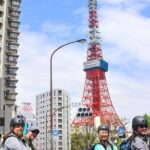
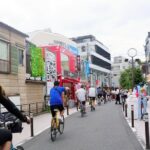
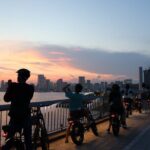
Tokyo City Route: classic sights plus calmer pockets
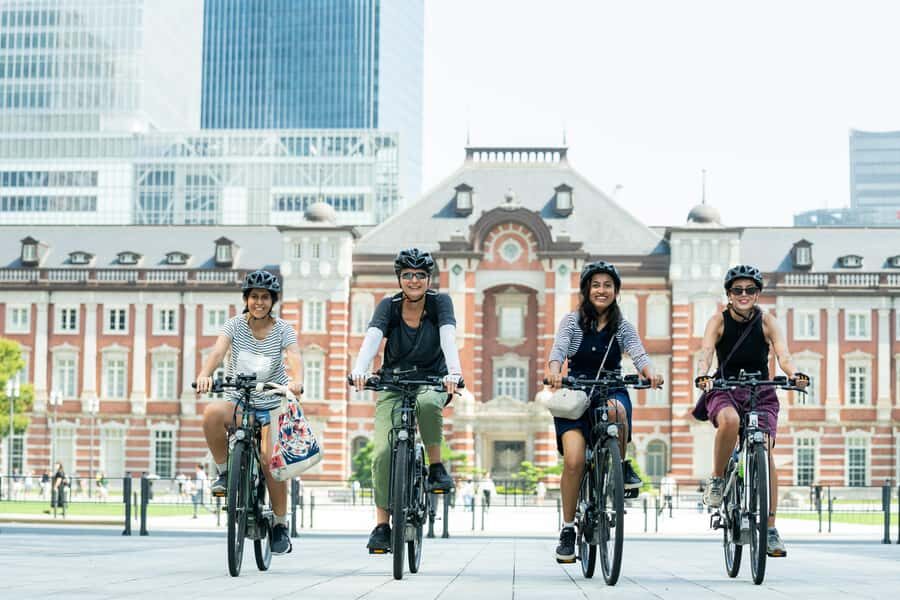
If you want Tokyo’s most recognizable landmarks mixed with quieter local corners, the city route is a great fit. You pass through areas like Ginza and the Imperial Palace area, then keep going toward Tokyo Station and the Nihonbashi area. The route also includes a garden stop and finishes at a shrine, which gives you a nice rhythm shift from busy streets.
Tokyo Bay Route: bridges, harbor energy, and sunset timing
If views are your priority, go for the bay route. It’s designed around Tokyo Bay and the Odaiba area, where the roads are flatter and wider, which makes the ride feel easier. You’ll cross bridges with breeze, pass major landmarks, and ride out toward some of the most dramatic skyline angles—especially around sunset and at night (timing varies by month).
Tokyo Tower Route: temples, hills, and a park break
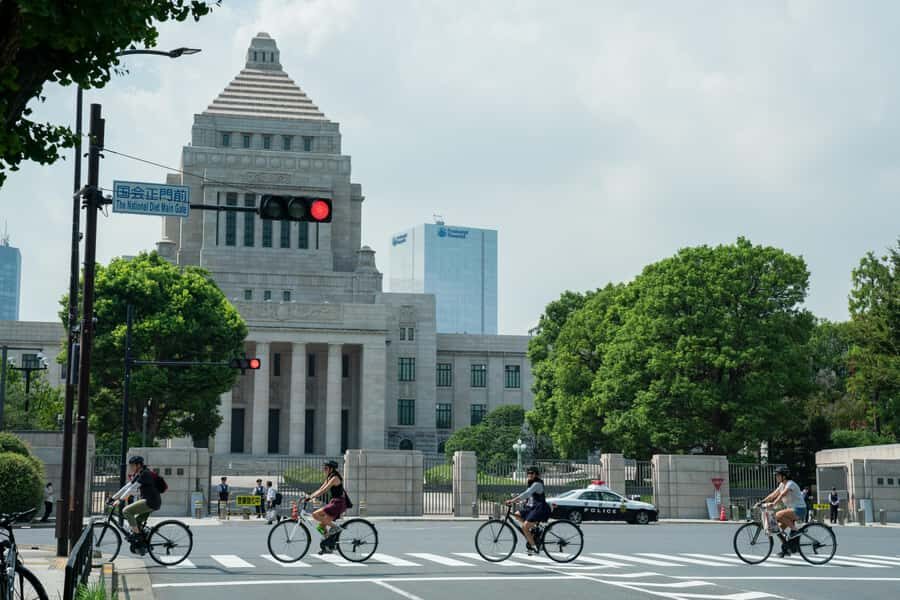
For a more “Japan you can photograph” day, the Tokyo Tower route mixes temples and shrines with park time. You’ll pass Zojo-ji Temple and the Tokyo Tower photo spot, ride through the Atago area, and also stop near the National Diet Building and Hibiya Park. It’s a great route if you like contrasts: classic architecture next to modern Tokyo.
Starting at the Fish-Market Neighborhood: Fast Setup, Real Tokyo
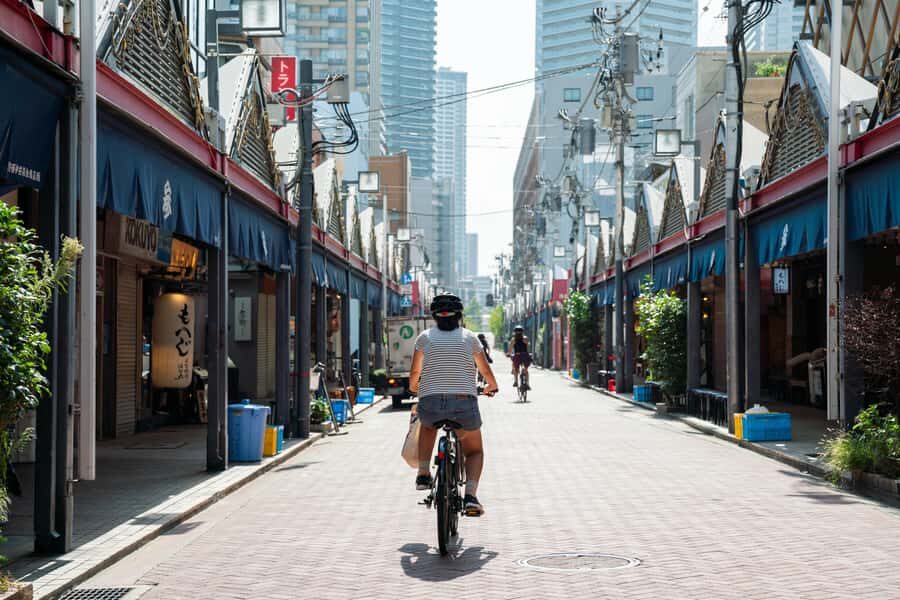
Most tours start with a lecture or a long walk to the first sight. This one starts with momentum. You begin near the fish-market neighborhood, then use the bike format to transition quickly from the lively market zone into broader city streets.
That matters because Tokyo can feel confusing on day one. Once you’re rolling, streets start making sense fast: where major areas connect, how traffic flows, and which neighborhoods feel calmer at street level. If you’re a first-timer, it helps you build a mental map without burning half a day just getting oriented.
Also, the pre-ride briefing is there for a reason. You’re asked to arrive about 15 minutes early so the guide can cover route flow and group rules before you hit the streets. Do not show up late and expect to join mid-way—this is a set course, not a grab-your-bike-and-ride-at-will situation.
You can also read our reviews of more guided tours in Tokyo


Ginza, Imperial Palace Area, and Tokyo Station: Up-Close Without the Grind
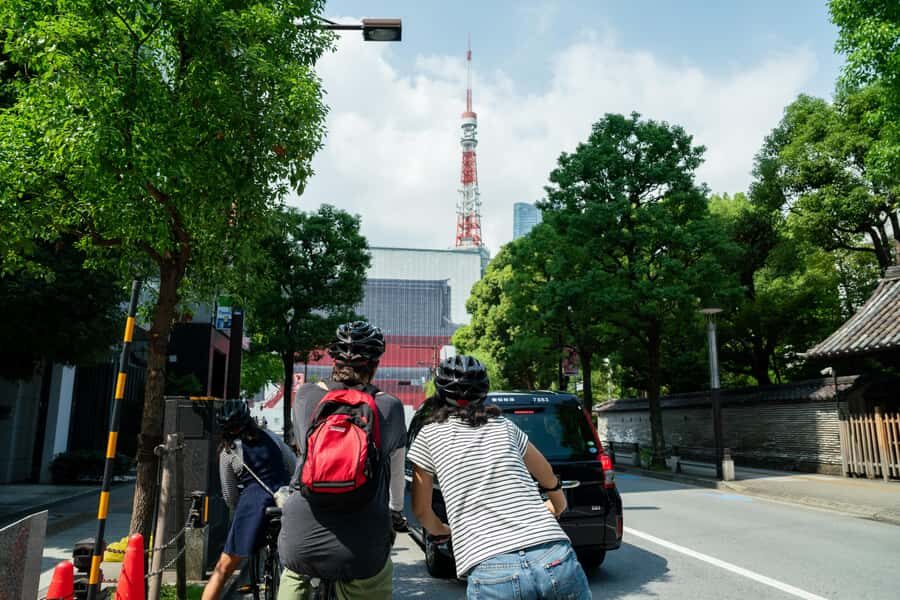
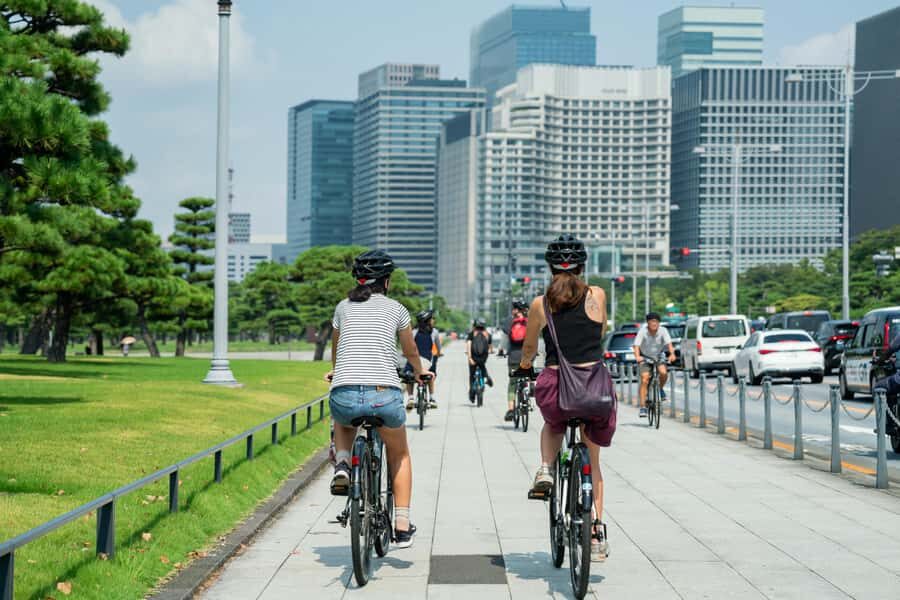
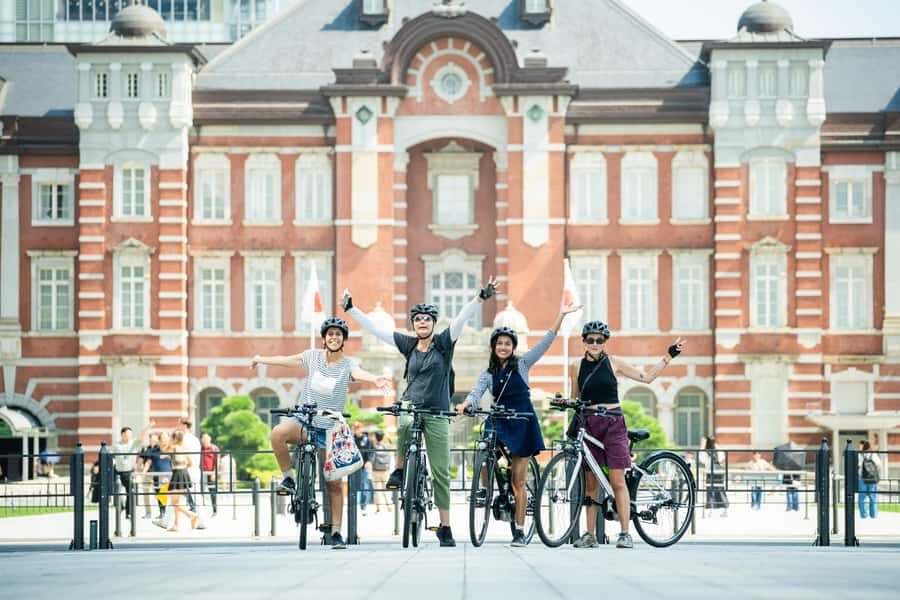
On the city route, you’ll pass major icons while still seeing the street-level details that big vehicles miss. Riding past Ginza and the Imperial Palace area gives you the “wow” factor early, without turning the day into museum time.
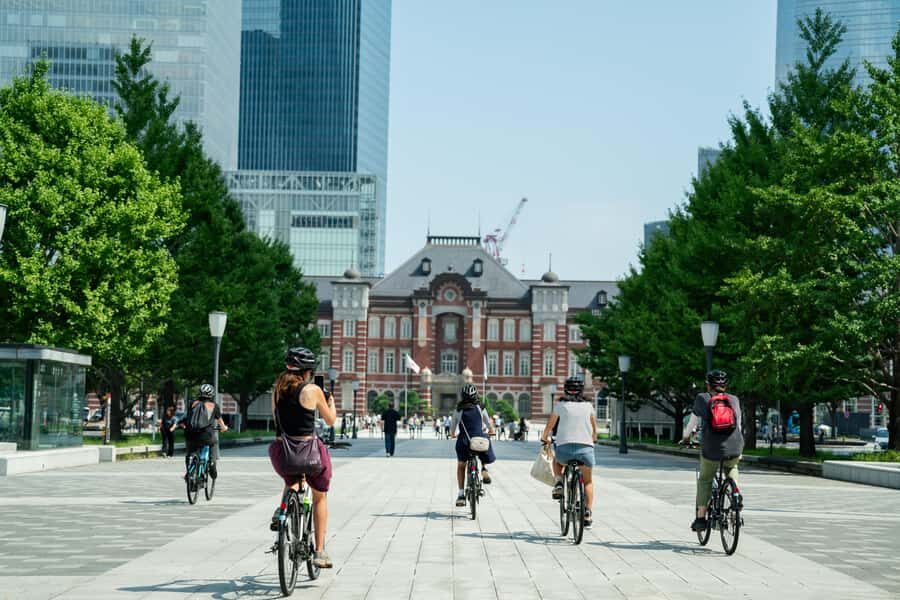
Tokyo Station and the Nihonbashi area are also part of the plan. This is one of the tour’s best features for people who want variety. You get the grand central Tokyo scenes, but you’re not trapped staring at them from one angle like you often are on public transport.
A practical note: even with an e-bike, you’ll still feel the rhythm of Tokyo. Traffic lights, crossings, and stop-and-go patterns are part of the ride. The plus is that a guide handles the flow for the group, so you can focus on the ride and the views instead of worrying about turn-by-turn navigation.
Kiyosumi Japanese Garden: Where the Pace Changes
One of the most consistently praised parts is the garden stop on the city route. You get to step into a calmer space, walk around for a bit, and reset your body before the ride continues.
This garden break is not just about scenery. It’s also a smart timing move. Cycling keeps you “on,” and gardens give you a short, easy decompression moment that makes the rest of the tour feel smoother. Guides also tend to use these pauses for context—things like how the garden relates to Japanese views of nature and urban life.
If you like photos, gardens help here too. You’re not trying to shoot in the middle of a wide intersection. You can actually slow down, frame shots, and take your time.
Tomioka Hachimangu Shrine: A Temple Stop That Feels Earned
The city route ends at Tomioka Hachimangu Shrine, and it’s a nice finishing note because it adds a distinct Japanese cultural tone to the day.
Shrine visits on a bike tour work because you arrive with momentum but still get time to slow down. You’re not just riding by; the format supports a brief, respectful visit and a change of pace.
It’s also a good reminder that Tokyo isn’t only neon and mega-shopping streets. Finishing with a shrine gives the day a more “lived-in” feeling, especially if your Tokyo time so far has been mostly along the biggest tourist corridors.
Temples on the Bay Route: Sumiyoshi and a Hidden-Feeling Stop
On the bay route, you’ll start with Sumiyoshi Shrine. Then the ride includes Tsukuda Tendai Temple, described as a hidden temple stop. The wording here is less about a secret location and more about the idea that these are not the first stops most people list when they plan Tokyo from the top ten sights.
Why it works: the bay route already has big, open scenery—water, bridges, and wide roads. Adding temple time balances that out so the day doesn’t feel like a single long “view chase.”
If you enjoy seeing how Japanese spiritual sites sit inside the real geometry of the city, these stops are a strong reason to pick the bay route even if you’re not traveling specifically for sunset.
Tokyo Bay and Odaiba: Bridges, Gundam, and Night Views
The bay route is where the tour feels most cinematic. Odaiba is set up for comfort on a bike: flat stretches and wide roads make it easier to settle into a steady pace. Then the bridges and harbor angles do the heavy lifting.
You’ll pass landmarks like TeamLab Tokyo and Tokyo Big Sight, then get the iconic Odaiba elements: the Gundam statue and the Statue of Liberty-style figure in Odaiba. You’ll also ride through Odaiba Aqua City for a snack break, and pass Rainbow Bridge.
Most people talk about this route’s timing for a reason. The best part is often the transition from late light into evening skyline views. The breeze on the bridges helps too, especially if you’re riding during warm weather months.
One more practical tip: when you’re close to water and at street-level crossings, it can feel like you’re sharing the road with everyone at once. Let the guide’s pacing control your stress level. If you keep your eyes up and your speed steady, the ride stays fun.
Tokyo Tower Route: Zojo-ji, Atago Shrine, and Hibiya Park
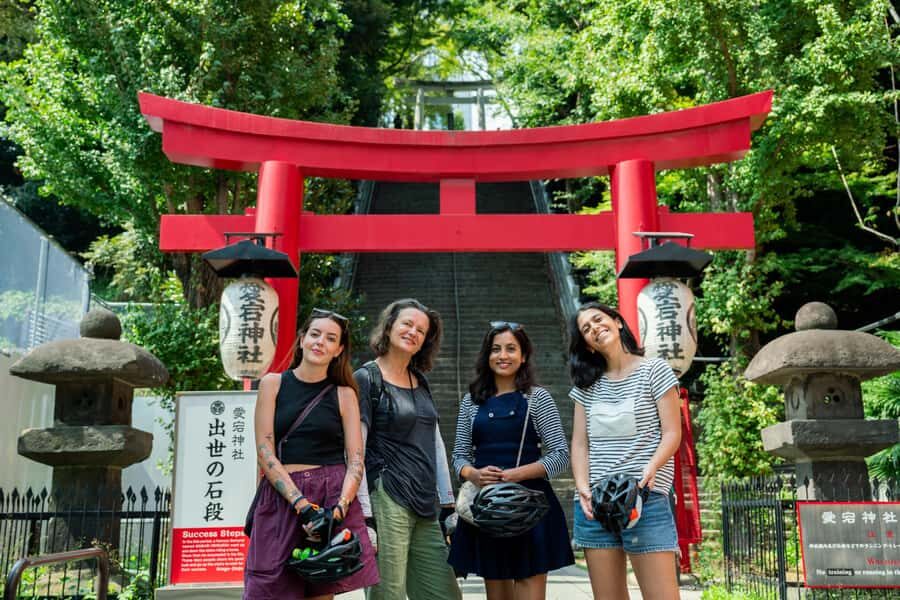
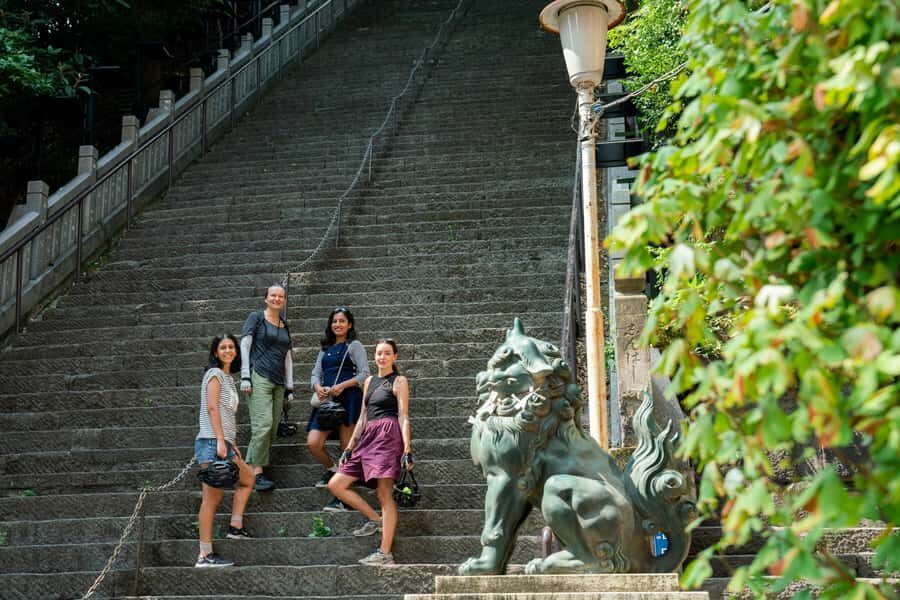
This route is for people who want the Tokyo Tower area without turning the day into just one photo stop. You start at Zojo-ji Temple, take a Tokyo Tower picture at the photo spot, and then add a string of culturally grounded stops.
Atago Shrine is included, along with a passing view near the National Diet Building and then the Imperial Palace area. You end at Hibiya Park, which is a useful release valve after riding through more structured, landmark-heavy streets.
The best thing about this route is the contrast. You can see classic temple architecture, then ride into modern Tokyo geometry, then end in a park space that helps your legs recover. Also, the e-assist makes the route feel far less physically demanding even though the area can be hillier.
Snack Stops and Small Cultural Lessons: More Than a Break
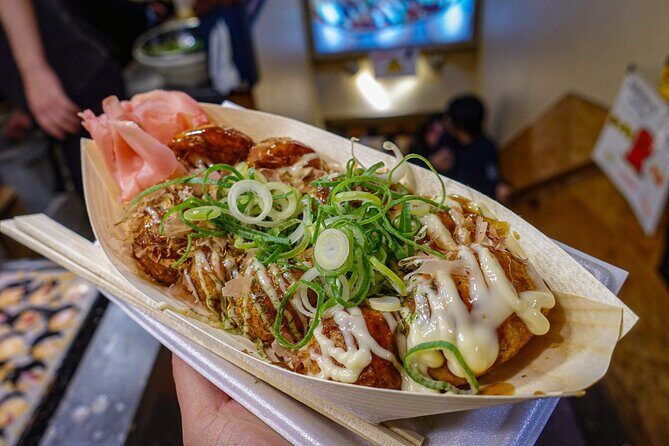
The tour includes a traditional Japanese snack. In practice, that means you get a built-in pause that feels like part of the local routine, not a commercial stop.
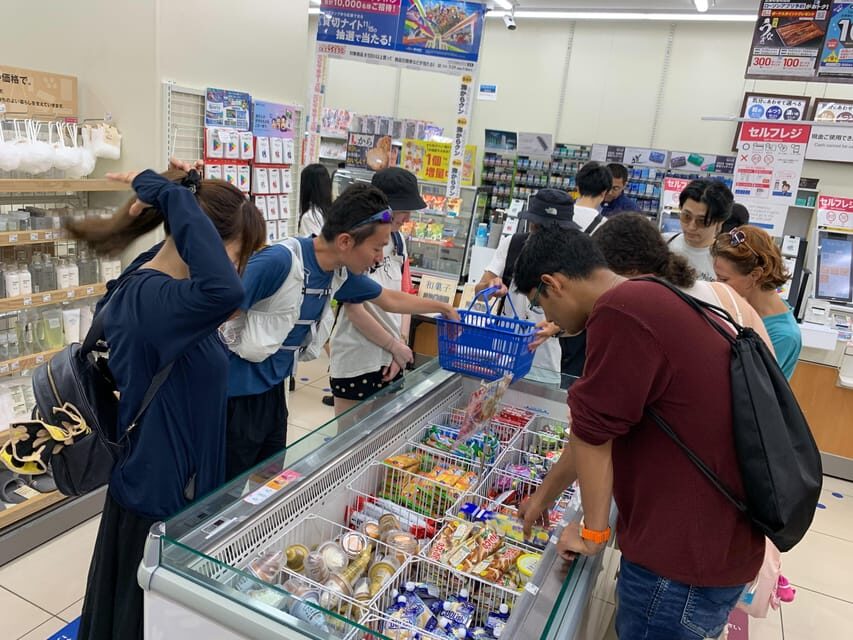
A few guide moments stand out from real-world experiences: some guides manage photo timing so people don’t feel rushed, and some add small extras like tasting snacks during a quick stop along the route. One highlight that comes up is convenience-store style snacks during the harbor ride, which feels very Tokyo because that’s where locals often actually grab food day to day.
Guides like Shinobu and Hiro are praised for story-driven commentary—explaining what you’re seeing and why it matters. Narita, Yota, and Miki also come up as guides who keep groups safe while still making conversation part of the ride, not just background facts.
How Hard Is It, Really? The E-Bike Learning Curve
E-bikes can feel intimidating at first, especially if you’ve never ridden one. But the ride is set up to be easy. The e-assist reduces the strain, and the group format means the pace is managed.
Still, you should be mentally prepared for one thing: shared space. Some routes include segments along footpaths where you’ll be around pedestrians. One practical suggestion that keeps coming up is to be comfortable anticipating movement—people in Tokyo walk fast, turn suddenly, and don’t always expect cyclists. Go slow through these sections and let the guide set the line.
Also, the winter season includes gloves, which is a big deal if you’re doing the tour when temperatures drop. You’ll likely be thankful for it if the ride starts early or you’re on a bay route where wind can cut.
And yes, you might feel traffic anxiety the first few minutes. That’s normal. Most guides handle this by keeping you together and choosing manageable lanes or crossing points.
Safety and Timing: 3 Hours That Actually Feels Like 3 Hours
This is a group tour, so you’ll ride as a unit. That makes it more efficient, but it also means timing matters. The tour starts with a briefing, and you’re asked to arrive around 15 minutes early. If you’re late, you can’t hop in mid-way.
Traffic can slow the end time slightly. Expect possible delays of about 30 minutes depending on road conditions and route flow. It’s wise to keep a little buffer in your schedule after the tour so you’re not sprinting to catch a tight connection.
Safety-wise, the guide role is central. Guides like Hiro are specifically noted for keeping groups safe and informed at all times. That’s exactly what you want on an e-bike: clear cues, controlled pacing, and someone watching group spacing so you don’t feel like you’re juggling the ride and your surroundings.
Value Check: Does $65 Make Sense for Tokyo?
$65 for a 3-hour e-bike tour is usually a fair deal because you’re paying for three things at once: the bike itself, an English-speaking guide, and the route execution (including snack time and planned stops).
Here’s what you get for that price:
- E-bike rental
- Helmet
- Luggage storage
- A traditional Japanese snack
- A guide and the route plan
- Gloves for winter season
- Knapsack options if you need it
In practical terms, this value is strongest if you’re trying to do more than one neighborhood in a short trip window. If you’re staying in Tokyo for a limited number of days, this format helps you turn “time lost commuting” into “time spent seeing,” while still getting cultural explanations along the way.
There is one trade-off worth mentioning: a few people prefer more scenic, iconic city areas over certain sections around Tokyo Station and Nihonbashi. So if your travel style is purely about the most famous postcard blocks, you might want to compare routes carefully. The garden and shrine stops help balance the day either way.
Who Should Book This E-Bike Tour (and Who Should Skip)
This tour is a good match if you want an active, guided way to see Tokyo that doesn’t require strong fitness. It’s also a great fit for first-timers who want a mental map and a repeat-visit crowd who want to see the city from a different angle.
But it’s not for everyone:
- Children under 13 are not permitted
- It’s not suitable for people under 147 cm tall
- Not suitable for people over 120 kg
- Not suitable for wheelchair users
- Not suitable for pregnant women
- Not suitable for people with heart problems
If you’re comfortable cycling and handling shared pedestrian areas, you’ll likely have a smoother experience. If you’re not comfortable near traffic or with bike learning curves, choose calm timing (and pay attention during the briefing). Your guide will keep you safe, but your comfort level matters.
Should You Book This Tokyo E-Bike Tour?
Book it if you want Tokyo coverage that feels closer to street life than bus or subway sightseeing. Choose the city route for classic landmarks plus gardens and shrines, the bay route for big scenery and skyline moments (especially sunset into night), and the Tokyo Tower route for temples, parks, and that classic modern-meets-traditional contrast.
Skip it if you need fully car-free riding, have mobility concerns, or aren’t comfortable with the reality of shared paths and crossings in a dense city. Also, if you only want the most iconic blocks with minimal riding around intersections, you may feel a little underwhelmed on parts of the route.
If you’re somewhere in the middle, this is one of the more practical ways to “see a lot” without turning Tokyo into a checklist day.
FAQ
What’s included in the tour price?
The tour includes e-bike rental, a helmet, a guide, luggage storage, a knapsack if needed, a traditional Japanese snack, and gloves for the winter season.
How long is the e-bike tour?
It’s a 3-hour guided experience, and it returns back to the meeting point.
Where does the tour start and end?
It starts at the meeting point (you’re asked to arrive 15 minutes early for the briefing) and ends back at the meeting point. Bikes may not be dropped off anywhere else.
Are there different routes?
Yes. You can choose among a Tokyo City Route, Tokyo Bay Route, and Tokyo Tower Route. Each route has a different itinerary and focus.
Do I need to be an experienced cyclist?
No. The e-bike is designed to be easy for anyone to ride, and the e-assist helps reduce physical strain. Still, you should be comfortable riding in a city environment with pedestrians.
What are the highlights on the city route?
The city route includes passes by spots like Ginza, the Imperial Palace area, Tokyo Station, and Nihonbashi, plus stops for a snack, Kiyosumi Japanese Garden, and Tomioka Hachimangu Shrine.
What are the highlights on the bay route?
The bay route includes Sumiyoshi Shrine, Tsukuda Tendai Temple, and passes like TeamLab Tokyo and Tokyo Big Sight. It also includes major Odaiba sights like the Gundam statue and the Statue of Liberty in Odaiba, plus a snack at Odaiba Aqua City and a pass by Rainbow Bridge.
What are the highlights on the Tokyo Tower route?
The Tokyo Tower route includes Zojo-ji Temple, a photo stop at Tokyo Tower, Atago Shrine, a passing view of the National Diet Building, a pass by the Imperial Palace area, and a stop near Hibiya Park.
Who is the tour not suitable for?
Children under 13 are not permitted. It’s not suitable for people under 147 cm tall, people over 120 kg, wheelchair users, pregnant women, and people with heart problems.
What happens if it rains?
If the tour cannot be held due to rain or other reasons, you’ll be notified by email on the day before the tour. If weather changes on the day, cancellation may happen for safety concerns.