REVIEW · TOKYO
Mt. Fuji Private Tour with English Speaking Driver
Book on Viator →Operated by Azu International Tours · Bookable on Viator
Fuji looks different up close. This private Mt. Fuji tour strings together the big hits—5th Station views, shrine-and-pagoda photo stops, and lakeside scenery—while staying flexible with your interests. What I like most is the human touch: guides like Irfan, Shahzaad, and Meebi make the day feel smooth, not rushed, with clear explanations at each stop.
I also love that the route covers contrasting sides of Fuji in one shot. You get the mountain’s dramatic altitude feel at Subaru Line 5th Station, then you switch gears to calmer viewpoints around Lake Kawaguchiko and the springs at Oshino Hakkai. One heads-up: the day depends on weather, and you’ll have a few entrance fees (including the 5th Station road fee), plus a lot of time spent driving.
In This Review
- Key highlights worth knowing before you go
- How a private Mt. Fuji route saves your time (and your patience)
- Subaru Line 5th Station: the closest car-access look at the summit
- Arakurayama Sengen Park and Chureito Pagoda: stairs, shrines, and the iconic angle
- Lake Kawaguchiko: where Fuji turns into a water-and-sky scene
- Oishi Park: the 350-meter flower path that changes with the season
- Oshino Hakkai springs: Fuji’s water story, plus the winter Diamond Fuji idea
- Gotemba Premium Outlets: a simple yes-or-no add-on
- English-speaking guides make the whole day work
- Price and value: when $464.71 per group actually feels reasonable
- Timing, weather, and how to maximize your odds of a clear Fuji
- Who this tour fits best
- Should you book it?
- FAQ
- How many people can be in a private group for this tour?
- How long is the Mt. Fuji private tour?
- Do I get pickup and drop-off in Tokyo?
- Is the tour fully guided in English?
- Are tickets and entrance fees included?
- How much is the 5th Station road fee?
- What’s the main purpose of visiting Mt. Fuji Subaru Line 5th Station?
- Is the tour dependent on weather?
- Can I cancel for a full refund?
Key highlights worth knowing before you go
- Private, customizable pacing: Your itinerary is a suggestion, and your driver can adjust.
- English-speaking driver/guide who actually guides: Names you may recognize from past trips include Irfan, Shahzaad, Meebi, Shiro, Malik, and Muneeb.
- Two strong Fuji viewpoints in one day: Close-up at 5th Station, then dramatic perspectives from the lakes.
- Seasonal wow factor at Oishi Park: Flower timing can shift the look of the whole area.
- Oshino Hakkai’s spring system and World Heritage setting: A very different kind of “Fuji attraction.”
- Optional Gotemba Premium Outlets: Add shopping if you want, skip it if you’d rather keep the day scenic.
How a private Mt. Fuji route saves your time (and your patience)
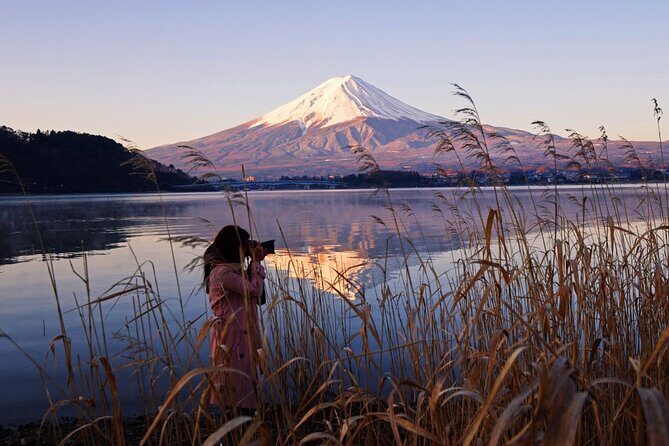
A classic mistake in Japan is trying to cram Mt. Fuji into one day using public transit and hope everything lines up. This is different. You’re in an air-conditioned vehicle with an English-speaking driver/guide, so you spend your energy on seeing Fuji instead of solving bus schedules.
The biggest value of a private tour is control. Yes, there’s a suggested route, but you’re not stuck with someone else’s idea of the perfect photo. If your group wants more time near a viewpoint, or you’d rather swap a stop’s order to dodge crowds, the driver can guide that choice in real time.
Another practical win: this plan mixes viewpoints with activity areas. You’re not just sitting in one place waiting for clouds to behave. You’ll hit the high-access look at Fuji’s peak area, then shift to lakes and parks where you can still enjoy the scenery even if the mountain is partially hidden.
You can also read our reviews of more private tours in Tokyo


Subaru Line 5th Station: the closest car-access look at the summit
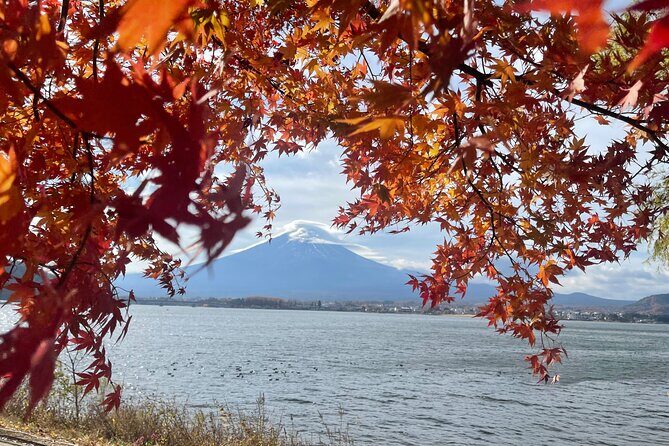
The tour starts with Mt. Fuji Subaru Line 5th Station, at about 2,200 meters (about 30 minutes on site). This is the closest point you can reach by car where the views can feel shockingly near—especially if the day is clear. You also get the “hiking horizon” vibe, since this is a logical place for people gearing up for the climb.
Here’s what to plan for. The road is reached via the Fuji Subaru Line, described as a scenic toll road beginning in Fujikawaguchiko Town. The toll is 2,100 yen, and the fee isn’t included in the tour price. In winter, it can face partial closures due to heavy snow. And during much of the climbing season (July 5 to September 10, 2024), the road is closed to private vehicles, so shuttle buses operate between parking areas at the base and the 5th Station.
So what does this mean for you? If your visit lands in a shoulder or summer period, you may be dealing with a shift in how you reach the station. Either way, the payoff is the same: you’re aiming for that closest, most dramatic perspective of Fuji’s upper region.
Arakurayama Sengen Park and Chureito Pagoda: stairs, shrines, and the iconic angle
After the mountain-height stop, you’ll head to Arakurayama Sengen Park. This is where Mt. Fuji becomes a photo composition. The park includes shinto shrines and the well-known Chureito pagoda viewpoint at the top.
One thing to know before you go: there’s a set of stairs—around 400 steps—to reach the upper lookout. The site also has the meaning layer: the Chureito pagoda was built in memory of soldiers and civilians lost in World War I and II. That makes this stop feel more grounded than a pure sightseeing “look and snap” moment.
The good news: it’s scheduled for about 45 minutes, and the admission is free. That makes it a friendly fit even if your legs are tired from the drive.
Potential drawback: if the day is windy or visibility is poor, the iconic “Fuji + pagoda” view can turn frustratingly gray. This is where having an attentive driver helps—because timing and positioning matter, and your plan already builds in other chances to see Fuji from different elevations later.
Lake Kawaguchiko: where Fuji turns into a water-and-sky scene
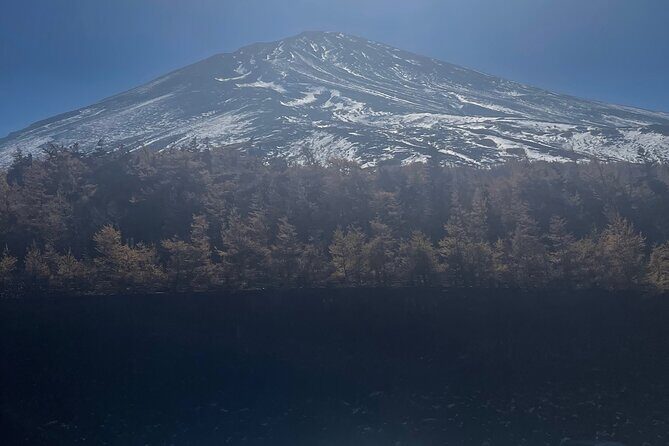
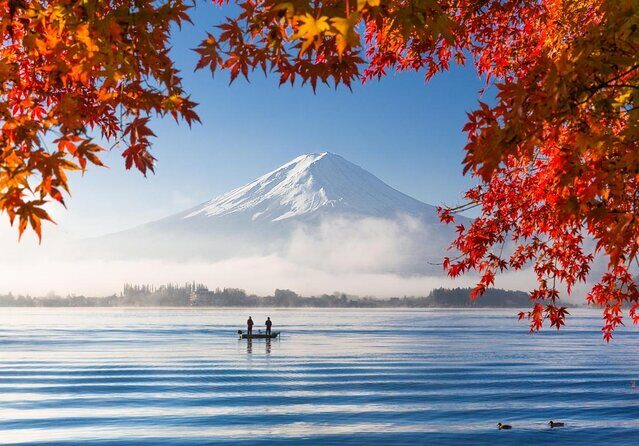
Next comes Lake Kawaguchiko for around 2 hours. This is one of the Fuji Five Lakes, and it’s known for wide views where Fuji can appear framed by the shoreline and the sky above it.
You’ll also have options here that go beyond looking. The plan mentions the Kachi Kachi Ropeway, which lifts you to an observation point near the summit of Mount Tenjo. From there, you can see Lake Kawaguchiko and Mount Fuji together, which is the whole point of coming here—Fuji as part of a bigger panorama, not just a towering wall.
There are also hot spring opportunities in the area, and that’s a smart choice if your group wants to unwind instead of staying in strictly photo mode.
The watch-out: there’s no guarantee Fuji will be fully clear from every angle. Clouds happen. The route’s strength is that it’s not one-view-only. You’re going to keep rolling through lakeside viewpoints, so you’re not banking the whole day on one perfect moment.
Oishi Park: the 350-meter flower path that changes with the season
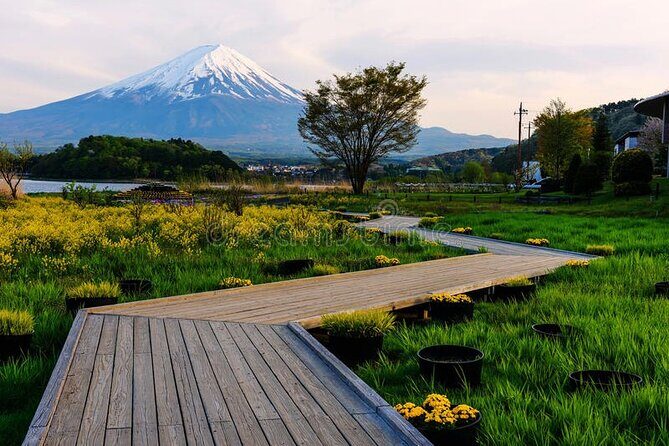
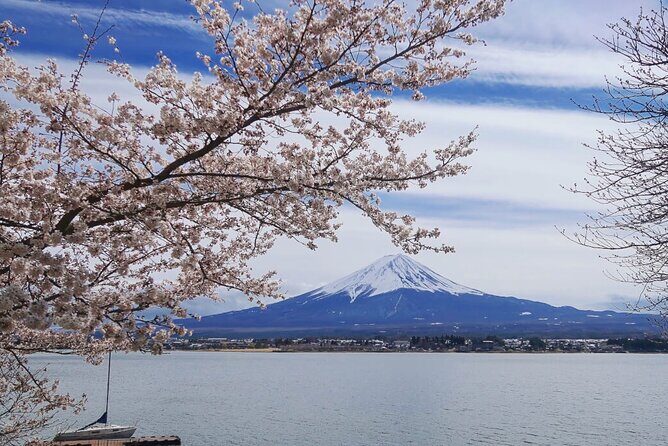
If you like places that feel thoughtfully designed for seasonal color, Oishi Park is a must. It’s on the north shore of Lake Kawaguchiko and gives you Fuji views with a relaxed walking setup: about a 350m walking path lined with plants.
What makes this stop special is that the park’s look changes across the year:
- Early April to late May: moss phlox can spread out like a pink carpet
- Late June to late July: lavender blooms
- Mid to late October: kokia shrubs turn a red autumn tone
The tour schedules this for about 30 minutes, and admission is free, so you’re not stuck committing half a day. You get enough time to walk, take photos, and enjoy the contrast between flower color and Fuji’s shape.
There’s also an activity angle if you want it. The Kawaguchiko Natural Living Center is in the area, where you can enjoy making fruit jam and an all-you-can-eat cherry & blueberry picking course. A café offers specialty blueberry ice cream, which is the kind of low-effort treat that makes the park feel fun instead of just scenic.
The practical consideration: if you tack on picking or jam-making, your timeline will stretch. With a private tour, you can decide what fits your group. If you’re short on time or you’re chasing clear views, sticking to the path and photos may be the best use of that half hour.
A few more Tokyo tours and experiences worth a look

Oshino Hakkai springs: Fuji’s water story, plus the winter Diamond Fuji idea
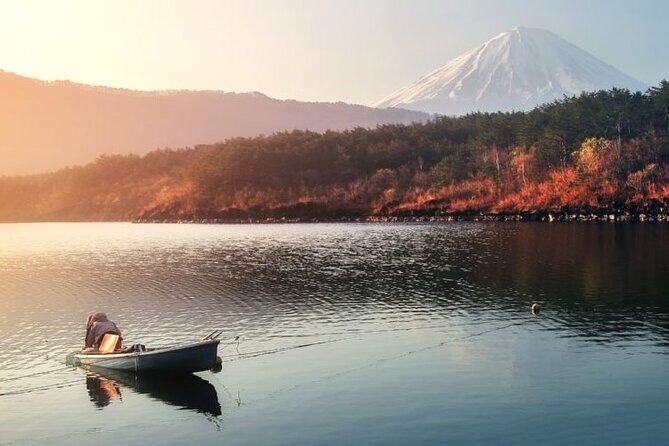
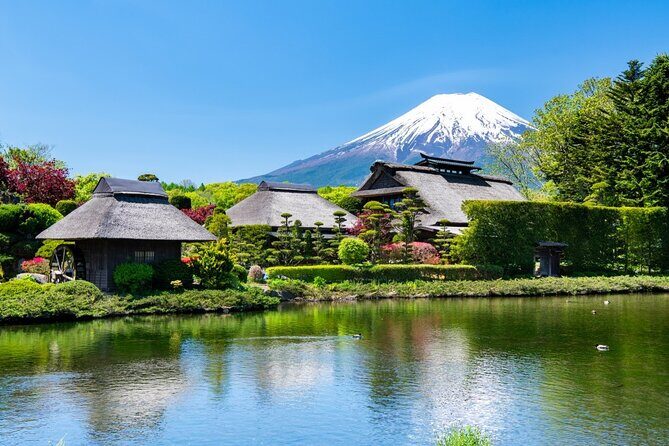
Oshino Hakkai is different from the other stops because it’s about water. You’ll visit the eight springs in Oshino, and the description notes that the aquifer water from Mount Fuji comes up to form these springs. This is also tied to the Mount Fuji World Heritage Site, so it’s more than just a pretty pond area.
The tour time here is about 45 minutes, and admission isn’t listed as included. One highlight mentioned for winter is the Diamond Fuji phenomenon, where the rising or setting sun aligns with Fuji’s peak so the caldera shape looks like it’s cupping the sun. The information says this can only be seen from certain places due to Earth’s position, so you’d want good conditions and correct timing if you’re visiting in winter.
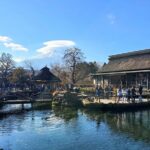
There’s also a small museum feature: the Hannoki Bayashi Shiryokan open-air museum surrounds the largest pond, with a small admission fee. The water at the Waku Pond is described as especially clear and clean.
What I like about this stop for most groups: it gives your eyes a break from high-altitude and lakeside viewpoints. Even if Fuji is partially hidden, the spring area still feels like a complete experience because it’s grounded and human-scaled.
Gotemba Premium Outlets: a simple yes-or-no add-on
Towards the end, there’s an optional stop at Gotemba Premium Outlets. It’s about 1 hour, and it’s for shopping at well-known brands.
This is a place I treat as optional for a reason. If your goal is photos, Fuji time, and local moments, shopping won’t replace those. But if you want practical souvenirs, winter layers, or just a familiar retail break, it can be a nice final reset before heading back to Tokyo.
The best approach: talk it through with your driver in the morning. Private tours work best when you decide early what kind of day you want—scenic and slow, or scenic plus a retail finish.
English-speaking guides make the whole day work
The mechanics of this tour are strong, but the day-to-day quality often comes down to the guide. The consistent theme is that guides like Irfan, Shahzaad, Meebi, Shiro, Malik, and Muneeb focus on two things: clear explanations and real flexibility.
One detail that stands out from the way past days have been described is how some guides manage the balance between talking and guiding. They keep explanations understandable and timed with the experience so you’re not listening for long stretches while doing nothing. Another repeated strength: driving choices that help you avoid the worst traffic and crowds, so you get more chances at clear views.
If you’re the type of traveler who likes knowing what you’re looking at—why this shrine is here, what a viewpoint is best for, how the area is laid out—this kind of guide makes the day more than a checklist.
Price and value: when $464.71 per group actually feels reasonable
The price is $464.71 per group (up to 3), for an 8 to 10 hour day. On paper, that can look pricey compared to public transport. But private Mt. Fuji tours don’t exist in the same category as squeezing into buses.
Here’s the value math that matters most: if you split the cost among three people, the per-person cost can feel far less intimidating. You also gain comfort and time efficiency:
- pickup and drop-off in Tokyo
- highway and toll coverage
- an air-conditioned vehicle
- an English-speaking driver/guide who can reshape the day as needed
You do pay extra for some items. Food isn’t included, and entrance fees for stops (plus the 2,100 yen road fee for 5th Station) aren’t included. But compared to self-planning with multiple transfers, you’re also paying for less stress and more control over your sight time.
If your group includes older travelers, anyone who hates tight transit schedules, or you simply want the day to run without friction, the price becomes easier to justify.
Timing, weather, and how to maximize your odds of a clear Fuji
This experience requires good weather, and that’s not a minor detail. Mt. Fuji can disappear behind clouds, fog, or haze, and your day’s satisfaction depends on visibility.
Your itinerary gives you multiple chances at viewing because it isn’t one single viewpoint. You get:
- a high-access look from the 5th Station
- shrine-and-pagoda framing at Arakurayama
- lakeside panoramas at Lake Kawaguchiko and Oishi Park
- a water setting at Oshino Hakkai
That design is smart. Even when Fuji is shy, the region still offers meaningful scenery and cultural stops. Still, if you’re visiting specifically for the strongest “peak reveal” photos, it helps to come prepared for a reality-check: cloud cover is part of the deal.
A practical tip based on how these areas work: bring some yen for small purchases and places that may not take cards. Since food and some activity fees aren’t included, having cash on hand can save time when you’re deciding on snacks, quick bites, or small admission-related costs.
Who this tour fits best
This tour is a great match if you:
- want a private day without negotiating train times
- care about seeing multiple “faces” of Mt. Fuji in one outing
- prefer flexibility over a rigid group schedule
- have a mix of interests—views, shrines, photo stops, and optional shopping
It may be less ideal if you:
- want a purely budget trip with minimal driving time
- strongly dislike stair walks (Arakurayama has about 400 steps)
- expect every photo to look like a magazine cover no matter the weather
Should you book it?
I’d book this private Mt. Fuji tour if your top priority is a smooth, guided day that hits the major Fuji-area highlights with enough variety to keep things interesting. The value really shows when you split the group price and when you care about how the day is paced. With guides like Irfan and Meebi adding context and flexibility, you’re not just transporting around the region—you’re being guided through it.
The main reason to hesitate is simple: weather. If you’re traveling in a period known for unsettled skies, you’re still likely to enjoy the region, but your favorite “Fuji peak” photos might depend on luck. If that trade-off sounds acceptable, this is a strong way to spend a long day outside Tokyo.
FAQ
How many people can be in a private group for this tour?
The price is listed per group, up to 3 people.
How long is the Mt. Fuji private tour?
It runs about 8 to 10 hours.
Do I get pickup and drop-off in Tokyo?
Yes. Pickup and drop-off in Tokyo are included, along with a meet-and-greet.
Is the tour fully guided in English?
Yes. The driver/guide is listed as English speaking.
Are tickets and entrance fees included?
No. Food and beverages aren’t included, and entrance fees for activities are not included. The 5th Station Fuji Subaru Line fee is also not included.
How much is the 5th Station road fee?
The Fuji Subaru Line (5th Station) admission/road fee is listed as 2,100 yen.
What’s the main purpose of visiting Mt. Fuji Subaru Line 5th Station?
It’s the highest peak area accessible by car (around 2,200m) and it’s one of the closest points to view the top of Mt. Fuji.
Is the tour dependent on weather?
Yes. The experience requires good weather. If it’s canceled due to poor weather, you’ll be offered a different date or a full refund.
Can I cancel for a full refund?
Yes. You can cancel up to 24 hours in advance for a full refund. If you cancel less than 24 hours before the start time, the amount paid is not refunded.