REVIEW · KYOTO
TAIKO, Japanese Drum Experience from Kyoto
Book on Viator →Operated by EE tour · Bookable on Viator
Kyoto has plenty of temples. This one hands you a drum. You get a beginner-friendly taiko lesson (no prior skills needed) with English support from guides like Michiko-san, plus a focused class taught in a small group, where Aoi-san’s demonstration makes the technique click fast. The one real catch: you must arrive on time at Kyoto Station, because if you’re late they won’t be able to wait and you may miss the experience.
I especially liked that the session mixes culture and action in the same 2.5–3 hour block: a short history of taiko overview, then you write on a hachimaki headband, then you play. The price (about $115.62) feels fair when you factor in the instruction, the calligraphy headband, the studio time, and the transfer from Kyoto Station to Takatsuki.
In This Review
- Key things to know before you play taiko in Kyoto
- Kyoto taiko is more than a show: you actually learn the moves
- Getting there: Kyoto Station to Takatsuki takes about 25 minutes total
- First stop at the studio: hachimaki calligraphy and taiko history
- Watching Aoi (or the professional drummer): how the demo teaches you
- Learning taiko fundamentals: posture, technique, and your first rhythm
- Your final performance and the happi + hachimaki photo moment
- Price and what you actually get for about $115.62
- Who should book this Kyoto taiko class (and who might not)
- Quick practical tips so you don’t lose time at Kyoto Station
- Should you book the Kyoto taiko drumming experience?
- FAQ
- FAQ
- How long does the taiko experience take from start to finish?
- Where do I meet for the Kyoto taiko experience?
- Do I need any experience playing drums?
- Will I get to do calligraphy too?
- Is the instruction available in English?
- How do you get from Kyoto Station to the studio?
- How big is the class group?
- Can kids participate?
- What payment is required on the day?
- What if the weather is bad or I need to cancel?
Key things to know before you play taiko in Kyoto
- Small group size (max 15): easier hands-on coaching and time with the instructor.
- No experience required: you’ll get taught step-by-step, tailored to your fitness level.
- Hachimaki calligraphy included: write wishes on a traditional headband before you drum.
- Live professional demonstration: Aoi-san (or similar professional instructor) sets the pace before you start.
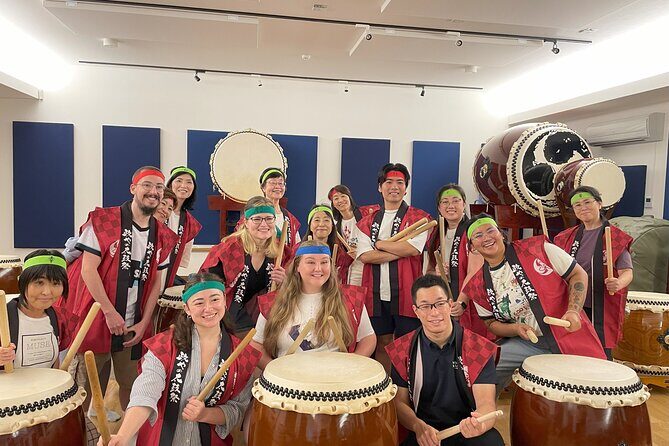
- You finish with a performance + photo: a simple piece with the group, then a commemorative shot in happi and hachimaki.
Kyoto taiko is more than a show: you actually learn the moves
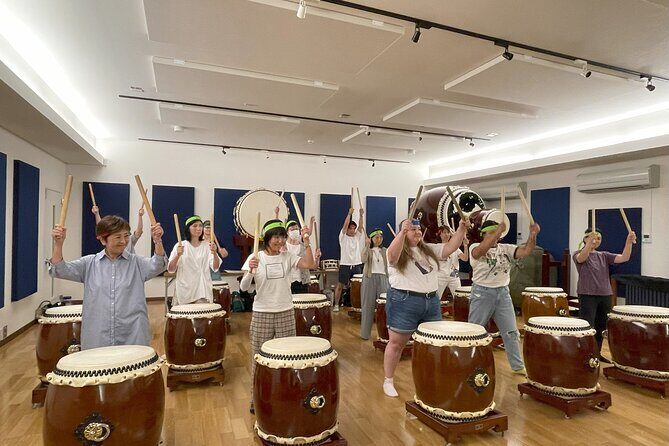
If you want a Kyoto experience that’s not just looking, this fits. You’ll start with a brief explanation of taiko and why drumming matters in Japanese life. Then the day pivots from theory to hands-on practice, which is where most people get hooked fast.
Two parts make this especially satisfying. First, you get structured teaching even if you’ve never touched a drum. The instructor gives basics of movements and techniques, and the pacing adapts to you. Second, the session doesn’t treat the demo as a separate “thing” you watch and forget. Aoi-san’s professional performance helps you understand how power, timing, and posture work before you try it yourself.
The main consideration is time discipline. The meeting point is at Kyoto Station, and they ask you to arrive about 15 minutes early. If you arrive late, you may not be able to participate, and there’s no “hang on while I find you” option.
You can also read our reviews of more tours and experiences in Kyoto.



Getting there: Kyoto Station to Takatsuki takes about 25 minutes total
The meeting point is at Kyoto Station (Higashishiokoji Kamadonocho, Shimogyo Ward). From there, you’ll take a JR train ride for about 12 minutes to Takatsuki Station. After that, it’s a short cab ride (about 10 minutes) to the drum studio area.
A few practical tips matter here:
- If you’re thinking of taxiing directly from Kyoto to the studio, don’t. The tour data warns it takes over an hour and costs more, and traffic can make it worse.
- Kyoto Station is big. If you get disoriented, ask staff for the central exit (not the Shinkansen central exit). It’s an easy mistake to make.
- The full duration you plan for is roughly 2 hours 30 minutes, including transfers. You’ll typically return to Kyoto Station about 2.5 to 3 hours after the start time.
So plan your day like a drummer: give yourself a little margin. Leaving early isn’t recommended because it can disrupt the flow of the class.
First stop at the studio: hachimaki calligraphy and taiko history
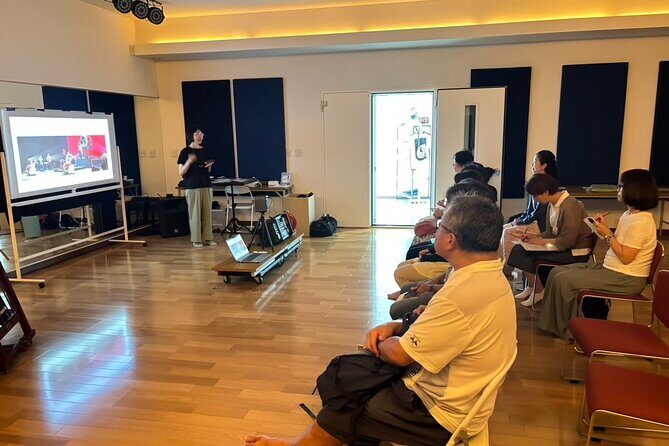
Before you drum, you’ll get a short, guided setup. Expect a quick history lesson about taiko drumming and its cultural importance. This isn’t meant to turn into a lecture; it’s the “why” that gives meaning to the physical training.
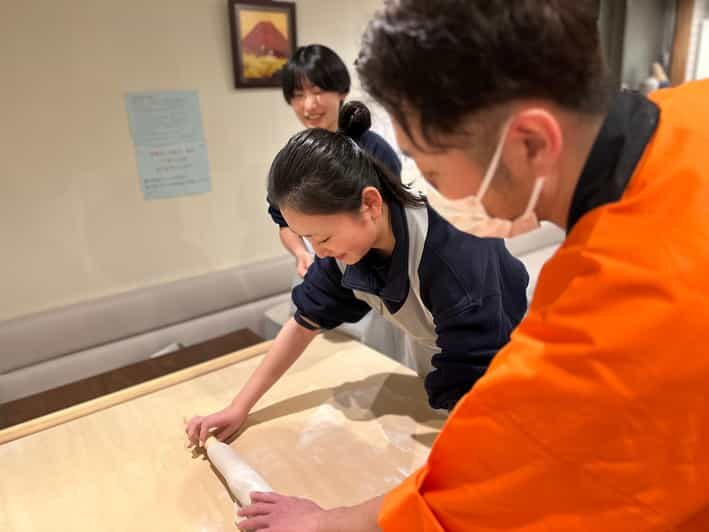
Then comes one of the more fun parts: you’ll try simple calligraphy on a hachimaki. A hachimaki is a traditional headband, and your activity is to write your wishes on it. It’s a small moment, but it helps personalize the experience. And yes, it also makes you feel more like part of the performance cycle, not just an observer.
After that, you’ll watch a powerful taiko demonstration by a professional instructor. If you’ve been to Japan and only stuck to museum-style experiences, this kind of live performance has a different effect. It shows how technique creates sound, not just how sound exists.
Watching Aoi (or the professional drummer): how the demo teaches you
A lot of hands-on tours skip the “show the skill first” step. Here, you get it. The professional demo is there to show you what the rhythms look and feel like in real time.
In the reviews and experience details, Aoi-san (also described as Aoi-sensei) is a common name for the professional instructor leading the music side. You may also encounter other professionals depending on the session, but the structure stays the same: demonstration first, then guided practice.
One review notes something worth keeping in mind: the demo can involve a live drummer while some elements may be supported by recorded accompaniment. That’s still normal for a teaching setup, and the key part is you’ll get a clear sense of posture and how the beats land. The instructor wants you to copy the fundamentals, not just clap along.
Learning taiko fundamentals: posture, technique, and your first rhythm
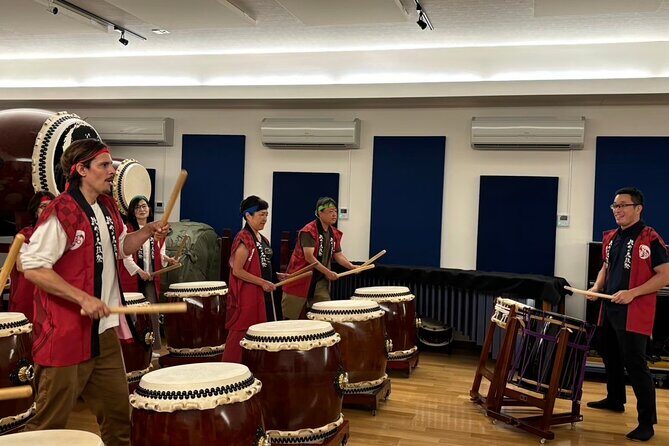
This is the heart of the class. After the demo, a friendly instructor teaches basic movements and techniques. The lesson is tailored to your skill and your fitness level, so beginners aren’t thrown into complicated patterns. If you’ve ever felt self-conscious trying something physical for the first time, this setup helps.
What you’ll practice is a simple foundation: how to hold the drumsticks and how to position your body so the force goes where it should. Taiko is physical. More than one review points out it can feel like a light cardiovascular workout. So treat it like exercise, not like a calm cultural craft.
You’ll then play a simple piece of music with the rest of the group. The goal is participation and progress, not perfection. And because the group cap is 15, you’re not stuck waiting for your turn while the instructor handles everyone one by one.





Your final performance and the happi + hachimaki photo moment
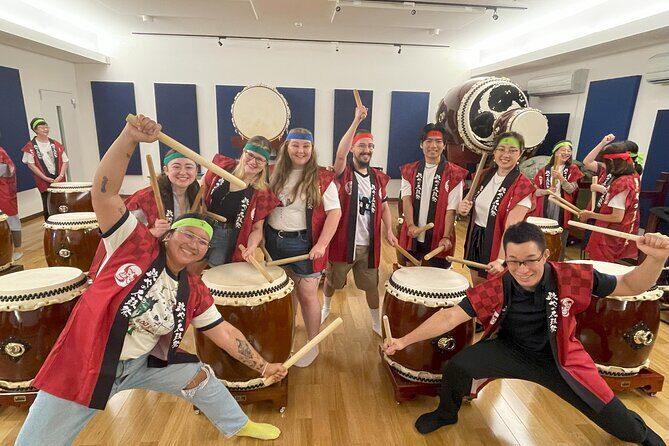
Once you’ve learned enough to join in, you’ll play together. This is where the experience becomes real. You’ll feel the timing as a group, not as an individual trying to figure out the beat alone.
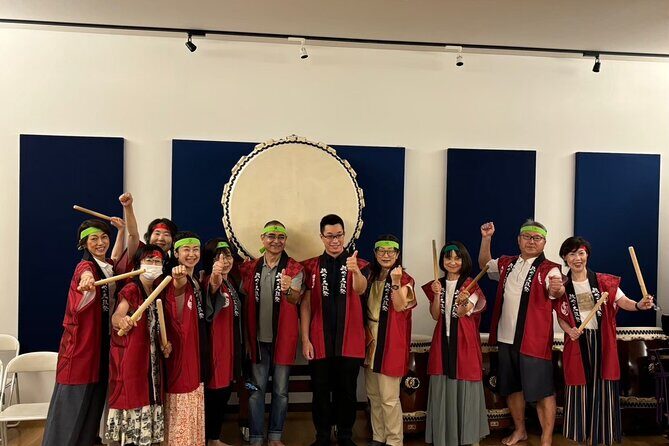
Then you’ll finish with a commemorative photo in traditional costume: a happi and a hachimaki. It’s a fun souvenir because it’s not a “stand here and smile” photo; you’ll have just played, so the costume feels earned. It also makes the whole session feel like a short cultural ceremony rather than a one-off workshop.
Price and what you actually get for about $115.62
At about $115.62 per person, you’re paying for more than a brief drum lesson. The included items cover:
- Taiko instruction with an English-speaking guide and a taiko instructor
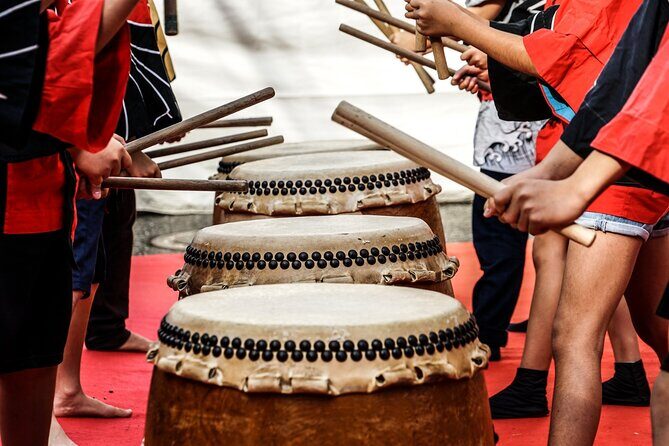
- A taiko (Japanese drum) playing session
- A hachimaki (headband), plus time to do the calligraphy
- Transportation from Kyoto Station: a train to Takatsuki, plus a cab to/from the studio (noted as about 2000 yen per cab when sharing among up to four people)
- One-way ticket to JR Takatsuki Station
There are also two practical money notes:
- Payment at the studio is requested in cash (Japanese yen).
- If you want an observer who isn’t drumming, the cost is listed as 9000 yen per person. Observers must be reported in advance; otherwise, transportation may not be arranged.
For value, here’s the honest math. You’re paying for guided teaching time, a professional demo, a structured group rhythm activity, and the included transfer. If you’re trying to “just watch taiko” in Kyoto, you can find performances. But if you want your own hands on the drum, the price aligns with what you’re getting here.
Who should book this Kyoto taiko class (and who might not)
This experience is a strong fit if you want:
- A hands-on cultural activity instead of another sightseeing stop
- A beginner-friendly lesson where you can follow along step by step
- A structured session with a history intro, calligraphy, drumming practice, and a final group piece
- An opportunity to work with professionals like Aoi-san, plus English-speaking guidance from people such as Michiko-san, Akayo, Akemi, Kumi-san, or Akiko (names vary by session)
It might be less ideal if you hate timing pressure. The tour data is clear: they cannot wait for latecomers because of the train schedule, and late arrival can mean missing participation. Also, children under 7 can’t participate, so plan accordingly for families.
Quick practical tips so you don’t lose time at Kyoto Station
Kyoto Station can derail a plan faster than any subway in the world. Do this and you’ll be fine:
- Show up 15 minutes early at the meeting point.
- Look for the meeting signage near the central exit kiosk area, and if you’re unsure, ask staff for the central exit (not the Shinkansen central exit).
- Keep your phone ready for your mobile ticket.
- Build buffer into your schedule afterward. The return to Kyoto Station is around 2.5 to 3 hours after departure, and timing can shift a bit based on the train timetable.
Should you book the Kyoto taiko drumming experience?
I’d book it if you want one organized, cultural, active experience in Kyoto that teaches you something you can carry home. The combination is hard to beat: taiko basics, a live professional demo, hachimaki calligraphy, and a final group rhythm plus costume photos.
I’d hesitate only if your schedule is tight, you’re often late, or you’re looking for quiet sightseeing with zero physical effort. This is participation-heavy. When you show up on time, you get guided attention in a small group and a real sense of accomplishment when you finish your rhythm together.
FAQ
FAQ
How long does the taiko experience take from start to finish?
It runs about 2 hours 30 minutes total (approx.), including transfers. You can expect to return to Kyoto Station about 2.5 to 3 hours after the start time.
Where do I meet for the Kyoto taiko experience?
The start point is Kyoto Station, at Higashishiokoji Kamadonocho, Shimogyo Ward, Kyoto 600-8216. The activity ends back at the same meeting point.
Do I need any experience playing drums?
No. The lesson is for all levels, and beginners are taught step by step.
Will I get to do calligraphy too?
Yes. You’ll have a chance to try simple calligraphy on a hachimaki headband, writing your wishes.
Is the instruction available in English?
Yes. The guide language offered is English.
How do you get from Kyoto Station to the studio?
You take a JR train for about 12 minutes from Kyoto Station to Takatsuki Station, then a cab ride of about 10 minutes to the studio area.
How big is the class group?
The tour has a maximum of 15 travelers.
Can kids participate?
Children under 7 years old are not allowed to participate.
What payment is required on the day?
Please pay in cash (Japanese yen) at the drum studio on the day of the tour.
What if the weather is bad or I need to cancel?
This experience requires good weather. If it’s canceled due to poor weather, you’ll be offered a different date or a full refund. Cancellations are free up to 24 hours in advance for a full refund.