REVIEW · TOKYO
Experience all of Japanese culture and Japanese food experience classes “origami, udon, Japanese food, green tea, calligraphy” in 4 hours
Book on Viator →Operated by homecoming TAKA,Tokyo · Bookable on Viator
A Tokyo meal in someone’s real home. This 4-hour Japanese food and culture class gives you hands-on practice—think fresh udon from scratch plus a full lunch of sushi and gyoza—without feeling staged. I also like the artistic add-ons: origami and Keiko’s name calligraphy on colored paper. One thing to keep in mind is it’s a compact schedule, so you’ll move from craft to cooking to tea without lots of downtime.
The best part is the setup: you meet a host at JR Omori Station and walk into a quiet residential neighborhood before the lesson starts. That home setting changes everything. You’re not just watching techniques—you’re working with the ingredients, tasting as you go, and having conversation while you eat.
If you’re coming for only one thing (say, sushi or tea), this might feel like a lot to fit in. But if you want a sampler of Japan that still feels practical and real, this format is hard to beat.
In This Review
- Quick hits: what makes this 4-hour homecoming class special
- A Home-Cooked Tokyo Day in Omori: What You Actually Learn
- Meeting Keiko and Taka: The 10:30 Omori Start and Easy Walk
- Origami Crane to Name Calligraphy: The Arts That Stick With You
- The Hands-On Udon Lesson: From Materials to First Bite
- Sushi, Gyoza, and Tempura Lunch: How the Meal Flows
- Matcha and Japanese Sweets After Lunch: The Calm Finish
- Price, Drinks, and Value: Why $92.50 Feels Fair
- Who This 4-Hour Homecoming Class Is Best For
- Small Logistics You Should Know (Without Making It Boring)
- Should You Book This Experience?
- FAQ
- What time and where does the experience start?
- What happens during the 4-hour experience?
- Is lunch included, and are drinks included?
- Is the tour private?
- Can vegetarians or vegans eat the food?
- What souvenir do I get at the end?
Quick hits: what makes this 4-hour homecoming class special
- Origami first: you fold a crane right as the day begins, not at the end.
- Udon making hands-on: you work through materials to completion, step-by-step.
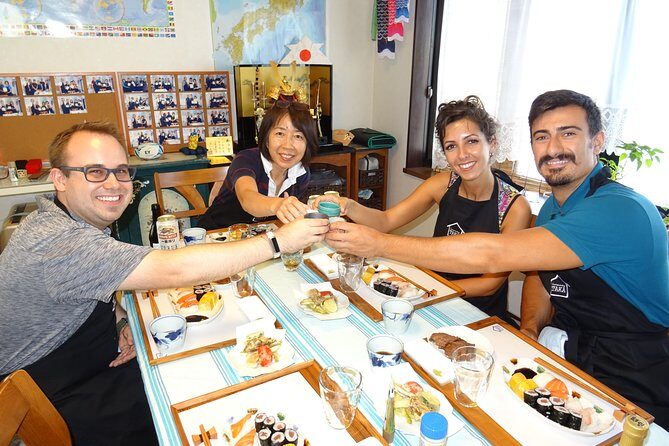
- Lunch you actually cook: sushi and gyoza are the main items, with additional small plates served by the host’s wife.
- Matcha + sweets after the meal: you make matcha and taste it with local-style Japanese sweets.
- Free drinks during lunch: options include sake, beer, shochu, and soft drinks.
- A calligraphy souvenir: Keiko writes your name in calligraphy on colored paper to take home.
A Home-Cooked Tokyo Day in Omori: What You Actually Learn
This experience is built around daily rhythms, not a checklist of photo stops. You’ll do crafts, cook, and eat in the same space, in the same time block, the way a home lesson would unfold.
I like that it hits both sides of Japanese culture: the creative parts (origami and calligraphy) and the food parts (udon, sushi, gyoza, tempura, matcha). The course design matters because you don’t just hear about traditions—you repeat them with your own hands.
You should also know the tone: this is a private session for your group. That usually means fewer awkward interruptions and more time for questions. It also means the “show” is more personal, since it’s not built for a big crowd.
You can also read our reviews of more food & drink experiences in Tokyo


Meeting Keiko and Taka: The 10:30 Omori Start and Easy Walk
You start at JR Omori Station at 10:30 am. Meet at the central exit, and look for your host carrying a bag with the homecoming TAKA logo.
From there, you’ll walk about eight minutes to the house. The route passes a shrine and then goes through a quiet residential area. That little walk is not just logistics. It’s a simple reminder that Tokyo life isn’t only train stations and neon signs.
Because this is in a neighborhood home, arrive on time and go with the flow. You’ll be able to settle into the day once you’re inside, but the start depends on that meeting spot.
Origami Crane to Name Calligraphy: The Arts That Stick With You
Origami kicks things off. You fold a crane, and you do it as part of the day, before you start handling food. That order feels smart because it gets you focused and calm, like a warm-up.
Then you end with calligraphy. Keiko writes your name in calligraphy on colored paper as a souvenir. This is one of those touches that sounds small, but it’s the kind of memory you can actually keep.
If you like cultural activities that don’t require fancy equipment, both crafts are a good match. You can take them home and show friends later without needing special storage or ingredients.
The Hands-On Udon Lesson: From Materials to First Bite
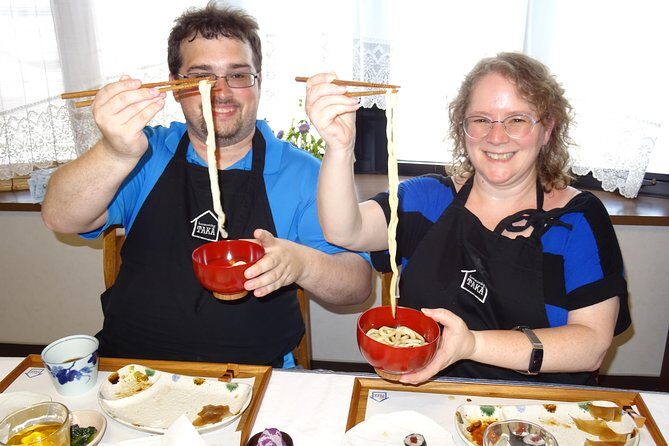
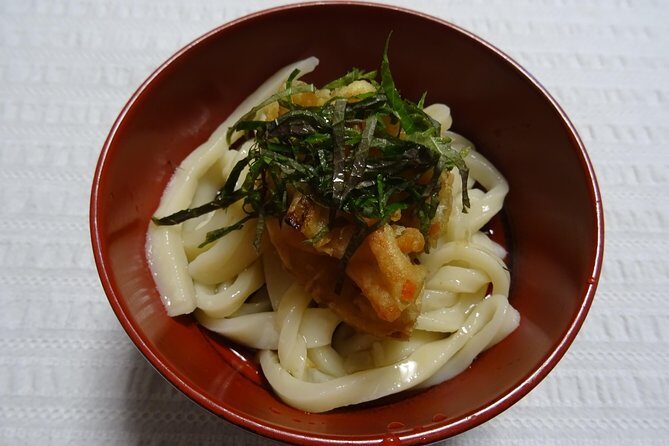
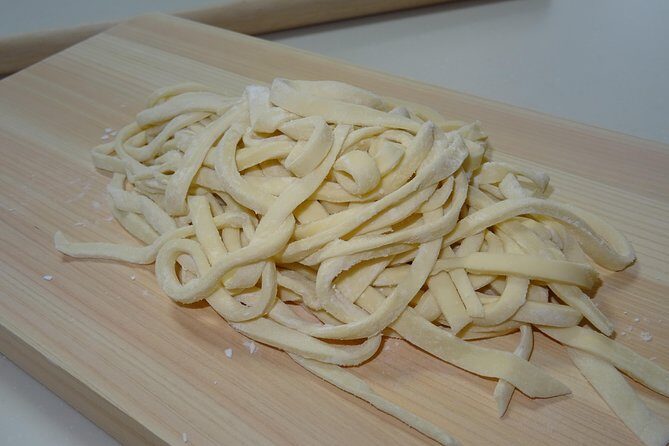
Next comes the udon lesson: you make handmade noodles, from materials to completion. You’re not just mixing dough in theory. The structure here is hands-on, and yes, part of the process includes stepping on the material.
That detail matters. In noodle making, pressure and timing change the texture. Getting that physical feedback is exactly how you understand what you’re tasting later.
This part also tends to be the most memorable for people who usually eat noodles and move on. When you build the noodles yourself, you notice the difference in chew and thickness. It turns lunch into a mini lesson instead of just a meal.
The course includes an apron, which helps a lot. Food days in a home can get messy, and you’ll be glad you’re covered.
Sushi, Gyoza, and Tempura Lunch: How the Meal Flows
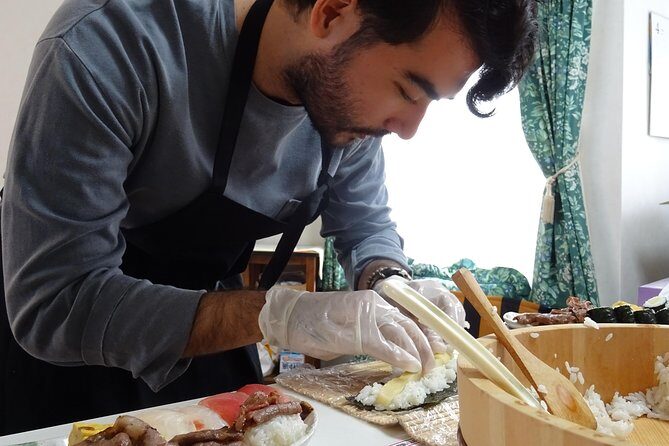
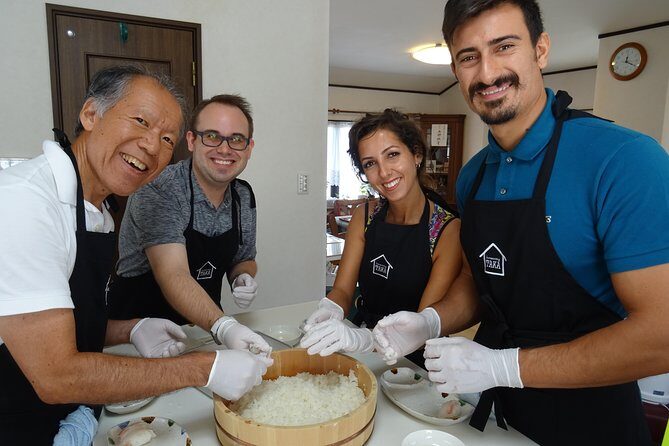
Lunch is the main event. You’ll cook sushi and gyoza together as the core items. In addition, the host’s wife serves Japanese small plates, so you’re not eating just one style of food—you’re getting a broader spread.
Drinks are free during the meal. Options include sake, beer, shochu, and soft drinks. Even if alcohol isn’t your priority, having the option makes the meal feel more like a real home lunch.
Also, the tempura mention is important: the experience includes cooking tempura as part of the day. So you don’t just learn “Japanese food.” You get both comfort-food staples (noodles, dumplings) and crisp-fried textures (tempura).
A key advantage of cooking at home is pacing. You can ask questions while you’re working, and the hosts can adjust if you’re slow or you’re quick. In a packed restaurant class, you often lose that flexibility.
One more practical note: if you’re vegetarian or vegan, the experience can still work. The information provided says you can enjoy all dishes with different ingredients. That’s a big deal, because it removes the usual worry of showing up and eating only side dishes.
A few more Tokyo tours and experiences worth a look




Matcha and Japanese Sweets After Lunch: The Calm Finish
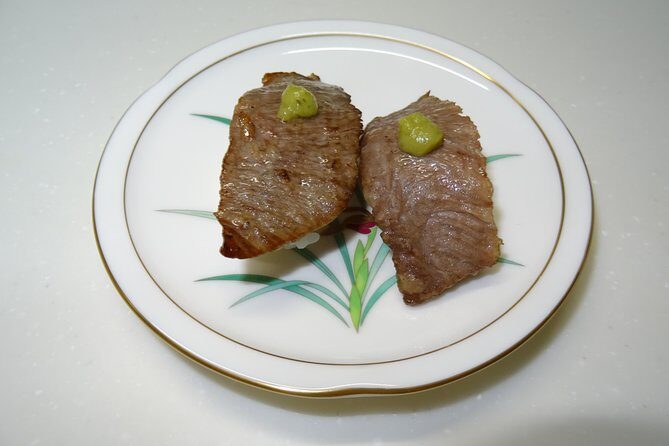
After the meal, you shift to tea. You’ll make matcha green tea together, then taste it with Japanese sweets.
This portion works like a landing step. When you’ve spent hours with dough and frying, matcha is a nice reset—bitter, earthy, and focused. Pairing it with sweets is classic, and the structure keeps the day from feeling like pure cooking labor.
The best part is that the matcha isn’t just poured. You do it. That small action helps you understand why matcha is treated seriously in Japan, not as a random drink add-on.
And because this is a home setting, you’ll likely have conversation while you enjoy it. That matters more than people expect, because the food techniques stick better when you connect them to stories.
Price, Drinks, and Value: Why $92.50 Feels Fair
At $92.50 per person for about four hours, you’re paying for a full lesson package: multiple cooking classes, two cultural crafts, and a keepsake. The price also includes lunch and free drinks, including alcohol options like sake and shochu.
Here’s what makes the value feel more balanced than many “food tours”:
- You’re cooking several items yourself, not just tasting.
- You take home calligraphy on colored paper.
- You get both savory food (udon, sushi, gyoza, tempura) and a tea + sweets finish.
- Drinks are included, which changes the overall experience tone at lunch.
If you compare it to eating out plus separate classes, the math usually works better here because the instruction is bundled. And because it’s private to your group, you don’t have to share instruction time with strangers.
If you’re on a strict schedule, four hours can still be short for learning everything perfectly. But for most visitors, this is the sweet spot: enough variety to understand Japanese food culture, not so long that you feel drained.
Who This 4-Hour Homecoming Class Is Best For
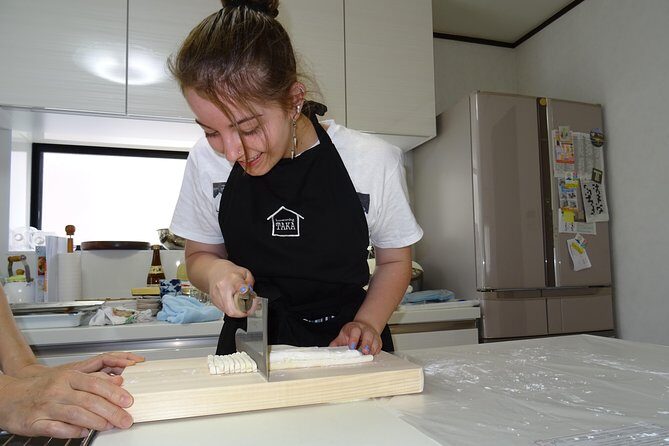
This class is a strong fit if you want Japan through daily life. If you’re tired of chasing only landmarks and want something that feels like Japanese hospitality, this is the style.
It’s also a good choice for families. The information you provided includes examples of participation by children and teens, and the way the hosts interact is described as engaging across ages. If your kids get restless during long tours, having different activities—origami, noodles, sushi, tea, calligraphy—keeps things moving.
Solo travelers can fit too, since conversation is part of the experience. You still cook and eat as your group, but you’re not stuck doing everything in silence.
It may not be ideal if you want only one focused theme. If your dream is solely udon perfection, you might feel like you’re splitting time. But if you want a “taste of many skills” day, the variety is the point.
Small Logistics You Should Know (Without Making It Boring)
The meeting point is Omori Station, central exit, at 10:30 am. You walk about eight minutes afterward, through a shrine and residential streets.
The activity ends back at the meeting point, so you’re not left figuring out how to get home after lunch and tea. You’ll have time in the afternoon for the rest of your Tokyo day.
Also, you’ll want to plan for home-style cooking. You’ll wear an apron, but you should still treat it like a hands-on class. If you’re sensitive about mess, wear clothes you don’t mind getting noodle or sauce crumbs on.
Should You Book This Experience?
Book it if you want Japanese culture that feels personal, not performative. I’d especially recommend it if you care about food technique—handmade noodles, sushi you assemble, and tempura you cook—because that’s where the learning becomes real.
Skip it if your priority is a deep, step-by-step mastery of just one dish. This format is intentionally broad: craft early, cook during lunch, tea to finish, and calligraphy as the closing souvenir.
If you’re traveling with a group, the private setup makes it easier to talk, ask questions, and keep the day comfortable. And if you’re vegetarian or vegan, the experience is designed to accommodate you with different ingredients.
If you’re looking for a Tokyo highlight that doesn’t feel like a production, this homecoming class is one of the better bets.
FAQ
What time and where does the experience start?
You meet at the central exit of JR Omori Station at 10:30 am. The guide will be looking for you with a bag that has the homecoming TAKA logo.
What happens during the 4-hour experience?
You’ll do origami, make handmade udon noodles, cook Japanese dishes including sushi and gyoza (and also tempura), make matcha with Japanese sweets, and end with calligraphy where Keiko writes your name on colored paper.
Is lunch included, and are drinks included?
Yes. Lunch is included, and drinks are free. Alcohol options listed include sake, beer, and shochu, plus soft drinks.
Is the tour private?
Yes. This is a private tour/activity, so only your group participates.
Can vegetarians or vegans eat the food?
Yes. Vegetarians and vegans can enjoy all dishes with different ingredients.
What souvenir do I get at the end?
Keiko writes your name in calligraphy on colored paper, and you take it home as a souvenir.