REVIEW · SHIZUOKA
Mt.Fuji area Tour from Shimizu Port / Van Taxi
Book on Viator →Operated by Local Travel Partners,Inc · Bookable on Viator
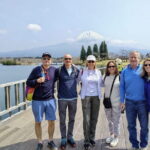
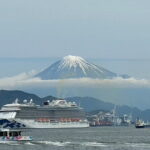
Fuji views can be shockingly close to the port. I like that this private jumbo-taxi tour keeps a tight 5-hour rhythm for cruise schedules, and I really like the English interpretation from a nationally certified guide who can explain what you’re seeing in plain, useful terms. You’ll hit three classic Fuji-related stops—Lake Tanuki, Shiraito Falls (with Otodome Falls nearby), and Fujisan Hongu Sengen Taisha—while getting plenty of time for photos.
One thing to plan around: the experience depends on weather. If it’s cloudy or rainy, you might get dramatic scenery instead of a crisp Mount Fuji silhouette.
In This Review
- Key things to know before you go
- Meeting at Shimizu Marine Terminal: the 5-hour game plan
- The value math: paying for privacy (and not missing the highlights)
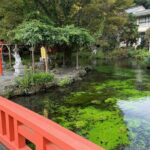
- Lake Tanuki: Fuji photos with a calmer rhythm
- Shiraito Falls and Otodome Falls: the water that’s part of Fuji’s story
- Fujisan Hongu Sengen Taisha: the shrine that grew into 1,300+
- The guide and driver factor: why the ride feels like part of the tour
- Accessibility that’s actually built in (not tacked on)
- When Mount Fuji shows up—and when it doesn’t
- Lunch timing: keep it simple
- Should you book this Mt. Fuji shore excursion from Shimizu Port?
- FAQ
- FAQ
- How long is the tour?
- Is pickup and return transportation included from Shimizu Port?
- What stops are included on the tour?
- Is there wheelchair access at all the destinations?
- Do I pay for admission at the stops?
- What is included in the tour price, and is lunch included?
- Is this a private tour?
- What happens if the weather is poor?
Key things to know before you go
- Private group up to 8: less waiting, more control of your pace during the 5-hour window
- Wheelchair accessible everywhere: the tour is designed so you can visit all three stops
- Two free waterfall/shrine experiences: Shiraito Falls and Fujisan Hongu Sengen Taisha both have free admission
- Shimizu Port round-trip included: pickup and return are built into the schedule
- Lake Tanuki for Fuji photos: a popular photographer stop with a calmer feel than Lake Kawaguchi
Meeting at Shimizu Marine Terminal: the 5-hour game plan
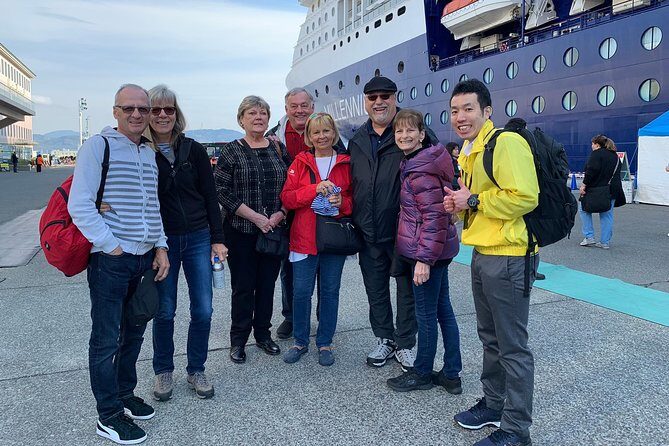
This is built specifically for people docked at Shimizu Port. The start point is Shimizu Marine Terminal (Hinodechō area, Shimizu Ward), and the tour ends back at the same place. That matters because shore excursions live or die by timing, and you’re not spending extra hours figuring out how to get back to your ship.
The tour runs about 5 hours, using a jumbo taxi (private transportation). Within that window, you get three stops with set visiting times: Lake Tanuki (about 40 minutes), Shiraito Falls (about 40 minutes), and Fujisan Hongu Sengen Taisha Shrine (about 30 minutes). In other words, it’s not a slow “wander all day” trip. It’s the kind of schedule that gets you the good stuff without turning your cruise day into a nap-fest.
Booking is often done months ahead (the average booking lead time is 142 days). If you’re traveling in peak cruise season or you want a specific day of the week, I’d treat that as a hint to lock in early.
You can also read our reviews of more tours and experiences in Shizuoka.
The value math: paying for privacy (and not missing the highlights)
The price is listed as $924.72 per group, for up to 8 people. If you fill the vehicle with a full group, that’s roughly $115 per person. If you’re only two people, it works out closer to $462 per person—not cheap, but you’re buying back the stuff tours often steal from you: waiting, transfers, and lineup stress.
What’s included is a lot of the “annoying extras” that can otherwise inflate the real cost:
- an English-speaking guide
- private transportation
- parking fees
- highway tolls
- the return trip to Shimizu Port
- mobile ticket for the day
Lunch isn’t included, so you’ll either skip it or grab something before/after depending on what time your ship sails. For a 5-hour outing with three fixed stops, I recommend traveling ready for the “snack gap” rather than expecting a sit-down meal.
Lake Tanuki: Fuji photos with a calmer rhythm
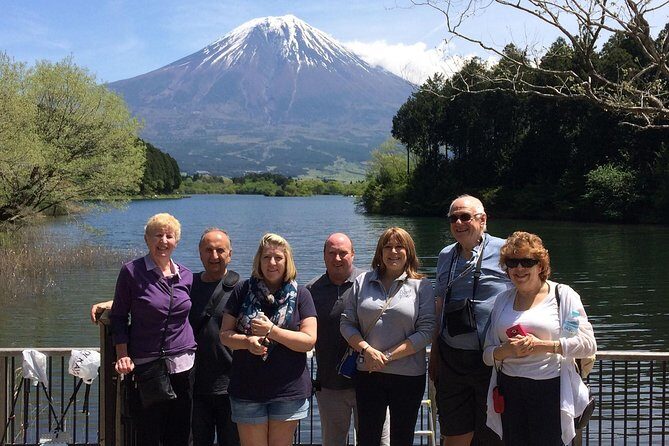
Stop one is Lake Tanuki, and it’s known as a favorite photo spot for Mount Fuji. The big selling point here is that it’s not the same busy, tourist-heavy vibe you can get at more famous lakes. You’re still in a classic Fuji setting—open water, strong sightlines, and that “is Fuji going to show up today?” feeling—but the atmosphere tends to feel more relaxed.
You’ll get about 40 minutes here, and that’s enough time to:
- walk to your preferred viewpoint
- shoot photos without feeling like you’re on a conveyor belt
- take in the lake scenery slowly
Accessibility is a major plus. This tour states all destinations are wheelchair accessible, and Lake Tanuki is part of that. I also like that it’s free admission, so you’re not losing sightseeing time to ticket lines.
One practical tip: if Mount Fuji appears through the clouds, don’t wait for the “perfect moment.” Take a few shots early, then keep exploring so you still enjoy the stop even if the sky changes.
Shiraito Falls and Otodome Falls: the water that’s part of Fuji’s story
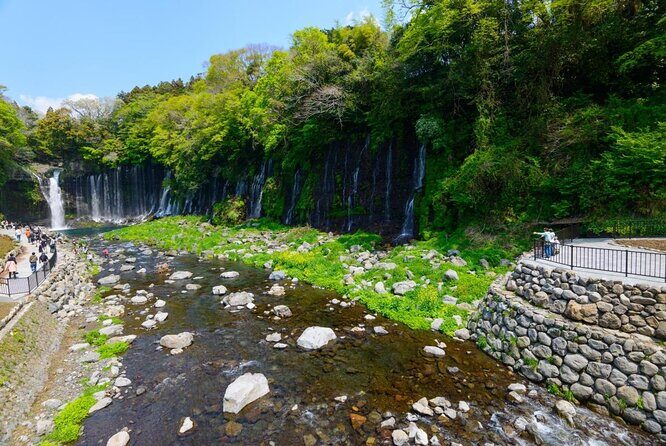
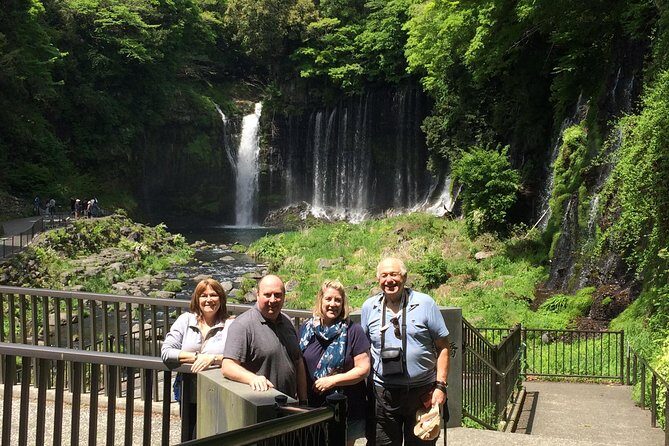
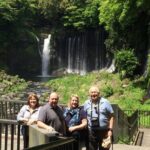
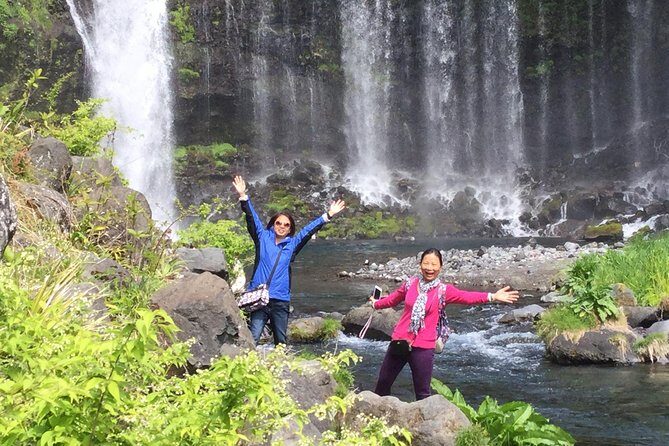
Next up is Shiraito Falls, which is connected to the Mount Fuji World Heritage theme. These falls are famous in Japan, and the format here is efficient: you can visit Shiraito Falls and Otodome Falls because they’re very close together.
Expect about 40 minutes at this stop, also with free admission. The tour frames these falls around the idea of Mount Fuji spring water, which is exactly the kind of detail that makes the visit feel more than just pretty scenery. You’re not only looking at water; you’re seeing a place shaped by the Fuji region’s natural water cycle.
What I like about this stop for cruise passengers: it’s a “high payoff per minute” location. Even in less-than-perfect light, moving water tends to photograph well, and there’s always something changing. If you’re traveling with kids or anyone who gets restless in long drives, this is a good place to reset their attention.
Possible drawback to watch for: if it’s raining or icy, the area may be slippery and visibility can drop. The tour requires good weather, so if conditions are rough, you might get less Fuji in the frame and more focus on the falls themselves.
Fujisan Hongu Sengen Taisha: the shrine that grew into 1,300+
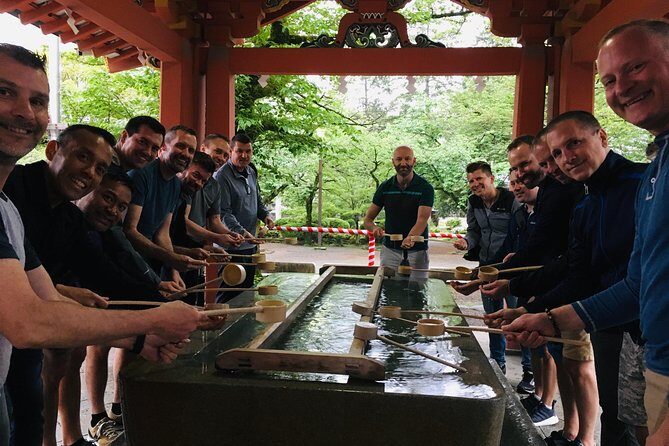
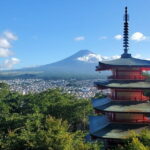
The final stop is Fujisan Hongu Sengen Taisha Shrine, also tied to the Mount Fuji World Heritage story. This shrine is presented as the main shrine for the Sengen worship system across the Suruga area—specifically, it’s the foremost shrine over 1,300 Sengen Shrines in Japan.
Why this stop is worth your time: it connects the mountain’s presence to Japanese heritage. The shrine’s origin is practical, too. It was originally built in the 9th century for protection from volcanic eruptions. That’s not just religious flavor text. It helps you understand why Fuji inspires worship: people historically lived with the mountain as both a source of life and a force to respect.
You’ll have about 30 minutes, with free admission. That shorter time works well here because:
- you get the key spiritual and historical context
- you don’t burn your cruise excursion sitting through something that isn’t designed for “hour-long lingering”
- you can still return to the ship with buffer
In a country where shrines can be intensely detailed, a good English guide makes a big difference. In past tours on this route, guides like Nobuko and Hiroko have brought explanations to life with visual aids—so even if you’re not the type to read every sign, you’ll still walk away knowing what mattered and why.
The guide and driver factor: why the ride feels like part of the tour
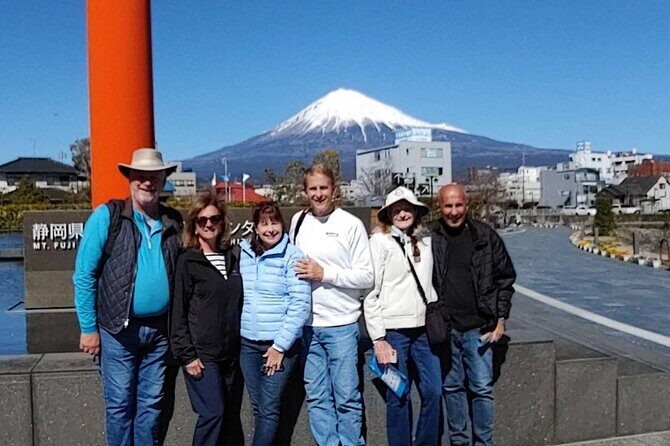
A tour like this lives or dies by communication, and this one is built around an English-speaking guide. Several different guides are reported in the experience history—names like Miyuki, Nobuko, Hero, Takako, Michiko, Roger, and Hiroko appear across groups.
Here’s what tends to make the difference in a good day:
- Clear, steady narration so you’re not just staring out the window
- Helpful context at each stop, not just surface-level “this is pretty”
- Extra attention to the group’s needs, including kids and accessibility
Some guides have been noted for going beyond basic explanations. For example, Miyuki has reportedly used visual displays and even origami folding to keep the day engaging. Others have used stories or interactive touches like quizzes or music during the drive. That’s not required for a classic Fuji day, but it turns the travel time into something you’ll remember.
Drivers matter too because the vehicle is your mobility link between stops. In at least one case, staff provided a foot stool to make it easier to get into the van—small detail, big relief if you’re using a wheelchair or have mobility needs. And when the vehicle timing is smooth, you feel less rushed at the viewpoints.
Accessibility that’s actually built in (not tacked on)
This tour explicitly states that all destinations are accessible via wheelchair. That’s a big deal, because “wheelchair friendly” sometimes means “we’ll try.” Here, accessibility is part of the plan.
On top of that, the experience is tailored for people on a cruise schedule. Private transportation means you’re less likely to get stuck waiting on public routes or navigating transfers with a tight ship deadline.
If you’re bringing a wheelchair, ask yourself what you’ll need for a 5-hour day: time to move between viewpoints, places to pause, and comfort during the drive. This tour’s fixed stop durations suggest a pacing that can work well for many mobility needs.
When Mount Fuji shows up—and when it doesn’t
Weather control is the main wildcard in any Fuji plan. The experience notes that it requires good weather, and the reality is simple: if it’s cloudy, you may not get a clear silhouette of Mount Fuji from Lake Tanuki.
Still, the itinerary doesn’t collapse if Fuji disappears. Lake Tanuki remains a calm lakeside photo area, Shiraito Falls remains a top waterfall stop, and the shrine remains meaningful whether the sky is clear or not. One group response specifically mentions the day being cloudy and Fuji being covered, yet still praising the guide and driver for handling the experience well.
If your goal is “I must photograph Mount Fuji,” build in flexibility:
- prioritize shooting early at Lake Tanuki
- don’t assume you’ll get another clear moment later
- plan to enjoy the places even if the mountain stays hidden
Lunch timing: keep it simple
Lunch isn’t included. With 40 minutes and 30 minutes at each stop, there isn’t room described for a sit-down meal. Your best approach is usually one of these:
- eat before the tour starts (if your ship schedule allows)
- plan a snack during the day and handle a real meal after you return
If you do have dietary needs, bring them up directly when you confirm your day plan with the operator, since the tour is designed around sightseeing stops rather than restaurant breaks.
Should you book this Mt. Fuji shore excursion from Shimizu Port?
I think this is a strong choice if you want a clean, efficient Fuji day without hassle. It fits especially well if you:
- are docked at Shimizu Port and need a reliable return to the ship
- want a private group experience (up to 8) with an English guide
- care about wheelchair accessibility across all key stops
- like photo time at Lake Tanuki plus a classic waterfall stop and a heritage shrine
I’d reconsider if you:
- need a long, unstructured day with lots of free wandering
- are very weather-dependent and get frustrated when mountains vanish behind clouds
- expect deep, hour-by-hour narrative on the long drive segments (some guide styles are more active than others)
FAQ
FAQ
How long is the tour?
The tour runs about 5 hours.
Is pickup and return transportation included from Shimizu Port?
Yes. Return transportation from Shimizu Port is included, and the tour ends back at the meeting point (Shimizu Marine Terminal).
What stops are included on the tour?
You’ll visit Lake Tanuki, Shiraito Falls (with Otodome Falls nearby), and Fujisan Hongu Sengen Taisha Shrine.
Is there wheelchair access at all the destinations?
Yes. The tour states that all destinations are accessible via wheelchair.
Do I pay for admission at the stops?
Admission is listed as free for Lake Tanuki, Shiraito Falls, and Fujisan Hongu Sengen Taisha Shrine.
What is included in the tour price, and is lunch included?
The price includes private transportation, an English-speaking guide, parking fees, and highway tolls. Lunch is not included.
Is this a private tour?
Yes. It’s private, and only your group participates.
What happens if the weather is poor?
The experience requires good weather. If it’s canceled due to poor weather, you’ll be offered a different date or a full refund.