REVIEW · TOKYO
Tokyo City Tour by Private Car & English guide
Book on Viator →Operated by Dream Tours Japan · Bookable on Viator
Tokyo’s highlights hit harder with a private driver. This Tokyo City Tour by Private Car & English guide strings together icons like Senso-ji, Skytree, Meiji Jingu, Tsukiji, and Shibuya with an English-speaking guide like Hadi, all while you ride in an air-conditioned vehicle. You’re not stuck juggling trains, transfers, and station exits all day.
What I like most is the day feels built for real people: you get a clear route, enough time at each stop, and you can still breathe between attractions. Guides including Zubi and Ali are the kind who time stops so you’re not always arriving right on top of the biggest crowds, and they’re ready with practical help like pointing you to the right places and even assisting with photos.
One drawback to plan around: the Skytree and Tokyo Tower entrance tickets cost extra, and you must choose one option. Also, while the tour is offered with an English guide, the clarity of explanations can vary a bit by guide.
In This Review
- Key highlights at a glance
- Why a private car tour makes Tokyo feel manageable in one day
- How the 8-9 hour route is paced: temple streets, towers, and Shibuya
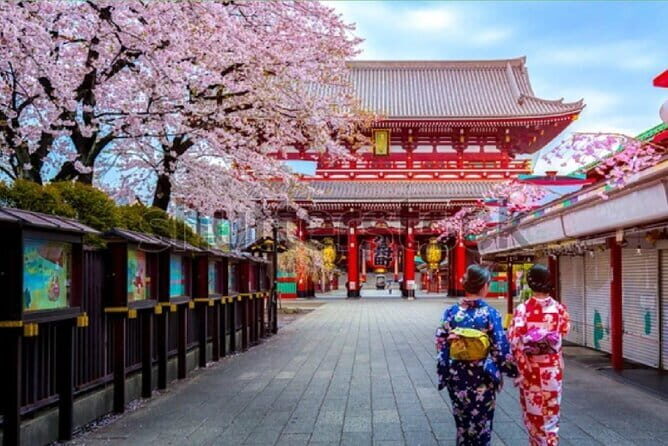
- Entering Senso-ji Temple and Nakamise’s 250 meters of snacks
- Timing tip
- Skytree vs Tokyo Tower: picking one skyline and budgeting for tickets
- Practical value
- Meiji Jingu’s shrine forest and why it slows the day down
- What to do in your hour
- Tsukiji Outer Market’s street-food rhythm (and what to plan for lunch)
- Lunch strategy for real life
- Odaiba and Shibuya Crossing: modern Tokyo without the train squeeze
- Quick photo advice
- East Gardens of the Imperial Palace and Tokyo Tower as optional add-ons
- How to choose between optional stops
- Price and value: what $445 buys you (and what it doesn’t)
- Guide quality, English, and how to get the most out of the day
- One consideration
- Who this tour fits best (and who might prefer something else)
- Should you book this private Tokyo city tour?
- FAQ
- FAQ
- How many people can join this tour?
- How long is the Tokyo City Tour by Private Car?
- Is pickup included?
- Is there a guide, and is it in English?
- Are the tower entrance fees included?
- Is lunch included?
- What’s included in the tour price besides the guide?
- Is free cancellation available?
Key highlights at a glance
- Private AC transportation: skip packed trains with door-to-attraction comfort
- English guide support: helpful explanations and on-the-ground assistance
- Classic Tokyo mix: temple streets, shrine forest, fish market energy, and skyline views
- Skytree vs Tokyo Tower choice: you’ll pay tower entry separately
- Stops that feel spread out: Asakusa → palace area → bay → Shibuya without the scramble
Why a private car tour makes Tokyo feel manageable in one day
Tokyo is big. Like, “I hope I chose the right platform” big. This private-car format matters because it cuts out the heavy lift of navigating the city’s rail web while you’re also trying to enjoy temples, markets, and skyline spots.
You’ll travel in an air-conditioned vehicle and your group stays together the whole time. That’s a comfort upgrade on hot, humid days, and it also helps if anyone in your party moves a little slower than the rest. Instead of spending your energy on transit math, you get to spend it on the sights.
The tour is designed for a full day—about 8 to 9 hours—with a practical mix of fast photo stops and longer wandering time. It’s a good fit when you want a broad “Tokyo greatest hits” day without turning it into a full-time logistics job.
You can also read our reviews of more guided tours in Tokyo

How the 8-9 hour route is paced: temple streets, towers, and Shibuya
The itinerary is structured around locations that are naturally different—so the day doesn’t blur into one long sightseeing loop. You start in the old Tokyo mood of Asakusa, then you move toward shrine grounds, the market area, and finally modern Tokyo neighborhoods like Odaiba and Shibuya.
Typical stop lengths are generous enough to actually do something at each place. For example, Senso-ji gets a full hour, Nakamise Shopping Street gets about 30 minutes, and then you get another hour at Skytree and Meiji Jingu. Later, Tsukiji Outer Market is given about an hour too, which is just enough time to snack and walk without rushing.
The optional segments—East Gardens of the Imperial Palace and Tokyo Tower—give you flexibility based on your interests. If your group loves history and gardens, you’ll likely enjoy the palace grounds. If your group is more into iconic Tokyo views than museum-style walking, you can swap toward the tower option you choose.
Entering Senso-ji Temple and Nakamise’s 250 meters of snacks
Senso-ji Temple is the kind of place that instantly explains why Asakusa remains a magnet for first-time visitors. It’s also timed in a way that fits a one-day route: you get about one hour to see the temple area and work your way around the approach.
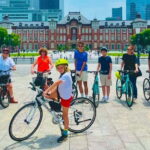
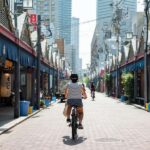
Right in the same zone is Nakamise Shopping Street, a pedestrian shopping strip of roughly 250 meters running from Kaminarimon (the Thunder Gate) toward Hōzōmon (the Treasure-House Gate). This is where you can grab quick souvenirs without needing a shopping strategy. It’s also easy to treat it like a food walk.
If you want a couple snack targets, this stop is known for things like dango (mini mochi balls) and deep-fried sweet bean filled mochi (agemanju). Even if you don’t go full snack mode, it’s a fun place to browse because the stalls are compact and walkable.
Timing tip
Try to keep your shopping rhythm relaxed. The area moves quickly, and it’s easy to spend too long browsing one stall. A guide can help you decide what’s worth buying before you lose time for Skytree or the market.
Skytree vs Tokyo Tower: picking one skyline and budgeting for tickets
This tour gives you a clear choice: Skytree or Tokyo Tower, not both. Skytree is listed at 3,400 yen for entry, while Tokyo Tower is listed at 1,500 yen. Neither entrance fee is included in the tour price, so you’ll want to think of this as a paid add-on day.
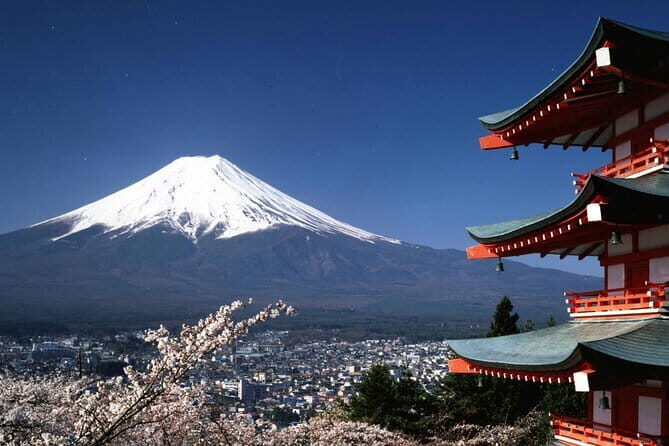
Skytree is a major reason people book this route, partly because of the scale. It’s 637 meters tall and described as one of the tallest towers in the world. The best part is what you do with that height: you get a strong sense of Tokyo’s spread, and on clear days you may catch far-off views like Mount Fuji.
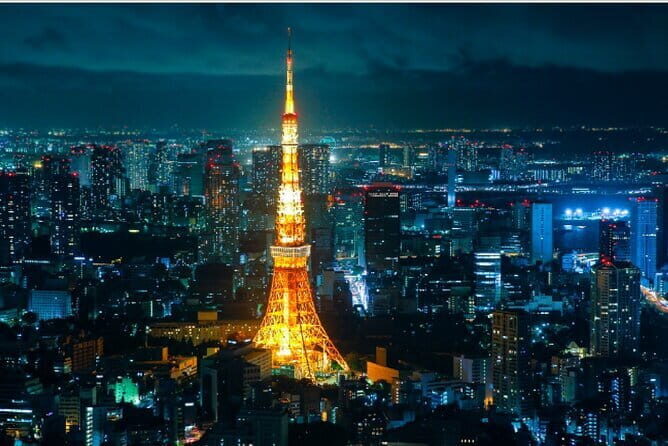
Tokyo Tower has a different vibe: it feels more retro and classic, and it’s tied to the earlier era of Tokyo broadcasting. If your group likes “iconic photos” more than “modern height records,” Tokyo Tower can be the better pick.
You can also read our reviews of more city tours in Tokyo



Practical value
Because you choose only one tower, the tour keeps the day from ballooning into ticket lines plus extra commuting. You get the payoff of a major viewpoint without sacrificing the rest of the itinerary.
Meiji Jingu’s shrine forest and why it slows the day down
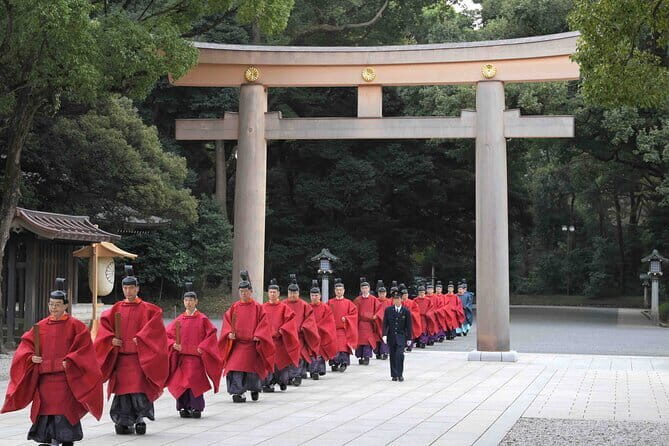
After Asakusa’s energetic temple approach and shopping street, Meiji Jingu is a nice change of pace. You’ll spend about one hour here, and it’s known as one of Tokyo’s most prominent shrines, dedicated to Emperor Meiji and Empress Shoken.
One detail I like about this stop is the contrast: the shrine is tied to modern Japanese history, but the experience itself feels calmer because it’s set in a forested setting. This matters in a long day. It gives you a reset so the last part—market + bay + Shibuya—doesn’t feel like nonstop motion.
Meiji Jingu is also described as completed in 1920, which makes it feel like it has a clear story rather than just being a random stop on a map. Your guide can connect what you’re seeing with why the shrine exists in the first place.
What to do in your hour
Keep it simple: walk the main paths, take a few photos where it makes sense, and don’t rush the forest feel. The shrine experience isn’t “one photo then leave.” It’s better when you slow your pace a notch.
Tsukiji Outer Market’s street-food rhythm (and what to plan for lunch)
Tsukiji is famous enough that it can feel intimidating at first—especially if you expect a single “market hall” experience. The Outer Market is different: it’s more like a lively street-and-stall walking zone where you can sample and browse.
You’ll get about one hour, and admission is listed as free. Food is the main event here, with stalls offering both raw and cooked seafood options, plus plenty of restaurants. The tour notes that lunch should be planned, and that matches the reality: Tsukiji is a natural place to eat, snack, or both.
This stop is also great because it teaches you a Tokyo skill: how to move in a crowd without getting stressed. The market area has motion, but it’s set up for walking. With a guide, you’re less likely to miss the best-feeling areas for a first pass.
Lunch strategy for real life
If your group wants a full sit-down meal, Tsukiji can still work—but you’ll want to go with a plan. Otherwise, lean into shorter bites at multiple stalls and keep your energy for Shibuya Crossing later.
Odaiba and Shibuya Crossing: modern Tokyo without the train squeeze
Once you leave the shrine and market areas, the itinerary moves into Tokyo’s modern “see it and feel it” zones.
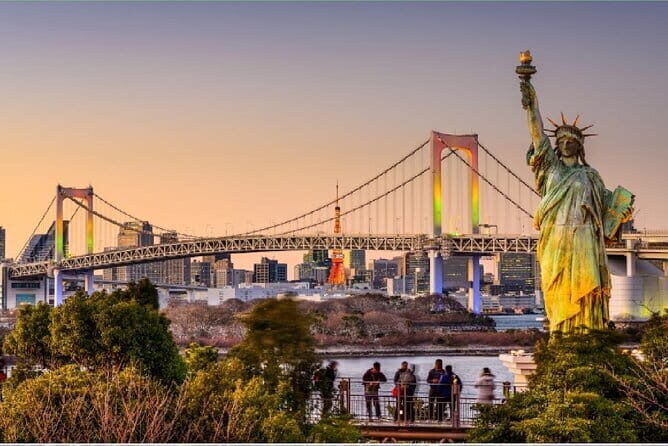
Odaiba is described as a popular shopping and entertainment district on a man-made island in Tokyo Bay. It originated as small man-made fort islands (daiba literally means fort) built in the late Edo period. Even if your goal is shopping or photos, that Edo-era origin gives the bay area a bit more meaning than just being a pretty waterfront stop.
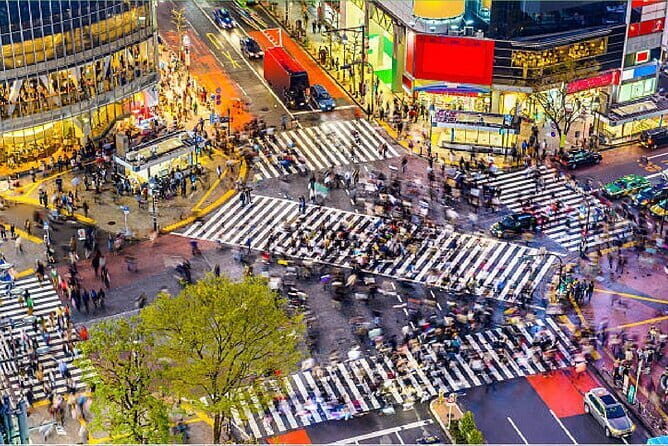
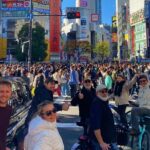
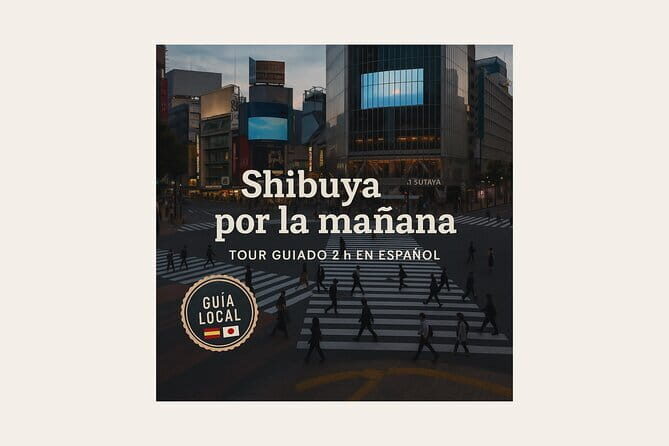
Then comes Shibuya Crossing, one of Tokyo’s most recognizable intersections. It’s famous in movies and media, including Lost in Translation and Tokyo Drift, which is why it often feels like stepping into a film set for a few minutes.
You’ll have about one hour here. That’s enough time to look, reposition for a better angle, and still avoid turning it into a rushed sprint.
Quick photo advice
Don’t stand in the first spot you reach. Give yourself a few minutes to walk to a safe viewing position and try for an angle where you can see people flowing. The intersection is intense, but it’s also predictable if you watch the signals.
East Gardens of the Imperial Palace and Tokyo Tower as optional add-ons
Two stops are marked optional: the East Gardens of the Imperial Palace (Edo Castle Ruin) and Tokyo Tower. That means the tour gives you room to customize based on what your group wants most.
The East Gardens are described as having historic relics that help you feel the Edo period atmosphere, along with natural surroundings. If your group enjoys green space and history that’s close to the center of the city, this is a strong “slow down and breathe” finish.
Tokyo Tower is a different kind of optional. You already saw a tall viewpoint idea with Skytree if you choose it. If you choose Tokyo Tower instead, this becomes your skyline moment. It also tends to feel more classic—an easy win for anyone who likes Tokyo icons that look like they belong on postcards.
How to choose between optional stops
If anyone in your group wants one last “Tokyo photo” moment, Tokyo Tower works. If your group wants one last calm walk, East Gardens are likely a better match.
Price and value: what $445 buys you (and what it doesn’t)
At $445 per group (up to 6), this is priced for private comfort rather than bargain bus tourism. The value comes from what’s included: an air-conditioned vehicle, private transportation, fuel surcharge, and parking fees.
So you’re not only paying for a driver. You’re paying to reduce friction. That friction can be huge in Tokyo, where getting from one attraction to another can mean more walking than you expect, plus transfers plus waiting plus figuring out exits.
What’s not included is just as important:
- Lunch isn’t included.
- Skytree entrance (3,400 yen) isn’t included.
- Tokyo Tower entrance (1,500 yen) isn’t included.
- You also choose one tower between Skytree and Tokyo Tower.
From a value standpoint, the math depends on whether you were going to see those towers anyway. If you’re a first-timer and you want a packed highlight day, this tour can actually feel efficient because you’re bundling transportation + guidance + timing into one price.
Guide quality, English, and how to get the most out of the day
The tour is sold with an English guide, and many guides on this route are praised for being organized and helpful—people like Hadi, Zubi, Ali, and Mohd show up often enough that you can feel the service approach is consistent: clear communication, practical support, and a calm attitude while you’re moving fast.
A couple practical things to look for during your day:
- Ask your guide for the next plan early. You’ll get more relaxed when you know what’s coming.
- Use your free time efficiently. Several guide styles on this route are described as giving people space to explore while still staying coordinated.
- If you care about photos, mention it. Some guides are known for taking pictures and helping your group get good shots without everyone scrambling for a selfie stick.
One consideration
The only real caution is that English understanding can vary. The tour is designed for English speakers, but if you need very detailed explanations, it’s worth asking your guide to slow down and repeat key points if anything isn’t landing.
Who this tour fits best (and who might prefer something else)
This private Tokyo highlights tour fits best if you:
- want a big day but don’t want to wrestle with trains
- have limited time and want to see temple, shrine, market, bay, and modern Tokyo
- prefer your own group pacing (especially with kids, seniors, or anyone who gets worn out by walking)
- care about having a guide who can help with timing and practical choices
It might feel less ideal if you:
- already know Tokyo well and enjoy navigating independently
- don’t care much about either Skytree or Tokyo Tower (since those are major decision points and ticket costs)
- want a slower, neighborhood-by-neighborhood tour with no set stop sequence
Should you book this private Tokyo city tour?
If you’re doing Tokyo for the first time and you want a high-hit-day that still feels comfortable, I’d lean yes. The private car format is the main reason, because it trades transit stress for guided sightseeing across Tokyo’s most recognizable areas.
Book it especially if you’re traveling with a group of up to six and you want everyone to experience the same highlights without splitting up. Just budget for the tower ticket you choose, and plan your lunch separately so you’re not hunting for food while the day is still in motion.
FAQ
FAQ
How many people can join this tour?
It’s priced per group, up to 6 people.
How long is the Tokyo City Tour by Private Car?
The duration is approximately 8 to 9 hours.
Is pickup included?
Pickup is offered.
Is there a guide, and is it in English?
Yes. The tour is with an English guide.
Are the tower entrance fees included?
No. Skytree entrance is not included (3,400 yen), and Tokyo Tower entrance is not included (1,500 yen). You also choose one tower between Skytree and Tokyo Tower.
Is lunch included?
No. Lunch is not included.
What’s included in the tour price besides the guide?
The price includes an air-conditioned vehicle, private transportation, fuel surcharge, and parking fees.
Is free cancellation available?
Yes. You can cancel up to 24 hours in advance for a full refund.