REVIEW · OSAKA
From Osaka: Himeji Castle, Arima Onsen & Mt. Rokko Day Tour
Book on GetYourGuide →Operated by VIP Japan Tour · Bookable on GetYourGuide
One day, three worlds of Japan. This Osaka-to-Himeji day tour strings together Himeji Castle and Arima Onsen plus big views from Mt. Rokko without the hassle of piecing together trains. It’s a full 10 hours, but the pacing is planned so you get real time to walk, snack, and reset.
What I like most is the “historic-to-relaxing” rhythm: castle first, then the peaceful garden, then a genuine onsen stop. I also like how the guide supports you on the ground, with help that includes multi-language hosting (English/Chinese) and on-the-day timing so you don’t miss your windows.
One consideration: the day is long and you’ll walk a fair amount, including stairs at Himeji. If you’re tall, the bus seating can feel tight, and weather can affect how strong the Mt. Rokko views look.
In This Review
- Key things to know before you go
- From Osaka to Himeji: Why This Day Trip Makes Sense
- Himeji Castle and Koko-en Garden: The White Heron Moment
- Himeji Castle (UNESCO first for Japan)
- Koko-en: A garden designed to frame the castle
- What to do with your time at the castle and garden
- Karoyashiki-ato Park Lunch Break: Where the Day Resets
- Arima Onsen: Real Hot Springs Time, Not a Quick Photo Stop
- Onsen entry is on you
- What to expect around Arima’s streets
- A note on expectations
- Mt. Rokko at 880m: Akashi Strait to Osaka Plain Views
- How to make the most of a short scenic stop
- Guide + Group Rhythm + Bus Reality on a 10-Hour Day
- English/Chinese guide support that actually helps
- You get free time, but don’t expect hand-holding everywhere
- Bus comfort and legroom
- Price and Tickets: When $53 Is Good Value (and When It Gets Tricky)
- What you get included
- What costs extra
- How I’d judge the math for your trip
- Who This Tour Fits Best
- Should You Book This Osaka to Himeji, Arima Onsen, and Mt. Rokko Tour?
- FAQ
- How long is the day tour?
- Where does the tour start and end?
- Which stops are included in the tour?
- Are Himeji Castle and Koko-en tickets included?
- Is the onsen (hot spring) entry included?
- What lunch options are available?
- What languages are the guides?
- What happens if there is traffic or schedule changes?
- Can I cancel and get a refund?
Key things to know before you go
- Himeji Castle + Koko-en in one flow: You pair Japan’s famous castle with its most natural garden backdrop.
- Arima Onsen is the real break: You get dedicated time to enjoy a classic hot spring town.
- Mt. Rokko delivers big-range views: From the 880m summit area, you can see toward the Akashi Strait and Osaka Plain.
- Tickets have a seasonal twist: Castle and Koko-en entry handling changes depending on dates in March.
- Lunch is optional but built-in: Choose a set meal like Senhime Gozen if you want an easy, timed lunch.
- The guide matters on a long day: Many people love the way hosts keep the group moving without making it feel rushed.
From Osaka to Himeji: Why This Day Trip Makes Sense
If you want a single day that hits three strong areas around Kansai—Himeji, Kobe/Arima, and Rokko—this tour is a straightforward way to do it. Starting from Osaka’s Namba area means you’re not doing multiple transfers or worrying about last-train timing.
The value here is less about “speed” and more about friction-free logistics. An air-conditioned vehicle handles the driving, and an English/Chinese-speaking guide helps connect the dots between the sites: what you’re seeing, why it mattered historically, and how to spend your free time without feeling lost.
That said, the day is built around walking. Even with a guide keeping you on schedule, you should show up ready for stairs, cobbled paths, and outdoor strolling—especially at Himeji Castle.
A few more Osaka tours and experiences worth a look
Himeji Castle and Koko-en Garden: The White Heron Moment
Himeji Castle (UNESCO first for Japan)
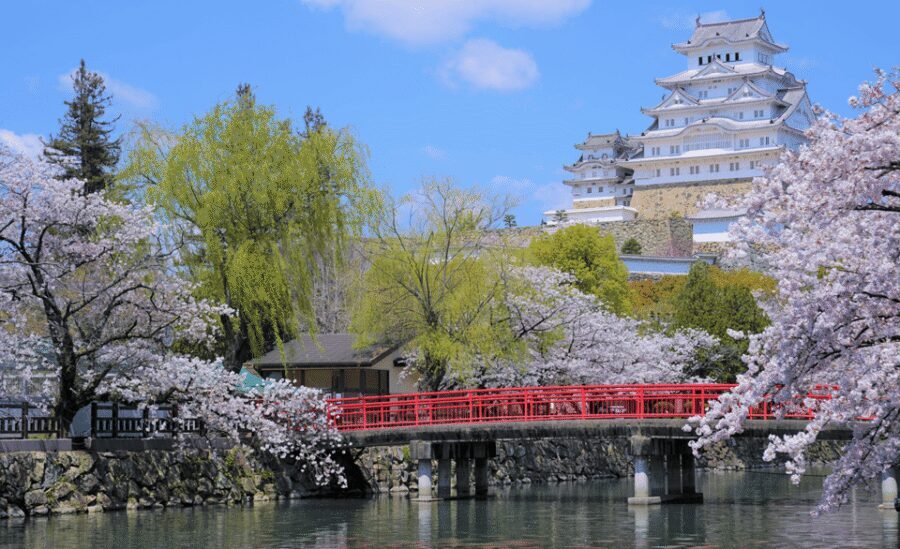
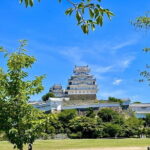
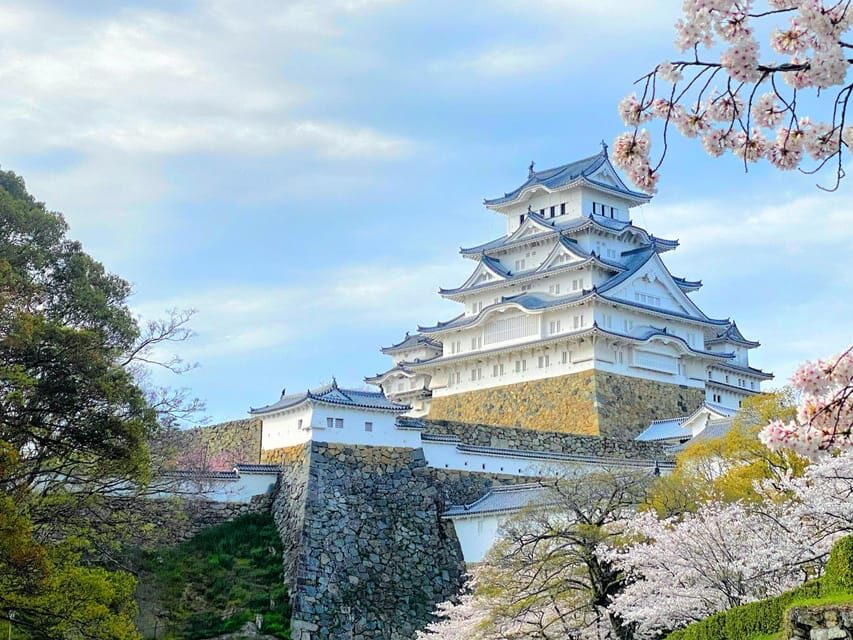
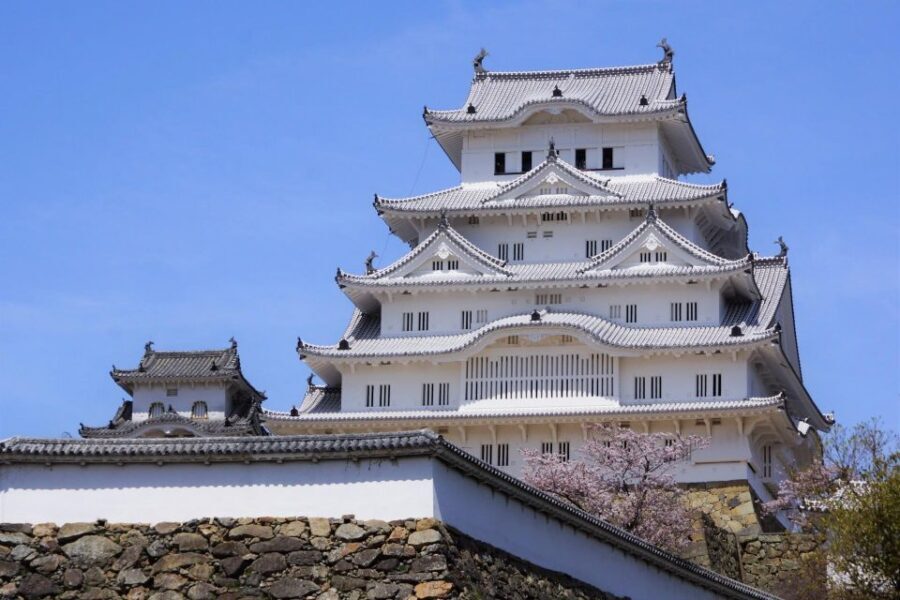
Himeji Castle is the star, and it earns the hype. It was registered as a UNESCO World Cultural Heritage Site in 1993, with the current magnificent structure completed in 1609. It’s often called the White Heron Castle because of its elegant white silhouette, and it’s known as one of the best surviving examples of Japanese castle architecture.
One practical thing: the castle’s wooden construction and defensive design reflect skills from the Sengoku era through early Edo. That matters because your visit isn’t just photos—it’s a chance to understand how Japanese fortifications evolved.
You also get a realistic amount of time to look around on your own. The tour sets aside about 2 hours for Himeji, including photo stops, guided orientation, and free time.
Ticket note (important): From March 1st, you’ll need to purchase a 2,500 JPY entry ticket yourself at the castle on the day to explore the interior structures. The tour includes entry fees only for tours until Feb 28.
Koko-en: A garden designed to frame the castle
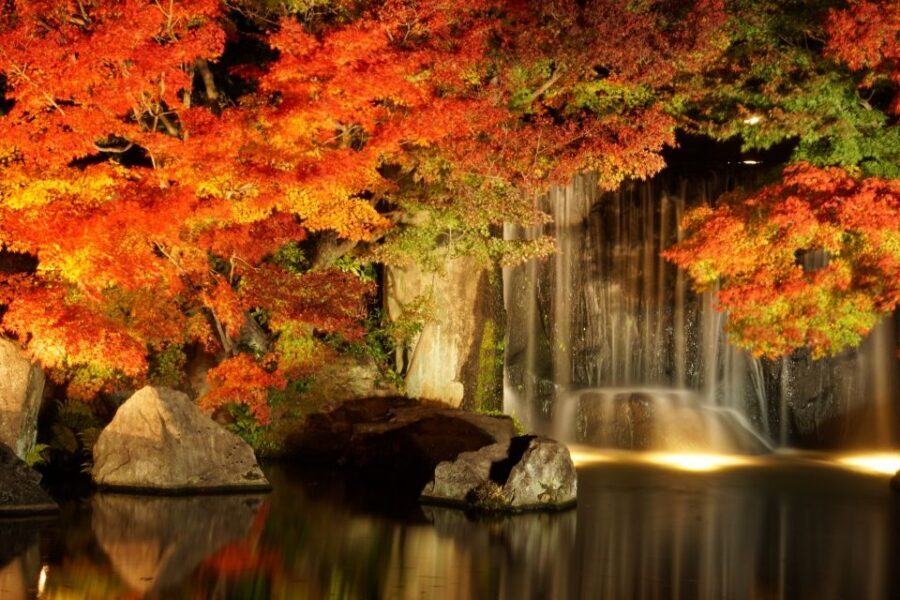
Right after Himeji, you head to Koko-en, a Japanese garden built with Himeji Castle as the scenic backdrop. It’s not just “nice landscaping”—it’s Edo-period style garden planning, with multiple distinct gardens packed into about 10,000 tsubo (around 3.5 hectares).
Koko-en is laid out with nine different garden styles, including a pond-centered stroll garden and a sukiya-style teahouse garden with the tea room Soju-an. Even if you’re not a garden person, it’s a great contrast to the fortress: less climbing, more wandering, and lots of chances to pause.
The tour gives about 1 hour here for photo stops and self-guided time.
Ticket note (important): From March 1st, Koko-en entry requires you to buy a ticket yourself at the castle on the day (same “on-site purchase” approach).
What to do with your time at the castle and garden
I’d treat Himeji as a walking circuit. Start early in your free time window to avoid feeling rushed at the main viewing areas. Then use Koko-en to slow down and reset—this stop is where you’ll enjoy the atmosphere and the small details, not just the big views.
Also, if you like tea culture, the tea room Soju-an is worth checking out if it’s open during your visit. It’s an easy way to end the garden portion quietly.
Karoyashiki-ato Park Lunch Break: Where the Day Resets
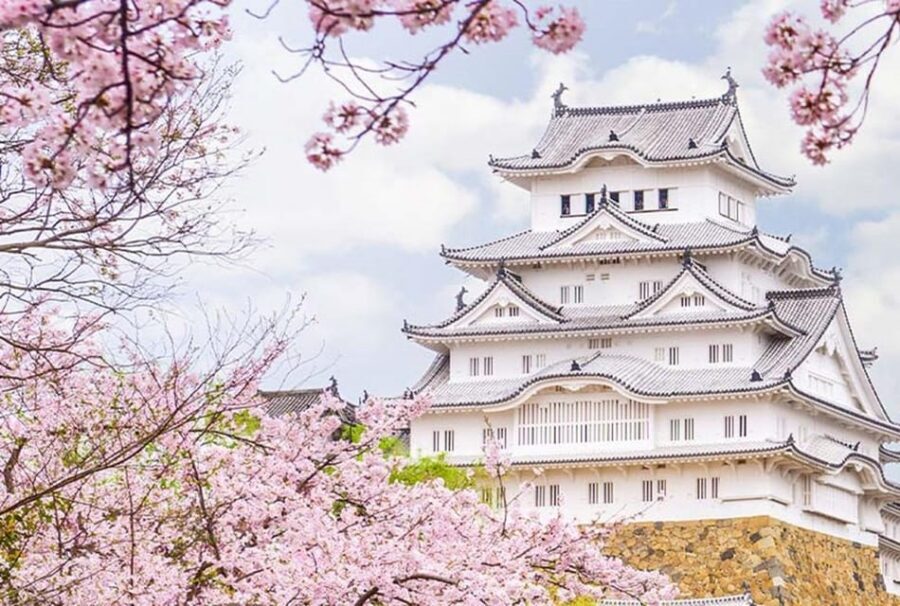
Between the heritage stops and the hot spring town, the tour includes a lunch period at Karoyashiki-ato Park (Historic Site Park). This is your buffer stop—time to eat, regroup, and give your legs a break before another round of walking.
You’ll have about 1 hour for this segment, including lunch and free time. If you selected a lunch option, this is where it happens. If you didn’t, you’ll still have time to snack or find something nearby on your own, depending on what’s available that day.
This park stop is also useful because it breaks up the day’s “straight lines.” After castles and gardens, a calmer historic site area helps the next move—Arima Onsen—feel like an actual transition, not just another stop.
Arima Onsen: Real Hot Springs Time, Not a Quick Photo Stop
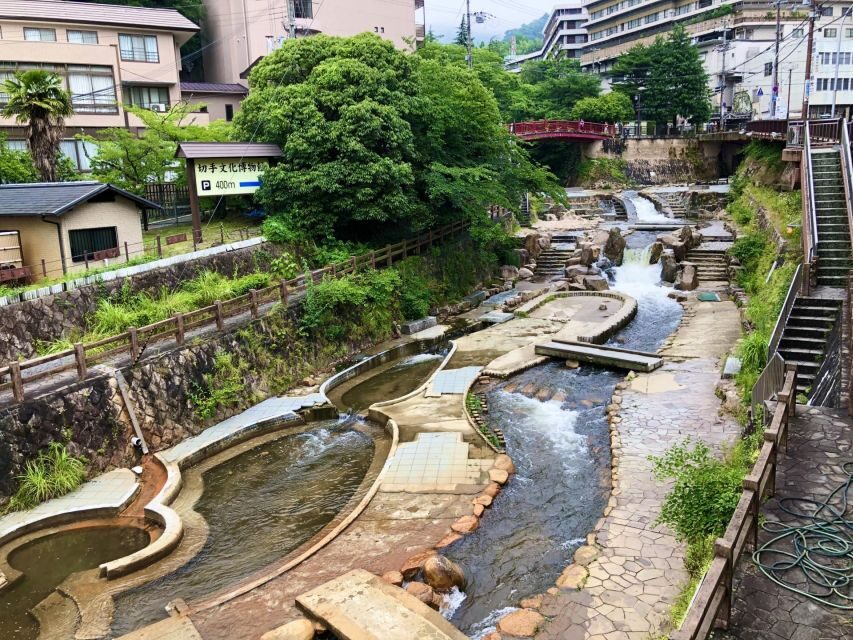
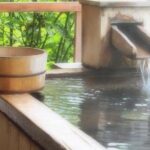
Arima Onsen is one of Japan’s Three Oldest Hot Springs, and the town layout makes it a fun place to wander on foot. You’re not just visiting a facility; you’re stepping into a hillside spa town where streets can be narrow, and walking feels part of the experience.
The tour schedules about 1.5 hours in Arima. This is long enough to do something meaningful with it—like enjoying the onsen break and still having time to wander.
Onsen entry is on you
One key detail: onsen entry fees are not included. So budget extra for your soak. Your guide will help you get oriented, but you should plan to pay on-site.
What to expect around Arima’s streets
During the Arima portion, you’ll have a chance to explore the local food vibe. The tour notes snacks like Tansan Senbei from Mitsumori Honpo and popular Kinsen-yaki pastries. This is the kind of stop where a few small bites can feel like “part of the ritual,” because Arima is paced differently than a busy city.
A note on expectations
A lot of the Arima magic is in downtime. You’ll want to use the time for the hot spring itself and a gentle stroll afterward, not just rushing to the next photo spot.
If you’re traveling with friends, this is also the segment where group members naturally split into “soak mode” and “walk-and-snack mode,” then regroup.
Mt. Rokko at 880m: Akashi Strait to Osaka Plain Views
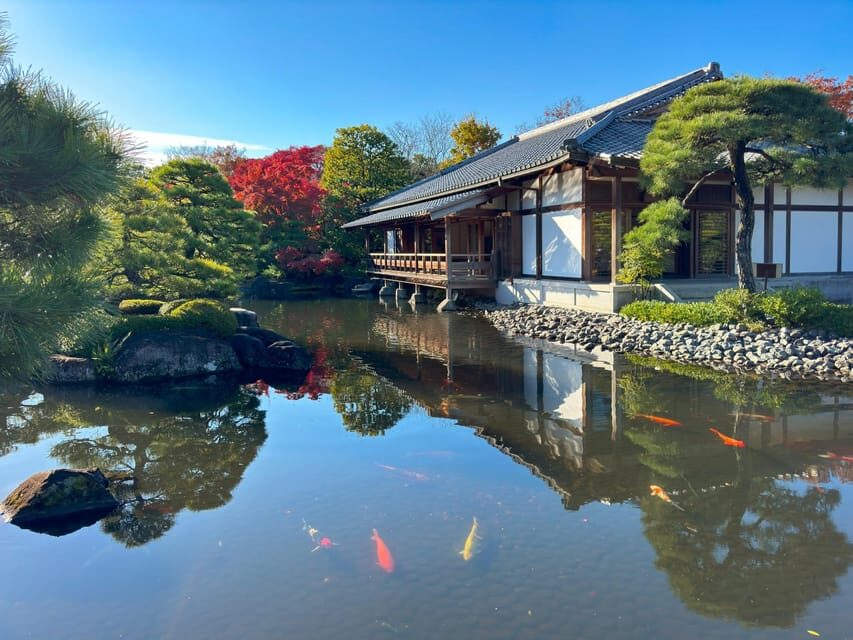
Mt. Rokko’s summit area is about 880 meters, and the tour focuses on Rokkosan Garden Terrace, a scenic viewpoint complex. The view range is the big selling point: you get sightlines stretching from the Akashi Strait toward the Osaka Plain.
The tour includes a photo stop and time on-site, with about 30 minutes for Mt. Rokko. That’s not enough to treat it like a full hike day, but it is realistic for taking photos, walking between viewpoints, and getting your final scenic payoff.
How to make the most of a short scenic stop
Pick your viewpoint early. Once you find the best angle, commit to it—because 30 minutes passes fast when you’re trying to check everything. Also, keep an eye on weather. If it’s hazy or rainy, those long-distance views can soften, and the “wow” factor will depend on visibility.
Still, even in less-than-perfect weather, Mt. Rokko tends to feel like a breath of fresh air after the hotter, thicker parts of city walking.
Guide + Group Rhythm + Bus Reality on a 10-Hour Day
English/Chinese guide support that actually helps
One of the most praised aspects of this tour is how well the guide works with a mixed group. The tour provides an English / Chinese-speaking guide, and in practice that often means your host can explain the why behind each stop—castle design, garden layout, and what you’re looking at from Rokko.
You’ll see guide names pop up often, including Nick San, Gary, Harry, and Mike. People also mention guides adapting across languages and keeping time so the day feels smooth rather than frantic.
You get free time, but don’t expect hand-holding everywhere
This is a good format if you like structure with independence. At Himeji Castle and Koko-en especially, you’ll have self-guided time. That’s a plus for enjoying at your own pace, but it also means the guide may not stay beside you for every single meter of walking.
If you want a guided “step-by-step” through every interior room, this might feel different than a pure museum-style tour. The tradeoff is you’re not stuck in a slow-moving line either.
Bus comfort and legroom
A couple practical complaints show up around the bus: some seats can feel tight if you’re tall, and this is a long day. The good news is the tour runs with an air-conditioned vehicle and a professional driver, and you’re not trapped in a slow local-transfer chain.
Tip: wear comfortable shoes and consider bringing a light layer. Buses can swing between cool and warm.
Price and Tickets: When $53 Is Good Value (and When It Gets Tricky)
At around $53 per person for a 10-hour day, the value is mostly about what’s bundled and what’s not.
What you get included
- Air-conditioned vehicle
- English/Chinese-speaking guide
- Himeji Castle & Koko-en entry fees are included only for tours until Feb 28
- Lunch is included only if you choose the lunch option
What costs extra
- Arima Onsen entry (not included)
- Himeji Castle & Koko-en entry fees starting March 1st
- Plus, from March 1st, there’s the 2,500 JPY ticket you buy yourself at Himeji for interior structure access
- Koko-en entry also becomes an on-day purchase handled at the castle
How I’d judge the math for your trip
If you’re traveling before March 1st, this tour tends to feel like strong value because the major attractions include entry fees. After March 1st, you can still come out fine, but you should plan for extra cash for ticket purchases and onsen entry.
The best “value moment” is the combination of UNESCO-level architecture plus a real onsen plus a scenic viewpoint—done in one shot with minimal planning headaches.
Who This Tour Fits Best
This works especially well if you:
- Want to see Himeji Castle without building a transportation plan
- Like a day that mixes major sights with a real downtime stop at Arima Onsen
- Prefer a guide to handle timing, photo coordination, and context while you explore on your own
It’s also a solid pick for first-timers in the Kansai region because it gives you a feel for how the areas connect—Osaka to Himeji to Kobe/Arima to Rokko—without forcing you into heavy logistics.
If you’re someone who hates long walks or wants minimal stairs, you may feel the effort at Himeji. Bring water, take breaks, and accept that “castle time” includes steps.
Should You Book This Osaka to Himeji, Arima Onsen, and Mt. Rokko Tour?
If your goal is a single-day sampler that covers UNESCO castle, Edo-style garden, classic hot spring, and big panoramic views, I’d say yes. The pacing is designed so it doesn’t feel like you’re rushing through everything, and the guide support can make a long day feel manageable.
I’d lean again if:
- You’re traveling after March 1st and want everything fully included (you’ll pay more on-site for tickets and onsen)
- You’re sensitive to bus seating comfort or long walking distances
If you book, do these three things: wear shoes for stairs, plan extra money for the onsen and post-March tickets if relevant, and treat the Arima and Rokko segments as your “recharge and reward” parts of the day.
FAQ
How long is the day tour?
The tour runs for about 10 hours.
Where does the tour start and end?
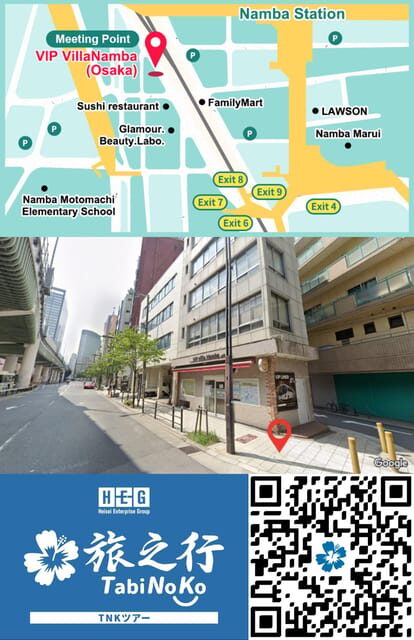
Pickup and drop-off are listed for VIP Villa Namba, いな音ビル, though the meeting point may vary depending on the option booked.
Which stops are included in the tour?
You’ll visit Himeji Castle, Koko-en, Karoyashiki-ato Park (Historic Site Park), Arima Onsen, and Mt. Rokko (Rokkosan Garden Terrace).
Are Himeji Castle and Koko-en tickets included?
Entry fees for Himeji Castle and Koko-en are included for tours valid until Feb 28 only. From March 1st, you must purchase them yourself.
Is the onsen (hot spring) entry included?
No. Onsen entry fees are not included.
What lunch options are available?
An optional lunch set is available, including Senhime Gozen (mini anago rice bowl, mini udon, mini steak, assorted tempura, and seasonal fruit) if you select the lunch option.
What languages are the guides?
The tour guide is available in English and Chinese.
What happens if there is traffic or schedule changes?
The schedule can adjust due to traffic conditions or unforeseen circumstances, so you should stay flexible.
Can I cancel and get a refund?
Yes. Free cancellation is available up to 24 hours in advance for a full refund.