REVIEW · OSAKA
Osaka: UTAGE Japanese Taiko Live Show
Book on GetYourGuide →Operated by 株式会社TryHard Japan · Bookable on GetYourGuide
Drums the size of a doorway hit Osaka. At the Osaka Cultural Center, UTAGE is a Japanese taiko and traditional-instrument live show built around a 180 cm drum and computer music.
I love the way shamisen and shakuhachi interact with taiko, with computer music keeping the rhythm current. I also love the audience participation, where you can be pulled in for one limited song.
The main catch is timing: arrive early (at least 5 minutes) because once the show begins you will not be allowed entry. Also, the event language is Japanese, so expect minimal English.
In This Review
- Key highlights you should know before you go
- UTAGE at Osaka Cultural Center: what makes this Osaka taiko show different
- The instrument lineup: taiko, shamisen, shakuhachi, and shinobue
- The 180 cm drum: why size matters in a live performance
- How the show runs: pacing, seating, and when you have to be on time
- Audience participation: what you can realistically expect to do
- TRAinnovation and the modern twist: why the band matters
- Photos, the downstairs shop, and how to plan your timing
- Price and value: is $40 a fair deal for Osaka?
- Who should book UTAGE (and who might prefer something else)
- Before you go: the practical checklist that actually matters
- Should you book UTAGE Japanese Taiko Live Show?
- FAQ
- Where is the UTAGE show located, and where does it end?
- How much does the Osaka UTAGE Japanese taiko live show cost?
- What time should I arrive?
- Can I enter after the show begins?
- What language is the show in?
- Is there audience participation?
- Are photos allowed?
- Is it refundable if plans change?
Key highlights you should know before you go

- A 180 cm drum billed as one of Kansai’s biggest: it’s not a prop, it’s the star of the room.
- Traditional instruments meet computer music: taiko, shamisen, shakuhachi, and shinobue layered over modern sound design.
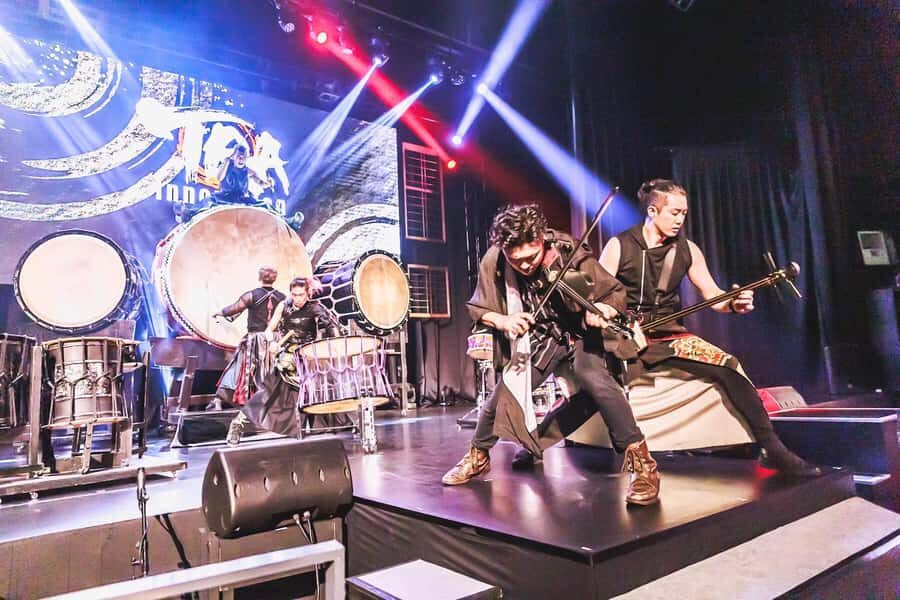
- Close-up staging: the band sits just a few metres away in a small theatre setup.
- You might play a song: there’s a short audience-performer slot for a single number.
- Photo moments before you leave: photos with performers after the show, plus an extra downstairs shop photo area.
UTAGE at Osaka Cultural Center: what makes this Osaka taiko show different
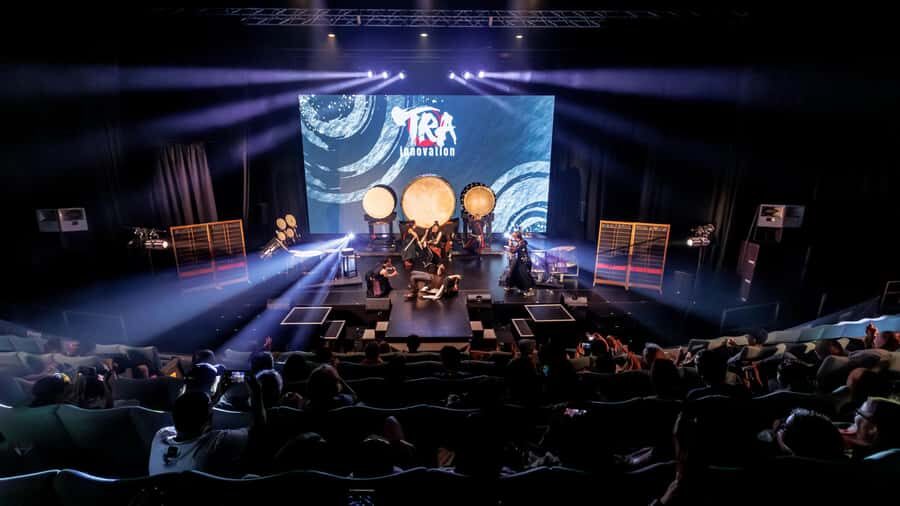
UTAGE is the kind of Osaka night out that feels less like sitting through a concert and more like stepping into a live “sound and motion” session. The venue is built for people to watch closely, and the performance leans hard into both energy and interaction.
Here’s the simple reason I’d put this in your short list: you get traditional Japanese instruments plus modern computer music in the same set. You’re not just hearing taiko from the back row, either. The show is staged so the musicians are right there, and the pacing leaves room for audience involvement.
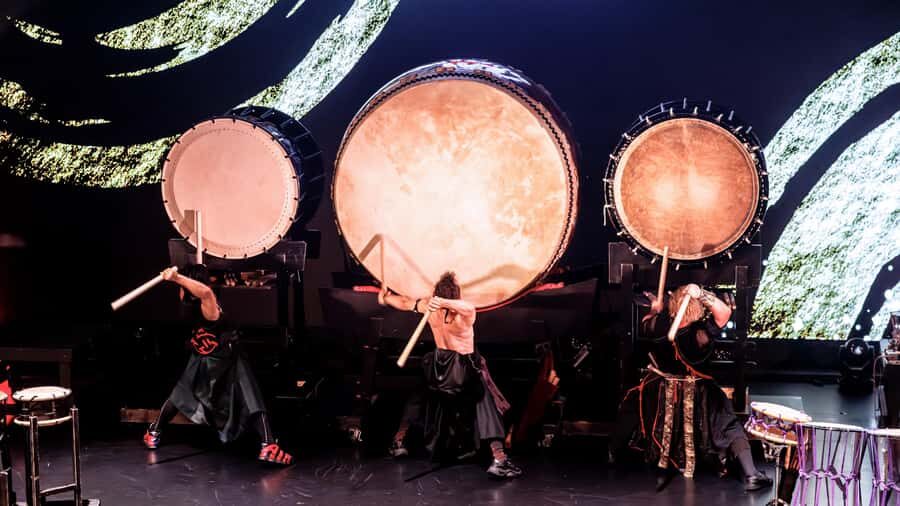
The biggest visual anchor is the drum. This one is described as a 180 cm drum in Kansai terms, and that size changes the feel of the room. When something that large is being played live, your body notices the rhythm even before your brain labels the instruments.
A few more Osaka tours and experiences worth a look


The instrument lineup: taiko, shamisen, shakuhachi, and shinobue
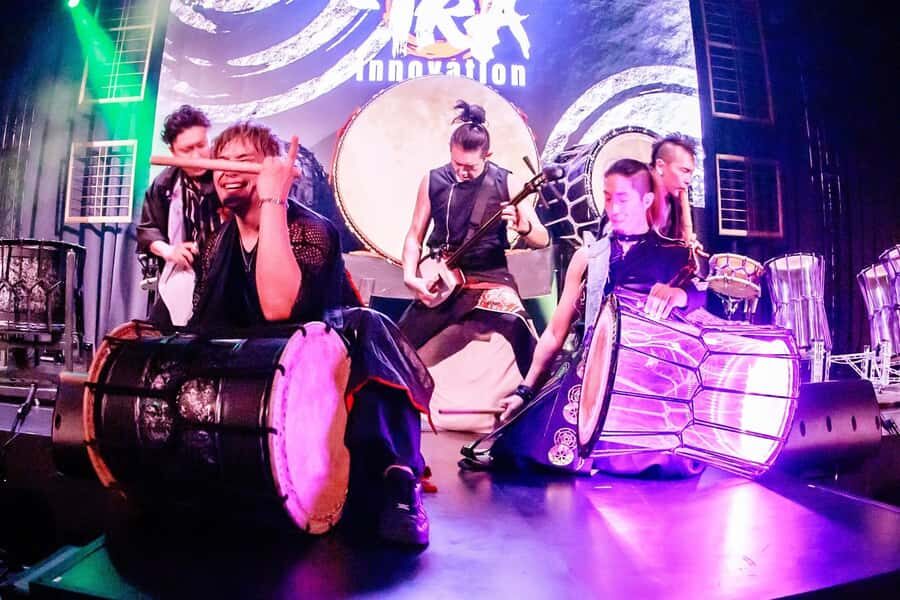
The sound palette is the real hook. Expect a mix of instruments that represent different sides of Japanese traditional music, then watch how they get rearranged through a modern lens.
You’ll hear Japanese drums at full force, but also string and wind instruments including shamisen and shakuhachi. Shinobue is part of the lineup too, which matters because it adds a higher, reedy top layer to the overall mix. In other words: you don’t get one texture all night. You get tone changes, call-and-response moments, and shifts in how the music “fills the air.”
What I like about this kind of lineup is that it helps your ears keep up even if you don’t speak Japanese. Music is doing the explaining. And because the show uses visual elements to keep things moving, the performance stays readable without needing translations.
The 180 cm drum: why size matters in a live performance
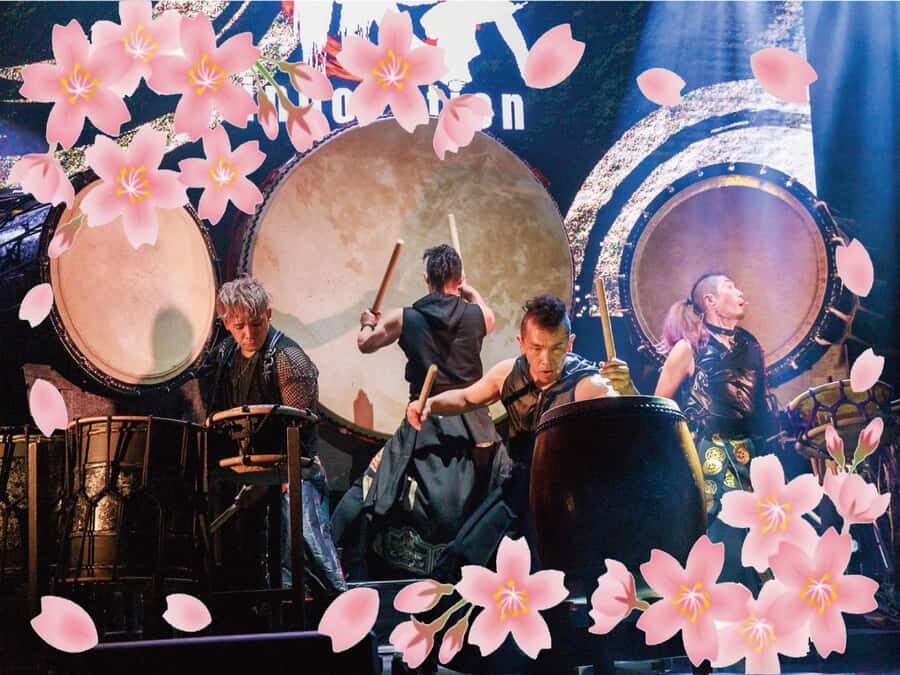
A drum that’s 180 cm wide is practically a landmark. In this show, it’s not a background element. It’s presented as a centerpiece, and the performance is structured around how that drum physically dominates the space.
This is where UTAGE feels special compared with smaller taiko performances. The beat doesn’t stay flat. It has weight. It hits like percussion should, then the other instruments wrap around it like supporting voices.
Also, one drum isn’t the whole story. There’s a modern layer through computer music, so the big drum can lock into a grid of electronic rhythm without turning the sound into generic “club beats.” You end up with something that feels contemporary but still rooted in traditional technique.
If you’re the type who thinks about instruments as visuals, you’ll probably watch the drummer more than once. If you’re the type who mainly listens, you’ll still notice how the timing and dynamic changes make the performance feel “alive” from section to section.
How the show runs: pacing, seating, and when you have to be on time
Plan for this show to be tight. The instructions are clear: arrive at least 5 minutes early, because once the show begins you won’t be allowed entry due to production reasons.
That might sound strict, but it’s actually part of what makes this format work. In a compact theatre setup, timing keeps the experience smooth for everyone. You don’t want the vibe broken by late seating.
From what the experience is set up to do, you can also expect a show that runs like a performance block rather than a long documentary-style event. Reviews consistently describe it as high-energy, and the fact that there’s audience participation helps explain the pacing. It’s built to keep the room engaged rather than passive.
Seating is part of the magic. The show is described as intimate, with small-group seating and the band nearby. That distance matters because it makes the music feel personal. When performers are a few metres from you, even simple gestures and cues land.
Audience participation: what you can realistically expect to do
This is one of the strongest reasons to consider UTAGE. There’s an opportunity to participate as a performer, but it’s limited and tied to one song. That limitation is good news because it keeps things organized, and it keeps the show from turning into chaos.
When you’re invited in, you’re stepping into a very short moment of shared stage time. And even if you don’t get picked, you’ll still get the experience of a show that talks back to the crowd. That audience engagement shows up in the way performers interact and in the energy the room carries.
One practical tip: treat the participation part like a “stand ready” moment. If you see staff signaling or if the show begins pulling people in, don’t get stuck fiddling with your phone. Be ready to follow cues quickly.
And yes, at least some guests end up taking turns with big drums during participation moments. That’s not something you should count on every time, but it does help explain why so many people leave feeling like the night was more than watching from the seat.






TRAinnovation and the modern twist: why the band matters
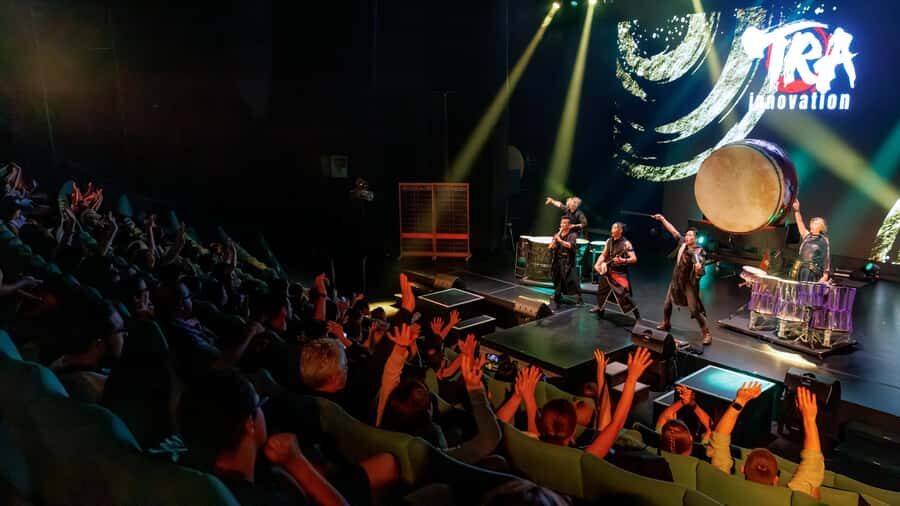
UTAGE is presented by TRAinnovation, and the overall vibe is that of a band confident enough to blend traditional performance with modern staging. The show description even highlights that the band won a world number one indie title, which signals this is not a sleepy cultural recital. It’s entertainment first, with culture front and center.
The “modern twist” is not just a gimmick. Computer music is integrated alongside live instruments, and the performance uses visual elements to keep your attention. That combination is exactly how a taiko show becomes legible to people who don’t know the background story.
One more reason TRAinnovation works in this setting: energy control. Taiko can be intense. This kind of show balances intensity with rhythm changes and crowd moments so the energy stays fun rather than overwhelming.
If you want Osaka nightlife that still feels authentically Japanese, this format is a smart compromise. You get the sound and technique of traditional instruments, but the delivery style is tailored for modern audiences.
Photos, the downstairs shop, and how to plan your timing
Plan your evening so you can linger for the photo moments. Multiple parts of the experience include pictures and meet-and-photo opportunities after the show.
During the performance, photos are allowed according to guest accounts, and after the show there’s a chance to take pictures with the performers. That’s a big deal if you like leaving with memories that feel more personal than just “I was there” snapshots.
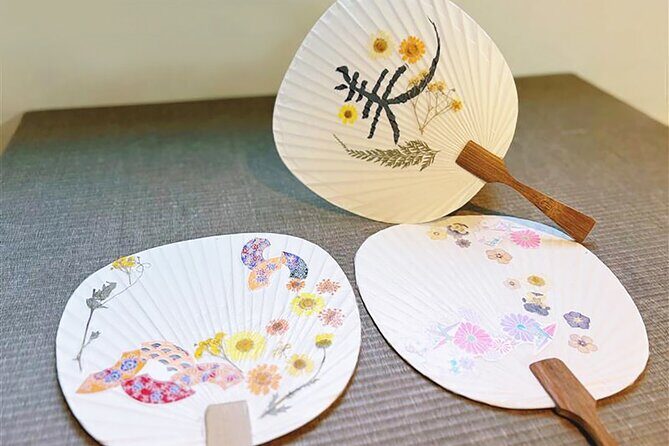
Then there’s the extra downstairs element. The experience continues at a shop located downstairs, where you can pose for complimentary photos with samurai sword-themed and traditional umbrella-style props. It’s not the main event, but it’s a fun add-on if you’re traveling with family or you like playful souvenirs that don’t require spending money.
So here’s the practical rhythm: show ends, performers come off, you line up for photos, and then you can head downstairs for the prop photo moment. Don’t treat this as a separate optional thing. If you care about photos, it’s part of the value.
Price and value: is $40 a fair deal for Osaka?
$40 is not the cheapest way to spend an evening in Osaka, but it also isn’t overpriced for what UTAGE delivers.
Here’s what you’re paying for, in plain terms:
- A small, close-up, theatre-style show where you’re not buried in the crowd
- Live performance by a full instrument lineup, including a 180 cm drum
- The computer-music + traditional-instrument blend, which takes real production effort
- Audience participation for a limited song, plus built-in photo moments after
If you compare it to larger-scale theatre tickets elsewhere, you’re getting a tighter experience with more direct interaction. And that interaction is the part that tends to make people feel they got their money’s worth, especially when a show invites you into the moment instead of keeping you an observer the whole time.
For families, the value can feel even better because the format works across ages. For solo travelers, it can be a social win since the crowd experience is active, not silent.
In short: if you want a lively, culturally rooted performance without needing deep background knowledge, $40 is a reasonable price for the effort and stagecraft you’re seeing.
Who should book UTAGE (and who might prefer something else)

UTAGE fits best if you fall into one of these groups:
- You want Osaka taiko with a modern production layer (computer music and visuals)
- You like audience interaction and short participation moments
- You’re traveling with mixed-age family members who need a show that stays entertaining
- You want a compact evening activity that doesn’t require long travel across town
It might be less ideal if:
- You hate timed events and strict entry rules
- You need an English-heavy explanatory format (the language is Japanese)
- You prefer purely traditional performances without any contemporary sound elements
The good news is that the show isn’t “either traditional or modern.” It’s both, and the structure is designed to keep you engaged even if you’re new to the instruments.
Before you go: the practical checklist that actually matters
Here’s what I’d do to make the night smooth:
- Arrive early: at least 5 minutes before the start so you don’t get turned away
- Go in expecting Japanese-language cues, not an English narration
- Dress for movement: participation is possible, and the show is energetic
- Charge your phone before you go: photos happen during and after
- Keep a little extra time after the show for the downstairs shop photo moment
Also, remember the location and flow. The meeting point is at Osaka Cultural Center, and the activity ends back at the meeting point. That makes it easier to plan dinner afterward since you’re not stranded across town when the show wraps.
Should you book UTAGE Japanese Taiko Live Show?
Book it if you want a close-up, high-energy Japanese music night in Osaka that mixes traditional instruments with computer music, and you like the idea that you might get pulled into the stage for one song. For many people, that combination is exactly what makes the show memorable.
Skip it if you’re very sensitive to strict show timing, you expect English explanations, or you prefer your cultural performances purely traditional with no modern sound design. In those cases, you might find a different taiko-focused show better matches your style.
If you’re on the fence, think about this: for $40, UTAGE gives you more than a performance. You get the instruments up close, a centerpiece 180 cm drum moment, crowd interaction, and built-in photo opportunities.
FAQ
Where is the UTAGE show located, and where does it end?
The show starts at Osaka Cultural Center and ends back at the same meeting point.
How much does the Osaka UTAGE Japanese taiko live show cost?
It costs $40 per person.
What time should I arrive?
Please arrive at least 5 minutes before the show starts.
Can I enter after the show begins?
No. Once the show begins, entry is not allowed due to production reasons.
What language is the show in?
The language is Japanese.
Is there audience participation?
Yes. There is an opportunity to participate as a performer for one song for a limited time.
Are photos allowed?
Photo moments are part of the experience. Guests can take photos during the performance, and there are also photos with the performers after the show.
Is it refundable if plans change?
You can cancel up to 24 hours in advance for a full refund.

![[One-day bus tour departing from Kanazawa Station] Shirakawa-go and Gokayama - Two World Heritage Villages Enjoyable Bus Tour - What your $88.44 covers (and what it does not)](https://images.thejapantraveler.com/wp-content/uploads/one-day-bus-tour-departing-from-kanazawa-station-shirakawa-go-and-gokayama-two-world-heritage-villages-enjoyable-bus-tour.jpg)