REVIEW · OSAKA
Osaka Sumo Experience with Live Show and Audience Challenge
Book on Viator →Operated by Local Guide Stars · Bookable on Viator
Sumo in Osaka is a live rules lesson you can touch. You get a live show with audience participation plus an English-speaking guide, and the highlight is that punchy tachiai moment with retired wrestlers. If you want more than watching from afar, there’s also a limited chance to step into the ring and challenge a sumo wrestler.
This experience is built to make sumo feel understandable fast: rituals, techniques, and what actually happens in a match all get explained in plain language. The main thing to consider is that the ring-challenge part includes borrowed clothing and sandals, and some people may find the sizing a bit limiting.
In This Review
- Key things I’d plan around
- What the live Osaka sumo show delivers in 90 minutes
- How the pre-bout rituals make the sport easier to understand
- The tachiai moment: the opening clash you’ll remember
- Watching the techniques up close, without needing a sumo glossary
- The audience challenge: what it feels like to step into the ring
- Comfort notes: clothes, sandals, and what to expect
- Price and value: why $55.50 can make sense
- Meeting point and timing: how to avoid last-minute stress
- Who this sumo experience is best for
- A balanced reality check before you book
- Should you book this Osaka sumo experience?
- FAQ
- How long is the Osaka sumo experience?
- What’s included in the ticket price?
- Is a meal included?
- Can I participate in the ring challenge?
- Is it a small group?
- What is the cancellation policy?
Key things I’d plan around
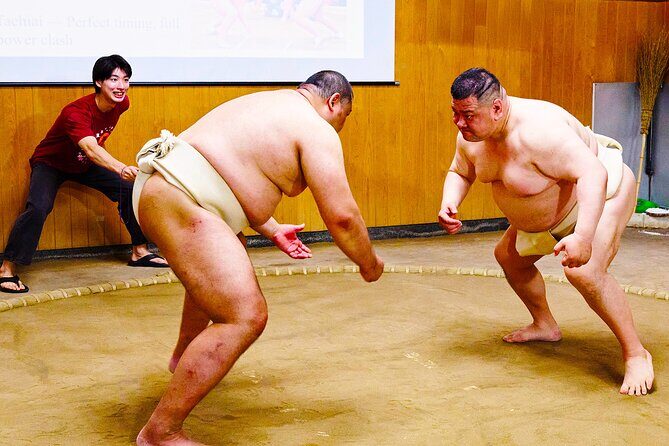
- Tachiai showdown: You’ll see the charged opening clash that sets the whole tone of a bout
- English-speaking guide: Explanations for rules, rituals, and what you’re watching
- Audience challenge is real: Limited spots mean you should be ready if you want to try
- Small group format: Up to 50 people keeps the energy controlled and interactive
- Practical sumo pacing: About 1 hour 30 minutes, so it fits neatly into a day plan
What the live Osaka sumo show delivers in 90 minutes
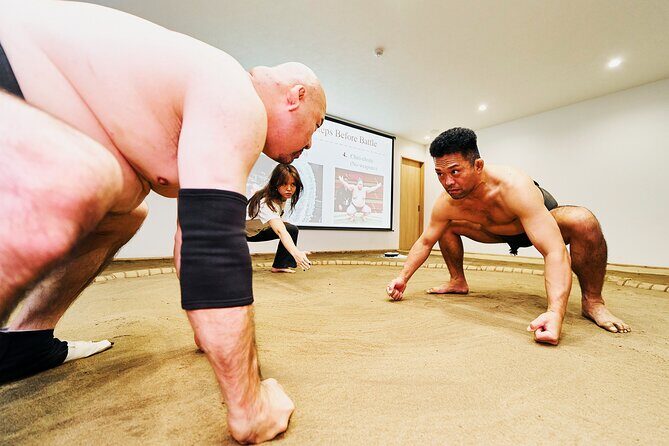
This is one of those activities where the time is tight on purpose. You’re not signing up for a long museum-style talk. You’re getting a scheduled, performance-based experience that moves from background to action quickly, with the show portion lasting about 1 hour 30 minutes.
The big value is that sumo isn’t just presented as sport. It’s presented as a system: rituals first, then technique, then the moment of impact. That structure matters because it helps you watch smarter. Once you understand what the wrestlers are doing before the match even starts, the action after that makes more sense.
You’ll also appreciate the small-group feel. With a maximum group size of 50, the atmosphere stays friendly rather than chaotic. That matters most if you’re hoping to take part in the audience challenge, because you’ll need coordination and attention from the staff.
A few more Osaka tours and experiences worth a look


How the pre-bout rituals make the sport easier to understand
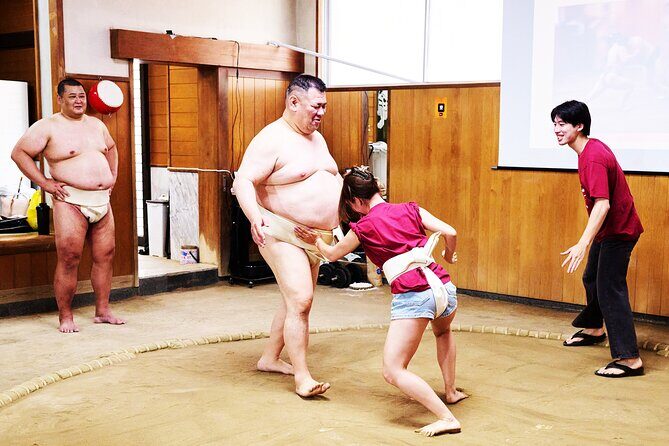
Sumo has a way of looking simple from far away: two big athletes, grab, shove, win. Up close, though, there’s a lot going on before the first move. In this experience, the guide walks you through the sacred-feeling parts and what they mean so you aren’t just guessing.
Here’s why I think this is a strong approach. When you know the point of the rituals, you stop treating them like decorative theater. You start noticing how they connect to respect, focus, and readiness. Even if you’re brand new to sumo, you can follow the logic instead of staring at motion without a map.
You’ll also get rule explanations in plain terms. That’s crucial for beginners. Sumo has technical outcomes, and once you understand what counts, you can watch for telltale signs instead of waiting for the obvious dramatic finish.
The tachiai moment: the opening clash you’ll remember
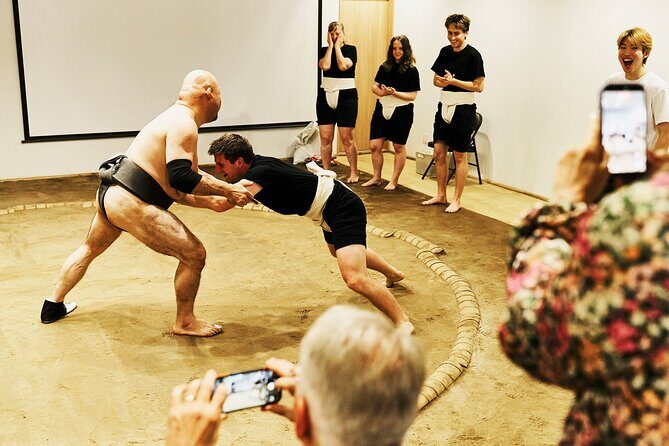
If you only cared about the match itself, you might miss what makes sumo feel intense. The tachiai is the charged, explosive start when both wrestlers surge in to meet each other. In this Osaka experience, you get to witness that dramatic moment, including a bout that features retired sumo wrestlers.
Why this matters for your experience: the tachiai is where momentum becomes everything. It’s the instant where posture, timing, balance, and intent show up at once. Once you see it live, you’ll understand why sumo fans talk about it like a signature event, not just a formality.
This part of the show also helps you appreciate why size alone doesn’t decide everything. A good start can force your opponent into a weaker position, and then the entire bout develops from there. The guide’s explanations help you spot those cause-and-effect moments as they happen.
Watching the techniques up close, without needing a sumo glossary
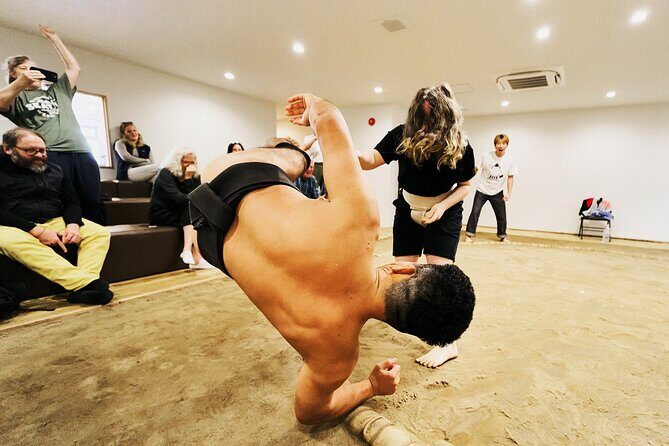
After the rituals and the big opening clash, the rest of the experience focuses on demonstrated technique. You’ll see how wrestlers set themselves, how grips and leverage work, and why certain body angles matter.
This is where the show does something smart: it doesn’t ask you to already be a sumo person. It turns you into one, temporarily. The guide’s role is to translate what you’re seeing into a simple set of takeaways.
A few things that consistently show up in the feedback from people who did this:
- The session is described as very educational, not just entertaining
- Staff come across as kind and welcoming
- The show balances information with laughs and energy
Even if you think you’ll only understand 30 percent of sumo by the end, that’s still a win. You’ll leave knowing what to look for next time you watch sumo on TV.
The audience challenge: what it feels like to step into the ring
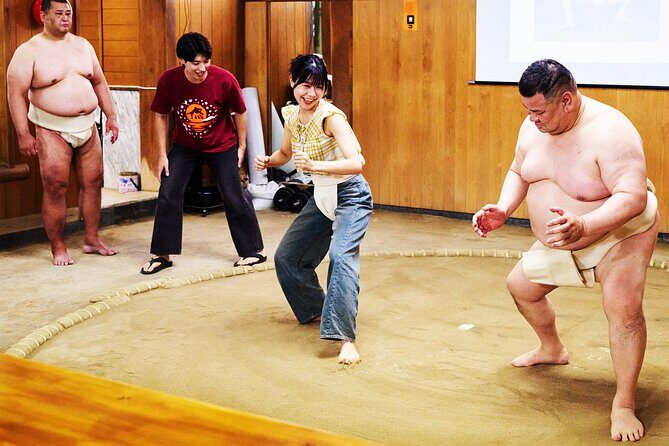
This is the part most people talk about, because it turns spectator time into hands-on time. There are limited spots to enter the ring and face a sumo wrestler yourself. That means you should treat the challenge as something you’re prepared for, not something you’ll casually do if it lines up.
Here’s how to think about it. You’re not just meeting a wrestler for a photo and calling it a day. You’re doing a short, guided, rule-based interaction that lets you feel how different sumo is from typical wrestling or martial arts impressions.
From what’s shared in the experience feedback, people often discover two things quickly:
1) The basics are harder than they look
2) The wrestlers stay respectful while still keeping things realistic
You may also get time to practice movements and get a chance to take a shot at a match. That practice angle is important because it makes the challenge feel doable. It’s not pure guesswork.
Limited spots also add a bit of pressure, in a good way. If you want to try, arrive with a clear mindset and listen closely when the staff explains what’s expected.





Comfort notes: clothes, sandals, and what to expect

Ring-challenge participants wear borrowed clothing and sandals. Some people have specifically mentioned that the sizes and fit may not work for everyone, so it’s worth planning for an imperfect fit.
What I’d do in your shoes, literally:
- Wear comfortable, easy-to-adjust clothing beforehand
- Bring water with you, if your day plan allows it (meals aren’t included)
- If you’re tall, broad, or very particular about footwear comfort, mentally prepare for a less-than-perfect borrowed sandal fit
This won’t ruin the experience for most people, because the goal is fun and learning, not a tailor-made outfit. Still, it’s the one practical detail that can affect comfort.
Price and value: why $55.50 can make sense
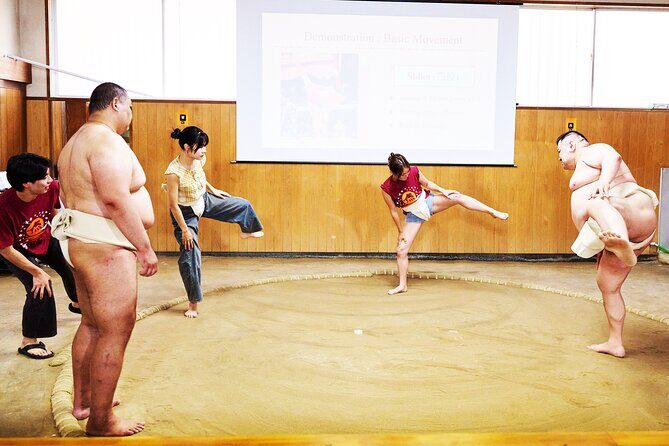
At $55.50 per person, you’re paying for more than a seat in a room. You’re paying for a guided explanation in English, a live sumo show segment, and the chance for a limited audience challenge.
To judge value, look at what’s bundled:
- English-speaking guide: you’re not left with guesswork
- Live demonstration: you’re seeing real technique and match dynamics
- Audience participation option: you might actually step in
- Small group size: fewer people means better attention and atmosphere
Compared with many activities that are either strictly passive or strictly instructional, this hybrid format helps. Beginners get context, and hands-on people get action.
One more value point: the experience lasts about 1 hour 30 minutes. That’s a manageable chunk of time that usually fits between other Osaka plans without stress.
Meeting point and timing: how to avoid last-minute stress
The meeting point is in Osaka’s Nishinari Ward:
Japan, 557-0032 Osaka, Nishinari Ward, Asahi, 1-chōme51 AIビル
It’s listed as near public transportation, which helps a lot in Osaka where transit options can change depending on where you start your day.
A practical tip: since the activity is time-based and the challenge spots are limited, show up early enough to settle in and get the instructions. If you’re hoping to participate, don’t treat the start time like a suggestion.
Also, you’ll use a mobile ticket. That means you should have your phone charged and your confirmation accessible.
Who this sumo experience is best for
This is a great fit if you fall into one of these groups:
- You’re new to sumo and want a clear, guided introduction
- You want live action with explanations, not just a performance with no context
- You like interactive activities and are curious about testing yourself in a controlled setting
- You’re traveling with someone else and want a shared, memorable story
It can also work well if you’re an actual sumo fan, because the tachiai and the rule-based explanation make it easier to “read” what you’re watching.
If you hate the idea of being involved at all, keep in mind that the show includes participation moments and there’s an audience challenge option. You can still enjoy the explanations and demonstrations even if you choose not to step in.
A balanced reality check before you book
The experience is high-rated and highly interactive, but it’s not a full day event. It’s compact. So if you’re looking for a long schedule with lots of downtime or multiple locations, this won’t match that vibe.
Also, participation isn’t guaranteed. The ring challenge is limited, which is part of why it feels special. If you want it, go in ready to try.
Finally, the borrowed clothing and sandals might not fit every body perfectly. That’s the main practical drawback that pops up, so take it seriously if comfort matters to you.
Should you book this Osaka sumo experience?
I’d book it if you want sumo in a format that’s easy to follow and fun to remember. The mix of show + explanations + a real chance to challenge a wrestler is what makes it good value, especially for first-timers.
I’d think twice only if you strongly dislike interactive components or you’re very concerned about clothing and sandal fit. Otherwise, it’s one of those Osaka activities that turns cultural curiosity into something you can actually feel in your bones.
FAQ
How long is the Osaka sumo experience?
It lasts about 1 hour 30 minutes.
What’s included in the ticket price?
You get the sumo show and an English-speaking guide.
Is a meal included?
No, meals are not included.
Can I participate in the ring challenge?
Most people can participate, but the ring challenge has limited spots, so it may not be available to everyone.
Is it a small group?
Yes. The experience has a maximum of 50 people.
What is the cancellation policy?
You can cancel for a full refund up to 24 hours before the experience starts.