REVIEW · KYOTO
Kyoto: Meet the Geisha Maiko with Gion Walking Tour
Book on GetYourGuide →Operated by Japan Wonder Travel · Bookable on GetYourGuide
Geisha culture feels close in Kyoto. Here you get rare access to a private ochaya where a maiko performs, then talks with you in plain, human terms.
Two things I really like are the way the morning (or afternoon) walk sets the mood in Gion, and the fact that the main moment isn’t only a show—it includes conversation with a maiko and a former geiko. One thing to consider: this is a stairs-and-socks kind of experience, and the venue rules are strict about what you can wear and where you can stand.
In This Review
- Key points to know before you go
- Why Gion First Matters: you learn the streets, not just the costumes
- Meeting points and the kimono option: plan for socks, short walks, and stairs
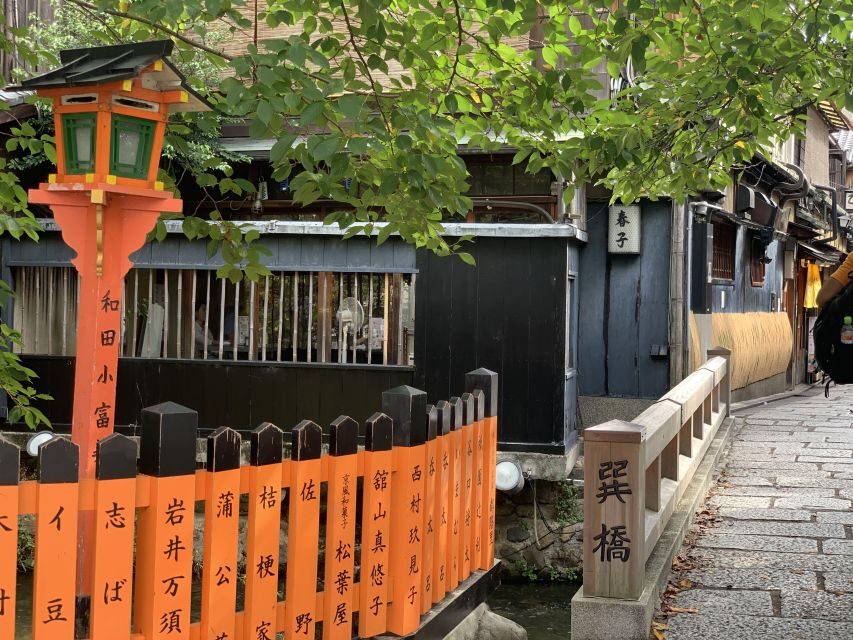
- The Gion walking circuit: Shirakawa Canal to Hanamikoji in a guided rhythm
- Gion Corner, Kenninji, and Miyagawasuji: where the vibe shifts from streets to stories
- The ochaya meeting: private residence energy, strict venue rules, and respectful access
- Maiko performance + former geiko conversation: the part people talk about afterward
- Photo etiquette that actually works: when you can shoot and what you can’t post
- Timing reality: 3–5 hours, but plan like it might run long
- Who should book this Kyoto maiko experience (and who shouldn’t)
- Price and value: why $106 can feel fair for what you get
- Should you book? My straight advice
- FAQ
- How long is the Kyoto Gion Walking Tour with Maiko and Geiko?
- Where do we meet for the tour?
- Is an English guide included?
- Do I need to bring anything?
- Can I take photos or record video?
- Can I post the maiko’s photos online?
- What happens if it rains?
- Is the venue accessible for people with mobility issues?
Key points to know before you go
- Private ochaya access: you meet a maiko and a former geiko in a residence-like tea-house setting.
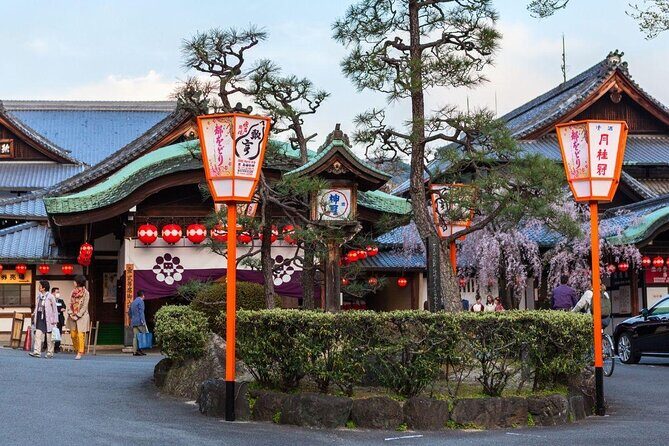
- Gion walk with real context: you cover classic streets and landmarks before the performance.
- Show + Q&A is the main event: the dance is short, but the questions and stories are long enough to matter.
- Photo time has boundaries: you can photograph during the performance and a dedicated photo session, with upload rules to follow.
- Practical constraints: bring socks, expect stairs, and plan for rain-or-shine walking.
Why Gion First Matters: you learn the streets, not just the costumes
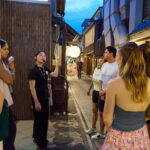
This tour works because it teaches you how to read Gion before you see geisha life up close. You start with a guided walk through the area where maiko and geiko practice, live around, and move through daily routines. The streets suddenly make sense: the narrow lanes, the sightlines, and why people keep certain distances.
I like that the walking portion isn’t just scenic strolling. It’s structured with stops such as the Shirakawa Canal, Tatsumi-jinja Shrine, and Hanamikoji Street, with a guide explaining what you’re actually looking at. That means when you later sit in the ochaya, the stories land faster.
Do note the timing can feel tight if you’re the type who needs long breaks. Also, if you’re hoping for a full temple-and-gardens sightseeing day, this isn’t that kind of tour. It’s focused on the geisha world.
You can also read our reviews of more walking tours in Kyoto

Meeting points and the kimono option: plan for socks, short walks, and stairs
You’ll have a choice that changes the vibe: you may meet at the Izumo-no-Okuni statue area (for the kimono rental option) or at Shirakawa Canal depending on booking. If you rent kimono, you’ll change clothes first, then go to the Izumo-no-Okuni statue by yourself—about a 3-minute walk—where your guide waits. That’s simple, but it’s also easy to miss if you wander off taking photos too early.
Here’s the practical part: you must wear socks at the performance venue. And because the tour runs rain or shine, you need to think about what happens if it pours. The venue has a clear rule that no wet clothes and socks are allowed at the venue on rainy days. Bring an umbrella for the walk, and if you get soaked on the street, you’ll want a quick plan to dry off before you arrive.
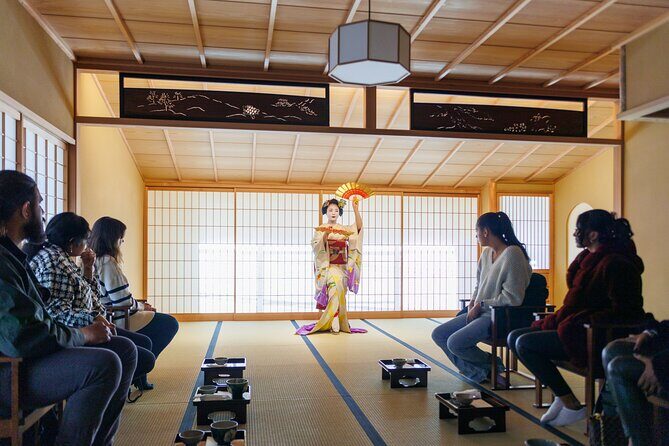
Finally, the performance happens on the second floor of a private house, and you can only access it by stairs. If anyone in your group has mobility concerns, this is worth factoring in early.
The Gion walking circuit: Shirakawa Canal to Hanamikoji in a guided rhythm
The tour’s walking segment is about 70–80 minutes, and it’s paced so you can still absorb details. You begin with the Shirakawa Canal area, then move through key Gion touchpoints that make the district feel real instead of photo-backdrop-y.
Shirakawa Canal (about 30 minutes guide time)
This stop helps you get oriented quickly. The guide points out how Gion’s geography shapes movement and why certain spots became known for teahouse culture over time. It’s a good warm-up: you’re not yet in performance mode, but you’re learning what to watch for.
Tatsumi-jinja Shrine (short guided visit)
It’s brief—about 5 minutes—but this kind of stop matters. Even if you only skim the area, it adds a layer of local religion and ritual that helps explain why the geisha world isn’t floating in a vacuum. It’s part of Kyoto’s everyday cultural framework.
Hanamikoji Street (around 10 minutes)
Hanamikoji is the classic “you’re in Gion now” street. You’ll get context from your guide on what the street represents and how it connects to the broader geisha neighborhood. I like that the tour doesn’t treat it as a single photo stop; you’re guided to notice details instead.
If you’re doing Kyoto for the first time, this is an efficient way to get bearings fast. If you already know Gion well, you might find a few parts overlap with what you’ve seen—but the payoff comes later in the ochaya meeting.
Gion Corner, Kenninji, and Miyagawasuji: where the vibe shifts from streets to stories
The tour continues with a few short “texture stops” that keep you moving while your guide builds context.
Gion Corner
This isn’t presented as a long museum-style visit. It’s more like a guided orientation, helping you place what you’re about to experience into the larger Kyoto picture. Think of it as set-up, not the main show.
Kenninji Temple photo stop (about 15 minutes)
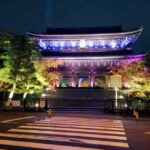
You get a photo moment plus a short guided look. The temple time is limited, so don’t plan on a slow, inside-the-halls kind of visit. Still, it’s a nice contrast: you see geisha life adjacent to Kyoto’s broader temple culture.
Miyagawasuji (about 1.5 hours, plus final finish nearby)
This is where the tour’s flow opens up. You’ll spend more time in this area—both for visiting and for photo opportunities. Even after the ochaya experience, this stop helps you end in a part of Gion that feels grounded and lived-in.
The ochaya meeting: private residence energy, strict venue rules, and respectful access
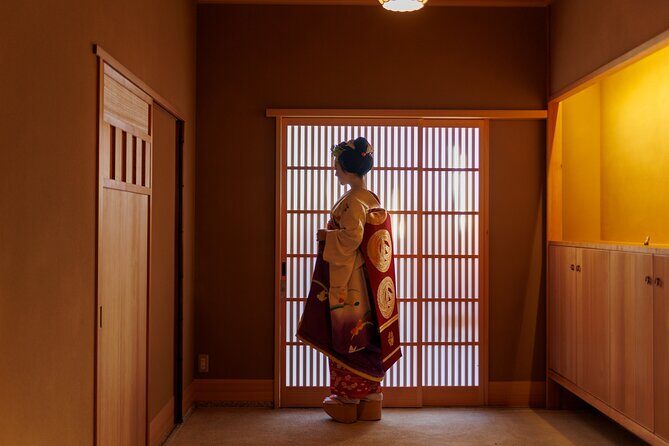
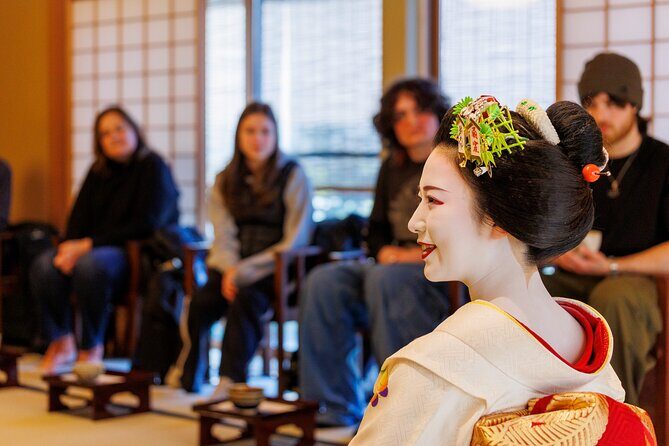
The heart of the tour is the meeting at Ochaya, a private tea-house venue. This is not the usual “watch from across the room” setup you see in many public performances. You’re entering a space designed for hospitality and intimate hosting, and you’re there under specific etiquette rules.
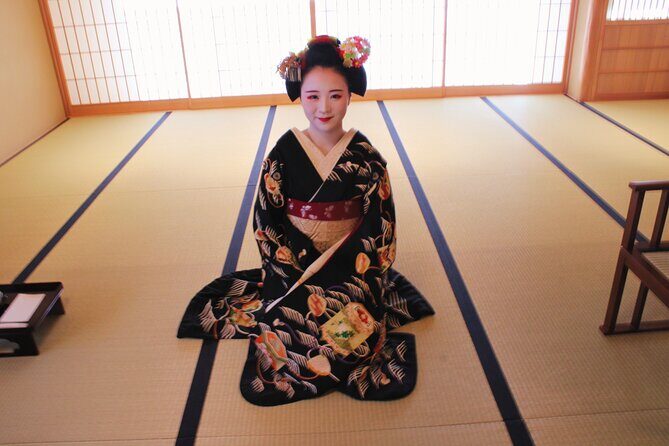
First, you’ll meet a maiko (an apprentice geisha) and a former geiko. That combination is a big deal. A lot of performances show you artistry. This one also offers you lived perspective—how training works, what daily life feels like, and how tradition survives modern Kyoto.
Second, venue access matters. The performance is held on the 2nd floor, accessible by stairs only. If you’re traveling with anyone who struggles with stairs, you’ll want to reconsider.
Third, dress and wet-weather rules aren’t optional. You’ll wear socks for the performance, and on rainy days you can’t bring wet socks or wet clothes into the venue. That rule might sound strict, but it’s also part of how these traditional spaces keep things clean and controlled.

Maiko performance + former geiko conversation: the part people talk about afterward
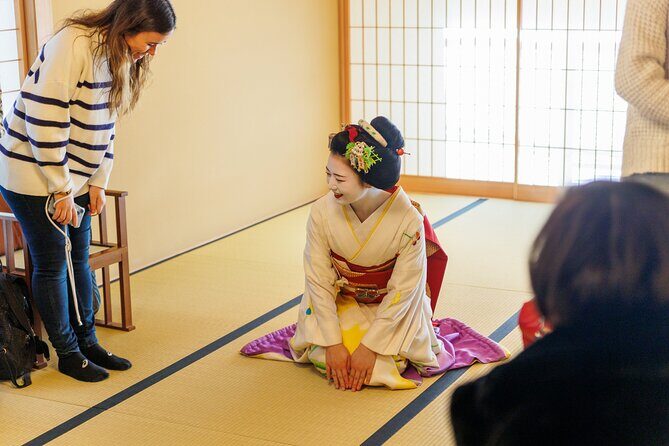
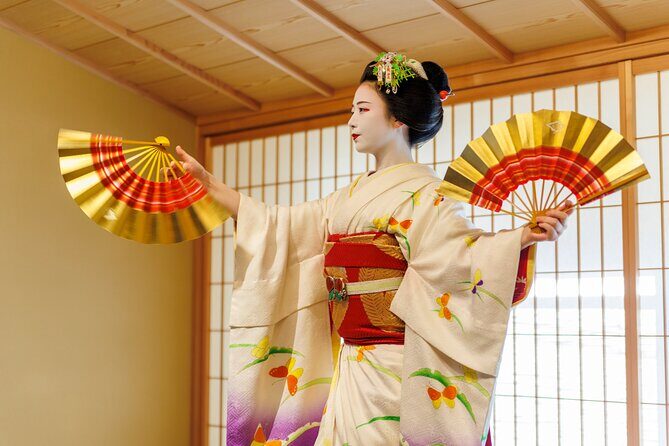
The live performance includes 1–2 dances by the maiko. The standout here is not the length of the show. It’s the way the experience shifts right into conversation afterward.
Many people love the performance itself because the maiko’s appearance hits hard: colorful kimono, detailed hairwork, and that poised way of moving that looks almost impossible until you see it in real time. One review mentioned Maiko Hidenagi presenting two dances, and described the session as breathtaking as soon as she entered the room.
But the conversation is what makes this tour feel like cultural exchange instead of entertainment. You’ll have a Q&A with the maiko, plus a conversation with a former geiko and the venue owner. In one account, the discussion lasted a long time and included warm laughter and detailed stories about the life. That’s the real value: you get answers to questions you would never think to ask unless you were actually in the room.
Expect candid topics like training and tradition, and you’ll also hear how roles in the geisha world evolve. Guides often translate throughout the session, and multiple reviews mention guides doing patient, clear English support—names like Takuma, Mika, Yuko, Ellie, Eric, Tom, Ayako, Naomi, and Chiko/Chika appear in the feedback. Your exact guide may differ, but the pattern is consistent: you’re meant to understand what’s being shared.
Photo etiquette that actually works: when you can shoot and what you can’t post
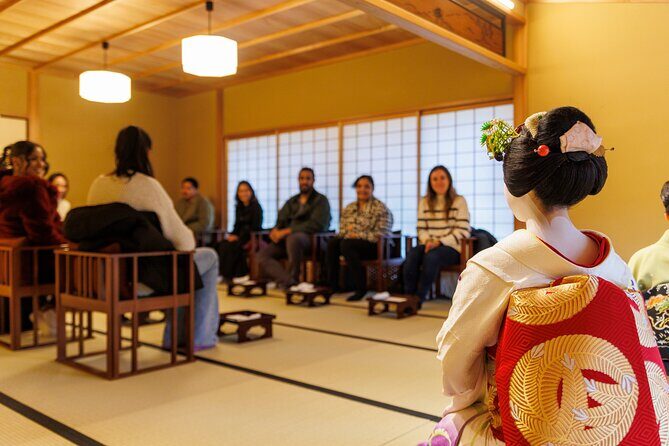
If photos are a priority for you (and in Kyoto, they usually are), you’ll want to know the rules before you pull out your phone.
Photography and video recording are allowed only during:
- the performance, and
- the photo session.
After that, you’ll need to stop. And there’s an extra rule that matters if you care about posting online: if you want to upload Maiko photos to the internet, you must obtain direct permission from the maiko beforehand.
Also, you cannot upload any video on the internet. So if your plan is a full Instagram reel, adjust your expectations. Aim for a few strong stills during the allowed windows, then focus on listening during the conversation.
Practical tip: if you’re wearing kimono, take a quick moment before the performance time to check that your socks and footwear situation is correct. One review mentions kimono fitting as a highlight, but the venue still demands socks at the performance.
Timing reality: 3–5 hours, but plan like it might run long
On paper, you’re looking at 3–5 hours total. In practice, some sessions can run a bit longer depending on the day. One review specifically noted the tour ending around 3:15, even when they expected it to be shorter.
Here’s how to protect your schedule: give yourself padding afterward, especially if you’re catching a train or making dinner reservations with zero flexibility. This tour ends in the Miyagawasuji area, so you’ll be well-placed to continue exploring, but you don’t want to sprint from the venue to a strict timetable.
If you’re doing Kyoto on a fast track, this is still doable, but don’t schedule this as the “one thing before your next overnight train departs” activity.
Who should book this Kyoto maiko experience (and who shouldn’t)
This is a great fit if you want more than a performance. You’ll enjoy it most if you genuinely like questions, cultural context, and people-to-people conversation. It’s also a strong choice if you want a kimono moment: multiple reviews mention the kimono rental experience as fun and memorable.
You should think twice if:
- you’re bringing a child under 10 (not suitable),
- you use a wheelchair or have mobility impairments (not suitable),
- you’re expecting a long, sightseeing-heavy day (it’s focused on Gion and the ochaya meeting),
- you’re counting on filming to post later (video upload isn’t allowed).
It’s also worth noting the group is small. One review said their group was only seven people, which helps keep the conversation feeling personal instead of rushed.
Price and value: why $106 can feel fair for what you get
At $106 per person for about 3–5 hours, this isn’t a budget add-on. But it also isn’t a generic “look, but don’t touch” cultural show.
The value comes from three things:
- Rare access to a private ochaya setting (not a public stage),
- direct Q&A with a maiko and conversation with a former geiko and venue owner,
- and the fact that you also get guided context in Gion before you enter the room.
A lot of Kyoto geisha performances are harder to access, often tied to specific networks or memberships. What you’re paying for here is access plus translation-friendly conversation—time with the people who know the tradition from the inside.
If you want check-the-box photos only, you might find better value elsewhere. If you want to understand the culture and ask questions, this tends to land as money well spent.
Should you book? My straight advice
Book this if you want a real-world look at the geisha world with context, conversation, and etiquette-respecting access. The part most people remember isn’t just the dance. It’s the chance to hear stories and ask questions in an intimate setting.
Skip or reconsider if you need a low-stairs plan, hate socks-in-venue rules, or want heavy filming. Also, if your schedule is razor-thin, build in buffer time since the tour can run longer.
If you match the fit—curious, respectful, and ready for a guided Gion walk plus a private ochaya encounter—this is one of the more meaningful Kyoto cultural experiences you can book.
FAQ
How long is the Kyoto Gion Walking Tour with Maiko and Geiko?
The experience lasts about 3–5 hours total, including the guided walk, the maiko meeting, and the performance and conversation time.
Where do we meet for the tour?
The meeting point can vary depending on the option you book. The options mentioned include the area around the Izumo-no-Okuni statue and also Shirakawa Canal.
Is an English guide included?
Yes. The tour includes an English-speaking local guide, and the activity is described as available in English.
Do I need to bring anything?
You need to bring socks. Socks are specifically required at the performance venue.
Can I take photos or record video?
Photography and video recording are allowed only during the performance and during the photo session. You cannot upload any video on the internet.
Can I post the maiko’s photos online?
You can’t assume permission is automatic. If you want to upload Maiko photos on the internet, you need to obtain direct permission from the maiko beforehand.
What happens if it rains?
The tour runs rain or shine. During rainy conditions, the venue does not allow wet clothes and socks, so you’ll want to use an umbrella during the walk.
Is the venue accessible for people with mobility issues?
No. The activity is not suitable for people with mobility impairments or wheelchair users, because the performance takes place on the second floor with stairs access.