REVIEW · KYOTO
Kyoto: Meet-and-Greet, Maiko Show and Experience
Book on GetYourGuide →Operated by Kyoto Handicraft Center, Amita Corp. · Bookable on GetYourGuide
A Kyoto Maiko in 45 minutes? You can. This is a small, respectful meet-and-greet with two short traditional dances, plus an English explanation of her kimono, makeup, and training. You’ll also get time for Q&A and a commemorative photo.
What I like most is how direct the teaching feels. The English-speaking staff gives you enough background to actually understand what you’re seeing, from the look of a Maiko to why the gestures matter.
My one caution: it’s family-friendly and not a private show, so if you’re sensitive to noise or slow pace, you’ll want to arrive on time and settle in calmly.
In This Review
- Key Things You’ll Notice Right Away
- Meet a Maiko Where the Arts Actually Live
- Where It Happens: Kyoto Handicraft Center, West Building
- The 45-Minute Flow: Two Dances, Then Conversation, Then Photos
- The Dances: Short, Beautiful, and Surprisingly Detailed
- Q&A with the Maiko: The Part That Makes It Worth $44
- The Attire Lesson: Kimono, Hairpieces, Makeup, and Meaning
- The Photo Session: Your Camera, Your Shot, 10–15 Minutes
- Gift and Shopping: Kyoto Handicraft Center After the Show
- Price and Value: Is $44 Reasonable?
- Who Should Book This (and Who Might Skip)
- Practical Advice: Make Kyoto Logistics Less Stressful
- Should You Book the Kyoto Meet-and-Greet?
- FAQ
- How long is the Kyoto Maiko meet-and-greet?
- Where do I go for the meeting point?
- Is this a private activity?
- Is there English support during the event?
- Can I take photos during the show?
- Is the photo session included?
- What is included in the ticket price?
- Are meals included?
Key Things You’ll Notice Right Away
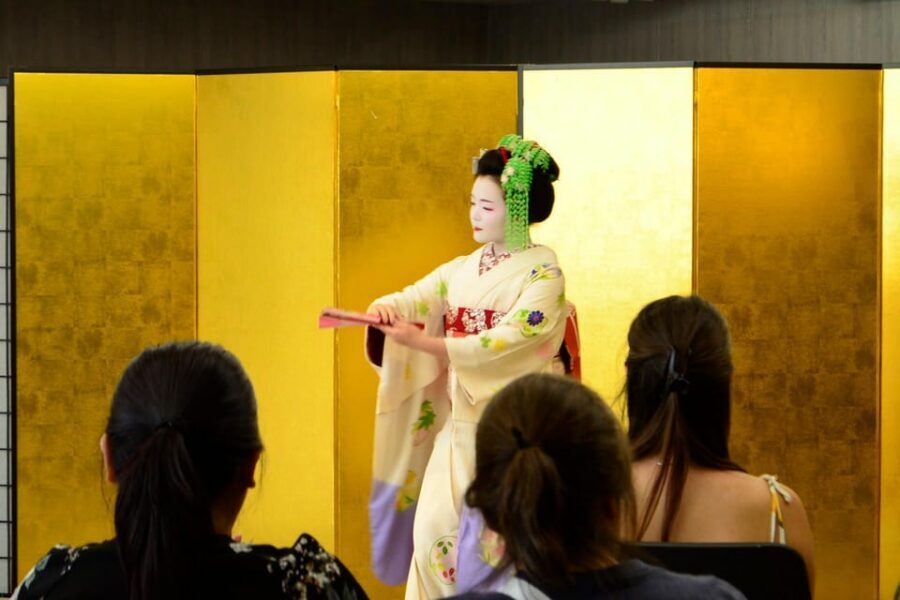
- Up-close sightlines for two short dance performances: You’re close enough to see the detail that usually gets lost from afar.
- English guidance that explains attire and meaning: Your view becomes clearer, not just prettier.
- A real Q&A time with the Maiko: You get answers about training and life that you can’t easily pick up from signage.
- Your own-camera photo session: You control the shot, and you don’t wait for a hired photographer.
- A shop stop right after: You can turn the cultural experience into souvenirs without scrambling across town.
- Small-group format capped at 30: It stays intimate, and questions feel possible for more than a few people.
Meet a Maiko Where the Arts Actually Live
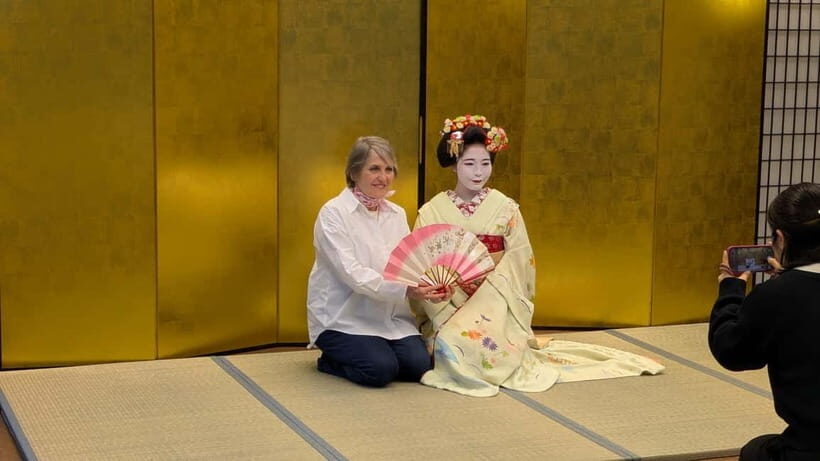
Kyoto is famous for geisha culture, but it’s also easy to turn that culture into a quick photo stop. This experience is different. You go to the Kyoto Handicraft Center, you watch a Maiko perform, and then you talk with her like a person with a craft—not like a prop.
A Maiko is a young apprentice geisha (also called geiko) from Kyoto. She wears intricate kimono, wears glamorous hairstyles with distinctive hairpieces, and her makeup is unmistakable: white face paint with red and black accents. She also goes through serious training in traditional arts like dance, music, and the tea ceremony, along with learning conversation, etiquette, and hospitality. That mix—art plus social polish—is what makes this culture so specific to Kyoto.
This is not a long theatre night. The whole event runs 45 minutes, with 8 to 10 minutes of dance inside that. The value is in what you understand while you watch, and in the way you get to ask questions afterward.
If you like cultural experiences that feel respectful and structured, you’ll likely enjoy this. If you’re expecting a full-length performance show, you may feel the clock move fast.
A few more Kyoto tours and experiences worth a look

Where It Happens: Kyoto Handicraft Center, West Building
You meet at the Kyoto Handicraft Center, West Building. Go inside, take the elevator to the 2nd floor, and look for the MEET MAIKO welcome sign.
This matters because Kyoto can be confusing when you’re juggling trains, buses, and walking. Having a specific indoor meeting point with a clear sign makes the start easier, especially in busy seasons.
Also, the venue is part of a bigger arts-and-gifts environment. That means you can get your bearings quickly. Reception opens 30 minutes before show time, so you’re not forced to rush in at the last second.
Seating is the simple kind: free seats, and everyone can sit. The event is designed so people can enter even if they arrive late, but your best move is still to arrive about 10 minutes early. You’ll avoid getting seated while the performance is already underway.
The 45-Minute Flow: Two Dances, Then Conversation, Then Photos
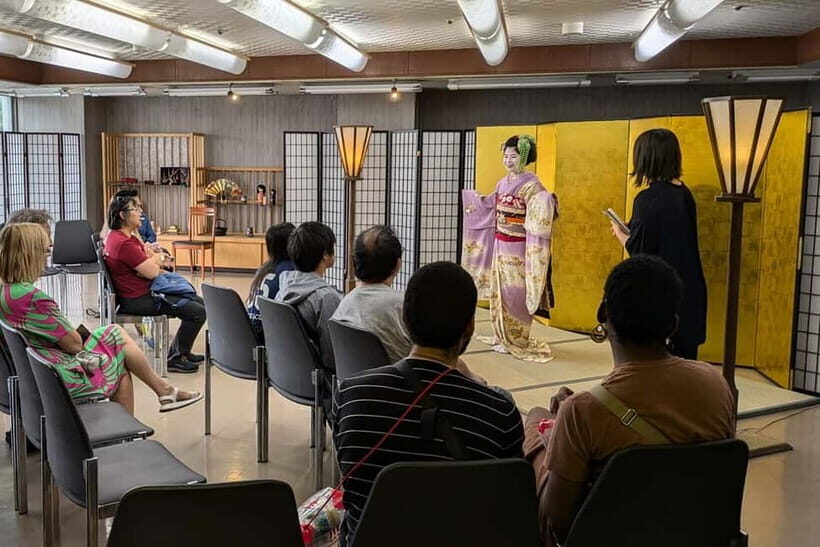
The timing is tight, and that’s part of the charm. You’re not trapped in a long script. You’re guided through a compact arc: introduction, dance, Q&A, photo, and then a small gift.
Here’s what the rhythm looks like:
- The introduction starts and the staff invites the Maiko to the stage.
- You watch two traditional dance performances, with a total dance time around 8–10 minutes.
- English-speaking staff explains key things: background info and what her attire and look represent.
- You get Q&A time, where you can ask questions and chat with the Maiko.
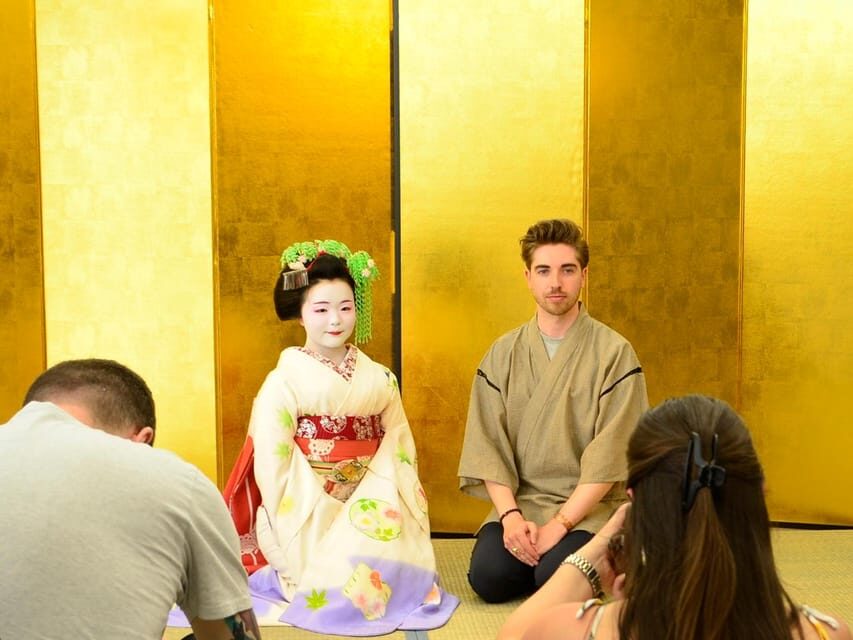
- After that, there’s 10–15 minutes for taking pictures with her using your own camera or smartphone.
- When you leave, you’re provided a small gift, and you have a chance to shop at the Kyoto Handicraft Center right after.
The staff moderation is a big part of the value. When the event runs smoothly, it prevents the common problem with cultural shows: you watch something beautiful but don’t connect it to real meaning.
And the Q&A is where the experience becomes personal. It’s one thing to read about training and etiquette. It’s another to ask questions and get answers from the person practicing the craft.
The Dances: Short, Beautiful, and Surprisingly Detailed
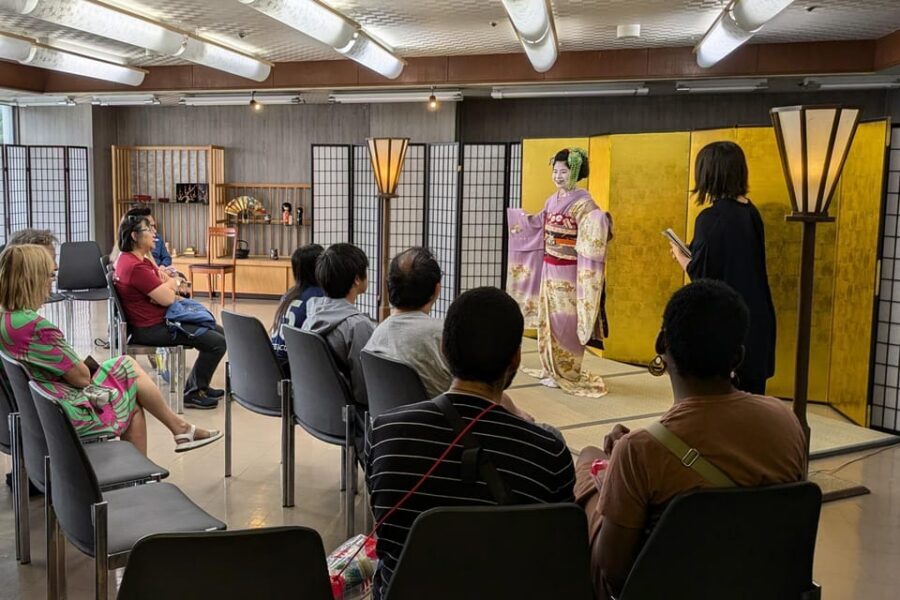
You come for the Maiko dance, and you leave having seen more than motion. The dances are traditional, and your job as a viewer is easier because the staff gives context before the dancing starts.
Because the dance time is short, every gesture has weight. You’re not waiting around for the “good part” to begin. You also aren’t stuck through a long stretch where your attention might drift.
The payoff is closer than you’d expect from typical tourist performances. The Maiko is presented in a way that lets you see the subtlety of her performance. You’re watching a trained craft, not a staged costume show.
One thing to keep your expectations realistic: this is two dance pieces totaling 8–10 minutes, not a full evening of choreography. If what you want most is nonstop performance, you might want to pair this with another cultural stop later that same day.
Q&A with the Maiko: The Part That Makes It Worth $44
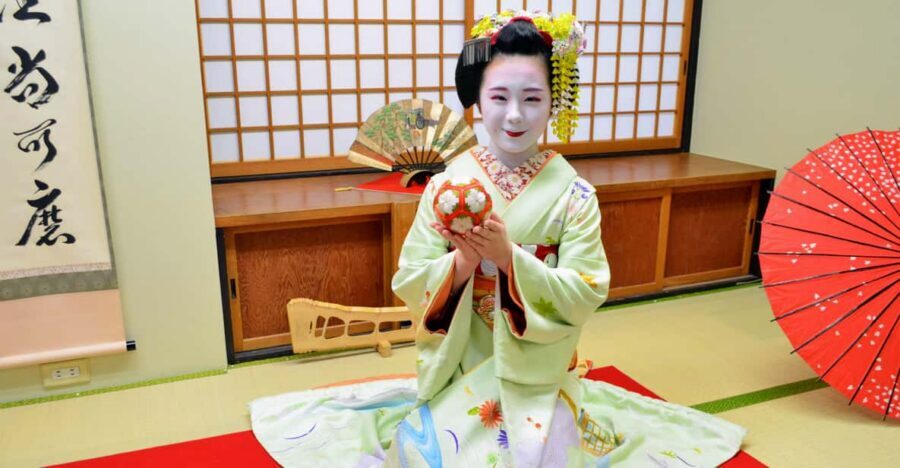
The most praised element of the experience is the interaction. The English-speaking moderator helps translate and keep the conversation flowing, and the Maiko gets time to answer questions.
This is where you learn the details that matter. The staff explains background info, but your questions shape what you end up caring about: her training, what daily practice looks like, and what the life path involves.
It also helps that the format is small. The event capacity is 30 people, which means more time for more voices. You don’t feel like you’re shouting at a stage.
You might notice that people love the emotional tone of the Q&A too. One participant connected with the idea that a Maiko—sometimes very young—is choosing this path and carrying responsibility while still learning. That kind of perspective makes the performance feel like it belongs to a living tradition.
Name drop note: some sessions have been praised for specific English interpreters, including Mina, and for a Maiko named Kanoshizu-san. Your event may feature different staff and a different Maiko, but the important point is that the moderation quality is a key strength here.



The Attire Lesson: Kimono, Hairpieces, Makeup, and Meaning
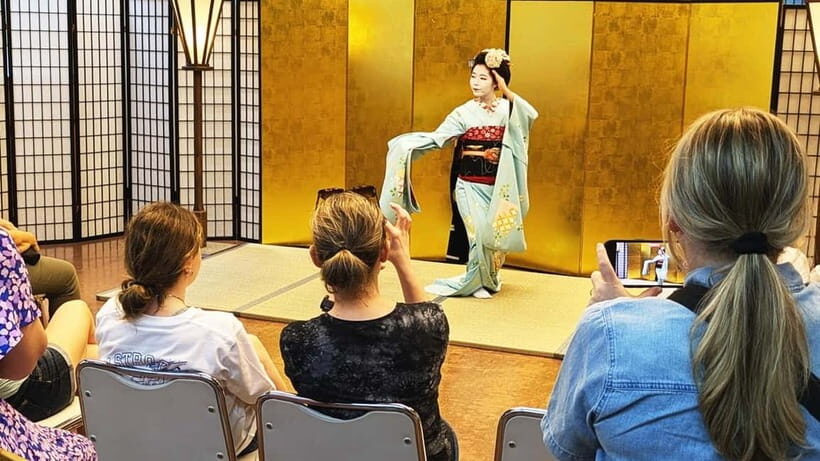
If you’ve ever looked at Maiko photos and thought, I can’t tell what’s decoration and what’s purpose—this helps.
Before and during the dances, the staff gives an English explanation of the Maiko’s look. You’ll learn about the kimono’s role, the distinctive hairstyle and hairpieces, and the makeup style with the white face paint and red/black accents.
Why this matters: when you understand the visual language, you start noticing how the performance is framed. Clothing isn’t just pretty. It’s part of how the body moves and how gestures land.
And once you understand the basics, your camera work improves too. You’ll know what to focus on instead of getting lost in everything at once.
The Photo Session: Your Camera, Your Shot, 10–15 Minutes
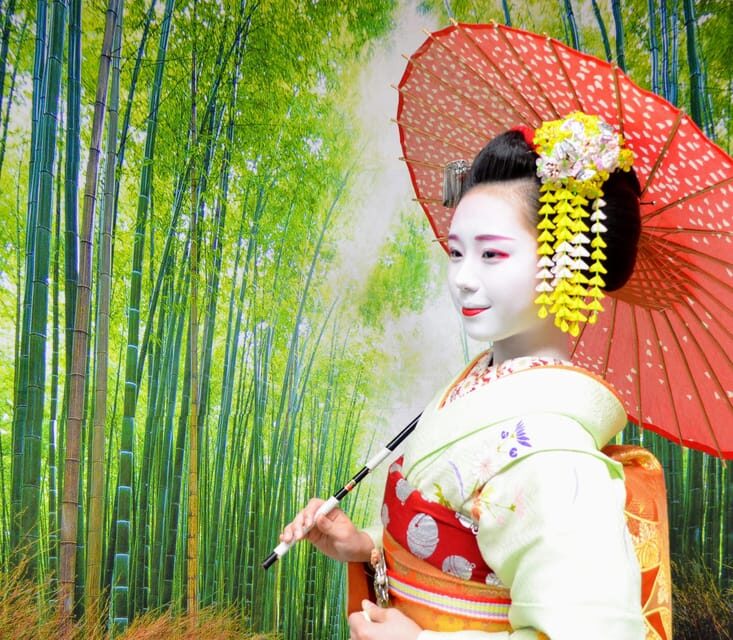
Yes, you’ll get a photo. And this is more practical than it sounds.
The photo time is 10–15 minutes, and you use your own camera or smartphone. That means:
- you can set your own angle,
- you can choose the moment you like,
- and you don’t end up paying extra for a separate photographer.
The tradeoff is crowd flow. Because it’s shared with a group, the session is timed. Keep your phone charged and your camera ready. Decide before you step up: horizontal or vertical, and whether you want a close shot or a full outfit shot.
Also remember: photography is allowed during the event. That’s great for keeping the memory real. Still, don’t turn it into a distraction festival. Take a few thoughtful shots, then watch with your eyes.
Gift and Shopping: Kyoto Handicraft Center After the Show
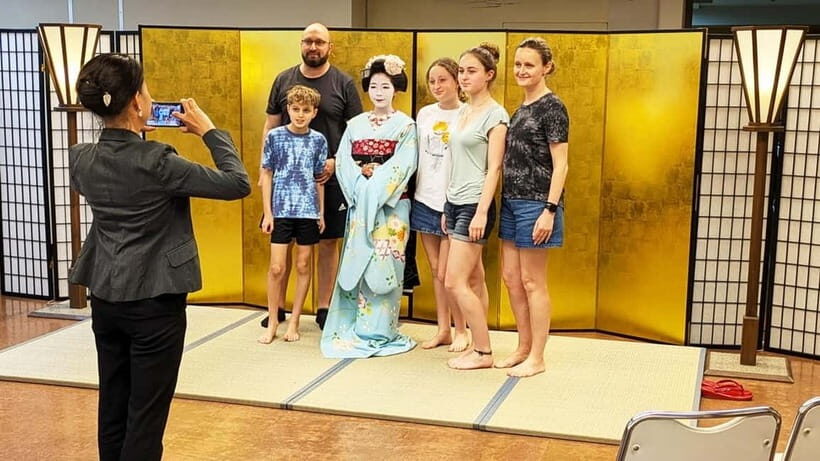
When the performance ends, you’re handed a small souvenir gift. Then you have a chance to shop at the Kyoto Handicraft Center right after.
This “stay put and shop” design is useful in Kyoto. It prevents a common scenario where you rush to a show, scramble for a snack, then realize you’re too tired to shop for anything meaningful.
The center is full of Japanese goods. People especially enjoy that it’s not just a generic souvenir corner. Even if you don’t buy much, it gives you something calm to do right after your photo session.
A practical tip: if you want to shop, do it right after. Your energy level drops later, and the event is the reason you’re already there.
Price and Value: Is $44 Reasonable?
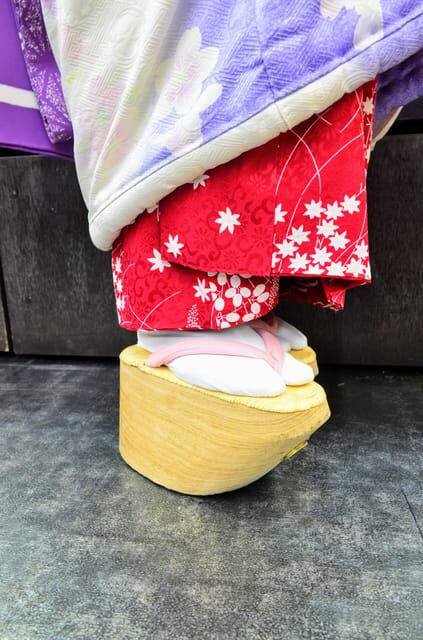
At $44 per person for 45 minutes, it might sound like a small slice. But the pricing makes more sense when you look at what’s included.
You’re paying for:
- two short dance performances (8–10 minutes total),
- English-speaking guidance and explanation,
- a moderated Q&A with the Maiko,
- a photo session with her using your own camera,
- and a small gift.
Most importantly, you’re paying for access. Not private access to a person for hours, but a structured, respectful moment that you usually don’t get in Kyoto without paying more or taking a bigger risk on quality.
Where the value can feel weaker: if you’re mainly chasing a long performance, the dance time is brief. And if you want a professionally taken photo, that’s not included. You’re doing it yourself.
Still, for the combination of education plus interaction plus photo, the experience is priced fairly for what it tries to deliver.
Who Should Book This (and Who Might Skip)
This is a strong fit if you:
- want a close-up introduction to Maiko culture without getting lost in research,
- like Q&A with the actual performer,
- want an experience that doesn’t feel sleazy or exploitative,
- and prefer a compact event that you can build into a Kyoto day.
It’s also great for families, since children age 0–2 can join free of charge as long as they don’t take separate seats.
Here’s the honest caution. Because it’s a shared, family-friendly show, you may run into noise from kids during the performance. One person described an uncomfortable moment when children were screaming. The host did their best to manage it, and the event still impressed people, but it’s worth considering if you’re easily distracted by sound.
If you’re sensitive to that kind of disruption, you’ll want to arrive early, choose a seat where you can focus, and keep your expectations flexible.
Practical Advice: Make Kyoto Logistics Less Stressful
Kyoto can be chaotic at peak times. Taxis can be hard to catch, and city buses can be crowded. Build in extra time so you’re not sprinting across sidewalks when you should be settling into the venue.
Also, this experience is conducted in English, and the moderator helps bridge the gap. Still, the event moves on schedule. Keep your questions ready, but don’t plan on asking a long essay-style interview.
If you wear something comfortable for sitting and standing, you’ll enjoy it more. You’ll likely be moving through the space for seating, then staying put for the performance and photo flow.
Finally, charge your phone. It sounds obvious, but the photo moment is a core memory. Don’t let battery anxiety ruin it.
Should You Book the Kyoto Meet-and-Greet?
I think you should book this if you want an efficient, respectful introduction to Maiko culture with the best part built in: watching the dances and asking questions in real time. The format is short, but the value comes from understanding and interaction, not just spectacle.
Skip it only if your top priority is a long, uninterrupted performance. This is two short dances inside a tight schedule, followed by conversation and photos. If that matches what you’re after, you’ll likely feel like the $44 buys you something more than a pretty show.
If you’re on the fence, a smart approach is to pair it with another Kyoto activity later the same day so you get both the cultural lesson and the full day energy. And if your schedule is flexible, you can book and pay later, plus cancel up to 24 hours in advance for a full refund.
FAQ
How long is the Kyoto Maiko meet-and-greet?
The experience lasts 45 minutes.
Where do I go for the meeting point?
Go to the Kyoto Handicraft Center (West Building). On the first floor, take the elevator to the 2nd floor and look for the MEET MAIKO welcome sign.
Is this a private activity?
No. It is not private. You join other participants, and the capacity is 30 people.
Is there English support during the event?
Yes. The event is conducted in English with English-speaking staff.
Can I take photos during the show?
Yes. Photography is allowed during the event, and there is also a dedicated photo session at the end using your own camera or smartphone.
Is the photo session included?
Yes. You get a commemorative photo session with the Maiko, and you use your own camera or smartphone. A separate photographer is not included.
What is included in the ticket price?
Included: English-speaking staff, viewing the dance performances, Q&A, a commemorative photo with the Maiko, and a small souvenir gift.
Are meals included?
No. Meal and drinks are not included.