REVIEW · KYOTO
Kyoto: Gion Walking Tour
Book on GetYourGuide →Operated by LAMBDA CUBE LLC · Bookable on GetYourGuide
Gion feels close enough to touch. This 2-hour Kyoto Gion walking tour puts you in the alleyways and preserved neighborhood streets, with a guide who keeps the pace easy and the group small. I like the small-group size (max 6) because you actually get time to ask questions and hear the details, even in busy areas.
What I really like is how it connects more than one side of Gion. In the span of a short walk, you visit three hanamachi—Pontocho, Gion-Kobu, and Gion-Higashi—and you learn how the district’s identity ties back to the local shrines, too. Guides such as Jose and Saskia bring it to life with stories, and they’ll use their iPad for photos/videos to help you see what you might be missing from street level.
One thing to plan around: a maiko or geiko sighting is not guaranteed, and Hanamikoji-dori isn’t included. If you’re expecting a nonstop parade of famous faces on camera, this tour is better for the history-and-place lovers.
In This Review
- Key Things You’ll Notice on This Kyoto Gion Walk
- Finding the Right Start Point: Disney Store on Shijo-Kawaramachi
- How a 2-Hour Gion Tour Stays Personal (Even in a Crowded District)
- Pontocho Alleys and the Kamogawa Side of Kyoto
- Entering the Hanamachi World: Gion-Kobu North and Gion Shiragawa
- Gion-Higashi and Yasaka Shrine: Why Gion Has That Name
- The Scope: What You Do (and Don’t) Get in 2 Hours
- Included focus areas
- Things to know before you set expectations
- Price and Value: Is $35 for a Gion Guide Worth It?
- Who This Kyoto Gion Tour Suits Best
- Should You Book This Kyoto Gion Walking Tour?
- FAQ
- How long is the Kyoto Gion walking tour?
- What is the group size?
- Where do we meet for the tour?
- Which languages are available?
- Which parts of Gion are visited?
- Is seeing a maiko or geiko guaranteed?
- Is Hanamikoji-dori included?
- What should I bring?
Key Things You’ll Notice on This Kyoto Gion Walk
- Max 6 people means fewer bottlenecks and more real conversation as you go
- Three hanamachi in 2 hours: Pontocho, Gion-Kobu, and Gion-Higashi
- Pontocho + Kamogawa-area landmarks help you understand where entertainment culture overlaps with everyday Kyoto
- Tatsumi Jinja and two bridges break up the walk and add context you’d likely miss solo
- Yasaka Shrine (Gion’s-name connection) ties the district to a history stretch of over 1100 years
- Cherry blossom season can mean a slightly altered route to showcase sakura around Gion
Finding the Right Start Point: Disney Store on Shijo-Kawaramachi
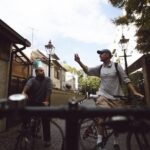
This tour begins in the center of Kyoto, at the Disney Store – Kyoto Shijo-Kawaramachi. The guide will be seated out front, waiting for your group, holding an iPad with the Get Your Guide image and the tour title on it—so you don’t have to guess.
Why this matters: good tours start on time, and this one is built for that. You’re not hunting for a meeting spot while your morning (or midday) slips away.
If you’re doing the 9:45 or 12:30 departure, you may also be able to add a free visit to the Gion Gallery if you extend your time. That’s a nice option if you want a bit more context after your walk, without paying for another ticketed activity.
Bring the basics: comfortable shoes (you’ll cover about 3.3 km / 2 miles), plus water, sunscreen, and an umbrella if the weather looks questionable.
You can also read our reviews of more walking tours in Kyoto


How a 2-Hour Gion Tour Stays Personal (Even in a Crowded District)
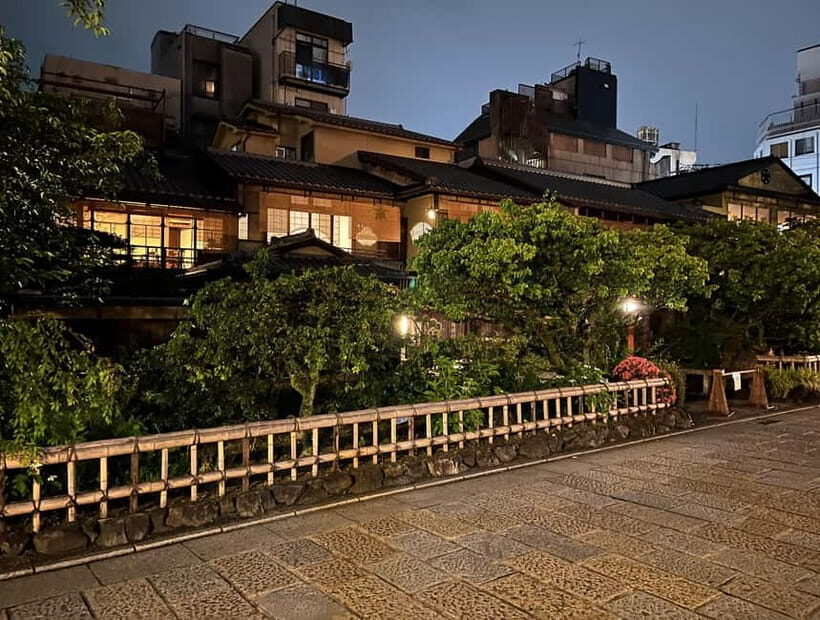
This walk is short on purpose. You’re on foot for about 2 hours, covering roughly 3.3 km, and the route is designed so the story keeps moving instead of turning into a long stream of quiet looking.
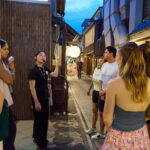
The best part is the format. With only up to 6 participants, the guide can:
- pause often for explanations,
- answer questions as they come up,
- adjust the talk toward what you care about.
That question-driven style is a big deal. Several guides (including Jose and Saskia) are described as treating the tour like a back-and-forth conversation, not a one-way lecture. One reviewer even joked that the guides could connect geisha-related topics to oddly specific interests—so if you’re the kind of person who keeps asking why something exists, this is a good fit.
Also, the guide uses tech. You’ll often see the iPad used to share extra images/videos, which helps when you’re standing in front of something that looks simple until someone gives you the historical layer.
Pontocho Alleys and the Kamogawa Side of Kyoto
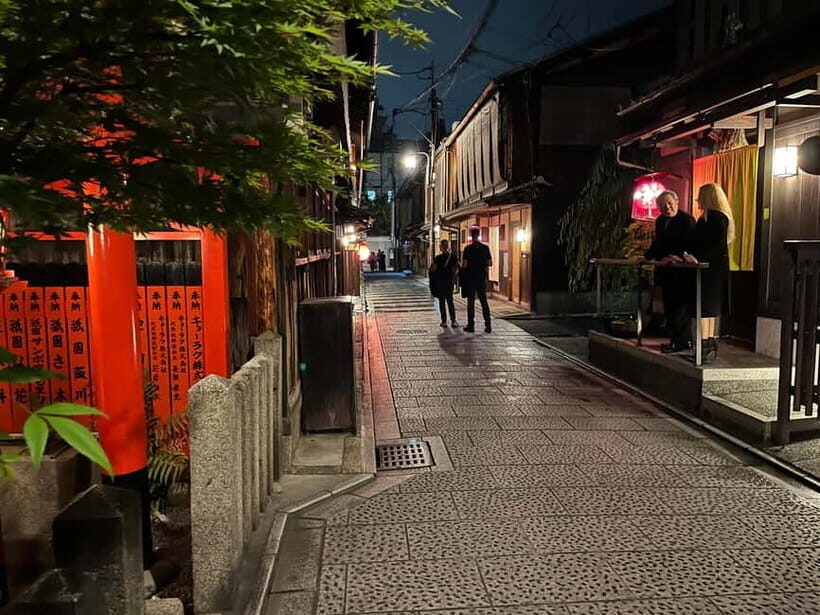
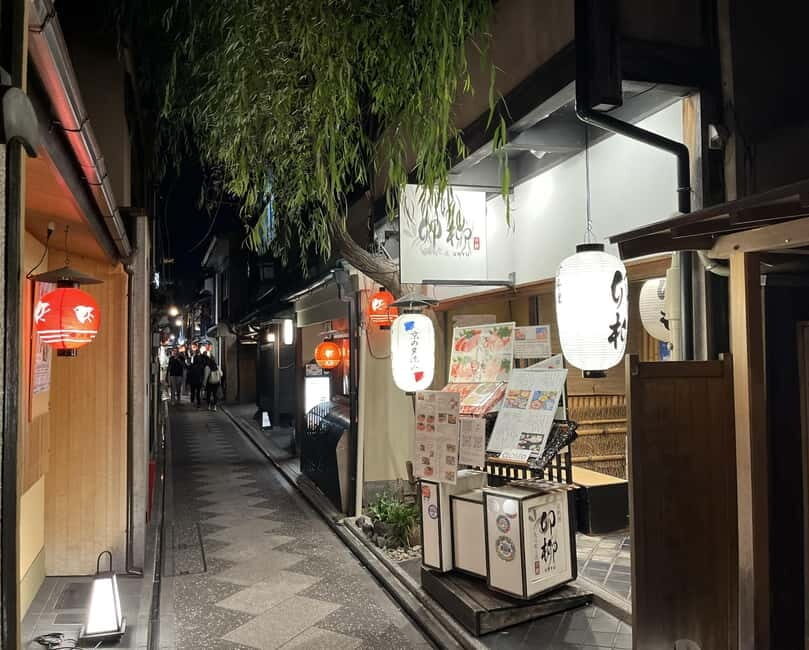
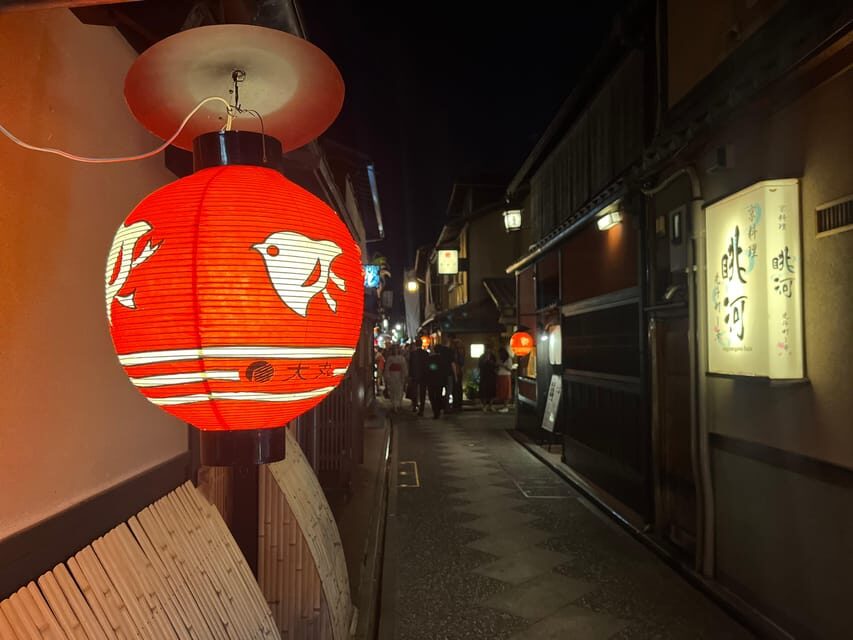
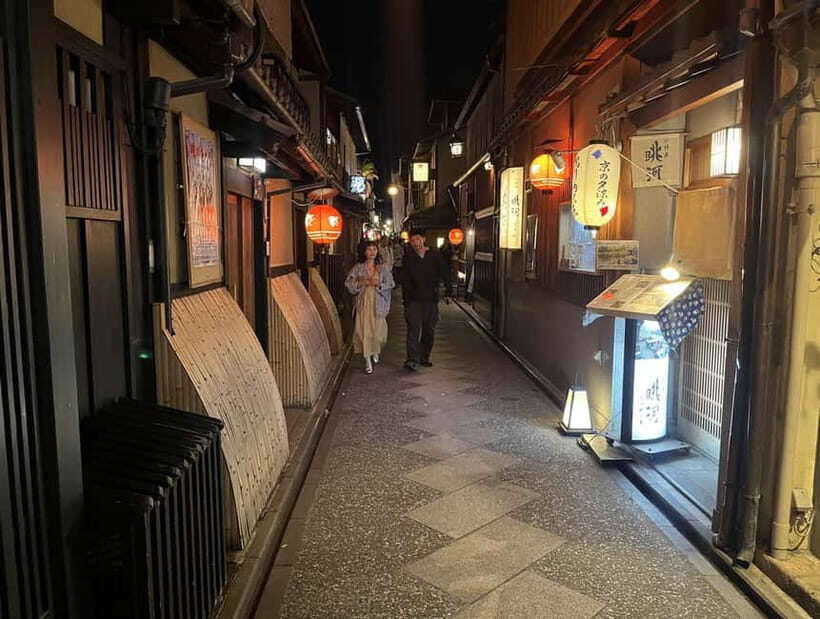
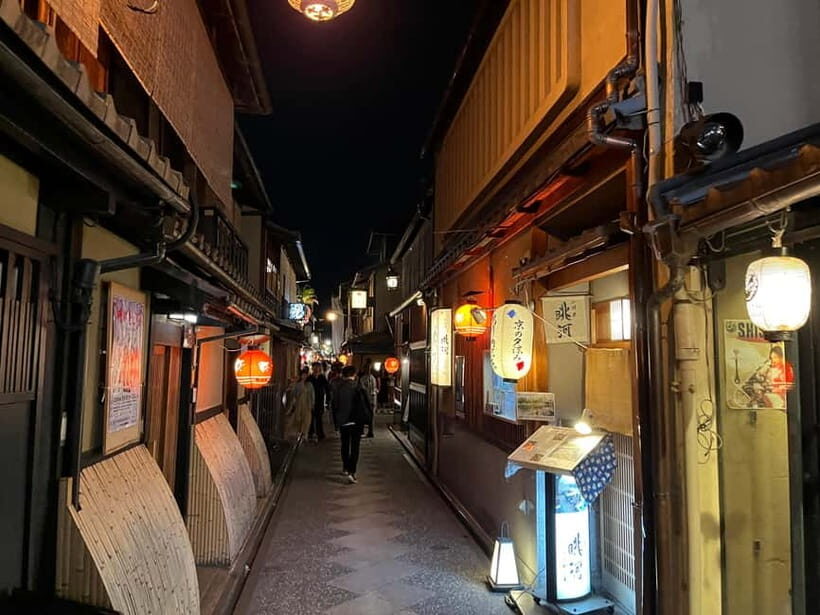
You kick things off in Pontocho, one of the most atmospheric areas in Kyoto for people-watching and old-street vibes. The walk starts in the Pontocho Alley, then shifts toward river-side landmarks.
Here are the main stops in this opening stretch:
- Pontocho Alley
- Kaburenjo area along the Kamogawa, including the Yagi-san and Kita-san statues
- Sanjo Ohashi (bridge)
- Yamato Dori (street segment)
This section matters because it helps you understand Gion as part of downtown Kyoto, not as a sealed-off theme district. Pontocho’s riverside setting is a key reason the area became a gathering place, and the statues and bridges work like “story anchors” for the guide’s explanation.
A practical note: bridges and river-adjacent areas can be windy. If you’re going in cooler months, dress in layers. If it’s summer, bring water and plan for shade where you can.
Entering the Hanamachi World: Gion-Kobu North and Gion Shiragawa
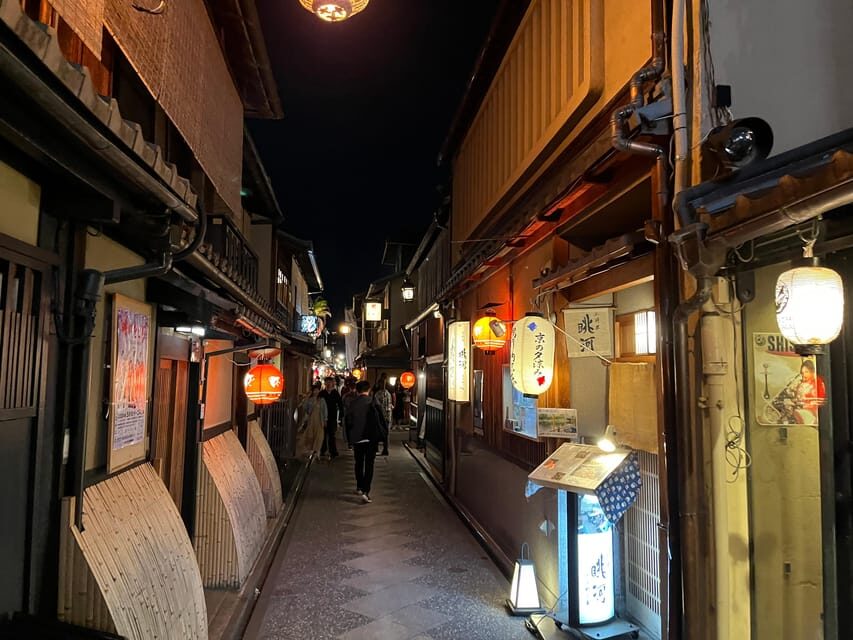
Next you move into Gion-Kobu, specifically the area described as Gion-Kobu (North) in the tour outline. This is where the tour becomes less about scenery and more about daily rhythm—how the hanamachi setting relates to the life of maiko and geiko, plus the customs and routines around that world.
Stops here include:
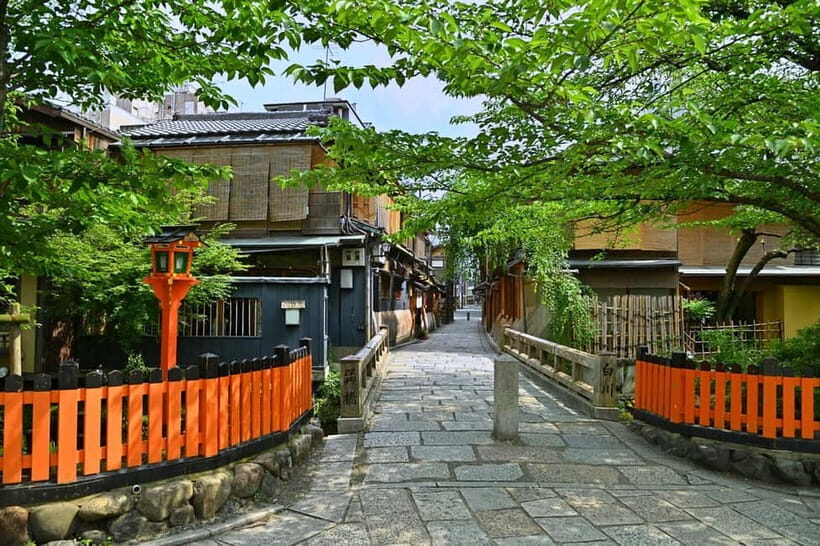
- Gion-Kobu (Gion-Shinbashi Dori)
- Gion-Kobu (Gion Shiragawa)
- Tatsumi Jinja
- Tatsumi Hashi (bridge)
What I like about this part of the walk is how it’s structured. You get a sequence: street view → recognized district lane → a shrine stop → a bridge crossing. That pattern keeps the story anchored in physical places, so you aren’t just collecting random facts.
Also, the tour doesn’t oversell “you will see a maiko.” The guide will explain what to look for and how the system works, but the outline is clear: a sighting is not guaranteed. If you treat that expectation carefully, you’ll enjoy this section more, because you’ll focus on the meaning of what you see rather than chasing a fleeting glimpse.
One more useful detail: Hanamachi life here is presented alongside Kyoto’s broader history. That’s what makes the tour feel more grounded than a simple photo walk.
Gion-Higashi and Yasaka Shrine: Why Gion Has That Name
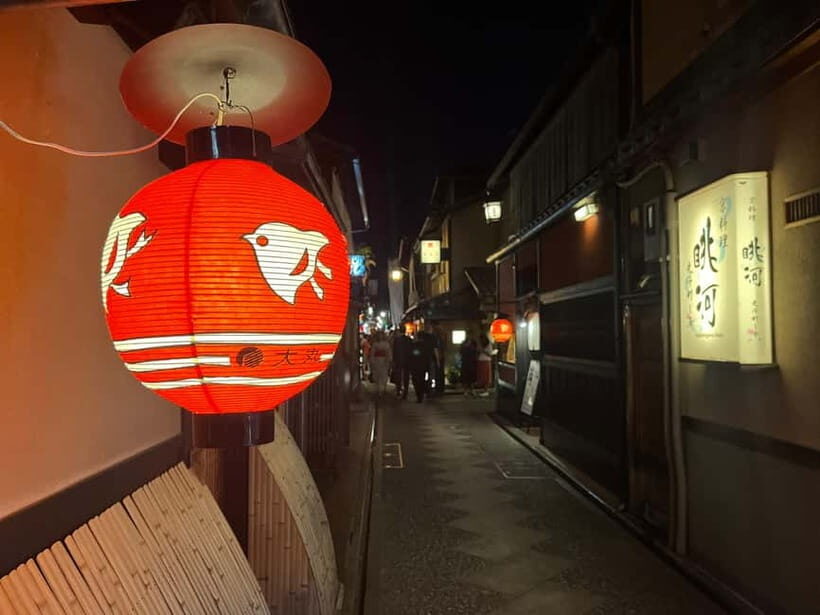
You finish by shifting into Gion-Higashi, and then you reach one of the most important historical stops on the itinerary: Yasaka Shrine.
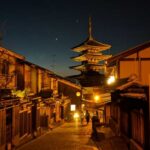
The tour notes that Yasaka Shrine was formerly known as the Gion Shrine—the place from which the district name Gion originates. The guide can also explain the Gion Festival, described as one of Japan’s three most famous and important festivals, with origins in the Gion district dating back more than 1100 years.
This is the payoff stop for people who like their travel stories to connect street-level Kyoto to the older layers underneath. It also reframes what you think Gion is. Yes, it’s famous for entertainment culture. But standing at (and hearing about) Yasaka Shrine makes it clear why the district became a major cultural center long before Instagram-ready streets ever existed.
If you’re short on time in Kyoto and want one walk that ties together hanamachi, old streets, and a name-origin story, this ending stretch is where the tour earns its keep.

The Scope: What You Do (and Don’t) Get in 2 Hours
This tour is designed to hit a lot without feeling like a speed run. Still, it’s honest about what it includes.
Included focus areas
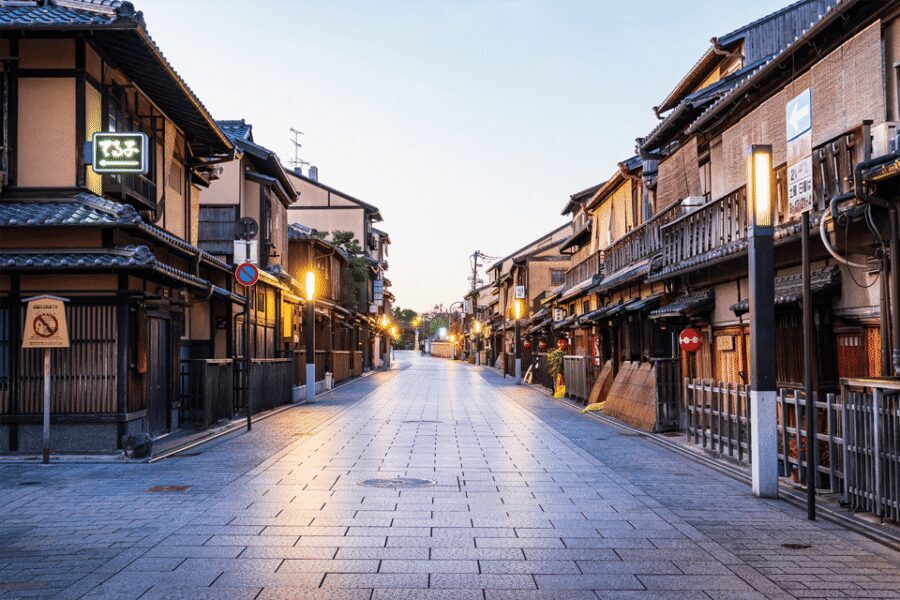
- Historic Gion District streets and lanes
- Three hanamachi: Pontocho, Gion-Kobu, Gion-Higashi
- National historical preserved neighborhood areas in the route
- An origin link via Yasaka Shrine (formerly Gion Shrine)
- Optional festival explanation if time allows
Things to know before you set expectations
- Hanamikoji-dori is not included. If that street is the one you came for, you’ll want another plan alongside this tour.
- Maiko/geiko sightings are not guaranteed. In other words, the tour is about learning and seeing how the place works, not guaranteeing celebrity.
If you want Gion for the vibe and the context, this format fits well.
Price and Value: Is $35 for a Gion Guide Worth It?
At $35 per person for a 2-hour guided walk, the value depends on what you want from your time in Kyoto.
Here’s why it can feel like a good deal:
- The group is limited to 6 people, so you’re not squeezed into a herd.
- You’re paying for an explanation layer, not just movement. The guide’s iPad visuals and frequent stops help you interpret details you’d otherwise walk past.
- The itinerary covers multiple meaningful areas: Pontocho, Gion-Kobu, Gion-Higashi, plus Yasaka Shrine.
And here’s the practical caution: there are no amenities provided. That’s not a dealbreaker, but it means you should bring water and plan for comfort like you would on any self-directed walk.
For solo travelers or couples who want a guided introduction without committing to a full half-day program, $35 can be a smart way to get grounded quickly in a complicated neighborhood.
Who This Kyoto Gion Tour Suits Best
This is a strong fit if you:
- want an overview of Gion that goes beyond the postcard version,
- enjoy asking questions (the guide role is built for that),
- like small groups where you can hear the guide and interact,
- care about the link between shrines, festivals, and district identity.
It also works for mixed-age groups. One family example in the available feedback included kids, and the pacing is described as doable rather than rushed. If your group prefers a relaxed “learn while walking” style, you’ll likely appreciate it.
If, however, you want a tour that guarantees seeing specific performers, or you mainly want one famous street, you may feel like something is missing. This is the type of tour that rewards attention to details and context.
Should You Book This Kyoto Gion Walking Tour?
I’d book it if your goal is to understand Gion as a real district with a long timeline—how Pontocho and the hanamachi areas connect, and why the name Gion ties back to Yasaka Shrine. The small group limit, the Q&A focus, and the guide’s use of visual aids (iPad photos/videos) are exactly what makes this kind of walking tour feel worth paying for.
I wouldn’t book it as your only plan in Gion if Hanamikoji-dori is your must-see street, or if your top priority is a guaranteed maiko/geiko sighting. In that case, pair it with another plan that covers what this itinerary leaves out.
FAQ
How long is the Kyoto Gion walking tour?
It lasts 2 hours.
What is the group size?
The group is limited to 6 participants.
Where do we meet for the tour?
Meet in front of the Disney Store – Kyoto Shijo-Kawaramachi. The guide will be seated and holding an iPad with the tour info.
Which languages are available?
The live guide is available in Spanish, Dutch, French, and English.
Which parts of Gion are visited?
The tour visits three hanamachi: Pontocho, Gion-Kobu, and Gion-Higashi.
Is seeing a maiko or geiko guaranteed?
No. A maiko and/or geiko sighting cannot be guaranteed.
Is Hanamikoji-dori included?
No. Hanamikoji-dori is not included, so plan another option if that street is a must for you.
What should I bring?
Bring comfortable shoes, a sun hat, umbrella, sunscreen, and water.