REVIEW · KYOTO
Kyoto Nighttime All-Inclusive Eats and Streets, Gion and Beyond
Book on Viator →Operated by Pinpoint Traveler, Inc · Bookable on Viator
Kyoto changes after dark. This walking-and-eating tour lets you make sense of Gion’s nightlife economy, from geiko culture to the bars where locals actually unwind. You start at Minamiza Theater, roam Gion and the riverside lanes, then finish near Kawaramachi with a final food-and-drink stop.
What I like most is the combo: dinner plus two drinks spread across two local places, not just one big meal. I also love how the guide frames the sights in plain language, including the Kyoto-specific way people talk about geiko (not geisha), plus quick cultural context that helps you read what you’re seeing.
One consideration: the tour includes a fair amount of walking, and some of the smaller bars can be tight or loud. If you’re hoping for wide-open space to talk or lots of easy photo angles in the dark, plan accordingly.
In This Review
- Key highlights at a glance
- Why this Kyoto night walk feels different than a usual food tour
- Price and value: $119 for dinner plus drinks (and why it’s not just “cheap”)
- The 6:30 pm meeting at Minamiza: arrive early and take control
- Gion after dark: geiko talk, a shrine stop, and the etiquette layer
- The first food stop (around 7:30): standing bars, small plates, and drink choices
- Crossing the Kamogawa: Pontocho and Kiyamachi’s narrow lanes vs the modern streets
- Second dinner stop near Kawaramachi (around 9:00): more bites, another included drink
- The final 9:30 pm close: you’ll leave with a map in your head
- Walking, timing, and how to prep so 3 hours feels easy
- Who should book this Kyoto night eats tour
- Should you book Kyoto Nighttime All-Inclusive Eats and Streets?
- FAQ
- How long is the Kyoto nighttime tour?
- Where does the tour start and end?
- What’s included with the price?
- Can I choose a non-alcoholic drink?
- Are vegetarian options available?
- Is there a minimum age to join?
- What if the weather is bad or I need to cancel?
Key highlights at a glance
- Geiko vs geisha explanations that match how Kyoto people describe it
- Two included drinks (alcoholic or non-alcoholic) paired with local bites
- Small-group feel: max 6 people, so the guide can keep things moving
- A night route through Gion, Pontocho, Kiyamachi, and Kawaramachi
- Dietary needs handled well, including vegetarian options
- Different nights can mean different restaurant picks, so you’re always sampling local favorites
Why this Kyoto night walk feels different than a usual food tour
Most food tours in Kyoto end up doing the same loop: “Here’s a street, here’s a snack, next.” This one adds a cultural layer you can actually use. When your guide explains the nightlife economy—how evening entertainment developed over time and how it connects to today’s hostess-club scene—you start seeing the streets differently.
The route also matters. You aren’t only stuck inside one famous district. You move between Gion’s classic lanes on the east side of the Kamogawa River and the west-side dining/entertainment streets like Pontocho and Kiyamachi. That shift helps you understand why Kyoto feels both traditional and very much alive at night.
And because the group is capped at six, you get more back-and-forth than the big-bus crowd. Guides like Hugo, Lin, Maya, Laura, Joshua, and Jamie show up in past outings, and the common thread is that they bring the story to the walk instead of treating it like a script.
You can also read our reviews of more tours and experiences in Kyoto.



Price and value: $119 for dinner plus drinks (and why it’s not just “cheap”)
At $119 per person, you’re paying for three things at once:
- a guided 3-hour nighttime walk
- dinner spread across multiple bites at locally owned spots
- two included beverages, one at each restaurant
If you tried to replicate this on your own, the cost adds up fast: you’d pay for multiple drinks, pay menu prices that vary wildly by neighborhood, and still spend time figuring out where to go and what to order. Here, you show up, get guided between vetted places, and don’t waste time second-guessing choices.
A key detail for value: those included drinks are not locked to one type. You’ll choose among options like beer, or you can swap to something like sake or shochu depending on what’s available. Extra drinks are on you, but the included ones reduce the “how much will this cost me at the end” anxiety.
One more cost reality: the tour is designed for 13+, and Japan’s minimum drinking age is 20. If you’re under 20 (or simply don’t want alcohol), you can still take part and order non-alcoholic versions for the included drinks where available.
The 6:30 pm meeting at Minamiza: arrive early and take control
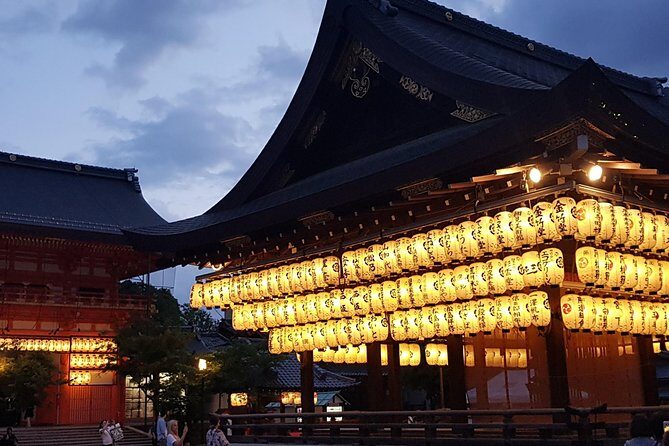
You meet at Minamiza Theater on the second floor (near the theater complex), then end at Kyoto-Kawaramachi Station. That part is great—public transport access helps.
But here’s the practical head-up: meeting spots in central Kyoto can feel like a tourist airport at rush hour. One past group had trouble because several tours were arriving at the same time, and there wasn’t an obvious way to tell who was who. So do this:
- arrive a few minutes early
- stand where you can see people gathering near the entrance area
- keep your phone ready for your mobile ticket
- check any name/sign your guide uses when you see the group form
This tour moves fast enough that getting “lost for five minutes” can feel like twenty.
Gion after dark: geiko talk, a shrine stop, and the etiquette layer
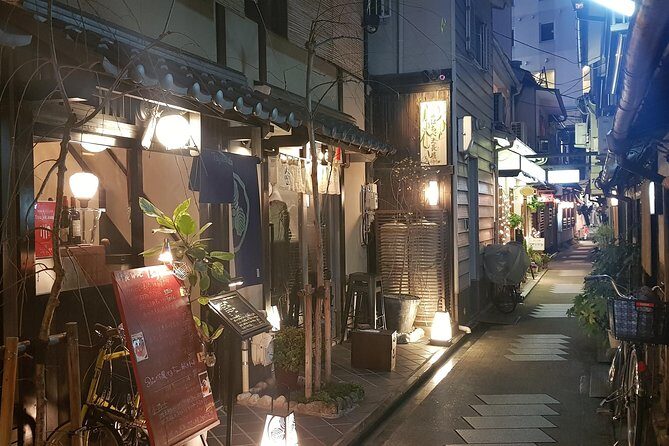
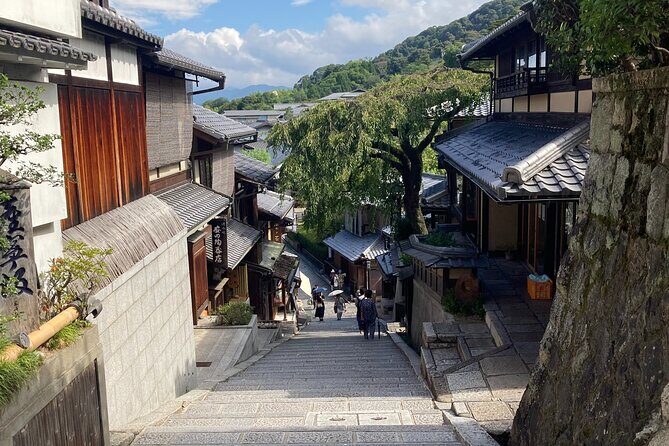
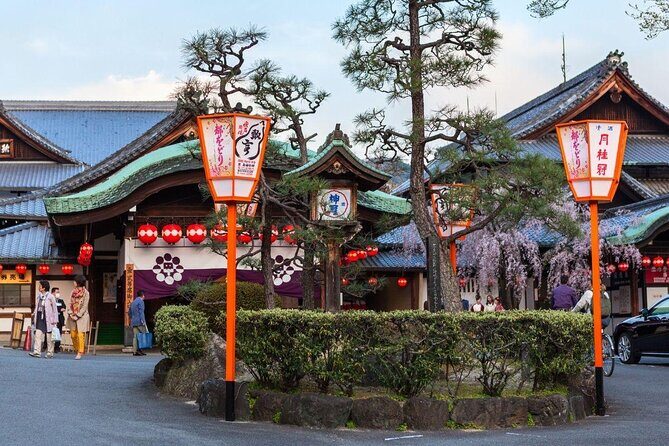
Your night starts in Gion, on the east side of the Kamogawa River. This is where the tour’s cultural storytelling really earns its keep. Your guide walks you through why the district is special and explains how people talk about performers in Kyoto.
Two things to pay attention to as you go:
- Geiko vs geisha language: Kyoto is specific about terminology, and your guide will explain why the common outside word doesn’t fit neatly here.
- Evening entertainment’s evolution: you’ll hear how traditional arts connect to modern nightlife industries, including the hostess-club world that exists today.
Along the way, you may also visit a Shinto shrine stop (and your guide should clarify the difference between shrines and temples—Shinto vs Buddhism—because Kyoto keeps both visible). This isn’t just trivia. It changes how you interpret what you see: Kyoto’s religious spaces have their own rhythms, even at night.
One of the best moments from past guests is the chance to spot a geiko walking through the neighborhood. Don’t count on it as a guarantee, but the tour positions you in the right area at the right time to have that possibility.
The first food stop (around 7:30): standing bars, small plates, and drink choices
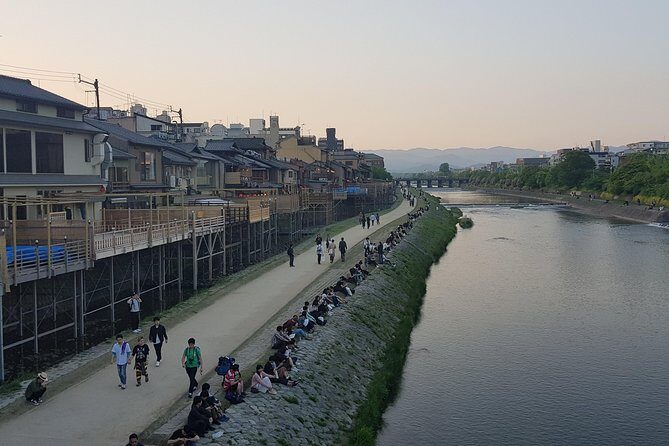
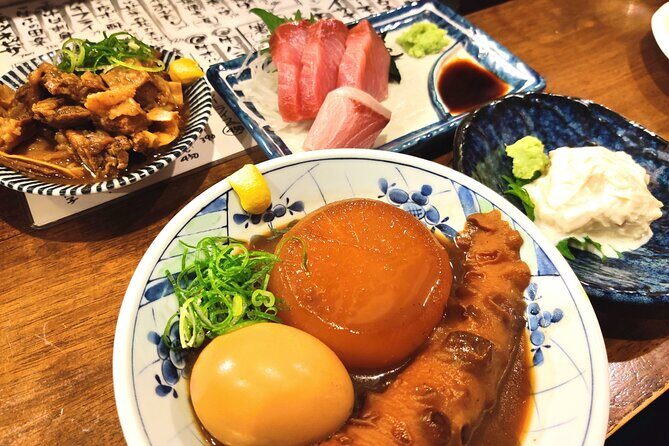
After your Gion walk, you transition to the food-and-drink portion. Past outings describe this part as very doable: you’ll try a few regionally representative dishes, and your included drink can be beer, or you can choose sake or shochu depending on the place and your preference.
What this stage is really about:
- learning what to order (and how meals are served in izakaya-style settings)
- tasting Kyoto’s flavors without having to decode a menu alone
- seeing how locals eat—often in smaller, shareable portions
Portions are set up so you don’t leave miserable or stuffed. One guest said it was enough to satisfy without going overboard, which makes sense for a tour that still has more walking and at least one more eating stop.
Dietary needs are handled. The tour notes that vegetarians are happily accommodated, and past guests also reported that dietary requirements were taken care of. That means you should still come with clear preferences, but you don’t need to fear being left out.
If you’re a meat lover, you might see options like wagyu beef on some nights (a past guest specifically called out a wagyu option). Since restaurant choices can vary, don’t assume the menu will match any one story you’ve heard—but do expect the tour to offer choices.




Crossing the Kamogawa: Pontocho and Kiyamachi’s narrow lanes vs the modern streets
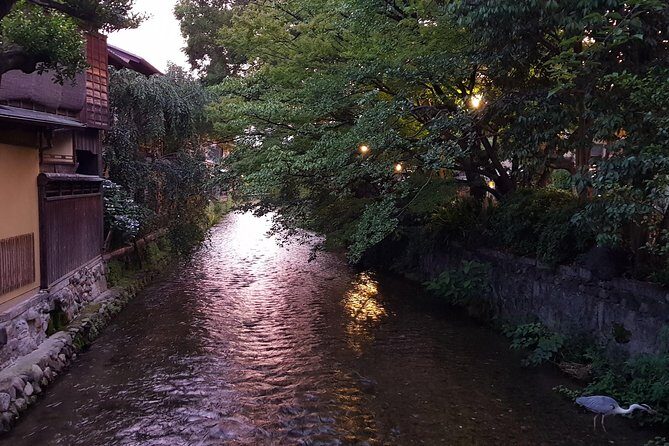
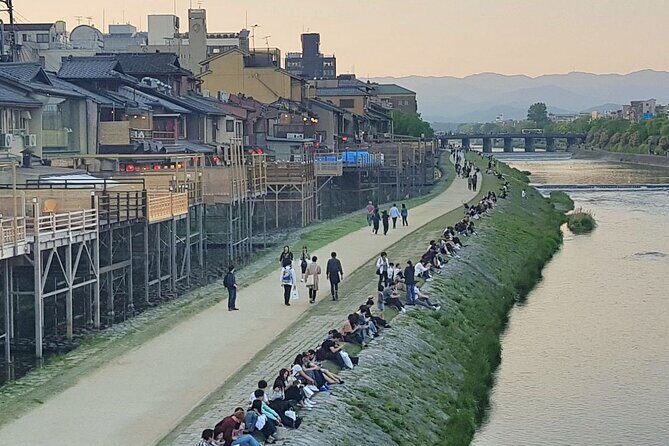
Around 8:15 pm, the vibe shifts. You’ll walk toward the west side of the Kamogawa River and pass through areas like Pontocho, Kiyamachi, and the Kawaramachi St. entertainment corridor.
Pontocho is the postcard lane: narrow, old-feeling, and protected by the way people keep the area’s identity intact. Your guide can point out how tradition still shapes where people gather and how the streets function at night.
Then you move a couple streets away and you’ll feel the contrast. Youthful energy shows up alongside the classics. Kyoto has a way of making “old” and “present” live side by side, and this part of the route is how you experience that without spending your whole trip chasing one perfect photo spot.
One thing to remember: night walking in Kyoto is beautiful, but it’s not always photo-friendly. Low light, crowds, and the narrow alleys can limit what you can capture. If you care about photos, focus on enjoying the walk first, then grab a few shots where the street opens up.
Second dinner stop near Kawaramachi (around 9:00): more bites, another included drink
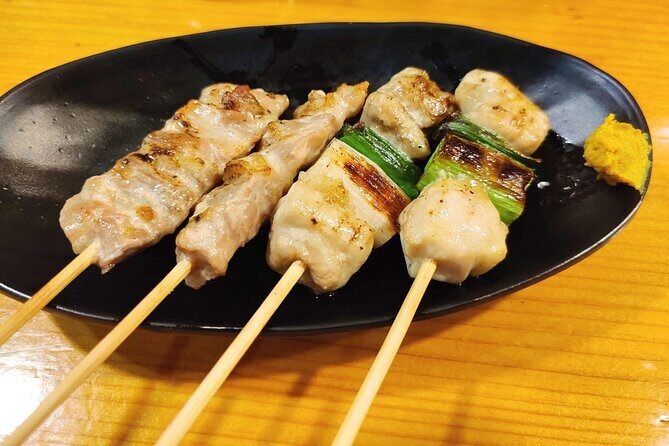
At about 9:00 pm, you head to another vetted spot for more tasty food and another drink. This is the “last meal boost” part of the night, and it’s designed to wrap up the tasting arc with a final set of local flavors.
A couple practical realities based on past experiences:
- Some small restaurants involve bar-style seating, which can make group conversation harder. If you prefer a table setting, you might feel this more than others.
- In Japan, smoking can still be part of the environment in certain places. One past review said smoking is occasionally allowed and that it can get smoky, though they described it as rare to be extremely smoky.
You don’t control restaurant policies, but you can control your response. Bring a light layer in case it’s cold, and if you’re sensitive to smoke, ask your guide about the venue environment when you arrive.
The final 9:30 pm close: you’ll leave with a map in your head
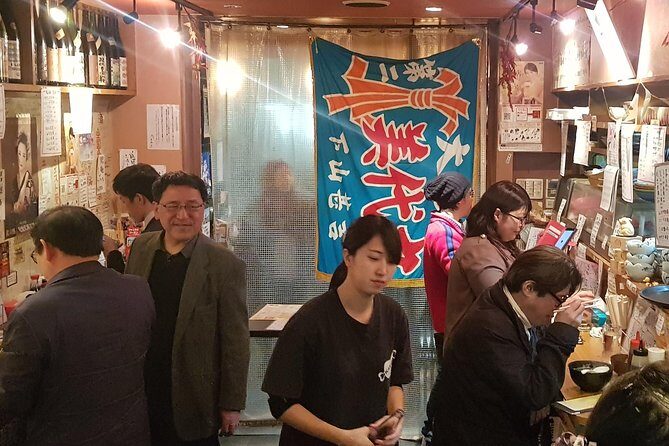
At 9:30 pm, the tour ends near Kyoto-Kawaramachi Station. That’s a smart ending point because it puts you back in an area with lots of transport options and places to keep the night going—if you want to.
The real takeaway is not just that you ate well. It’s that you learn how Kyoto’s nightlife districts operate: who they’re built for, what kind of atmosphere each street has, and how the entertainment economy connects to the city’s cultural identity.
If you’re worried you’ll feel lost later in your trip (especially if you don’t read or speak Japanese), this tour gives you navigation confidence. You finish with mental breadcrumbs you can reuse the next night you go out on your own.
Walking, timing, and how to prep so 3 hours feels easy
This is a walking tour. Several past guests specifically mentioned that it was a lot of walking, even though the time passed quickly. That’s a good sign for pacing, but you still want to prepare your body.
Here’s how to make the experience comfortable:
- wear supportive shoes (Kyoto sidewalks can be uneven in spots)
- bring a light rain layer or umbrella if conditions look iffy
- plan to layer up if it’s chilly; nighttime temperatures can drop
- pace yourself with water between stops (you’ll be drinking, even if it’s non-alcoholic)
Weather also matters for the tour itself. The experience notes that it requires good weather. If bad weather forces a change, you’ll be offered a different date or a full refund.
Who should book this Kyoto night eats tour
This fits best if you want:
- a guided look at Kyoto’s nightlife culture, not just food calories
- a mix of classic district streets (Gion) and dining lanes (Pontocho/Kiyamachi)
- practical eating help in small local restaurants
- a small-group evening where the guide can keep the story and the pace working together
It’s also a strong “first night in Kyoto” type of plan. Past guests described it as a great orientation because it shows where things are and how they work after dark.
It might not be your best match if:
- you hate crowded narrow streets
- you strongly dislike bar-style seating
- you’re very sensitive to smoke and need a totally smoke-free environment
Should you book Kyoto Nighttime All-Inclusive Eats and Streets?
I’d book it if you want to leave Kyoto at night with two things: full confidence in where to eat next, and a clearer sense of what those districts mean beyond the scenery. The included dinner and two drinks make it feel like a packaged value, and the guided storytelling turns the route into something you can explain later.
I’d think twice if you prefer a slower pace, want lots of open seating, or plan to treat this as a purely food-focused tour with minimal walking. This is culture + food + streets, all together.
If you do book, my best advice is simple: show up a few minutes early, wear comfortable shoes, and go in ready to taste what the guide recommends. That’s where the payoff lives.
FAQ
How long is the Kyoto nighttime tour?
It runs for about 3 hours.
Where does the tour start and end?
It starts at Minamiza Theater in Higashiyama Ward (6:30 pm) and ends at Kyoto-Kawaramachi Station.
What’s included with the price?
Dinner is included, along with two beverages total—one at each restaurant. The tour also includes alcoholic beverages as part of what’s offered.
Can I choose a non-alcoholic drink?
Yes. The tour includes two beverages that can be alcoholic or non-alcoholic, with one included drink at each restaurant.
Are vegetarian options available?
Yes. The tour notes that vegetarians are happily accommodated.
Is there a minimum age to join?
Participants must be 13+. The minimum drinking age in Japan is 20.
What if the weather is bad or I need to cancel?
The tour requires good weather. If it’s canceled due to poor weather, you’ll be offered another date or a full refund. Cancellations are free up to 24 hours before the start time for a full refund.