REVIEW · TOKYO
Mt. Fuji, Oishi Park & Arakurayama Pagoda Bus Tour with Lunch
Book on Viator →Operated by JTB Global Marketing & Travel Inc. · Bookable on Viator
Mt. Fuji in one relaxed day sounds great. This tour bundles the big sights around Kawaguchiko with round-trip bus transfers from Shinjuku, a licensed English guide, and a real lunch stop—so you’re not wrestling trains and transfers on a tight schedule. I especially like how it hits both the high-altitude viewpoint at the Mt. Fuji 5th Station and the classic postcard view around Lake Kawaguchiko.
I like that you get two lunch options—regular Japanese or vegetarian—served at Hotel Regina Kawaguchiko or Highland Resort Hotel & Spa. I also like the pacing: you see Oishi Park for photos, catch Lake Kawaguchi from the bus at Ohashi Bridge, then finish at Arakurayama Sengen Park for Chureito Pagoda.
One thing to consider: Mt. Fuji visibility is weather-dependent, and the view you came for may be muted or hidden. Also, Arakurayama Sengen Park involves a serious stair climb (398 steps one way), so plan for that effort.
In This Review
- Key highlights in plain terms
- Leaving Shinjuku: the simple way to escape Tokyo traffic
- Mt. Fuji 5th Station: the altitude viewpoint that sets the tone
- Oishi Park: the Fuji-over-the-lake moment you actually want
- Lunch at Kawaguchiko: where the tour earns its keep
- Lake Kawaguchi and the Ohashi Bridge: quick views, no extra hassle
- Arakurayama Sengen Park and Chureito Pagoda: the stairs are the deal
- Guides who turn “sightseeing” into a story you’ll remember
- Timing, weather, and why your plan should stay flexible
- Price and value: what $99.10 gets you (and what it doesn’t)
- Who should book this tour—and who should adjust expectations
- Should you book? My decision framework
- FAQ
- FAQ
- Where does the tour start and end?
- What are the main stops during the day?
- Is lunch included, and can I choose vegetarian?
- What happens if Mt. Fuji can’t be seen or the 4th/5th station can’t be reached?
- How much walking or stairs should I expect at Sengen Park?
- Are special dietary meals like gluten-free or allergy-friendly available?
Key highlights in plain terms
- Mt. Fuji 5th Station (2,300 meters): big-air altitude viewpoint without planning your own transport.
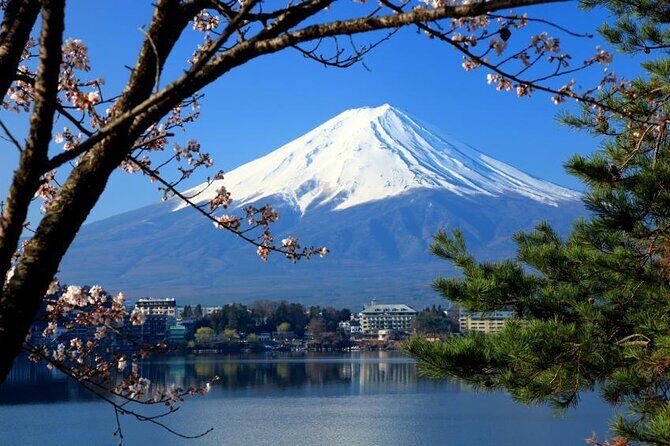
- Oishi Park photo stop: one of the best quick chances to see Fuji over the lake.
- Lunch choices: Japanese or vegetarian, with the venue run by the tour.
- Lake Kawaguchi from the bus: Ohashi Bridge views without extra steps.
- Chureito Pagoda at Sengen Park: classic stairs-and-view moment (and a short walk beyond the bus stop).
Leaving Shinjuku: the simple way to escape Tokyo traffic
If you’ve ever tried to get yourself to Mt. Fuji by public transport, you already know the trick. It can be doable, but it usually takes planning, timed connections, and patience when schedules don’t line up the way you expect.
This day trip solves that by starting and ending at Shinjuku Station (West Exit area) instead of hotel pick-ups. The meeting point is listed as Shinjuku Sta. West 1 Chome 5, Nishishinjuku, and the tour drops you back near Shinjuku around about 5:30 PM. That means your logistics are mostly locked in from the start, and you can focus on the sights.
The bus itself is operated by Hato Bus Co., Ltd., and one practical detail I appreciate: while the bus is waiting, the engine and cooling/heating are turned off to prevent global warming. It won’t matter much if you’re walking around between stops, but it’s good to know if you’re the type who likes steady A/C.
Group size is kept to a maximum of 40 travelers, which is large enough to feel organized but small enough that you’re not totally swallowed by a stadium crowd.
A few more Tokyo tours and experiences worth a look

Mt. Fuji 5th Station: the altitude viewpoint that sets the tone
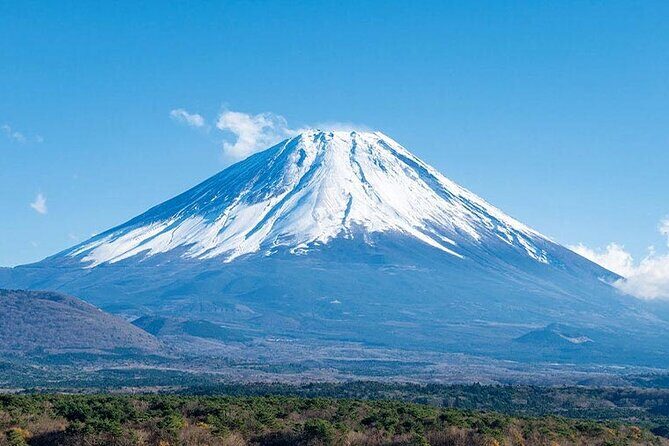
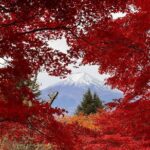
Your first major stop is Mt. Fuji 5th Station, reached along the Subaru Line. The altitude here is listed as 2,300 meters (7,546 feet), and that number matters because it changes what you feel—cooler air, thinner atmosphere, and often strong wind if conditions are right.
This stop is short by mountain standards (about 40 minutes), and that’s on purpose. You’re not hiking; you’re grabbing the best viewpoint window you can before the next leg. The good news is that the views are the whole point. Even when the weather shifts quickly, you get a real shot at seeing Fuji close enough to feel like a physical presence.
The tour notes that admission at the 5th station is free, and while the time is limited, you can still do the essentials: look around, take photos, and take a couple deep breaths because being at altitude is kind of the whole experience.
The practical catch: you may not be able to reach the 4th or 5th station if roads can’t handle freezing, there’s an accident on the Subaru Line, or weather conditions interfere. If that happens, the tour can redirect to Oshino Hakkai or the Fujisan World Heritage Center. That’s not the same as standing on the mountain road, but at least you won’t end up with a wasted day.
Oishi Park: the Fuji-over-the-lake moment you actually want
Oishi Park is a popular photo spot because Mt. Fuji towers beyond the lake, and the tour schedule gives you about 30 minutes there. This is exactly the kind of stop that works well with a bus tour: it’s concentrated, scenic, and close enough to enjoy without needing extra transit.
What I like about Oishi Park in particular is the way it connects Fuji to daily life. You’re not only looking at a mountain peak; you’re looking at a classic composition—Fuji framed by water and shoreline—something you just don’t get from inside Tokyo.
You also don’t need to overthink it. In a short window, I’d keep it simple: walk to the main viewpoint you can reach quickly, take your photos, and then give yourself one slow moment where you just look. If the weather cooperates, the picture matches reality more often than you’d expect.
If it doesn’t cooperate, you’ll still at least understand why this area became famous for that view.
Lunch at Kawaguchiko: where the tour earns its keep
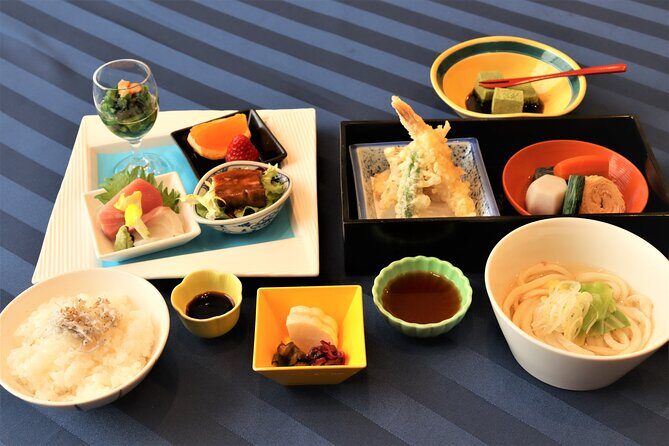
Lunch is served in the Kawaguchiko area, with the tour stating the meal is at either Hotel Regina Kawaguchiko or Highland Resort Hotel & Spa. The exact venue can change depending on restaurant circumstances, and the tour notes that you shouldn’t expect day-of changes.
You get a choice of meal style when booking with lunch included:
- Japanese cuisine with meat and fish (standard option)
- Vegetarian meal (available through a separate tour code, so don’t assume you can swap on the day)
This is one of those details that matters for real life. If you want vegetarian food, choose the right code ahead of time, because the tour data says changes on the day may not be possible. It also says other dietary accommodations like allergy-friendly or gluten-free meals, and Muslim-friendly meals, are not available. So if you have specific restrictions, plan around what’s explicitly offered.
Lunch time is about 50 minutes. That’s enough time to eat, reset your energy, and use the bathroom without turning lunch into a second tour stop. I’d treat it like your main break of the day.
One extra small win from the vibe of this tour: people rave about the lunch plus Fuji-themed treats, like Mt. Fuji ice cream soda drink. Even if you don’t order it, knowing there are Fuji-area snack moments can help you picture how relaxed the break feels.
Lake Kawaguchi and the Ohashi Bridge: quick views, no extra hassle
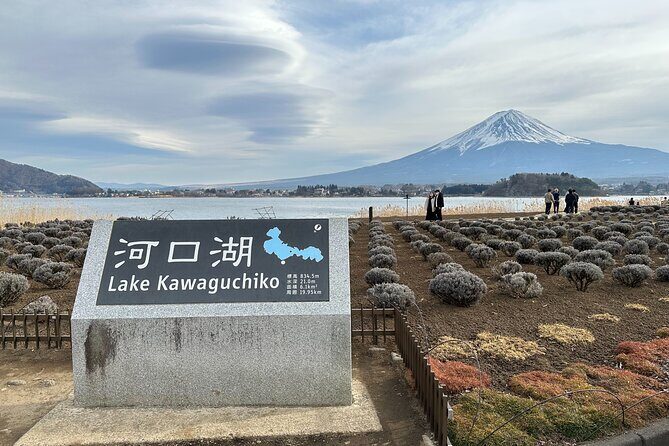
After lunch, you cross Lake Kawaguchi Ohashi Bridge and look out at the lake from the vehicle window. This is a smart compromise in a day trip. It adds a key Lake Kawaguchiko sight without padding the schedule with more walking.
Because it’s from the bus, you don’t have to worry about finding a specific spot or figuring out how to get there. You just sit back, look left and right as you cross, and you’ll see the lake pull into view in a way that helps you connect what you saw at Oishi Park.
If you’re someone who likes to photograph, keep your phone/camera ready before the crossing begins. You’ll get only the pass you’re given.





Arakurayama Sengen Park and Chureito Pagoda: the stairs are the deal
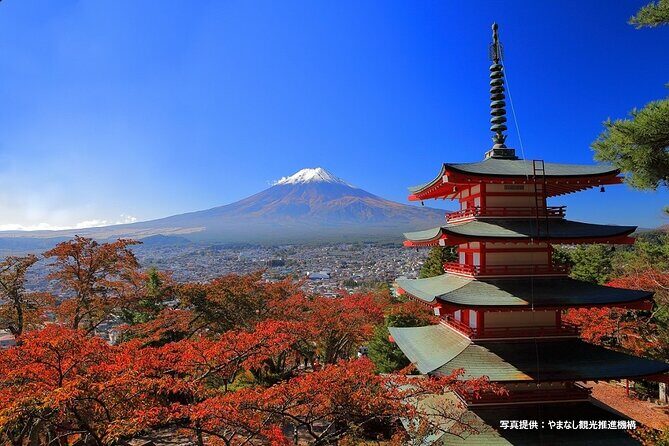
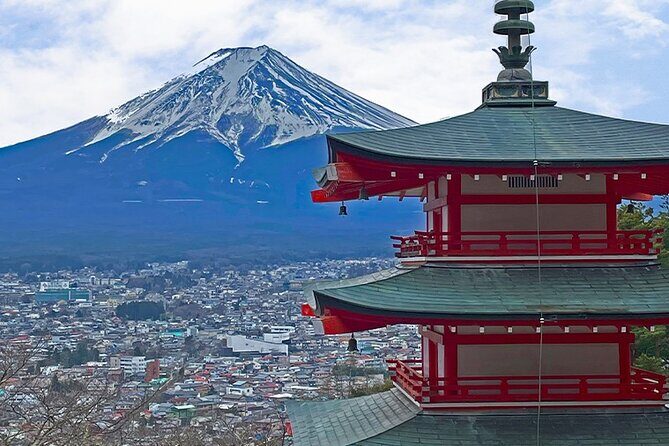
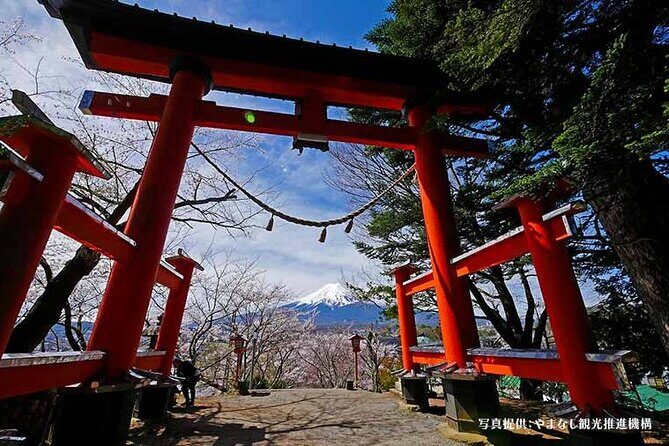
The day’s most physical stop is Arakurayama Sengen Park, where you’ll have about 1 hour 20 minutes. The park is known for views of the city with Mt. Fuji in sight, and the signature photo spot is Chureito Pagoda.
Here’s the practical part: the bus disembarks and boards at Shimo-Yoshida Station on the Fujikyuko Line. From there, it’s about a 10-minute walk one way to the shrine area. Then you climb the famous stairs—about 398 steps—and the tour estimates that climb takes about 15 minutes one way.
That means you’re not just popping in for one photo and heading out. You’ll likely do:
- the 10-minute walk to get to the stairs
- the 15-minute climb if you’re going for the main pagoda viewpoint
- the return walk after
The tour also notes that people not confident in their stamina may need to wait at Sengen Shrine. If you want the pagoda photo but you’re worried about the climb, plan your pace early and don’t treat the steps like a race.
This is also where weather matters most. Fog or heavy cloud can blunt the whole scene, but when it’s clear, Chureito Pagoda plus Fuji is exactly the kind of classic contrast that makes the trip feel worthwhile.
Guides who turn “sightseeing” into a story you’ll remember
A big reason this tour scores high is the guide factor. The tour includes a National Government Licensed English guide interpreter, and the experience varies depending on the personality in the driver’s seat.
In particular, people describe guides like Makoto as thorough and informative, turning the stops into something you understand instead of just something you see. Others highlight guides like Saiki-Sun, with lots of mountain and Japan context—and even Japanese learning using symbols, which is a fun way to break up the day without forcing classroom vibes.
There’s also mention of Atsushi being energetic and entertaining, with a show element as an extra bonus. Even if you don’t catch every detail, the key idea is that the guide helps you connect the sights.
So here’s my advice: listen on the bus, not only at stops. A lot of the story happens in transit time, and that’s when you’ll learn what to look for at each viewpoint.
Timing, weather, and why your plan should stay flexible
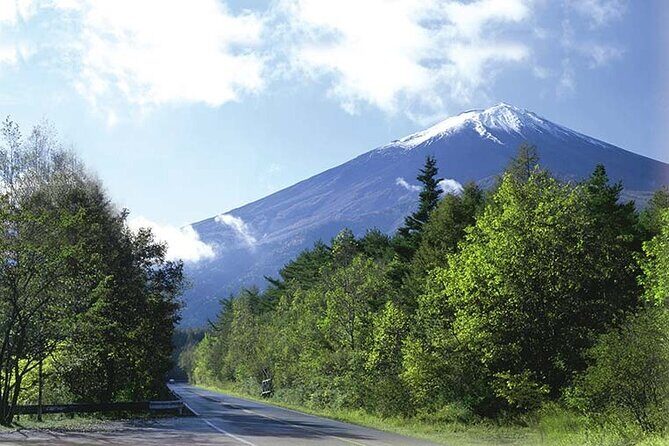
This is a full day, about 9 hours total, and traffic can shift the schedule. The tour notes that arrival time at each location may be considerably delayed depending on day and season.
Now add weather. Mt. Fuji may not be visible, but the tour says it won’t be canceled and there won’t be refunds for lack of visibility. That means you have to go in with the right expectations: you’re paying for access and experience, not a guaranteed clear mountain photo.
The good part is that even when Fuji hides, the stops around Kawaguchiko still give you a sense of place. You’ll still visit high points, lake views, and a major cultural landmark at Sengen Park.
If you want to maximize your odds, dress and prepare as if conditions can change quickly. Altitude at 2,300 meters plus lake-area weather means you can go from cool to even colder fast.
Price and value: what $99.10 gets you (and what it doesn’t)
At $99.10 per person, this tour isn’t cheap, but it also isn’t trying to be a luxury private experience. It’s a value play: you pay for transportation, a licensed English guide, and organized stops that are tough to string together quickly on your own.
Here’s what you’re getting for that price:
- Lunch included (Japanese or vegetarian meal option)
- Round-trip bus fare between Shinjuku and the Fuji area
- National Government Licensed English guide interpreter
What you’re not getting beyond that includes other fees not listed in the package. The itinerary also lists several admissions as free, so most of the main costs are handled already.
The biggest “value driver” is time. You’re going to see multiple signature areas—Mt. Fuji 5th Station, Oishi Park, Kawaguchiko lunch area, lake bridge views, and Sengen Park—without you doing the scheduling math across trains and buses.
The main trade-off is flexibility. You’re on the tour’s timeline. If Mt. Fuji is hidden, you don’t get to swap to an entirely different plan last minute. You do get a contingency if the 4th/5th station can’t be reached, but it’s still within the tour’s structure.
Who should book this tour—and who should adjust expectations
This tour fits best if:
- you want a one-day Mt. Fuji overview with low stress
- you don’t want to plan transport from Tokyo to the Kawaguchiko area
- you’re excited about iconic spots like Oishi Park and Chureito Pagoda
- you’re comfortable with a moderate walking day plus a stair climb (398 steps one way)
It may be less ideal if:
- you’re trying to avoid stairs entirely
- you’re extremely weather-photo dependent and won’t enjoy the day if Fuji is faint or hidden
- you need specific dietary needs beyond the listed Japanese/vegetarian options, since the tour data says other accommodations like gluten-free or allergy-friendly meals aren’t available
Also note the drop-off rule: drop-off is only at Shinjuku Station (West Exit). The tour won’t return you to Tokyo Station, so plan your evening near Shinjuku.
Should you book? My decision framework
If you want the core Mt. Fuji highlights without turning your day into a logistics project, I think this is a smart booking. You get guided context, real breaks, and a schedule that hits the big Fuji-related photo themes in one go.
Book it if:
- you like organized days and want your transportation handled
- you’re willing to work for the Chureito Pagoda viewpoint with the stairs
- you’re okay with weather being a variable
Maybe skip or rethink if:
- your body can’t handle long walks plus 398 steps
- you require dietary options beyond the stated Japanese or vegetarian meals
- you’re counting on a guaranteed clear Mt. Fuji skyline, no matter what
FAQ
FAQ
Where does the tour start and end?
The tour starts at Shinjuku Station (West 1 Chome 5, Nishishinjuku) and ends near Shinjuku Station around about 5:30 PM, with drop-off available only at Shinjuku Station (West Exit).
What are the main stops during the day?
You’ll visit Mt. Fuji 5th Station, Oishi Park, the Kawaguchiko area for lunch, get views of Lake Kawaguchi from Ohashi Bridge (from the vehicle window), and Arakurayama Sengen Park for Chureito Pagoda.
Is lunch included, and can I choose vegetarian?
Yes. With lunch included, you can choose a Japanese meal with meat and fish or a vegetarian meal. The vegetarian option is handled via a separate tour code, and changes on the day may not be possible.
What happens if Mt. Fuji can’t be seen or the 4th/5th station can’t be reached?
The tour says it may still run even if Mt. Fuji is not visible, and there is no refund for that reason. If the 4th or 5th station can’t be reached due to road freezing, weather, an accident on the Subaru Line, or other reasons, the tour can be guided to Oshino Hakkai or the Fujisan World Heritage Center.
How much walking or stairs should I expect at Sengen Park?
From the bus stop at Shimo-Yoshida Station, it’s about a 10-minute walk one way to Sengen Shrine, then about 398 steps to reach Chureito Pagoda. The climb is estimated to take around 15 minutes one way.
Are special dietary meals like gluten-free or allergy-friendly available?
No. The tour data states that Muslim-friendly meals, allergy-friendly meals, gluten-free meals, and similar special options are not available.