Shibuya changes by the block. This 2-hour walk links Myth of Tomorrow with the chaos-control of Shibuya Crossing, then threads through quieter side streets that feel like a different decade. You get a guided path that’s easy to follow, even if it’s your first time in Tokyo.
I especially like the mix of meaning and motion. The start at Taro Okamoto’s Myth of Tomorrow mural gives you something to think about before you hit the loudest intersection in Japan, and the route keeps throwing great photo stops at you—especially at Shibuya Crossing and the ending at the Hachiko Memorial Statue. In the same spirit, guides such as Loc and Rio are praised for explaining what you’re seeing and helping with practical tips, from photo angles to where to stand for a cleaner shot.
One thing to plan for: this tour moves at a walking pace with brief stops at each spot. If you want to linger for 30+ minutes at every location, you may feel rushed. Also, the meeting point can be confusing on day one—double-check you’re going to SABON Shibuya Mark City on the 3rd floor inside the building.
In This Review
- Key reasons this Shibuya walk feels worth your time
- A 2-hour Shibuya primer that doesn’t swallow your day
- Where to meet: SABON Shibuya Mark City, 3rd floor
- Myth of Tomorrow: a serious start before the street noise
- Shibuya Crossing: how to stand, watch, and actually get photos
- Nonbei Yokocho: old Tokyo atmosphere in a tight maze
- Miyashita Park: your modern reset halfway through the walk
- Center Gai: youthful meeting point energy, explained simply
- Maruyamacho streets: a bridge from history to nightlife
- Hachiko Memorial Statue finish: a classic endpoint with real momentum
- Price and value: $22 for a smart, guided Shibuya slice
- What you’ll probably like most (based on the strongest signals)
- Who this Shibuya tour fits best
- Should you book this Shibuya Crossing & Hidden Streets Walking Tour?
- FAQ
- Where is the meeting point for the tour?
- How long is the Shibuya tour?
- Is the tour offered in English?
- How much does the tour cost?
- Where does the tour end?
- Is free cancellation available?
Key reasons this Shibuya walk feels worth your time
- Myth of Tomorrow mural: a powerful message that frames the whole district
- Shibuya Crossing timing: learn how to watch the crossing without fighting the crowd
- Nonbei Yokocho + Maruyamacho: side streets where Shibuya’s older layers still show
- Miyashita Park break: a short reset at a modern, multi-level hangout
- Center Gai energy: the spot that locals use to orient and meet up
- Hachiko finish: easy endpoint for continuing your night, right in Shibuya
A 2-hour Shibuya primer that doesn’t swallow your day
If you only have a short window in Shibuya, this tour is built for that problem. It’s two hours, so you can fit it between trains, meals, or other plans without feeling like you lost half your trip. You’ll hit the district’s biggest “I’m really in Tokyo” moments—then you’ll step into lanes that tourists often skip.
The other thing I like is how the route keeps switching gears. You start with a mural and theme (the future, nuclear impacts, and hope). Then you get the machine-like choreography of Shibuya Crossing. After that, you shift into narrow lanes and back-of-block streets, then end with a classic Shibuya anchor in Hachiko. That rhythm makes it easier to remember what you saw and why it matters.
You can also read our reviews of more walking tours in Tokyo


Where to meet: SABON Shibuya Mark City, 3rd floor

Meeting point matters in Shibuya, because there are a lot of entrances and a lot of foot traffic. The tour starts at SABON Shibuya Mark City, and the correct spot is on the 3rd floor inside the Mark City building. The guide will be holding a sign, so if you’re scanning from street level, you’ll want to look for that.
If you want to set yourself up for an easy first minute, aim to arrive a little early and give yourself time to get up to the 3rd floor. One small delay here can snowball into stress for the whole tour, and punctuality is emphasized for a reason: Shibuya is busy and the route depends on short, timed stops.
(For navigation help, the coordinates are 35.6586643, 139.6999525.)
Myth of Tomorrow: a serious start before the street noise
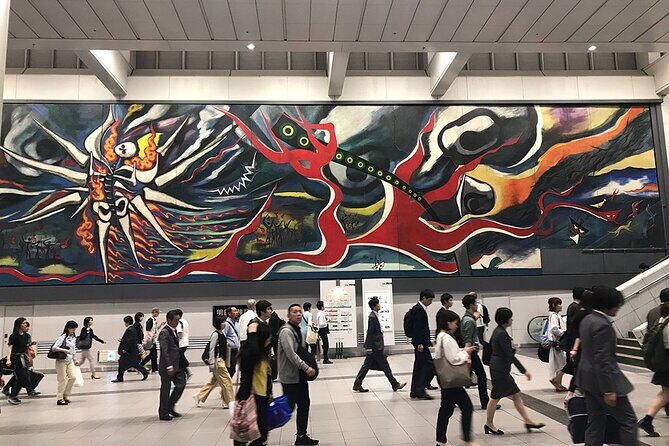
The tour begins with a photo stop and a short guided look at Myth of Tomorrow, a powerful mural by Taro Okamoto. This is not just wall art. It’s positioned as a moment of reflection about nuclear impacts, paired with a message of hope.
I like this start because it stops you from treating Shibuya like a theme park of neon and crowds. Before you see the busiest crossing on Earth, you’re reminded that Japan’s modern city life sits next to (and sometimes carries) hard history. It gives context, and that makes later scenes more meaningful.
It also sets up the walking pace. You’ll get your orientation early, so when you step into the crush of Shibuya Crossing, you’re not just reacting—you’re watching with a plan.
Shibuya Crossing: how to stand, watch, and actually get photos

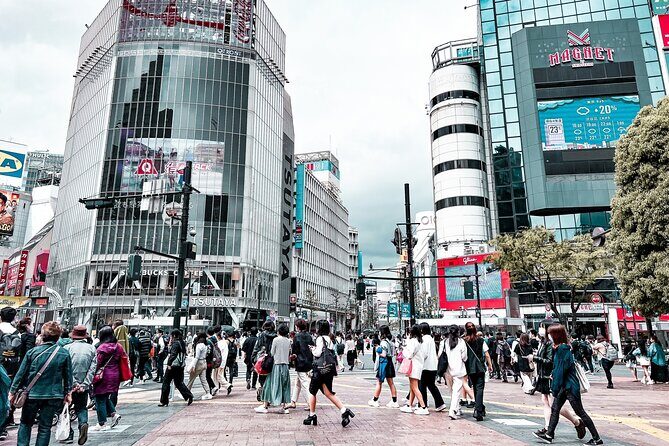
Then comes Shibuya Crossing, the iconic intersection that’s basically a world-famous stress test. On a normal day, people cluster randomly and hope they get a shot before the walk signal flips.
Here, you get guidance on where to pause and how to watch. The tour includes a photo stop plus a brief guided segment, timed to the reality of the intersection—fast changes, big crowd movement, and lots of angles.
I find this part helps most with first-time confusion. Shibuya Crossing feels like one big event, but you’ll notice how it has multiple flows and how that affects where you can stand. Guides like Loc have been noted for taking really good photos of solo travelers, which is a practical win if you’re going to be alone in Japan and still want a clean souvenir photo without juggling your camera and the crowd.
Nonbei Yokocho: old Tokyo atmosphere in a tight maze
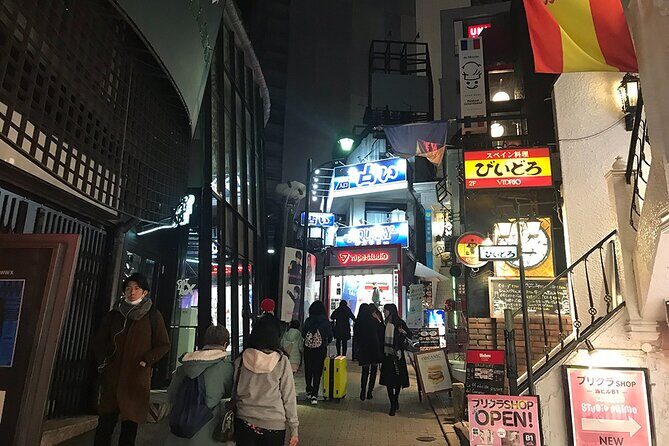
Next up is Nonbei Yokocho, also known as Drunkard’s Alley. This is the shift from big-city spectacle to smaller, older-feeling lanes. You’ll spend about 10 minutes here with a guided look.
What makes Nonbei Yokocho worth stopping for is the contrast. It’s the kind of place where you can feel the “earlier Tokyo” layer under the modern storefronts. Even if you don’t plan to eat right there, the street layout and the atmosphere tell you something about how locals used to spend time—before Shibuya became the global icon it is today.
The drawback: this is a quick stop by design. You’re not going to fully explore every nook in 10 minutes. But as a guided taste, it works. You’ll leave with the sense of where these lanes are and how they connect back to the main Shibuya grid.






Miyashita Park: your modern reset halfway through the walk
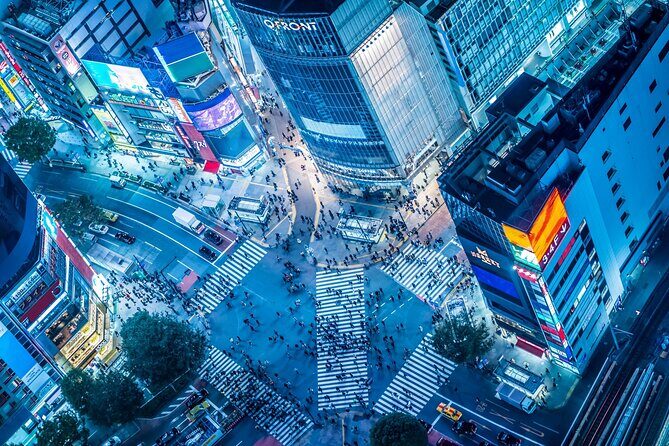
After the older lanes, the tour moves to Miyashita Park, where you’ll spend around 20 minutes. This matters because it gives your feet—and your brain—a break.
Miyashita Park is a multi-level urban space, so it changes your perspective. Instead of being stuck at street height watching crowds, you get an above-and-around viewpoint and a more “designed city” feel. For many people, this is where Shibuya stops being only chaos and starts feeling like Tokyo’s future-minded side.
Also, this longer stop gives you time to breathe, check messages, and plan your next move. It’s a good moment to decide where you’ll go after the tour without rushing.
Center Gai: youthful meeting point energy, explained simply
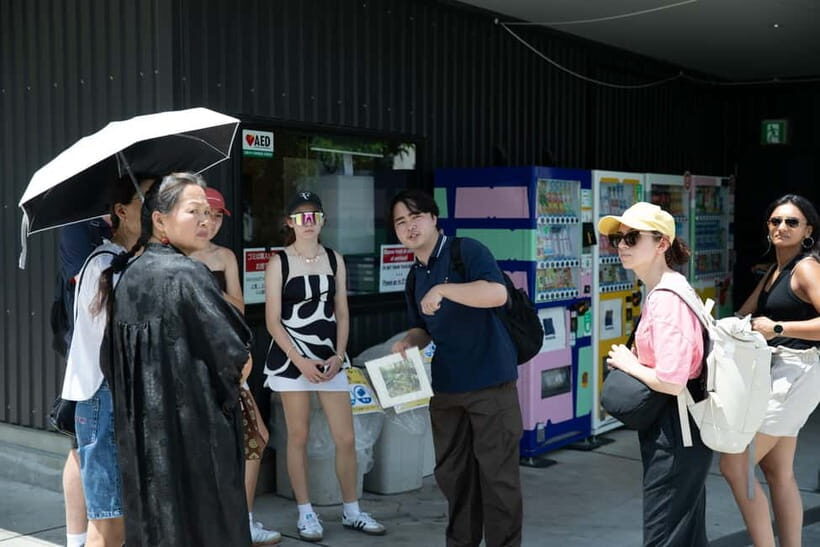
Then you’ll head to Center Gai, where the tour gives a short guided segment (about 10 minutes). This is a place that functions as a meet-up point and a social hub—exactly why it’s useful on a tour.
I like Center Gai for what it represents: it’s Shibuya as a social stage, the part of the district that feels geared toward meeting friends, hanging out, and making a night plan on the go. Your guide helps connect the dots so you’re not just standing in a busy square with no idea what it’s for.
If you’re trying to understand Shibuya beyond photos, Center Gai is an important stop. It’s where the district’s identity as a youth-and-fashion magnet becomes more obvious.
Maruyamacho streets: a bridge from history to nightlife
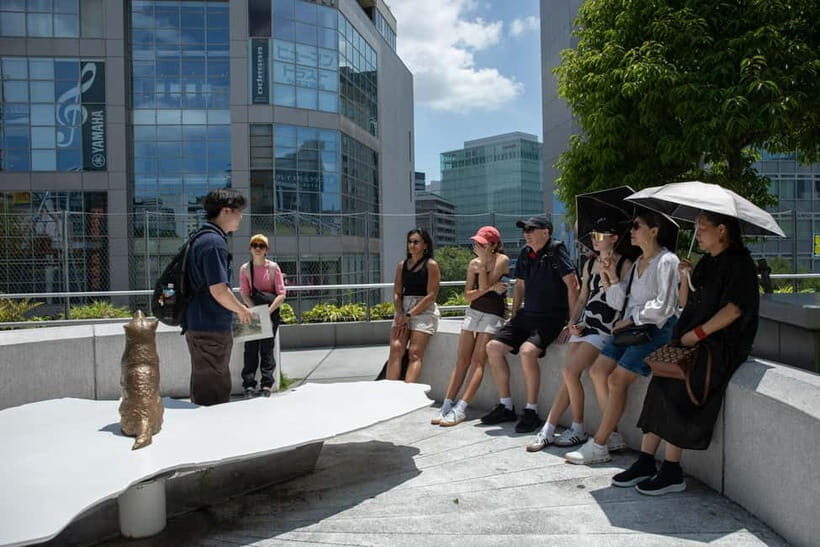
Next is Maruyamacho, with another short guided stop of about 10 minutes. The tone here is older streets with a modern nightlife vibe layered on top. You’ll be walking through a part of Shibuya that feels like it has more stories than storefronts.
This segment works well if you want a taste of local night energy without turning the entire tour into a late-night event. Maruyamacho gives you that “small streets with big atmosphere” feel, and it helps you picture where you might roam after dinner.
The caution is similar to Nonbei Yokocho: short timing. You’ll see the street character, but this isn’t a full neighborhood walk. Think of it as a map in motion—enough to point you toward where you’ll want to go again.
Hachiko Memorial Statue finish: a classic endpoint with real momentum
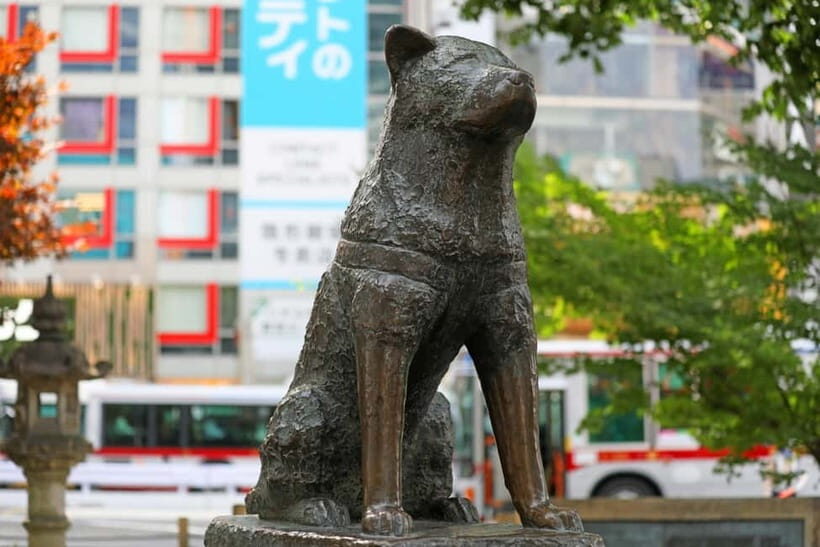
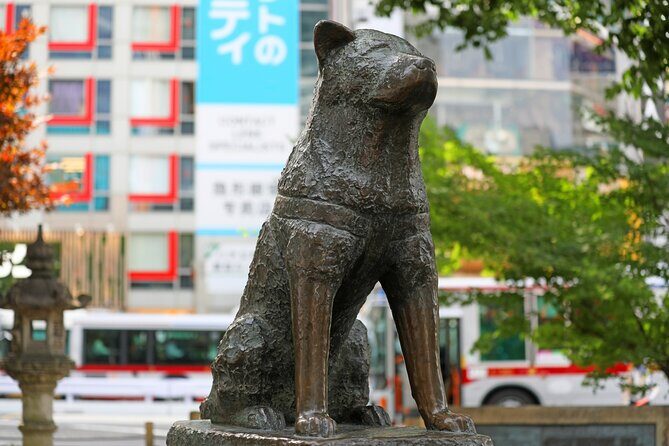
The tour wraps at the Hachikō Memorial Statue in the heart of Shibuya. This is a smart finish point because it’s a landmark you can return to, and it’s surrounded by the kind of transit and shopping options that make it easy to keep going.
I like finishing at Hachiko because it closes the loop. You started with a message about the future, then you saw Shibuya’s modern rush, its side-street layers, and its youth-centered meeting points. Ending at a symbol of loyalty brings it back to something human and recognizable.
It’s also an easy place to orient yourself afterward. If you want to go grab food, find a store, or meet someone, you’re ending at a spot that everyone understands.
Price and value: $22 for a smart, guided Shibuya slice
The price is $22 per person for a 2-hour live English walking tour. In Tokyo terms, that’s not bad for a guided experience that covers multiple distinct zones inside one district.
Here’s why it feels like value: you’re not just paying to walk. You’re paying for a guide to connect what you see—history cues, street context, and practical guidance for things like where to stand during Shibuya Crossing. Plus, the tour gives you a tight route with a clear start and finish, which saves you time and decision fatigue.
You’ll also benefit from the fact that English is supported by a local guide, and many past participants praised guides for being friendly and for answering questions. A good guide turns Shibuya from “a lot of people and buildings” into “a place with logic and layers.”
What you’ll probably like most (based on the strongest signals)
The most praised aspects are pretty consistent: guides who communicate well, friendly guidance, and a route that shows Shibuya’s variety rather than repeating only the postcard stops.
For example, guides such as Loc and Rio are specifically praised for explaining context and sharing practical tips. People also highlight flexibility—like when schedules get messy on a solo day. If you’re juggling other tours or you’re tight on time, the tour’s 2-hour length and focused route are a real plus.
There’s also a strong photo component in the experience. Multiple mentions point out that the guide helps with photos at key stops, which is huge if you’re traveling alone and want a clean Shibuya Crossing shot without spending 30 minutes fighting the crowd.
Who this Shibuya tour fits best
This is a strong pick if:
- It’s your first time in Tokyo and you want a quick orientation to Shibuya.
- You want a mix of modern icons and older backstreets in a single walk.
- You like asking questions and getting explanations rather than following a static route.
- You need a short activity that won’t ruin your whole day.
It may not be the best fit if:
- You hate crowds and want long quiet time at just one location.
- You prefer slow wandering with long stops, because the route is designed to move.
Should you book this Shibuya Crossing & Hidden Streets Walking Tour?
If you want the best of Shibuya without doing the heavy lifting yourself, I’d book it. The route makes sense: start with meaning at Myth of Tomorrow, handle the logistics of Shibuya Crossing with guidance, then spend time in streets that feel more local at Nonbei Yokocho and Maruyamacho. You end where it’s easiest to continue—at Hachiko.
Just go in knowing what the tour is: a smart, guided snapshot. If you keep your shoes comfy, arrive on time at SABON Shibuya Mark City (3rd floor), and treat the stops as introductions you can repeat later, this is exactly the kind of Tokyo experience that pays off quickly.
FAQ
Where is the meeting point for the tour?
The meeting point is SABON Shibuya Mark City, inside the building on the 3rd floor. The guide will be holding a sign, and it can be difficult to find if it’s your first day in Tokyo.
How long is the Shibuya tour?
The tour duration is 2 hours.
Is the tour offered in English?
Yes, it’s a live tour guide in English.
How much does the tour cost?
The price listed is $22 per person.
Where does the tour end?
The tour ends at the Hachikō Memorial Statue in the heart of Shibuya.
Is free cancellation available?
Yes. You can cancel up to 24 hours in advance for a full refund.