REVIEW · TOKYO
Let’s experience calligraphy in YANAKA, Taito-ku, TOKYO !!
Book on Viator →Operated by YANESEN Tourist Information & Culture Center. · Bookable on Viator
Kanji looks hard until your brush moves. This one-hour calligraphy session in Yanaka turns a complex art into a clear, hands-on class, and you leave with something real to hang at home. I especially like the step-by-step instruction you get (often from patient teachers like Chie or Saori) and the fact that you take home your own shikishi keepsake. The main drawback is timing: it is not long enough to master calligraphy styles, so think of it as a fun introduction, not full training.
You also get the setting. The studio is in an old townhouse converted into a working space, in the YANESEN area, close to Yanaka’s everyday streets (Yanaka Ginza Station is about 100 meters away). It feels like you are learning in real downtown Tokyo, not inside a polished tourist box.
This is a private activity just for your group, and it is designed to work for both kids and adults. You will practice strokes, choose a character to write, then create a final piece you can decorate your home with.
In This Review
- Quick Highlights: Yanaka Calligraphy in a Nutshell
- Why This Yanaka Calligraphy Lesson Fits a Tokyo Stroll
- The Studio Setup: Old Town Charm Meets a Real Classroom
- The Lesson Flow: From Brush Strokes to One Character
- Choosing Your Word: Make It Personal, Not Just Accurate
- Your Sensei Matters: Chie and Saori’s Patient Style
- Shikishi Board Keepsake: The Souvenir That Doesn’t Feel Generic
- Optional T-Shirt Name in Kanji: Fun, but Decide First
- Location and Timing: Fit It Into Your Yanaka Day
- Price and Value: What $75.98 Gets You (and Why It’s Fair)
- Who This Lesson Is For (and Who Might Skip It)
- Quick Tips Before You Go
- Should You Book This Yanaka Calligraphy Lesson?
- FAQ
- How long is the calligraphy experience?
- What do I get to take home?
- Can children participate?
- Do I need previous calligraphy experience?
- Is this a private experience?
- Where is it located?
- What happens if the weather is bad?
Quick Highlights: Yanaka Calligraphy in a Nutshell
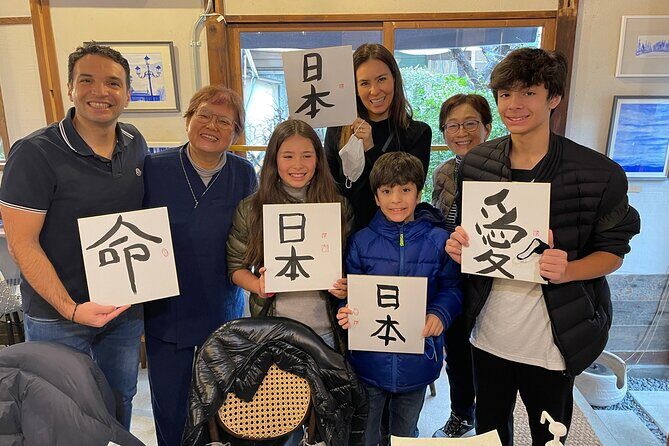
- Beginner-friendly structure: basics first, then your chosen character
- Your own keepsake: a shikishi board is included
- Choose what you write: practice one character, then write your favorite
- Photo-friendly teaching: instructors guide while helping you get pictures
- Optional T-shirt craft: you can make your name in kanji on a shirt
Why This Yanaka Calligraphy Lesson Fits a Tokyo Stroll
Yanaka is one of those Tokyo neighborhoods where you can slow down without feeling like you are wasting time. This lesson slots neatly into a day of wandering because it is near the YANESEN area and close to Yanaka Ginza Station.
What you’re really buying is time with instruction. A lot of cultural activities in Tokyo are “watch this, then move on.” This one actually teaches you how to make a calligraphy character with a brush, and it keeps the session moving so you get a finished result.
Also, the studio location matters more than it sounds. Learning inside an old townhouse converted into a workshop gives you a sense of daily life in Yanaka, and the experience naturally matches the neighborhood vibe.
You can also read our reviews of more tours and experiences in Tokyo.



The Studio Setup: Old Town Charm Meets a Real Classroom
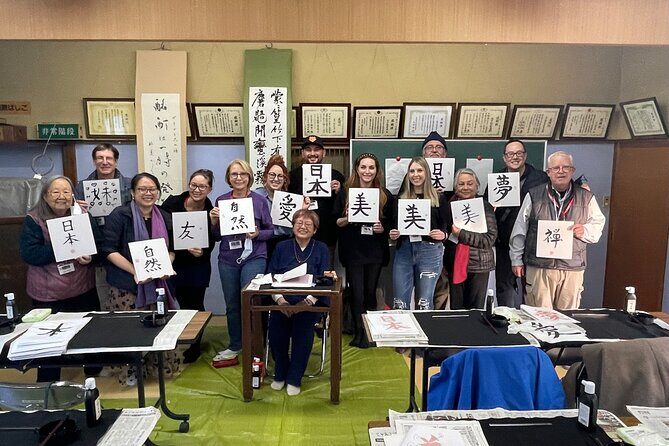
The meeting point is at the YANESEN Tourist Information & Culture Center in Yanaka (3-chōme-13-7 Yanaka, Taito City). From there, the activity takes place at the studio in a converted old townhouse.
That detail helps you set expectations. You are not in a sterile studio with everything standardized. You are in a real neighborhood setting, which is great if you like local atmosphere, and it can also mean the room is small or cozy compared to modern spaces.
One more practical plus: there is a roasted coffee shop next door to your studio. That makes it easy to pair the lesson with a snack or drink afterward, especially if you want to keep your day low-stress.
The Lesson Flow: From Brush Strokes to One Character
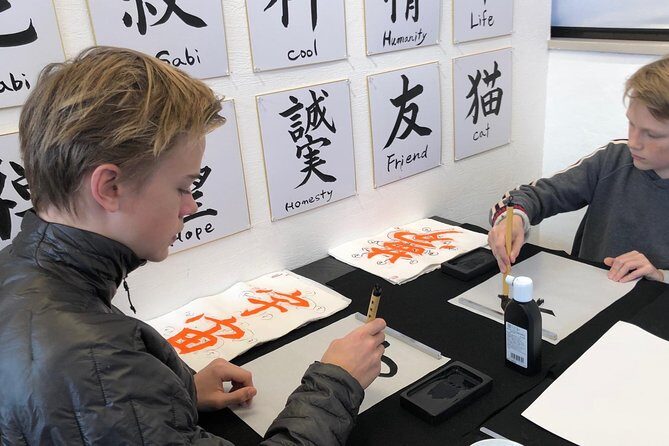
The class is built in a simple, satisfying order:
First, you learn basic strokes. Calligraphy can look intimidating from the outside, but the teaching is focused on what your brush needs to do—direction, pressure, and movement.
Next, you choose a character and write it while the instructor corrects you. This is where the class becomes practical. You are not just copying a template; you are learning how to adjust your motion so the character starts to look right.
Finally, you create your own finished piece on a shikishi board. That final step is what turns practice into a souvenir you’ll actually want to keep.
The biggest value here is that you get “intermediate satisfaction.” You start as a beginner, but the structure gives you enough repetition to feel your progress within an hour.
Choosing Your Word: Make It Personal, Not Just Accurate
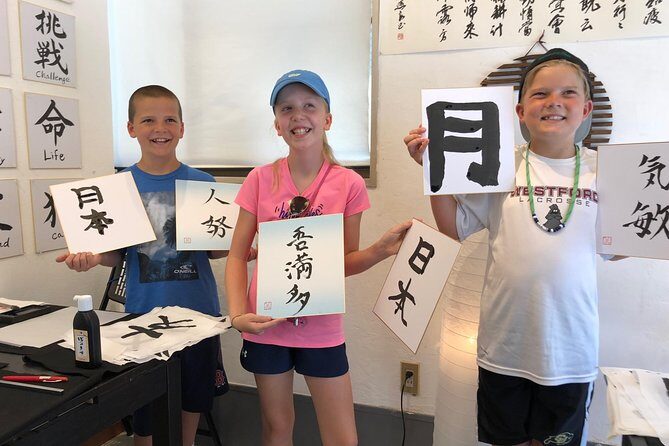
You get to practice and then pick your final character (or words) to put on the shikishi board. This is a small decision with big payoff because calligraphy feels more meaningful when it is tied to you—your name, a word you like, or a simple kanji that you can explain later.
You also have another option if you want something playful. The program mentions making a T-shirt with your name in kanji. If you like taking home wearable souvenirs, that can be a fun add-on because it is personal and photo-ready.
A practical note: keep your choice simple. If you aim too complex for your first try, you may spend the last minutes still struggling with the strokes. A character that fits your goal (souvenir, name, small message) usually makes the session more relaxing.
Your Sensei Matters: Chie and Saori’s Patient Style
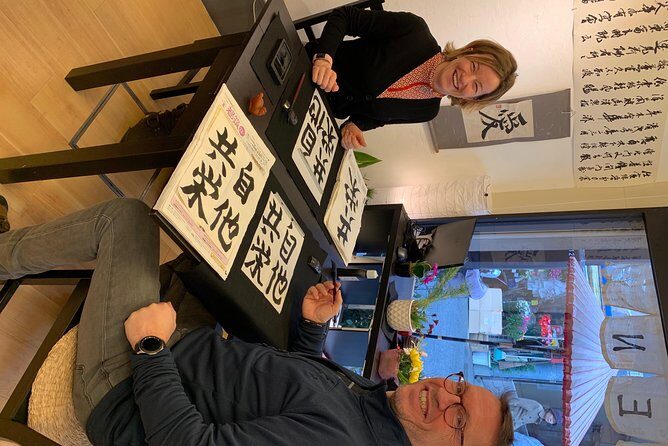
From the instruction style that shows up in this class, two names come up again and again: Chie and Saori (often called Saori-san). Both are described as friendly, patient, and great at breaking things down.
What I find important is not just that they are nice. It is that the teaching is step-by-step, with help aimed at where your brush goes wrong. That feedback loop is what makes beginners feel capable.
Language is also handled well. One review specifically calls out that Saori spoke good English, which matters if you want to understand the technique rather than just mimic motions.
Another “small but real” win: the instructors help with pictures. Calligraphy is hands-on, and you will likely be busy focusing on your brush. If someone helps you capture the moment without rushing you, you end up with souvenirs you can actually share.






Shikishi Board Keepsake: The Souvenir That Doesn’t Feel Generic
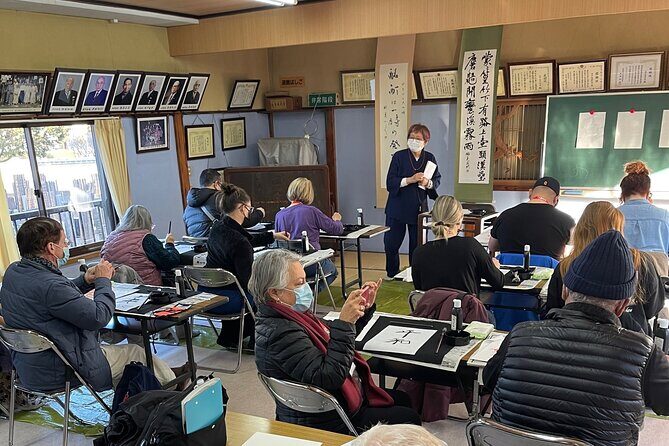
You get a shikishi board as part of the experience fee, and your final work is the centerpiece. This is where the value shows up.
A lot of cultural souvenirs are things you can buy in a shop. This one is different because it is your writing. Even if your strokes are not perfectly “museum quality,” the piece carries the story of you learning in Yanaka.
If you plan to hang it at home, transport matters. Since the program ends back at the meeting point, you can manage your day around safely carrying your artwork.
Also, the shikishi board makes a difference visually. It is designed for calligraphy, so your finished piece looks like calligraphy rather than just marker art on paper.
Optional T-Shirt Name in Kanji: Fun, but Decide First
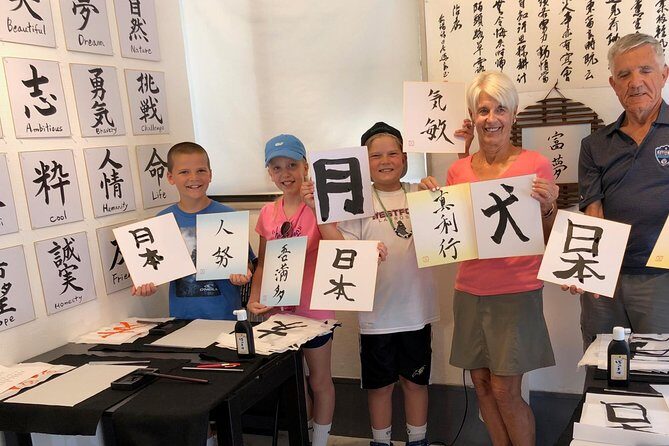
The program mentions a T-shirt option where you can make your name in kanji. That is a fun twist for anyone who wants a practical souvenir.
But do it with intention. If your focus is bringing home something you will display, prioritize the shikishi board. If your focus is wearing a Tokyo memory, the T-shirt can be the better choice.
Either way, this is part of what makes the class feel customizable. In one hour, you are not stuck with a single standardized product.
Location and Timing: Fit It Into Your Yanaka Day
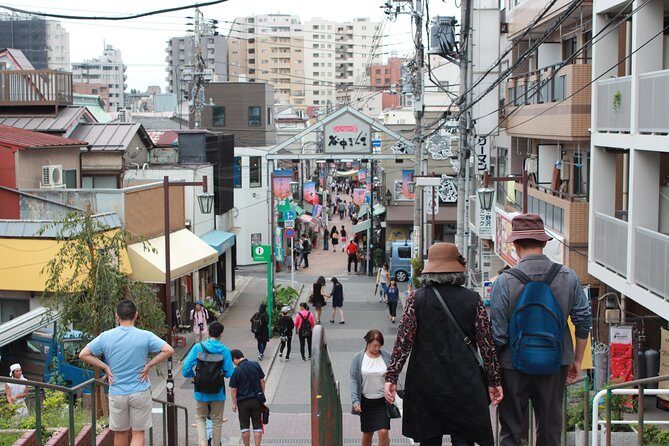
This lesson is positioned well for the YANESEN area. If you are planning on walking around Yanaka’s shopping streets, coffee stops, and small local lanes, this activity becomes a natural mid-day or early evening anchor.
Why that helps: calligraphy requires concentration, so you want to schedule it when you can slow down. If you cram it between long train hops, you’ll spend the class rushing. When you schedule it around a neighborhood stroll, you will enjoy the learning more.
Also, the experience is designed for both adults and kids. If you are traveling with mixed ages, this is one of the calmer cultural activities that still delivers something tangible at the end.
Price and Value: What $75.98 Gets You (and Why It’s Fair)
At $75.98 per person, this is not a “cheap activity.” But it is also not just sitting in a room.
You’re paying for:
- the instruction (an experienced, friendly sensei guiding the strokes),
- a shikishi board included as part of the experience,
- the chance to practice basic brushwork and end with a finished keepsake,
- and the convenience of a location tied to exploring Yanaka.
The duration is about one hour, so it respects your time. You will not feel like you sacrificed half a day to get one craft item.
There is also mention of group discounts, which can make it noticeably better value if you are traveling with others. And since it is a private activity for your group, you avoid the “watching from the side” problem that sometimes happens in larger classes.
If you want a real Tokyo memory that is more personal than a storefront purchase, this price starts to make sense.
Who This Lesson Is For (and Who Might Skip It)
This is a great fit if you want:
- a beginner-friendly cultural activity,
- a clear, guided craft outcome,
- and a souvenir you can display or wear.
It is also appealing for families. The class is described as enjoyable for children as well as adults, and it supports writing personal favorite words or names.
You might consider skipping if you are looking for deep calligraphy training or advanced technique. In an hour, the goal is getting your first character to work, not turning you into a calligrapher.
Think of it like this: you are learning enough to start appreciating the art. Then you take home proof.
Quick Tips Before You Go
A few small moves can help you get better results in less time.
- Choose your character calmly. If you’re unsure, pick something meaningful but not too complicated for a first try.
- Watch your brush pressure cues. Calligraphy is partly about motion, partly about how hard the brush hits the paper.
- Take photos early. Once you start writing, you’ll focus, and you might forget to capture the setup and the early practice.
And one friendly reality check: your first attempt won’t look like a master’s work. That’s not a failure. It’s the point of a beginner lesson. You’re going for a character you can live with and proudly hang.
Should You Book This Yanaka Calligraphy Lesson?
Yes, if you want a high-touch cultural activity with a real output in a short time. The included shikishi board plus the option to make a name in kanji on a T-shirt gives you flexibility, and the instruction style associated with teachers like Chie and Saori seems built for people who are starting from zero.
Book it especially if you are already planning a Yanaka or YANESEN day. The location is convenient, the studio setting feels authentic, and the class naturally pairs with a neighborhood walk and a coffee after.
If you’re a calligraphy fanatic hunting for advanced technique, you may feel the hour is too short. But for most people, it is a smart way to experience Japanese art without needing prior knowledge.
FAQ
How long is the calligraphy experience?
It lasts about 1 hour (approx.).
What do I get to take home?
You get an experience fee and a parting gift of a shikishi board. Your final calligraphy work is created on shikishi paper.
Can children participate?
Yes. The program is designed so children and adults can enjoy the lesson.
Do I need previous calligraphy experience?
No. The lesson teaches basic strokes and guides you through writing a chosen character, so most people can participate.
Is this a private experience?
Yes. It is private, and only your group participates.
Where is it located?
You meet at the YANESEN Tourist Information & Culture Center in Yanaka (3-chōme-13-7 Yanaka, Taito City, Tokyo). It is near public transportation, and Yanaka Ginza Station is listed as about 100 meters away.
What happens if the weather is bad?
The experience requires good weather. If it is canceled due to poor weather, you will be offered a different date or a full refund.