REVIEW · TOKYO
Tokyo: Mt.Fuji & Lake Kawaguchiko 1-Day Bus Tour w/Optional Lunch
Book on Viator →Operated by VIP Japan Tours · Bookable on Viator
Mt. Fuji in one easy day from Tokyo. This tour strings together the most famous viewpoint hits around Mt. Fuji—without you wrestling trains, transfers, and timing. You’ll travel from central Shinjuku, hear live commentary on the bus, and get dropped back in time for dinner.
What I like most is how efficiently the day is packed: Arakurayama’s Chureito Pagoda viewpoint first, then Lake Kawaguchiko for crafts and lake air, and finally a traditional thatched-roof village by Lake Saiko. I also like that the tour is built for photography—multiple “different angles” of the mountain across the day.
One thing to keep in mind: Mt. Fuji visibility depends on weather, and you’ll do some stair climbing to reach the best look near Chureito Pagoda. If clouds roll in, you’ll still see the area and viewpoints, but it won’t be the same as a crisp, clear day.
In This Review
- Key things to know before you go
- Why this Mt. Fuji day trip is built for busy Tokyo schedules
- Shinjuku meeting point and how the day actually flows
- Stop 1: Arakurayama Sengen Park and Chureito Pagoda views
- A steep add-on: the Niikurayama Asama Park observation deck
- Lake Kawaguchiko: craft park, optional lunch, and real-time Fuji spotting
- Oishi Park: the flower-and-reflection photo break
- Saiko Iyashi no Sato Nenba: thatched-roof village energy
- Price and value: is $77.96 a good deal?
- The biggest ups and downs you should plan around
- Who should book this tour (and who might not)
- Should you book? My quick decision guide
- FAQ
- Where do I meet the tour guide?
- Where does the tour end?
- How long is the tour?
- Is the tour air-conditioned?
- Is lunch included?
- Does the tour include ticketed entries?
- Will I definitely see Mt. Fuji?
- How physically demanding is it?
- What luggage can I bring?
- What happens if I’m late or miss the meeting point?
Key things to know before you go
- Central Shinjuku start/end: Shinjuku Post Office (West Exit area) is your meeting point, with drop-off back at Shinjuku.
- Live commentary on an air-conditioned bus: You get guide context while you’re driving, not just at stops.
- Chureito Pagoda viewpoint requires stairs: Expect a walk up before you get the postcard view.
- Lake Kawaguchiko craft-and-photo time: Kawaguchiko Craft Park and nearby stops focus on local makers and scenes by the water.
- Multiple Fuji angles in one day: You’re not relying on a single viewpoint.
- Thatched-roof village by Lake Saiko: Saiko Iyashi no Sato Nenba is included (ticket included, 1 hour).
Why this Mt. Fuji day trip is built for busy Tokyo schedules
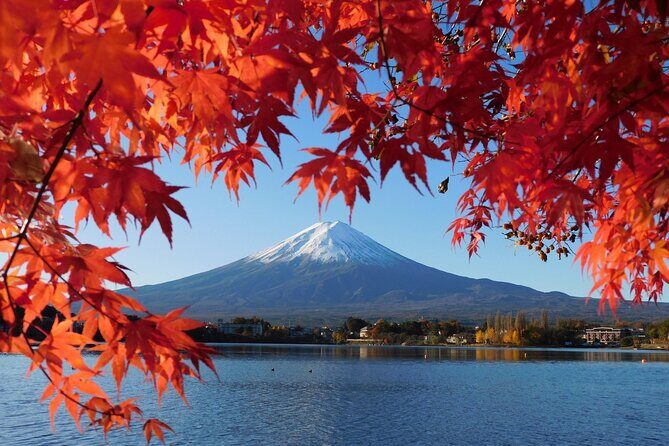
If you’re in Tokyo and you want Mt. Fuji without committing to a full overnight plan, this is the kind of day trip that makes sense. You get a guided route with stops designed around views, crafts, and quick strolling—so you spend less time figuring out transit and more time actually looking at the mountain.
The other smart move is the timing rhythm. You start in Shinjuku, take breaks at scenic points, and return to Shinjuku rather than ending somewhere inconvenient. That matters if you don’t want your evening eaten by getting back across the city.
Finally, I like that the tour leans into variety. You’re not just getting one “Fuji photo moment.” You’ll see different viewpoints around the Kawaguchiko area, plus a cultural stop at a traditional village.
A few more Tokyo tours and experiences worth a look


Shinjuku meeting point and how the day actually flows
Your day begins at the Shinjuku Post Office in the West Exit area. It’s clearly listed as the start (and the end is also Shinjuku Post Office, same address). You’ll meet your guide, then board an air-conditioned vehicle for the drive toward Fuji-san.
Two practical tips that save stress:
- Arrive 10 minutes early. If you’re late or at the wrong pickup, refunds won’t be issued.
- Double-check your QR code for the correct meeting point. The guide works from a participant list tied to your meeting location.
This tour runs about 9 to 10 hours total, and the bus can’t wait for you if you miss the start. Also, the operator notes schedule changes can happen due to weather or road traffic. That’s normal for a Fuji area day—just don’t stack any time-sensitive commitments right after the tour.
Group size is capped (up to 94). That usually means you’ll move as one unit, but you still get to explore each stop during the allotted time.
Stop 1: Arakurayama Sengen Park and Chureito Pagoda views
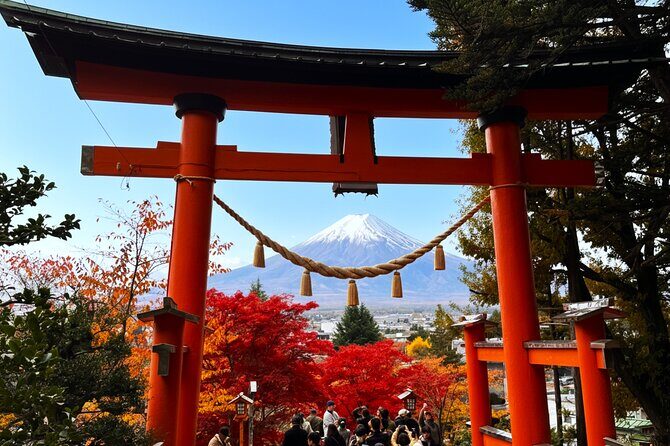
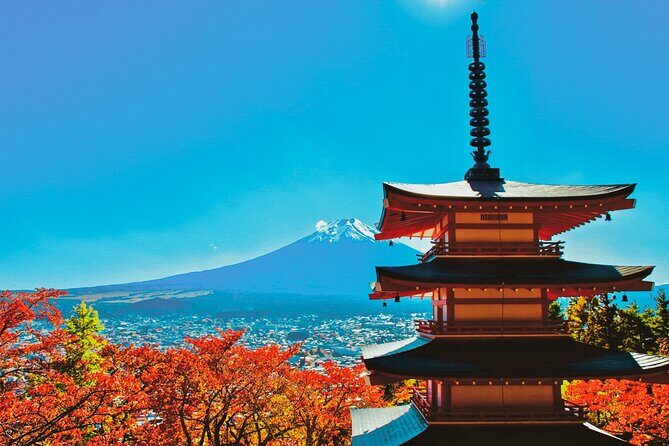
This is the moment most people picture when they think of Mt. Fuji in Japan. You’ll head to Arakurayama Sengen Park and climb the stairs up toward the viewpoint where you can see the iconic Chureito Pagoda with Mt. Fuji in the background.
The big practical detail: there’s some climbing of stairs required. The viewpoint setup is part of why the view is so famous, but it’s not a flat stroll. If you’re walking with slower pace or you’re sensitive to stairs, plan for a careful, steady climb.
Why I think this stop is worth it: Chureito Pagoda is a symbol shot for a reason. It gives you that classic “Japan postcard” composition—pagoda foreground, Fuji behind—plus it tends to be a strong photo target even when the light changes.
Also, the tour notes the park is known for cherry blossoms in spring. In season, that means you’re not just photographing architecture—you can be photographing Fuji with seasonal color, depending on when you’re there.
A steep add-on: the Niikurayama Asama Park observation deck
In the same area stretch, the itinerary includes the Niikurayama Asama Park Observation Deck, which is described as the highest observation deck in Japan, with 398 steps after reaching a climb point.
I’ll be blunt: this is the part that tests your legs. If you’re doing this tour in winter or early morning when it’s chilly, take it slow. If you’re okay with stairs, it’s also a great trade—up there, you’re getting a higher vantage point and a wider sense of the mountain’s presence.
This stop also helps your day feel less repetitive. Even if you get a fantastic view at Chureito Pagoda, the observation deck gives a different angle, and angles are what make a Fuji day feel “complete.”
Lake Kawaguchiko: craft park, optional lunch, and real-time Fuji spotting
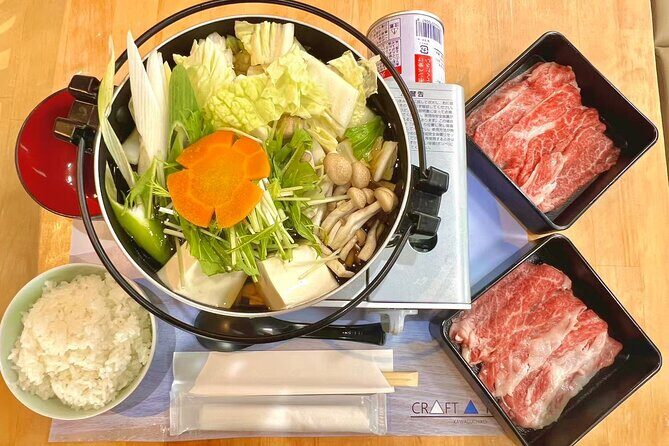
Once you head to the northern side of Lake Kawaguchiko, the vibe shifts from stairs and temples to lake air and local shopping. Your main stop here is Kawaguchiko Craft Park, where you can browse crafts and enjoy time by the water.
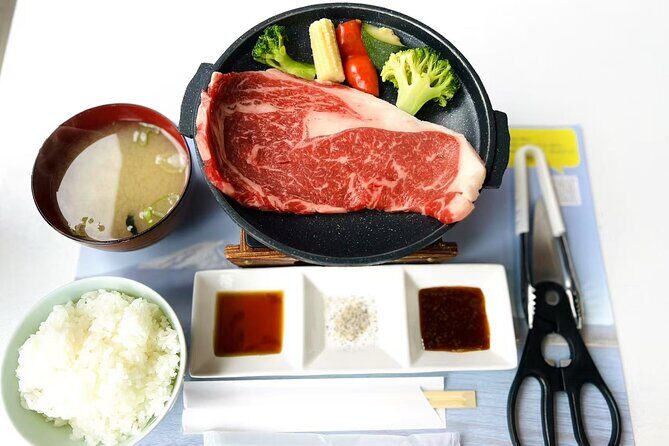
Lunch is tied to this part of the day. You can have lunch at your own expense, or you can upgrade so lunch is included (the tour offers different options when booking). A practical move: if you know you’ll be hungry, choosing the lunch upgrade can reduce decision fatigue while you’re on a tight schedule.
This section of the route also includes extra cultural and craft-related pauses, such as:
- Shinkura Fuji Sengen Shrine (with views of Mt. Fuji when weather is good)
- Oishi Tsumugi Traditional Craft Museum (traditional silk techniques)
- Kawaguchiko Music Forest (a musical-themed park with a European Alps atmosphere)
- Itchiku Kubota Art Museum (including Mt. Fuji-related arts)
- Photo-friendly stops around the Shimoyoshida area
Not all of these will feel like “must-dos,” but together they add a layer beyond scenery. If you like Japan as more than photos—if you enjoy how everyday life connects to craft—you’ll likely feel rewarded here.
One more thing: this is also where your Fuji check happens. Weather controls visibility, and Kawaguchiko is one of the best places to “wait for a break in the clouds” without losing the whole day.
A few more Tokyo tours and experiences worth a look





Oishi Park: the flower-and-reflection photo break
Next comes Oishi Park, another Fuji-focused stop with seasonal scenery. You’ll have around 30 minutes here, and the point is simple: flowers plus lakeside paths plus Mt. Fuji reflection chances.
This is the stop for that “reflection” style photo people chase—if conditions cooperate. Even when Fuji isn’t fully dramatic, the lake setting still gives you calm, walkable time and a break from shopping.
Two small reality notes:
- It’s a quick stop. Don’t plan to wander forever—plan to photograph, enjoy the views, and move.
- Depending on season, the flowers change, so your photos won’t all look the same. That’s normal; it’s also why repeating Fuji trips can be different.
There’s also an Oishi Hana Terrace style shopping row mentioned in the route. It’s low-pressure and scenic, but it’s still shopping time—so if you don’t want to shop, keep your focus on the lake paths.
Saiko Iyashi no Sato Nenba: thatched-roof village energy
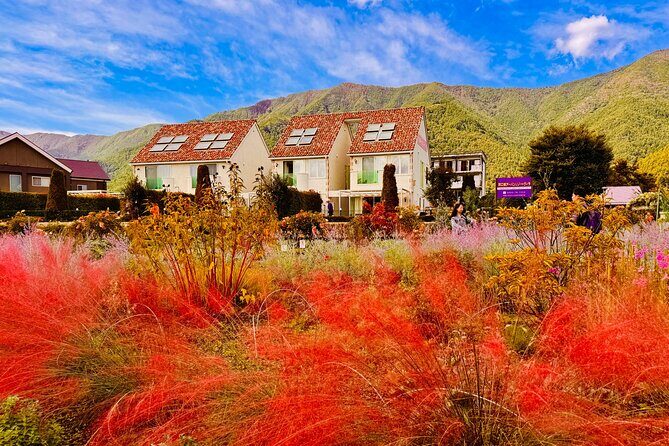
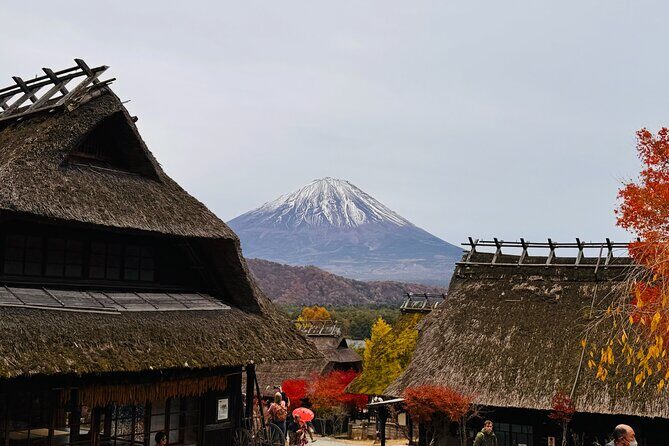
The final scenic/cultural stop is Saiko Iyashi no Sato Nenba on Lake Saiko. It’s a village of traditional thatched-roof houses, and the ticket is included, with about 1 hour on site.
This stop is a nice counterbalance. By the time you get here, you’ve already done viewpoints and crafts. Now you get something more “slow.” It’s a walk-through village experience, where the buildings and lakeside setting do a lot of the work.
I also like that it gives your day a story arc. Start with a religious/pagoda view, move into lake craft and modern themed sites, then finish with a more traditional lifestyle snapshot. Even if Mt. Fuji isn’t crystal clear at every stop, this village still lands because it’s about place, not just the mountain.
Price and value: is $77.96 a good deal?
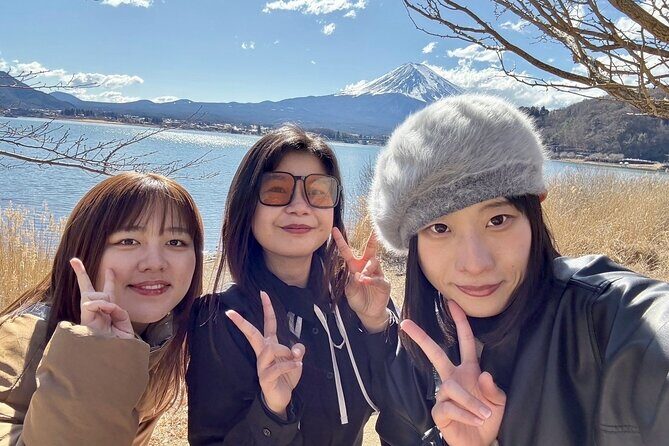
At $77.96 per person, you’re paying for three main things:
- Guided routing and live commentary (so you’re not just “waiting at stops”)
- Central Tokyo transfers without you planning public transit on the fly
- An organized sequence of multiple viewpoints and cultural stops in one long day
If you were to DIY this, you’d need to plan how to get out of Tokyo, how to connect between Fuji area spots, and how to keep your day from turning into a transit marathon. This tour replaces that planning burden with a bus schedule and a guide who explains what you’re seeing along the way.
Is it “cheap”? Not exactly. But it’s priced like a day trip where you’re buying convenience plus time efficiency. Considering it’s a full 9–10 hour outing with an air-conditioned vehicle, guide commentary, and an included-entry village stop, the value usually makes sense—especially if you’re short on days in Tokyo.
One more value angle: the tour design helps you hedge against partial cloud cover. Even when visibility isn’t perfect, you still have stops that work as experiences by themselves (craft time, parks, the thatched village).
The biggest ups and downs you should plan around
Let’s be honest about what can change your day.
Upsides you can count on
- The day is structured around multiple Fuji viewpoints, not just one.
- You get live commentary on the bus, which makes the stops feel more meaningful than sightseeing without context.
- The group visits include both scenery and local culture, so you won’t feel like you’re only shopping for postcards.
Potential downsides
- Mt. Fuji visibility isn’t guaranteed. The route depends on weather conditions beyond anyone’s control.
- You’ll do some stairs, including a notable climb tied to the viewpoint experience.
- This is a long day. Even with good pacing, you’re on the move for hours.
Also, the operator flags a couple of special timing issues:
- Dec. 14 could bring traffic delays due to the Mt. Fuji Marathon nearby.
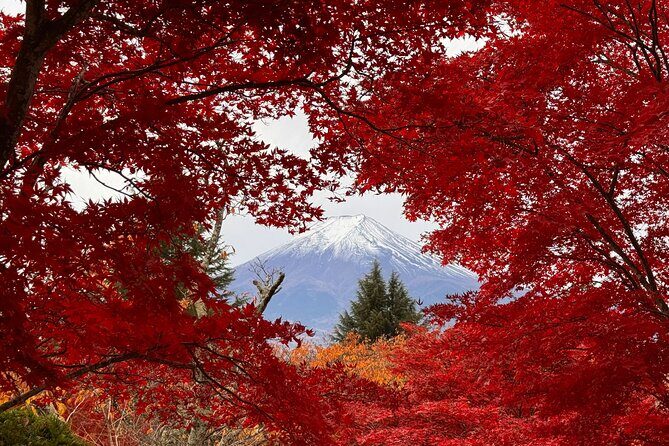
- In November, the route may shift a bit after Lake Kawaguchiko Craft Park to focus on autumn foliage, including a corridor with more than 400 maple trees.
That kind of season adjustment is useful. Fuji area scenery changes fast by month, and that’s when timing matters most.
Who should book this tour (and who might not)
This is a good fit if you:
- Want one organized day from Tokyo to see Mt. Fuji and the lakeside area
- Prefer a guide to explain what you’re looking at while you travel
- Like having several photo stops in one trip, with some craft and village time mixed in
It may be less ideal if you:
- Want total freedom to linger for hours at a single spot (your time per stop is limited)
- Don’t want any stair climbing at all
- Have very tight plans later that day—because getting back to Shinjuku is planned but depends on traffic and weather
If you’re traveling as a couple or with family, the tour’s structure tends to work well. Many guides also try hard to manage timing based on weather—so your day stays on track even when clouds drift in.
Should you book? My quick decision guide
If your main goal is to see Mt. Fuji from the iconic viewpoint areas and you want the easiest path from Tokyo, I’d book this. The combination of central Shinjuku transfers, live guided commentary, and multiple scenery stops makes it a practical way to spend one limited day.
I’d think twice only if stairs are a hard no for you, or if your schedule is so tight that you can’t handle minor delays from traffic. Also, if you’re unlucky with clouds, you’ll still enjoy the parks, lake walks, and the thatched village—but don’t assume you’ll get the exact postcard visibility at every stop.
If you want a straightforward Fuji day with the least logistical stress, this tour is a solid choice. Just pack for weather, expect stairs, and plan to chase Fuji when the clouds briefly loosen.
FAQ
Where do I meet the tour guide?
You meet at Shinjuku Post Office (Shinjuku Station West Exit area) in Shinjuku, Tokyo.
Where does the tour end?
The tour ends back at Shinjuku Post Office (the same location). The bus does not return to Shinagawa.
How long is the tour?
The experience runs about 9 to 10 hours.
Is the tour air-conditioned?
Yes. The vehicle is listed as air-conditioned.
Is lunch included?
Lunch is not automatically included. You can purchase lunch at your own expense, or you can upgrade for lunch inclusion when booking.
Does the tour include ticketed entries?
Yes. For example, Saiko Iyashi no Sato Nenba includes the admission ticket. Other stops in the itinerary are listed as free admission.
Will I definitely see Mt. Fuji?
No. Visibility of Mt. Fuji can’t be guaranteed because it depends on weather.
How physically demanding is it?
The tour notes travelers should have moderate physical fitness. The Chureito Pagoda area includes stair climbing, and there is also a 398-step observation deck included in the route.
What luggage can I bring?
The tour allows one piece of luggage per person, stored in the vehicle trunk. The total size stored in the trunk should not exceed 155 cm combined dimensions. Valuables should be kept with you because you can’t access stored items between stops.
What happens if I’m late or miss the meeting point?
The bus leaves on time. If you arrive late or at the wrong location, you may miss the tour, and refunds won’t be issued.
![[2.3km / 1.43mi] Kyoto East Early Morning Walking Tour - Your 2-hour route: a focused walk through Higashiyama streets](https://images.thejapantraveler.com/wp-content/uploads/2-3km-1-43mi-kyoto-east-early-morning-walking-tour.jpg)