REVIEW · TOKYO
Samurai Experience Mugai Ryu Iaido in Tokyo
Book on Viator →Operated by Beauty of Japan · Bookable on Viator
A katana lesson with a real master. In just about an hour you’ll learn the flow of Mugai-ryū iaido with Master Takeda Hougyoku in a small group, plus you’ll get hands-on practice rather than only watching. Two things I really like: the one-on-one attention you get in a group capped at 8, and the chance to try sword basics yourself with mock katanas for safety. One consideration: you’re changing into hakama and doing the work fast, so it’s not a long training session—if you want hours of practice, this will feel brief.
The experience is also built for real photos, not awkward “stand here” moments. You’ll get rental hakama and a Japanese sword rental, then you’ll move through explanations, safe handling, and cutting practice (tameshigiri) before ending with a clear kata look from the master. If you’re expecting a passive cultural show, adjust your mindset: this is participatory training, even though it’s beginner-friendly.
In This Review
- Key things that make this Tokyo iaido lesson worth it
- Kuramae start point: how logistics shape your experience
- Step one: changing into hakama and learning the tone of iaido
- Safe sword handling with mock katanas: drawing, gripping, and control
- Tameshigiri practice: the moment iaido turns from theory to action
- Watching Mugai-ryū kata: why the predetermined patterns matter
- Master Takeda’s presence: attention, credibility, and the 340-year lineage
- Photo-friendly moments without derailing the lesson
- Price and what you’re paying for: $151.92 for a hands-on hour
- Who this Mugai-ryū iaido experience suits best
- Booking tip: plan your timing to keep the session smooth
- Should you book Samurai Experience Mugai Ryu Iaido with Master Takeda?
- FAQ
- How long is the Samurai Experience Mugai Ryu Iaido lesson?
- Do you use real swords?
- What’s included in the price?
- How big is the group?
- Where do I meet, and does it connect to public transportation?
- Can I cancel for a full refund?
Key things that make this Tokyo iaido lesson worth it
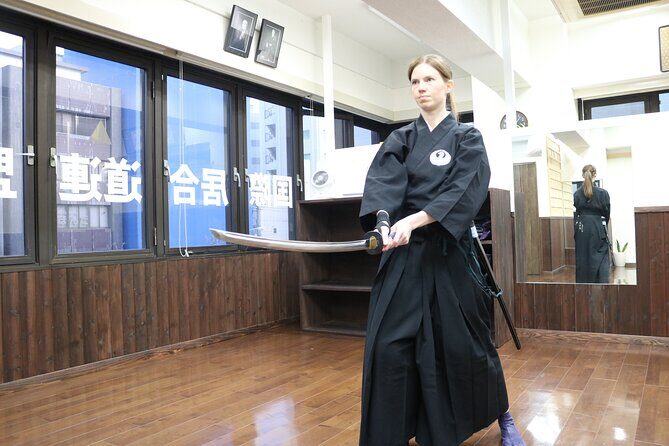
- Master Takeda Hougyoku in the room: you’re not just hearing about Mugai-ryū, you’re learning under the head of the Hougyoku-kai organization
- Maximum 8 people: plenty of attention, less waiting your turn
- Mock katana safety: you learn draw, grip, and movement without real steel
- You actually try tameshigiri: the cutting practice is where it starts to feel real
- Hakama + sword rental included: less fuss, more time doing the lesson
- Photo opportunities throughout: you’ll have chances to capture the moment while you learn
Kuramae start point: how logistics shape your experience
This lesson runs from a meeting point in Kuramae (Taito City), and it finishes back there. That matters because you’re not dealing with a car drop-off hunt or multiple transfers. You’ll also want to plan for local transit timing, since it’s described as being near public transportation.
Two practical notes before you go:
- Bring yourself in ready to change clothes. The flow includes changing into a hakama, so you’ll want to show up with clothing that’s easy to remove and put back on.
- Plan for a fast schedule. The whole session is about 60 minutes, so there’s no time padding for late arrivals.
The tour uses a mobile ticket, and you should receive confirmation within 48 hours of booking (subject to availability). Since the average booking window is about 9 days in advance, it’s smart to lock in early—especially if you’re visiting during peak weeks when short lessons with small groups fill first.
You can also read our reviews of more tours and experiences in Tokyo.



Step one: changing into hakama and learning the tone of iaido
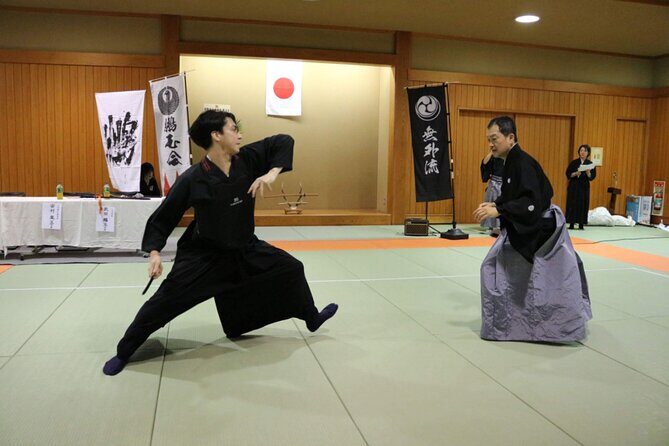
Once you meet, the session starts with the wardrobe switch. You’ll be given rental hakama, and this isn’t just costume drama. Hakama changes how your movement feels and how you stand, and that’s part of why traditional martial arts training often begins with clothing.
Then the lesson turns to what you’re about to do:
- You’ll get an explanation of what iaido is.
- You’ll learn the overall flow of the experience, including how to safely handle the sword.
Why I think this opener is valuable: it lowers the mental noise. When you know the order of events—change clothes, safety overview, draw/sheath work, practice, then kata viewing—your brain stops panicking about what comes next and you can actually focus on technique.
The instruction is English-speaking, so you’re not stuck decoding gestures. The tone also matters here. The teaching style is described as welcoming and professional, with an obvious desire to share the art—exactly what you want in a beginner-friendly environment.
Safe sword handling with mock katanas: drawing, gripping, and control
Here’s where the experience earns trust quickly. Even though you’ll learn katana fundamentals, the swords are imitations of the katana (mock katanas). That means you can practice key motions without the stress of real steel.
In the “safe handling” portion, you’ll cover essentials like:
- How to hold the sword properly
- How to draw and sheath safely
- Basic patterns so your body understands what the movements are trying to do
This is the heart of why iaido is different from generic sword play. Iaido isn’t just swinging. It’s about controlled movement—what you do when the sword is still, what you do to draw, and how you finish.
If you’re a first-timer, you’ll probably be surprised by how much attention you need for the basics. The upside of the setup is that the group is small, so you’re more likely to get corrections in real time instead of watching others and hoping you got it right.
Tameshigiri practice: the moment iaido turns from theory to action
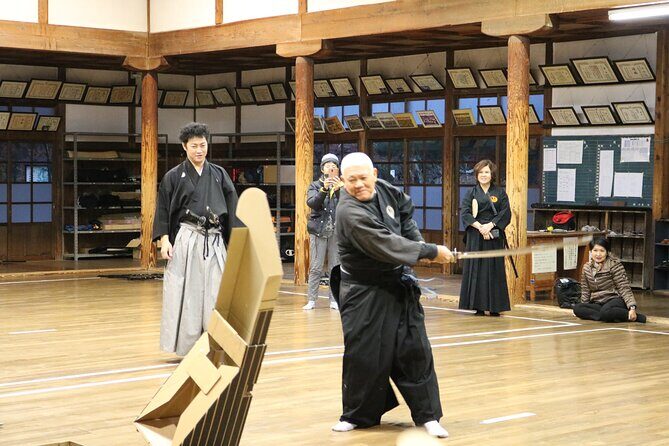
Then you’ll try tameshigiri, which is the practice of cutting using the sword. Even though the swords are described as mock/imitations for safety during the lesson, tameshigiri is still the big “oh wow” part. It’s one thing to learn draw and sheath; it’s another to understand how cutting timing and form connect.
A couple of realistic considerations to keep in mind:
- This section will feel more intense than the earlier movements because you’re doing something practical with purpose.
- Because it’s a one-hour format, you’ll likely get a limited number of practice moments. That’s normal here—don’t expect a full training syllabus.
Still, for most people, this is the highlight. It’s where iaido stops being a museum story and becomes a physical skill. And you’ll be doing it with instruction, not guessing.
Also, the lesson includes plenty of opportunities to take photos. So you’re not locked into facing a wall the whole time. You can capture the experience, while still following safety guidance.
Watching Mugai-ryū kata: why the predetermined patterns matter
After your hands-on practice, you’ll watch Mugai-ryū iaido kata, meaning predetermined attack sequences. Kata can sound rigid on paper, but in practice it’s the structure that keeps the art consistent and teachable—especially for beginners.
Here’s what you should take away:
- Kata shows you the “finished shape” of technique: the order, the timing, and the calm control between actions.
- Since you already tried the basics, the kata isn’t abstract anymore. You’ll have mental anchors for what you practiced.
The experience is described as Mugai-ryū being a practical martial art, and you can feel that practicality in the lesson structure. You don’t spend the whole hour on dramatic storytelling. You learn the handling, try core practice, then watch kata as the blueprint.
By the end, you’ll have a chance to see real iaido kata right in front of you, not just a quick overview.






Master Takeda’s presence: attention, credibility, and the 340-year lineage
A big reason people love this experience is that Master Takeda Hougyoku is present. He’s identified as head of the International Iaido Organization Hougyoku-kai and connected with the Mugai-ryū tradition, including the idea of carrying forward a lineage described as 340 years.
What that means for you in the moment:
- You’re not just copying an instructor’s movements; you’re learning within the larger tradition.
- In a small group, his attention can translate into sharper feedback and a stronger sense of what matters in the art.
The reviews also point to something practical: the instruction feels both professional and genuinely enthusiastic. In martial arts, that combination matters. You want someone who takes safety seriously, but also teaches in a way that doesn’t make you feel foolish for being new.
If you care about authenticity, this is one of those experiences where the master’s role is visible, not just background context.
Photo-friendly moments without derailing the lesson
One of the most common tour problems in Japan is photo time that eats into actual learning. This setup is different. You’ll have opportunities to take photos during the lesson, not just at the end.
That said, do yourself a favor: keep your camera ready, but don’t rush to shoot during safety-critical steps (like drawing, sheathing, and cutting). You’ll get better photos when you’re listening and moving correctly.
If you’re traveling with friends, plan for a quick visual workflow: one person shoots, one person focuses on technique. In a group of 8, timing matters less than it does in bigger classes.
Price and what you’re paying for: $151.92 for a hands-on hour
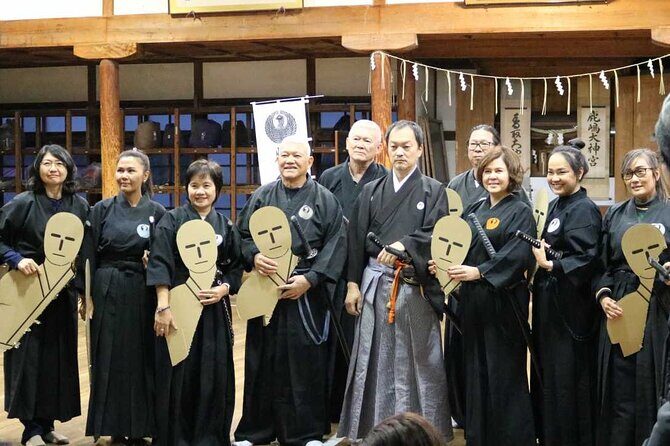
At $151.92 per person for about 60 minutes, this isn’t a “cheap activity.” So is it good value?
Here’s the value logic I’d use to decide:
- You’re paying for a small group size (max 8), which usually means more direct coaching.
- You get included rental hakama and sword rental, so you’re not budgeting for gear.
- You do multiple core activities in one sitting: safety and handling basics, draw/sheath practice, tameshigiri, and a kata viewing by the master.
- The lesson is led in English by an instructor, which saves you from needing to translate everything yourself.
If you compare this kind of experience to taking multiple lessons, buying equipment, or finding an open practice where a qualified instructor is watching you closely, the price starts to make sense. You’re buying coaching time plus access to a recognized lineage through Master Takeda.
One more value note: the session ends back at the meeting point and doesn’t include pick-up or drop-off. That keeps costs lower, but it also means you’ll want to be on time and ready to get there by transit.
Who this Mugai-ryū iaido experience suits best
This fits best if you want:
- A focused cultural activity that includes hands-on practice, not just observation
- A beginner-friendly introduction with safety guardrails (mock katanas)
- A Tokyo experience that feels specific and skill-based, tied to a named tradition
It may not be ideal if:
- You want a long, slow training plan with lots of repetition
- You hate changing clothes as part of the activity
- You want a purely scenic or relaxed outing with zero physical effort
If you’re a first-time visitor to Tokyo, the location in Kuramae plus the martial arts angle gives you something different from the usual highlight circuits. If you’re a repeat Tokyo visitor, this is the kind of class that feels like a “real you were here” moment because you learn something procedural.
Booking tip: plan your timing to keep the session smooth
Because it’s about an hour, you don’t want to stack it too tightly against other commitments. Eat first or plan a nearby meal window. Wear clothing that makes it easy to change into hakama.
Also, the average booking lead time is around 9 days, which is a hint: early planning improves your odds of getting the slot you want.
Should you book Samurai Experience Mugai Ryu Iaido with Master Takeda?
I’d book it if you want a short, well-guided taste of iaido that includes real practice, not just a performance. The strongest reasons are the small-group attention, the chance to try core techniques including tameshigiri, and the fact that Master Takeda Hougyoku is actually part of the experience.
I’d skip it only if you’re looking for a long class, a low-key show, or a gear-free activity. Otherwise, this is a practical, memorable Tokyo lesson you can talk about because you did the moves, not just watched them.
FAQ
How long is the Samurai Experience Mugai Ryu Iaido lesson?
The experience runs for about 1 hour.
Do you use real swords?
No. The lesson uses mock katanas for safety.
What’s included in the price?
You get rental hakama, an English-speaking instructor, and Japanese sword rental.
How big is the group?
The group has a maximum of 8 travelers.
Where do I meet, and does it connect to public transportation?
You meet at 4-chōme-20-10 Kuramae, Taito City, Tokyo 111-0051. It’s described as near public transportation.
Can I cancel for a full refund?
Yes. Free cancellation is available if you cancel at least 24 hours before the experience’s start time.