REVIEW · KYOTO
Authentic Ninja Weapon Forging Experience in Kyoto
Book on Viator →Operated by Atelier NIN · Bookable on Viator
A Kyoto workshop turns ninja myths into steel. You start in samue and choose shuriken or kunai, then forge metal at an 800°C furnace, polish it, and finish with your own kanji mark.
What I like most is how hands-on it feels from the first second to the last polish. I also love that the team kept things fun and practical, and I even got help from Taka to make my kunai more symmetrical. One thing to consider: the flow can feel fast, and a couple guests noted that directions can be vague sometimes, so you’ll want to watch closely and ask questions when you’re unsure.
In This Review
- Key Things I’d Book This For
- A Kyoto Ninja Workshop Where You Actually Make Something
- Your 2.5 Hours in the Studio: Step-by-Step Creation
- 1) Suit Up Like a Craftsman
- 2) Choose Your Ninja Weapon
- 3) Forge the Steel at 800°C
- 4) Shape and Refine With a Belt Sander
- 5) Kanji Engraving for Personalization
- 6) A Ninja Knowledge Session
- 7) Blackening the Steel for the Dark Finish
- 8) Final Polish and Take-Home Moment
- Picking Shuriken vs Kunai: Which One Fits Your Taste
- The Metalwork: Heat, Hammering, Sanding, and Blackening
- Forging With a Furnace (800°C)
- Belt Sander Shaping
- Blackening for Protection and the Ninja Look
- Final Polish
- The Kanji Choice: Making It Yours Without Making It Complicated
- Culture Without Lecturing: The Ninja Knowledge Session
- Price and Value: What $151.92 Buys You in Real Terms
- Where It Is and How to Get There Without Stress
- Comfort Level: What “Moderate Physical Fitness” Means Here
- Who This Workshop Is Perfect For
- When You Might Want a Different Option
- Should You Book This Kyoto Ninja Weapon Workshop?
- FAQ
- How long is the ninja weapon forging experience in Kyoto?
- What weapons can I make?
- Do I need prior experience with forging or metalworking?
- What’s included with the price?
- Where do I meet, and does the tour end nearby?
- What is the cancellation policy?
Key Things I’d Book This For
- You forge real steel (heat, hammer, and shape), not just a craft project
- Pick your weapon style: three shuriken options or a kunai
- Kanji engraving makes it personal, not generic
- Blackening + final polish gives that dark, finished ninja-tool look
- Small-group vibe with a maximum of 25 people
- A souvenir-ready box and bag so you can pack up and go
A Kyoto Ninja Workshop Where You Actually Make Something
If you’re tired of the usual museum route, this Kyoto class is a nice change. You don’t just learn ninja lore from a screen or a plaque. You work metal with your own hands and leave with a finished ninja weapon you shaped.
The biggest hook is the realism of the process. You choose between shuriken styles or a kunai, forge it in a furnace, refine it with a belt sander, engrave kanji, then blacken and polish it so it’s ready to display.
I also like that it’s built for beginners. You’re not expected to arrive knowing how steel behaves or how to hold tools for hours. The workshop format is hands-on, but it’s organized, with skilled craftsmen guiding each step.
You can also read our reviews of more tours and experiences in Kyoto.


Your 2.5 Hours in the Studio: Step-by-Step Creation
Plan for about 2 hours 30 minutes in the studio. The pace is active, and you’ll move through outfit, metalwork, personalization, and a short knowledge session without long downtime.
Here’s the flow, in the order you’ll experience it:
1) Suit Up Like a Craftsman
You change into samue, the traditional blacksmith uniform. A tenugui (a head scarf) goes around your head, and suddenly the workshop feels like training rather than a typical class.
This matters more than you’d think. When you’re dressed for the role, you tend to pay closer attention to how tools and tasks are handled. It sets the tone for the whole afternoon.
2) Choose Your Ninja Weapon
Next you select what you’re going to make: three shuriken styles or one kunai. Each shape has a different look and feel, so this is where you can make the experience feel personal right away.
If you’re deciding on the spot, don’t overthink it. Pick the one you’d actually want to keep and show, not the one you think sounds coolest.
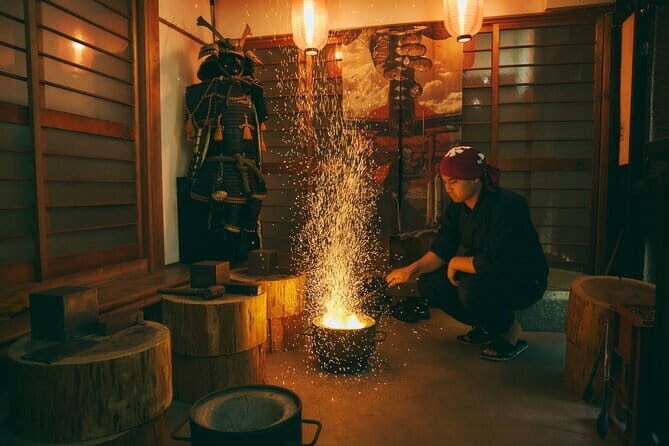
3) Forge the Steel at 800°C
This is the main event. Your metal gets heated in an 800°C furnace, and then you hammer the glowing steel.
Even if you’ve never forged anything before, you’ll get guided technique. You’re learning the physical basics—how the metal changes with heat and how hammering shapes form—while still getting the excitement of seeing the process up close.



4) Shape and Refine With a Belt Sander
After forging, you move into refinement. You’ll use a professional belt sander to sharpen and smooth the metal, turning it into your own handcrafted weapon.
This step is where the object starts looking truly finished. It also helps balance the workload because you’re not doing everything by hand.
5) Kanji Engraving for Personalization
You choose a kanji character, and the staff engraves it for you. This is the moment your souvenir shifts from a made-by-you object to a made-for-you keepsake.
One practical tip: think about how you want it to look before you commit. A small choice here changes the emotional payoff later when you’re back home unpacking your box.
6) A Ninja Knowledge Session
Between the making steps, you’ll get a session about ninja history, weapons, and secret techniques. It’s not just “ninja trivia.” It’s meant to connect what you’re crafting to why those weapons existed.
I like this part because it stops the workshop from feeling like a purely physical craft class. You understand the context of what you’re producing.
7) Blackening the Steel for the Dark Finish
Then comes the transformation that makes it feel like a real ninja tool. You apply a special solution that protects the metal and gives it a dark, authentic finish.
This also helps with presentation. A shiny metal souvenir is nice, but blackened steel looks instantly “right” for the theme.
8) Final Polish and Take-Home Moment
Finally, you polish the weapon. You’re done, and you can pack it up—often with that mix of pride and disbelief that you made the whole thing.
The final polish isn’t just cosmetic. It makes the piece look intentional, not like it was worked on in a hurry.
Picking Shuriken vs Kunai: Which One Fits Your Taste
Choosing between shuriken and kunai is more than a theme decision. It affects how the finished object feels in your hand and how you’ll want to display it later.
If you like variety and sharper visual rhythm, the three shuriken options are a strong pick. Shuriken tend to look more graphic, and you’ll probably enjoy the look of a small star-like weapon after the blackening.
If you want something a bit more straightforward and iconic, the kunai is the classic choice. Reviews specifically mention kunai-making as memorable, and some families booked the class for kids and teens because the result felt like a real personal weapon rather than a random souvenir.
My advice: pick the shape you can picture at home. If you’re imagining it on a shelf, choose the one that matches that mental image.
The Metalwork: Heat, Hammering, Sanding, and Blackening
Let’s talk about the core craft steps, because this is where the value is hiding.
Forging With a Furnace (800°C)
The workshop’s most dramatic moment is the furnace step. Heating metal at 800°C changes what’s possible with hammering. You’ll get a hands-on look at how heat drives the process, and why forging isn’t just “hit it until it looks right.”
Belt Sander Shaping
After forging, the belt sander refines the edges and surfaces. This tool choice helps you get to a clean result without requiring advanced manual stamina.
It also means you’ll likely spend more time learning the “why” of shaping rather than fighting through a slow, all-manual grind.
Blackening for Protection and the Ninja Look
The blackening solution is key. It gives that dark, finished character while also protecting the metal, according to the workshop details.
This is also where the workshop stops feeling like a workshop and starts feeling like a finished product. Your weapon looks complete, not half-formed.
Final Polish
Polishing brings back contrast. Blackened metal plus final shine creates a souvenir that photographs well and looks good in person.
The Kanji Choice: Making It Yours Without Making It Complicated
Kanji engraving is one of those simple steps that pays off big later. You choose a kanji character, and the staff engraves it with precision.
What I appreciate is that it’s not a “write a message” freestyle moment. It’s controlled and supported, so the outcome stays consistent even if your Japanese is basic.
If you’re traveling with friends or family, this also makes a great memory match. Two people can choose different kanji and end up with clearly distinct keepsakes.
Culture Without Lecturing: The Ninja Knowledge Session

You’ll also get a ninja knowledge session during the workshop. It covers ninja history, weapons, and secret techniques, tied to what you’re making.
This balance is important. Too many themed experiences stop at entertainment. Here, the storytelling supports the craft steps instead of competing with them.
If you’re a fan of ninja culture, you’ll likely enjoy the added context. If you’re not, don’t worry. You’re still getting a full making experience with clear stages.
Price and Value: What $151.92 Buys You in Real Terms
At $151.92 per person, you’re paying for more than “a souvenir.” You’re paying for tools, staff time, instruction, and a finished steel piece.
The class includes rent of specialized tools like files to sharpen steel and hammers, plus craftsmen uniforms. You also get prep for transport: a clean box and bag to take the weapon home.
That matters because it turns the experience from a fun hour into something you can actually bring back safely. One review even noted they packed the weapon in checked baggage, which is exactly the sort of real-world detail you want to hear when you’re planning a trip.
Are you paying for a longer lecture? Not really. It’s a hands-on workshop with an efficient schedule. That’s why it can feel like great value to some people—and pricey to others who wanted more time for explanation.
My take: if you want to do something active and you like the idea of forging and personalizing a physical object, this price starts to make sense fast.
Where It Is and How to Get There Without Stress
The meeting point is studio NIN, 八瀬168-1 Yasenosechō, Sakyo Ward, Kyoto (601-1254), Japan. The activity ends back there.
It’s described as near public transportation, but you should still expect it to feel off the main tourist path. One tip from reviews: having a taxi app ready can make the last mile easier.
Build a little buffer into your schedule. Kyoto traffic and getting to quieter neighborhoods can be slower than you expect, especially if you’re depending on buses.
Comfort Level: What “Moderate Physical Fitness” Means Here
You’ll be doing real tool work. That doesn’t mean you need to be an athlete, but you should be comfortable standing and using your arms for tasks like hammering and sanding.
The good news: the workshop is designed for beginners, and there are easier sharpening options mentioned in reviews for people who don’t have as much stamina.
If you have wrist or shoulder issues, take that seriously. This is not a sit-and-watch experience.
Who This Workshop Is Perfect For
This is a strong fit if you:
- want a hands-on Kyoto activity with a real take-home item
- like pop culture themes but also want practical making skills
- travel with teens or adults who enjoy workshops and active classes
- care about personalization, especially kanji engraving and the blackened finish
It’s also a great choice when you want a break from food tours and temple circuits. In about 2.5 hours, you get a different side of Kyoto: craft, technique, and storytelling.
When You Might Want a Different Option
Consider skipping if you mainly want:
- a long, slow museum-style explanation
- lots of downtime for photos and narration
- very detailed step-by-step directions without any ambiguity
One review pointed out that directions can sometimes feel vague, and another felt the workshop was more like a conveyor-belt setup than a deeply explained process. That doesn’t match the overall ratings, but it’s a fair warning that you should bring curiosity and a willingness to follow along closely.
If you’re the kind of person who needs constant verbal detail, you may have to ask questions faster than you’d like.
Should You Book This Kyoto Ninja Weapon Workshop?
Yes, I’d recommend booking Atelier NIN if you want a memorable, active workshop where you forge a real ninja-style weapon and leave with a souvenir that’s actually finished. The combination of forging, kanji personalization, and the blackened + polished final result is a strong package for the price.
I’d be cautious only if you’re looking for a slow, heavily explained class. This is a fast-moving, practical workshop built around making. If that matches your style, you’ll likely have a great time.
One last practical note: go in ready to watch your instructor’s technique and ask for help early. When staff like Taka jump in to adjust something (like symmetry), you’ll appreciate how much small coaching can improve the final piece.
FAQ
How long is the ninja weapon forging experience in Kyoto?
It takes about 2 hours 30 minutes.
What weapons can I make?
You can choose from three shuriken styles or make one kunai.
Do I need prior experience with forging or metalworking?
No. The workshop is designed for people with no experience required, and skilled craftsmen teach you the steps.
What’s included with the price?
The experience includes rented specialized tools (like files and hammers), craftsmen uniforms, and a clean box and bag to take your weapon home.
Where do I meet, and does the tour end nearby?
The meeting point is studio NIN, 八瀬168-1 Yasenosechō, Sakyo Ward, Kyoto. The activity ends back at the meeting point.
What is the cancellation policy?
You can cancel for a full refund up to 24 hours in advance of the experience start time. If you cancel less than 24 hours before start, there’s no refund.