REVIEW · FUJIYOSHIDA
From Tokyo: Full-Day Mount Fuji Tour in English or Spanish
Book on GetYourGuide →Operated by JP Pacific Co, Ltd · Bookable on GetYourGuide
Mount Fuji from street level feels almost close enough to touch. This full-day tour stacks the best photo spots around Arakurayama and Lake Kawaguchiko, plus a few quieter shrine and garden moments that make the day feel more than just a sightseeing checklist. I especially like that you get both iconic viewpoints and cultural stops tied to the mountain’s pilgrimage routes.
The big reason it works is the guide-led flow: you’re not just moving, you’re learning what you’re looking at while still getting time to enjoy the views. The main trade-off is effort and weather—there are 400 steps at Arakura if you choose the staircase route, and conditions around Fuji can change quickly.
In This Review
- Key Things to Know Before You Go
- From Nishishinjuku to Fuji: how the 10-hour day moves
- Arakurayama Sengen Park: the first Fuji photos and the sacred setting
- Chureito Pagoda: the iconic angle, with stairs or a slope
- Honcho Street in Fujiyoshida: Fuji views with local texture
- Kitaguchi Hongu Fuji Sengen Shrine: UNESCO status and a 100 AD origin
- Oishi Park by Lake Kawaguchiko: eruption stones, seasonal flowers, and breaks for snacks
- Lake Kawaguchiko cruise: where the mountain and water share the frame
- Guide impact: why Luis-style storytelling makes the day click
- Price and value: what $90 covers (and what it doesn’t)
- Logistics that actually matter: footwear, fitness, and Fuji weather
- What if Mount Fuji is closed or entry is restricted?
- Should you book this Mount Fuji day tour from Tokyo?
- FAQ
- What language is the tour guide?
- How long is the full-day Mount Fuji tour?
- What is included in the price?
- Is lunch or ice cream included?
- What should I bring?
- What happens if Mount Fuji is closed?
Key Things to Know Before You Go
- Arakura Sengen Park + Chureito Pagoda: one of Japan’s most famous Fuji backdrops, with a choice of staircase or slope.
- Two Fuji-facing viewpoints in the same day: Arakura area views and a walk along Honcho Street for another classic angle.
- Kitaguchi Hongu Fuji Sengen Shrine: part of the Fuji UNESCO World Cultural Heritage site, with very old origins dating back to 100 AD.
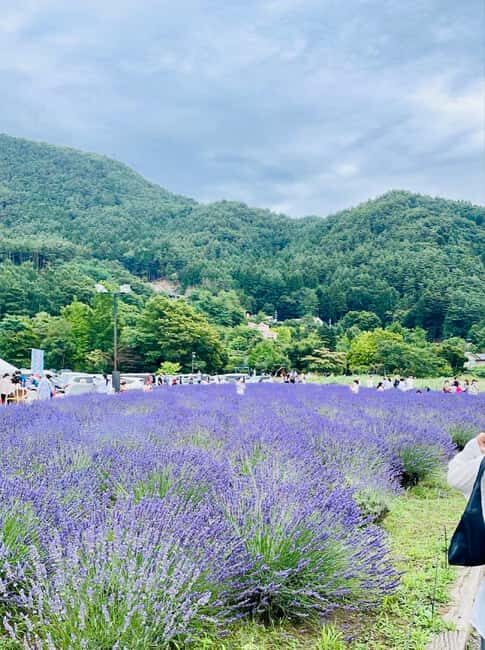
- Oishi Park by Lake Kawaguchiko: gardens with seasonal flowers plus the chance to try 14 creamy ice cream flavors (not included).
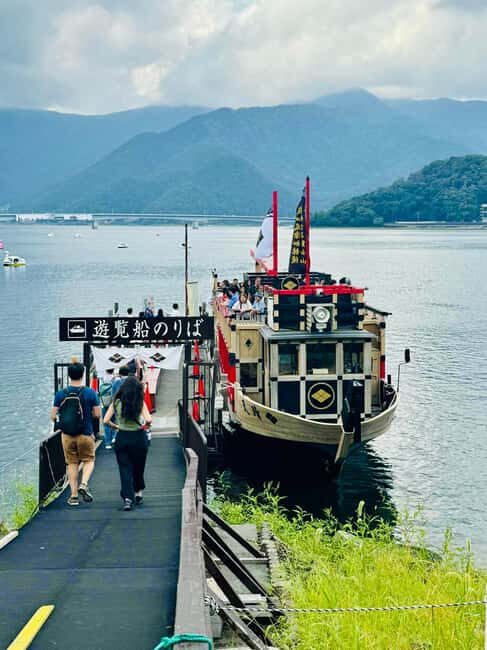
- Lake Kawaguchiko cruise: about 40 minutes on the water to frame the mountain and the lake surroundings.
- Language support: live tour guide in Spanish or English, with a guide who clearly explains the meaning behind each stop.
From Nishishinjuku to Fuji: how the 10-hour day moves
You’ll start in Tokyo at 6-chōme-5-1 Nishishinjuku, meeting in front of the Robert Indiana sculpture called LOVE. The guide will hold a sign for JP Travelers and say Fuji tour in Spanish, which makes it easy to spot your group even if your Japanese is still in hibernation mode.
The schedule is built for a full day: once you leave Tokyo, you’ll be on the move through multiple regions around Fuji. There’s a coach ride at the start (about 30 minutes listed), then the rest of the day is walking, scenic pauses, and short guided visits.
One practical note: you’re outdoors most of the day, and the tour explicitly warns that weather can change rapidly. Bring layers, and don’t dress like it’s the same day at the same temperature you walked out the door in Tokyo.
A few more Fujiyoshida tours and experiences worth a look

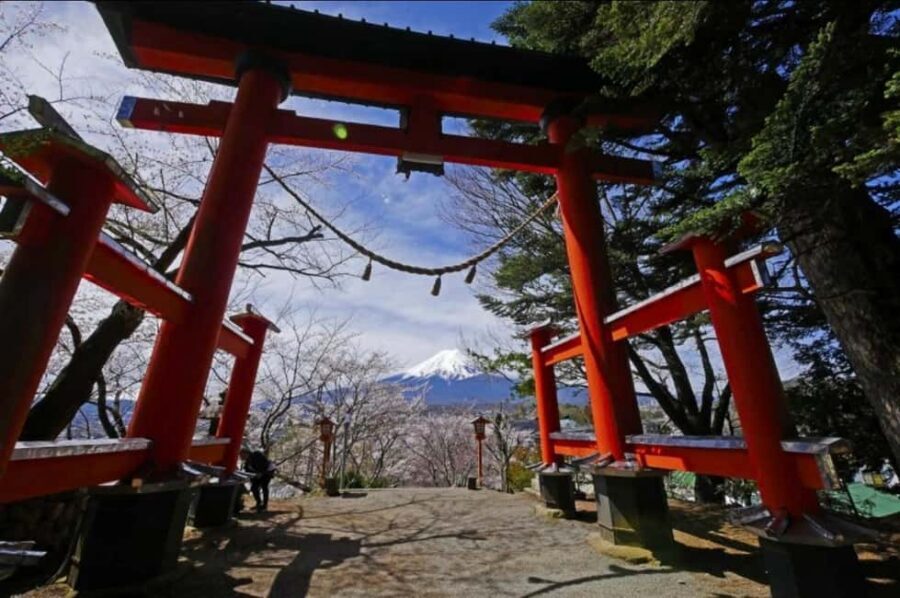
Arakurayama Sengen Park: the first Fuji photos and the sacred setting
Arakura starts the day in a way that feels appropriate for Mount Fuji. You begin at Mount Arakura Sengen Park Observatory, where you can take pictures and get a first strong look at the mountain. The place has a sacred reputation tied to the region’s older samurai history—your guide explains how the shrine area is linked to Lord of Yamanashi and the famous warrior Mr. Takeda, which gives context beyond just scenery.
Expect guided time and sightseeing here (about 70 minutes in the planned flow). This isn’t only about getting to the next viewpoint; you’re learning how people traditionally approached and respected Fuji.
If the sky cooperates, this is where the day can feel instantly rewarding. If clouds roll in, the bonus is that the shrine grounds still give you a meaningful atmosphere, not just a “we missed it” moment.
Chureito Pagoda: the iconic angle, with stairs or a slope
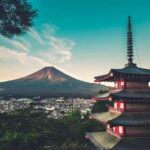
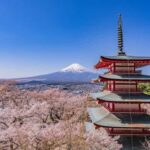
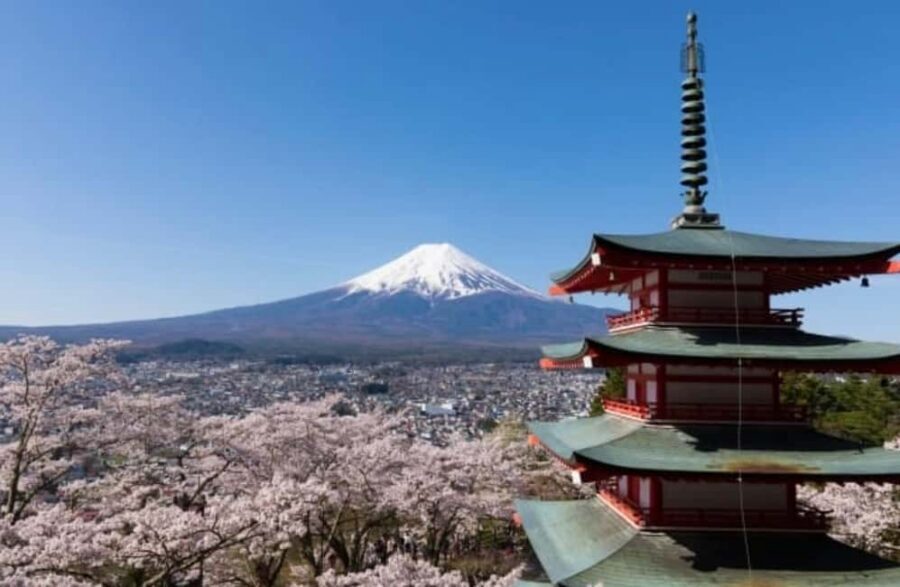
Next comes Chureito Pagoda, one of the most famous Fuji-photo compositions in the country. The walk is part of the experience, and you’ll be given two route options.
Here’s the key detail: the staircase route goes through about 400 steps total. The first 100 steps take you toward the shrine area, then the remaining 300 steps lead you up to the pagoda viewpoint. There’s also an alternative path with no steps—just a beautiful slope—with an impressive view either way. Either route takes you to the same place, so you can choose based on your energy level.
What I like about this setup is that it doesn’t force everyone into the same physical challenge. If you want the easier rhythm, take the slope. If you’re okay with a climb and love a quick burn on the way up, stairs will get you there faster.
Honcho Street in Fujiyoshida: Fuji views with local texture
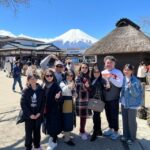
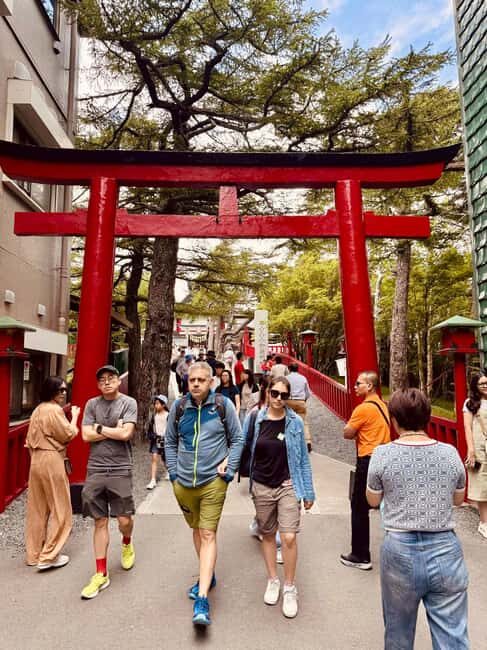
After the Arakura area, you walk along Honcho Street in Fujiyoshida for another of the mountain’s classic viewpoints. This is a shopping street with traditional architecture, so you’re not only seeing Fuji—you’re seeing how locals live around it.
This stop has a deeper meaning, too. Honcho Street is connected to the old pilgrimage concept called Fuji Michi, essentially the path people took toward the sacred mountain. The tour guide connects the dots between the street’s cultural role and the dramatic views you get while walking it.
Time here is shorter (about 40 minutes), but it’s a good stretch to reset your legs after the stairs and before the next shrine-and-garden part of the day.
Kitaguchi Hongu Fuji Sengen Shrine: UNESCO status and a 100 AD origin
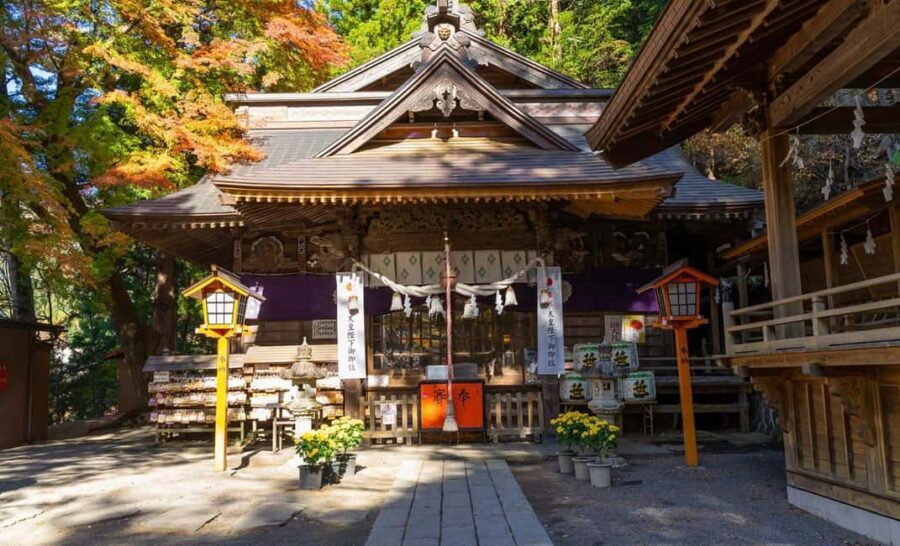
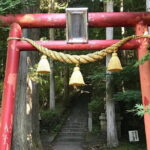
Next up is Kitaguchi-hongu Fuji Sengen Shrine, a strong cultural counterweight to all the picture-taking. This shrine is part of the Mt. Fuji UNESCO World Cultural Heritage site (designated in 2013), and the tour mentions its history goes back over 1,900 years, with origins around 100 AD.
You’ll also hear about the shrine’s connection to legendary Japanese figures, including prince Yamato Takeru. What I found especially useful in this kind of stop is that it turns Fuji from a “view” into a place people built traditions around. The tour also notes this is the true and ancient northern entrance to Mount Fuji and a starting point for pilgrimage routes.
Plan for about 50 minutes here, which gives you time for the guided explanation plus a real chance to look around without feeling rushed.
Oishi Park by Lake Kawaguchiko: eruption stones, seasonal flowers, and breaks for snacks
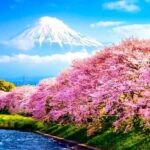
Oishi Park is one of those stops that makes a Fuji day feel human and grounded. It sits in front of Lake Kawaguchiko, the second largest lake around Mount Fuji. The tour describes the park as being built with stones that local people recovered from Fuji’s eruptions—stones that were carried around the lake during strong eruptions. It’s basically a memorial garden, and that detail changes how you see the place.
You’ll walk through two gardens and see seasonal flowers, with time to enjoy the views toward the lake and Fuji. There’s also an emphasis on food here: the tour mentions 14 delicious flavors of creamy ice cream (not included), plus the option to buy fruits from the area and souvenirs.
This stop lasts about 50 minutes, so it works well as your mid-to-late-day reset. Just remember lunch isn’t included. If you skip food earlier, Oishi Park is not a full meal solution—it’s more of a break with snacks and treats.
Lake Kawaguchiko cruise: where the mountain and water share the frame
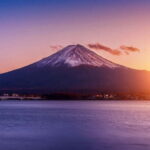
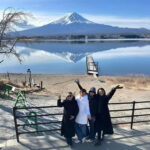
To end the day, you get a cruise on Lake Kawaguchiko, listed as a sailing time of about 40 minutes. This is a smart finale. By the time you’re on the water, you’ve already seen multiple Fuji viewpoints, so the cruise lets you compare how the mountain’s shape and mood change when you’re farther back.
The tour explicitly calls out the goal: enjoy views of Mount Fuji and the lake surroundings from the water. Even when clouds show up, water reflections and the sense of distance can still make the moment feel special.
If you’re the kind of person who likes photos that look different from the normal postcard angle, this portion is your chance. Bring your camera, but also just look up. The lake makes Fuji feel less like a picture and more like a real neighbor.
Guide impact: why Luis-style storytelling makes the day click
The biggest “hidden ingredient” here is the guide. The tour has high praise for the Spanish-speaking experience, and the guide name Luis comes up again and again for a reason: he explains the meaning behind what you’re seeing, and he does it in a way that stays useful while you’re moving.
In a long day like this, that matters. When you understand why Chureito Pagoda sits where it does, or what the shrines represent in the pilgrimage routes, you don’t just take photos. You actually get something from the visit, and you walk away with more than a memory of shapes.
You’ll also benefit from a guide who tends to help with practical choices, like pacing to avoid the heaviest crowds and recommendations for what to look for and buy at the right moment.
Price and value: what $90 covers (and what it doesn’t)
At $90 per person for a 10-hour day, this tour is good value if you care about hitting the classic Mount Fuji sights without the stress of planning transit yourself. The included items are clear and meaningful: bus transportation, guide fee, entrance fees, the cruise, Arakura and shrine visits, Honcho Street walk, and Oishi Park.
What’s not included is also important: lunch, snacks, drinks, and ice cream. That means you’ll want a simple budget plan for food. If you’re planning to try the 14 ice cream flavors, that’s on your dime.
Also, because this is a guided, multi-stop itinerary, you’re paying for time on the road and time on the ground with someone managing the sequence. If you’d rather DIY, you can try to stitch together buses and tickets. But for a first Fuji day from Tokyo, this structure saves energy and helps you see more in one shot.
Logistics that actually matter: footwear, fitness, and Fuji weather
This is a walking-heavy day. You need comfortable shoes because you’ll do stair climbing at Arakura if you choose that option. The tour also lists that it’s not suitable for people over 95 years, which tells you they expect some mobility demands.
Weather is the other real variable. The tour notes that conditions can change rapidly, so dress accordingly and keep water handy. Even if you don’t climb the stairs, you’re still outdoors at multiple viewpoints and parks.
Finally, come prepared with basics: camera, sunscreen, water, comfortable clothes, and cash. Entrance fees are included, but snacks and extras aren’t.
What if Mount Fuji is closed or entry is restricted?
You’re not taking a huge gamble, because the tour includes a contingency. When Mount Fuji is closed or entry is not permitted for reasons beyond control, the plan adjusts so you still visit Kitaguchi Hongu Fuji Sengen Shrine instead. That means the day still contains meaningful shrine time even if the most famous viewing areas aren’t available.
It’s not the same as getting every planned Fuji viewpoint, but it’s better than losing the day entirely. And since shrines and cultural sites are part of Fuji’s UNESCO context, you’re not walking away with only half the story.
Should you book this Mount Fuji day tour from Tokyo?
Book it if you want a one-day, guided Fuji hit with a mix of iconic viewpoints and cultural context, and you value having explanations in English or Spanish. I also think it’s a strong pick if you’d rather not handle logistics around multiple locations, because the tour bundles transport, entrances, and the Lake Kawaguchiko cruise.
Skip or reconsider if you have trouble with stairs or long outdoor walking. The 400-step option at Arakura is optional in the sense that you can choose the slope, but it still signals that this is an active day. Also, if you’re traveling during periods when you expect heavy cloud cover, keep your expectations flexible. Fuji days can be dramatic, but they can also be stubborn.
Overall, this is the kind of full-day tour that’s built to make your Fuji experience feel organized, meaningful, and photo-ready without eating your whole vacation planning.
FAQ
What language is the tour guide?
The live tour guide speaks Spanish and English.
How long is the full-day Mount Fuji tour?
The tour duration is 10 hours.
What is included in the price?
The price includes bus transportation, guide fee, entrance fees, the listed sightseeing stops, and a cruise on Lake Kawaguchiko.
Is lunch or ice cream included?
No. Lunch, snacks, drinks, and ice cream are not included.
What should I bring?
Bring comfortable shoes, a camera, food and drinks, sunscreen, water, comfortable clothes, and cash.
What happens if Mount Fuji is closed?
If Mount Fuji is closed or entry is not permitted, the tour will instead visit Kitaguchi Hongu Fuji Sengen Shrine, which is described as over 1,400 years old.