REVIEW · TOKYO
Tokyo: Sumo Morning Training Visit
Book on GetYourGuide →Operated by H.I.S. Co Ltd(TIC) · Bookable on GetYourGuide
Tokyo sumo training beats any staged show. I love the up-close keiko (training) where you can actually see technique and power up close, and I also love the group picture moment at the end. One drawback to plan for: you’ll be sitting and staying quiet for a long stretch, and the session can be shorter during tournament weeks.
This is a simple, focused experience: you visit a working stable in Tokyo, watch active pro wrestlers train, and leave with a real sense of what sumo is like day to day. For the $77 price tag, you’re paying for access and proximity, not a big arena spectacle.
In This Review
- Key points to know before you go
- Tokyo Sumo Morning Training: what you’re truly visiting
- Getting there without stress: meeting time and changing locations
- Entering the stable: rules that shape the whole experience
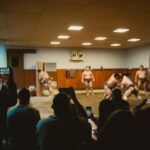
- What the training looks like up close (and why it’s impressive)
- Seating reality: how to handle the long sit without ruining your morning
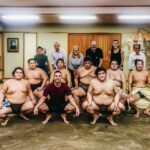
- The group photo moment: what happens at the end
- Price and value: $77 for access, not a tournament show
- What kind of guide experience you should expect
- Who should book this sumo training visit (and who should skip it)
- Practical tips for a smooth, respectful visit
- Should you book the Tokyo sumo morning training visit?
- FAQ
- How long is the Tokyo sumo morning training?
- What if I arrive early or late for the meeting?
- Where is the meeting point?
- Is hotel pickup included in the price?
- What’s included besides watching the training?
- What should I bring and what is not allowed?
Key points to know before you go
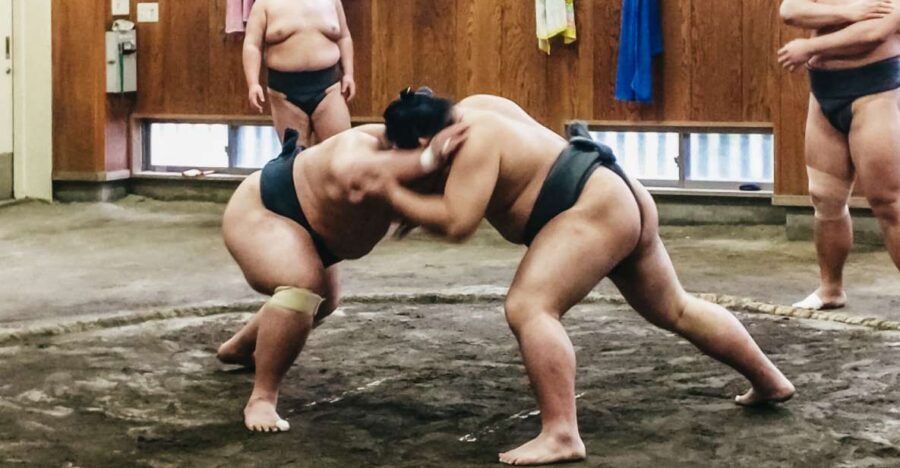
- You’re watching real training: not a performance, with drilling and warm-ups as the main event
- Meeting details can change: the stable and exact check-in spot are confirmed by email about 3 days ahead
- Entry is guided: you enter the stable only with the guide, so show up on time
- Flash and noise are a no-go: hats, sunglasses, and flash photography are not allowed
- The group photo depends on timing: if you leave early, you may miss it
Tokyo Sumo Morning Training: what you’re truly visiting
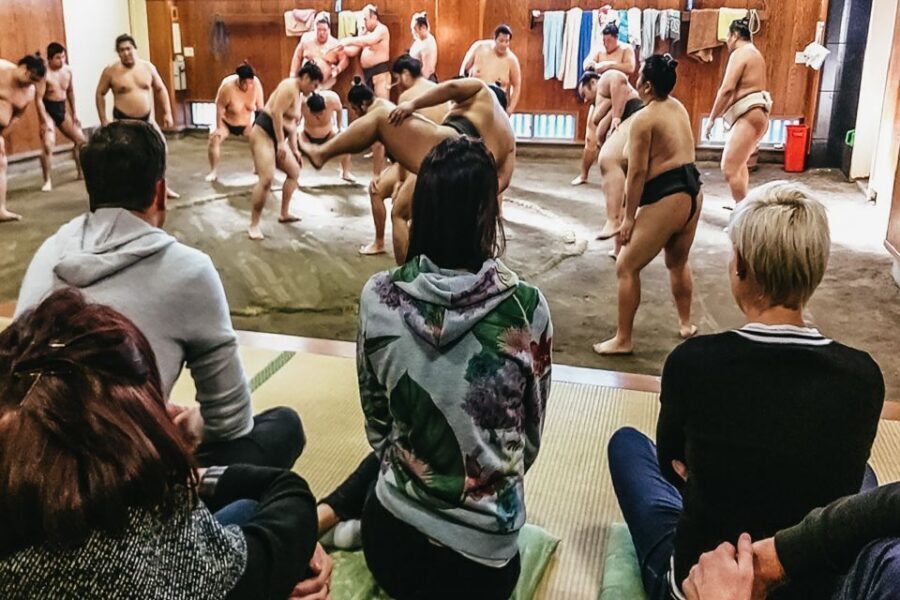
This isn’t a museum-style demo. You’re going to a real sumo stable where professional wrestlers train in the morning, following a set routine like they always do. The value here is proximity: most people only see sumo from far away during tournaments, and this lets you watch the work right at the source.
You should think of it as keiko observation—watching warm-ups, drills, and sparring-style sessions when they happen. Expect athletes who look powerful and controlled, because that’s what stable training is designed to build: balance, timing, footwork, and strength that’s useful in a match.
The tone is also important. This is a training space with rules. You’re not there to hang out. You’re there to witness—quietly, respectfully, and on schedule.
A few more Tokyo tours and experiences worth a look
Getting there without stress: meeting time and changing locations
The biggest practical thing to know is that the exact meeting place and time aren’t guesswork. They’re confirmed by a separate email about 3 days before your experience, and the stable name/location on your voucher is what you should trust. Don’t rely on what you see on Google Maps, because the map can point to a different location.
Check-in starts at the meeting time. If you arrive early, don’t ring the doorbell or enter. The stable only opens up with your guide, and arriving too soon can throw off timing for everyone.
If you’re doing hotel pickup (optional), it’s a one-way transfer only, and only within Tokyo’s 23 wards. The driver speaks Japanese, not English, so if anything goes off script, you’ll want to have your contact details ready from your confirmation email. And if your hotel doesn’t have a front desk, pickup isn’t accepted—so it helps to know that before you build your morning.
Bottom line: treat this like an appointment. Read the confirmation email carefully, arrive a bit early for your transit buffers, but don’t show up early to the door itself.
Entering the stable: rules that shape the whole experience
Once you’re at the stable, the structure becomes clear fast: entering is allowed only with the guide. You’ll be brought in and positioned based on your group.
Inside, expect a strict “training first” atmosphere:
- Talking loudly or making noises is prohibited
- Phones need to be on silent mode
- Flash photography is forbidden
- Video is only allowed with prior permission
- Food and drinks aren’t allowed
- Hats and sunglasses aren’t allowed
Also, bring a face mask or protective covering. That’s listed as a required item, so don’t count on being able to improvise.
This might sound like a lot of “don’ts,” but it’s really part of why the experience works. Those rules keep the wrestlers focused and make it easier for you to see what matters—how they move, recover, and reset between drills.
What the training looks like up close (and why it’s impressive)
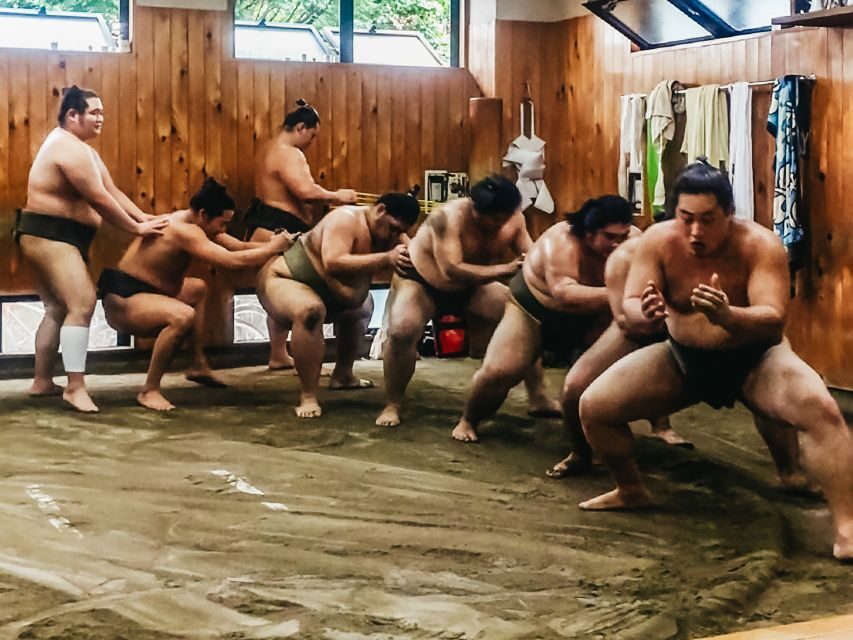
In most cases, the morning session lasts about 60 minutes, and during Tokyo Grand Sumo Tournament periods (January, May, and September), training is shorter—about 30 minutes. The schedule can also change depending on the wrestlers’ condition, so you should stay flexible.
What you’ll likely see includes:
- Warm-ups and repeated practice drills
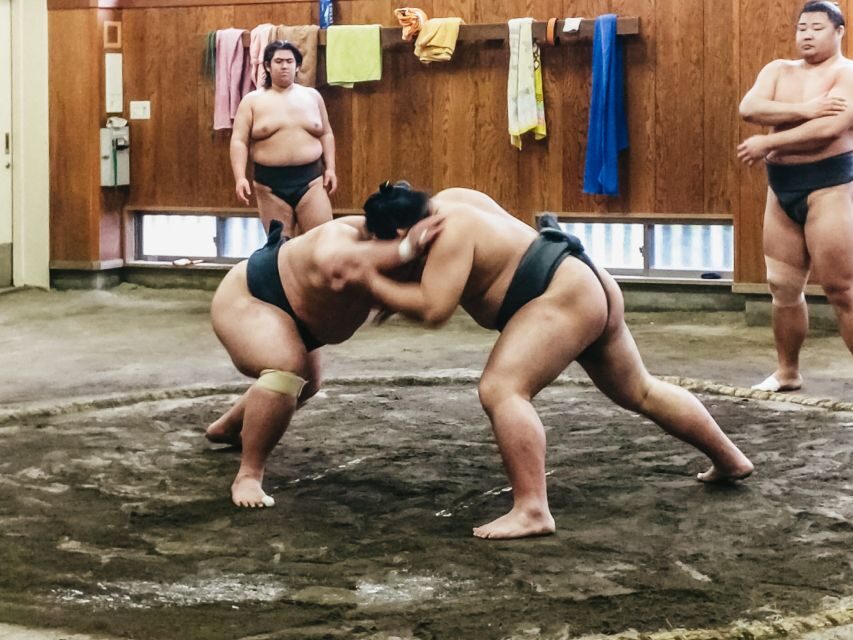
- Keiko-style sparring and pushing/rubbing techniques (depending on the stable that day)
- The kind of intensity that shows up in sweat, stamina, and quick resets
This is where sumo stops being a “big guy versus bigger guy” sport and becomes something more specific. You can notice details like stance control, how wrestlers shift weight, and how they protect balance while forcing pressure. Even if you don’t know every term, your eyes start learning the patterns because training repeats them.
A small but real insight from the rules: you’re not meant to move around, and you should expect limited seating. The experience is designed for viewing from your spot while the session unfolds.
Seating reality: how to handle the long sit without ruining your morning
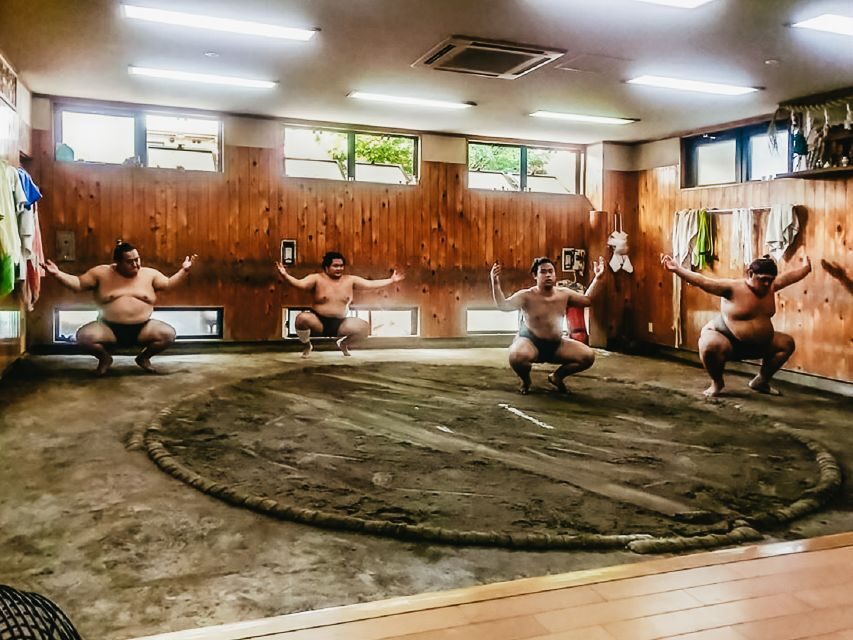
A lot of the experience comes down to your comfort level because you’re watching from the floor. Many people are fine with it, but it’s not a cushy spectator setup.
Here’s what to plan for:
- You may sit for the full session time, which is sometimes longer than the “about 60 minutes” expectation depending on the morning
- Some sessions end up feeling long because you’re required to stay quiet and still
- If you have knee issues, you might want to consider that seating options can be limited
If you’re sensitive to hard surfaces, wear practical clothing (not just for style). Long pants can help your comfort. Also, don’t plan on using hats or sunglasses as an everyday workaround, because those aren’t allowed.
This is one of the biggest make-or-break factors. If you hate sitting still, this tour won’t feel relaxing. If you can treat it like a focused cultural viewing session, it becomes a memorable morning.






The group photo moment: what happens at the end
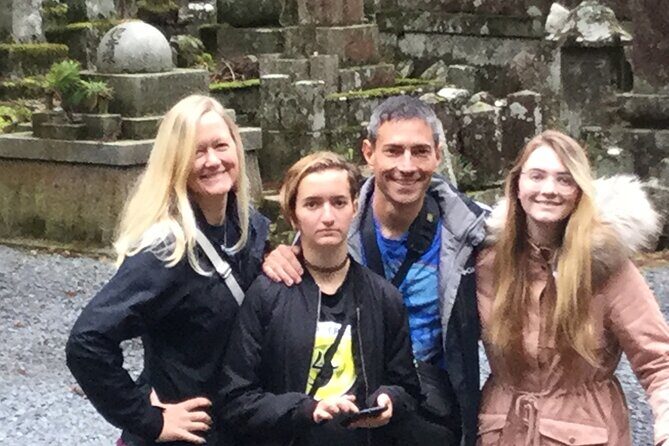
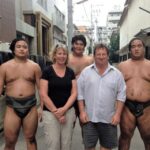
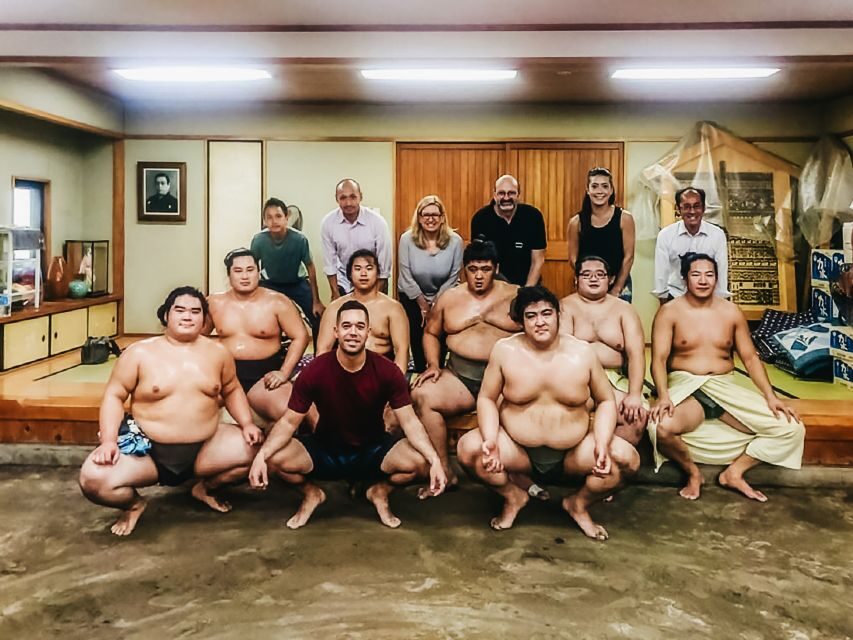
The highlight isn’t only the training—it’s the end-of-session group picture with the wrestlers. That photo is tied to your time. If you leave earlier than the end, you won’t receive the group picture.
So think of it this way: keep your schedule simple that morning. If you have a tight itinerary right after, give yourself a buffer. The whole point is to stay until the session wraps, then do the photo and leave properly.
Also, follow the “quiet training” vibe through the end. Even when you’re excited, keep your voice down and follow guide instructions.
Price and value: $77 for access, not a tournament show
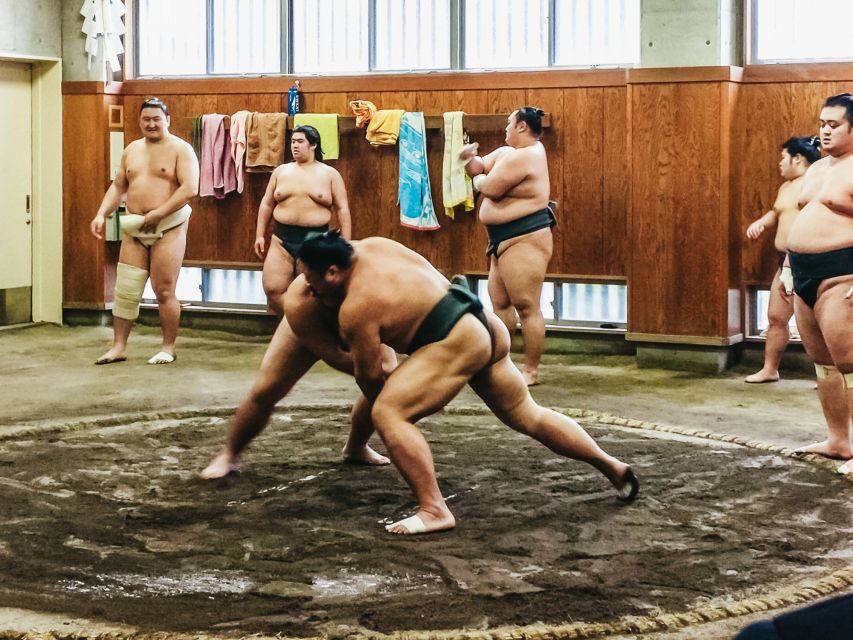
At $77 per person for about an hour, this is mostly about value through access. You’re paying for:
- entry into a real stable environment
- proximity to active professional wrestlers training
- the group photo payoff
What you are not buying is a full tournament-style spectacle. This is a training visit. In tournament months, training can be shorter, and it still doesn’t turn into a competition.
So if your goal is to watch full bouts, you might find better value by pairing this with tournament tickets or other competitive viewing options. If your goal is to see how sumo is practiced—how wrestlers warm up, drill, and work the basics—this tends to feel like money well spent.
In other words: if you want authenticity and closeness, this is a strong pick. If you want a “show” with uninterrupted action and easy explanations, manage expectations.
What kind of guide experience you should expect
The host or greeter is listed as English-speaking, and that matters for basic coordination—where to check in, when to enter, and when the group photo happens.
Still, you should be prepared for the reality that some visits focus on logistics more than storytelling. You may get limited background during the session, so it helps to do a little pre-reading on your own: what keiko is, why rituals exist, and how training translates into matches. That way, even if the talk time is short, you’ll still come away with understanding.
If you’re the type who likes asking questions, this is also a good chance. Just remember: the wrestlers are training, and the guide has to keep things orderly.
Who should book this sumo training visit (and who should skip it)
This works best for you if:
- you want an authentic working stable experience in Tokyo
- you enjoy sports details—form, power, repetition, and technique
- you like early mornings and can sit quietly for a while
- you’re excited to see professional wrestlers up close
You might want to think twice if:
- you need lots of seating comfort or struggle with floor sitting
- you’re expecting a narrated “history lesson” throughout
- you’re only interested in actual tournament bouts
It’s a training visit, so the vibe is serious and practical. Treat it like that, and you’ll likely love it.
Practical tips for a smooth, respectful visit
A few small things can make a big difference.
Before you go
- Read the email confirming the meeting spot and time about 3 days ahead
- Don’t rely on the Google Map location
- Plan your morning so you’re not rushed right after the photo
What to bring
- A face mask or protective covering
What to leave at home
- Hats and sunglasses
- Food and drinks
- Luggage or large bags
Photo and phone rules
- No flash photography
- Phones on silent
- Video only with prior permission
And here’s a simple mindset: keep your attention on the session, not on “tour mode.” The better you follow the quiet rules, the more rewarding the training becomes to watch.
Should you book the Tokyo sumo morning training visit?
If you want a real sumo stable experience in Tokyo—up close, respectful, and focused on training—this is a solid booking. The price makes sense for what you get: access to active professional wrestlers and a guaranteed group photo if you stay to the end.
The main reason to hesitate is comfort and expectations. You’re sitting and staying quiet, and the session can be shorter in tournament months. If you can handle floor seating for the time window and you’re okay with a training atmosphere instead of a full arena show, book it and enjoy a morning that feels like you stepped into sumo’s daily life.
FAQ
How long is the Tokyo sumo morning training?
Training is normally about 60 minutes. During Tokyo Grand Sumo Tournament periods in January, May, and September, training is about 30 minutes.
What if I arrive early or late for the meeting?
Check-in starts at the meeting time. If you arrive early, don’t ring the doorbell or enter. If you’re arriving for hotel pickup, note that being more than 10 minutes late after the pickup time can be treated as a waiver.
Where is the meeting point?
The meeting location can differ from what Google Maps shows. The exact stable and meeting point are confirmed by email about 3 days before your experience, and you should follow the details on your voucher.
Is hotel pickup included in the price?
Hotel pickup and drop-off are not included. There is an optional one-way transfer if you request it, limited to pickup within Tokyo’s 23 wards.
What’s included besides watching the training?
You’ll visit the stable to watch the training and you’ll take a group picture with the wrestlers at the end of the session.
What should I bring and what is not allowed?
Bring a face mask or protective covering. Hats and sunglasses are not allowed, as well as food and drinks, flash photography, and smoking indoors. Luggage or large bags are not allowed either.