REVIEW · TOKYO
JDM Itasha trip to famous car meet up spot Daikoku Parking
Book on Viator →Operated by Team Open Tours · Bookable on Viator
Daikoku is famous; your route is the real treat. I love that you ride in a Toyota 86 and get Tokyo views that are hard to copy by train, especially on the upper roads as you pass Shinjuku and Shibuya. I also like the way the trip blends city sightseeing with Japanese car culture once you reach Daikoku Parking Area, with a driver who explains what you’re seeing and how the scene works. One thing to factor in: the best cars and photo moments can depend on weather and what shows up that night.
You’ll meet at 5-8 Funamachi, Shinjuku City and end back at the same spot, usually in about 2 to 3 hours total with a mobile ticket. The plan gives you time at the meet itself, with Daikoku entry listed as free, so you can focus on wandering, watching, and talking instead of figuring out logistics.
In This Review
- Key things that make this Daikoku night drive worth it
- Why a Toyota 86 night drive beats DIY to Daikoku
- Meeting in Shinjuku: where the neon starts before the highway
- Upper-level expressways: Tokyo Tower and Skytree in the same frame
- Rainbow Bridge to Odaiba: the night skyline with reflections
- Daikoku Parking Area: how to use your 1 hour 30 minutes well
- The driver makes it more than a ride: car talk and city context
- JDM and Itasha culture: arriving like a local fan
- Practical things to know before you book
- Who this tour is best for (and who might not love it)
- Should you book Team Open Tours to Daikoku?
- FAQ
- How many people can join the tour?
- Where do we meet for the Daikoku trip?
- How long does the tour last?
- What’s included for Daikoku Parking Area entry?
- What places in Tokyo will we pass on the drive?
- What happens if the weather is poor?
- Is the tour ticket mobile?
- Is cancellation free?
Key things that make this Daikoku night drive worth it
- Private group of up to 3 for a more personal pace and conversation
- Tokyo at night from the road, not just from station stairs
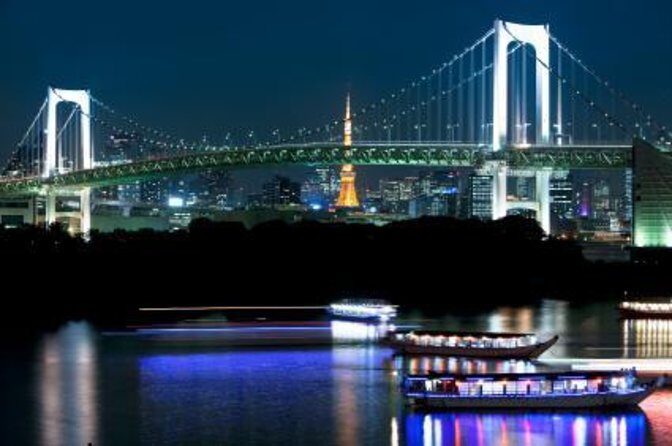
- Rainbow Bridge to Odaiba for that big skyline-and-reflection moment
- Daikoku Parking Area meet time (about 1 hour 30 minutes) with free admission
- JDM and exotics mix once you arrive, from iconic Nissan models to other tuned cars
- A driver who talks cars and Tokyo, so even non-car people get something out of it
Why a Toyota 86 night drive beats DIY to Daikoku
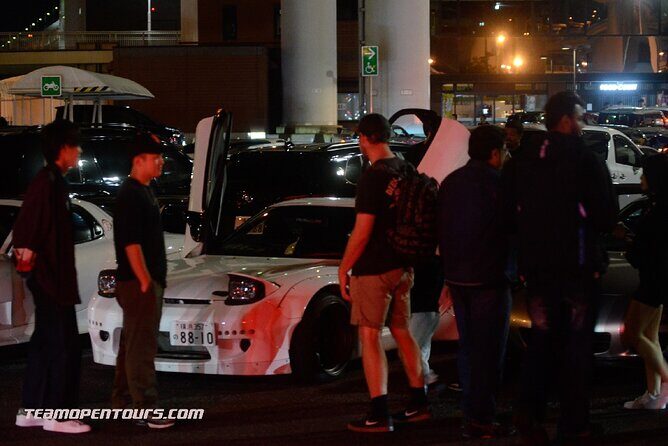
Daikoku Parking Area is one of those Tokyo-area experiences that sounds simple until you try to plan it. You’re traveling at night, you’re aiming for a specific kind of car-scene location, and you want the route and timing to work without stressing over trains, transfers, and getting back afterward.
That’s where this tour pays for itself. For $191.60 per group (up to 3), you’re buying three key things at once: transportation, a driver who knows the flow of the evening, and commentary that turns the drive into part of the experience. If you were to DIY it, you’d still need to get from Shinjuku to the meet, and you’d still miss out on the road-level views that only a car can deliver.
The other win is the scale. This is private and small. With just your group, you’re not squeezed in with strangers who don’t care about why a Skyline is special, or why a certain build gets attention at Daikoku. People who come for cars tend to go home happy, and people who came for the culture still usually feel like they got a real slice of Tokyo life, not just a photo stop.
You can also read our reviews of more tours and experiences in Tokyo.



Meeting in Shinjuku: where the neon starts before the highway
Your evening begins in Shinjuku, at 5-8 Funamachi (and it’s near public transportation). I like this start because Shinjuku is where Tokyo’s energy is easiest to feel right away. The drive time begins fast, and you don’t spend the first hour just commuting.
Once you’re moving, you catch the city in a different way than daytime sightseeing. You’re dealing with a nighttime rhythm: brighter signs, sharper reflections on windows, and that sense that you’re traveling through the real Tokyo rather than around it.
One practical note: this kind of night tour is short. You don’t want to show up already tired. Keep your phone charged, wear something warm enough for the season (you’ll be at the meet later), and be ready for a lot of looking out the window.
Upper-level expressways: Tokyo Tower and Skytree in the same frame
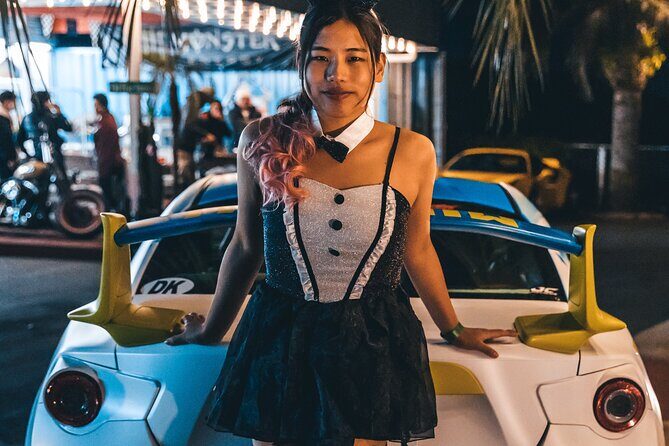
After Shinjuku, the route shifts to the upper roads. This is the part you can’t really replicate with walking or normal transit. You’re zig-zagging between tall buildings from above ground, watching Tokyo change layers in seconds.
The itinerary includes views that help you orient yourself. You may spot major landmarks like Tokyo Tower and Skytree while the skyline fills your sides and the road curves away beneath you. It’s the kind of seeing that makes your later photos better, because you actually understand the geography.
There’s also a psychological benefit. When you ride smoothly through traffic patterns under a trained driver, your brain stops fighting the logistics. You can focus on noticing details: how neighborhoods shift, where clusters of lights gather, and how the city looks from height.
For people who get motion-sensitive, this is still a car ride. One review noted the car cabin isn’t built for everyone’s height, so if you’re tall, plan around comfort and ask yourself honestly how you handle snug seating.
Rainbow Bridge to Odaiba: the night skyline with reflections
Then comes one of the most photogenic segments: crossing Rainbow Bridge toward Odaiba. The big win here is the combination of scale and timing. Night makes the bridge and the harbor area feel futuristic, and the skyline has enough light to produce those dramatic reflections.
This is the moment to grab photos and short video clips, not just long shots. Bridge traffic, moving reflections, and shifting building lights create a lot of variety, but you get only limited windows as the car is moving. If you’ve got a camera, use this section to test settings quickly, because you’ll get a feel for the light before you reach Daikoku.
This segment also gives the non-car people something. Even if you’re not chasing JDM details, it’s a strong Tokyo visual. You’re basically getting a moving highlight reel of the city’s modern face.
Daikoku Parking Area: how to use your 1 hour 30 minutes well

Arrival at Daikoku Parking Area is where the whole trip clicks. The meet is famous among Japanese car fans, and you feel it immediately. Reviews describe flashing neons and color, and that makes sense: the place has energy, sound, and a crowd that gathers with a purpose.
You’ll spend about 1 hour 30 minutes there, and admission is listed as free for this activity. That free access matters. You’re not paying extra once you arrive, and you can put your time toward what you actually came for: seeing cars up close and talking to people who built them.
What you might spot covers the full spectrum. The car scene there can include tuned JDM icons such as Skylines, RX-7s, Subarus, and Silvia models, plus other performance brands. Some nights can also include supercar and luxury builds mixed into the lineup. The point isn’t that every night is identical. The point is that Daikoku is a place where you can find variety within Japanese performance culture.
Once you get out, use your time in a simple way:
- First walk the perimeter to understand where traffic and crowds are densest.
- Then slow down and focus on the details that match your interests: wheels, body kits, exhaust setups, and livery.
- If you’re chatting with owners, ask about the build philosophy rather than only the model name. You’ll learn faster.
Also, practical comfort checks help. One review mentioned the lot has shops, vending machines, and toilets, which is the kind of detail that saves you later.






The driver makes it more than a ride: car talk and city context
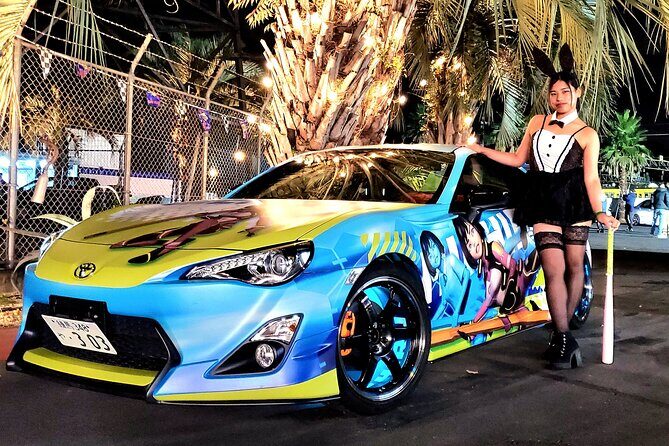
The best part of a tour like this isn’t the car itself. It’s what the driver adds while you’re in motion and after you arrive.
Guides like Graham, Jeremy, and Alistair come up in the stories for a reason: they don’t just point at things. They explain what you’re looking at and connect it to how the scene works in Japan. That might mean breaking down which cars you’re likely to see, what tuning culture values, or why the meet has a particular vibe.
I also like that this tour is flexible for different kinds of people. Reviews describe the driver tailoring the experience so someone who isn’t as car-obsessed can still enjoy the night. That matters, because Tokyo sightseeing can get lopsided fast if one person cares deeply and the other feels stuck on the sidelines.
You should also expect the driver to set you up at the meet. People describe being taken around the area first, told what to look for, and then given room to explore. That approach helps you avoid that awkward feeling of arriving at a huge crowded place with no idea where to start.
JDM and Itasha culture: arriving like a local fan
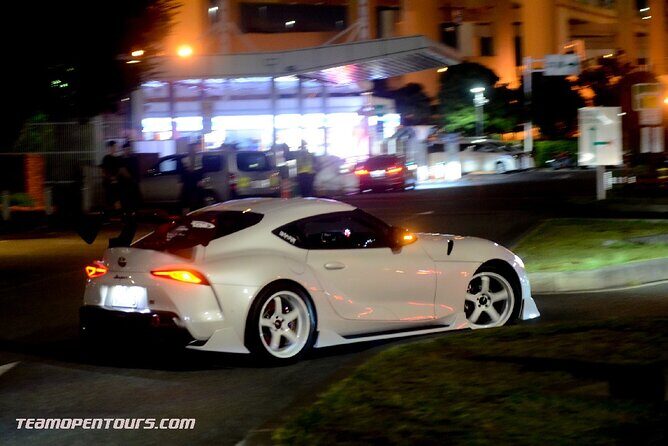
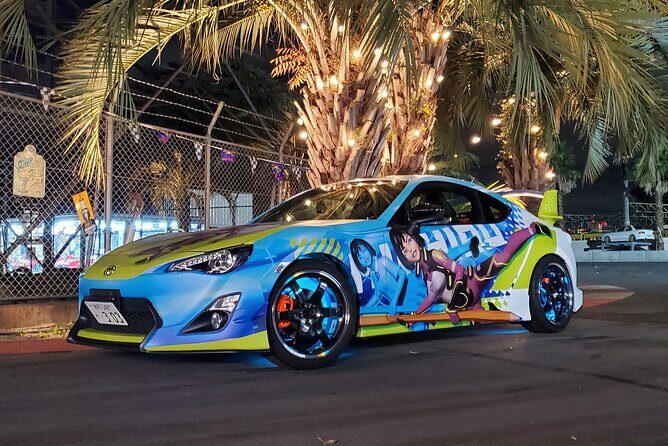
This is billed as a JDM Itasha trip, which signals the tone: the experience is for people who enjoy Japanese car culture beyond stock models. Itasha, for the uninitiated, is a style of themed car artwork tied to anime and character fandom. Whether you’re fluent in it or just curious, you’ll usually recognize the vibe quickly once you get to the meet.
Daikoku itself functions like a magnet for that kind of creativity. You’ll see cars built for attention, built for show, and built for the people who get the references. The driver’s commentary helps you decode what you’re seeing, so you’re not just looking at a lineup of vehicles like a dealership brochure.
And arriving by car changes your first impression. You show up already inside the culture, instead of arriving sweaty and confused on public transit. People line up for photos when the cars drive by, and that kind of attention makes the night feel like an event.
Practical things to know before you book
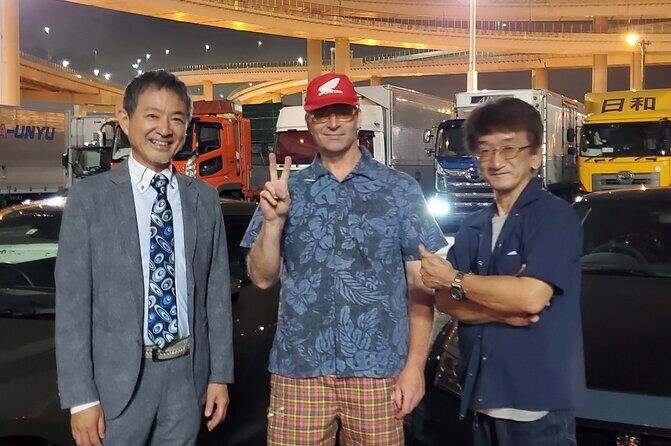
A great night tour can still trip people up. Here are the practical points that matter most for this one:
- Weather matters. The experience requires good weather. If it’s canceled due to poor weather, you’ll be offered a different date or a full refund.
- Plan for comfort limits. One note from a tall rider: the car isn’t made for very tall people. If you’re closer to 6 feet 4 inches, think twice and consider swapping seats if possible.
- Night timing is part of the deal. You’re doing Shinjuku and Rainbow Bridge at night, then walking among cars later. Dress warm, and keep your phone ready for skyline shots.
- Expect road time. The drive from pickup toward the meet is around the range of 35 to 40 minutes in some cases, and the full tour lasts about 2 to 3 hours total. That’s enough time to enjoy the skyline without turning into a long commute.
- Bring curiosity. If you ask good questions, the driver’s car talk turns the trip into a story you remember, not just a transfer.
Who this tour is best for (and who might not love it)
This tour is a strong match if:
- You’re a car enthusiast or traveling with one
- You want Tokyo views from the road at night, including Shinjuku, Shibuya, and Rainbow Bridge
- You’re visiting as a couple or family group of up to three and want a smaller, private pace
- You want a short, focused experience instead of half-days of transit
It might be less ideal if:
- You hate cars or don’t enjoy crowds
- You’re extremely sensitive to being in a smaller cabin if you’re tall
- You’re traveling on a night when the weather is questionable (since the tour needs good weather)
Should you book Team Open Tours to Daikoku?
If your goal is to experience Daikoku as more than a destination, I’d book it. You’re paying for a package that gives you: a private ride from Shinjuku, major Tokyo night views, a full Rainbow Bridge moment, and then real time inside the Japanese car scene at Daikoku with free entry.
I’d especially recommend it if you’re going with someone who likes cars a lot and want the evening to feel like an event. It also works if not everyone is obsessed, as long as you’re open to learning while you watch.
If you’re the type who expects the same lineup every time, manage that expectation. Daikoku nights can vary, and the tour depends on weather. But the route itself is a big part of the value, and the experience of arriving and wandering in that car-culture space is the reason most people come back eager to do it again.
FAQ
How many people can join the tour?
The tour is private and limited to a maximum group size of up to 3 guests.
Where do we meet for the Daikoku trip?
You’ll meet at 5-8 Funamachi, Shinjuku City, Tokyo 160-0006, Japan.
How long does the tour last?
The duration is approximately 2 to 3 hours.
What’s included for Daikoku Parking Area entry?
Daikoku Parking Area admission is listed as free for this experience.
What places in Tokyo will we pass on the drive?
The drive includes passing Shinjuku, Shibuya, and Rainbow Bridge, plus views from upper roads.
What happens if the weather is poor?
This experience requires good weather. If it’s canceled due to poor weather, you’ll be offered a different date or a full refund.
Is the tour ticket mobile?
Yes, the tour uses a mobile ticket.
Is cancellation free?
Cancellation is free up to 24 hours before the experience start time for a full refund. Less than 24 hours before the start time is not refundable.