Cart wheels never sounded so historic. This rickshaw tour lets you glide through Kyoto’s old lanes while a local guide explains what you’re seeing in plain English. I especially love the street-level access to Higashiyama and Gion—wooden townhouses, stone alleys, and those small “wait, look at that” corners you miss on foot. I also love how guides like Fumi and Kai can keep the ride lively, answer questions, and help your group get great photos.
One possible drawback: the seats are narrow (about 29.1 inches wide). If you’re bigger or have comfort concerns, you’ll be happier booking a separate rickshaw instead of squeezing into one.
In This Review
- Key things to know before you ride
- What this Kyoto rickshaw tour feels like on the ground
- Meeting at Ebisuya Higashiyama Rickshaw and setting expectations
- Riding Higashiyama: from stone lanes to wooden townhouses
- The small bridge stop and why it’s worth your attention
- Temple time: gardens, atmosphere, and the story behind the gates
- Ending in Gion: a major shrine and the New Year context
- How long should you book: 30 minutes, 90 minutes, or 2–3 hours?
- Price and value: what $39.79 really buys
- Comfort and sizing: the narrow seats matter
- Weather, pace, and that rain-or-shine promise
- Who should book this rickshaw tour
- Final call: should you book?
- FAQ
- FAQ
- How much does the Kyoto rickshaw tour cost?
- How long is the tour?
- What’s included in the tour price?
- What’s not included?
- Where do I meet the tour?
- Is this tour private?
- How many people can ride in one rickshaw?
- How wide are the rickshaw seats?
- Does the tour run in bad weather?
Key things to know before you ride
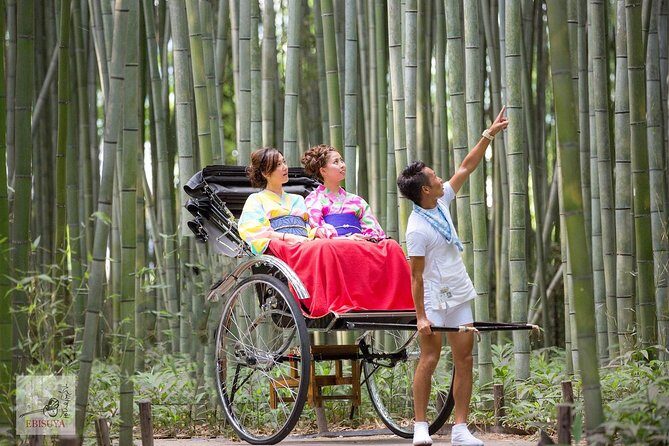
- Private group time means only your party rides together, so the guide can set the pace.
- Route flexibility: the ride length can be 30 minutes to 3 hours and can be customized to your interests.
- Narrow seating: max 2 adults per rickshaw, and it may be more comfortable to reserve one rickshaw per person.
- Photo-friendly stops in classic Kyoto: traditional wooden streets, a small bridge, and multiple temples/shrines.
- Rain or shine keeps your plans moving, as long as weather isn’t bad enough to cancel.
What this Kyoto rickshaw tour feels like on the ground
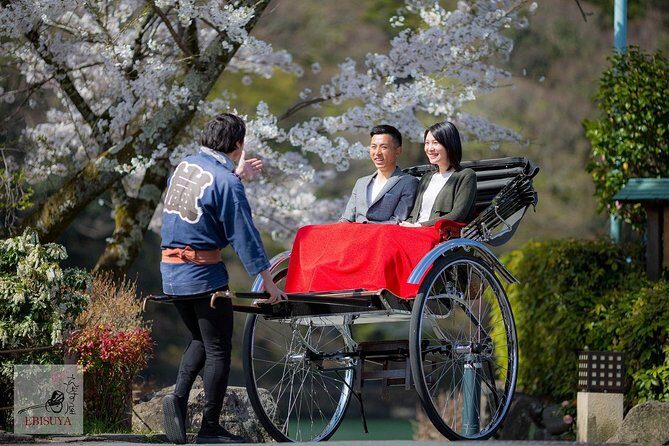
Kyoto can be a lot when you’re doing it on foot: stairs, crowds, detours, and the constant question of what matters most. A rickshaw ride solves a big chunk of that. You still get the real Kyoto vibe—narrow stone streets, timber buildings, shrine gates, and those quiet pockets where the noise fades. But you’re moving at a human pace that lets you look up and take in details without burning your legs.
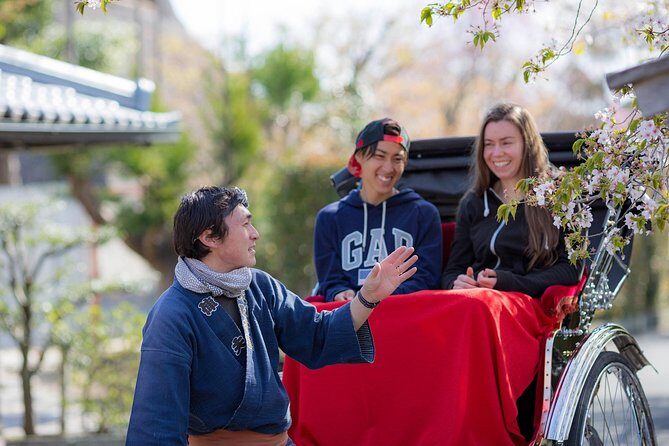
What makes this tour click is that it is not just a novelty ride. You’re paired with a local English-speaking guide, so the stops make sense. You get context on why a lane bends where it does, what a shrine area is signaling, and how the traditional neighborhoods work. Guides I’ve heard praised—Fumi, Kai, Kanta, Yoshi, Hina, Kota—show up as a mix of history teacher and friendly hype person, with enough energy to keep going as you hop from one classic scene to the next.
The other big plus: it’s built around Higashiyama and Gion, the kind of Kyoto most visitors picture. Expect more old-town feel than modern streets, with the ride acting like a moving guided walk.
You can also read our reviews of more tours and experiences in Kyoto.



Meeting at Ebisuya Higashiyama Rickshaw and setting expectations
You start at Ebisuya Higashiyama Rickshaw in Higashiyama (483 Shimokawarachō). The meeting point is described as being near public transportation, so you’re not dependent on a hotel pickup. That matters: if you’re staying outside central Kyoto or want to coordinate with trains and buses, plan to arrive a bit early so you’re not stressed about timing.
This is also an out-and-back style day in the sense that the activity ends back at the rickshaw stand. Your guide will handle the flow of stops along the route, and the exact path depends on the tour length you choose when you book.
One practical note that can affect your enjoyment: time matters. If you’re late, the late time can be deducted from your tour duration, and a delay of 10 minutes or more can lead to automatic cancellation. So keep your schedule tight.
Riding Higashiyama: from stone lanes to wooden townhouses
Your first section focuses on the Higashiyama area—a classic Kyoto zone known for its preserved streets and architecture. Early on, you’ll get a feel for the neighborhood with stops that help you orient: a tour operator introduction to the area and a nearby landmark stop in Higashiyama.
This part matters more than it sounds. If you’ve never been to Kyoto’s older districts, it can all blur together. The guide’s job here is to help you understand the layout: where the main pedestrian pull is, where the quiet lanes slip away from it, and how the “Kyoto postcard” look is created by street width, building materials, and the way crowds flow.
You’ll then move into the area that visitors often connect with geisha culture—traditional wooden town houses and the street character around the geisha district. Even if you never spot a geisha or maiko figure, the setting is the point: wooden facades, lantern-adjacent streets, and the sense of stepping into an older rhythm.
Tip for your photos: narrow streets make it easy to miss angles from street level. Tell your guide you want photos showing both the architecture and the lane ahead. Several guides have been praised as strong photographers, but you’ll still get better shots if you ask for the kind of framing you want.
The small bridge stop and why it’s worth your attention
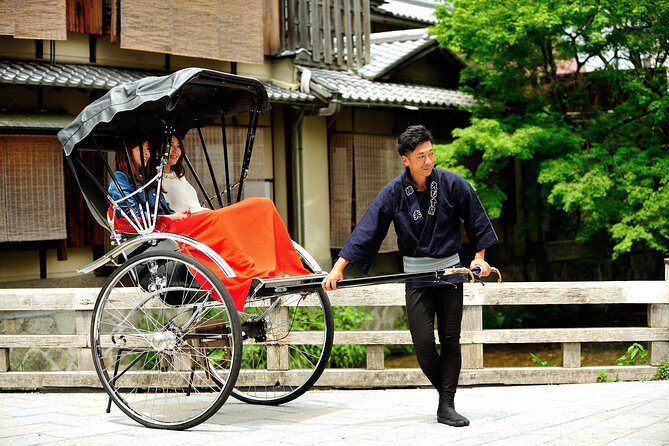
One of the included moments is a small bridge in a traditional district. Bridges like this are not just scenic props. In places like Higashiyama and Gion, crossings often define neighborhood boundaries and connect sightlines. That means the guide can use the moment to explain how the district developed and why certain areas feel “different” from one block to the next.
Also, this is a good “breather stop.” The ride gives you movement, then the bridge gives you time to pause, look around, and collect your thoughts before the temples and shrine segments.
Temple time: gardens, atmosphere, and the story behind the gates
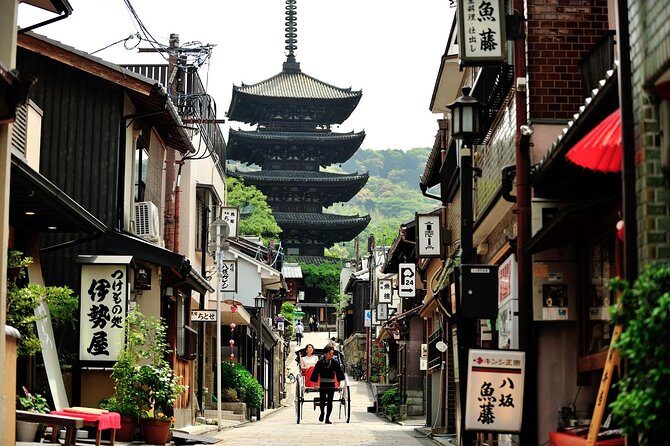
Later in the tour, you’ll visit a beautiful temple with a garden, then an additional impressive temple. The exact temples can vary depending on your route length and customization, but the experience pattern is consistent: you move from lively streets into places designed for calm.
Here’s what you’ll likely notice right away:
- The sound changes when you reach temple grounds.
- You get sightlines framed by gates, walls, and garden edges.
- The guide can point out what you might otherwise skip—symbols, layout choices, and how visitors are meant to move through the space.
If you want a more specific temple experience, some routes have included places like Kennin-ji Temple (often highlighted by visitors) and areas associated with Kodaiji and shrine zones like Yasaka. If a particular temple is high on your list, you can ask about fit when customizing the route.
One caution: temples often mean walking on uneven stone. Your rickshaw handles the hardest part—long distances and stairs—but you should still expect short walking segments at each stop.



Ending in Gion: a major shrine and the New Year context
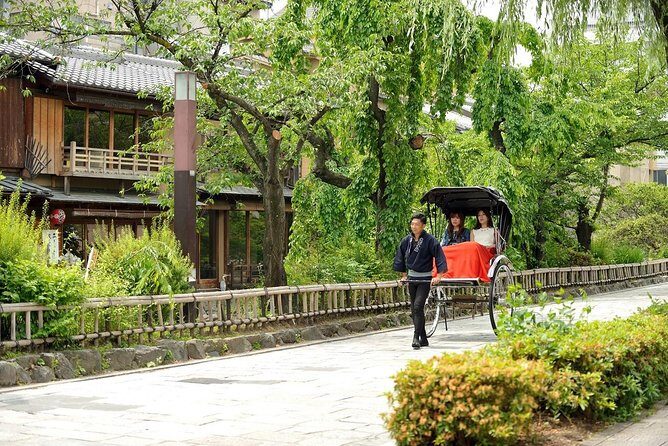
The tour’s last big geographic shift is to Gion. You’ll finish at a large shrine in the Gion area—a stop that’s noted as being especially worth visiting around New Year, before or after your ride.
In Kyoto, New Year shrine visits are a big deal culturally, so this stop lands with more meaning than just another photo spot. If your timing happens to line up with the season, you’ll feel why people plan their Kyoto trips around these moments.
Many people connect Gion shrine time with Yasaka Shrine, and that name shows up in route descriptions tied to the neighborhoods you cover. Even if your exact stop is slightly different, you can count on a major shrine segment with the classic Gion street mood.
How long should you book: 30 minutes, 90 minutes, or 2–3 hours?
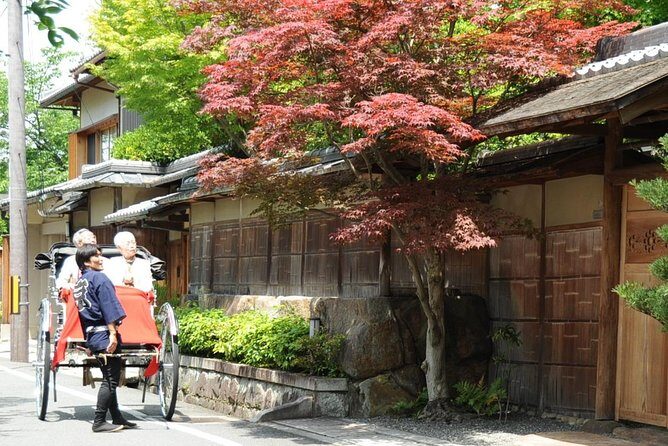
The duration options range from about 30 minutes up to 3 hours. I’d think of tour length in terms of how much you want the rickshaw to do vs. how much you want to linger.
- 30–70 minutes works if you mainly want the vibe: a fast overview of the old streets and a couple of picture-ready stops.
- About 90 minutes to 2 hours is where most people land for a balanced mix: you can cover Higashiyama streets, hit at least one temple highlight, and still feel like the ride has substance.
- 2–3 hours is best if you want more stopping time, more temple/shrine moments, and the chance to customize the pace based on what you’re most curious about. Extra time is also where guides who are great with photos can slow down enough to get the angles right.
Customization is explicitly part of the experience, so don’t treat the time as the only choice. Tell your guide what you care about—architecture, temples, shrine atmosphere, or just the most photogenic street corners.
Price and value: what $39.79 really buys
At $39.79 per person, this is not a cheap ride in the way a basic transit ticket is cheap. But it isn’t priced like a luxury chauffeur either. What you’re paying for is:
- A rickshaw ride (not just a tour guide on foot)
- A local English-speaking guide
- A route that focuses on classic Kyoto neighborhoods and multiple scenic stops
For value, the key question is how much you’d otherwise spend in time and energy to recreate this on your own. If you’re doing Kyoto in a day with limited stamina—or you want the best “first Kyoto” experience—this is the kind of paid shortcut that can actually earn its cost back by making the city easier to understand and easier to enjoy.
Also, you’re not stuck with one boring, fixed route. You can choose longer rides and discuss interests, so you can steer the value toward your preferences.
Comfort and sizing: the narrow seats matter
This tour uses rickshaw seating that’s only 29.1 inches (74 cm) wide. The rules also cap occupancy: maximum 2 adults per rickshaw.
If your group has any size/comfort concerns, I recommend planning for one rickshaw per person. Some people can fit fine in two seats; others feel cramped even if they technically fit. And because the ride is narrow by design, comfort isn’t just a “nice to have”—it can affect how much you enjoy the stops and photo time.
For children: kids 5 and under can ride on an adult’s lap, with one child per adult. There’s also an important note that if a child will use one of the two seats, they must be booked as an adult. It’s the kind of detail that impacts booking decisions, so check it early.
Weather, pace, and that rain-or-shine promise
The tour runs rain or shine, which helps you avoid the Kyoto planning nightmare where your schedule depends entirely on weather. But keep in mind that very poor weather can still lead to cancellation, in which case you’ll be offered another date or a full refund.
Pace-wise, expect a mix of riding and short pauses at each stop. This tour is a good fit if you want to see a lot without walking long stretches—but it’s not a zero-step experience. You’ll likely walk a little at temples and shrine areas.
Who should book this rickshaw tour
This is a strong choice for:
- First-time Kyoto visitors who want the “main districts” feel without committing to a long walking day
- People who want photos plus context, not just photos
- Anyone who has limited mobility and wants a gentler way to enjoy old Kyoto streets
- Groups who want a private experience, with the guide adjusting to your interests
It might be less ideal if:
- You strongly prefer wandering freely with no structure
- You have a tight schedule that doesn’t allow for a guided route and short walking segments at each stop
- You’re not comfortable with narrow seating and don’t plan to book separate rickshaws
Final call: should you book?
Yes—if you want Kyoto’s old districts in a way that’s easy, guided, and photo-friendly, this tour makes a lot of sense. The combination of Higashiyama + Gion focus, English-speaking guides, and multiple temple/shrine stops is exactly what many visitors hope to get out of a first Kyoto day.
My main “only if” is comfort. If you or your group might feel tight in the rickshaw seats, book one rickshaw per person. If you handle that detail, you’ll likely find this is one of those Kyoto experiences that turns into a highlight fast.
FAQ
FAQ
How much does the Kyoto rickshaw tour cost?
The price is listed as $39.79 per person.
How long is the tour?
Durations range from about 30 minutes to about 3 hours, depending on the option you choose.
What’s included in the tour price?
It includes a local English-speaking guide and the rickshaw ride.
What’s not included?
The tour does not include hotel pickup and drop-off, food and drinks, and it does not include the Arashiyama Bamboo Forest.
Where do I meet the tour?
The meeting point is Ebisuya Higashiyama Rickshaw, 483 Shimokawarachō, Higashiyama Ward, Kyoto, 605-0825, Japan.
Is this tour private?
Yes. It’s listed as a private tour/activity, so only your group participates.
How many people can ride in one rickshaw?
The maximum is 2 adults per rickshaw. Up to 2 children ages 5 and under can ride with 2 adults, but children must ride on an adult’s lap.
How wide are the rickshaw seats?
Each rickshaw is 29.1 inches (74 cm) wide, and it may be more comfortable to book individual rickshaws for larger passengers.
Does the tour run in bad weather?
The tour takes place rain or shine, but if it’s canceled due to poor weather you’ll be offered a different date or a full refund.